
A 'Skeptic' on Finding the Truth
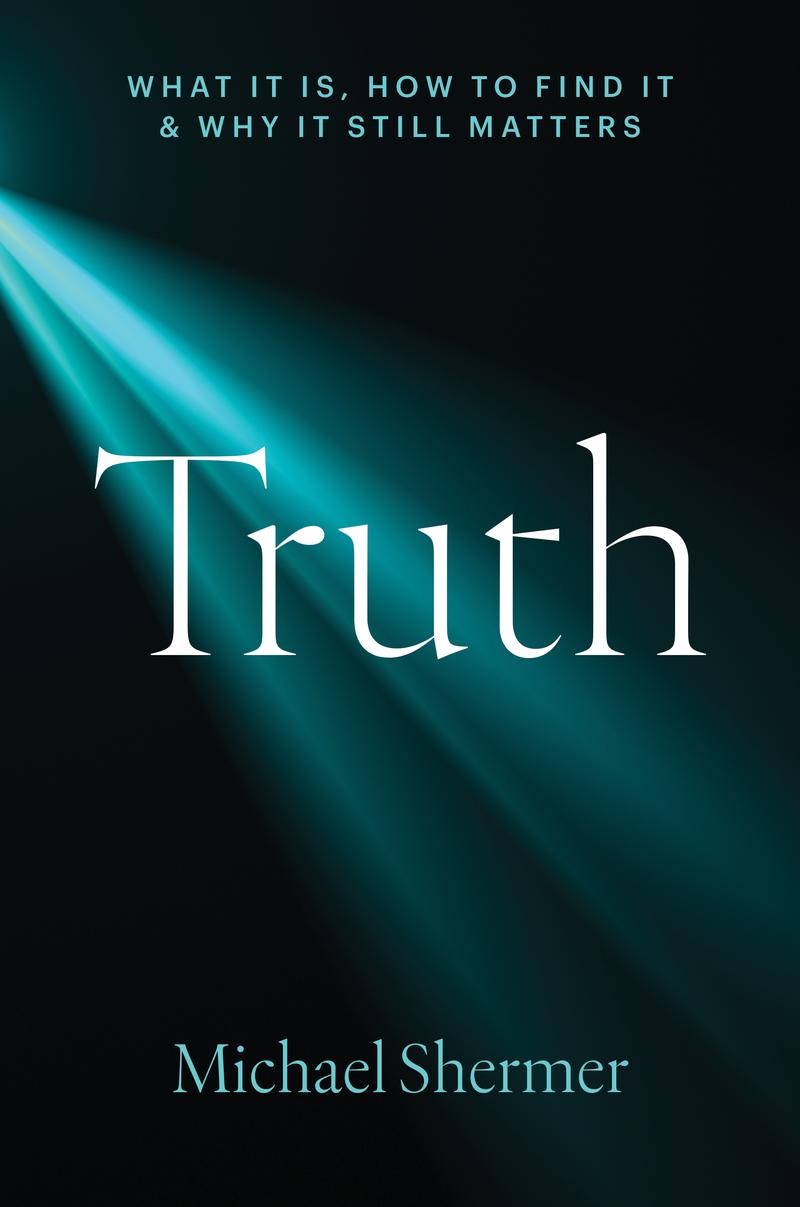
Brian Lehrer: It's The Brian Lehrer Show on WNYC. Good morning again, everyone. The false statement of some top Trump administration officials about Alex Pretti brings the issue of discerning truth from lies from different points of view to the top of the national agenda. Our next guest offers advice for evaluating information and sources, and argues that getting to the truth is still possible, even in what some people call the post truth world. Joining us now is Michael Shermer, publisher of Skeptic magazine, the executive director of the Skeptics Society, and the author of a new book called Truth: What It Is, How to Find It, and Why It Still Matters. Michael, thank you for joining us. Welcome to WNYC.
Michael Shermer: Oh, thank you, Brian. Thanks for having me.
Brian Lehrer: Can you start by giving people some background on the Skeptics Society? From my past contacts with it, I tend to think of it as almost like a group of atheists or people who believe that religion is a matter of things that can't be proven, and you would argue against that. Where would you start to explain the Skeptics Society as grounding before we talk about your book for our listeners?
Michael Shermer: Yes, great question. No, we're not an atheist organization. We're not atheists. Maybe some of my members are. I don't really know. That's not our focus. Our focus is on science and rationality and critical thinking. We started the magazine in 1992, ostensibly to start to debunk a lot of pseudoscience like things like astrology and psychics and the spoon benders and Bigfoot and aliens and conspiracy theories and that sort of thing. Then it morphed into more serious topics like Holocaust denial, which we took on in the late '90s, which unbelievably has made a comeback through Candace Owens and Tucker Carlson.
There it is. Our job is never done. Our mission is to promote the search for truth using the best tools we have, mainly the scientific method and the tools of rationality and logic, and to promote these critical thinking tools for everybody. We're all interested in what should we believe. What should I believe is true? I don't want to believe things just because I want them to be true. I'd like them to actually be true. That's our mission.
Brian Lehrer: Pundits in the media have said during both Trump administrations that we live in a post truth world. That feeling maybe really began in the first term around how, in 2017, President Trump's then adviser, Kellyanne Conway coined the term 'alternative facts' when talking about Trump's inaugural crowd size. A lot of our listeners will remember that. Later that year, fake news became a common refrain by the administration when confronted with reporting that they didn't like. You don't buy, I see from your book, that we're in a post truth world. How come?
Michael Shermer: First of all, you'd have to have some standard of measure by which you're determining that we're living in a post truth world. That is to say, you'd have to present arguments and evidence for it, which means you actually think there is a truth and you're making a case for it. It's self refuting in that way. Really, it begins way before Trump alternative facts.
Fake news is the right's version, the left's version of this is postmodernism, which really took off in the 1990s with the culture wars on science, science wars, that science is just another form of truth, no different, no better than other forms of truth telling. That that postmodern deconstruction of the text, including science texts, and that these are just one of many ways of knowing.
We've been dealing with this for a long time. The idea is that-- Where I begin my book is that none of us are omniscient, that is, we're not deity. This is called fallibilism. We're all possibly wrong about almost anything. We have to work together as a collective social community to determine what is most likely to be true with a small T true. From there, you build communities of institutions like universities and the academy, or science institutions like the CDC medical institutions, or the National Academy of Science or NASA.
Until recently, most people most of the time trusted most experts and institutions. That's taken a big hit since COVID. Also, the whole politicization of many woke issues like the trans issues and so on, such that a lot of people when they see these statements made by university professors or presidents or scientists, and it turns out they're wrong or just crazy, they think, "Why should I believe what Harvard scientists tell me about climate change when they can't even tell me what a woman is."
You get these extreme polarizations that makes people think, "I'm just not sure what to think about anything." One purpose of the book is to say, "Actually no, no, no, no, hang on. There are methods to determine what is true. They really do work pretty well even though scientists and institutions and so on occasionally get it wrong. That doesn't mean they're wrong about everything. Let's get back to reviewing what those tools are and who we should believe and when."
Brian Lehrer: You explore pluralistic ignorance, you call it, in which most people assume that most others believe something that they themselves do not believe. The consequence of that then is that the non believers stay silent. You refer to this as a spiral of silence, which can have consequences of mass compliance. Can you explain that phenomenon further and where we've seen it?
Michael Shermer: The classic studies on pluralistic ignorance began with asking college students their opinions of binge drinking. Now, individually, almost all college students say, "I don't really like it." They also all say, "But everybody else likes it and does it, so I go along." If everybody knew that everybody knew that they don't like it, then it would more likely stop. This is a common knowledge problem, collective action problem, in that sense. If we can communicate openly, then we actually know what other people are thinking, and then we know that they know that we also know, and so on.
Which is why dictators and autocrats need to control the press and need to control protests and so on, such that to prevent people from finding out that no one else likes the regime. Most famously, people thought that everybody else liked Stalin's regime or Hitler's regime, but that they were the only ones so they better keep silent. Then when they could see that people that spoke out were sent off to the gulag or the concentration camps, then they just kept their mouth shut.
When that happens, then you can get whole communities of people just floating in the ether thinking, "I guess this is the way it is and everybody but me believes it." If we can break the spiral of silence through the press, through the media, through open dialogue, through open communication. This is why free speech is at the core of everything, for determining what's true, because we might be wrong, so you got to find out what other people are thinking, and then you can make a more assessed judgment.
Brian Lehrer: My guest is Michael Shermer, publisher of Skeptic magazine. He's the executive director of the Skeptics Society and the author of a new book called Truth: What It Is, How to Find It, and Why It Still Matters. Who wants to ask him a question? 212-433-WNYC, or share a story or an opinion? 212-433-9692. You can call or you can text. Here's a caller. Frank in East Islip. You're on WNYC with Michael Shermer. Hi, Frank.
Frank: Hi, Brian. Mike, I have a question. I have a lot of friends of mine that they believe in aliens. They believe all this Trump stuff. I bang my head against the wall constantly talking to them. Every time you try to bring up a fact of maybe the pyramids or Stonehenge, whatever it might be, they'll always come up with something else. I hear this term that people say, you can't prove a negative or you can't disprove a negative. I don't know the exact term. How do you respond to people like this? I'm sure I'm not the only person going through this. How would you respond to people like this? I'll just pick my answer off the air.
Michael Shermer: Very common comment. I hear all the time. My first response is, "Show me." It's like, "I believe aliens are here on Earth." "Okay, show me." When I do that with the UFO people are now the UAP people, I have a whole chapter on this in my book, they say, "I can't show you because it's classified," or, "I can't show you because it's at Area 51 and we can't go there." Or, "Even the president doesn't know because this is a dark program. This is part of the deep state. The people could show us, they can't show us." It's so frustrating.
There, I just suspend judgment. I just say, "For now, I'm skeptical on aliens or Bigfoot or whatever until you show me. Show me the body. Show me the Bigfoot body or the Loch Ness monster or the aliens and their spaceships. Otherwise, it's reasonable to be skeptical." Now what a lot of these people are doing, though, is not really asking in innocence, objective innocence. They're directing the conversation in a certain direction. We call this just asking questions, sometimes called jacking off.
This is what you see with like Candace Owens and Tucker Carlson recently, just asking questions about the Holocaust. How many bodies could they burn at Auschwitz Crema II, at Auschwitz Birkenau? I'm not saying the Holocaust didn't happen. I'm just asking how this--" These are not innocent questions. These are directed toward some particular agenda. It's fun with UFOs and Bigfoot. It's not so fun with things like the Holocaust.
Brian Lehrer: You mentioned UFOs and now UAP. What's UAP?
Michael Shermer: Oh, Unidentified Anomalous Phenomenon. This is the changing treadmill of euphemisms. UFO became so tainted with tinfoil hat wearing acadoodle, people thinking that they see things in the night sky that no one took it seriously. It morphed about, I don't know, 9, 10 years ago into this UAP, which sounds more neutral. Instead of calling it aliens, they now call them biologics or non-human intelligence. To which I say, "You mean like dolphins?" They go, "No, no, no, we mean aliens." "Okay, just say space aliens because that's really what we're talking about."
Now we're seeing this in the halls of Congress with congressional hearings about UAPs and so on. As I describe in the book, I think it's very unlikely to be aliens or Russian or Chinese assets. I think these are mostly just things like planes and birds and balloons and stuff like that. At most, it's probably maybe a DARPA test project of drones or the equivalent of the SR-71 Blackbird spy plane, U-2 spy plane, that kind of thing that we don't know about, if it's anything like that.
Brian Lehrer: I'm going to read a couple of interesting texts that have come in with questions, and then I'll take a phone call from a woman in Trenton who I think you have made an instant fan of yours out of. Here's the first text, "I would be interested in your guest's take on AI and the truth. The chatbots come with a warning they might be wrong, but everyone is using them. The AI generated pictures and videos make it difficult to believe what you're seeing. I have trouble believing a lot these days."
Michael Shermer: That's a good point. The AI, I use the AI programs also, but they're just another tool. Don't think of it like, "I'm asking God the ultimate answer to my questions." Just think of it as another tool. With the AI programs, they usually provide half a dozen to a dozen links of where they're getting this information that they're telling you. You really have to take the time to click on the links to see what the original papers actually said or the articles or whatever.
Case of videos and photographs, yes, this is disturbing. I've seen many videos that they look absolutely real. Somebody did one of myself and Steven Pinker on a book event dancing on stage that never happened. It looks exactly like us. They just uploaded a picture of us sitting on stage, put it into Grok and said, "Make them dance." Sure enough, we're up dancing. I was like, "What?"
Now, I'm told by people in this business that there is a way to embed a digital watermark to tell if the video is fake. We're going to absolutely need tools like that, because you can imagine, let's say, a divorce trial where one spouse has a video of the other spouse beating the children or something that never happened. There has to be a way to find out if these are true or not, because our own vision is not going to be able to detect that, and even if it could.
As we've seen with the recent ICE videos in Minneapolis, you see the exact same video being analyzed by different sources, and one says, "You can clearly see right here she was trying to get away and was innocent." "You can clearly see right here she's trying to run over the ICE agent." We're looking at the same video. It can't be both. Even with clear, high resolution videos, the truth is going to be difficult to find.
Brian Lehrer: Another text says, "The idea of a post truth era assumes our institutions were ever fully truthful to begin with. In many ways," this says, "Trump didn't create this moment, he just failed to keep the veil in place. Maybe what we're really grappling with now is how to define accuracy in a system that has long blurred the line between truth and power." Interesting, right?
Michael Shermer: Yes, it's a great text. I define truth in the book as something confirmed to such an extent it would be rational to offer our provisional assent. That is to say, "It's truth," with a small T. "I'm going to provisionally say this is what I think is the truth right now, but I may change my mind if the evidence changes." This is called Bayesian reasoning, after the Reverend Thomas Bayes articulated this in the 1700s. You never assign a 0% or 100% probability to anything just in case.
On a scale, let's say of 1% to 99% confidence, where are you on whatever it is, aliens or conspiracy of who shot JFK, whatever it is? Go ahead and say, "This is what I think is true for now, but let's wait and see if new evidence comes in." Like with the case of masks or vaccines during COVID, I was distressed that a lot of our experts were pronouncing as if we knew 100% that masks do this or they don't do that, or vaccines will do this or they'll do that. They turned out to be wrong in a lot of those.
Why not couch it and just say, "Look, we're not sure about the mask thing at the moment. We're recommending with an 80% confidence that the mask will do the following. We're waiting for more studies to come in and we may change our mind. This is our recommendations now." People, the public can understand that. This isn't quantum physics. I mean, come on, just give it to us as you know now. Tell us the evidence, we can process that, and then couch your recommendations with caution.
Brian Lehrer: My guest is Michael Shermer, publisher of Skeptic magazine, the executive director of the Skeptics Society, and author of the new book Truth: What It Is, How to Find It, and Why It Still Matters. We are with you at 212-433-WNYC with your calls and texts for him. Mabel in Trenton. You're on WNYC with Michael Shermer. Hi, Mabel.
Mabel: Hi. I'm glad you repeated his name. Michael Shermer. I may write you in in my next election for president. We definitely need someone who is truthful and not just self interested in gaining more power and wealth in this world. The majority of people are living in conditions that are a lot less than what we grew up in because our parents had a chance to make enough money to purchase homes to allow us to grow up in nice, safe neighborhoods. What's happening now is that we are being divided. America is turning into a third world country because of the liars that have taken over our government.
The Democratic Party has let me down because they also are untruthful about certain things. As a very fertile woman growing up in an age where sex was just out there, you did it if you like the person. Now they're saying that men can become women. I feel that you are just discounting women as a species because in nature there are male and females. Now you're trying to make us believe, or certain psychiatrists or surgeons are trying to make us believe that you can turn a male into a female. A female is more than her anatomy. She is her experience growing up in this world.
Brian Lehrer: Mabel, if you're going to go there, trans-women would say they had their experience of being a woman before they had any hormone replacement therapy or surgery or anything like that. I don't know. Maybe you're just biased against the segment of society who you don't like. Michael, I might have picked up from one of your earlier answers that you're on the same page as Mabel. A lot of people who I know-- a lot of people might agree with you, but a lot of people might say, "Come on, why do you have to go to that binary that people's experience proves-- You want evidence? People's experience proves that transgenderism is real."
Michael Shermer: Here in my book, I distinguish between subjective truths and objective truths. Subjective truths are internal states. It's true for me. I like dark chocolate and you like milk chocolate, or I like Stairway to Heaven, and you like whatever. Or meditation works for me. Maybe it doesn't work for you there. We're just talking about internal, subjective state. The transgender issue is very much in that realm of, it's not biological sex at all. Biological sex is absolutely binary. Men cannot become women, men cannot become pregnant and so forth. I'm referring to that gynecologist last week who could not answer Senator Josh Hawley's question, can men get pregnant?
I worry about the Democratic Party as being strong and robust in the future to counter the craziness of the right. The craziness of the left has got to counter the craziness of the right. If you go too far, either either way, right or left, that's disturbing for our mission here as a democracy. When that happened, why couldn't she-- Here's how I would have answered this question, Senator Josh Hawley, can men become pregnant?
"Senator, no, men cannot become pregnant. Now, I do have some patients I deal with who are women, biological women, who identify as men. Now, of course, they're not men, so when they get pregnant, they're women getting pregnant, but they call themselves men. I want to go along to get along. I can't judge somebody's internal, subjective state. If that's how they feel, that's how they feel. I'm not going to judge that." That would be a good liberal, progressive, tolerant answer, while also acknowledging the reality of biology, which is it's binary. If you want to talk about gender, that's an internal, subjective state. That's a different thing entirely. That's how I think about that.
Brian Lehrer: For people who heard you, as I will admit I did, as dismissing the idea that gender is a different state than sex. That's not where you want to land.
Michael Shermer: Yes, gender is different than biological sex. The people that study it also say that, that are more open to that. I know some transgender men who now identify as women. I'm sympathetic to what they went through. This was a difficult part of their lives. That's not what we're talking about when we're talking about, say, teenagers who are going through puberty and struggling with bodily dysphoria, and then are told or learn online that maybe you're in the wrong body. There's no such thing as the wrong body. You are your body. There's no you and then your body, as if there's a little gendered homunculus floating around inside you. No such thing. You're just your body.
Now, some people, for whatever hormonal differences or variations, identify more male or more female or whatever. All of that, again, if we stick it, stay with the internal subjective truth, that's fine. To then say, "But this could be true for you too." Then for minors to be told, "We're going to transition you and this will help you with your depression, anxiety, suicidal ideation," whatever it is that these teenagers are going through. That's where it crosses the line where the facts actually matter. You cannot pause puberty. You can't. That's not how it works. You can, but then there's going to be irreparable damage changes going forward. [unintelligible 00:22:14].
Brian Lehrer: This is not at all where I thought this segment was going to go. People who are going through that gender dysphoria, who are teenagers, you're framing it as if some kind of psychological establishment or something has an agenda. This is what the right wing says, that it's gender ideology as opposed to a lot of well-meaning psychology practitioners and in conjunction with the parents of the teenagers looking for what's best for the individual teenager. That might be different for one person than it might be for another person. It sounds like you're being very dismissive of a group and accusing them of the-- what's the word? Recruitment that I wouldn't have expected from you.
Michael Shermer: [chuckles] No, I agree with you, Brian. I didn't think we were going to go this direction either. Let me articulate it a little more carefully. There is such a thing thing is gender dysphoria. That's real. It's been around for a long time. We've known about it. It's a vanishingly small number. Well less than 1%, probably less than one-half of 1% that experience this.
Around about a decade ago, there began a larger movement of what's called rapid onset gender dysphoria. This is not young children, which is what the gender dysphoria was originally designed or discovered about. These are teenagers or young adolescents just starting puberty or going through puberty in which there's something-- This is called the social contagion hypothesis. I don't buy into at all any of the top down, "They're trying to recruit kids and change their gender." That's a very conspiratorial thing that I don't buy.
No, I think I agree with you. These are well-meaning parents, doctors, nurses, teachers, school counselors and so forth, or even the people online, on Facebook that are designing these websites. They're trying to help people. I think, for the most part, these are good people trying to do the right thing. Then it does become a factual matter of, what's true? Can you actually pause puberty and then turn it back on again if you change your mind? No, you can't. Things like that. Can you actually change sex? No, you can't. If sex is defined as the gametes that your body makes, either sperm or eggs, then you can't change that. That's not possible.
Brian Lehrer: Again, I think there are doctors who do this for a living who would disagree with you that you can't pause something and turn it back on again. I don't want to go round and round on that with you. One other thing on this, a number of people pointing out when you say sex is a binary, even if not gender, "Please correct him," says one text, "That sex is not an absolute binary. Intersex people exist." That's the I in LGBTQIA.
Michael Shermer: Yes, I understand.
Brian Lehrer: There are people like that, you acknowledge, right?
Michael Shermer: I would just point out that in many northern European countries, and in the UK now, they have stopped all this because the science has changed. When this began a decade ago, we just didn't know much about this. Now we do. The United States is slower because we don't have a federal mandate on this. It's state by state. Some states are more encouraging of it. Some are more skeptical of it and so on. It's a moving target in that sense. In case, again, let's distinguish between internal, subjective truth, "This is what I feel inside." "Okay. How would I know? You have your truth."
Objective truth, that is, can you actually change biological sex? You can't. There's no third sex. Intersex is-- They're referring to XYY or XXY conditions, Klinefelter syndrome, Turner syndrome. There's a bunch of these. In the same way that there's people born with six fingers, that doesn't mean our species is on a finger spectrum. The vast majority of people have five fingers. The vast majority of people are male or female. There's no in between. There's no third sex.
Brian Lehrer: And minorities exist.
Michael Shermer: And minorities exist, yes. What should we do about it? How about-- this is called watchful waiting. The teenager struggling with gender dysphoria and other issues. We now know a lot of these kids are on the spectrum. They have some autism issues. They have some normal adolescents issues. Watchful waiting. Let's get them the help they need, the counseling and so on. Don't inject them with hormones because that could change their body permanently going forward.
We don't allow these kids to get tattoos without parental consent. We don't allow them to vote. We don't allow them to drive or smoke or drink. Why would you allow them to change their bodies? This is really a risky thing to do. Now we're getting a lot of the detransitioners are going, "Where were the adults in my life when I was a kid? I should have never been allowed to do this." That's now a growing movement. Anyway, Brian, this will all be sorted out in these lawsuits that are coming. Then in the courts, they'll have to bring in scientific experts.
Brian Lehrer: You're here supposedly representing science. The legal questions are the legal questions and the science is sometimes very different from what politics and the law determine to be allowable. I will just say as we wrap this up that, yes, that's not at all what I expected this conversation to turn into, but so it did. We leave it with Michael Shermer, publisher of Skeptic magazine, the executive director of the Skeptics Society, and author of a new book Truth: What It Is, How to Find It, and Why It Still Matters. Thank you for joining us.
Michael Shermer: Oh, thank you.
[music]
Brian Lehrer: I know a lot of people want to respond to that last stretch with the last guest, and you can do that, too. If you've been texting or starting to call in because you were offended and you want to tell your own experience or that of a trans person you know, you can call in, too, in these last 10 minutes. Equal time. 212-433-WNYC. 433-9692. Megan in Maplewood, you're on WNYC. Thank you for calling in.
Megan: Hi, Brian. Thanks for taking my call to just quickly address what that last guest just said about trans youth and access to hormones and detransitioning. As the parent of a trans child who has fully transitioned to the person that they want to be, I really wish that people that don't have trans children would stop talking about their experiences and their needs. There is nothing that compares to watching your child suffer. Adolescence is already hard enough.
Watching them suffer through not being able to be who they truly are, and then going through the process of transitioning and seeing them come out of that, and the brightness and joy that comes into their lives, and the clarity that they have after being able to transition, nobody can understand that but the child and the parent. Of course, there are times when people feel differently and might change their minds. I don't think that we should be giving a platform to pseudo scientists telling us what trans kids need when they are not the parent of a trans child and have never been through the experiences that our children are going through. They need more support now than ever.
Brian Lehrer: Interestingly, the book was supposed to be in support of science. My understanding is, and from my own looking at it, the topic wasn't even in the book, but that's where he went. Megan, thank you for adding your voice. Jason in Queens, you're on WNYC. Hello, Jason.
Jason: Hello. I'm so glad that you opened up the phones back, because I'm sure you had deluge of calls about the just list of falsehoods and ridiculous statements that this guy who's supposedly talking about being a logical skeptic, and then just to say a bunch of false nonsense. I don't even know where to start. Implying that transgender kids are somehow psychologically having problems or that they're all just autistic. That it's some kind of disease. It's just total nonsense.
He also implied that the kids are just going out and getting hormone therapy. What, like down the street from a drug dealer or something? They're not doing it with parental consent? Which is just also total nonsense. Of course, it's with the parents consent. What's going on in this country right now, because of idiotic pseudoscientists like this guy giving support is that the government is clamping down on families, making the choice.
My own brother and his wife, I have a niece who's transgender. They're going through this right now where they're seeing their health care completely pulled under the rug from them, and they can't even make the decision. They've made the decision very carefully with their daughter, who has made this decision at a young age and has stayed that way, has not transitioned back like another nonsense myth that this guy said. Because of people like him giving it some pseudoscientific backup, they're being attacked for making personal decisions for their family. This guy is just nonsense. I'm so glad that you pushed back. I'll let other speakers go on. I'm so glad that you opened up the phone. Thank you [unintelligible 00:32:18].
Brian Lehrer: Jason. Thank you very much. Interestingly, I'm getting pushed back, too. A listener writes, "I was offended by Brian. Sounds very much like you have a vested interest in promoting sex change. Did you give your guests proper deference?" Another one, "Sorry, Brian, but the skeptic guy was reasonable." Linda in New Orleans, you're on WNYC. Hi, Linda.
Linda: Hi. I have a trans grandchild who transitioned male to female, and she is very happy now. I was just about to follow Michael Shermer on X. When I heard the caller make a U-turn and talk about trans and his equivocating, and then not giving you an answer and almost ending up by saying, "We'll see how it plays out," as if he's the final judge and jury, was so offensive and so condescending. Of course, I'm not going to follow him. I'm so surprised, disappointed, and shocked at this guest. Thank you for taking all the calls and not talking about snow.
Brian Lehrer: Thank you very much, Linda. Let's see. I think we have time for one more. Can I go to Jessica on the line? Claire, is that line available? Jessica, you're on WNYC. Hello.
Jessica: Hi. I'm also the mom of a transgendered adult now child. I would like to echo the mom from Maplewood. She's my neighbor. We live nearby each other. I'd like to back up some of what she said with science. We have been performing transgendered medical care and surgical care for something like 90 years now. We're very, very good at it. It has almost zero morbidity. It has something like zero mortality. If any other treatment for any other human condition were so successful, we would be shouting it from the rooftops.
Because people feel uncomfortable or something around transgendered people, it's become politicized. We don't celebrate it the way we celebrate other medical successes. As for treating it therapeutically, gender dysphoria therapeutically, which the guest suggested, that has very often resulted in disaster, including the death of the patient. That's an unacceptable outcome. Yet the outcome of transgendered medical care and surgical care is so much the opposite and so much more often results in happiness.
Brian Lehrer: Jessica, I have to leave it there because the show is over. I'm just going to say thank you for your calls. Brian Lehrer on WNYC. Stay tuned for All of It.
[music]
Copyright © 2026 New York Public Radio. All rights reserved. Visit our website terms of use at www.wnyc.org for further information.
New York Public Radio transcripts are created on a rush deadline, often by contractors. This text may not be in its final form and may be updated or revised in the future. Accuracy and availability may vary. The authoritative record of New York Public Radio’s programming is the audio record.
