
A 'School Choice' Advocate's 180 on Testing and Charter Schools
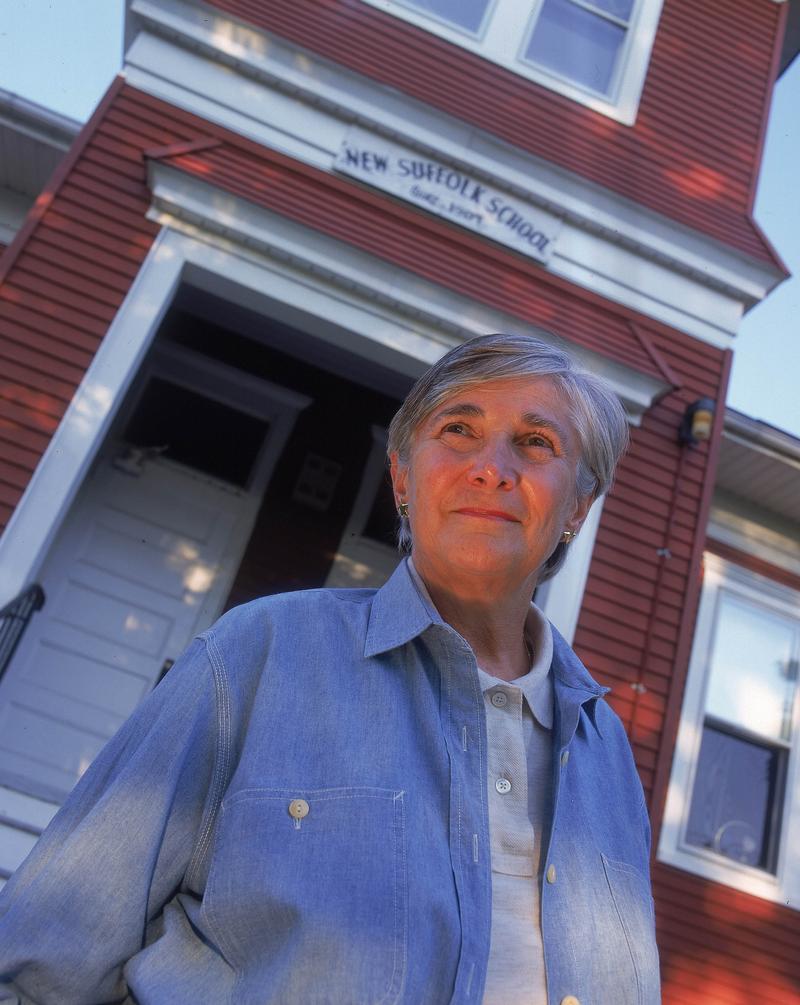
( Steve Liss / Getty Images )
[music]
Brian Lehrer: It's the Brian Lehrer Show on WNYC. Good morning again, everyone. It's not often that a public figure begins a book by acknowledging plainly that they change their mind, no less change their mind on something really big, but within the first few lines of her new memoir, An Education: How I Changed My Mind About Schools and Almost Everything Else, historian Diane Ravitch reflects on the positions that she once championed: school choice, charter expansion, standardized testing, and the moment she came to the conclusion that the evidence no longer supported them. She writes, "I was wrong." How often do you see that? Ravitch, who advised the administrations of President George H.W. Bush and Bill Clinton, had since become one of the country's most forceful advocates for public schools and one of the most vocal critics of test driven reform. Our guest now is Diane Ravitch, historian of education and former research professor of education at NYU, blogger at dianeravitch.net and author of the new book, An Education: How I Changed My Mind About Schools and Almost Everything Else. Diane Ravitch, Dr. Ravitch, welcome back to WNYC.
Diane Ravitch: Well, thank you so much, Brian. Delighted to be with you.
Brian Lehrer: Listeners, what about you? Have you found your own thinking shifting over the years about public schools, testing, school choice? Maybe you've had experiences as a parent, a teacher or a student that changed how you see these debates. We'd also love to hear from some listeners who support charter schools or school choice generally or the way standardized tests have been used or are being used under President Bush, either one back then or Obama, or anyone else. What have you seen in your community that you think has become better because of any of those things? 212-433-WNYC, 212-433-9692.
Dr. Ravitch, you write vividly about your upbringing in Houston, so let's start all the way back there. What early experiences shaped how you thought about schools, learning and inequality, even before you studied education and the history of education formally?
Diane Ravitch: Well, first of all, let me say call me Diane. I'll call you Brian.
Brian Lehrer: It's a deal.
Diane Ravitch: Next, I want to point out that I went to public schools K through 12 in Houston, and they helped to shape my view that public schools are not necessarily rigorous, but what they are is very important civically in allowing people like me to intermingle with people who are very different. However, the differences were limited during the time I was growing up because the schools I attended were completely segregated. It was only in 1954 that the order came down from the Supreme Court that racial segregation in schools was not constitutional.
I tell in the book about how I went to our high school principal and said, "Why aren't we integrating our school?" He said, "Well, it would hurt Black teachers and Black principals. They would all lose their jobs." For me, growing up in Houston was formative in many ways because I was surrounded by so much angry conservatism of the kind that we see today, and so I can relate the Trump era to that period that I was growing up in which racism was rampant and people just took it for granted.
I think we're now in a period where the current effort by the president is to roll back, whether it's DEI or civil rights or anything that relates to race and gender. My childhood was very formative in showing me what the world will be like, and I don't want to go back there.
Brian Lehrer: In the book, you also describe your early years working at a socialist magazine- which might surprise some listeners based on the context that you were just describing, a socialist magazine called The New Leader before turning toward academia. At that point in your life, did you think of yourself as a socialist?
Diane Ravitch: Oh, no, I didn't at all. I was just looking for an interesting job, and it turned out to be the most interesting possible job because I interacted with a lot of the leading literary figures of the day, even though the magazine didn't pay anything. Lots of important intellectuals, whom I had never heard of, were submitting reviews and articles. I later wrote an article that that chapter is based on. I got my master's degree at The New Leader, and it was an incredible learning experience for me. There was no propagandizing.
I think that the essence of The New Leader was democratic debate, and I loved it. It also taught me, and I thought this was a lifelong lesson, to be skeptical. I tried to carry that through in my later life to have a certain skepticism towards all panaceas, all claims that there's one answer to everything, because there never is.
Brian Lehrer: Sounds like a really powerful experience that you had there. When you began your doctorate in the history of education, what parts of that history were you most drawn to?
Diane Ravitch: Well, at the time I started my doctorate, I wasn't sure-- I knew I needed a doctorate because I had been advised by my mentor, who is Lawrence Cremin, the president of Teachers College, that I shouldn't get a doctorate, and then he ran into Bruno Bettelheim during the summer who said that he had read an article of mine, and he said, "You tell that young lady that you're wrong and that she does need a doctorate or she'll hit a glass ceiling."
Of course, he was right, and I went forward towards the doctorate. I wasn't sure at that time whether I would write about the New York City public schools. I was thinking actually of writing a history of the mayors of New York, which I think, in retrospect, was a really terrible idea. We've had some interesting, very colorful mayors and also some very boring mayors, and I think that would not have been a book that had a long shelf life. It would have to be revised every four years, for one thing.
Being at Teachers College was a great experience for me because of the mentor that I had who's no longer alive. My first book was, as I said, A History of the New York City Public Schools, and it started with- or at least my interest in it started because of the teacher strike in 1967 and 1968. The one in 1968 closed the schools down for two months, and that was really an unprecedented event in this city and probably anywhere in the country where almost every teacher in the city was out on strike, except those in the demonstration districts where they were trying to prove that they didn't need to be connected to the central board.
Brian Lehrer: You became one of the most prominent advocates in this country for school choice, but just as you have changed, the identification with that issue seems to have changed from one of reform, which is usually a progressive notion, to one seen as more conservative. What did you originally see as the core promise of choice?
Diane Ravitch: Well, when I was a strong advocate for choice, there wasn't much choice, and it was a theory. I like the theory. I love the idea that there would be competition and that the competition would cause all schools to improve and that choice would lead to great things, but it was based on speculation.
I wrote many articles supporting charters. I went to Albany to testify in 1998 on behalf of charter legislation which passed. For a long time, really from the 1980s up until the early 2000s, I was a very prominent supporter of choice. What happened to change my mind about that was that as the results began to come in, I realized it was not producing the kinds of changes that I had hoped for.
Brian Lehrer: Can you walk us through some of the turning points that flipped you?
Diane Ravitch: At one point I was on the board of three or four different conservative think tanks; a think tank at the Hoover Institution, which is super conservative, a think tank in D.C. called the Thomas B. Fordham foundation, which sponsors charter schools in Dayton, Ohio, and also briefly at the Manhattan Institute, which was promoting the charter legislation in Albany and is even more right wing now.
My credentials as a person on the right were very strong over several decades through the '70s, '80s, '90s and then into the early 2000s, but in the internal discussions at the Fordham Institute and also in the Hoover Institution, we talked very frankly about why were charter schools not succeeding? We saw that they were failing almost as rapidly as they were opening, and what was the cause of this.
There was also a very frank discussion about the number of fraudsters entering into the charter space. I think the very first charter chain was in California, which had 60 charters, and it collapsed. There have been any number of charter scandals. The biggest, again, was in California involving a $200 million fraud in which the guy behind it had fake students. There have been many scandals in Ohio and in other states where people are just going into the charter business for the money.
The other thing about charters is they choose their students. Every time there's a comparison of charters and public schools, you have to remember that a school choice, it's the school's choosing, and that makes the public schools worse off. As I began to be skeptical around 2006, 2007, I saw that the charters were really a way of turning people's heads into the way they thought about schools, not as, "This is a civic responsibility that we all have to support the way we support the police, firefighters, public parks, public other things," but rather it's a consumer choice.
We were changing from "What's the public good? What's the common good?" to, "Where should I shop to get the school that's best for my child?" That had a big impact on me because I lost faith that charter schools were good for kids, because I could see that many of the kids with the greatest needs were not welcome in charter schools, and charter schools, in fact, did encourage the voucher movement. In this country, a majority of the states have voucher programs. In 15 of the states, the voucher programs are for everybody, including children of the wealthy.
Voucher program, the other thing to say about it is it's not saving poor kids from failing schools, which was my original idea, and that's the way it was sold. It's rather a subsidy for the well to do, because in every state that has vouchers, most of the vouchers are going to kids who never attended public schools, but rather to children who were already enrolled in religious schools and elite private schools. I'm talking about 75-80%, even close to 90% of these vouchers are just a public subsidy for kids already in private schools.
Brian Lehrer: On the religious school aspect, at a certain point in your career, you describe this in the book. You're in a meeting with Texas Governor Ann Richards, a Democrat. This would have been in the early '90s. You write, "I waxed on about the theoretical benefits of school choice and I never forgot her response. She said, 'If there is ever school choice in Texas, the hard right, evangelical Christians will get public money to indoctrinate children. You won't like it.'" Then you write, "How right she was. I wish I had had the wisdom to heed her, how right she was."
If you zoom out now, how much do you see school choice as a trick, if that's the right word, or a political vehicle for public money for religious institutions or indoctrination?
Diane Ravitch: Well, there's no question that most of the public money that's going into vouchers is going to religious schools. In Florida, for example, most of the schools receiving vouchers are evangelical Christian schools. The same is true in Texas and in many other states. It's become a way of subsidizing, especially religious schools, the elite private schools. When we think of Andover, Phillips Exeter, and Lakeside Academy in Seattle, they are not taking voucher students. All of their slots are already taken.
People are actually opening private schools specifically to get vouchers. Private schools that already exist and religious schools that already exist are encouraging their students to apply for vouchers so that there are schools, religious schools in particular, where almost 100% of the kids are now supported by the state, whereas previously, their parents paid their tuition.
I think that what the Republicans have done who pushed the choice ideology is to create a constituency for vouchers that will then reliably vote Republican so that they can continue to get that $8,000 or $10,000 a year to subsidize the tuition they're already paying.
Brian Lehrer: Listeners, if you're just joining us, our guest is Diane Ravitch, who, among other things, was a high ranking education official in the George H.W. Bush and Bill Clinton administrations. She is author of the book now, An Education: How I Changed My Mind About Schools and Almost Everything Else. We can take your questions or stories for her at 212-433-WNYC, 212-433-9692. You can call or you can text.
Here's a text, Diane. It says, "Recent articles in left publications like The Atlantic and New York Magazine shed light on the push to end or opt out of standardized testing in blue states have resulted in the largest reduction in student achievement, in particular among Black and Latino students in decades." The listener continues, "This went well beyond what can be explained by COVID school closures." The listener says, "Southern states like Mississippi and Louisiana have seen the largest rise in their students' achievement in the recent five years, dubbed, 'The Southern miracle,' moving well up from their near bottom position among all US states."
Diane, I've seen that term certainly in the conservative press, "The Southern miracle," with respect to Mississippi, and this listener sites Louisiana. Are you familiar with this? How would you put it in the context of your book?
Diane Ravitch: Yes, I am. I've become very critical of standardized testing. Just briefly, before I answer your question, I'll say it's because I was on the National Testing Board, I was appointed by Bill Clinton to the National Testing Board and served on it for seven years. What I saw was, first of all, the results were the same every year, not in terms of the scores, but the ranking of students. The richest kids are at the top, the poorest kids are at the bottom. The achievement gap may move by one or two points, but it never closes because it's a normal curve and normal curves never close.
Now when I realized that the main thing you get from standardized testing is the confirmation that being rich really matters and being poor really matters, is that the test-- I'm thinking of the Mississippi miracle, anytime you see the word "miracle" attached to anything in education, you have to be skeptical. I would say that the one thing that characterizes my work over the years is being skeptical.
There are no miracles in education. As one of my friends said, you only find miracles in churches and other religious institutions, not in education. You may recall that when George W. Bush was elected president, he boasted about the Texas miracle, and it was a complete fraud. There was no Texas miracle. There's no miracle now in Florida and Mississippi and other Southern states because what they're doing is to hold back the third graders who can't pass the reading test. If you hold back the low-scoring kids, of course you're going to see an increase in the scores in the fourth grade.
This whole talk of miracle is about the fourth grade scores going up when you look at the later grades like grade 8 or even grade 12- and I don't put any trust in grade 12 scores, but the grade 8 scores, by then the miracle has disappeared because the third graders eventually, at some point, have to be moved back into the student body. There is no miracle. When you game the system by holding back low-scoring students, you will see a miraculous increase in fourth grade scores. Florida pioneered that and now Mississippi picked it up.
It's not insignificant that the Mississippi scores were improved because $100 million was put into a project to increase literacy. They had smaller classes, they had a focus on literacy, not because of the so called science of reading, but because there was more attention given to literacy and that was bound to produce some improvement. As for miracle, the miracle is easily explained by the holding back of third graders.
Brian Lehrer: Here's Angela calling from Costa Rica. Angela, hello from New York. You're on WNYC.
Angela: Hi, good morning and thank you for taking my call. This is something I'm passionate about. I've called before from my classroom, Brian. In terms of school choice, I believe in school choice in the sense that everyone should have an option of where they want to send their child because they know what's best for their child. I grew up in Brooklyn. I went to all New York City public schools. I went to a specialized high school, which Mamdani wants to get rid of specialized high schools. I don't think they should. I went to a magnet school that-
Brian Lehrer: He does not say that, by the way, just for the record. He even will keep the single test qualification for the current specialized high schools, but go ahead.
Angela: All right. The middle school that I attended, that I taught at for 32 years was a magnet school school that just opened in 1977. I think that it's important to meet children where they are. If you have students that are excelling, and you have a group of students that are doing very well, I don't see where there's a problem grouping them together so the teacher can move at a certain pace.
The school where I taught and I also attended in the beginning, when it first opened, you had to have a certain average and take a test to get in. The last 10 years or so, we couldn't test. There was another school in Brooklyn that was able to test. As teachers, I called it the three-wing circus. You had students that were maybe level 1, students that were level 2, and students that were level 4, and you had to find a way to meet the needs of all of those students in that one classroom within that 40-minute period.
Whereas before, when I first started teaching, when you had accelerated classes, you can move that way now. I had to discuss it with my students because some people are concerned about labels. They're going to think that they're less than. Well, how do you think they're going to feel when they're in a classroom and you have five, six students that are always excelling and they're afraid to raise their hands?
Brian Lehrer: Angela, I'm going to leave it there, but you raise a really important topic that we haven't touched on yet. I really appreciate your call. Keep calling us. Diane, really what she's bringing up is tracking and whether that serves the interests of all students or harms some students along the way. Do you write about that in the book?
Diane Ravitch: No, I don't because my main focus is really on, first of all, the testing and choice. I think the testing has been very harmful because first of all, it makes the students at the top, who are always at the top because of family background, feel like they're the best in the world, they deserve the best, and it stigmatizes the bottom half. There will always be a bottom half.
I think that we should not let tests rule the schools. Since the No Child Left Behind legislation sponsored by George W. Bush, the schools have been locked into this, "Test math, test reading," and then everything else is irrelevant. I have a national overlook on this, which is that recess has disappeared in many schools. In some states, they've had to pass legislation to restore recess. Kids need to play.
I think we should judge students on many different qualifications, not just on their test scores. I think that what the caller was referring to was the use of test scores for tracking. I understand that there are kids who will forge ahead, and they will forge ahead and advance classes. I'm not sure- probably because I went to a public school where there was no tracking, I'm not sure that it serves anyone's interest to rigidly track children and say, "You are the best and you are the worst," because it does create badges that are not very helpful.
I think we should, as she said, meet the kids where they are and recognize that all children have gifts of different kinds. Kids who are gifted in arts, kids who are gifted in sports, all of them should be recognized as people with wonderful potential and should not be beaten down like a square peg into a round hole.
Brian Lehrer: Related, what you said before about Mississippi's fourth grade test scores going up because they left back a lot of kids in third grade who wouldn't have done so well on those fourth grade tests, could that have served those left back kids as well because they needed more time to conquer third grade material, and then when they got to fourth grade, eventually, then they did well on the tests, and so it's a positive?
Diane Ravitch: It's possible, but on the other hand, there's research that shows that the kids who are left back feel so stigmatized that they don't try. Eventually, the dropout rate amongst those kids is higher because they were left back. I remember going to a meeting of the National Association of School Psychologists and the president of the organization said that the greatest fears that kids have, first was losing their parents, the second was going blind, and third was flunking in school and being held back.
I don't see the value in intensifying that. I think that the kids who can't read need extra help. They should have tutoring, they should be in small reading groups, they should have small class sizes, and they will catch up. I think we put so much emphasis on the academics that now kids in preschool are being tested, and that's ridiculous. I was in Finland some years ago and they don't even start teaching reading until kids are age 7 or second grade.
Brian Lehrer: Lisa, in Manhattan, is more of an advocate of charter schools. Lisa, you're on WNYC. Hello.
Lisa: Hi, good morning. Thank you for taking my call. It's an honor to hear you speak, Ms. Ravitch, about your experience. I agree with you that there are some bad apples with charter schools and there are also some bad apples with traditional public schools. I think that, at least in New York City, when charter schools are filling their seats, it's by lottery and they're not hand-picked.
I will agree that some schools will hand-pick and I will agree that some schools will kick kids out for various reasons so that they can uphold their whatever "standards", but every school that I've worked in that's a charter school, they had a lottery. That's the first thing.
The second thing is the bad apples. There's bad apples in charter schools like International Leadership Charter High School, for example. This goes back to your comment about rigging the system. If you don't pass the mock regents in that high school, they will not let you take the regents. That is illegal. You see that on both sides. My concern is that by getting on this bandwagon about downing charter schools is that we're always back to that original conversation about not letting families have a choice. A charter school A is about the same as traditional public school A, and that parent wants to send their child to A, they should be able to do that.
In Black and Brown neighborhoods, if we have a traditional public school that has traditionally sucked, that parent should be able to say, "I want to take my kids someplace else," and they haven't had that opportunity.
Brian Lehrer: Diane, do you want to talk to-- Talk to Lisa. Lisa, stay there. Diane talk to Lisa.
Diane Ravitch: Lisa, I understand that there are many parents who want choices, and actually, there are a lot of choices within the public school system. I'm not in favor of closing down charters, but rather of stopping this myth that charters offer something better, because they don't.
Nationally, about 20% of charters close every year, and the federal government, especially under Trump, has been expanding charters as rapidly as they can. The current Secretary of Education, the wrestling entrepreneur from Connecticut, McMahon, has expanded the amount of federal funding for new charters to $500 million a year. Well, there really is no demand for new charters because they're opening and closing almost at the same rate, but they will continue.
This is part of a Republican plan to destroy public education. If you take the long view, they're succeeding. We have a pie for schools, for education, and what is divided three ways, the public school is the loser, because, believe it or not, charter schools are not taking the kids with the most serious disabilities. They're the most expensive to educate, and those are the children who will remain in the public schools. The research is very clear nationally that charter schools do not outperform public schools. I think that they also destabilize neighborhoods because they're not neighborhood schools.
The whole choice program is one that leads to community destabilization. Instead of the public school being a place where parents learn how to operate in a democratic system, how kids learn to interact with those who are different from themselves, the charter schools do have the ability to kick out anyone they want. They may not kick them out and say, "We're kicking them out." What they'll do, and I think Success Academy has proven this again and again, is to call parents in day after day to say, "You have to come in. Your child is misbehaving. You have to come in again tomorrow. You have to come in the next day." Sooner or later, the kid drops out.
Brian Lehrer: They leave.
Diane Ravitch: There is a high attrition rate in charters.
Brian Lehrer: Lisa, you want one quick response?
Lisa: Yes. Thank you for that. I'm definitely not pro anything that has to do with what the Trump administration is trying to enforce. What I am saying though is that there are some great charter schools out there that are doing amazing work, like Growing Up Green, Our World Neighborhood Charter School, Renaissance. There's a lot. Yes, there may be more bad apples than not. I think that we also have to think about, if that's the case, if we're saying, "No more charter schools," and I'm okay with that, then how are we going to take our traditional public schools, give them the money to help teach our children so that they can perform at the same rate as an independent school?
Brian Lehrer: Thank you very much for that, Lisa. It leads to one more point in your book that I want to make sure we get out, which is that school reform of any kind keeps sidestepping the deeper structural issues of concentrated poverty, racial segregation, housing inequality. I used to have this conversation with Mayor de Blasio when he would come on the show, and he said, "Well, the solution to school desegregation is really housing desegregation." I wonder what your thought is, before we run out of time, on these deeper structural issues and how to approach them as they will affect educational outcomes.
Diane Ravitch: My view of the structural changes is something that will not happen in the next three years, that's for sure. That is to address the issues of income inequality and wealth inequality. I would like to see a much more equal and much more fair society where people at the bottom have a chance to enter into, at least, the working class and the middle class. That happens usually because of strong unions. I'm a very strong supporter of unions because the unions created the middle class in this country and they have been beaten down over the past 30 years. The guys at the top haven't wanted unions and they've been quite successful.
My short term answer is, and this would be my advice to Mayor Mamdani, which I think he would be very open to, and that is to focus on creating community schools. Community schools are full service schools where kids get medical checkups, dental checkups, vision checkups, the whole business, and where they also have social workers to help parents and have food pantries, and the social workers can connect parents to services that are available to them that they don't even know about.
Community schools, in my view, are the best short term solution. The best long term solution is to work on raising the taxes for the wealthiest people. I'm talking about the billionaires and the billionaire corporations that have wonderful ways of avoiding any taxes. I think that we have to have a more just and a more equal society because I believe in the capitalist system, but unregulated capitalism is very, very, very bad, as we're seeing in our society today.
Brian Lehrer: Diane Ravitch, historian of education at NYU, blogger at dianeravitch.net, former George H.W. Bush and Bill Clinton administration official, and author now of An Education: How I Changed My Mind About Schools and Almost Everything Else. We're out of time, but do you want to do, just as a little tease, one or two other things that you changed your mind about since you put it in the title?
Diane Ravitch: Sure. [unintelligible 00:33:20] The most important thing has to do with the issue of race. I describe how I thought I was a liberal when I was in high school and college because I believe that we should be a colorblind society. I was very critical of affirmative action. I was critical of ethnic studies. I was critical of anything that seemed to me divisive.
This was one of the-- when I say I changed my mind about almost everything else, I came to realize that all the things I was critical of were, in fact, very constructive. I believe that affirmative action was very important, that it brought a lot of Black, Hispanic, other people, and women into positions that they would have never been able to achieve without DEI, without affirmative action. I'm a strong supporter of those concepts.
Also, I understand that colorblindness is a way of maintaining the status quo, that I believe that the very things that the Trump administration is now punishing universities for are very good things that they should continue doing. Well, that's the big thing I changed my mind about.
Brian Lehrer: Diane Ravitch, thank you very, very much.
Diane Ravitch: Thank you, Brian. It was great talking to you.
Copyright © 2025 New York Public Radio. All rights reserved. Visit our website terms of use at www.wnyc.org for further information.
New York Public Radio transcripts are created on a rush deadline, often by contractors. This text may not be in its final form and may be updated or revised in the future. Accuracy and availability may vary. The authoritative record of New York Public Radio’s programming is the audio record.
