
A Recap and Preview of New State Legislation
[music]
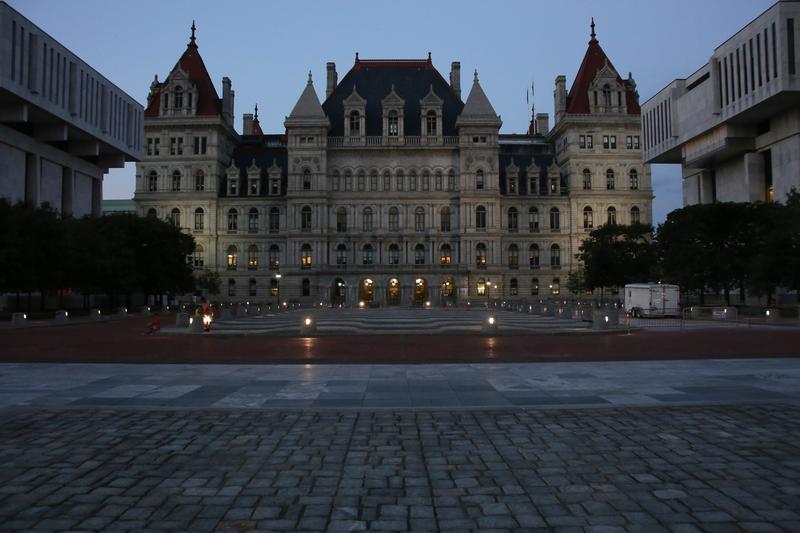
Brian Lehrer: It's the Brian Lehrer Show on WNYC. Good morning again, everyone. We've talked about the Mamdani administration in its first five days at the beginning of the show. We've talked about the crisis involving the United States and Venezuela in our last stretch. Even though there's plenty happening in the city and around the world, there's also a lot happening in Albany, the New York State Capitol, as they are about to start a new legislative session, things that will affect Mayor Mamdani's agenda in New York City as well as New Yorkers all over the state in many ways. For example, as governors tend to do every year, Governor Hochul spent the final days of 2025 clearing her desk. She signed 73 bills into law and vetoed 49 others. We're going to go down a few of them. The result was a burst of major policy; a new AI safety law, expanded prison oversight after the deaths of two incarcerated men, and after years of back and forth, legislation allowing medical aid in dying in New York.
We'll unpack some of that as well as how the state legislature is gearing up for a new session just as New York City has inaugurated its brand new mayor. Many of Mayor Zohran Mamdani's biggest promises, as most of you know, most notably on child care, depend on state cooperation and some state funding. That might mean raising taxes on people with million-dollar incomes per year and some corporations, or maybe they can find another way. The question now is what does Albany seem poised to take in this new year?
To help us unpack where things stand and where they may be headed, and you just heard a short version during Michael's newscast, we are joined by Jimmy Vielkind, New York State Issues reporter for WNYC. Hey, Jimmy, always great to have you on the show.
Jimmy Vielkind: Good morning, Brian.
Brian Lehrer: Let's do some, let's say, old business and then we'll get to new business. The signing first of the big stack of bills right before the new year. Let's talk about one of those, and certainly one that's been in the news is the Medical Aid in Dying Act. It passed in the State Senate in June, but Hochul had been reluctant to sign it into law. New York becomes the 13th state to do this, so most states still have not. The Catholic Church doesn't like it, advocates for people with disabilities, some of them don't like it. She put her stamp on it and required the legislature to go back and make some tweaks before she would sign it. What changed? What did she sign?
Jimmy Vielkind: That's exactly right, Brian. We actually reported several weeks ago that Hochul was pushing for these changes, and she described them as measures that would just give her a little bit of additional comfort in what's very clearly a moral thicket, for lack of a better word. Among other things, New York would institute a waiting period between the point where a patient with a terminal illness and a prognosis of less than six months to live can request and take a fatal dose of drugs.
Other states have had waiting periods. They've been whittled down over time, but she, the governor, wanted to have that in place. She also wanted to restrict physician-assisted death or medical aid in dying to just New York residents, so there is a residency requirement added. There's also a broader requirement for a psychological evaluation.
The bill, as passed by the legislature, required evaluation if a physician had concerns about someone's decision making capacity or about whether they were able to, of their own free will, request to end their lives. The bill, with the restriction that Hochul has pushed for, would require either a psychologist or a psychiatrist to evaluate a patient before the drugs can be dispensed.
Brian Lehrer: Let's go to another closely watched bill that she just signed. It's the RAISE Act, which stands for Responsible AI Safety and Education. What does this law actually require from AI companies? I'll note that President Trump just issued an executive order last month barring states from passing their own legislation regulating AI. First, what's in it? The federal government, do they want to stop her from doing that?
Jimmy Vielkind: The RAISE Act is pretty similar to legislation that was signed earlier this year by California Governor Gavin Newsom. Both states now require developers of large language AI frontier models to release their safety protocols or their safety framework to state regulators and then describe the steps that they are taking to prevent breaches. When we're talking of breaches, we're talking about people who might try to use AI to develop biological, chemical, or nuclear weapons. A potential safety breach would be a model that's operating outside of human development, which for people who didn't know, is basically the plot of the Terminator series.
The New York law would have actually gone further than the California law as it was passed in Albany in June. Hochul pushed to remove a provision that would have allowed the state attorney general to sue to prevent the release of a model that posed a substantial potential risk to human life. It was pushed back on as having vague and unenforceable language. We now have the two big states, New York and California, setting roughly the same standard for what to do for regulations. We have the federal government doing nothing, and as you said, the Trump administration has issued this executive order to try and reserve for itself the right to set a national AI standard.
I assume at some point lawsuits are going to start flying. Neither New York's law nor California's law has actually taken effect. It's still a few months down the road. I think we're a little bit uncertain as to what's going to come next or perhaps if Congress is actually going to come up with its own national framework for AI regulation.
Brian Lehrer: Another bill, the prison oversight legislation that she signed in December in response to the deaths of Robert Brooks and Messiah Nantwi in state prisons last year to expand surveillance and oversight of the prison personnel. You reported that some advocates say it doesn't go far enough, that death with alleged killing of Robert Brooks has certainly sparked new intensity in the movement for prison reform. What does the final version do? What was left on the cutting room floor?
Jimmy Vielkind: The final version has a bunch of different provisions, some of which involve giving more timely access to data for the Correctional Association of New York. That's the designated outside watch for the state prison system. Another provision requires cameras, fixed cameras in so called blind spots of New York State prisons.
You referenced the murder of Robert brooks, December of 2024. The reason that came to light and was such a shocking and horrific moment for anyone who thought about it, was that there was body cam footage. Body cams are slowly being deployed throughout the state's 42 prisons, and the guards who were implicated in Brooks' murder didn't know that they were on tape, that they were being recorded. The addition of fixed position cameras within facilities is something that the bill's sponsor, Julia Salazar, says will go a long way towards shedding more light on what she believes is a system that is rife with abuse and has been unaccountable for far too long.
Now, in terms of a provision that fell short, there was a decision or a proposal to add more members to the State Commission on Correction. That's currently a three-member body. Activists say it doesn't do much of anything. Salazar wanted to add a formerly incarcerated person as a permanent member of that commission. In the end, the compromise was that there will be a part time member. She says that there's more work to do. Certainly given the fact that there was a three-week strike, a wildcat strike in the prison system in 2025, I think prison legislation is something that's absolutely going to be ripe for discussion this year in Albany.
Brian Lehrer: We've talked about some year-end signings. How about some year end vetoes? [unintelligible 00:09:20]
Jimmy Vielkind: There were some year-end vetoes. Generally, the governor vetoed legislation that she said would add cost or would have implications that weren't accounted for in the budget. For example, one of the reasons she pushed back on that addition to the State Commission on Correction was saying that we didn't put this in the state budget, we don't know exactly how it's going to go.
Another one that was notable to me was the so called Grieving Families Act. This would expand New York's wrongful death statute and allow people to sue for pain and suffering damages. Hochul has now vetoed this bill for four times in a row. She says that she's concerned it will raise insurance costs for New York businesses or other institutions. I don't know if it's going to happen again. What's the definition of insanity? Doing the same thing and expecting a different outcome, or whether there's going to be negotiation on something that could be passed into law.
Brian Lehrer: Listeners, any questions or comments on New York State policy as 2025 has ended and 2026 begins. 212-433 WNYC. We're going to get into the Mamdani aspects of this with respect to Albany. 212-433-9692. You can call or you can text for our New York State Issues reporter Jimmy Vielkind. 212-433-9692. Here's a text. Listener writes regarding Albany, "Last year the state legislature did nothing to protect immigrants in New York. This is an emergency. They must do something right now. New York for All piece of legislation is the obvious one, but there are others too. Please ask Jimmy about this," so I am.
Jimmy Vielkind: Hi, thank you for the text. That is, in fact, correct, and that was something that we reported on pretty extensively throughout the course of last year. We, of course, saw heightened immigration enforcement in New York State and as well as around the nation when Donald Trump took office in 2025. This proposal called the New York for All Act would do several things but one of the most important would be a prohibition on cooperation agreements between local police authorities and federal immigration authorities.
There are several counties in New York State that have these agreements where local officers are basically cross-designated to do immigration enforcement of ICE. One notable example is Nassau County, which under County Executive Bruce Blakeman, has aggressively sought to help out ICE in its immigration enforcement efforts.
The New York for All Act would prevent that, and it's something that, frankly, has been a very sticky wicket for Governor Hochul. She was called to testify before Congress along with other blue state governors, and she repeatedly stressed that New York cooperates with ICE. New York State has in place right now an executive order which limits the ability of state agencies to cooperate with immigration enforcement officials. Generally, you need to have a warrant or be in an active investigation scene, but that is seen by immigrant rights advocates as not having sufficient force.
As to what's coming, I think is the most important question. The politics on this have shifted. We've seen a shift in the polls in the Siena University surveys released both in the early summer and the fall, where a majority of New Yorkers now support doing something to restrict help. We've seen some shocking instances, including a raid in Cato, an upstate New York community, in which a food [unintelligible 00:13:03] factory was raided by agents and dozens of people were arrested, some of the whom were deported.
I think that going into an election year and facing a Democratic primary challenge, this is something where Governor Hochul may need to take some steps, if not the New York for All Act, then perhaps some other measure like a pending bill that would prevent ICE officers from wearing masks or concealing their identities while on duty.
Brian Lehrer: Interesting. Here is Gerald on Staten Island, on something we haven't touched on at all that may have been in one of those new laws that took effect on New Year's Day. Gerald, you're on WNYC. Hello.
Gerald: I know. I was just reading Mr. Vielkind's article in The Gotham today about the move to allow wine to be sold in grocery stores. The wine industry is very powerful in New York. New York State has one of the lowest taxes on wine in the country. It's less than 2 cents a serving. It's 5 ounce serving. It's less than half the comparable rate in New Jersey and Connecticut, for example. Also, New York City has a very small tax on liquor and beer, but not on wine.
I wondered if your expert just wanted to talk to the power of the wine industry in New York in both keeping taxes so low on wine in New York State and also this move not allow wine to be sold in grocery stores.
Jimmy Vielkind: Thank you for that. That's a really great point you brought up. I won't pretend to know in the detail that you just said, the relative tax rates on different spirits. I do know that the last governor of New York, Andrew Cuomo, was the wettest governor we've had since Al Smith. He liberalized the laws. He wanted to let spring, let flourish a craft spirits, craft wine, craft beer movement.
A lot of laws that were put in place in the prohibition era to tightly regulate the sale of alcohol, Cuomo rolled back many of their provisions. I think that wine and the wine industry in New York is older than brewing and craft spirits. It goes back to the '80s. There was probably some favorable tax treatment baked in at that time in order to spur agriculture and agricultural tourism in upstate areas, and that might explain that disparate tax rate that Gerald is talking about.
As for wine in grocery stores, it's been around for many years. I think it's an interesting issue, Brian, because it's tangible. People get it. People can see it. They often know if they live in a more suburban or rural community, that where there's a grocery store nearby, there's going to be a liquor store. Again, this is an old vestige from prohibition that doesn't exist in many other states. We'll see if this is finally going to be the year. It's a proposal that generally has popular support but faces fierce resistance from wine and liquor stores.
Brian Lehrer: Here is a caller who is happy that the governor signed the Medical Aid in Dying bill. Laura in Brooklyn, you're on WNYC. Hello, Laura.
Laura: Hello, can you hear me?
Brian Lehrer: Can hear just fine. Hi, Laura.
Laura: Hi. Recently, back in May, I lost my 52-year-old son to cancer. He was living in Seattle, Washington, where they have a program that they call Death with Dignity. As I took care of him, because I moved up to Seattle to take care of him, we were comforted by the fact that there was an option for him to choose his own death if he decided that he could no longer bear the treatment and the pain. I am so happy that Governor Hochul signed that law.
Ultimately, my son did not use the medication. He chose to go as far as he could and then went into hospice, but we had the medication in the house if we wanted to use it. He did go through. His doctor had to sign, two doctors had to sign. He had to be psychologically evaluated. All of that happened. I also met other cancer patients while I was taking care of my son, one of whom was in his 70s and had said that his cancer was going to end up leaving him paralyzed, and so he was waiting until Thanksgiving before actually having a party and taking his medication because he did not want to become completely incapacitated.
It is such a relief for me to hear that we have that here, and I hope that it only gets easier for people to make these decisions.
Brian Lehrer: Did you say that this happened, that he lived his last days in Seattle because Washington was a legal state for medical aid in dying, or was he there anyway?
Laura: No, he lived there. I moved there to take care of him. He was a Seattle resident.
Brian Lehrer: I see. Laura, thank you very much. I asked Laura that follow up question, Jimmy, because of one of the provisions in the law that you said Hochul made sure the legislature inserted to make it a little bit weaker, I guess you could use the word "weaker", which is that it's only for New Yorkers.
I have a personal story here, too. I have a friend here in New York whose elderly mother was in a terminal condition and she also lived here in New York. Her daughter, my friend's sister, lived in California. The mom wanted to take advantage of medical aid in dying. Her condition, I won't even start. She was done. She wanted to do this and she couldn't do it here.
She and my friend, her son, went to be with the sister where she did, in fact, take the drug that hastened her death. Very much her choice. They went to California and I guess it was okay for them to go to California. That's exactly the thing that Governor Hochul doesn't want people to come here to do. Do I have that right?
Jimmy Vielkind: Yes, that's right. Under the scenario that the way the bill is going to be amended hasn't happened yet. Someone would have to be a New York State resident. I actually haven't seen the legal language of the amendment, so I can't give you any specificity about exactly how that will be determined.
Brian, your story and Laura's story, they really hit on just how wrenching these decisions are for people and how so many of us know family or loved ones who have gone through this. That's something Governor Hochul talked about as well in considering this legislation. She said that she watched her own mother die of ALS over time. In debating this, she said it really came down to individual freedom versus a religious moral standard. Presented with that, she believed that given New York's long history as a leader in civil rights, in LGBT rights, that she wanted to come down on the side of individual freedom and letting people have the choice and if they wanted to exercise this end-of-life scenario.
Brian Lehrer: We spent so much time on end-of-year New York State business, a lot of last minute signings and vetoes and things while people were not paying attention to the news very much for the holidays that we haven't even gotten yet to new business. Hochul, Mamdani, State Legislature Mamdani, with very big things obviously coming their way. Jimmy, I have to ask you right here on the air, do you have another 10 minutes?
Jimmy Vielkind: Oh, sure.
Brian Lehrer: All right. We'll stay with Jimmy Vielkind and shift to the present and the future right after this.
Announcer 1: Thanks to our monthly sustaining donors, WNYC has a strong and reliable base of support all year long. If you're a WNYC sustainer and you've received a new credit card recently, please apply update your information, or even better, use your checking account so you never have to worry about new cards again. Give us a call at 888-376-WNYC or make your update online at wnyc.org/update.
Announcer 2: WNYC received support from Symphony Space presenting Love Force by Sunny Jain, the band leader of Red Baraat, an evening of music and stories exploring Jane's family history across Pakistan and India. January 9th at 8:00 PM. Tickets at symphonyspace.org. The New Jersey Board of Public Utilities offering community solar focusing on providing solar benefits to low and moderate income households. More at nj.gov/bpu. The Public Theater presenting elevator repair services, Ulysses. This New York premiere weaves together verbatim passages from James Joyce's epic novel, directed by John Collins and co directed by Scott Shepard. Learn more at publictheater.org.
Brian Lehrer: It was 250 years ago this year that the 13 colonies declared independence from Great Britain. Today on All Of It, hear about the tavern down in Lower Manhattan where the so called sons of liberty plotted their revolutionary tactics over a pint. Plus, Vulture's TV critic shares her suggestions for the most bingeable TV series this season coming up on All Of It at noon here on WNYC.
[music]
Announcer 3: WNYC, independent journalism in the public interest. 93.9 FM and AM 820, NPR news and the New York conversation.
[music]
Brian Lehrer: Brian Lehrer on WNYC with our New York State Issues reporter Jimmy Vielkind as we talk about a lot of things that happened right at the end of the year and a lot of things that are likely to happen at the beginning of the year involving Mayor Mamdani and Albany, the state legislature and the governor. A couple of texts, though, I will read. One says, "Please ask Mr. Vielkind about the new New York State law that requires medical insurers to cover breast cancer screenings, including mammograms, ultrasound, et cetera, if the doctor orders the test."
I'll throw in, separate from the end-of-year signings, things that are now taking effect. A number of new laws that just went into effect on New Year's, caps on EpiPen costs, a 50 cent increase in the minimum wage, a ban on Styrofoam coolers. Is there a new law requiring medical insurers to cover breast cancer screening tests? Is this familiar to you?
Jimmy Vielkind: Yes, there is. It's one of a few, along with, as you said, Brian, those cost caps on EpiPens that are taking effect in order to improve public health but also keep costs down for consumers. The governor touted the expanded screening requirements with the start of the new year, but the head of a major health insurer said, "Hey, you've got to be careful." There are now more than 70 insurance mandates, 70 laws that require health insurance plans to do something or to fully cover something. All of that gets socialized and pushed out to everyone who pays a health insurance premium.
Yes, that new law has taken effect and Governor Hochul says that she hopes it will improve public health, save lives and save people money.
Brian Lehrer: Mamdani-
Jimmy Vielkind: Mamdani.
Brian Lehrer: - and Governor Hochul, a lot of what he wants, his biggest ideas, especially universal child care, probably require a lot of cooperation from the state, probably, but he's trying to hedge it recently saying, "We'll fund this any way we can fund it." He has called for a small increase in the tax on people with million-dollar plus incomes per year and certain corporations. Listener writes, "Taxing the rich is so unbelievably popular in poll after poll and outrage that the billionaire class in corruption is at an all time high. Why is Hochul dragging her feet on taxing the rich?" To that listener and everybody else, where does this stand?
Jimmy Vielkind: I think it's very, very much going to be the central question of the legislative session this year and certainly for the four months leading up to the March 31 budget deadline. I think, Brian, that Governor Hochul is dealing with an environment in which New York City's top earners pay the highest combined state and local income tax in the nation already. She's very wary and very sensitive to business leaders and corporate leaders who argue that if you keep increasing that rate, people will leave, there will be relocation of jobs, perhaps in the finance industry. There will be less of an incentive to start a business in the state and in the city of New York if you keep raising these taxes.
As I said, Hochul has been very sensitive to those arguments. She grew up in Buffalo. She watched, as a young mother and as a young person, deindustrialization really, really ravage the economy of that city in western New York in a deeper and harsher way than it did in New York City and the five boroughs, because New York City, while it also suffered deindustrialization like most American cities in the North, it had that buoy, it had those corporate jobs which rose to take place of a lot of those blue collar manufacturing jobs.
Hochul has said she does not want to raise income taxes, regardless of the political popularity, because she is concerned and she weighs that heavily. She has left the door open to some kind of an increase in the corporate tax or some kind of other revenue-raising item. How the state is going to find money to pay for additional billions to extend childcare subsidies is very much an open question. Whether or not there will be sufficient political pressure from the left flank of the Democratic Party on Governor Hochul to relent is, I think, very much an open question. I think a lot of it's going to depend upon how much cover or pressure does Zohran Mamdani place on her.
Brian Lehrer: Well, this goes back to something we talked about, three guests ago, at the very beginning of the show, Mamdani establishing over the weekend what he calls an office of mass engagement. I know his hope is that the grassroots movement, which produced so many volunteers who helped him get elected, will stay engaged and not just consider the election the endpoint of that movement, but really stay engaged and put a lot of political pressure through numbers of people showing up, through the persuasion of their arguments, through their involvement in multiple communities around the state, maybe with legislators who may be on the fence about some of these things, including taxes.
Do you feel like Albany is bracing for that or there's any fear, if that's the right word, of a mass movement, which maybe they've not seen under any other mayor?
Jimmy Vielkind: I think that what Mayor Mamdani is doing with that is saying that he's keeping his army at the ready, he's maintaining those volunteers for political use. What he hasn't said yet is exactly when he will engage them or how he will deploy them. I guess it will remain to be seen what will happen when he makes that call or that order.
When it comes to legislators, there's probably already a majority of Democratic legislators in the New York State Assembly and Senate who are willing to back a tax hike on the rich. It really comes down to the governor. When I think about that, I look to what we saw in recent weeks with how mayor-elect, at the time, Mamdani approached the potential primary challenge to House Minority Leader Hakeem Jeffries, where he argued vociferously against a bid by Councilmember Ossé against Hakeem Jeffries in Central Brooklyn.
Again, I think that we've seen from Mamdani a desire to keep that army of volunteers and keep up this mass engagement, but also a willingness to play realpolitik when it suits him.
Brian Lehrer: Let me slip in one more caller on one more issue. Mary Beth, on the Upper West Side, we've got about 30 seconds for you. Go for it. Mary Beth.
Mary Beth: Hi. Co-founder of Families for Safe Streets. I'm wondering if your guests could comment on the Super Speeders bill and what's happening there in Albany. It was [unintelligible 00:30:52]
Brian Lehrer: Tell us what what it would do. You're an advocate for this. What would it do?
Mary Beth: For anyone who got 16 speeding tickets driving at school zones and speeding, they would get what's called a governor put on their car, which would not allow them to go over the speed limit wherever it was. It can detect what the speed limit is and resist any attempt to go beyond it.
Brian Lehrer: Thank you, Mary Beth. Status of the super Stop Super Speeders law. Jimmy, do you know?
Jimmy Vielkind: Mary Beth, thank you for calling that. I know that Families for Safer Streets has been a force in Albany and has pushed successfully for the expansion of speed cameras and for the ability of New York City to lower its own speed limit. That bill is not high on my radar and as far as I know, it has not been something that has been picked up as a cause by either the governor or the major legislative leaders. As the session unfolds, we'll have to see if it rises up.
Brian Lehrer: Mary Beth, we will come back to that. Thank you for your call. Everybody, thank you for your calls and texts as always. Jimmy Vielkind, our New York State Issues reporter, thank you very much for ending one year and starting another year with so much information for our listeners.
Jimmy Vielkind: Thanks, Brian. Always a pleasure.
Brian Lehrer: That's the Brian Lehrer Show for today, produced by Mary Croke, Lisa Allison, Amina Srna, Carl Boisrond, Esperanza Rosenbaum and Sasha Linden Cohen, Juliana Fonda, Milton Ruiz at the audio control. Stay tuned for All Of It.
Copyright © 2026 New York Public Radio. All rights reserved. Visit our website terms of use at www.wnyc.org for further information.
New York Public Radio transcripts are created on a rush deadline, often by contractors. This text may not be in its final form and may be updated or revised in the future. Accuracy and availability may vary. The authoritative record of New York Public Radio’s programming is the audio record.
