
A Proposed Billionaire Tax in California
[MUSIC - Marden Hill: Hijack]
Brian Lehrer: It's The Brian Lehrer Show on WNYC. Good morning again, everyone. Let's talk about this California wealth tax proposal. California is home to more billionaires than almost anywhere on earth. Now it's also the site of a new political fight over what exactly the ultra, ultra wealthy owe the state that arguably helped make them rich. There's this proposal backed by labor groups primarily that would impose a one-time 5% tax on Californians worth more than a billion dollars, with the goal of funding health care and other public needs. It is a wealth tax. It's a one-shot, not an ongoing income tax.
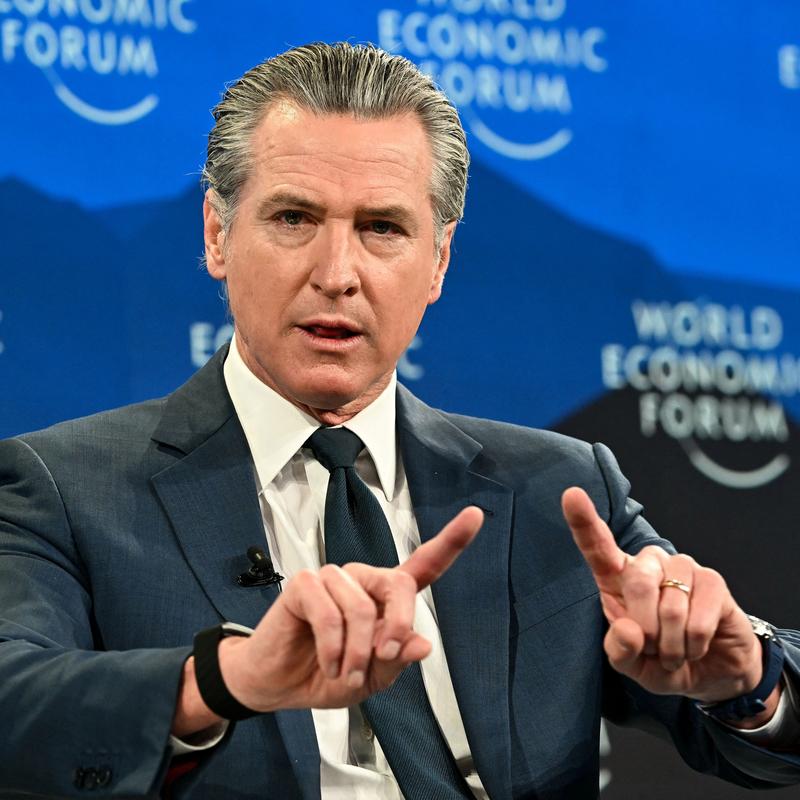
Now, for proponents of the tax, it's a rare chance to tap extreme wealth and shore up finances for needed services without really dinging the finances of the people who get taxed. Opponents, including some of the state's richest residents, not surprisingly, say it's punitive, unconstitutional, and could backfire by pushing billionaires to flee California altogether with their tax dollars. By the way, Governor Gavin Newsom is also against it.
Suzanne Jimenez is chief of staff at SEIU, United Healthcare Workers West, and architect of the proposal. She joins us now to explain how it would work and make the argument that it would work and be a good thing for the state and the world. Ms. Jimenez, welcome to WNYC. Hello from New York.
Suzanne Jimenez: Hi, Brian. Thank you for having me today.
Brian Lehrer: Do you want to introduce yourself a little bit first and say a bit about how SEIU, United Healthcare Workers West, became interested in this?
Suzanne Jimenez: Yes, absolutely. We are a healthcare workers' union. We represent 120,000 healthcare workers across the state. Last year, when H.R. 1, the One Big Beautiful Bill, was signed into law by President Trump, it became very clear that we were going to see significant cuts to our healthcare system. That's not true just for California; it's true across the country.
As we really dug into what that was going to mean for our state, in the next five years, starting in fiscal year 2026, we are going to see anywhere between $20 billion to $30 billion cut from our healthcare system annually. For the next five years, $100 billion from our Medicaid system, called Medi-Cal here in California. That means hospitals, clinics, home care services, nursing home services, all of those services that Californians, patients rely on, are going to see massive cuts.
We are going to see cuts to our health insurance whether you're a small business that pays for insurance for your employees, or you're an individual that just buys on the exchange. All of that combined together, really we are heading towards a collapse of our healthcare system in California if we do nothing.
We looked at how do you generate enough revenue so that we can protect one of our most vital systems in California, our healthcare system, while also not putting this on the backs of working people. That's where the California billionaire tax came from. We really looked at how do we do a meaningful tax that's going to, like I said, bolster our healthcare system here in California.
When we looked at those that have really benefited from California's economy, whether it's our workforce, the innovation economy, everything that this state gives to many of these ultra-wealthy folks, it made sense a one-time 5% tax to our most wealthiest Californians to protect one of our most vital services was the route. We worked with some of the top tax experts and economists in the country to develop this one-time tax that really we hope is going to-- well, we know is going to bolster our healthcare system, but California voters are going to get to vote on it in November.
Brian Lehrer: I'm going to play a clip of Governor Newsom in a minute, saying why he opposes it. First, I want to play a clip of another opponent who says this is essentially soaking the rich and driven by resentment, and that some billionaires are already threatening to leave California if it passes, like David Sacks, who's speaking in this clip, a tech billionaire who's also currently working in the Trump administration.
David Sacks: I've been in California for 30 years. It was painful to leave. I had no problem paying one of the highest taxes in the country. I think it's 13.3%. This is different. This is not a tax. This is an asset seizure.
Brian Lehrer: He argues that it's not a one-time tax, but a first-time tax, because if you do this once, then maybe you'll do it again in another five years after the current funding period that you were just identifying runs out. Obviously, that David Sacks clip raises the prospect of this backfiring.
That is, if the people who already pay so much in tax because they are billionaires leave California in any number, you may wind up with less tax revenue in the state. Address those things.
Suzanne Jimenez: Yes. I think this is honestly a common scare tactic to any wealth tax, that if you do this, you'll continue to see these taxes. This initiative itself was designed in a way so that we can find a solution to an immediate problem. Mr. Sacks talked about living in California or being here for 30 years. I would hope, as someone that's been here in California for 30 years, he'd be concerned about our health care system crumbling, because that's what we're talking about.
Brian Lehrer: Apparently, he didn't enough to keep him in the state. The implication is that he left because of taxes. Why think that others will heed your call, that's a moral call as you're framing it, rather than their self-interest?
Suzanne Jimenez: Honestly, if we look at examples of wealth taxes that have passed all across the country or in different states, there's this common narrative that people are going to leave the state. What has proven to be true is that's not the case. Even in California, if a handful of billionaires decided to relocate, the financial impact to the state would be minimal.
Right now, February 17th, there is no economic incentive for a billionaire to relocate now because the deadline, or at least the cutoff point for this initiative, is anybody that was a resident as of January 1st of this year they'll have to pay the tax in full. If they decided to leave now, they're still responsible for this tax if it passed. I just will say billionaires don't earn as much ordinary income like working folks, teachers, firefighters, healthcare workers, and they don't generally sell their assets.
They're keeping or accumulating their wealth in these in stocks and investments and assets and things like that. They only represent about two and a half percent of our total income in California. Again, I feel like a lot of or what we're hearing from a lot of ultra-wealthy folks, and it's not all of them, it's just a couple folks that have been pushing back, is that this is unfair. We also have heard from billionaires, like the CEO of Nvidia, or Nvidia, who has said he's going to pay it if it gets passed.
We've also heard gubernatorial candidate Tom Steyer say that he's going to vote for this. I think we're seeing both sides. Ultimately, at the end of the day, this narrative that this is too much or they can't pay it, it's just not true. Billionaires are gaining so much wealth, month over month, year over year, a 5% tax is minimal and is not going to hurt their overall wealth. They will still be incredibly wealthy after they pay the 5%.
Brian Lehrer: Is this definitely going to be on the ballot, by the way? Is that determined?
Suzanne Jimenez: Well, we're still collecting signatures. We're currently qualifying it for the ballot. We have until spring to turn in our signatures. That effort is underway. We have thousands of volunteers out there collecting signatures. We're confident we're going to get this qualified and on the ballot in November.
Brian Lehrer: It's a statewide referendum.
Suzanne Jimenez: Yes.
Brian Lehrer: Just to be clear to people not in California, it's not for the legislature to vote on. This is for all the voters of California who want to weigh in, right?
Suzanne Jimenez: Yes, absolutely.
Brian Lehrer: Do we have any Californians listening right now? 212-433-WNYC. Or does anyone else have a question or a comment? 212-433-9692. Call or text. What do you think? Should California impose a one-time 5% tax on billionaires? Is this a smart way to raise revenue, and reduce inequality, and fund basic services? Or does it risk pushing wealth and jobs out of the state? Or any other critique that people may have of it? We'll play Gavin Newsom's critique here in just a sec.
If you live in California, how do you think this would affect you or your community? If you're a business owner, investor, tax expert, what questions, or comments, or stories do you have about how this might actually work? 212-433-WNYC. Call or text 212-433-9692 for Suzanne Jimenez, Chief of Staff at SEIU, United Healthcare Workers West, and an architect. Should I say an architect or the architect of this proposal, Suzanne?
Suzanne Jimenez: I'm part of a team that has put this together.
Brian Lehrer: Now, here's that Gavin Newsom clip. Governor Newsom opposes the proposal. Here is Newsom speaking to the press last month, explaining why.
Governor Newsom: It's a badly drafted effort. It's already had an outsized impact on this state. It does not support our public educators. Does not support our teachers and counselors, our librarians. It doesn't support our first responders and firefighters. It doesn't support the general fund.
Brian Lehrer: Your reaction, Suzanne?
Suzanne Jimenez: I think that we're very disappointed in Newsom's outward opposition to this. What I will say is that at no point in that comment or any of his public comments has he talked about what's going to happen when $20 to $30 billion is cut from our health care system. We are going to see hospitals close. We are already starting to see clinics, our community clinics that see our most vulnerable populations in the state, start to close. Last week in LA and Los Angeles, we just heard of 17 clinics that are going to be closing due to federal cuts. We're also going to see cuts to home care services, nursing home services.
What the governor hasn't talked about is what is his solution. He has been so focused on talking to the national media about this, but he has proposed no solution to the problem. How I see it is he's waiting for the next person to come in and let them deal with it. For me, as I see it in this campaign and health care workers, we're focused on protecting the 39 million Californians. It seems like Governor Newsom is focused on protecting just about 200 or so ultra-wealthy people in the state. We are coming forward with a true solution to a real problem that's happening right now in our state. The governor, we just haven't seen the leadership from him that we need to see.
Brian Lehrer: Are you surprised that some of the opposition is coming from leading Democrats like Governor Newsom? Here's one more. The Democratic mayor of San Jose speaking to CBS News Bay Area station about why he opposes this billionaire tax. This aired on January 9th.
Matt Mahan: We will actually increasingly have to rely on middle-class and working families to fill that gap. That's who will lose here. The people who will benefit are the taxpayers of Texas, and Arizona, and Florida, who will now have more billionaires relocating to their state and sharing in the burden of paying for their public services and their infrastructure.
Brian Lehrer: Matt Mahan, Democratic mayor of San Jose, who has also entered the race for governor, and he's known as a critic of Gavin Newsom and a moderate in the traditional measure of Democrats. Those are those are two Democrats. How do you explain that from within the party that you might think might have its leaders lining up behind you?
Suzanne Jimenez: I think there are many Democrats that support this. We have folks all across the state, other mayors of larger cities in San Jose, that are supporting this because they know that if we do not do something now, they are going to see hospitals in their cities close. They are going to see clinics in their cities close. I know that the mayor of San Jose and his campaign is primarily funded by a lot of these ultra-wealthy folks.
I think this is going to be a turning point for folks in California about are we-- for us, especially for gubernatorial candidates, are we looking at how do we look at the 39 million people that access health care in California, or are we going to continue to protect just the ultra-wealthy? I think in the coming days on this campaign for folks here in California, we're going to be able to announce some huge endorsements.
We have Senator Sanders, who's coming to LA tomorrow to kick off our campaign. We have Congress member Ro Khanna from the same district that Matt Mahan is from, who endorses the initiative. I think that we're going to start seeing Democrats all across the state support this, but not just Democrats. I would say Californians all across the state, because we need to make sure that our health care system is intact for us to continue here and provide the services for Californians.
Brian Lehrer: Let's take a phone call from Gabriel in Queens, but originally from California. Gabriel, you're on WNYC. Hello.
Gabriel: Hello. How are you doing, Brian? I'm calling to say-- I think I am calling in support of the billionaires tax. As somebody who's from California and worked in the film industry, I've seen firsthand how competing on lower taxes for the wealthy is a race to the bottom. We saw that with tax credits, which are basically a tax break for film production. Georgia offered the biggest tax breaks.
Production went there, and then eventually production just went abroad anyways, where there's even lower taxes. I feel like when we compete on lower taxes for the wealthy, there will always be a state or part of the world that can outcompete you. At the end of the day, we should just put our taxes where we think are equitable and reasonable.
Brian Lehrer: Gabriel, thank you very much. Do you want to comment on that race to the bottom idea? I've asked on this show in more of a local context, let's say New York and New Jersey politicians, whether they would agree to a non-aggression pact. No race to the bottom by lowering taxes on corporations or wealthy individuals to attract them from other cities or towns in the region. Generally, they say no, no such pact. These politicians, they want to have that option. With that being the reality, the wealthiest corporations and individuals have everyone else over a barrel, is one way to look at it. That's what Gabriel is raising. What do you think about the whole race to the bottom issue? Is there any way around it?
Suzanne Jimenez: I think this is exactly why we have citizen-led initiatives. This is the reason why we're going this route, because our legislature, our governor, hasn't come up with a viable solution to solve this problem. I think in this moment right now, where we're seeing billionaires, the ultra-wealthy getting incredible tax cuts, this is a federal problem. This is not just a California problem. We're seeing California billionaires increase their wealth. If we look at just the 200 or so billionaires in California over the last three years, their wealth has increased by 158%.
The idea that we shouldn't be looking to our most fortunate individuals in California is to pay a barely noticeable 5% tax is crazy to us. I think that it shouldn't be on the shoulders of working people. That is who ends up having to pay most of these taxes, whether it's a sales tax or any other type of income tax in our state. For the immediate, for this immediate crisis that we have on our hands in California with our health care system, we look to our most fortunate folks to pay, again, a common-sense one-time tax.
Brian Lehrer: Listener writes, "Has your union, SEIU, been able to create some statistics comparing the amounts of billionaires, public assets, and investments to the relatively small sums needed for California's health care systems?" Listener writes, "That was a very effective message when Jeff Bezos spent over $40 million on a movie that could have funded The Washington Post staff he laid off." I don't know if it was very effective because he certainly didn't rescind those layoffs.
Of course, some people will say the California health care system does not demand relatively small sums, as the listener writes, but is getting increasingly expensive. I think so many states are dealing with ballooning Medicaid costs, especially. What do you say to that listener about creating comparative statistics that might help make your argument?
Suzanne Jimenez: Yes, we have them. When we look at just the 200 or so billionaires in the state, they accumulate $2 trillion in wealth just alone, just them, those 200 here in the state. That's going to be part of our campaign is talking to California voters about this group of folks can pay a one-time 5% barely noticeable tax to bolster up our health care system. Again, this is all happening.
This crisis is happening because the federal government made the decision to cut health care and to give not just billionaires, but other ultra-wealthy folks the biggest cuts in our country's history. I think that's going to be part of the story, the narrative we're going to have to tell to California voters throughout this campaign, and remind them that in terms of their wealth, this is very minimal, and honestly, probably it's less than a percent of their wealth.
Brian Lehrer: Almost as a response to the previous text, this one says, "Health costs go up every year. You need to fix the system. This is a stopgap measure, but needs to be coupled with systems that provide affordable health care." Do you have anything like that? Your union is a healthcare workers' union. You know everything's going up and up and up in the entire sector. Do you have any cost containment measures that go along with it?
Suzanne Jimenez: We have supported different cost containment measures in the state, but we would definitely be open to looking at policies on how we bring down costs. I think we were a big proponent of when the ACA was implemented, obviously across the country, but in the state specifically. We'd love to look at those kinds of measures, but right now, what we're facing are these immediate cuts. We need to backfill those cuts, but we are definitely interested in how do we bring costs down in healthcare. That's been a big priority for our union for several years.
Brian Lehrer: Craig in Morganville, New Jersey, with some pushback, I think. Craig, you're on WNYC. Hello.
Craig: How you doing? You guys got to stop demonizing the wealthy, okay? You got to figure out how to work with them so that they can contribute money to hospitals, provide better jobs, make the paychecks higher for them so everyone can afford everything. They are so wealthy that they will have no problem relocating their businesses. They won't care. On a side note, it's not the tax rate that they're doing it. It's the loopholes and the rules that are in the tax code. Have you guys actually read it? By the way, also, I'd like to see some of you politicians who have your own healthcare that you guys are not affected. Nobody fails to mention that. You can't keep demonizing the rich. You got to find a way to work with them. There's got to be other ways to do it. Thank you.
Brian Lehrer: Thank you, Craig. Of course, our guest is not a politician, but a union leader, a healthcare workers' union leader, just for accuracy's sake. What about his basic argument? Close the loopholes that let the wealthy get away with tax avoidance so much, don't demonize them as a group of people, might be more politically effective. What do you say?
Suzanne Jimenez: First, I would say, I don't think we're demonizing them at all. They pay a lower percentage than everyday folks. Teachers, firefighters, healthcare workers get taxed at a higher rate than any billionaire in the state. They, I think, in terms of the loopholes and the question about closing those, we're foreclosing those loopholes. Right now, we have an immediate crisis that we're trying to solve for, and that's what the California billionaire tax is. We have been open to working with our legislature, our governor.
I think there is some point to what he is saying, that a lot of elected officials don't want to have to take on that issue. We'd support it. In this moment right now, what this measure is about is we are heading towards a crisis in our healthcare system. We've got to generate revenue so that we don't see a collapse of it and see hospitals close.
Brian Lehrer: A few listeners are asking, "Why a wealth tax rather than an income tax that's ongoing?"
Suzanne Jimenez: That's a great question. Billionaires don't generate income like most people do. They hold their wealth largely in assets like stocks and investment that often go untaxed because of the loopholes that the previous caller talked about. We really looked at how do we generate essentially a dollar-for-dollar solution for this crisis that we have. That's why we looked at accumulated wealth and not income tax. You just can't generate the amount of revenue that you need to fill these holes.
Brian Lehrer: One more call.
Suzanne Jimenez: Sure.
Brian Lehrer: Here's Rachel in Rockland County, New York, but who worked in an LA County hospital. Rachel, you are on WNYC. Hello.
Rachel: Yes, thank you. I'm calling because I worked at Harbor-UCLA, which is one of the LA County hospitals. I want to know, with 17 clinics closing already and just Harbor and LA County left, how much can those hospitals absorb when they are already overburdened? That's why I'm in support of SEIU and what they're doing. I'll take my question off the air, but I'm leaving this to her because I know that they are so overburdened. Thank you.
Brian Lehrer: Thank you. Suzanne?
Suzanne Jimenez: That's absolutely why we're moving this initiative because we are going to see more of that happening. As you see clinics and hospitals and even services getting cut back, we are going to start seeing what the impact of that is. Whether it's someone not being able to access their general provider, and hopefully this doesn't happen, but that someone doesn't have access to an ER because the wait time is too long, or because they have to drive further. That's exactly what we're trying to prevent here by raising $100 billion from just 200 individuals here in California with a barely noticeable tax.
Brian Lehrer: Let's see, I'm on my calculator. One billion times 0.05 equals $50 million. Did I do that right? Is that the 5% tax?
Suzanne Jimenez: That's right.
Brian Lehrer: If you have exactly $1 billion in assets, $50 million.
Suzanne Jimenez: Yes. Then that billionaire will make up that $50 million in six months because that's how fast their wealth generates.
Brian Lehrer: I guess that's going to be the question as we start to run out of time around this, how many billionaires will really depart the state? More depleting the tax base than adding to an issue that people are raising. If they look at it and say $50 million, and that's if they have just $1 billion. If they have $2 billion, it's $100 million that this one-time tax would be. They say, "That's outrageous. I'm going to move--" if they have the ability to move, if they don't have the family ties, whatever. "Take my business and my life elsewhere." Versus, they're still going to have basically a billion dollars and plenty to live on. I guess that's going to be the dilemma that some of the billionaires themselves would face. You think?
Suzanne Jimenez: Yes. They could also see as their part in protecting the healthcare system for 39 million Californians. Again, you have many of these billionaires generated this incredible wealth in California because of all of our-- not just our economy, but the workforce. They can give a little bit back to California to make sure that we bolster our healthcare system. Honestly, the overwhelming majority of those billionaires have stayed in California; it's just a myth that they're all going to leave. At the end of the day, what we're trying to do here is solve for a crisis. Our healthcare system is on the verge of collapsing if we do nothing.
Brian Lehrer: Suzanne Jimenez, Chief of Staff at SEIU United Healthcare Workers West and an architect of the proposal for a one-time 5% wealth tax on billionaires in the state of California. I guess we're going to learn by April whether they get enough signatures to get it on the November ballot. Suzanne, thanks for giving us sometime today and laying out your case.
Suzanne Jimenez: Yes, thank you so much for having me.
[00:28:11] [END OF AUDIO]
Copyright © 2026 New York Public Radio. All rights reserved. Visit our website terms of use at www.wnyc.org for further information.
New York Public Radio transcripts are created on a rush deadline, often by contractors. This text may not be in its final form and may be updated or revised in the future. Accuracy and availability may vary. The authoritative record of New York Public Radio’s programming is the audio record.
