
A New Plan For Affordable Housing at Atlantic Yards
Amina Serna: It's The Brian Lehrer Show on WNYC. I'm producer Amina Serna, filling in for Brian today. Good morning again, everyone. Now we turn to Brooklyn, where a decades-old promise to build affordable housing is getting yet another makeover. If you're looking for an example of the City's failure to deliver on affordable housing, look no further than Atlantic Yards.
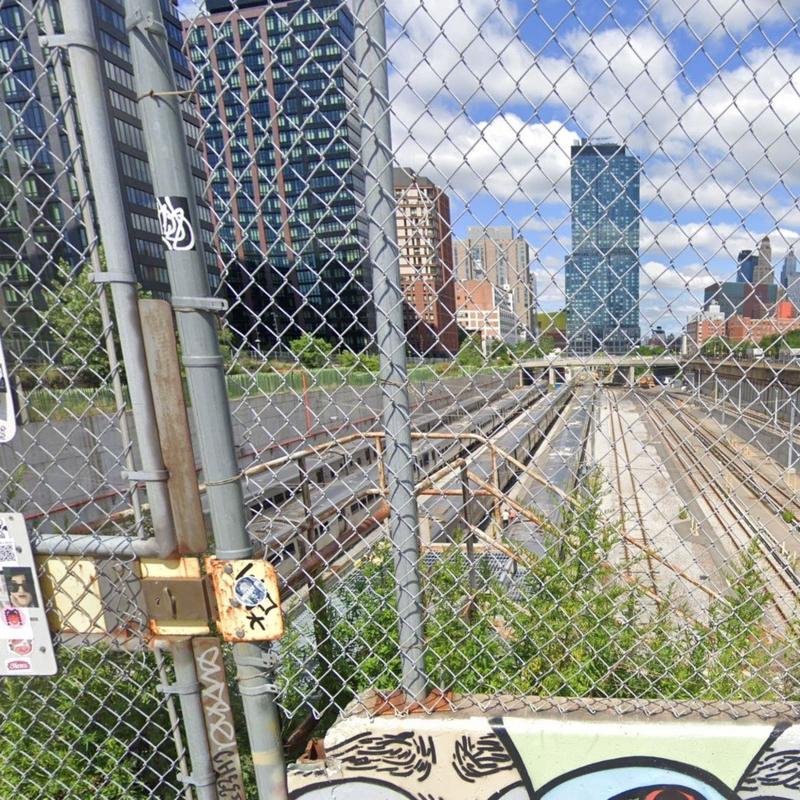
Back in 2003, developers promised nearly 900 units of affordable housing by May of 2025, yet the rail yard between Atlantic Avenue and Pacific Street remains empty. In October, a new team of developers and the State's Economic Development Authority announced a new proposal meant to fulfill the promises of decades past, and are looking for community input once again.
While the new proposal is promising 3,600 more apartments than the original plan, they've also raised the income levels for apartments considered affordable. With me now to talk about the details of the new proposal and explain why this project has been breaking promises for 20 years is WNYC and Gothamist housing reporter David Brand. Hi, David.
David Brand: Hey, Amina.
Amina Serna: All right, start us off with what's in the new proposal. What did developers present to the public on Monday night?
David Brand: This is Atlantic Yards, Take 3, Take 4. I don't know a lot. There's been a lot of iterations of this plan over the past 20-plus years, but this latest version from this new development team that took over officially in October calls for a total of 9,000 units on this site. Right now, there's about 3,200. They want to add around 6,000 more apartments. They're going to do that in taller towers, including two proposed towers on the lot of lots that catty-corner to the Barclays Center, where there's right now a PC Richards & Sons and an old abandoned Modell's that's become a basketball training facility.
We could maybe expect to see two high rises there, and they're going to make a percentage of those units affordable. It's not quite clear how many yet, but they are talking about the income levels for the affordable housing in these new buildings being higher than the original proposal, as you mentioned. They're thinking like up to $147,000 for an individual or $200,000 for a family of 3, so not for low-income New Yorkers, more for kind of like middle-, moderate-income people.
Amina Serna: Before we get into some more details, can you give us the backstory of the Atlantic Yards development project? How did we get to this point over 20 years?
David Brand: Well, I think we could confidently say that this shows that things are often a lot more expensive and more complicated than initial plans would suggest. Back in 2003, the developer, Bruce Ratner, and his company, Ratner Forest City, introduced this plan with backing from the state and the City. The state's Empire State Development Economic development arm, allowed them to bypass the typical land use review process through the City to accomplish this.
They would build more than a dozen buildings, apartments, and condos around this centerpiece, Barclays Center. Fast forward 22 years, the Barclays Center is there, about half of the buildings are there, but half of them are still missing. We mentioned this has gone through different iterations. Ratner got out in 2014, sold it to another China-based company called Greenland.
Greenland later went bankrupt. That's where we are now and why a lot of this hasn't been completed. Found out it was a lot more expensive, mostly when it comes to building a platform over the rail yards there, between Atlantic Avenue and Pacific Street. 22 years later, there's still an open rail yard, no platform developed there, and that's why we don't have the housing.
Amina Serna: Listeners, do we have any veterans of the Atlantic Yards battles of the early aughts tuning in, any new residents of the downtown Brooklyn area? The state's Economic Development Authority and the developers are looking for community feedback on this proposal. We'll open up the lines for your feedback here. Call or text us at 212-433-WNYC. That's 212-433-9692. David, take us back in time to that 2014 agreement. What exactly did it require the developers to do?
David Brand: Yes. Right before Ratner got out of the deal and sold it to this company, Greenland, he had reached a binding legal agreement with community groups in the area called BrooklynSpeaks. This was also signed by the state, where everyone was frustrated. It had already been 11 years at that point, and nearly 900 units of affordable housing were still missing, specifically because they were going to be built on this platform.
They reached this legal agreement where they said, "Okay, by May 2025, the end of May 2025, we will finish these apartments, or we will have to pay $2,000 a month per missing unit." That date came and went, and not only had they not completed the apartments, they hadn't even started, yet the state's Empire State Development Economic Development arm agreed to waive the fines.
Seven or eight months have passed without collecting those fines, those penalties from Greenland. The new development team, as kind of a sign of good faith, has said, "We're going to contribute up to $12 million to this to make up for those penalties." That money is supposed to go to the City's housing agency to be set aside for other affordable housing projects in surrounding neighborhoods. So far, they've only submitted a fraction of that. We will see if they actually make the full $12-million payment over the next couple of years.
Amina Serna: A listener texts, "This is not affordable housing for most New Yorkers." I know at the beginning of the segment, you were starting to get into it, but residents were concerned about what's deemed affordable in the original Atlantic Yards battles, as you call them. Can you explain the controversy around the term "affordable" in this housing battle?
David Brand: Yes, well, affordable means that rents are capped for people making certain amounts of money. That could be very low-income people. People around the federal poverty line are considered pretty low-income. It could also mean housing for people considered middle-income. I think if you hear people making close to $150,000, you would think that's beyond middle income. That's pretty significant, but maybe not so here in New York City.
The original plan had a mix of income levels up to pretty high incomes for tenants. The housing reserve for the lowest-income New Yorkers was supposed to be built in the apartments on top of the rail yard. While other buildings were constructed, about 1,300 affordable units were constructed. A lot of the lowest-income units never were constructed. Some of the controversy here is that people involved in that 2014 agreement say, "Again, you're promising affordable housing, but it's not the housing that's affordable to the people most in need, who are the lowest-income New Yorkers who are getting displaced from the City."
Amina Serna: This wasn't just developers making a promise, though. The community had to sue to get these commitments in writing. What was at stake?
David Brand: Well, right. In this agreement that they reached, they sued. They had then threatened to sue in the future if the apartment promises were not fulfilled. As part of the agreement, they said that they would withhold future lawsuits until May 2025, when the apartments were supposed to be built, and they never were. That's another reason a lot of community residents and a lot of community groups in Brooklyn are upset.
They say, "Look, we held our fire, and you didn't deliver. Now we're starting all over again with different affordability levels, different plans." Step back and say people are also potentially optimistic that a new proposal has more apartments, more buildings. The development team, maybe, is being a little more straight up and saying, "This is expensive. We can't do this without more subsidy from the City and state. We need more money to make this happen." Again, everyone's just skeptical. Can you blame them after two decades of broken promises, right up until not collecting penalties from a developer that didn't deliver on a legal agreement?
Amina Serna: We have a caller here who founded BrooklynSpeaks, and according to the website, BrooklynSpeaks is an initiative of civic associations, community-based organizations, and advocacy groups concerned about the future of development at the Atlantic Yards site. Assemblymember Jo Anne Simon, you're on WNYC. Hi.
Assemblymember Jo Anne Simon: Hi. Good morning, Amina.
Amina Serna: Good morning. Thank you so much for calling in. What would you like to say?
Assemblymember Jo Anne Simon: Well, I did want to say that we're pleased that there's something happening here at this site after years of clear inability to perform, but I think David mentions a number of very important issues, and that is the community really wants to see, A, the site built, but also the affordable units built. There are deeply affordable units. There's over 1,000 of them that are due and owing under the original agreement and under the original plan, right?
Those have not been delivered. One of the concerns people have is whether or not we will have a commensurate number of really affordable units. We believe, in fact, that if they're building more, they ought to increase the percentage of those more deeply affordable units.
Amina Serna: Thank you so much for your call. David, did you come across some of BrooklynSpeaks and their policy platforms and what they're proposing, or how do you want to weigh in on the call?
David Brand: Yes, well, BrooklynSpeaks is the, I guess, group of community leaders and advocates who had accomplished that 2014 legal agreement. Assemblymember Simon was part of that then, and she's still very active and engaged. She was just at the most recent community meeting, talking with its new development team earlier this month, and she made some of those same points.
She said she doesn't want to be left with two towers on that site where there's currently Modell's and PC Richards & Sons with higher affordability levels, and still again not see those apartments built on top of the rail yard on top of a platform, because that's kind of secondary now to the effort to build on that site. Makes sense. It's expensive to build over the rail yard, as we've seen.
It's more financially feasible to build on solid ground. This is a point that the developers made. They don't have to build a platform to build on the Site of the Modell's, but people are still concerned that, again, that stuff gets prioritized, but what about this affordable housing?
Amina Serna: As you're mentioning, the previous developers and even the new ones have cited challenges with building over the active rail yards as a major obstacle to completing this project. Have the new developers found a way to overcome it?
David Brand: Not yet, I don't think. The former company, Greenland, had started to do some of the work to kind of shore up foundations there, and they spent hundreds of millions of dollars to do it, but they still weren't able to accomplish it, and then interest rates rose; other costs have risen, so it makes it even more financially complicated. What the new development team has said, a lot of these plans are still early stages, so even unit counts and affordability levels are still in flux, but they said they want to build these other towers on solid ground, and then that will give them more money to be able to dedicate to building the platform. They also want to see what's available from the City and state in terms of subsidies or low-interest financing to make it possible, but I think a lot of this is still being worked out.
Amina Serna: If you're just joining us, my guest is WNYC and Gothamist housing reporter David Brand. We're talking about some new movement on a plan to build housing in the Atlantic Yards neighborhood near Barclays Center in Brooklyn, and why those plans are now seeing some movement, new movement after being stalled for many years. We can take a few more of your questions or comments at 212-433-WNYC. That's 212-433-9692. Call or text. Let's go to another call. John in Brooklyn, you're on WNYC. Hi, John.
John: Oh, hi. Thanks for taking my call. I appreciate the comments that people are making about this. The point I wanted to make is based on being a long-term Brooklyn resident. In the early 2000s, Bill de Blasio was running for, I believe, public advocate, and before he ran for mayor. I ran into him in Grand Army Plaza and said, "Well, what's your position on the Atlantic Yards?"
He said, "Well, I support it because they're going to build affordable housing." I said, "Yes, right. Okay, I understand that." My point is that the politicians let this happen. The review of, let's say, the platform, building on the platform over the train tracks, that should've been evaluated, and they should've come up with a feasibility to do that, but the larger point is that every mayor in New York City's history has been in bed with the real estate industry, and they have not been able to get elected without their support.
The people have to be aware of that. Thank goodness we have Mamdani coming in. No one can fool him about the power of real estate, but still, the people overall have to be aware of the level. I'm not saying it's corruption. It's like they just make a deal. They get contributions from real estate, and it can't go on because we need housing for regular people, not just millionaires. I live in Park Slope, and the apartments around here are going for $2 million. Houses are going for $6, $8, and $12 million. It's got to stop. Thank you for [crosstalk]
Amina Serna: John, thank you so much for your call. David, what was coming up for you? You were nodding as John was speaking.
David Brand: Well, I think John makes a really important point here, because the saga here isn't just about developers failing to deliver on affordable housing and making pledges that they ultimately didn't keep; it also is about accountability. You look back at that 2014 agreement, a legally binding agreement to complete these units. It became clear years ago that these units weren't going to be constructed, but the Empire State Development kind of almost pretended like, "Yes, we might impose these penalties for this failure."
Then, at the very end, right before the deadline, we got the scoop that, "Oh, they're actually not going to impose these penalties." I talked with people involved in BrooklynSpeaks, other community leaders at the time, and the quote that really stands out to me is from Michelle de la Uz. She's Director of Brooklyn's Fifth Avenue Committee. She was like, "This is what makes people cynical about government, because these promises weren't upheld, and there was really no accountability for the failure."
I think, to John's point, he's saying, "Look at politicians. Same old politicians in bed with real estate. They don't hold their feet to the fire. You don't get the promises that were made." Going back even to 2003, there was a notion among a lot of residents there that a lot of these promises would never be made and that they were just kind of being dangled to make it more kind of politically palatable and say, "No, we're going to build this, and we're going to include affordable housing," but then they didn't.
I would say, also, the landscape has shifted. There's more of an acknowledgement that we need a lot of housing at all different income levels. It's encouraging that this project is going to have even more apartments, but then it comes back to people have lost faith in this project, and they're going to have to see some actual results to believe again.
Amina Serna: What happened to the original developer, Greenland USA, for this project? You report, they owed $1.75 million in monthly penalties for missing the deadline. Did they ever pay any of that?
David Brand: No, they didn't. They took over the project from Ratner in 2014, and they were still bound to the same agreement. They revised some of the plans, but ultimately, bound by the original terms, and they went bankrupt. They couldn't pay back their investors. That meant they couldn't complete the housing, couldn't complete the platform, yet they are still involved in this project.
They still retain ownership of that lot that's catty-corner to Barclays Center with Modell's and PC Richards and Son. They are still involved, and that came up at a community meeting recently. The new developers are called LCOR and Cirrus. Their principals said, well, they are still involved, but they may never make money from this. They will be the last company that gets any profits that we see from these projects. We'll see about that.
Amina Serna: Can you talk about this process of building affordable housing? How does it work, and what's the role of Empire State Development? Why does the state control land use review instead of the City?
David Brand: Sure, it's complicated. In New York City, most new development projects have to go through a land use process to rezone them for larger development or bigger buildings. If they accomplish that, one of the conditions is that they have to set aside about a quarter of the new apartments, make them income-restricted affordable housing for lower- or middle-income renters.
This project, because it was so complicated, I think such a political minefield went through a separate process called the General Project Plan, where Empire State Development, the state agency, allows them to circumvent the City's typical land use review process. The community doesn't have as much of a say in the project because, in contrast, I guess, to the City land use review process, there's a lot of milestones that developers and the City have to hit.
You need opinion from the community board, from a borough president, from the community at public hearings, and ultimately from the City Council. This project skirted that. The binding agreement that they reached was that legal agreement to create the affordable housing.
Amina Serna: As we run out of time, I want to ask you, why has Atlantic Yards become a cautionary tale for other New York City neighborhoods, and what does this saga reveal about developing affordable housing in the City?
David Brand: Well, I think it's become kind of a cautionary tale around these kinds of state-led General Project Plan projects. Most recently, we're seeing that with the Brooklyn Marine Terminal plan, and that's a proposal to develop thousands of new apartments in buildings along the waterfront just south of Brooklyn Bridge Park. Again, it's circumventing the City's traditional land use review process. People are skeptical, and they say, "Well, look at what happens in Atlantic Yards." That's kind of the ultimate result of a failure like this is that it kind of really affects People's confidence in future projects.
Amina Serna: What comes next for this project? When will we see the construction begin if this proposal is adopted by the community?
David Brand: Well, it'll still be a few years before construction begins. Right now, they're doing a series of public hearings. There was just one on Monday at the Barclays Center. They were talking about some of the retail needs and also open space needs for the area. There's going to be a few more and then they will, I think, finalize some of the actual plans and release some of those and maybe find out what money is available from the City and state, and then we'll get a clearer picture of how many units there will be, how big the buildings will be, and just how affordable the apartments are going to be.
Amina Serna: More to be seen. We'll have to leave it there for now with WNYC and Gothamist housing reporter David Brand. David, thanks for the updates.
David Brand: Thanks for having me.
Copyright © 2025 New York Public Radio. All rights reserved. Visit our website terms of use at www.wnyc.org for further information.
New York Public Radio transcripts are created on a rush deadline, often by contractors. This text may not be in its final form and may be updated or revised in the future. Accuracy and availability may vary. The authoritative record of New York Public Radio’s programming is the audio record.