
A Democratic Manifesto
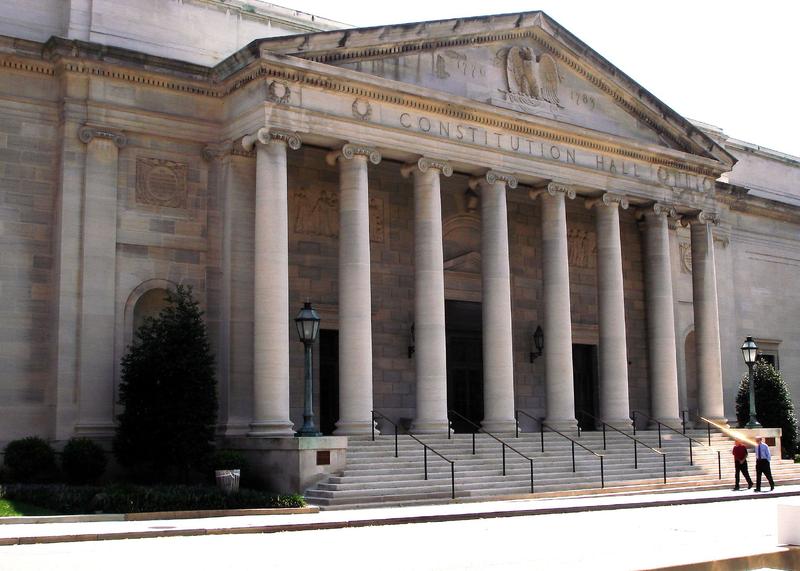
( Edna Barney/Wikimedia Commons )
Title: A Democratic Manifesto
[MUSIC]
Brian: It's The Brian Lehrer Show on WNYC. Good morning again, everyone. Joyce Vance is with us. Some of you see her on TV as an MSNBC legal analyst. Some of you may follow her very active Substack called Civil Discourse, which is largely about democracy and Trump era court cases. Joyce Vance is from Alabama, and during the Obama year, she was the US attorney in northern Alabama, which gives her a perspective many people on the coasts don't have. She is a law professor at the University of Alabama. They don't just play football there. Now Joyce Vance has a book that may surprise you for how optimistic it is, called Giving Up Is Unforgivable: A Manual for Keeping Democracy. Joyce, thanks so much for coming on. Welcome to WNYC.
Joyce: Thanks for having me. Roll Tide.
Brian: I knew you'd bring it back to football somehow with the university [unintelligible 00:01:04].
Joyce: [laughs]
Brian: Let's start with the big idea in your book. Then we'll get to your take on some of the news stories you've been writing about, like why you think No Kings Day mattered, President Trump's revenge prosecutions, your piece called When they Bukele the Courts, and the ICE raids in New York and elsewhere, which actually prompted you to write the question, "Are we the Nazis now? Yikes." We'll see how much of that we can cover. First, your book. Chapter 1 is called "Don't Be the Frog." Who's being what kind of frog?
Joyce: This is the well-used metaphor that describes how people fail to react to dramatic changes as long as they're applied incrementally. During the first Trump administration, we were the frogs in the pot. The temperature was turned up so slowly that for many people, perhaps not you and me and many of your listeners, but for many of our fellow citizens, the change was so gradual that they didn't begin to react to it until it was almost too late.
Fortunately, Americans changed course and put Trump out of office at the end of his first term. The issue we face now is, can we respond in real time, or because change sometimes is slow and incremental, we're, of course, living through a moment where it's less gradual. When those changes are slower, do people simply let them become the new normal without taking action?
Brian: You wrote that the rule of law has been bent, but not broken. Where do you think the country is right now on the scale between rule of law and autocracy, or however you want to frame it?
Joyce: I'm not a fan of sugarcoating where we are, and I think we're in a very dangerous position. I don't think we're in a position where we can't see what's broken and fix it. It's a moment where Americans need to look very clearly at what we're facing because this is a president who is trending toward a much more autocratic style of government, where instead of honoring the original structure set up by the founding fathers with three co-equal branches of government that act as checks and balances, we're now in an era of a nearly all-powerful presidency with a president who's trying to make Congress and the courts less relevant and courts and the Congress that in many cases seem far too willing to go along with that.
Brian: You wrote that it's no longer necessary for a "storm-the-palace coup" moment for a dictator to take over a democracy. "A would-be autocrat can come into power after winning an election, commandeering institutions cloaked in an aura of legality," you write. I think this idea of cloaked in an aura of legality is a very important concept for you because I've seen you use it elsewhere. Yes?
Joyce: Yes, it is very important because the modern-day approach to controlling a country is not to go in and storm the palace, not to engage in a military takeover. We see that in its most extreme form in Putin's Russia, where he still holds elections so he can claim to be a duly elected leader. Of course, he has done away with most of his opposition.
Brian: Those are fake elections in Russia. You're not saying that we have that here at this point, right?
Joyce: No, we don't, and that's the important point, Brian, being aware so that we can fight to make sure that when we go to the polls in 2026, and even when folks go to the polls next month in some state and local elections in this country, that we're still holding free and fair elections, where American citizens have the ability to exercise their right. Look, we are in a moment where there's an effort to make inroads into those free and fair elections, whether that's this push to require proof of citizenship before people can register, or whether that's efforts at intimidating voters when they're at the polls. This is now a new America where we have to be very aware of both our rights and the efforts to make inroads into them so we'll be able to vote in record numbers.
Brian: Now, the review of your book in Kirkus Reviews, which I see you've sent to your newsletter readers, says the book is sometimes relentlessly optimistic. Given all that you've just laid out, how much would you describe the book or yourself as relentlessly optimistic?
Joyce: I am relentlessly optimistic because I'm a student of legal history in this country. If we just take a snapshot of the current moment, there would be very little reason to be optimistic. If we're willing to look at the longer trajectory of American history and to understand that the country has faced moments before where democracy has seemed to hang in the balance, or at least important aspects of it, then I think we can develop our understanding of how our institutions can be nimble and can reform themselves in a critical moment.
Like the history following the Civil War, where it was ultimately Congress that stepped up and passed new amendments to the Constitution that guaranteed citizenship and rights to Black people. That's certainly a seminal moment in our country's history where democracy stood in the balance and the institutions were up to the challenge. The lesson of that history, though, is that it's up to American citizens, it's up to the public, which in many ways is a fourth foundational institution of our democracy, to understand the importance of the moment, to support the institutions, if not the people occupying them that aren't doing their jobs, and to demand that the institutions do better so that we can move forward as a country.
Brian: I'm going to ask you how in just a second, but I also want to invite our listeners in. Listeners, for anybody who follows Joyce Vance on television or her Substack and has always wanted to ask her something, now's your chance, or anything relevant to her book, which is just out, Giving Up Is Unforgivable: A Manual for Keeping Democracy, 212-433-WNYC, call or text 212-433-9692.
I want to focus some questions on chapter 6 of your book, which you labeled as the most important chapter, called "We Are the Cavalry." You write, "The most important piece of knowledge to carry with you is that you are not powerless." For many listeners who may be feeling powerless these days, assuming they're opposed to what's going on, how are they not powerless?
Joyce: I draw much of my strength in this regard from the lessons of the civil rights movement and foot soldiers, particularly in Alabama, who were relentlessly denied their right to vote and who found ways from a position of apparent powerless to fight back. I think the first lesson that we can learn from the civil rights movement is you don't have to fight these battles alone, and it's important to fight in community. I've spoken with a lot of people on my book tour who've joined organizations like the League of Women Voters, which is, of course, open to men as well as women, and have found the opportunity there to work on some aspect of the right to vote that's important to them.
I've talked to other people who've signed up to be poll workers or poll watchers, and I think the reality is, look, we all know no one would fight so hard to take away your right to vote unless it really mattered, unless it was really powerful. Finding these opportunities to protect the right to vote can be pivotal, but that may not work for everybody. You may not want to go protest, you may not want to work in a voting place. What you may want to do is participate through the arts.
You may want to go out and write songs or make artwork that people can use for inspiration. Many people are inspired through literature or through films. I think the important thing for us to understand is support for democracy comes in a lot of different flavors. There is room for each of us. Fortunately, we live in a world with the Internet, which makes it awfully easy to find a place that you can slot yourself in. That's, I think, the challenge for all of us to find our own particular place in these next months.
Brian: Listener question and a text message on election integrity. It says, "A Republican toady bought Dominion Voting," the voting machine company, "and Cleta Mitchell is in charge of Election Integrity." I think she was a lawyer in the Trump election denial era post-2020. I guess that era is still going on. How would you respond to that listener?
Joyce: These are important concerns. Cleta Mitchell was deeply involved in the efforts to overturn the 2020 election. We need to be on guard, and we have mechanisms for being on guard because we don't hold one national election in this country. We hold 50 state elections. It's at the state level that we need to make sure that we, as citizens, are doing due diligence. If you're in a red state like I am in Alabama, that might mean staying in tune with what your secretary of state is doing in regards to the next election. What moves are going on?
Elections are very local, and we have the ability to influence choices about things like voting machines in this era, where there are now some additional concerns in that regard, but it's our friends and our neighbors who are running these elections, who are handing out ballots, who are overseeing the count. We have every reason to have confidence in the integrity of these elections. We need to push back against narratives, many of which come out of the White House, that say that we can no longer trust our elections. That's the dangerous narrative. The work that we do is to maintain that integrity by reinforcing our local control over them.
Brian: You may have been on hold while we were finishing our previous segment and talking about the Trump Justice Department's announcement the other day that they're going to do election monitoring in Passaic County, New Jersey, in the gubernatorial race there, as well as some elections in California, and particularly around mail-in voting, which the election deniers after 2020 were trying to convince people was a source of a lot of election fraud. I don't know if you've seen that story yet, but I'm just curious if you have, if you have a reaction to it, if there's any particular source of worry that you have on that, because I don't even know how they monitor mail-in ballots.
Joyce: That's a really good question. DOJ has a long-term history of monitoring elections where there are concerns about suppression of voting rights. That's one of the functions DOJ plays. It has no impact on the outcome of elections, or at least it's not supposed to, and that's been the institutional history there. Now we have to ask questions about why they would be sending poll watchers into areas where the traditional concerns don't exist, and whether this will become a form of voter intimidation in and of itself. I think it bears watching this go round, certainly because it has the potential to impact the midterm elections.
Look, the best response to efforts to intimidate voters are well-informed citizens. We're seeing outreach efforts from the civil rights community, from, for instance, the Legal Defense Fund, and from other groups that protect Americans' rights to vote so that Americans understand what's going on. If you show up at your polling place and you see, for instance, this deluge of threatening sort of poll watchers, you might be put off unless you understand what's going on. There are federal laws that prohibit certain sorts of activities around polling places, and it'll be up to state and local officials to make sure that no one engages in conduct that violates the rights of voters in that sense.
Brian: One of the most bracing moments of your book for me is when you describe your conversation with your son, a senior in college. While you talked about saving democracy, he said he doesn't believe that in his lifetime the US has ever been a democracy. You wrote that pulled you up short. We definitely have callers to this show. Actually, here's a text right now. "We do not have a democracy. We have a corporate plutocracy." That pulled you up short. What was your reaction after your son said that?
Joyce: It's really bad when your fourth child, your youngest child, schools you in an area where you're supposed to have some expertise. He really did that for me here. We've all struggled with the issue of turnout among younger voters, or why younger voters aren't out marching for democracy, because they, of course, are the people most impacted by the legacy of this administration. I think it's sobering to learn that they don't have the confidence in democracy that my generation has.
Brian: I think the point being, if I can jump in, that he didn't think that it was a democracy before Trump, right? He said to you, "Protests don't work. That's something your generation thinks. I was four when "Occupy Wall Street" happened. Nothing has changed since." Your reaction?
Joyce: That's very much that view, I think, that they don't have the ability to impact future outcomes. I think, look, in some ways, our generation got it wrong. We have an obligation to do everything we can to fix it before we turn the reins over to them. At the same time, though, I think we need to reinvigorate civics education in this country, take it out of the schools and into our homes. My child is my test project. I continue to work with him and talk with him, and the view that I try to share is this. Democracy is imperfect. We are a country that was founded on the original sin of slavery. We excluded women from the political process for decades, but the point is we are aspirational. We are always trying to do better.
The point that I try to make with him is the way this country would look, the future would look if we didn't have that aspiration to perfect our democracy, is a very dark picture of the world that we would live in. When we say no kings, king is a pretty word that we use in place of dictator or autocrat or strongman. I think it's easy to understand that if it's a binary choice between A and B, maybe you think that democracy isn't worth pursuing. If you understand that these are real outcomes on a sliding scale of aspiration, then fighting to perfect democracy as much as possible is what matters.
Brian: On the "No Kings Day" protests, you wrote that you hope your newsletter readers who participated are feeling a sense of pride and accomplishment. What do you think the "No Kings Day" protests might have accomplished? Trump is still doing everything he wants to do.
Joyce: Let me push back on that a little bit. I think Trump is not doing everything that he wants to do. I think that there are constraints that are imposed on this administration when 7 to 8 million Americans take to the streets, and especially when they do something that political pundits have said wasn't possible for many, many election cycles. Candidates are always told to run on the economy, that it's kitchen table issues that impact voters. We're seeing Americans in the street holding placards that say due process.
Americans understand democracy. They understand that it matters and that it's important. When we have rallies and these numbers growing steadily over months, what we see is the development of our political muscle, because ultimately we are the cavalry. It will be up to us to be the final check and ensure that democracy stays in place. I think that this is a development that it's easy to overlook. It's easy for people to say, "That's great." It was one day fantastic. It accomplished nothing. Again, if what you take as a snapshot, I think it was still a tremendous accomplishment. If you view it as building for the future, as developing a force of aware, committed Americans as we head into the midterm elections, it was a tremendous accomplishment.
Brian: On what you described as your relentless optimism for preserving or taking back elements of our democracy, Eric in the West Village is going to voice something that a number of listeners are calling or texting about. Eric, you're on WNYC. Hello.
Eric: Hi, Brian. Thank you. Joyce, I always appreciate your thoughts whenever I hear them. My concern, as Brian alluded to and many others, is a Supreme Court that's not holding up the laws and rules that we thought would help preserve democracy. If you want to look to go full circle at the civil rights demonstrations back in the '60s that led to the Civil Rights Act. Today, now, 60 years on, we're seeing a Supreme Court dismantling the good work that was done. It's very hard to remain optimistic, even though I greatly appreciate your optimism. Any comments on that would be greatly appreciated.
Brian: Thank you, Eric. Joyce?
Joyce: Hey, Eric, I appreciate your comment and the question that's built into it, and I share your concerns. I remember this moment back in 2011 when I was a US attorney. Alabama had passed something called HB 56. It was an anti-immigrant bill, which looks a lot like the policies that we're seeing implemented nationwide right now. A former federal judge who was acting as a lawyer in retirement, UW Clemon, had a parallel civil case to my government case challenging this measure.
I remember that after we lost in the district court, Judge Clemon said something to me that has stuck with me ever since. He was a civil rights lawyer before he went on the federal bench. He said, "In the '60s, we could rely on the courts, and we aren't going to be able to do that anymore. We have to start relying on ourselves. We may have to go back to protesting." He was so far ahead of his time, as he often was, when he made those comments. I believe that that's true and that in many ways, the Supreme Court has disappointed us in this era. They have failed to stand up and do their constitutionally assigned job as acting as a check on this administration.
Now they're hitting a moment where the consequences of their decisions in the criminal immunity case are really coming home to roost. They've given this president almost unhinged power by saying that nothing he does can be the subject of a criminal prosecution, as long as it's an official act. Now we're seeing a series of civil cases where the president is acting beyond what many people believe is his article to authority, and it will be up to the Supreme Court to step in and say there are limitations on the presidency and you've crossed over them. We will see that, for instance, in the tariffs case that will be argued.
I'm still waiting to see whether the Supreme Court will perform its duty there. This goes back to us and to when we vote in 2026 and begin to reset guardrails that will have to do with judges and confirmation in the Senate, thinking carefully about candidates, because we are seeing district judges and judges in courts of appeals who are performing magnificently and are doing everything that we could ask of them. The question is whether or not the Supreme Court will continue to shadow docket those judges or whether we will be able to have a Supreme Court that will honor its obligations again.
Brian: Really interesting about civil suits as a possible way around the immunity from prosecution that the Supreme Court gave the president previously. In our last minute, I'm going to ask you to take me a little deeper and everybody a little deeper into the tariffs case that you mentioned. Next Wednesday, they're hearing a very important one, as you know, on Trump's power to impose tariffs at will.
The Constitution gives tariff power to Congress, not to mention Trump is using them for things other than trade, like to punish Brazil for prosecuting their Trump-supporting former president for his attempt to steal an election, or the latest one just the other day, raising tariffs on Canada to punish it for even having a television ad that quotes Ronald Reagan's opposition to tariffs. What do you see is at stake in that particular case? How much just tariffs, how much democracy in a larger sense? Then we're out of time.
Joyce: The issue in this case that'll be heard next week involves a specific statute, IEEPA, which does not explicitly give Trump the ability to impose the tariffs he did in that case. This should be an easy case for the Supreme Court. It's a textual case. It's a textual Supreme Court. They should say this exceeds the president's authority under the plain language of the statute. As you point out, a lot of this is about presidential power and whether this court will be willing to read exceptions into statutes and ignore the major questions doctrine that it used to hamstring the Biden administration in order to give Trump greater power.
I think we shouldn't mistake these cases for something that they aren't, though. They're not about whether tariffs are desirable. They're not about whether the president, broadly speaking, has a power to impose tariffs. They're about whether Trump got it right in this instance, involved in these cases. It's important, and we'll all watch carefully to see if the Supreme Court will live up to the principles that it has applied in other cases and as to other presidents here.
Brian: Joyce Vance, her new book, Giving Up Is Unforgivable: A Manual for Keeping Democracy. Thank you so much for sharing it with us.
Joyce: Thanks so much for having me.
Copyright © 2025 New York Public Radio. All rights reserved. Visit our website terms of use at www.wnyc.org for further information.
New York Public Radio transcripts are created on a rush deadline, often by contractors. This text may not be in its final form and may be updated or revised in the future. Accuracy and availability may vary. The authoritative record of New York Public Radio’s programming is the audio record.