
A Controversial Sale of Rent-Stabilized Apartments
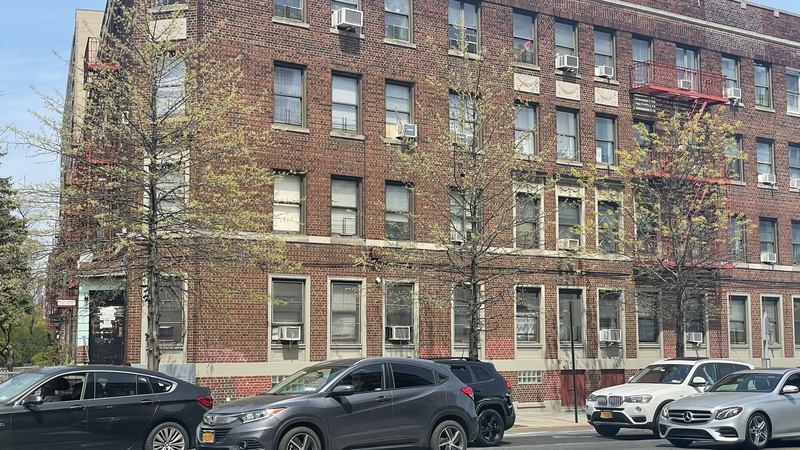
( Wil540 art / Wikimedia Commons )
Brigid Bergin: It's The Brian Lehrer Show on WNYC. I'm Brigid Bergin, senior reporter in the WNYC and Gothamist newsroom, sitting in for Brian today. Now, an update on the controversial bankruptcy sale of over 5,000 rent-stabilized apartments owned by the real estate firm Pinnacle Group. Normally, bankruptcy cases like this speed through the court system without much attention from the public. On day one of Mayor Mamdani's tenure, he thrust this case into the spotlight by promising the city would intervene on the side of tenants in court, due to fears that the proposed buyer, Summit Properties USA, would continue to neglect maintenance of the buildings.
WNYC and Gothamist housing reporter David Brand has been all over the story. He was in the courtroom yesterday for nine hours. David, oh my gosh. He witnessed the proceedings of the case. He joins me now to share what he's learned, both in the court and out. Welcome into the studio, David.
David Brand: Thanks, Brigid.
Brigid Bergin: Before we get to yesterday's proceedings in court, set the scene for us a little bit. Why did Pinnacle declare bankruptcy last year, and what are the complaints of tenants living in their properties?
David Brand: Sure. This has been going on for a while before Mamdani took office. Like you said, he thrust it into the spotlight by declaring on day one that the city would intervene. Some backstory here. Pinnacle purchased this huge portfolio of apartments in four boroughs, every borough except Staten Island, 10 to 20 years ago. Conditions in a lot of the apartments, especially in these older buildings in Brooklyn, have really deteriorated.
Tenants have organized for a long time to try to get repairs. There's a lot of tenants dealing with crumbling ceilings, heat outages. One person submitted an affidavit to the court describing how he moved into a new apartment, and there was blood on the floor and maggots in the refrigerator.
Brigid Bergin: Oh my gosh.
David Brand: They had to clean up themselves. There's been a lot of problems, especially in these Brooklyn buildings that tenants have had to deal with. The landlord, Pinnacle Group, has struggled to fix a lot of those problems. There's 6,500 or so open housing code violations, and they also couldn't pay their lender, which is Flagstar Bank. Flagstar was going to file for foreclosure after they defaulted on their loans. To forestall that process, they declared bankruptcy, which meant that this entire portfolio would come up for sale. They declared bankruptcy in May.
Tenants in dozens of buildings united in one tenant association called the Union of Pinnacle Tenants to try to advocate for a new buyer who they could try to pick, or have some authority over, who took over the buildings. That's where Mamdani stepped in on January 1st to say, "We're going to intervene on their behalf to try to delay this sale and try to find a new buyer."
Brigid Bergin: When the city first attempted to delay the sale of Pinnacle's properties to Summit, searching for this new buyer, what were some of the tenants' and the city's concerns about Summit's ability to continue maintenance of these 93 buildings? What would the city do to help find a different buyer to improve the conditions of these properties?
David Brand: About a week and a half before Mamdani took office, this company, Summit Properties USA, placed the bid. It's called the stalking horse bid. It would be the minimum bid at the sale for $451 million. That bid had the full backing of the lender, Flagstar. They say this has been months in the making, that we get to this point where a company comes forward with the financing. They also, earlier this week, released a plan to make repairs and how much money they were going to spend. The lender's on board. Pinnacle is on board with the sale. Summit says, "Look, we want these properties. We're going to fix all the violations and run them well."
The concern from the tenants and the argument from the city is that Summit already owns about 90 buildings as it is. They partnered with these two companies, Chestnut Holdings and Denali Management, to purchase and operate these buildings in 2021 and 2022. All of those buildings have their own share of problems. The executives from Chestnut and Denali, which are interrelated companies, have routinely appeared on the city's worst landlord list. The Attorney General, Letitia James, back in 2020 reached a settlement with Chestnut to pay hundreds of thousands of dollars to resolve lead paint violations that were endangering children.
What the tenants say is, "We don't want them to replicate these same conditions we're already dealing with." The city's position is, "We don't want to be on the hook for emergency repairs, or if people have to leave their apartments." This was an argument that an attorney made yesterday. They could end up in a city homeless shelter, and we would be footing the bill for them there. That's where they say they have an interest.
Brigid Bergin: Do we have any Pinnacle tenants listening right now and want to weigh in on what happened in court yesterday, going on in your building now, in your apartment? Tell us about the conditions of where you're living and the outcome you're hoping for. Perhaps, there's someone from Pinnacle or Summit, or other real estate industry experts, who want to present your side of the story. Why do rent-stabilized properties end up in disrepair, and what can the city or state do to help? We can take your comments and questions for my guest, WNYC and Gothamist housing reporter, David Brand.
Call 212-433-WNYC. That's 212-433-9692. Before I even asked David, we had a caller on the line. Let's go to Jack in the Bronx. Jack, you're on WNYC.
Jack: Hi. I'm actually not in one of these affected apartments. I have a larger background issue. It's a good question. It seems like during the mayor's race, all the talk about rent-stabilized apartments. I guess my question for your expert is: the increase in rents in New York City over the last 10 years hasn't that been much more so in the non-stabilized apartments? The percentage increases in rent-stabilized apartments, even in the worst year of inflation.
What was the approved rent increase in rent-stabilized apartments? I sort of feel like rent-stabilized landlords, and I'm not a landlord, have been portrayed as greedy and whatnot, but hasn't the run-up in average rents in New York City been much more so in the non-stabilized segment of the housing stock?
Brigid Bergin: Jack, thanks for your question, and you do have the right expert to answer it. David, do you want to take that on?
David Brand: Yes. Jack makes a great point. That's one of the reasons why this deal, and what happens with these apartments, has become such a high-profile issue. Jack said that rents in non-regulated apartments, non-rent-stabilized apartments have increased by a much higher rate than rent-stabilized apartments. That's a function of rent stabilization. That's a prescribed increase every year from the Rent Guidelines Board. Under Mayor de Blasio, it was relatively limited increases, like three instances of rent freezes, a few examples of 1% or 2% increases. Mayor Adams' rent guidelines board increased rents on stabilized apartments by a combined 12%, an average of 3% a year.
Then, in the unregulated market, people have dealt with 50% increases, 100% increases, even so, that is true. Then to the point that makes this a higher profile, maybe reflects bigger debates over city and state housing policy, is that landlords will say, "Yes, a consequence of strict rent stabilization rules and tenant protections that cap rents and don't allow us to increase rents on vacant apartments, or don't allow us to deregulate apartments after a certain period of time, which used to be allowed, is that we can't keep up with debts to our lenders as well as maintenance and repairs, like basic maintenance."
In this instance, it's a little more complicated. The landlord, Pinnacle, took on debt that was very high and higher than the rent rolls could actually sustain because the business model was: you get empty apartments, you increase the rent, you make major capital improvements to the building, you increase the rent that way. They factored in these rent increases in order to pay off their debt and keep operating their buildings. Once new tenant protection laws took effect in 2019, it ended that business model. Now suddenly they're on the hook for these loans, that they can't really cover on current rents.
Proponents of the rent stabilization laws say, "They made a bad bet. They were over-leveraged. They shouldn't have taken on all that debt that they couldn't actually afford based on current rents."
Brigid Bergin: David, a listener texted: "I'm wondering why Summit would want these properties. Seems like a legal PR and maintenance nightmare. Would they really make enough through these rent-stabilized rents to make this profitable, or is there another long-term play here?"
David Brand: That's a great question. I think a couple of things are going on here. In the bankruptcy process, they were able to shave off about $275 million from those loans. It reduces their debt, gets it back to a level they say they can sustain just based on current rents alone. They were pretty adamant about that yesterday during the court hearing. In their court filings, they say, "The cash flow will allow us to make repairs. If we need additional money, we have that money available, and we could infuse some more into the operations and make repairs."
There is a longer play here. Another thing that the owner of the company was saying yesterday was that we are in this for the long haul. That's our business model: long-term commitments to the properties we purchase. That means that if the rent rules do change down the road, it could be a bonanza for them. Maybe hold onto it for 10 years. Things change 10 years from now. You buy these apartments for about $88,000 a unit right now. It could be worth 10 times that if there were changes to the rent stabilization laws that allowed them to increase rents.
Brigid Bergin: Wow. Let's get back to what was at issue in court yesterday. You reported that the federal bankruptcy judge rejected the city's attempt to delay the sale to Summit. Is that why the case ended up in court yesterday?
David Brand: Yesterday was a confirmation hearing for the sale. Summit made their bid. They were approved by the lender and Pinnacle, the bankrupt current landlord. This hearing yesterday normally would've been a routine hearing where the judge would say, "Okay, everyone's on board with this. We approve the sale." The city's intervention here was to say, "We need more assurances that they're going to actually pay for the repairs, that they have the money available, that they have conducted the kind of financial and physical needs assessment that we need to see to feel comfortable with this deal."
That's what a lot of the negotiations and testimony was about yesterday. It ended on the judge signaling he will probably confirm the sale. I think most people expect he'll approve the sale today, but might he attach conditions, like Summit has to set aside X million dollars to fund repairs and capital expenses, or adhere to a legally binding timeline for making the repairs and resolving the violations on the buildings?
Brigid Bergin: We have two Pinnacle tenants on the line. I want to bring them in so they can share a little bit of the detail about how they're living. Let's start with Anna in Brooklyn. You're on WNYC.
Anna: Hi. I'm a Pinnacle tenant. I live in Brooklyn. I've been watching the court case as our union has been fighting for us in court, and the city's been fighting for us in court. I want to say we're very grateful that the city has gotten involved, and that we are not ending this fight with this court case. We are really committed to having Summit outline a repairs timeline under OATH. We're very happy that Flagstar extended an additional $3 million line of credit for repairs, preemptively, before the judge has committed to the ruling.
We're also committed to continuing to fight for our communities and our neighbors, especially in historically Black and brown neighborhoods where Pinnacle has been buying up and deregulating buildings and driving long-term tenants out. While we're tentatively hopeful about the potential of this ruling and getting a commitment to completing these repairs, we will also be continuing to organize and to push to make sure that all of these violations are seen to.
Brigid Bergin: Anna, thank you for your call. I want to bring in another Pinnacle tenant. Let's go to May in Brooklyn. May, thanks for calling WNYC.
May: Hi. Thank you so much for having me on. I don't have much more to say than what Anna said. I would say we tenants in Brooklyn and across the city, and especially with who've had Pinnacle as a landlord, are no stranger to a fight like this. Obviously, there's a lot more attention on it now that the Mamdani Administration has weighed in. Tenant organizing has been going on for decades and decades. Like Anna said, this is not the end. I also wanted to respond to what Jack said about market-rate rents. I think what Jack is pointing to, and what I think also rent-stabilized tenants would often agree with, is that the larger housing market is broken.
The problem is that housing is speculative, and that is what is making it so hard for working-class people, especially, like Anna said, in Black and brown neighborhoods, people who are being pushed out, to stay in New York and live normal lives, and not make hundreds of thousands of dollars in order to live in dignity. I would say this is just one fight and one step. People deserve to live in clean, affordable homes, especially if they're not making hundreds of thousands of dollars.
The problem definitely goes beyond just Pinnacle and just rent-stabilized apartments. I'm hoping that the Mamdani Administration will do more to really put a check on the out-of-control speculation that has ruled our real estate market.
Brigid Bergin: May, let me jump in and ask you a quick follow-up. Just briefly, what is the alternative that some of the Pinnacle tenants are hoping to see in terms of ownership? Is it selling to a nonprofit, or the tenants taking over as ownership? Is there an alternative that some of the tenant union members are pushing?
May: Thank you for that question. I don't think that there's just one answer to that. The buildings that are being sold right now is, it's 93 buildings across 4 boroughs. Some of those buildings have had tenant associations and been organized for years and years. Others are getting more organized now because of the bankruptcy, or because of this citywide organizing drive. Neighbors haven't even been able to talk about what an alternative is. A lot of people have been in their apartments for 20, 30, 40 years and have seen slumlord after slumlord come through, and just haven't had an opportunity to understand what the alternatives are.
Brigid Bergin: Sure.
May: I think we've definitely talked about forms of tenant ownership and nonprofit potentially being a slightly better landlord, though that can also be problematic.
Brigid Bergin: Sure.
May: We've talked about community land trusts. I think no matter what the idea is, tenants having more control over their homes, and not being traded on the market, the way that we're seeing with this bankruptcy.
Brigid Bergin: May, thank you so much for your call. David, I have a caller that we want to get to. Anything you want to add in terms of what some of the alternatives the Pinnacle tenants may be looking for in this particular sale?
David Brand: To May's point, Mamdani came into office two weeks ago, and this has become a higher-profile phenomenon with what's going on with Pinnacle. Tenants have been organizing for months and years at their individual buildings or across this citywide network. The one thing that Anna said that I didn't mention before is Flagstar Bank, the lender for Pinnacle, and it would now be the lender for the new potential owner, Summit. They did pledge in court to extend a $3 million line of credit specifically for funding repairs. That was in response to the judge asking for more assurances that money would be available.
Then, in terms of how tenants might want to move forward, or what this could look like beyond just Summit buying 93 properties, this is kind of a bigger issue. We're going to see it, I think, coming up more and more in buildings in similar conditions, is there's not just one broad-stroke answer for every situation. Some buildings are in better condition. Some have a higher rent roll. Maybe a nonprofit could take over and seamlessly run things, and get tax breaks or incentives from the city. Maybe, in some cases, ownership by the tenants is the solution, and then they could create some type of ownership structure together.
I think that's going to be something we're going to find out a lot about in the coming years under the Mamdani Administration, these various solutions for buildings in distress.
Brigid Bergin: Let's go to John in Hoboken, New Jersey. John, thanks for waiting. You're on WNYC.
John: Hey, guys, how are you doing?
Brigid Bergin: Good.
John: As a landlord and kind of a small property developer who has owned rent-controlled apartments, to me, one of the biggest problems is actually the government itself. The property taxes, the fees from the fire department for the annual inspections, the permit fees, the fees that they allow the water companies and electric companies to charge when you're hooking up a new building. If you really add up all these fees, the biggest of which, of course, a property tax, it's more than 25--
[sound cut]
John: Probably 40%.
Brigid Bergin: John, I'm going to back you up because you dropped out there for a minute. You were talking about the fees that accumulate for landlords, for the different city agencies that they need to pay. You were saying I think a number, a percent, that they total up to, and that's when you dropped out, so just pick it up there.
John: I'm going to guess that 40% of the rents that I charge, one way or another, goes to the government, excluding my taxes, whether that be from property taxes, fees to the fire departments, fees for the city inspectors, taxes when you buy products. It's the government itself which takes so much from the landlord that that's one of the biggest problems no one talks about. If there's really a problem with affordability, why isn't the city controlling their expenses a little more and charging less in property taxes?
Brigid Bergin: John, thanks for the question, and thanks for holding on for us. David, he is raising issues that potentially could be something that a Mamdani Administration looks at in terms of: Are there additional fees that could be reduced that could then go toward making some of these apartments more affordable?
David Brand: Yes. Owners have expenses. A lot of those costs are rising, and some of them are within the city and state's control, specifically property taxes. Right now, apartment building owners pay a disproportionate amount in property taxes compared to other types of landlords or housing owners. Mamdani has said repeatedly that his goal is property tax reform. Now we've heard that for decades from other mayors, Eric Adams, de Blasio. Three days before de Blasio left office, his Blue Ribbon Commission on Property Tax Reform released its recommendations.
Those went nowhere, even though Eric Adams, on the campaign trail, said he would tackle property tax reform. This is the political football in New York City and state politics, and it requires state action. Mamdani says, "We're going to get property tax reform done." He says, "We're going to get insurance reform done so that property owners pay less in property and liability insurance." That's something that Kathy Hochul included some ideas for in her State of the State speech. If you were to lower those expenses, and then, to John's point, some of the expenses that landlords have to pay to the city for penalties or for inspections, that would lower costs and make rents less imperative.
We could shift away from this conversation about we need to raise rents or we need to freeze rents, and instead focus on these expenses. Challenge there is that those things are a lot more complicated and take a lot more political will to accomplish.
Brigid Bergin: David, I want to go back to some of your reporting. You did a story looking at the property records of Summit's buildings and found some familial ties between Pinnacle CEO Joel Wiener and companies connected to Summit. I will also note that a listener observed: "Pinnacle, Summit, Denali. What's with all the mountain names, and these interconnected companies?" What did you find, and what has the judge said about the connection among these companies?
David Brand: This is interesting. A few people have pointed out that Pinnacle and Summit are basically synonyms, and that Denali-- Oh, yes, also the largest mountain in the United States. To backtrack, the CEO of Pinnacle, his name is Joel Wiener. His brother is Jonathan Wiener. Jonathan Wiener is the owner of Chestnut Holdings and Denali Management, the two companies that partnered with Summit, which is buying all these properties after Pinnacle filed for bankruptcy. Denali, Chestnut, and Summit all partnered on this other portfolio of buildings, mostly in the Bronx.
The news outlet Bisnow reported that connection, that Jonathan Wiener is already involved with Summit. I started looking at all of the property records for buildings listed on the Summit website that Summit says it owns. In 53 of the 82 properties, I found Jonathan Wiener signed the deeds. In another 29 or so, executives from either Chestnut or Denali signed the deeds or mortgage documents. The question became: Is this an insider transaction? The city, tenant groups, and Attorney General Letitia James' office even intervened in the court and said, "We need to explore these connections. Is this Joel Wiener from Pinnacle declaring bankruptcy so a company tied to his brother can swoop in?"
That came up at the court hearing yesterday. The owner of Summit, his name is Zohar Levy. He denied that Chestnut and Denali, or Jonathan Wiener, had anything to do with this deal. He said the companies, or Jonathan Wiener, will not be involved in running or managing these buildings that they're trying to purchase. The judge did say, though, that it was eyebrow-raising connections and that it was a legitimate line of questioning given what he called "seeming proximity" of the company, so just interesting. The small world of New York City real estate, maybe.
Brigid Bergin: Very small. David, you're going to be back in court this afternoon. When are you expecting a ruling from the judge? Then what comes next after that?
David Brand: The judge says he's going to issue his ruling at 1:00 PM today, so definitely we'll be following along for that. We'll see. He suggested yesterday that he's going to approve the sale. I don't think anyone doubts that that's going to happen. Then, he also left the door open for conditions, like requiring Summit to set aside a specific amount of money in an account to cover repairs and fix violations across the portfolio, and maybe even a specific timeline for taking care of those violations. That's what I expect to happen today.
I think this is going to be an interesting test case for the Mamdani Administration moving forward because he campaigned on making life better for tenants, for holding negligent or financially distressed landlords accountable, and even taking their buildings, purchasing their buildings, transferring them to new owners. He arrived in office on January 1st, announcing he would intervene in this specific case, but it was already eight months into the process. A purchaser was lined up with financing from the existing lender. It was always going to be an uphill battle to really intervene here and try to slow this sale, but they might use this experience as a blueprint for what to do in future deals like this.
Brigid Bergin: David, one listener texted: "Thanks for this conversation, but a question, which is what prevents New York City from buying these 93 buildings and hiring a management company to run it? The city would still control the building, not private equity firms, and could even set up a rent-to-own arrangement with tenants." That sounds like a novel model, but what are some of the obstacles the city might face, and is that something that could be scaled?
David Brand: The obstacles, I think, are just money and all the sign-offs required to approve something like that. Part of the reason why the city wanted this extra time in this case to potentially negotiate something like that. It would be expensive. That's probably the biggest obstacle. It's something that Mamdani and his housing czar, Cea Weaver, the head of his new Mayor's Office to Protect Tenants, say they wanted to test out. They want to try out the model of city ownership where they then lease management and effectively ownership to another company, or to tenant groups, or to nonprofits, while they retain the right to remove those companies or entities if things go sour. I think that is something we might expect to see in the coming months and years, where the city does test out a model like that.
Brigid Bergin: WNYC and Gothamist housing reporter David Brand, have fun in court this afternoon. I'm sure we will all be reading your reporting to find out what's happened. Thanks so much for joining me.
David Brand: Thanks for having me, Brigid.
Copyright © 2026 New York Public Radio. All rights reserved. Visit our website terms of use at www.wnyc.org for further information.
New York Public Radio transcripts are created on a rush deadline, often by contractors. This text may not be in its final form and may be updated or revised in the future. Accuracy and availability may vary. The authoritative record of New York Public Radio’s programming is the audio record.
