
A Brownsville Story
Title: A Brownsville Story
[music]
Brian Lehrer: It's The Brian Lehrer Show on WNYC. Good morning again, everyone. Brownsville, Brooklyn, has been home to wave after wave of New Yorkers. Since its founding in 1858, it evolved from a rural hamlet into a densely populated, predominantly immigrant and predominantly Jewish working-class garment district by the early 20th century. Then, following World War II and the Second Great Migration, it transformed to a largely Black and Latino neighborhood. After systemic disinvestment from the '60s through the '80s, the area had to rebuild itself through grassroots efforts by the community in large measure.
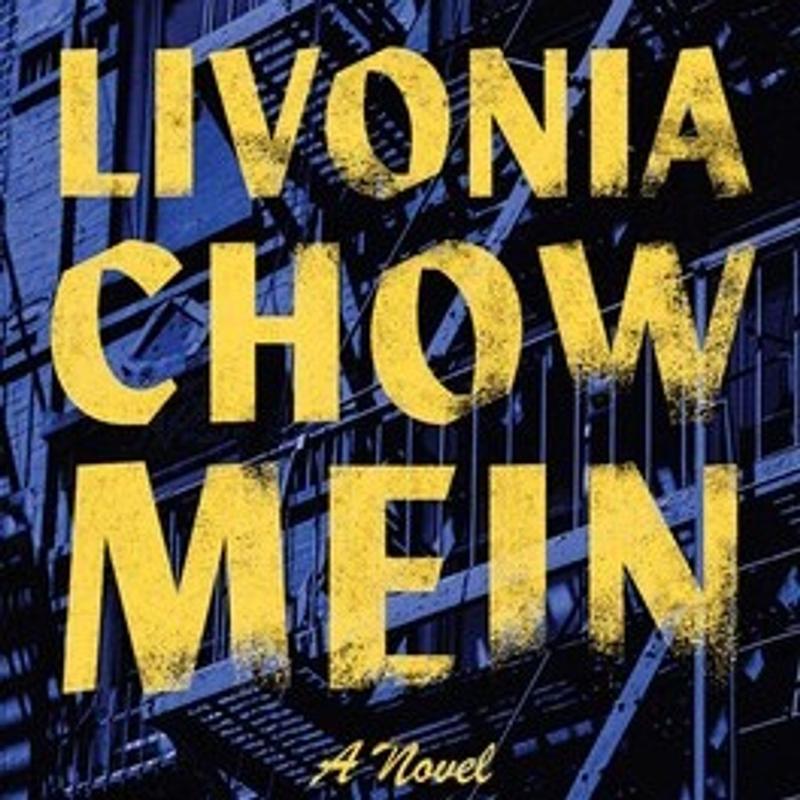
Today, it's home to the largest concentration of public housing in New York City. A new novel explores some of that history, in large part through the eyes of a Chinese American family across several generations. It raises questions about who belongs to a neighborhood like Brownsville, and who gets to tell its story. The book is called Livonia Chow Mein, and it's written by Abigail Savitch-Lew. I'm proud to say, Abigail is a former Brian Lehrer Show intern. Local girl makes good. Abigail, welcome to WNYC as a guest.
Abigail Savitch-Lew: Thank you, Brian Lehrer. It's so amazing to be on the other side.
Brian Lehrer: Let's just dive right in. You open the book in the summer of 1978 with two boys, age 7 and 10, being paid $100 to set a tenement on Livonia Avenue in Brownsville on fire. That is, of course, a specific kind of New York crime with a specific 1970s history. Walk us through that opening scene and tell us what you were trying to convey.
Abigail Savitch-Lew: Yes. I'll say that some of the inspiration for that scene came from watching the documentary Decade of Fire, about the wave of arson in the Bronx that really burned down a lot of the South Bronx in the '70s and '80s. I learned through that documentary that landlords did pay young children from the neighborhood to torch buildings. It was a way to hide the fact that there was a lot of white-collar crime happening, and a great deal of insurance fraud. This begins the book, and as readers will find, it's unclear who exactly paid the boys. Was it the landlord? It's never investigated, as was true in New York. There was a lot of this crime swept under the rug.
I think in the book, I'm interested in readers reflecting on both what is the true history of these neighborhoods whose reputations have been marred so many times? Also, where are people complicit? Who are the people who are complicit that may never have really atoned for how these neighborhoods have suffered?
Brian Lehrer: I said in the intro that the story of Brownsville is told in your book in large part through a Chinese American family, the Wongs. There are two other main characters I'll ask you about, but first, tell us a bit about how the Wongs came to Brownsville at the turn of the century. There was this concept of the "paper son" that listeners may not be familiar with. Maybe you want to start by explaining that.
Abigail Savitch-Lew: Yes. When the Chinese Exclusion Act were still very much in effect, it was very difficult for Chinese Americans to come to the United States. These took effect in the late 1800s and were, really, still in effect all the way through the 1940s. There were some changes in immigration laws up and through the 1960s. Many families, and I'll say, my own is one of them, came under a false name as a paper son. The idea is-- one loophole is that a Chinese person would claim that their father was in the United States, and somebody who was there would claim their son was in China, and they would assemble false paperwork.
Many families came over here under a false name, and eventually, many also received amnesty in the 1960s and were able to change their names back. That ends up becoming a plot-driving device also. I'm really glad in a way that this story can be told now because it's a reminder that so many of the Chinese Americans, fourth-generation Chinese Americans that are here now, once, we, too, were struggling with our existence as undocumented immigrants in this country.
Brian Lehrer: Right. That term paper son, they were somebody's son on paper, if not really. Actually, even before chapter one, the reader gets a glossary of Toisanese phrases with a note that in many third and fourth-generation families, the language is dying out. Why Toisanese in particular?
Abigail Savitch-Lew: Right now, if you walk the streets of Chinatown, in most of our boroughs, you'll hear a lot of Mandarin, you'll also hear Cantonese, but back in the 19th century, and for a lot of the 20th century, it was mostly Toisanese that you heard on the streets. That's because most of the immigrants from China were coming from this part of Guangdong, also known as Canton Province, that is the county of Toisan. That language is increasingly only spoken in either that one part of Toisan or in the remaining diaspora that still remembers it.
Brian Lehrer: Listeners, does any of this sound like you? It's from Abigail Savitch-Lew's novel called Livonia Chow Mein, but obviously, based on real characters from real life, including, I think, members of her family. Who's relating to this as a Brownsville, Brooklyn, or any other kind of New York or New York area story that sounds like you, or your parents, or grandparents, or great grandparents? 212-433-WNYC. As we talk about identity across generations, especially in immigrant families. If you've ever been caught or felt that way between your family's culture and the one you currently live in, how has that shaped the way that you see where you're from or anything else related? 212-433-WNYC, 212-433-9692, if you want to call in.
By the way, having been trained in journalism and having worked as a journalist, including as an intern with us, why a novel to tell this story, so much of which is culturally and historically true, as you've been describing, even if the characters and specific plots are made up?
Abigail Savitch-Lew: That's a great question. I'll say that I began this novel very shortly after my great internship at The Brian Lehrer Show. I was working on it for 12 years, as I went and became a housing reporter at City Limits, and did other journalistic assignments, but I've always been passionate about fiction. I would say that, yes, although it's true that the novel is inspired greatly by my family's history, including my family indeed ran a Chinese restaurant in Brownsville. Also, it's very inspired, too, by everything I was learning as a reporter covering New York City politics, and housing and development.
Still, there's so much that I feel could not be said in the space of an article and even in the genre of nonfiction that I felt I really could do and explore in fiction. An example might be that there's a way in which reality can be a diffused thing, whereas fiction distills that reality, allows us to focus on it in a way that I think allows some, maybe, hidden truths to emerge. Yes, maybe stories that my family might tell or that I've learned as a reporter, that happened all over the city, all over the place, all over time, I could streamline into one story that could really speak to those themes.
Brian Lehrer: Got it. That's great. The other character in your book who has a long historical arc in Brownsville is Lina Rodriguez Armstrong. She's the person who, in 1978, witnesses the two boys set the tenement on Livonia Avenue on fire. She's this central force in the book who has long sought to lift up her Brownsville community. We meet Lina again decades later. First, can you tell us about Lina's Freedom School, as it was called in 1978, and why you wrote that into the book?
Abigail Savitch-Lew: Lina takes us almost on a tour through the incredible community control and self-determination movements that have happened in East Brooklyn and Central Brooklyn throughout the 20th century. Through Lina's eyes, definitely, we see the Freedom School, which is based, or I would say, has a relation, maybe, to The East in Bed-Stuy, that in itself grew out of the Brownsville community control school movement. We see Lina really being a leader in her community to actually teach students and people from the community about Black history and about a decolonized understanding of American history.
Brian Lehrer: Lina's character is a very specific portrait of a Black woman organizer in 1970s Brooklyn, right? Where her character comes from for you, who you were thinking about when you built her, was it a specific person?
Abigail Savitch-Lew: She's very much what we call a composite character, like a combination of different people. I would say that working at City Limits, I met so many amazing organizers, grassroots organizers from Black and brown neighborhoods throughout Brooklyn and the Bronx. I think that I was particularly intrigued by the Community Land Trust movement and efforts to reconceptualize who should own land. A lot of those housing activists really came into her character.
Brian Lehrer: Finally, your third character, also a composite character, Sadie Chin. She's a young reporter who gets hired at a news site called NewGotham.com in 2014, starting to sound like you. She's half Jewish, half Chinese, and she gets hired to cover a Black and brown neighborhood like Brownsville, because her editors think she looks kind of Latina, and partly, because her family used to run a restaurant on Livonia Avenue. Can you tell us a bit of her story and how pretty immediately she feels like both an insider and an interloper in Brownsville?
Abigail Savitch-Lew: Yes. For sure, I feel like I was taking a lot of the questions that I've wrestled with myself as a Chinese Jewish New Yorker who's very racially ambiguous and a reporter, but she's not me, in the sense that I really wanted to exaggerate, of course, and lean into these particular themes of outsider, insider. It's really funny because I think that different readers respond to her differently. Some are really moved by her efforts to-- she is a dedicated reporter. She is trying to do her best, but others, I think, see her immaturity, and her blind spots, and her inauthenticity, and, in a way, her entitlement.
I think her journey and the mistakes she makes as she tries to understand what it means to be in service to Brownsville as a non-Black person is one of the major questions driving the book.
Brian Lehrer: My guest is Abigail Savitch-Lew, whose new novel is called Livonia Chow Mein, about people and history in Brownsville, Brooklyn. Oh, we were talking before about that concept of paper son, people who came over from China, saying they were the son of somebody who was here on paper. I think Jesse in Manhattan has a paper son story. Hi, Jesse, you're on WNYC.
Jesse: Hi. My maternal grandmother, who is Toisan, as you mentioned before, we were visiting her and my mom's side for a cemetery visit for Qingming earlier this month, which is the Chinese Tomb Sweeping Festival. I had previously noticed that my grandmother's dad's last name did not match up with any of our family's last name historically. That was a thing. Then my mom mentioned that he had come over as a paper son. That concept, I've noticed, is getting more play in the younger Chinese community nowadays because there's also now a new cafe on Mott Street called Paper Sons Cafe, which calls back to that as well.
Brian Lehrer: How did that affect you to learn that piece of your family history?
Jesse: It's interesting, but I had never actually met my grandmother's parents, so I wouldn't really know about that.
Brian Lehrer: Kind of theoretical.
Jesse: It was still an interesting, I guess, tidbit to learn.
Brian Lehrer: Jesse, thank you very much for your call. Tony in Hastings is relating to this, too. Tony, you're on WNYC. Hi.
Tony: Hi. Good morning, Brian. Avid caller, love to listen to your show. I want to congratulate the person you're speaking to online there about being paper son, but there are a lot of stories that are different. Like mine, my great-grandfather was the first Chinese Baptist minister in San Francisco, where I understand my grandfather's son was born, so we're second generation, but the story of my mother from Shanghai and my father from Guangdong, he lived in a small island, was raised on a small island on the coast of Hong Kong. The story goes that he was the first one here brought over by missionaries, and his church is still in San Francisco, and his name was on the church in 1903.
My grandmother, who married my grandfather, was a graduate of Columbia and, I think, Yale University's pharmaceutical schools. He died of influenza at an early age, in his late 40s or 50s. My mother's story saw all the atrocities of the Japanese in Shanghai when she was 17 and was put into an internment camp in her country, and then sent to an internment camp here in the coast of California on Angel Island, for months on end. My father himself was put onto a Dutch frigate in 1940, around '40, '41. My son located the shipping log with my father's name on it.
Brian Lehrer: Wow.
Tony: Saying he was 18 and was put on the Dutch ship, and said he was a cook's helper.
Brian Lehrer: Can I ask, Tony? How does all of what you've been saying about your family history land in shaping who you feel you are as a person or as an American today?
Tony: Well, I have six siblings raised in an apartment on the Upper West Side by Columbia University. My mother has so much PTSD, which was never diagnosed at the time because there was no such diagnosis. How it has shaped me was to be a hard worker. My parents always wanted all of us to go to college. I didn't go to college. I was a worker on selling newspapers on 110th Street and Broadway, but going to a different part of the story, recently, we found out that my great uncle or another relative was a civil rights activist on the railroads being built for California in the 1850s.
As far as shaping me, hard work, doing what you can for yourself, surviving, it's just amazing. I have four siblings who went to college out of the seven of us, and they're all doing well, but I think it's all shaped us in a different way. I don't know if that great-uncle from the railroads was ever a paper-- I don't know how he got there. We don't know. There needs to be some clarification on that, but it's an amazing story for my family's generations.
Brian Lehrer: Tony, thank you. Thank you so much. One more in this set of callers, inspired by the conversation that we're having with Abigail Savitch-Lew, author of the novel, Livonia Chow Mein. Laura in Sussex County, New Jersey. Hi, Laura, you're on WNYC.
Laura: Hi, there. Where do I start?
Brian Lehrer: Well, I think you started with my screener with your aunt and uncle, yes?
Laura: I started with my aunt and uncle. I started with my aunt, who was born in 1925. She's now 100 years old. She was born in China. Her parents came over without her. She was left behind in China for a little while. Her parents, my grandparents, had two other children. One of them was my dad. It really shaped me learning about my aunt and her struggles, really. She didn't really know her mother and her father until she was 14, when she came over to the US in 1940. She met her. I didn't tell this story when I was calling in initially, but she had to take a boat. It was a very difficult struggle, 22 days. Then she met her father on a train.
When she got here in 1947, she got married, and she and her husband were working for a laundromat. I was saying the commute was very, very hard on them in New York City, snow, and they worked six days. Some days, seven days a week. Very, very long hours, very, very hard work. They didn't want to do the commute. My uncle, her husband, decided, "Oh, let's try to create a loft where we live, so that we can just go downstairs and we'll work to the bone. We'll just go downstairs, and we'll have our laundry right there." That's what they did. They created a loft, and it ended up being a good solution in terms of convenience, but it was not the best living situation.
One night, my uncle smelled smoke. Sure enough, the row of stores was alight. He was able to contact the storekeeper, and the fire was able to be contained to some degree. Some stores were gone, but I was saying, too, that I don't know the origin of the stores, or what happened with the fire, but it was a suspicious fire. It made me think, "Oh, that's--"
Brian Lehrer: When Abigail brought up the beginning of her book, where in Brownsville in the 1970s, somebody was setting tenement apartment buildings on fire for the insurance money, that rang a bell with you, it sounds like.
Laura: It really did ring a bell. My aunt and uncle were in the Bronx, and they really don't know what happened with that fire. My aunt and uncle had to move. They just struggled very much. My aunt was very discriminated against, and my dad always felt like, even though he was born here, he always felt like an outsider. My mom is Irish Catholic. She was born here as well, but it was just sad to hear that my dad always felt like an outsider, even being born in the US, because of the struggles that my aunt went through, and just everything that was going on with Chinese Americans and Chinese culture, and the problems that they were having during that time.
Brian Lehrer: Thank you so much for your call. We're going to run out of time soon, Abigail. Any thoughts listening to that set of calls, who you obviously touched the emotional heart of with your story?
Abigail Savitch-Lew: It's wonderful to hear their stories. It made me think of a certain passage later in the book where Lina reflects that there were two types of people in America. The people who forget, and the people who remembered. It's in a passage where she's reflecting on the importance of understanding one's history. I think the book, too, is trying to say that the importance of looking back at this history is not only to celebrate our ancestors for their accomplishments and for overcoming so many obstacles, which is also worth doing, but also to understand, as Tony mentioned, what trauma is there that may not be healed, and what ways we may have also traumatized others, or what ways maybe we have to examine who is hurting us and how do we fight back in solidarity with other groups against white supremist structures.
Brian Lehrer: Livonia Chow Mein comes out today. It's written by Abigail Savitch-Lew. Abigail, this was great. Thanks so much for coming on today.
Abigail Savitch-Lew: Thank you, Brian.
Copyright © 2026 New York Public Radio. All rights reserved. Visit our website terms of use at www.wnyc.org for further information.
New York Public Radio transcripts are created on a rush deadline, often by contractors. This text may not be in its final form and may be updated or revised in the future. Accuracy and availability may vary. The authoritative record of New York Public Radio’s programming is the audio record.
