
$4 Billion From NYC Pension Funds Going to Affordable Housing
Title: $4 Billion From NYC Pension Funds Going to Affordable Housing
[music]
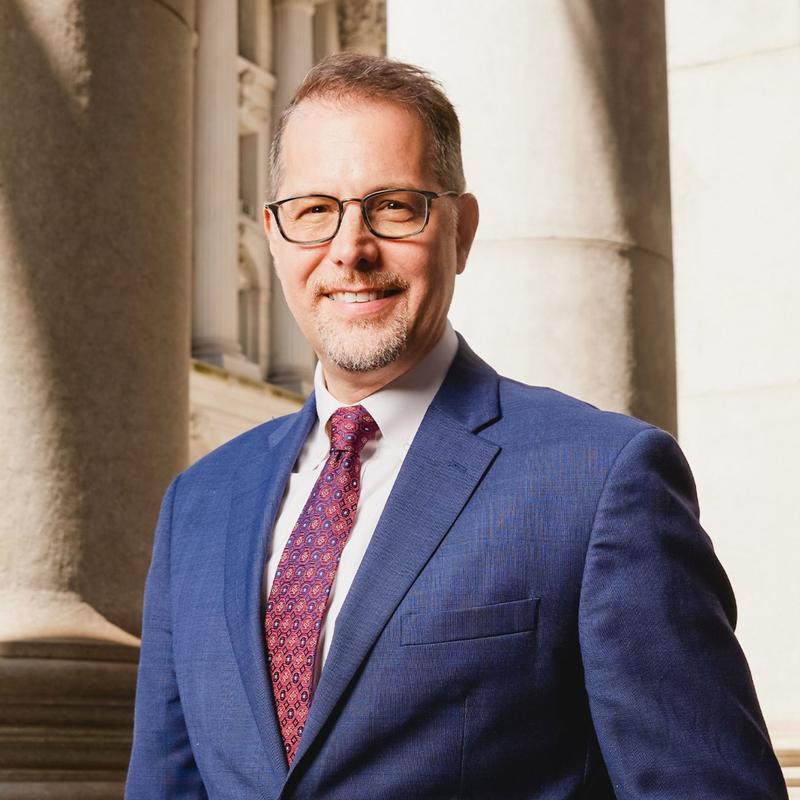
Brian Lehrer: It's The Brian Lehrer Show on WNYC. Good morning again, everyone. Hey, let me just say, on behalf of all the Mets fans, it's only April. Maybe they'll be assembled for winning once we get to September and October. It's only April, we keep telling ourselves. With us now for the second time since taking office in January is New York City Comptroller Mark Levine. Last Thursday, his office announced a $4 billion plan to put some of the city's pension money behind building and preserving affordable housing. We'll invite him to dig into the details of that in a minute.
In general, it's been a busy few months also when Comptroller Levine was with us last. He rang the alarm bells on the city's dire financial situation for the coming budget year. He had projected a $10.4 billion budget gap for the coming fiscal year. That gap now sits at about half that, $5.4 billion, according to the mayor. That's an improvement, but still nothing to sneeze at. The comptroller, from what I've seen, still doesn't think Mayor Mamdani has a responsible budget plan yet. One big issue, how much to spend on priorities like child care right now versus, say, for a rainy day.
As we wait for Albany to wrap up the state budget process there, which is going to affect the city, Mayor Mamdani and the City Council continue to feud over solutions to the deficit, and the comptroller, as his responsibility, weighs in. Let's talk to the city's chief accountant, Comptroller Mark Levine. Comptroller, welcome back to WNYC.
Comptroller Mark Levine: Hey, Brian. Thanks. Great to be back.
Brian Lehrer: Well, let's start with your big announcement from last week. As comptroller, you get to manage the city's pension funds, or you have to manage the city's pension funds. You've decided to invest $4 billion into building affordable housing. For people thinking, "Wait, how do pension funds and affordable housing expenses relate?" Is affordable housing a good investment?
Comptroller Mark Levine: It can be, and it certainly is when we do it. I want to remind people of the big picture here. You've covered this for years. We have the worst housing affordability crisis we've ever had in New York City. It just keeps getting worse, Brian. We get monthly rents, and we've just hit the unfortunate milestone of $5,000 as the median rent in Manhattan right now, and not much better than the other boroughs. This is pushing out low-income families and middle-class families. This is a crisis that we've got to address. There is good news in that we have improved our zoning code so much in recent years through things like City of Yes and the charter amendments.
Now we actually have to build the housing that those zoning changes authorized. That's going to require us dealing with the shortage of financing. Your listeners might not be aware of how big of a challenge this is, but there are projects all over the city that have a property and a developer and the zoning's all set. Then they have to sit in the pipeline for years, four years or more, waiting for financing. If you see in your neighborhood a vacant lot and you hear it's targeted for affordable housing, and you wonder why it sits vacant year after year after year, this is probably the reason. Some of these projects just die because the wait is so long.
We want to help solve this problem in a way that is good for our pension funds, that will give us good returns consistent with our investment guidelines, but will also fill a gap in the affordable housing in the broader housing sector in New York City. As you mentioned, we've announced a plan that would invest $4 billion over the next four years into this critical sector. Happy to talk more about how it'll work.
Brian Lehrer: Yes, do, because here's a New York Post editorial board headline, you probably saw it. It says, "Hey, New York City Comptroller Mark Levine, pension funds belong to the taxpayers, not you." It says, "New York City comptrollers are supposed to safeguard taxpayer dollars, but many have treated the city pension funds they oversee as their own play money, and Mark Levine is no different. Thursday, Levine announced that he'll skim $4 billion in pension fund cash to boost affordable housing in response to a worsening housing crisis." They see it as play money and that you're skimming money from the pension fund, rather than investing it in the best way possible.
Comptroller Mark Levine: Yes, I'll point out that this editorial also claimed that we do not have an affordable housing crisis currently in New York City, so that tells you where they're coming from. Almost everything you said there is inaccurate, or almost everything you quoted there is inaccurate. We have a pension fund of over $300 billion right now, and we have a very diverse investment portfolio across all asset classes. Real estate is and has been a very important part of our investment strategy, as it is for every pension fund in America. By the way, the Post might like to know that red states generally have even a greater allocation to real estate than we do.
It's yielded good returns for us, and our affordable housing portfolio has yielded good returns. We are looking for the sweet spot where we find projects that meet our investment needs and also fill a gap in the affordable housing landscape. I can give you some great examples like that. We've had a long partnership with the Community Preservation Corp, a program that dates back, actually, to the 1980s, that helps to provide financing to rehabilitate existing affordable housing. That has yielded above our target returns. We have target returns of 7%. Historically, it's beat that average. Brian, we've never lost a single dime in what I think is now over 2 billion over those decades.
A component of the plan we announced last week is to expand that investment by another $500 million. We have a partnership with the AFL-CIO, a big national labor union that has a housing investment trust which builds housing targeted towards workers. We call it workforce housing. The salary targets are someone who might be a bus driver, a social worker, or a teacher. We've had a years-long partnership with them, which has been very successful. To give you an example of the kind of project, you might know the old 1199 building on 42nd Street just west of 8th Avenue, that's been torn down. This investment trust is going to build 200 units of workforce housing, and we're an investment partner there.
Again, this has been a very successful investment for us. It will continue to be. Brian, just to say it explicitly, we do not lower our investment standards, ever, across any kind of investment, whether in New York City or beyond. We have a solemn fiduciary obligation to protect the pensions, to maximize risk-adjusted returns. Affordable housing has been a critical part of that portfolio. It's a big need in the city. I really think this is a win-win. This is actually something that Henry Garrido, the executive director of DC37, said. It's a win for workers, it's a win for housing, it's a win for our pensions. I agree.
Brian Lehrer: A little more pushback, though. From what I read, the last time the city used pension money to invest in rent-regulated housing, it didn't go that well. This is according to the real estate news website, Bisnow. It says, "Last fall, they reported that a $300 million pension investment in a related company's portfolio made after Superstorm Sandy had lost around $130 million." How is this new plan different, or how do you avoid that kind of outcome?
Comptroller Mark Levine: Look, that is not, you said, "the last time we have invested." That is one investment over hundreds, maybe thousands, over the last four decades. Overwhelmingly, this portfolio has performed, and it has actually exceeded our investment targets. When you make hundreds of investments, there is going to be some risk. This portfolio ran into a very unique challenge when the 2019 rent laws were changed, and it undermined the financial viability of some of those buildings. We've attempted to learn from that. This is obviously before I got here. We've unwound that portfolio, so we've moved beyond that, but we do everything we can to minimize risk.
In fact, our single biggest portion of this portfolio, with the Community Preservation Corp, which I was just speaking about, has backing for these mortgages by the State of New York Mortgage Association, SONYMA. That further minimizes the risk. It's one reason why we've never lost a dime in that part of our investment. I think to cherry-pick that one case is to miss the bigger picture of this, having been over decades, a really strong investment. It's why we're going to go bigger now to meet a need and to do right by our pension funds.
Brian Lehrer: Here's, I guess, a different kind of pension fund and housing question. New York Focus reported last week that the city pension funds are also invested in the Carlyle Group, the private equity firm that's been buying up apartment buildings across Brooklyn and Queens and hiking rents on tenants. That suggests that the pension funds are invested to some degree in not affordable housing, including even what they may characterize, what critics may characterize, as predatory housing investment. Are you revisiting that investment, too, in the name of affordable housing?
Comptroller Mark Levine: Well, I will look into the Carlyle investment to confirm what's happening there, but we have a responsible investment policy that we're ahead of most other pension funds in the country, maybe even the leader on this, where we set out guidelines for any investments we have and how they treat tenants, and that they treat tenants fairly and that they're good stewards from affordable housing. We'll make sure that the Carlyle Group and every other group that we invest with is adhering to that. I'm pretty proud of those standards. I think New Yorkers can feel good that it puts us ahead of almost every pension fund in America.
Brian Lehrer: By the way, on a slightly lighter note, a listener wants to know how you pronounce the name of your job. Looking at the spelling, listener writes, "He is not controller, he is comptroller."
Comptroller Mark Levine: I'm pretty laissez-faire here. You can call me comptroller. You can call me comtroller. You can also call me Mark. I answer to all of it.
Brian Lehrer: Just don't call him late for dinner. Andrew in Brooklyn, you're on WNYC with Comptroller Mark Levine. Hi.
Andrew: Hey, Brian. Hey, Mark. I voted for Mark. I'm a city employee for the Parks Department. I have paid into this fund for 20 years. I think this is pretty much political posturing for some sort of future ambitions, maybe, Mr. Levine, because, really, the point of this fund is to keep it 100% funded so that public employees have a pension when they retire. I was even feeling mixed feelings about the divestment from Israel and the fossil fuel corporation stuff. I like that we have political activism. I feel that way personally, but this is not your money to make political choices with. It's the taxpayer/city-employee workers' money.
Can you address in any way, shape, or form how this isn't political posturing, and it is a great investment for those of us who want the pension fund to be 100% funded forever?
Comptroller Mark Levine: Absolutely. Forgive me, could you tell me your name again?
Brian Lehrer: It's Andrew. Andrew in Brooklyn.
Comptroller Mark Levine: Andrew, first of all, thank you for your service to the Parks Department for 20 years. I'm grateful for that, love Parks workers. I absolutely agree with what you just said. This should not be about political agendas, certainly not anyone's personal political agenda. This is about building a robust, diverse investment portfolio that meets the needs of our retirees. We have a statutory goal to achieve 7% over time. The way you do that when you have a pension portfolio which is as big as ours, which is approaching a third of a trillion dollars, is you have to be extremely diversified.
You have money in public markets and private markets. You have money in alternative investments, like private credit. You have money in infrastructure. You have money in real estate. In fact, our real estate has performed well. We do invest in New York City, in part because we want to help grow New York and to address housing, and energy, and other needs. As I said, we never, ever lower our investment standards. We say no all the time to people who propose projects in New York City, people who propose housing projects, people who propose affordable housing projects, because they don't meet our standards.
You can sleep well at night knowing that we're pretty hardcore on this and our due diligence. Also, we are better funded than most pension funds in America. We are 90% funded at this point and approaching 100%, on track to hit 100% by 2033. This puts us amongst the best-funded in America. You can be confident that I wake up every morning committed to being a good fiduciary for your retirement, Andrew, and that of the 750,000 people who have served our city.
Brian Lehrer: All right. Hundreds of thousands of New York retirees and current employees hope you're right. Ben in upper Manhattan, you're on WNYC. Hi, Ben.
Ben: Hi. Yes, thank you for taking my question. Every other citywide official in the city right now currently opposes reinvesting the city's pension funds in Israel bonds. It's something that Jumaane Williams came out against. I'm curious. First, I want to thank you for not making that reinvestment thus far. I see that you're still expending a lot of energy pushing against the majority opinion of the city for the sake of this one investment. I'm curious if your time might be better spent focusing on other, more ethical and sound investments than Israel bonds. As you know, it's the only country with which historically we have had such a specific investment instrument. Yes. Again, thank you for not reinvesting thus far. I'm curious what you have to say.
Comptroller Mark Levine: Ben, appreciate the call. I am putting the majority of my energy into addressing the affordable housing crisis that we've been talking about. We've put a ton of work into this plan. I'm putting intense effort into helping us navigate through the hardest budget, we've got the biggest gap we've had for almost 20 years, and hope we'll talk more about that. As Andrew properly said in the last call, and I confirm, I don't bring personal politics. I don't bring politics, period, into investment decisions. I do what's best in my fiduciary role. That's how I evaluate every investment. It's how I evaluate housing investments. It's how I evaluate investments around the world, including in Israel.
We do have investments in every major economy on earth because that's how we remain diversified. We currently have and had had equity investments in Israel for many years. We have investments in national bonds from many governments around the world, from Italy to Romania to Mexico, and have had for most of the last 50 years, investments in Israel bonds. As I said, I make the evaluation based on the performance of any investment and its role in a diverse portfolio. Look, my job is to make recommendations. Ultimately, it's the trustees on the investment funds, on the pension funds which make that decision. That's what's doing here. We've talked--
Brian Lehrer: About that.
Comptroller Mark Levine: Yes, please.
Brian Lehrer: That answer almost suggests that you have no social investment standards for the pension funds, which I know is not true. The pension funds won't invest in tobacco companies. I'm not sure where you are in fossil fuel companies at this point. Obviously, there's a debate in the world whether Israel's acts in Gaza, in Lebanon, elsewhere, have warranted a divestment movement, and whether Israel various, like you say, equities or Israel bonds belong on that list. Whatever your point of view is on that, one way or another, is your point of view, but you have to make a decision as comptroller whether to put that on the social investment/divestment list or not, correct?
Comptroller Mark Levine: First, just to clarify. We, in very rare cases, have pulled out of certain sectors, including-- three of our five pension funds no longer own companies which hold fossil fuel assets in the ground. I supported that decision because I firmly believe that sector is dying, and that the future is green energy, and we need to shift to those investments. That is the frame in which I look at every decision on investments. I also value having ownership in companies where we can exert our influence as shareholders, the people who vote, board of directors.
In my time as comptroller, already in just a few months, we've exerted that power in pressuring Palantir on their relationship with ICE, on AT&T, with their diversity policies, on Starbucks, with their hostility to organized labor, and winning some good results, too, in some of those cases. Look, on Israel, I spoke about this the last couple of times I was on the show. I'm both open about having deep ties to the country and having quite severe criticisms of the current government. I've literally been in the street protesting and wouldn't hesitate to do it again, but I keep those personal politics out of it and try and make a decision based on what's best for the pension fund.
Brian Lehrer: Last question. In our last month, with the budget pressures on the city right now and the $5 billion plus projected deficit that City Council and the mayor, and with your input as comptroller, will have to close by July. Last month, Moody's changed the city's credit outlook from stable to negative. You called it a sobering wake-up call. I heard some analysts say it's not really going to affect how much interest the city has to pay on its borrowing, but tell us before you go, what does an outlook change like that really mean, and where do you stand now on whether the mayor has a responsible enough budget on the table?
Comptroller Mark Levine: This is a big deal, maybe not for the reasons that your listeners think. I'll clarify, but this doesn't happen often. Other than during the pandemic and the financial crisis, we haven't had an outlook change to negative from our major bond rating agencies. It's not a given that they would downgrade us, but that does often follow a change in outlook, so it's something that we should be wary of. It is true what you said. A downgrade of a level or two would add a small amount to our borrowing costs, but not a catastrophic amount. Of course, over time, that would add up.
To me, it's a red alert because it indicates that we have a structural imbalance in our budget that we've got to fix, or we're going to really face painful choices in the future. I want to credit the current mayor for being honest about that structural balance and about the fact that we've had some really fast-growing expense lines that exceed what we're bringing in in income. We've got to close that now. I'm fighting to make sure we do it in a responsible fashion that doesn't kick all the risk into the next year, when I see lots of concerns with the damage from the war in Iran, and the crazy tariff policy, and the risk of AI disrupting the economy.
I also want to say, because this is the closing days of the Albany budget process, that I strongly believe we need more assistance from them. New York City sends billions more off to Albany than we get back every year. That needs to be part of the solution here, but I don't actually use the word crisis to describe our budget scenario. I actually believe we can get through this with just some smart moves in the budget.
The economy remains strong in New York City, Brian, and so if that weren't the case, I might have more dire language, but our economy is still growing, and there's lots of signs of health. If we're smart about the budget, I think we can get to a good place without having to do things like drain our reserves or use accounting measures that kick the risk into next year.
Brian Lehrer: Good to end on that upbeat note with New York City Comp, that's C-O-M-P, not C-O-N. It's Comptroller, not controller, Mark Levine. We always appreciate when you come on with us. Thanks a lot.
Comptroller Mark Levine: Thanks so much, Brian. Really appreciate it.
Copyright © 2026 New York Public Radio. All rights reserved. Visit our website terms of use at www.wnyc.org for further information.
New York Public Radio transcripts are created on a rush deadline, often by contractors. This text may not be in its final form and may be updated or revised in the future. Accuracy and availability may vary. The authoritative record of New York Public Radio’s programming is the audio record.
