
30 Issues in 30 Days: The Case for a Free CUNY
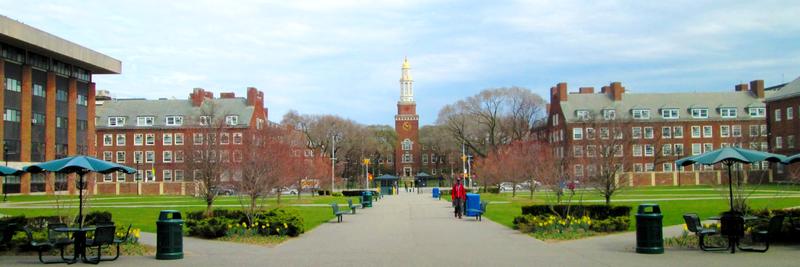
( Beyond My Ken / Wikimedia Commons )
[theme music]
Brian Lehrer: Brian Lehrer on WNYC. Now we continue our election series, 30 Issues in 30 Days, with issue number 21. Should CUNY be free again, as an issue in the New York City mayoral race? It's relevant because Zohran Mamdani has been among those in the state legislature supporting that idea. For decades, the City University of New York was free. That was a point of pride for a city that saw higher education as a public good. Full disclosure, my own parents, who both grew up poor in the South Bronx, both went to City College for free and wound up in the middle class, to my advantage, of course. Could their parents have paid any tuition? I don't know, but I don't think so. Since the fiscal crisis of the 1970s, CUNY students have paid tuition. Over the years, that tuition has crept up, even as the system's public funding has gone down. Now, some New Yorkers want to bring back the idea of a free CUNY as an investment in the city's long-term future, but not everybody thinks it's a good idea. There are multiple sides to this, which is why it hasn't passed the legislature. State Senator Andrew Gounardes has been one of the leading voices pushing for that return. He has argued for years that a tuition free, well funded CUNY is a way to lift families into the middle class today, strengthen the local workforce, and keep more talent right here in New York.
The idea, obviously, comes with a price tag, either worth the cost or not, when New York has so many other urgent needs. Can we afford to make CUNY free again? What would that actually look like in practice? Joining us now for, in this case, an advocate segment, is State Senator Gounardes, who represents New York's 26th District, and co-sponsors the new deal for CUNY bill, as they call it, which would restore free tuition and expand support for students and faculty across the system. Senator Gounardes, welcome back to WNYC.
Andrew Gounardes: Thanks. Good morning, Brian.
Brian Lehrer: What would it mean? How would it work to make CUNY free again?
Andrew Gounardes: You just made the case for me. This would be one of the biggest economic boons we could deliver to New York City, because an investment in higher education, whether that's a bachelor's degree, an associate's degree, or some other kind of post secondary credential or training, would be a huge economic driver for New York City and New York State. 80% of CUNY grads stay in New York.
Just like we don't bat an eye thinking about spending billions of dollars for economic development incentives that may or may not actually create jobs, but actually go to pad the bottom line of big multinational companies, we should think about an investment in a free CUNY as an economic development tool so that we can empower the 350,000 students who are getting an education at CUNY to stay in New York, invest in New York, start a business in New York, start a career in New York, start a family in New York, and so on and so on and so on.
I think there's a huge potential here for us to get back to our roots, as to what CUNY was originally founded to be, which is the free people's university. Help working class families who are struggling to make it into the middle class and create a pathway towards an economic boon that has a proven track record of results.
Brian Lehrer: Yes, but-- and you know, doing this job, I'm in the, yes, but business, when we talk about contentious issues. Yes, but for a lot of people, free college sounds great in theory, but impossible in practice. How much would it cost?
Andrew Gounardes: That's a question we get all the time. Right now, roughly 75% of students enrolled in CUNY do not have tuition because they get Pell Grants, they get TAP grants, maybe they have some other private support as well. We're really only talking about the additional 25%, give or take, of students who are not currently able to attend CUNY tuition free. Our estimates are that the cost between senior colleges and community colleges would be less than $800 million a year. That would make it fully tuition free for everyone.
That's not that much money in the context of a city budget of $115 billion and a state budget of $262 billion. 10 billion of which we give away for economic development programs that we have no idea whether they're successful or not.
Brian Lehrer: You're saying less than $1 billion, funded partly by the city, which has over $100 billion annual budget, and partly by the state, which has a $250 billion budget. Less than a billion out of that would make CUNY totally free again. There's a question that comes up. Yes, but. There's a question that comes up. With all of these free program things that Assemblyman Mamdani is running on, free buses, free childcare, free CUNY. That is, why stop the money from coming into the system from people who can afford to pay?
Why universal free CUNY when there are families who can? Either the parents or the students themselves pay for CUNY, and help support that large percentage you mentioned that needs a free ride.
Andrew Gounardes: Well, first, it's important for us to put this in context. More than half of the students who are enrolled in CUNY today have household incomes of under $30,000. They are making less than the medium. Significantly less than the medium wage in New York City. Number two, you started out this segment calling CUNY a public investment in a higher education as a public good. This is a public good. We don't think twice about making families pay to enroll their child in a public school program in New York City. It is a public good that we have decided is necessary for the education and betterment of our children and for the preparation of the next generation.
A post-secondary education, again, whether that is a four year degree, a two year degree, a certificate, some type of training credential, is essential in the 21st century to prepare the next generation to be able to get a job, start a career, create a business, plant roots here in the city or in the state. It's the next necessary step. College as a traditional path may not be for everyone, but some type of post-secondary preparation is essential, especially in this age we are about to enter, with all of the churn coming from AI and the workforce displacement that we're on the cusp of realizing because of AI, we can't afford not to consider a CUNY education or a college education of some kind as a public good.
Brian Lehrer: Staying on the cost of this to the taxpayer, you said less than $1 billion. I guess that's less than $1 billion a year. Other analysts who I've read about estimated tuition-free CUNY could cost the state several billion dollars a year. Here's a little pushback from a listener in a text message, because you said so many students are already going for free through their Pell Grants and other programs. That's a federal program, Pell Grant. Listener writes, "Why would somebody bother to try to get a Pell Grant if tuition is free? The implication is, then it'll cost the taxpayers that much more times however many Pell Grants people would need to apply for."
Andrew Gounardes: Well, the way that we have structured our proposal, it essentially would take all of the existing public money that we are allocating across the city and state budgets and then simplify that process and repurpose it for the kind of closing in of the last dollar for each of those students. The Pell program is federal money, you apply federally through your FAFSA. It's based on a formula. We have no input into deciding what students can get, what they can't get. It's all formula-driven.
So, this has nothing to do with Pell. This has everything to do with all of the remaining dollars that a student still owes after they get their Pell award, if they're eligible for a Pell award. Whether that be through TAP, or their own resources, or a student loan, or some other type of private scholarship. This would have no impact on that. This is really, I teach at CUNY, I teach up at Hunter College, and I have students who, varying backgrounds. Some of them can have their tuition paid for from scholarships, some of them can't, but they have to pay for their living costs. They have to pay for their textbooks. They have to pay for all the other costs of living.
Having this additional burden on their shoulders, and having them-- force them to carry some form of student debt on their shoulders at a time when their economic prospects are uncertain, their ability to secure housing is increasingly limited, it's an added burden that is just unprecedented, I would argue, from what any other previous generation has had to experience in New York City. It is incredibly tough to be a young person coming out of college today and be able to chart a path forward yourself when you're coming out the gate with a huge burden on your shoulders. That is the cost of trying to finance your education.
Brian Lehrer: We have a few minutes left with State Senator Andrew Gounardes, who represents neighborhoods in Brooklyn, including Carroll Gardens, Cobble Hill, the Columbia Street Waterfront District, Dumbo, Dyker Heights, Fort Hamilton, Gowanus, Park Slope, Red Hook, South Slope, and Sunset Park. That's a lot of Brooklyn in his district. He's-
Andrew Gounardes: All the best parts.
Brian Lehrer: -a lead sponsor. Don't tell that to the other parts. Lead sponsor of a make CUNY free again piece of legislation in the State Senate. We're talking about this as an issue in the mayoral race, because Zohran Mamdani also supports this. Gary in Jersey City is calling in. Says he's a CUNY professor who has a particular concern. Gary, you're on WNYC. Hello.
Gary: Hi. Thanks for having me. I'm calling-- I, of course, support this initiative for free tuition, but my concern is, and I'm going to guess that your guest knows this, that state money or federal money also come with strings attached. Currently, this is getting in the weeds a bit, but if you receive TAP money at CUNY or any other school, you must take-
Brian Lehrer: TAP is the state Tuition Assistance Program, state level. Right?
Gary: Correct. A student must only take classes that are covered in its major. What that means in practice is that our nursing students, where I teach, cannot take a course in Spanish. This has become-- we try to find workarounds and loopholes, but this has become increasingly difficult for us to uphold the notion of a liberal arts education, or even what I would call important education in terms of-- well, liberal arts are important, but also in terms of practical education, in terms of foreign language for health care professionals, for example.
Brian Lehrer: Yes, certainly that would be relevant to a nurse in our area. Are you saying that if they want to take other liberal arts courses outside their major and, I don't know, maybe they're required. I don't know if you have a core curriculum at your CUNY school, that everybody has to take a little bit of something so they come out educated, not just in their future vocation, but they have to pay for those courses out of pocket, Gary?
Gary: It is correct that TAP will not cover them. Now, there's a little workaround that if you have 12 courses that fit within your curriculum, you're allowed to take one outside of it because you're already a full-time student. It's little in the weeds. My concern is, if we extend this public funding-
Brian Lehrer: State funding.
Gary: -to students, that we're going [crosstalk].
Brian Lehrer: You're going to extend those strings. Briefly, because we're going to run out of time soon, but Senator Gounardes, interesting concern.
Andrew Gounardes: Yes. Well, I would say, first of all, this just proves the point of how our convoluted and complicated existing system makes it difficult for students to be able to figure out how to finance their education. Our proposal seeks to make it easier for students to be able to benefit from programs like this. Then secondly, TAP is a great program, but it needs a lot of reform. Over the last couple of years, we've been chipping away at some of the ways of making TAP available to more students, to part-time students, to students not seeking full-time degrees.
We have been making progress in reforming TAP. There's still more work to be done here. I think the concerns you speak to are a great example of what types of things we have left on our to-do list that we need to tackle.
Brian Lehrer: I want to raise one other argument that people make against this, which is that when students pay, even a small amount, they're more likely to take school seriously and finish. It does take CUNY students, because of a lot of life circumstances, very frequently more than four years to finish. I don't know what the rate is, but there is a certain significant dropout rate. Do you think there's no truth to that? That when students pay even a small amount, they're more likely to take school seriously and finish?
Andrew Gounardes: I think the stats you cite actually apply to more than just CUNY students. I think it's normal now for any type of college student to take more than four years. Some take five, some take six, which is why we expanded TAP to include up to six years of coverage. It's not just the cost of tuition. There are books, there are fees, there's all these other costs that students have to pay in order to finance their education. Brian, I've been teaching at Hunter for the last couple of years. I cannot tell the difference between a student who has to cover their costs from a student loan versus a student who gets a TAP award and a Pell award.
I see those students equally. They engage with the class material with me equally. More often than not, I see students who don't finish their coursework because they have other issues that they're dealing with in their personal circumstances. They have housing issues, they have family issues, they have health issues. It's not about the cost of tuition for them. It's all the other things that are burdening them that make school and put school out of reach. I don't actually think this is going to affect that in any way.
Brian Lehrer: All right. State Senator Andrew Gounardes of Brooklyn, who is sponsoring legislation to make CUNY free again. Only Zohran Mamdani, among the three candidates for mayor, supports that. We heard some of his arguments for, I threw out some of the arguments against. We'll see if we get to bring this one up in the debate on Wednesday night, that I'm co-moderating, with the three candidates. In any case, that is issue 21 in our 30 Issues in 30 Days election series. Senator Gounardes, thanks for sharing your point of view.
Andrew Gounardes: Thanks, Brian.
Copyright © 2025 New York Public Radio. All rights reserved. Visit our website terms of use at www.wnyc.org for further information.
New York Public Radio transcripts are created on a rush deadline, often by contractors. This text may not be in its final form and may be updated or revised in the future. Accuracy and availability may vary. The authoritative record of New York Public Radio’s programming is the audio record.