
100 Days: Housing
[music]
Brian Lehrer: It's The Brian Lehrer Show on WNYC. Good morning, everyone. Coming up later this hour, why the road to control of Congress runs across the Tappan Zee Bridge. There was a big debate last night among three Democratic candidates hoping to unseat Congressman Mike Lawler, major swing district. We're going to play excerpts from that debate and talk about why the road to control of Congress runs across the Mario, the Mario Cuomo Tappan Zee Bridge coming up.
Today is Mayor Zohran Mamdani's 100th day in office. If you're a regular listener, you know we did a 100 Days overview segment on Wednesday with Errol Louis and Brigid Bergin. Yesterday, we had Linda Lee, the City Council's Finance Committee chair, with the council leadership and the mayor already having descended into what the New York Times calls a feud, mostly over taxes and spending.
Today, on actual day 100, we'll get into the weeds on what the new mayor has done so far on issue number one for so many New Yorkers: affordable housing. One of Mamdani's three core campaign promises was on housing. As many of you know, remember, they were universal child care, free public buses, and freeze the rent. Freeze the rent, of course, only helps people already in rent-stabilized apartments. That is a lot of New Yorkers. The mayor also has to act on developing new affordable housing, managing the voucher system, shoring up public housing, and making home ownership as affordable as possible, too.
Some basic stats. I thought maybe you'd find these interesting. This will get a little bit into the weeds, but according to the city government website, this will be cocktail party chatter for you this weekend. There are about 3 million households in New York City. About a third of them are rent-stabilized apartments. That's almost a million rent-stabilized apartments, about a third. Another 10% of the homes in the city are in public housing, a little less than 200,000 of those. About a third are homes people own, co-ops, condos, and private houses. That's about a million households, about the same as the rent-stabilized number of households. The other 25% or so, market-rate rentals. That's a lot, too. That's around 880,000 households, or a little less than in the rent-stabilized ones.
I know that's a lot of numbers, but I thought you might appreciate that basic breakdown of what kinds of homes New Yorkers actually live in today, before we discuss the Mamdani administration's approach. Again, close to a third in rent-stabilized rentals. Almost that much in market-rate are the two biggest blocks. On the affordability crisis, the city says most renters pay more than a third of their income in rent. That's the usual threshold for the label rent burdened, more than 30% of your income on rent. More than half the renters in the city are rent-burdened by that standard.
In his first 100 days, how is Mayor Mamdani trying to address this problem differently from past mayors, who, let's face it, they all talked about affordable housing, and they all made attempts at delivering more affordable housing. Despite their efforts, they only saw housing become less and less affordable on average during this century. We have two guests. Mihir Zaveri covers housing for The New York Times, and Brad Greenburg is executive director of the Furman Center at NYU. The Furman Center studies housing issues with the goal of helping to inform smart policy choices. Brad and Mihir, thank you for joining us on Mayor Mamdani's Day 100. Welcome to WNYC.
Mihir Zaveri: Thanks very much.
Brad Greenburg: Brian, good to be here.
Brian Lehrer: Let's jump right in on that core pledge from the campaign. Mihir, you have a Times article called Mamdani Promised to Freeze the Rent. Now the Fight Begins. How is it beginning?
Mihir Zaveri: As you mentioned, the freeze the rent pledge was really one of the signature campaign promises. As you also mentioned, this targets rent-stabilized households, which is about 2 million people. Interestingly enough, he appointed six members of the Rent Guidelines Board. This is the body that will determine whether the rent will be frozen or not for this segment of the housing stock. The majority of the board is now appointees of Mayor Mamdani. In that sense, he's kind of on the track to maybe delivering on this promise.
At the same time, the process is looking the same this year as it has in many years past. This is a panel that's very bureaucratic. It looks at a lot of esoteric data. They have a series of meetings, just started last month, and they'll continue holding meetings, and they'll take a preliminary vote on whether to raise or not raise the rents, and then they'll take a final vote in June. We're kind of in the midway point of that so far.
Brian Lehrer: Brad, for you at the Furman Center, the Rent Guidelines Board has allowed rent-stabilized rents to increase by 17% in the last decade, is the number that I'm seeing. How do you view that number? Is that a lot for the rent to increase in a decade? Have wages gone up 17% for most of those renters? Are more rent-stabilized tenants officially rent burdened than 10 years ago? How should we think about a 17% average increase over a decade for rent-stabilized renters?
Brad Greenburg: Yes, Brian, it's a great question. We actually testified in the first meeting this year with the Rent Guidelines Board at the Furman Center, and folks can definitely go to our website and look at our testimony. The Rent Guidelines Board is in a really difficult spot. I mean, they have a dual mandate here. One is to look at affordability of the stock. As you say, a lot of folks that rent rent-stabilized units are rent burdened, and they still struggle to pay the rent, even though it has traditionally not gone up as fast as market rate units.
At the same time, the Rent Guidelines Board also, as part of their mandate, has to look at the financial sustainability of the stock, meaning whether or not owners have enough cash flow and net operating income to operate the buildings and still make a return. They're in this difficult situation where they have to look at the data. The data is also not super nuanced across the 1 million or so apartments in the stock.
Different segments of the stock are performing differently in terms of affordability and in terms of financial sustainability. We have published a lot of data to show people which geographies and which types of the rent-stabilized stock have been performing better than others, and which ones have not been. Every building is a little different in that regard.
Brian Lehrer: Right, but 17%. Do you know, do you have any data on whether more rent-stabilized tenants are officially rent burdened than 10 years ago?
Brad Greenburg: We do, yes. In the briefs that we published last fall, we still showed around 40% of tenants in rent-stabilized units were rent burdened. That's showing you that even with the protections of rent stabilization, some folks are still struggling with affordability in those units.
Brian Lehrer: Yes. Mihir, Brad brought up that landlords are struggling too. Your article notes that "along with the challenges faced by the city's renters, some landlords, particularly those with older or smaller buildings, are increasingly struggling," according to the Rent Guidelines Board's own data. Who is struggling how, according to that data? I'll tell the listeners that you also reported last year that some claim the situation is now so bad that it reminds them of the 1970s when real estate values plummeted, and owners abandoned thousands of buildings in low-income neighborhoods, you wrote.
I guess my question about that is how much are those claims real, and how much are they just the rent-stabilized landlord's lobby making things sound as bad as possible to lobby against freezing the rent.
Mihir Zaveri: That's the question. I would say two things. One, as Brad pointed out, the data isn't great. We don't have access to a lot of the types of numbers that will really conclusively answer that question. At the same time, you can start to see clues in different areas. One, the context of leading up to today, we passed in 2019 some really stringent rent laws that offer a lot of protections to renters and really limit the ability to raise rents. That kind of upended a business model that some companies have been using for a while, which is buy a rent-stabilized building, try to get everyone out, raise the rents, make a lot of money, essentially.
That's more or less not happening anymore because of these laws that, at the same time, by putting these limits in place, it really changes what your financial forecast is. If you own one of these buildings, say you bought one, you took another mortgage out to buy another building, and now the rents aren't going up as much as you thought. All of a sudden, you're like, "Okay, maybe this isn't working for me."
In particularly buildings that are older, that don't have mixed income. A lot of the newer rent-stabilized units are actually quite high rents. They're in these new buildings in, say, Downtown Brooklyn or Long Island City that have taken advantage of a tax abatement or a tax break, stabilize the rents, but their rents stabilize at like $3,500 for a one-bedroom or something like that. Then they also have luxury units that are maybe $5,000 or something. You have other revenue sources to make up for this. In those places, it's not really a problem. Even landlord groups will say that. Different segments have different stories here.
Brian Lehrer: That's why you said older or smaller buildings struggling the most. On the first thing you said in that answer, that there isn't great data on how the landlords are doing. You just have to read tea leaves in various ways. Is that an issue for the tenants' lobbies to get the landlords to open their books, to have the city require them to open their books more explicitly than they do?
Mihir Zaveri: Definitely. This is maybe to evidence that this is actually a problem. More and more landlords seem to be publicly saying, "Here's what's going on with my portfolio." We had a big story in the New York Times written by one of my colleagues a couple weeks ago, where one of the bigger landlords just said, "Here's what my finances look like right now." That being said, I think the tenant lobby isn't-- The main case they're making, and I think it's a fair case, is that a lot of people are struggling. Like, whose responsibility should it be to keep these buildings in good operation? Should it be the renters, who many are struggling, or should it be someone else, essentially?
Brian Lehrer: Right. Brad, same question, basically, about how much the landlord claims are true. I'll add a headline here from Crain's, the New York Business publication from just yesterday, "Landlord takes 50% hit on sale of rent-stabilized Central Park sites." It says the landlord company called T30 Capital unloaded four buildings on Central Park West for $33 million after paying $65 million for them in 2016. Crain's calls it the latest sign of financial troubles in the city's rent-stabilized housing stock.
Can you put that story in a larger context? That is some striking headline. A Central Park West building that they bought for $65 million 10 years ago, they only can get half of that for that now with inflation and everything else. Can you put that story in context?
Brad Greenburg: Yes, absolutely, Brian. Mihir is right to point out there's so many different types of rent-stabilized buildings. We did a piece in November where we segmented them all out, out of the 1 million units. The buildings, I think, that you're referring to that are maybe struggling, that sold between 2015 and 2019 before the law changed, and probably took on some debt to do that, were a particular type of rent-stabilized building where they assumed, as a business model, they could probably have, upon vacancy, rents go up and maybe decontrol some of the units, and that changed when the law changed in 2019.
That's like one segment of the stock. The rent-stabilized stock, like you said, is a million units. There's a lot of different variety in it. We focus a lot at the Furman Center on two particular segments of the stock that are very different from the one you just described. One is the government subsidized stock that's run by a lot of nonprofits and mission-oriented for-profit developers who are doing HPD transactions and getting subsidy from HPD. Those go into the rent stabilization stock.
Then there's also a lot of units. There's about 400,000 of the 900,000 or so that are 90% plus rent-stabilized. Still, most of the units in the buildings are rent-stabilized. A lot of them are based in upper Manhattan and the Bronx and other parts of the outer boroughs. There, the rents are significantly lower. The median rent is a lot lower than what Mihir described in those luxury 421-a buildings. Those are the buildings that are struggling.
If you're a government-subsidized project that has 100% rent stabilization or an old building like you described, among those 400,000 units or so that has 90%-plus rent stabilization, there's not a lot of places you can go for additional income other than just the rent of your tenants. Like we said, tenants are struggling to pay or keep up with the demand of any rent increases. I would say that's a good way to look at the stories you see about sales prices, is to think about, well, which portion of the stock is this, and what are we talking about?
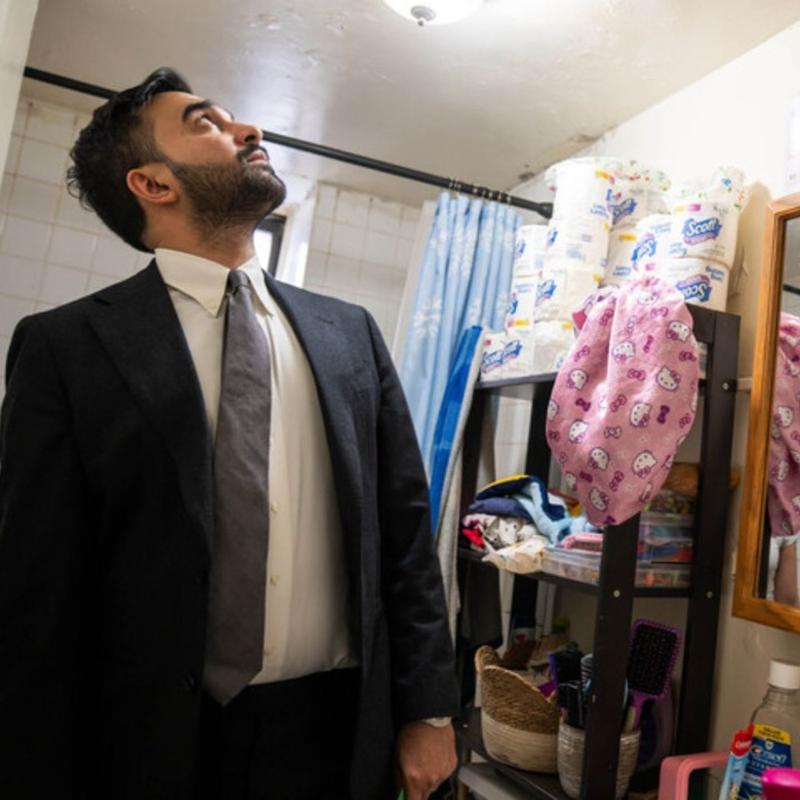
Brian Lehrer: Mihir, one of Mayor Mamdani's first actions in office as why are we talking about housing? It's housing as a number one issue for so many New Yorkers, and what is Mayor Mamdani doing about it in his first 100 days? One of his very first actions was to try to block the sale of 5,000 rent-stabilized apartments from a company called Pinnacle to the buyer they had chosen. A court allowed the sale to go through, so Mamdani lost that one. Why did the mayor get involved in the sale of 5,000 rent-stabilized units from one owner to another?
Mihir Zaveri: First of all, this is a big portfolio. It's one that had a lot of attention on it. There's a lot of tenant organizing going on in many of these buildings. The previous owner basically was in bankruptcy proceedings and didn't have the money to keep these up. The Mamdani administration intervened in the case or tried to intervene. They will also say this is not something the city has done before, and there weren't a lot of options at the time period where they intervened. You could imagine another administration, maybe not even bothering with a long shot bid to getting involved in this case.
I think part of why this happened was this was a place the mayor actually visited, one of these buildings, and he saw some of the issues that were going on. I think he was genuinely moved by seeing and hearing about some of these things. This is also a mayor who's saying, "I'm a mayor for the tenants, and I'm going to stand up for tenants' rights." Making a big public move to plant your flag in that way and signal going forward, like, "Hey, we're going to try to do something about these portfolios and these buildings," I think that might be part of what's going on here.
We've seen that there was a recent article in Gothamist about how the mayor is looking at other portfolios that maybe aren't as big, but just trying to see what they can do in these places where the current owners just don't have the money to keep running them.
Brian Lehrer: Right. I'm glad you cited the article by my colleagues at Gothamist, which I was about to do also, because Brad, more like the Pinnacle effort are coming. The Gothamist article said the mayor is eyeing another sale of rent-stabilized apartments in the works from a company called Emerald Equities. The deputy mayor for housing, Leila Bozorg, told Crain's this week that with portfolios like Emeralds, the city is looking at what it can do to help facilitate more responsible ownership. That's the premise there: more responsible ownership of rent-stabilized apartments.
We know the mayor also held the first of what he called rental rip-off hearings for tenants to complain about bad conditions in their building, stabilized or not. Do you know what they mean by more responsible ownership, even as they try to limit profit margins?
Brad Greenburg: I think so. I think Mayor Mondani's team is very smart on this topic. What they're really talking about is, before I get to a bankruptcy or a foreclosure, which is probably honestly somewhat too late to have the ability to use the city's leverage to try to stabilize these buildings, they want to get in earlier to some of these portfolios that are struggling and work with owners of those current properties, or if they have other means of intervening because maybe the properties are in enforcement action with the city, they want to use that leverage to basically transition the property to a different owner or to a more stabilized operating model from a financial standpoint.
That would mean a preservation intervention, which would be to give a subsidy to a new owner and maybe a tax exemption or tax break on the property tax side for this new owner, and see if they can stabilize the finances of the building or the portfolio. I think that's a set of tools that the city is used to using in the preservation area. I will say that this is probably a lot coming their way really fast. I mean, there's a lot of distress in some parts of this market, and they're probably going to need some new tools in order to do that. I know that they're working hard to start deploying those. That's probably what they're talking about, Brian.
Brian Lehrer: Now, listeners, we invite you into this. Your comments and questions welcome on Mayor Mamdani's first 100 days on issue number one for so many New Yorkers, affordable housing, or as a famous past mayoral candidate put it, the rent is too damn high. 212-433-WNYC, 433-9692, call or text. Obviously, after only 100 days, it's early yet, but has he done anything or started anything that could affect you that you like or don't like or that you have a question about for our guests, Mihir Zaveri, who covers housing for the New York Times, or Brad Greenburg, executive director of the Furman Center, which studies housing policy at NYU. 212-433-WNYC, 433-9692, call or text.
Here's an interesting-looking call, I think, because we were talking about rent stabilization in some historical context. Marsha in Brooklyn has a story, I think. Hi, Marsha. You're on WNYC.
Marsha: Hi, Brian. Thanks for taking my call. Yes, I am the beneficiary of immigrant grandparents who came over in the teens of the 20th century and began building in Brooklyn and ended up with a host of rent-stabilized 60-unit buildings, which they sold in the mid-80s when none of the grandkids who were pursuing their creative desires wanted to get involved in the business.
Those tenants from those buildings, when I moved back to New York in the early '90s, used to call me and beg me because of the horrific landlords that had bought the buildings from my grandparents, who lived in one of their buildings, and the others were walkable to their apartment. Tenants could just knock on their door and say, "Hey, Mrs. Bazerman, we need something done in my apartment."
They were able to pay their bills. They were able to pay everything. I remember the OPEC oil crisis. I was managing one of the buildings, and everybody was getting less heat. I complained to my grandmother, and the tenants asked me not to because they were willing to have a little less heat to have a good landlord who was so accessible and who took care of things. My grandmother would open the book, and she would show me her books every Sunday night at dinner, and she would say, "You take care of the tenants, and the tenants take care of you."
They lived in the building. They had one old Dodge. They did not need to have lots of fancy things, but they didn't live poorly; they lived well. Vacations, houses for all of their grown children, cars and houses and college education for us, the grandchildren, all on rent-stabilized housing where there were three-year leases and much lower rent increases. Not because they didn't take care of the buildings, but because they took care of the tenants, and they were able to maintain a consistency of revenue.
Brian Lehrer: With this knowledge, and you tell a wonderful story, but with your personal connection to that history, why aren't the current landlords living in Grandma Bazerman's world anymore? What is it that's going wrong?
Marsha: Well, in addition to all the changes in the economy since the '70s, when New York suffered its financial crisis, and the greed of the '80s that has led us to the current situation that never stopped, there was never any regulation, the deregulation of the Reagan years and the continuation of it under the neoliberals like Clinton, that passed itself ont states under bad governorships and very bad assemblies in Albany. Between all of that stuff, we got rid of three-year leases. We didn't modulate the rent increases.
In the last 30 years, since I moved back to New York, we have had at least 40% increases in rent stabilization rents. I have never heard any of your housing reporters actually look at it historically to see these huge increases at the Rent Stabilization Board approved, particularly in the Giuliani and Bloomberg years.
Brian Lehrer: Let me ask you one more follow-up question, then we're going to throw some of this to our guests. I think you told our screener that one of the things that the new owners wanted to do, and you'll tell me if they've succeeded, is get people out of the rent-stabilized apartments that they owned altogether so they could turn them to market rate or sell them. Is that correct?
Marsha: Yes. How do I know that? I own a dog walking agency, and I would walk in and out of buildings to meet clients where people had just purchased them and were trying to take down sustaining walls because they wanted to be able to create condos and create an issue where rent-stabilized tenants would not be able to live there. Somebody would come in and declare the building inhabitable so that they could then lay claim to the building and fall into the condo and co-op craze that really took off in the '80s.
Brian Lehrer: Marsha, thank you so much for your call. We really appreciate it. Brad, at the Furman Center, anything you were thinking, listening to Marsha? Since you brought up the historical curves, do you happen to know if there are about a million rent-stabilized apartments in the city today? Is that less than there were a generation or two ago?
Brad Greenburg: It's a good question, Brian. Units come in and out of rent stabilization. New construction and new subsidized units and units that are getting preserved that maybe were previously not rent-stabilized, they're also coming into the stock. Since 2019, when the law changed, there's been a lot fewer vacancy decontrol efforts. It's really much more difficult under the new state laws to do something like that. You should have more units coming into the stock over the last six or seven years or so than you have exiting the rent-stabilized stock.
I think it's a good point to say that the reason the law changed in 2019 was there was a perception and probably reality that a lot of landlords were using the vacancy provisions of the state law to try to harass tenants in certain buildings and maybe turn them over. I do think some of that has been clamped down by changes in state law over the last six or seven years. When you talk to owners, they'll confirm that for you, too, and tenant advocates who, I think, have justifiably said that the law was successful in that way. I do think it's changed a lot in the last six or seven years. The history from your caller is super useful for folks to remember, too.
Brian Lehrer: It's such a classic New York and American story, too, right? Your grandparents own buildings so you could grow up to work in the arts. Then, when you work in the arts, you wind up also having to have a dog walking agency. [chuckles] All right, so the battle over freeze the rent is on. The Rent Guidelines Board, with a majority of its members appointed by Mayor Mamdani now, is expected to determine its number in June. After a break, we're going to go on to another Mayor Mamdani 100 Days housing issue: building more affordable housing. Stay with us.
[music]
Brian Lehrer: Brian Lehrer on WNYC. Here on Mayor Mamdani's actual 100th day in office, we're looking at how he's come out of the box on one of the biggest issues in New York City, affordable housing, with our guests, Brad Greenburg, executive director of the Furman Center at NYU. They study housing issues with the goal of helping to inform smart policy choices. And Mihir Zaveri, who covers housing for the New York Times. We've been talking about rent stabilization so far. Next issue, building more affordable housing for a better balance of supply and demand.
Mihir, one of the headline stories that you covered from Mayor Mamdani's first 100 days is his agreement with President Trump at the White House for a federal partnership on building 12,000 homes over the Sunnyside rail yards in Queens. What exactly did the mayor get the president to promise?
Mihir Zaveri: That is a fantastic question.
Brian Lehrer: [laughs]
Mihir Zaveri: We don't actually know. I've asked, and I'm sure others have asked many times, and the White House won't provide any details. What seems to be going on, just reading between the lines a little bit, is trying to see this project in Sunnyside Yard, which was much discussed during the de Blasio administration, involves creating a deck over some rail lines. That whole process is going to involve multiple agencies, including some federal agencies. It's going to cost a lot of money, like billions and billions of dollars, to do that. The idea would be to try to divert some federal grant funding to this project.
We don't actually know what the conversation entailed and what the actual willingness of the federal government is to participate in this. As we know, things can change quite a bit at that level. I think it's a pretty open question at this point.
Brian Lehrer: Brad, is there a bigger federal context to that, though, like the federal role, if any, in developing more affordable housing in New York? Again, to reference history, it's not the 1930s anymore, when Mayor La Guardia got FDR and Congress to devote a lot of money to building so much of the public housing stock that we still have in New York City? It's definitely not the 1930s anymore. Is there a federal context at all, given Trump politics, even Biden and Obama politics, and realities toward building more affordable housing in New York City?
Brad Greenburg: It's a great, great question, Brian. We wrote a piece, actually, for the 90th birthday of First Houses in New York that talked about how the federal government had stepped up as basically the only subsidy source to build the first public housing project in New York City 90 years ago, as of December. You just see a completely different history around federal spending on housing in New York City back then.
Now, the federal government's resources for housing are really not sufficient for a project of this size. Most of it goes to general operations of the existing public housing stock or go through the Section 8 voucher program, which is usually a mobility voucher for folks to go on the private market and rent a unit or project-based vouchers to rehab some existing public housing, but it's nothing at the scale of a project like Sunnyside Yard.
I think Mihir is right to ask questions about exactly what source of federal money folks are talking about here. My sense is it's not directly an investment in the housing itself, but probably in the platform that you would need to put over the railyards, which would be incredibly expensive. Some of the infrastructure you'd have to also add to the neighborhood in order to have residential housing go on top of the platform. Honestly, I don't know what program folks are looking at to fund some of that work, but it goes way beyond the current capacity of HUD or the federal government from a housing standpoint.
Brian Lehrer: A big debate in progressive circles the last few years has been how much to roll back zoning restrictions on density and environmental review that some consider unnecessarily burdensome to fast-track affordable housing. Where is Mamdani coming down on those? Brad, I'll stay with you for the moment. I know that during the election campaign, he declined to take a position on the fast-track city of yes ballot questions that New Yorkers were voting on, but he did vote yes for them in the end.
Brad Greenburg: Yes, they've been advancing these ballot measures and using some of the new powers they have pretty quickly in the first 100 days here. There was three ballot questions for folks that don't remember. The first was the fast track that you're talking about, Brian, which has two components to it. One is to have the Board of Standards and Appeal do a fast-track zoning action. The BSA did put out rules around what that would look like recently. The second part is to designate 12 community districts citywide that don't produce enough housing, and in those districts, to have City Council review of projects eliminated.
They also published rules around how they're going to calculate and designate the districts in the coming year. Those are moving pretty fast through the rulemaking process. Then the other ballot measures, there's a ballot measure called the expedited land use review procedure ballot measure, which lets the city, when they're building affordable housing on city-owned land, do a faster pre-development process on certain projects. The city did already announce a project in the Bronx on a parking lot and are starting to hint at some other projects they want to do that will use that expedited process.
We'll be hosting a policy breakfast to go over a bunch of maps on city-owned land. It's a big area of focus for the deputy mayor, and she'll be on our panel. I know they're trying to use that new power. Then we've already seen the third ballot measure, which is the creation of this affordable housing appeals board that lets you escalate a matter beyond just the City Council member whose district has the project. That's kind of changed the dynamic. We've seen already a council member in Queens for a project in Bayside say, "Yes, I'm going to let a project go forward because I've lost some of my negotiating leverage, and I don't want to get this escalated to the appeals board."
I think you've definitely seen the mayor embrace the ballot measures in the first 100 days and start to think about how he wants to use them.
Brian Lehrer: We mentioned the Trump-Mamdani interest in the Sunnyside Yards development, 12,000 homes. Well, the council member from that area is calling in City Council Member Julie Won. Council member, thank you for chiming in. You're on WNYC. What were you thinking when you heard that stretch? Our guest from the New York Times couldn't put his finger on what, if anything, Trump actually promised the city to help it come about.
Council Member Julie Won: Hi, Brian. What I want to make clear is that the $21 billion is only for the cost of the deck, not for housing, not for parks, or schools, or anything like that. Currently, without the funding allocated from Congress because we don't want unlawful money from Trump, without that funding written in a bill for it to be appropriated by Congress and voted on, there won't be any funding for the $21 billion. The city of New York, the mayoral administration, has said that this project cannot move forward without that funding.
Therefore, what that means is the Sunnyside Yards master plan from 2020, which is what we're referring to, there is no new study for us to work off of. That study needs to be further studied, which is what the study calls for, saying that this is not a shovel-ready project, this is not construction-ready, and we need to do a lot more community engagement, as well as feasibility studies, because this project is going to take 50 to 100 years.
Brian Lehrer: What?
Council Member Julie Won: We've got a lot of work to do. Yes, that's what was discussed in all of the town halls.
Brian Lehrer: They built the Empire State Building in eight months, or I don't know what it was, but something like that.
Council Member Julie Won: [laughs] You would think so, right? It's the size of Governors Island. It's actually larger than Governors Island that you're trying to build on glacial till and marsh soil on an active train track that has 800 trains that are going back and forth on a daily basis that cannot be interrupted. As of 2020, they were estimating 100 years.
Brian Lehrer: That's crazy.
Council Member Julie Won: Just for the deck.
Brian Lehrer: Well, what's your interest in this? Is it that people in your district don't want this much development in their area, and so you're saying all these things to try to muck it up so it doesn't happen, or do you want to try to see that it becomes a reality?
Council Member Julie Won: I would love to see it become a reality, but we need to get the $21 billion, and it has to be clear of what we're asking for, because as part of the government and part of the bureaucracy, if we don't have a clear ask, that is not going to happen. That means that we have to hold the Trump administration accountable, saying, if you were interested, we want to see the $21 billion allocated in a bill for Congress to vote on. Currently, we don't have either of those things on record.
Brian Lehrer: Councilmember, thank you very much. Mihir, any thoughts about that call?
Mihir Zaveri: No. I think the council member, who has pretty prominently expressed her surprise and wants to know more about what's going on here, is right that there are a lot of complications and a lot of details that haven't really been outlined very clearly. Maybe they don't have them yet. I think people have a right to ask.
Brian Lehrer: 100 years to build a deck? All right, next issue, public housing. Mihir, you had an article last month about vacancies in the city's public housing buildings doubling in the last few years to more than 6,700 apartments. Part of that article was about squatters taking up residence in some of those units. If the city's 180,000 public housing units are so coveted and the waiting list is always so long, why are 6,700 sitting vacant?
Mihir Zaveri: Everything that you said is true. This is sort of the paradox of public housing, where you have people who really, really want to hold on to these apartments that are the really, truly affordable housing in New York City. Yet, at the same time, a lot of them are in bad shape. Part of what's going on with these vacancies is they are having to do upgrades to these apartments. They're having to deal with lead and other issues in them, and that takes time to turn them over. In other cases, they're thinking about, "Okay, if we're going to have to upgrade one building and do some other renovations on one building, we need to make sure there's vacancies to relocate people to make that happen."
There's a few different reasons why this can happen. I think, again, it's another one of these issues that maybe isn't a complicated multifaceted answer. It just depends on where you're talking about and what the context is. I mean, Brad, as somebody who worked for the public housing system, probably has even more insight.
Brian Lehrer: Brad, want to pick it up?
Brad Greenburg: Yes. We talked earlier about First Houses is 90 years old. Most of the public housing stock is 60, 70, 80, 90 years old now. Folks that live in public housing tend to stay for a long time. It's very stable, affordable housing. Once they turn over the unit, there's a lot of wear and tear. Also, there's been a legacy of disinvestment in the stock. A few years ago, NYCHA estimated their capital needed to be $78 billion. $60 billion of that was capital they needed to address in the first five years. The legacy of disinvestment is really intense in the public housing stock. The vacancies are kind of a manifestation of that.
When folks are exiting their unit after a 20-year tenure, maybe in the apartment, and things like lead paint haven't been abated, and asbestos hasn't been abated, and you maybe have like a lot of leaks from old plumbing systems, you need to upgrade electrical, you're basically rebuilding the unit from scratch at that point. It's important for NYCHA to do that so that the unit is safe for the next tenant, but it takes a long time. During that long period of time, it's hard to secure the unit sometimes, working with the NYPD, so they run into issues there, too.
I think it's in some ways a nuanced issue. In other ways, it's not. I mean, the capital needs of NYCHA are really intensive, and this is like another manifestation of that capital need. They really just need to address the physical conditions over time, and that's how this shakes out.
Brian Lehrer: To bring it back to Mayor Mamdani in his first 100 days, I know that in 2019, the de Blasio administration agreed to a federal monitor for the city's public housing stock, as described by the Times that year as intended to correct years of mismanagement that prosecutors said had exposed hundreds of thousands of residents to lead paint and other health hazards. Do you know if that federal oversight, Brad, has made things any better in the seven years since, or if Mamdani has a fresh approach to that?
Brad Greenburg: The federal monitor is regularly reporting that he thinks there's been a lot of progress and that they've made a lot of progress, especially with regards to lead paint, but a lot of the other areas of the agreement, like heating and elevators as well. The lead paint need to do that on vacancy has been a requirement for a long time, and NYCHA had maybe not been doing it properly. It's taking longer now to turn over units when they're doing what they're supposed to do, which is abate the lead paint.
They've abated tens of thousands of units at this point since the agreement was signed and have tested a lot more than that to make sure they know exactly where the lead paint is, and they're using lead-safe work practices. I think it's made a difference. I don't know what the mayor's plan is in terms of the monitorship. It's a five-year term. This current monitor got their five-year term a couple years ago, so they still have some time to go here. It's really up to the parties to the agreement, which is HUD and the US Attorney's Office and the city, to decide on next steps, which will eventually happen in his administration.
Brian Lehrer: All right. We're just about out of time. We obviously can't get to everything in such a big topic area as housing in one segment. One thing that we did a separate segment on recently that we didn't get to today, but I'll just say it. The mayor broke a campaign promise to expand the city for HEP's voucher program because he concluded that the city couldn't afford his original promise. They're looking at other ways to go forward. Is there anything I haven't asked you about that you're burning to get out about housing policy in Mamdani's first 100 days? Mihir, anything?
Mihir Zaveri: Well, I think the something that bridges a lot of these questions, and I recently wrote about, is the redevelopment of the Fulton & Elliott-Chelsea campuses, NYCHA public housing campuses in Manhattan. That's a project that's going to involve demolishing a bunch of these buildings and rebuilding them. It's been contentious, and the Mamdani administration has backed it pretty strongly, which many people may not have realized. It's part and parcel of this overall push to find an answer for public housing.
Brian Lehrer: Is there data on that? I'll ask you one follow-up question. From other public housing developments where private ownership has come in? It's always contentious, but the claim is always that they're going to do things better than the government was able to do.
Mihir Zaveri: Right. This is something that's happened in most other places around the country. Part of what's going to matter the most is the oversight and making sure whoever's running the new developments does what they say they're going to do. That, I think, regardless of where you are is always a challenge for the public sector.
Brian Lehrer: Brad, anything that you're burning to get out that I didn't bring up?
Brad Greenburg: I would just say that the team that he has put together is pretty interesting. You have a new HPD commissioner and some new folks at the Housing Development Corporation. The most interesting part, I would say, is there's a new buildings commissioner who has a housing background and a City Planning Commission chair who's got a housing background. They've really shown directionally that I think they're interested in a pretty ambitious all-of-government approach. Everybody's focused on the housing crisis. I do think the housing crisis warrants it in New York City. They definitely seem to be putting a team together that wants to take this on. I'll probably leave it there.
Brian Lehrer: Brad Greenburg, as we do leave it there, is executive director of the Furman Center at NYU. The Furman Center studies housing issues with the goal of helping to inform smart policy choices. Mihir Zaveri covers housing for the New York Times. Thank you both so much for spending a lot of time with us this morning and being so clear on so many housing issues. Thank you.
Brad Greenburg: Thank you.
Mihir Zaveri: Thanks, Brian.
Copyright © 2026 New York Public Radio. All rights reserved. Visit our website terms of use at www.wnyc.org for further information.
New York Public Radio transcripts are created on a rush deadline, often by contractors. This text may not be in its final form and may be updated or revised in the future. Accuracy and availability may vary. The authoritative record of New York Public Radio’s programming is the audio record.