
New Jersey Gubernatorial Debate Recap
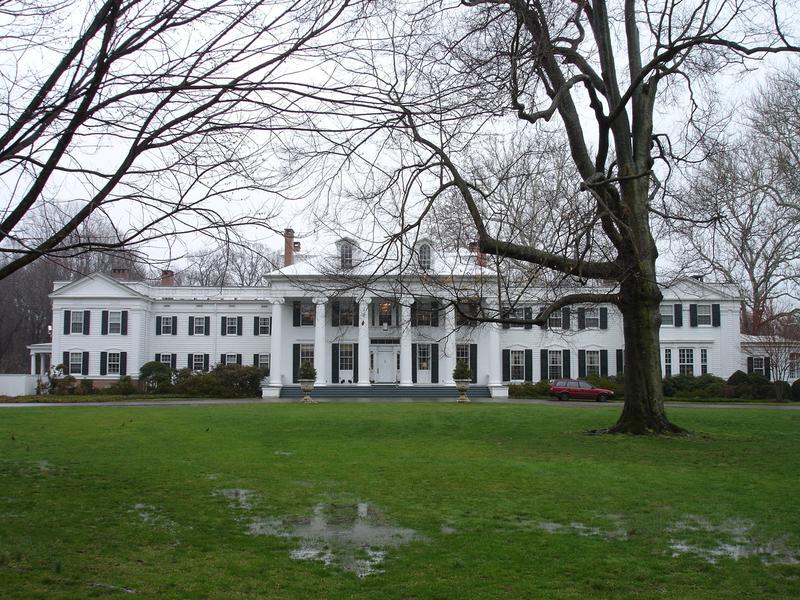
( KForce / Wikimedia Commons )
Title: New Jersey Gubernatorial Debate Recap
[MUSIC]
Brian: It's The Brian Lehrer Show on WNYC. Good morning, everyone. Somewhere in between accusing each other of a mysterious military scandal and killing tens of thousands of people, somewhere in between those things was a New Jersey gubernatorial candidates' debate on the issues. Last night on Channel 7 in New York and Channel 6 in Philadelphia, the ABC stations that cover the state, somewhere in there, we learned about Democrat Mikie Sherrill and Republican Jack Ciattarelli's different approaches to rising utility bills and climate change, education, choice in funding, immigration, more affordable housing, and managing the state while Donald Trump is president.
It's those alleged scandals that have grabbed the headlines this morning. If you paid any attention to the news, you know that. We will try to address both. We've got about half a dozen clips to play. We'll open our phones and text message thread for you. We've got our favorite New Jersey maven, Nancy Solomon, whose "Ask Governor Murphy" call-in was postponed last night so it wouldn't compete with the debate for the attention of voters in the state. Hi, Nancy.
Nancy: Hi, Brian. I'm very happy to hear that I'm your favorite.
[laughter]
Brian: Wow, they were hitting each other harder than the Blue Jays hit Yankees pitching, and that's pretty hard. Were you expecting that level of accusation?
Nancy: Yes. This is the last debate, and the most recent poll showed them at a dead tie, so they've got to go negative. They've got to do that stuff. I agree with you. If you listened super carefully, you could pick out the policy differences and what this really should be all about. It was pretty feisty, and there were a lot of accusations flying back and forth.
Brian: This is my lot in life. I was watching with, what you might say, a fine-tooth iPad, taking notes on where those issue differences actually were and pulling them out for clips for this morning. Let's get the scandal accusations out of the way first, and then we'll concentrate on issues. This two-minute clip starts with Mikie Sherrill.
Mikie Sherrill: My opponent likes to talk a lot about being a businessman, but I think what New Jersey doesn't know as much about his business, how he made his millions, by working with some of the worst offenders and saying that opioids were safe, putting out propaganda, publishing their propaganda while tens of thousands of New Jerseyans died. As if that wasn't enough, then he was paid to develop an app so that people who were addicted could more easily get access to opioids. As he made millions, as these opioid companies made billions, tens of thousands of New Jerseyans died.
Moderator: Mr. Ciattarelli?
Jack Ciattarelli: First of all, shame on you. Second of all-
Mikie Sherrill: Shame on you, sir.
Jack Ciattarelli: -shame on you. During the Biden administration, she had no problem whatsoever with tens of thousands of people crashing our border each and every day, not knowing what impact they had in our communities with regard to fentanyl crisis, fentanyl abuse, fentanyl distribution, vaccination rates, and the like. Talk to your local police, talk to your county prosecutors in New Jersey. Since the border's been secured, fentanyl crisis has decreased significantly. She supported those open border policies. With regard to everything she just said about my professional career, which provided my family, it's a lie. I'm proud of my career.
Moderator: You get 30 seconds.
Mikie Sherrill: I'm happy to publish the information, and here are the facts-
Jack Ciattarelli: I'm sure you are.
Mikie Sherrill: -I work because I think our kids deserve better. I think the people you got addicted and died deserve better than you.
Jack Ciattarelli: Addicted [crosstalk]
Mikie Sherrill: I'll tell you, tens of thousands here, as you published misinformation, as you got more people addicted, as you got paid to develop an app so that more people could get more opioids and die. Here's the fact, even during--
Jack Ciattarelli: I got to walk at my college graduation.
Moderator: Sir, you'll get 15 seconds.
Mikie Sherrill: I'm so glad that you then went on to kill tens of thousands of people in New Jersey, including children, as they got--
Jack Ciattarelli: I never broke the law.
Mikie Sherrill: You just broke the law. In fact, your campaign right now is under federal investigation for how you-
Jack Ciattarelli: No, you've broken the law.
Mikie Sherrill: -illegally got access to my records. To say that right now, and I think you're trying to divert from the fact that you killed tens of thousands of people by-
Jack Ciattarelli: You broke the law.
Mikie Sherrill: -printing your misinformation, your propaganda, and then getting paid to develop an app so that people could more easily get the opioids once they were addicted.
Brian: Mikie Sherrill and Jack Ciattarelli from last night's debate. Listeners, did you watch the debate? Who has a reaction to anything from it, the policies or the accusations we just heard? First priority will go to callers from New Jersey, of course. 212-433-WNYC, 212-433-9692. Did you learn anything about either candidate that you didn't know before? Did anything you heard last night make you change your mind at all about one candidate or another? 212-433-WNYC, New Jersey listeners, especially, 212-433-9692, call or text. Nancy, is this the first time that Mikie Sherrill leveled that specific charge of Ciattarelli being responsible for tens of thousands of opioid deaths?
It might have been the first time she's brought it up publicly. I do think the campaign has sent it out in some form, and she said that in the press conference afterwards. This has been out there for quite some time. It came up in the 2021 race when Ciattarelli ran against Governor Murphy. There's a really excellent piece in The Star-Ledger written by investigative reporter Ted Sherman, an in-depth story about his medical publishing business that he sold for $12 million.
Brian: That's really what broke this open back in 2021?
Nancy: Exactly. Yes. It's more about just like what that business was, and that he talks about himself as a Main Street businessman, but really, it was a much bigger, more profitable enterprise, and whether or not these kinds of publications, his included, just shill for big pharma, or whether they really provide serious vetted education. That was another question in the piece. Yes, it also is very clearly there's a whole section about the recommendations about painkillers, opioids, and the fact that they can pose a danger, but not enough of one to not prescribe them.
Brian: That was the guidance or the information in this, would you call it a medical publishing business?
Nancy: Yes.
Brian: Has there been any other finding by a government agency or charge of any kind of his business promoting opioid treatments in a way they knew was needlessly adding to the opioid death toll?
Nancy: I don't think so. I think it came up in 2021, and it went away. He hasn't owned the business anymore. I guess Purdue Pharma is being held accountable in terms of they're paying money into it for a settlement for what they did. I don't think there's been any legal action against him. In the big scheme of things, it's probably a little drop in the bucket when you think about it, like what his business, how it contributed. Still, I think it's fair enough, especially since he talks about that he's a small businessman who made it and that he'll-- I think it's fair game. Let's put it that way.
Brian: Fair game, and I guess people will decide if it's fair game, the way she put it, you kill tens of thousands of people. On the Mikie Sherrill Naval Academy question, she says she was denied the privilege of walking at graduation. She was allowed to graduate, but not participate in the ceremony, because she failed to report fellow classmates she knew were cheating. Ciattarelli said that that duty to report a fellow classmate may be in the West Point Academy Code of Conduct, but not at the Naval Academy, which Sherrill attended, so it must have been something else that she was disciplined for. Is there confirmation from the records that were released that the punishment was for what she says?
Nancy: No, I don't believe so. I haven't looked at the records, but in the reporting about it, I haven't seen any confirmation. I think her response to him was to talk about what she managed to achieve and how successful she was in her military career following her graduation. You got to wonder if someone was being punished for doing something wrong and not allowed to walk in there, and she wasn't denied the graduation. She was denied the ceremony of walking. What level of infraction are we talking about here? Then how she ends up going to officer school, becoming an officer, serving decorated service.
I think there's a decent argument to be made here that this is an example of swift voting, the reference to John Kerry against George W Bush, where Mikie Sherrill's military record and service is something that she talks about a lot, and it's a strength for her in terms of her narrative and her story, and the Ciattarelli campaign is trying their best to undermine that and say, no, she's not trustworthy-
Brian: It's a weakness.
Nancy: -and make it into a weakness. Did she do something really bad? It sure doesn't seem like it. Maybe there was some infraction, but it doesn't seem to really undermine everything that she did in terms of her military service.
Brian: From what I've read, her actual military record in the Navy, from everything that's been released, was spotless, including a medal for saving somebody's life. This was only about whatever it was when she was in school. He wants her to release her full disciplinary record and says, "If this was really about what you say, and it's only that small a thing, why don't you release it?" Why doesn't she?
Nancy: What she said last night is that releasing those records would require her to release confidential information about all of those students who were investigated at the school. I can't fact-check that between last night and this morning. I don't know whether or not that's true, but that was her answer.
Brian: His accusation that she broke the law with something having to do with stock trades. What's that?
Nancy: I think there was a reporting issue, and there was a fine that she paid, but she has her stuff in a blind trust. He was making it sound like she profiteered off of insider information that she got because she served on one of the armed services committees.
Brian: Defense stocks while she was on an armed services committee.
Nancy: Right. If you put your stuff in a blind trust so that it's being managed by a fund manager and you're not making decisions about it, that's the common way that members of Congress are expected to deal with it, and that's what she does.
Brian: The one more back at him about the release of her personal information from the Naval Academy that Sherrill said was done by someone close to Ciattarelli, who he even considered as his running mate. Any reason to believe it was a malicious release?
Nancy: I don't think there's any proof. I think that this is one of these things where how you see the world is going to affect who you believe. I think Democrats see the Trump administration as weaponizing information that they have access to in the federal government against their political enemies, and they see this as a case of that. I think that's a legitimate argument one can make. Ciattarelli's defense of that is, "Hey, we put in an OPRA request, and we didn't have anything to do with what we got back. The National Archives has said it was a mistake and they have apologized." Is it being investigated? Yes. Sherrill is right about that. What will come out from that investigation? Totally unclear.
Brian: All right. Before we get to other issues, some might say actual issues, we've got clips lined up on affordability, on education, on governing New Jersey in the time of Trump, on abortion rights, and on immigration. We'll try to get to all of them. Nancy, do you think these scandal accusations are voting issues that are swaying anybody? Judging from our caller board and our text message thread, for what it's worth, small sample, thoroughly unscientific, people are finding it a distraction. From what you can tell, are voters doing anything more than just rolling their eyes at all this from either of them and then going on to try to figure out who's going to be best for the quality of life?
Nancy: I feel like we have this conversation every four years because it detracts from what are they really going to do? What does it mean? Where do they differ on these policies? What's true, and what's not true, about those public policies? That's the important thing, but attack ads work. They're effective. That's why campaigns spend millions of dollars on them. We're in a trap. Is it important? I don't think so, but will it change how voters feel? It must, because that's why they're being barraged with these ads.
There's another ad that didn't come up last night that I think is probably the most damaging ad against Mikie Sherrill. It's one in which she's doing a local New York, I think it's CBS. Don't quote me on that, but it's a TV interview, and she is asked just give me an example of a piece of legislation that you would push when you first take office. She stumbles really, really badly. She goes blank, and she cannot think of a single piece of legislation she would propose. That is in heavy, heavy rotation, that ad. I've talked to a few people, just voters and folks I know, and people find that ad really damaging. This is the world of negative TV advertising, and I think there's nothing really to be done about it.
Brian: I think what you were just describing, that ad and that response previously by Sherrill, gets us to the next clip. They didn't reference the ad in the question, the moderators, but affordability is the buzzword just about everywhere these days, and for both parties. They were asked last night to name three specific things that they would do to make life more affordable in New Jersey. Here's some of each of them on that.
Mikie Sherrill: I constantly hear about this from voters. That's why on day one, I'm declaring a state of emergency on energy prices, freezing rate hikes. I'm going to take on the PBMs. Those are those middlemen that can drive up drug prices up to 10 times, driving down your health care costs. I'm going to ensure that I'm taking on those landlords that are colluding to drive up your rental prices. Housing, health care, utility costs immediately get to work driving down your costs. Quite frankly, we know my opponent won't do it because his number one donor is somebody who's actually under investigation for driving up those rental costs. I'm going to continue to fight for New Jerseyans, and my opponent just won't.
Moderator: Mr. Ciattarelli?
Jack Ciattarelli: My opponent has put forth an illegitimate plan that isn't feasible. Even the governor, a member of her own party, has said that I don't really think you can do that. There are 77 incumbent Democratic legislators, 52 of which are on the ballot this year, and not one has endorsed her plan. To get electricity rates down on day one, I will pull us out of RGGI. The Regional Greenhouse Gas Initiative is a carbon tax policy that has cost New Jersey $300 to $500 million a year for homeowners, tenants, and businesses, and it's been a failure.
Electricity is at its all-time high, the air is no cleaner, and ratepayer dollars are going to other states. We can provide some relief on day one. We also have to take care of the property tax crisis, something you won't hear my opponent ever talk about. We need a new school funding formula in New Jersey. With a new school funding formula, we can have a more equitable distribution of state aid, and in so doing, reduce the property tax burden with our local school districts.
We also have two other things that are driving the affordability crisis in New Jersey. Housing. We need more affordable housing. We just need to be smart about the way we do it. Another thing that's driving the affordability crisis is child care, and I have a specific plan on how to relieve that burden for families with young children.
Brian: Nancy, to my ear, if there was one thing Ciattarelli kept coming back to, as we played that approximately two minute clip on affordability from each of them, if there was one thing that he kept coming back to, it was to try to reduce energy costs by withdrawing from the Regional Greenhouse Gas Initiative, known by the acronym RGGI, as he said, among New Jersey and some other Northeast states. What does RGGI require the member states to do?
Nancy: Oh boy, you're asking me something I have not looked at in several years. Chris Christie pulled us out of RGGI, and I dug into it deep back then, and then Murphy put us back in it.
Brian: This has been back and forth between Democratic and Republican governors for that long.
Nancy: Yes, and it really goes to the heart of the difference between the two parties on climate change. The Republican Party has basically, in every possible way, doubled down on climate change is not a problem, and we shouldn't be doing anything about it. I think RGGI is an agreement by regional states in our region to increase clean energy, reduce pollution, reduce burning of fossil fuels. The states join a compact and commit to doing things. I can't remember exactly what those things are.
What I can say is that Jack Ciattarelli's position is really completely opposed to the whole side of the political spectrum that believes that climate change is a problem, and that we need to wean ourselves off of fossil fuels to solve that problem. For instance, he says that it was Murphy's emphasis on wind power, and in setting these clean energy mandates, electrification of driving cars, of gas stoves, just every possible way to wean off of oil and gas, and move towards cleaner energy. He says that's what's driving up costs.
I just don't think that that's true. I think that what's driving up costs is we have a massive demand for electricity for all kinds of reasons. Yes, it's true that electric vehicles increases demand for electricity, but so do computers, so do data farms, and so does AI. There are all kinds of things that are driving up the demand for electricity, and the system that brings more electric plants online is very slow, full of red tape, and ineffective.
If the Murphy administration had been able to get its wind program going-- It did everything it could do to get it going, and it was blocked by the federal government. There were problems caused by the economy and the pandemic that also gave the administration trouble in getting the wind turbines built. If those were coming online, we would see a downward pressure on rates. Jack Ciattarelli does not believe that, and that's what he's talking about.
Brian: If Ciattarelli thinks agreements with other states on climate change reduction measures are affecting energy prices, she didn't mention it last night, unless I missed it, Nancy. I've heard Mikie Sherrill say before that the way New Jersey gets electricity priced from the way it's set by a multi-state PBM, she did mention that term, PJM-
Nancy: PJM.
Brian: -the fact that New Jersey's energy prices are somewhat dependent, she argues, on Virginia's energy prices, and Virginia has so many of those AI data centers where so much of the demand is, that somehow getting New Jersey uncoupled from that would help bring down electricity costs. She didn't really get into that last night, but she did say, as she always says, that she would declare a state of emergency on energy costs as governor. Does she get specific about what that executive order would allow her to do?
Nancy: She says it would freeze costs, and he says she can't do it. I tried to listen very carefully, and Ciattarelli is saying no one in the legislature has endorsed that plan, and I'm wondering when do legislators enter a campaign and say, "I endorsed that plan?" It's not really a thing? Just because they haven't publicly endorsed it doesn't mean she doesn't have enough support to do it in the legislature, although maybe she doesn't. Obviously, she doesn't need the legislature to sign an executive order as governor. Is it feasible? He says it isn't. The governor has pretty wide powers through the New Jersey Constitution, so I can't say I have fact-checked his claim that it's not feasible, but I don't know what he's basing that on.
Brian: All right. We're going to take a break. Then we're going to go next to the issue of education. That was a big one at the debate last night, and then after that, how they would be governor in the time of Trump, and on from there. Listeners, we will take some of your calls and texts on any of the issues that we're playing excerpts from from last night's New Jersey gubernatorial debate on the ABC stations in New York and Philadelphia. 212-433-WNYC, call or text, 212-433-9692. They were very different on education, and we'll get into that right after this.
[MUSIC]
Brian: Brian Lehrer on WNYC as we play clips and get analysis from Nancy Solomon and your reactions, if you want, at 212-433-WNYC on the phones or on text messages, 212-433-9692, excerpts from last night's New Jersey gubernatorial debate. Let's talk next about education. Ciattarelli seemed to have two major proposals for change. One is to change the state's education funding formula in a way that he calls more equitable, and that will let some localities lower or not raise property taxes, which are used for local schools. Here's his other main proposal for change.
Jack Ciattarelli: I'm going to repeat something I said earlier in the evening, because I think it's one of the things that differentiates the two of us very, very much, but also reveals one of the hypocrisies of the Democratic Party that wants to portray itself as the party of the marginalized, disadvantaged, and minorities. Who has school choice? People with money. They can pull their children out because they have the wherewithal to send them to private school. Who doesn't have school choice, particularly in failing school districts? People without the money. I'll provide them choice with vouchers and charter schools. My opponent will not.
Brian: Nancy, when Ciattarelli says choice, he's talking about, he made it clear there, both charter schools, which are alternative public schools, and vouchers, cash from the state to families that I presume they could use for private school. That's what he means by vouchers, yes?
Nancy: Yes.
Brian: Does New Jersey have any of that now?
Nancy: Oh, I don't think so. There might be some. It's not a huge feature of the system. We have a lot of charter schools, but I'm afraid you stumped me on that one. I'm not sure if we have vouchers.
Brian: Sherrill didn't respond explicitly in this way last night, but how does she respond, if you know, to the class-based frame that Ciattarelli put on that in that clip? Wealthy or New Jerseyans have school choice because they can afford private school out of their pockets. School choice is the way, he argues, it's an equity proposal.
Nancy: Listening to it on the air, without seeing it, you don't see that there's just a slight pause when he says the rich or the wealthy. What you can't see is that then he looked over at her as if to suggest she's the rich one here, which it's actually the other way around. I thought that was interesting. I would say that this is his strength is talking about schools and school choice. I thought he does it very well, and it's very appealing when you listen to him, like, "Wow, that sounds good. Yes, only rich people get choice."
I thought that this is a major weakness for Mikie Sherrill, that her experience is at the federal level, and her state public policy chops are just not quite that good. She's smart and she's capable. I'm not saying that, but she's just not that dug in on New Jersey-specific policy in every way. She is, in some ways.
She really failed last night to point out the problems with what Jack Ciattarelli is proposing, which is that funding for charter schools, but less so than funding for school vouchers, siphons money out of the public system and makes it harder for public schools to be as good as they can be because some resources are being taken away from them, and that all the research that's been done on charter schools shows that they're a lot like public schools in the sense that there are good ones and there are not so good ones.
When you average it out, charter schools don't necessarily do any better than public schools. Yes, there are some very good ones, but-- I'm going to get a lot of mail today about this. She did not challenge him in a deep public policy way, and she needed to-
Brian: Or on the vouchers.
Nancy: -about what is wrong. Then the other thing is he talks about the school funding formula, and this is a dog whistle to white suburban communities that are really mad that Black and brown urban school districts get more state funding for their schools than white suburban communities do.
Brian: Lower-income school districts, which is the metric, right?
Nancy: Yes, exactly. He's saying something there about that, which is that he would put more funding into suburban schools and less funding into urban schools, and she's not really challenging him on that, and what the problem with that is.
Brian: What are Sherrill's main proposals for improving education? Because I'm not sure I heard anything last night as specific as those two, more choice and education funding formula, that we heard from Ciattarelli, whether people like them or not.
Nancy: I think this is where we're not seeing enough public policy out of her campaign. I've heard people involved in democratic politics in New Jersey frustrated with her campaign and frustrated that it's being run by campaign managers who are not New Jersey in-state people, but out-of-state people, and that she doesn't have enough very specific policies about what she would do as governor, and I think that is the biggest problem with her campaign.
Brian: Listeners, anybody want to engage on vouchers? Especially if we happen to have people of, let's say, moderate means, however you define that for yourself, who have kids in the public school system anywhere in New Jersey. Would you like a voucher for private schools? Do you think the state should take some-- I guess they have to take some money from somewhere. Maybe it would come from education funding, I don't know, but to give vouchers to people. If so, should it be means-tested to fulfill the promise that Ciattarelli was making there that it would even the playing field? Anybody in New Jersey, especially if you're a parent of a school-aged child, 212-433-WNYC, 433-9692.
Here's one that's in a text message. A person who's against vouchers writes, "The majority of people who take advantage of vouchers are the wealthy who are sending their kids to private schools. It helps to subsidize their investment. Private schools are very expensive, and the voucher program does not address how expensive they really are. Usually, poorer parents end up sending their kids to Catholic schools." I guess, meaning if they leave the public system at all. I don't know if he's gotten into it this specifically, Nancy, but that is a question.
If it's an equity program, would it be means-tested? Could a wealthy parent in Summit or Millburn or somewhere take their kids out of the public school and be partially subsidized by the state to pay for an elite private school? Also, how much of a private school tuition that's not Catholic school would the voucher cover? These are all details that he'll need to flesh out. I'm not sure that he has.
Nancy: No, I don't think so. I think it's fair to say that Jack Ciattarelli governorship, it would be a return to Chris Christie in many ways. Christie was very big on charter schools. There was a huge explosion of them during his years. He was critical of the school funding formula and the emphasis on funding low-income school districts. I think that's where a Cittarelli governorship would go.
Brian: All right. Next issue: Support for President Trump. Here's an exchange they had on that. They were each asked to give the Trump administration a letter grade so far. I'm not sure if their specific letter grades are in this clip, but we will definitely get to that after the clip if it's not.
Jack Ciattarelli: No matter who it is that's in the White House, my job is to stand up for the 9.3 million citizens of this state, and I will. I will fiercely advocate for them at all times. Let me also say this: that in times of need, it's best to have a relationship with whoever occupies the White House, and I will.
Moderator: Congresswoman?
Mikie Sherrill: He's shown zero signs of standing up to this president. In fact, the president himself called Jack a 100% MAGA, and he's shown every sign of being that. He said it's his job to support the president of the United States. I think as governor, it's the job to support the people of New Jersey. I've taken on anyone and everyone, including powerful members of my own party, to fight for people here in New Jersey. Jack won't say one cross word about the president.
Brian: The addendum that I promised, she gave Trump an F so far, and he gave Trump an A. How MAGA Ciattarelli is is kind of a branding question, Nancy. It's Trump, who himself, as was cited during the debate, who calls Ciattarelli a 100% MAGA. What does this suggest at the policy level? Did either of them get specific about that?
Nancy: Jack Ciattarelli says that his good relationship with Donald Trump will mean that he can pick up the phone, and he can get stuff done, and he can bring federal money back to New Jersey. He cited the experience that Phil Murphy had getting help during the early days of COVID, from the Trump administration, and that you have to be able to pick up the phone and talk to the guy. He's the one who can do that. Nothing a whole lot more specific than that.
I think he was forced during the primary to pretty much go full-on MAGA to win the primary, and now he can't walk away from it completely. Obviously, giving Trump an A is not trying to. He's not trying to walk away from it. He does a really, really good job at making some of the most conservative extreme views sound moderate. I got to tip my hat to him. I sit there listening to him at these debates or some of his campaign appearances, and he's likable, and he talks about things, and they sound good. Let me give you an example. Most New Jerseyans are pro-choice and support a woman's right to have an abortion. Jack Ciattarelli last night, and always calls himself pro-choice, but he's for a ban at 20 weeks, and--
Brian: You know what? Let me jump in because I have that clip. Let me play part of the exchange on abortion rights last night, and then you'll get more specific on that. Here we go.
Jack Ciattarelli: I've always supported a woman's right to choose, and I said yes to that question back in 2021. What I don't support is celebrating abortion the way the current administration does. What I don't support is making New Jersey the abortion capital of the country, inviting people from other states to come to New Jersey and have their abortions performed. I don't support that, let alone use taxpayer dollars to do that. I also support something that my opponent does not: parental notification.
In the state of New Jersey, you can't get your ears pierced under the age of 18 without the permission of your parents, but we're not going to notify parents when a 16 or 17-year-old is having an abortion before them? I think that's terribly wrong. I've yet to find the most liberal, maybe with one exception, of women across the state who support that policy. That's where my position has always been on abortion. I've supported a woman's right to choose.
Moderator: Congresswoman?
Mikie Sherrill: Again, he's peddling misinformation. I don't think he knows what's going on in this state, or he's willfully ignoring it, or in this country. We're hearing stories across the country about horrible outcomes, like Porsha, a woman in Texas, who went to the emergency room as she was miscarrying two young children at home.
As she was miscarrying, they gave her multiple transfusions, but because of abortion bans, like the one my opponent's proposing, the doctors were afraid to give her a D&C or an abortion to save her life, so she died in an emergency room. Purely preventable. Could have been taken care of. When you put in place things like my opponent has suggested, people die. We also have the fact that when he was last in office, he voted to defund Planned Parenthood. These are not pro-choice positions.
Brian: Nancy, you want to pick up where you left off before the clip?
Nancy: Yes. When you listen to him, like I said, it sounds reasonable. Mikie Sherrill did a decent job of pointing out the problems. I think she could have hit it a little harder. The whole issue of late-term abortions, and 20 weeks isn't even late term, but this whole issue is really about women who are having a horrible medical and health outcome and are having to make a horrible decision. Nobody goes late into their pregnancy and decides they don't want to have a baby, and they're going to abort it. That's not what happens. What happens is women are in health crisis, and they've got to make a horrible choice about saving their life versus saving the pregnancy or other kinds of horrible outcomes.
The way this has been twisted, I just don't think it's really coming up in a debate like this. It's not totally clear. There's been a whole criminalization of pregnancy around the country, like women who are pregnant, who miscarry, obviously a horrible thing to happen to a woman. Nobody wants to miscarry. Miscarry at home, and then they're charged with murdering their fetus. There's just all kinds of horrible, extreme things going on that he's not really addressing, and they're connected to these things that sound really good, like parental notification and funding services that promote pregnancy among young women, that kind of thing.
Brian: Sherrill brought up that horror story from Texas, and he said, "We have New Jersey's laws, not Texas's laws." The only things that he proposed were restrictions, the parental notification, which is a discouragement from going through an abortion for a minor. He said, "What I don't support is making New Jersey the abortion capital of the country." I was curious about the implication of that because I don't know if that means people can't come from Texas to get abortions in New Jersey. Yes?
Nancy: I think that is what that means. I think that he's signaling to conservatives that he's with them, he's with the national plan. He is with the plan to stop abortion at least post-20-week abortions, and part of that plan is saying, "No, we're not going to provide services to women around the rest of the country."
Brian: Out of state. That's, I know, an issue between New York and Texas right now. The New York doctors, I guess, will fulfill prescriptions for abortion drugs for people in non-legal states because it's legal to prescribe them in New York, and so they can be sent, but then, I guess, the other side in Texas is claiming, "No, that violates our laws to do that." I guess he's saying New Jersey will not do what New York is doing in that respect. The one last thing you brought up, I don't think it came up last night, the 20-week ban on abortion.
Nancy: He didn't say it.
Brian: He didn't say it, and she didn't say it, right?
Nancy: Yes. She did okay, but she needed to sharpen her response on this issue. This has been such a huge issue, and it's also-- Here's an example where it's not a New Jersey state public policy issue. It's a national issue. She's very well-versed in it, and she could have just been a little sharper on what is the problem with, if you think about what he's really saying, this is what it means. She didn't quite nail it.
Brian: Dan in Westwood has a response to the letter grades that they gave Trump. Dan, you're on WNYC. Hello.
Dan: Hey, Brian. Thanks for picking up the call. First of all, I just have been listening to the program when you asked Nancy about RGGI. I didn't know what that meant, and you asked her to explain it. She wasn't sure that she could because it's been so long since Christie. She did a great job to the point where that would be my number two reason.
Brian: The Regional Greenhouse Gas Initiative, with other states that Ciattarelli says he would pull New Jersey out of. Go ahead.
Dan: That would be my number two reason not to vote for him. I was actually very strongly considering voting for him because my number one issue was COA. He talks about that and disbanding it. Really, that's why I was going to vote for him. When they were asked about the grade of giving Trump, and he gave him an A, come on. I would say a CC+ because he is responsible for closing the border, and that's very important to me. I just could not see myself voting for anybody that's--
Sherrill has been campaigning on this, that he's all MAGA, and you know what? He proved that he is. I cannot vote for somebody that's 100% MAGA, and he is. He lost my vote, and I don't know if he's lost anybody else's vote, but boy. I know there's a lot of people that voted for him here in New Jersey, but that is just too extreme for me. I would have accepted a CC+, B- at the most, but that's just too much for me. He lost my vote for sure.
Brian: Dan, thank you very much. I don't know if Dan is a bellwether for something, but there are probably a lot of people in New Jersey who might like some of the things that Ciattarelli said and some of the things that Sherrill said, and were thinking about it, but really don't like Trump and don't like him being given an A by Ciattarelli. I guess the question is, is that just too hypothetical a thing to sway a lot of people's votes? Obviously, it swayed that caller.
Nancy: I think it's interesting to note that they were also asked to grade Phil Murphy. Ciattarelli gave Murphy an F, expected, and Mikie Sherrill gave him a B. I think it's interesting compared to our caller suggesting he would have felt a lot more comfortable with Ciattarelli giving Trump a C. Sherrill was willing to say she's critical of Murphy somewhat, even though she mostly supports what he's done.
I will note, I hope I'm right about this, but I'm pretty sure from my memory that at a debate that was held that I attended during the primary, she gave Phil Murphy a C, not a B, back then when she was under attack from the left side of the party. You know how primaries are. Either way, she's willing to be critical of him in a way that I thought it was really surprising, that Jack Ciattarelli is not going to criticize President Trump at all.
Brian: Listeners, that's our coverage of last night's New Jersey gubernatorial debate, the last one before the voting begins. Listeners, we hope this was useful for you. Nancy Solomon, thanks as always for talking New Jersey with us.
Nancy: Thanks for having me, Brian.
Copyright © 2025 New York Public Radio. All rights reserved. Visit our website terms of use at www.wnyc.org for further information.
New York Public Radio transcripts are created on a rush deadline, often by contractors. This text may not be in its final form and may be updated or revised in the future. Accuracy and availability may vary. The authoritative record of New York Public Radio’s programming is the audio record.