
Why Some New Yorkers Must Become Homeless to Get Help
[music]
Janae Pierre: From WNYC, this is NYC Now. I'm Janae Pierre.
Response: CityFHEPS extension.
Call: When do we want it?
Response: Now.
Call: What do we want?
Response: CityFHEPS extension.
Janae Pierre: The CityFHEPS voucher is the largest municipal housing assistance program in the country. Before becoming mayor, Zohran Mamdani campaigned on extending the program, which helps more than 65,000 households across New York City. That extension hasn't happened yet. On today's episode, we meet some of the people who depend on this assistance.
First, here's what's happening in our area. City officials are criticizing immigration enforcement after a clash outside of Bushwick Hospital over the weekend. Police say officers responded to a crowd outside Wyckoff Heights Medical Center after federal agents brought a detained man there for care Saturday night. Eight people were arrested. Here's Mayor Zohran Mamdani.
Zohran Mamdani: ICE raids are cruel and inhumane. They do nothing to serve in the interest of public safety. I've said that even directly to the president. Here in this city, you hear it from so many New Yorkers the impact of this, and I think it is clear for everyone to see.
Janae Pierre: A Department of Homeland Security spokesperson says several vehicles were damaged and officers suffered minor injuries. Food pantries across New York City saw twice the number of visits from families with children last year than before the pandemic. The new numbers were released by the food rescue group City Harvest. The group says child hunger rates have remained stubbornly high as the cost of food and housing has risen. Edwin Pacheco runs Redemption Red Hook Food Pantry. He says he's seeing more families who are struggling to make it to the end of the month.
Edwin Pacheco: Families that are trying to make their dollars stretch a little bit more, are working or are in school, just need additional assistance. Cost of living in New York City is outrageous.
Janae Pierre: Pacheco says many families are primary caretakers or grandparents caring for young kids. Pantry saw an average of 1 million visits by families with children every month. It'll cost a little more to catch the PATH train. A new fare increase went into effect Monday. A single ride is now $3.25. Unlimited passes are also getting pricier. A 30-day pass will cost $131.50.
Reduced fares for eligible riders stay at $1.60 and discounts for buying in bulk are still in place. 10-ride and 20-ride options bring the per trip cost down slightly. The Port Authority says the changes are part of its regular fare updates. More than 65,000 households depend on the CityFHEPS voucher. That's the Fighting Homelessness and Eviction Prevention Supplement. Still ahead, who are these New Yorkers and why should the program be expanded? That's after a quick break.
[music]
Welcome back. CityFHEPS vouchers go out to more than 65,000 households across New York City. That's the Fighting Homelessness and Eviction Prevention Supplement. It's the largest municipal housing assistance program in the country.
Call: What do we want?
Response: CityFHEPS extension.
Call: When do we want it?
Response: Now.
Call: What do we want?
Response: CityFHEPS extension.
Call: When do we want it?
Response: Now.
Call: Then do so--
Janae Pierre: Mayor Zoram Mamdani initially pledged to expand the program during his campaign, but his administration is now saying the program is too expensive and the city just can't afford it. WNYC and Gothamist reporter Karen Yee spoke to some New Yorkers who are advocating for the program's expansion. Welcome to the show, Karen.
Karen Yee: Hi, Janae.
Janae Pierre: I really want to know who these people are who are impacted by this and what's keeping them from qualifying right now?
Karen Yee: That's the question that I wanted to know, too. This fight over these housing vouchers has been going on for many, many years. There's a lot of legalese over it, a lot of advocates pushing for it across the spectrum, a lot of conversations around money and budget. I really was interested, like you, in the who. Who exactly are we talking about that is being left out of these vouchers right now? There's basically four different categories of New Yorkers who would qualify for a CityFHEPS voucher under the expansion laws passed by the city council.
The first bucket is New Yorkers who are currently in housing. Right now, the vouchers are for people who are in shelter. The expansion would say if you are facing eviction or at the brink of eviction and you're about to go into a homeless shelter, you can get a voucher. The second category is for New Yorkers who earn too much. There are income requirements, as there are with any of these programs, to qualify for a voucher. Some New Yorkers are stuck in the middle. They're working, but they make slightly too much to qualify for CityFHEPS, but not enough to really get out of the shelter or find their own apartment and afford it.
The third category would be New Yorkers that aren't currently working. There's a variety of reasons why people aren't working. Maybe they lost their job, maybe they have a disability. Maybe they're looking for work, and it would apply to them so that they could be able to get out of the shelter. The last category is a little bit tricky. Vouchers are for New Yorkers who are in shelter but who are in the city's largest shelter system for adults. The expansion laws would allow the voucher to be for people in specialized shelters, like shelters for young people.
Janae Pierre: Can you introduce us to some of these New Yorkers?
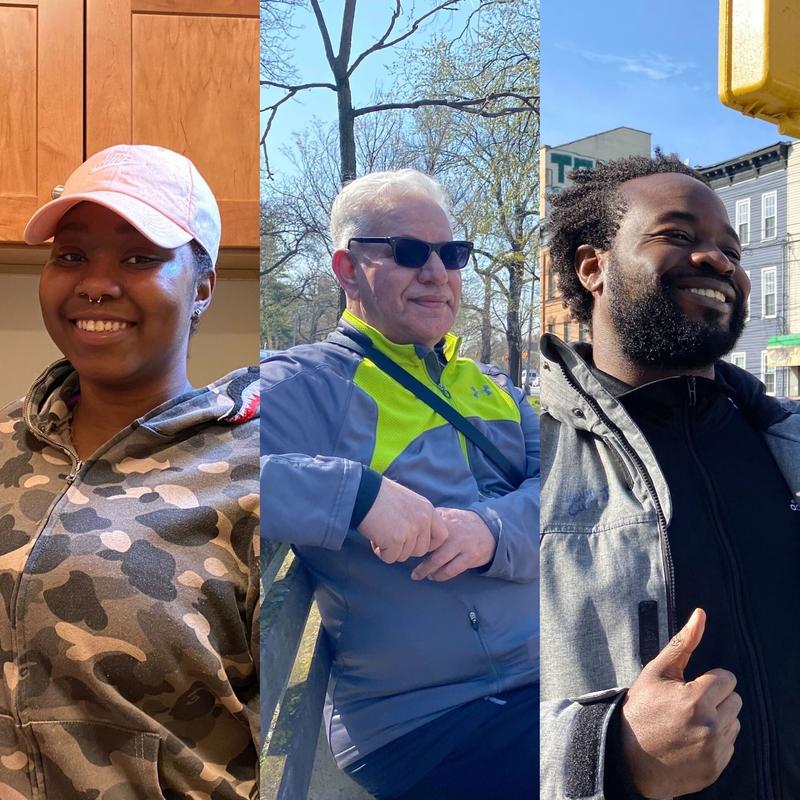
Karen Yee: Yes. I met a man named Ciro Selassie on a bench along Ocean Parkway in Brooklyn. Hi. Nice to meet you.
Ciro Selassie: Nice to meet you as well.
Karen Yee: Solazi lives in a one bedroom apartment in Kensington, and he's been there for a long time. He's been there for 22 years. When we met, he was a little nervous to meet me.
Ciro Selassie: I'm afraid to leave the house because I don't want to run into the dirty looks from the managing agent and so forth.
Janae Pierre: Why was that?
Karen Yee: He's facing an eviction notice, so he was wary, looking over his shoulder, concerned that management would come out and give him a dirty look because he owes them two years of money.
Ciro Selassie: It's been quite stressful.
Karen Yee: He tells me that he's feeling very anxious. He's very ashamed because this is the first time that he's found himself in this situation. He's always hustled to provide for himself, but these are factors that were outside of his control. He lost his job. The pandemic happened. Then he got sick. He couldn't go back to work, and he burned through all his savings. Now he's figuring, trying to think, what are his options? He doesn't really have anywhere to go if he actually gets evicted from his apartment.
Ciro Selassie: Every time I see a homeless person, I get the fear struck inside of me that I'm going to wind up to be one of those people.
Karen Yee: He says that when he sees people who are homeless on the street, he really feels for them. He also has this fear in the back of his head that he could eventually become homeless himself. Now that fear is even more present because he has this eviction notice and is currently fighting to stay in his apartment that he just can't afford.
Janae Pierre: How would an expansion of the voucher program help Selassie, if his issue that he hasn't paid his rent in two years?
Karen Yee: The vouchers allow tenants to pay 30% of their paycheck toward rent, and the city will subsidize the rest. Currently, Ciro's rent is almost everything that he makes in a month with his disability payments and his SNAP payments for emergency food assistance. He has to choose between using all of the money to basically pay his rent, which is $1,200 a month for his one bedroom, or having enough to eat, or being able to afford other things for his home and to live.
The voucher would allow him to keep up with future rent payments because he would only have to pay 30% of whatever is coming into his paycheck or his bank account. The rental arrears what he owes for two years, you're right, that's still an issue. He's pursuing another avenue which is an existing program called a one-shot deal where you can apply and the city will help cover your rental arrears for whatever time period.
That would reset him. Even if he is reset, there is no way he can afford future rent payments without something like a CityFHEPS voucher. Right now to qualify, you have to be in a shelter, and Selassie, obviously, is in housing. To qualify, he'd have to leave his home, enter a Department of Homeless Services adult shelter, then apply for CityFHEPS, then find an apartment where he could use that voucher, and potentially find an apartment where the rent is much more than the $1,200 a month that he's paying.
Janae Pierre: Yes, right, because you mentioned that he's in a rent stabilized unit, right?
Karen Yee: That's right.
Janae Pierre: Basically, he would have to face that fear of homelessness.
Karen Yee: Exactly. That's what he's scared of. He's never had to be there before, but right now, he's stuck. He can't really go back to work. He's sick, he has a disability. There's no way for him to make more income.
Janae Pierre: Karen, what about New Yorkers who are trying to get housing?
Karen Yee: I spoke with 32-year-old Kevin Joseph Cuffy. Hi, I'm Karen. Nice to meet you. He's currently in a shelter in Bushwick. Now, Cuffy works full time, and he earns about $19 an hour, which is over minimum wage, but it's too much to qualify for a voucher. Yet, it's not exactly enough for him to save up and be able to get his own place and really stay there.
Kevin Joseph Cuffy: I feel like I'm probably just going to end up back in a shelter due to housing expenses. I have enough to not hit the minimum wage rack, but I don't have enough to live.
Karen Yee: I think Cuffy has cycled in and out of homelessness for several years now, and he's really looking for something long term. He doesn't just want to keep revolving back and forth getting a place that he can't afford. The rent goes up, ending back in shelter, crashing on friends couches. He's saying, with what I make, he's squeezed in between. He earns too much, but too little.
Janae Pierre: That's because a single person can't earn more than $31,000 a year to qualify for a voucher. Kevin, as you mentioned, is working, making around $40,000 annually if he's working full time.
Karen Yee: Right. The expansion laws would boost that to about $56,000 for an individual. Right now, people are a little bit in a catch 22, and potentially making those decisions, do I take fewer hours so that I can qualify for the CityFHEPS voucher and then maybe get it? That could limit your career mobility, your opportunities, just what's coming into your bank account as well.
Janae Pierre: It's like, do I put out less in the world to get more for my life?
Karen Yee: Righ. It's a really hard-- I think these are the decisions that people are navigating constantly when they're struggling and trying to find their way into systems. That can be very onerous.
Janae Pierre: There's also the question of youth shelters. Right?
Karen Yee: Yes. I met Lajoie Clark. She's 20 years old, and she was living in a youth shelter, but she doesn't qualify for vouchers because she's not in the traditional adult shelter system. Like I explained, there are five different city shelter systems. The biggest one, and the one people are most familiar with, is the adult shelter, which is run by the Department of Homeless Services. There are other shelters that are specialized for different groups of people. One of those is for young people, youth, runaway homeless youth. CityFHEPS vouchers right now are only for people within the adult population run by the Department of Homeless Services.
Shelters that Lajoie Clark was in, which is a youth shelter run by a different city agency, they're not eligible. For her to be eligible, she's 20, she would have to leave the youth shelter, which is-- Those tend to be smaller. There are programs specifically for young people because your brain is still developing. Maybe you've never held a job, maybe you want to go back to school.
There's other needs that you have have when you're a young person experiencing homelessness, other than being mainstreamed into the general adult population. Lajoie would have to enter a women's adult shelter to then be able to apply for CityFHEPS, and she says she just doesn't want to do that. She's been through a lot in her life. She's nervous about what an adult shelter could be. There's different personalities. People have different situations going on in their lives.
Janae Pierre: Some people think it's dangerous.
Karen Yee: Absolutely. It can be dangerous. There are reports of violence and assault at some of these shelters. It could be large. There can be congregate settings, as many as 200 women. In the youth shelter, it's a much more smaller space. Lajoie wants to move on with her life. She wants to be able to maybe go to nursing school and get her own place. When we met last month, she was actually getting ready to leave. She was getting ready to leave the shelter system and just leave New York City where she can get a job and find more affordable housing.
Janae Pierre: Man, Lajoie wants a fresh start here.
Karen Yee: Absolutely. She can't get it in the city that she was born and raised in.
Janae Pierre: That's so sad. Karen, that's the story for so many New Yorkers who were born and raised in this place. It's impossible to afford the city.
Karen Yee: Right. I think her point is, she wants the city to be able to create more opportunities for young people. I think there are reports of really high unemployment rates, particularly for youth. They're up against all these greater forces. You have really low vacancy rates in affordable housing units. You have very expensive housing. You have unemployment rates, and Lajoie in the middle of it, trying to navigate all this and not able to get a voucher.
Janae Pierre: Let's talk a bit about the Mamdani administration and where they stand in all of this, because so many of these people that you've spoken to sound so desperate for help making the city work for them. Like Lajoie, she's leaving, like we said, because she can't afford to be here. Mayor Mamdani, as I mentioned earlier, campaigned on expanding this program, but now he's pulling back on that. What is his administration saying now about why they're pulling back?
Karen Yee: The main argument here is cost. He did campaign. He said, "I will expand the CityFHEPS laws." These were a package of laws passed by the city council in 2023. Former mayor Adams said, "No, I'm not going to expand this." They took him to court, and it's this ongoing battle. He said, "I will drop litigation. I will expand these laws." Then he took office. He saw the budget.
There is a yawning budget deficit. He said it's just too costly. It's not feasible for the city to do. Right now, CityFHEPS actually cost $1.2 billion. His administration estimates that expanding CityFHEPS in its entirety would drive those costs up to $4.7 billion by 2030. To give you a sense of the scale of that is that's basically the entire budget for the entire Department of Homeless Services agency.
Janae Pierre: Oh, wow. Okay.
Karen Yee: Now what the mayor has done is he's appealing a court decision that ordered the city to expand rental assistance and echoing and taking a page from his predecessor, Mayor Eric Adams, even though he opposed it on the campaign trail.
Janae Pierre: Expansion advocates say this would actually save the city money. The expansion.
Karen Yee: They're saying whatever the city is paying or could pay in vouchers would save them money in the long term. Save them money in terms of what they're paying to house people in shelter, so people would be avoiding shelter in the first place. Shelter can cost, for a single person, $142 a night, which is $52,000 a year. If you're keeping people like Selassie, we talked about his rent stabilized unit. That's $1,200 for a one bedroom a month. If he would have to go into shelter, the city would be paying for his shelter costs. Then he would apply for a voucher, have to look for an apartment, and potentially find an apartment that is much more expensive than the $1,200.
The city would actually be paying more for a voucher later on and for the shelter than if they would just give him a voucher right now. That's their argument about how the city can actually-- Yes, it is a costly program to run, but they're saying it's costly because it works. It can work to alleviate the shelter population, but also prevent people from entering the shelter system in the first place.
Janae Pierre: Who wants to force a man in his 60s into the shelter system in the first place?
Karen Yee: You're exactly right. There's also the level of emotional trauma. That you're sparing people from having to enter a very crowded shelter system.
Janae Pierre: Where does this stand right now? Is there any sign of a resolution between the mayor and the City Council?
Karen Yee: I'm told that negotiations are ongoing. When the mayor took office, the administration was in conversation and trying to reach a settlement and a compromise with several of the groups that are involved in this. Some ideas that were floated were let's expand some parts of it, but not all of it. The negotiations obviously didn't get anywhere, and the mayor filed his appeal in court because he was up against a court deadline.
The court case is proceeding that probably will take a few months to resolve itself as both cases file their arguments. In the meantime, negotiations are happening. We may see a compromise and some settlement outside of court before then. As we talk a lot with you on the show, the housing crisis continues. The affordable housing crisis continues. People like the four New Yorkers I spoke to are still having to make tough decisions about whether they stay in the city. What kind of work they take, where they can live. It's really stressful for them.
Janae Pierre: Very stressful.
Karen Yee: I was just reading an email from the case manager for Lajoie. I was asking how she's doing. She moved to Niagara Falls, and he was telling me that, "We've been in contact with her. She seems to be happy and is employed while adjusting to a slower paced lifestyle outside of New York City."
Janae Pierre: I love that. I love to hear that. That's WNYC's Karen Yee. Thanks a lot, Karen.
Karen Yee: Thanks, Janae.
Janae Pierre: Thank you for listening to NYC Now. I'm Janae Pierre. See you next time.
[music]
Copyright © 2026 New York Public Radio. All rights reserved. Visit our website terms of use at www.wnyc.org for further information.
New York Public Radio transcripts are created on a rush deadline, often by contractors. This text may not be in its final form and may be updated or revised in the future. Accuracy and availability may vary. The authoritative record of New York Public Radio’s programming is the audio record.