
The Subway Station Behind Some of NYC’s Most Iconic Movie Scenes
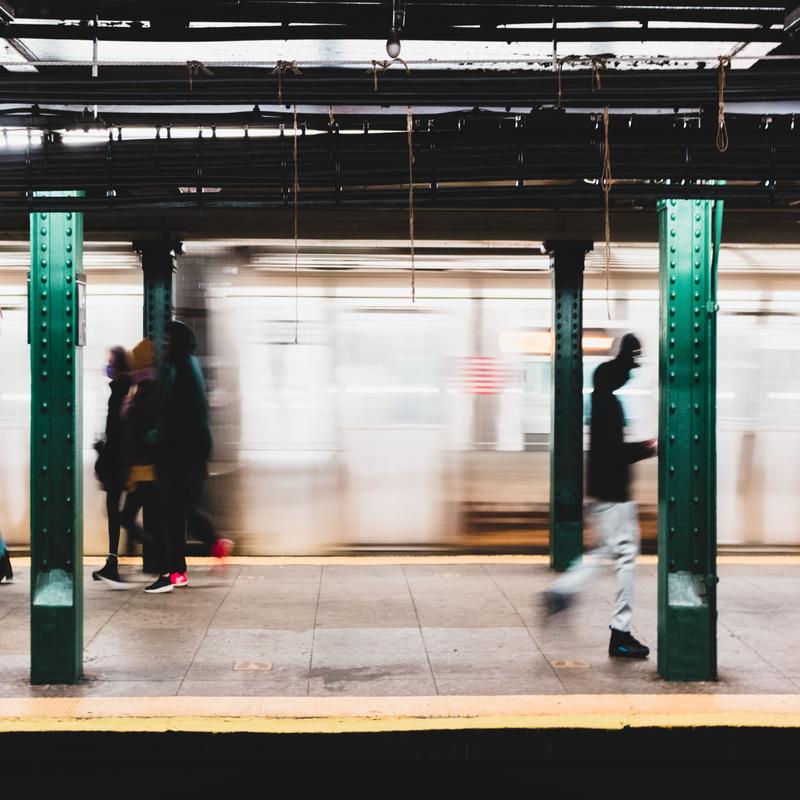
Title: The Subway Station Behind Some of NYC’s Most Iconic Movie Scenes [music]
Janae Pierre: From WNYC, this is NYC Now. I'm Janae Pierre. Ever recall watching a movie and realizing the scene is taking place at a New York City subway station? A new series at the Brooklyn Academy of Music is highlighting those films and the station behind them. Plus, New York City's Department of Transportation is responsible for cleaning city landmarks. A Brooklyn Heights resident has taken it upon herself to clean the Brooklyn Bridge walkway, which has dirty tissues, trash bags, and even used condoms affixed to the bridge's frame. We'll get into it all on today's episode, but before we do that, here's what's happening in New York City.
Cardi B: I feel like free childcare is very important. Sometimes us women, we can't really go forward because we don't have nobody to help us take care of our kids.
Janae Pierre: Mayor Zohran Mamdani is teaming up with rapper and Bronx native Cardi B to help spread the word about universal childcare for two-year-olds. New York City is opening up applications on June 2nd for its 2K program. Parents can apply in certain communities across Upper Manhattan, the Bronx, Southeast Queens, and Central and Eastern Brooklyn. In a video released by his office Friday, Mamdani says the city is launching a jingle contest to help get parents to apply, and it'll be judged by Cardi B.
Mayor Zohran Mamdani: We wanted to know if you would help judge that competition.
Cardi B: Oh, I will judge it for sure.
Mayor Zohran Mamdani: Cardi's going to help you-
Cardi B: Yes, I'm going to help you.
Mayor Zohran Mamdani: -by judging this competition.
Cardi B: No, the Mayor is going to help you. I'm going to judge, and he's going to give-- He's the one with the funds.
Janae Pierre: The initiative comes as childcare continues to be a key affordability issue for New Yorkers. When New York City stopped issuing fines for not separating compost from trash, many New Yorkers just quit doing it. That's the finding from a new report from the Independent Budget Office. Analysts found that compost collection lost momentum right as fines stopped last year, and it hasn't recovered since. Those fines began again under Mayor Mamdani, but they haven't reached the same levels as last year, before former Mayor Eric Adams suddenly hit pause on enforcement.
The budget experts say a combination of fines and education should convince more New Yorkers to separate their organic waste from the rest of their trash. Sanitation officials say they're just getting started with the big awareness campaign, but they'll turn up the heat with enforcement if they need to. The annual Easter Parade and Bonnet Festival returns to Manhattan Sunday. The photo-worthy event draws people in their most elaborate hats. For Brooklyn artist Casey Sobel, it's her favorite way to ring in spring. She's been attending the parade for years and says her hats usually take months to create.
Casey Sobel: A beautiful, artistic, and creative expression of our excitement of spring, of getting to shake off the coldness of the winter and being inside.
Janae Pierre: The parade and festival take place Sunday morning outside St. Patrick's Cathedral. The Brooklyn Academy of Music is marking 90 years of an iconic downtown Brooklyn subway station with a series of films shot in and around it. Can you guess which station? I'll let you know after a quick break. Stay close.
[music]
Janae Pierre: Welcome back. Everyone has a favorite subway scene in a New York City movie. Maybe the chase in The Warriors. Maybe a train hijacking in The Taking of Pelham 123. Now, a film series at the Brooklyn Academy of Music is taking a closer look at those scenes and the station behind many of them. That's Hoyt-Schermerhorn in Brooklyn, which filmmakers have used for decades to shoot subway scenes. WNYC producer Verónica Del Valle has been looking into this and reporting on it, and she joins me now. What's up, Verónica?
Verónica Del Valle: Hi, Janae.
Janae Pierre: Do you have a favorite movie that has a New York City subway scene?
Verónica Del Valle: My favorite New York City subway movie actually isn't in the series we're talking about. It is in the Martin Scorsese movie After Hours, which I will only describe as being about the worst day of a pretty normal guy's life. He escapes, this girl he's trying to woo, apartment, and heads right into the subway at midnight when he discovers that the subway fare has gone out. This is in the days of quarters and subway tokens, and the guy just will not sell him a subway token. He's this really boring guy who looses his core and then immediately gets stopped by a cop. It's beautiful.
Janae Pierre: I have to check that one out. I have to be honest, I haven't seen that one. One of my favorite New York City subway scenes is in the movie The Wiz. I'm not sure if this is a part of the series or not, but it's a really cool subway scene where it's like a haunted subway and the vending machines come alive, and all of the characters, even Toto, are running from them.
Verónica Del Valle: I have good news for you. You can see it on the big screen as part of this series.
Janae Pierre: Wow. That's totally cool. Tell me about this series and how did the organizers describe the idea behind it?
Verónica Del Valle: I talked to two guys who work at BAM. Their names are Jesse Trussell and Adam Goldberg. They were the masterminds behind it all. Adam told me that he's just constantly pitching ideas for series and hoping they stick. This one worked because the 90th birthday of the Hoyt-Schermerhorn station is actually coming up.
Janae Pierre: 90.
Verónica Del Valle: 90 years old. He was just like, "We can celebrate the movies. Hoyt-Schermerhorn is right around the corner from BAM." It was a perfect confluence of factors.
Janae Pierre: When you were reporting this, what stood out to you about the films that they chose?
Verónica Del Valle: It runs the gamut of film history. There's a little bit of something for everyone. You can see Crocodile Dundee II, which is a movie that I have never had the pleasure of watching.
Janae Pierre: Same.
Verónica Del Valle: Apparently, it's very funny. You can see The Taking of Pelham 123, the 2009 version with Denzel Washington, not the original version. There's actually two Sidney Lumet movies, The Wiz, of course, and a dark crime drama movie called The Pawnbroker, that both of them were actually nominated for Oscars. You get to see one guy's career, lots of different kind of movies, laugh, cry. It's great.
Janae Pierre: I guess I need to make my way over to BAM because I haven't seen a few of these that you're calling out. What about you?
Verónica Del Valle: I've seen about half of them, and I will not lie, I watched a lot of them for this.
Janae Pierre: Okay. The programmers have a phrase for the era of these films. Can you share that with us?
Verónica Del Valle: Adam Goldberg coined this phrase he calls Battle Days New York. It's the '70s or the '80s. It's a little dark. It's a little gritty. Actually, Coming to America, the Eddie Murphy movie really-
Janae Pierre: I love it. [laughs]
Verónica Del Valle: -encaptures this concept. For those of you that aren't blessed enough to have seen the movie, Eddie Murphy plays a prince who's coming over from a rich African country to find a wife.
Janae Pierre: The Prince of Zamunda.
Verónica Del Valle: Zamunda.
[laughter]
Verónica Del Valle: The Prince of Zamunda comes to America, and he falls in love with this woman named Lisa. He gets out of his limo, is calling after her, and then gets in the subway. It's supposed to be Queens, but it's actually Hoyt-Schermerhorn. It's like baby's first experience with the subway. It's this place where real things are happening and this place where everyone has to interface with New York as it actually is.
Janae Pierre: Now, of course, Coming to America, The Wiz, these aren't recent movies. Can we talk about the process? They are not shutting down the subway to film these scenes, right?
Verónica Del Valle: The secret is that Hoyt-Schermerhorn has these two unused subway platforms that make filming there really, really easy. Like I said, Hoyt-Schermerhorn opened in the '30s, and there were two old school New York City train lines that ran there until about the middle of the '40s. When subway patterns changed, they closed those lines down, and then those platforms closed with them. Essentially, filmmakers can run subway trains to these platforms or put lots of actors on them without having to shut down the station and disrupt people's normal lives, unlike at another station like Union Square, maybe.
Janae Pierre: After reporting on this, did it change the way you think about subway scenes in New York movies?
Verónica Del Valle: I can't stop thinking about the logistics of it now. In The Taking of Pelham 123, they're hanging out in the subway tunnel between what's supposed to be, I think, 51st Street and 42nd Street, but it's actually the tunnel at Hoyt-Schermerhorn. I'm thinking about the ways that filmmakers are trying to trick us and make sure that a location feels like somewhere else. You see it in The Warriors, too, another one of the movies that's in this series. On the polls, it'll say Union because it's supposed to be Union Square, but if you look really far in the background, you can actually see the words Hoyt on the subway wall. It's this, like, little Easter egg hunt, almost of process and artistry.
Janae Pierre: Easter egg hunt. I see what you did there. [laughs] Listen, we're talking about movies, but I can think of a couple of music videos that were actually shot there. When I saw this, I was like, one of my favorites, Michael Jackson, once again, but Bad was definitely shot in Hoyt, and it was a really cool scene.
Verónica Del Valle: We're bringing up Michael Jackson and Martin Scorsese twice in this conversation-
Janae Pierre: Oh, yes.
Verónica Del Valle: -I have to say. He actually directed that music video. It's interesting because when Michael Jackson died in 2009, current New York Attorney General Letitia James wanted to rename the Hoyt-Schermerhorn station after Michael Jackson.
Janae Pierre: I hope someone's a fan.
Verónica Del Valle: It's really iconic. You see the station in the music video, and you understand why it works so well for filming because it's big, big, big, big empty space that you can have dancers run around in and that you can take over in a way that's really fun and is used in a really cool way in that music video specifically.
Janae Pierre: Yes, for sure. When can people check out this series?
Verónica Del Valle: The series starts screening on April 9th. That's the 90th anniversary of Hoyt-Schermerhorn. Movies will keep running until the 16th, but make sure you head to the BAM website because the movies aren't running for that whole time. It's like little days of pairs of two and three. Find the one you want to see and go see it.
Janae Pierre: All right. That's WNYC producer Verónica Del Valle. Thanks so much for stopping by.
Verónica Del Valle: Thanks, Janae.
Janae Pierre: Can you tell us about your favorite subway movie scenes? Send us a voice memo or an email@nycnownyc.org. We may use your comment on a future episode.
[music]
Janae Pierre: Thousands of people walk across the Brooklyn Bridge every day, commuters, tourists, and everyday New Yorkers just trying to get their steps in or enjoy the spring weather. One of them is Ellen Baum.
Ellen Baum: Hi, I'm Ellen Baum, and I'm 37 years old from Brooklyn Heights.
Janae Pierre: Ellen is one of those New Yorkers who walks across the Brooklyn Bridge to commute to work, clear her mind, and sometimes to meet friends in other boroughs.
Ellen Baum: I'm originally from Long Island, and I spent one year in Lower Manhattan, and because of my proximity to the bridge, I'm almost always on it. [chuckles] I'm probably in thousands of engagement photos in the background from people seeing me on it.
Janae Pierre: About a year ago, she started to notice that something strange was appearing along the walkway's chain link fences.
Ellen Baum: Hair ties, tissues, tampons, condoms, underwear, everything under the sun, tied to this.
Janae Pierre: Objectively, this is gross. Ellen thought so, so she decided to do something about it.
Ellen Baum: It was one of those moments where I was like, on a very micro level, I can affect change and do good things.
Janae Pierre: WNYC reporter Brittany Kriegstein met Ellen on the Brooklyn Bridge to talk to her about the unusual items people have been leaving and why she spent weeks cleaning them up. Brittany joins me now. Hey, Brittany.
Brittany Kriegstein: Hey, Janae. Thanks so much.
Janae Pierre: All right. Let's start with when you met Ellen. You met her on the Brooklyn Bridge. Tell me, what did you see there?
Brittany Kriegstein: I saw the ending of Ellen's project. She was coming to the end of her cleaning up. Janae, that's not to say that I still didn't see a bunch of really nasty things in that chain link fence. There were hair ties, there were bandaids, used band aids, I may add. There were locks of hair, scraps of clothing, tissues, receipts. It was disgusting.
Janae Pierre: Why did Ellen decide that she was going to take it all down?
Brittany Kriegstein: I asked her that question, and she told me she started noticing a cacophony of trash building up.
Ellen Baum: Sometimes they fall off, and then it goes straight into the East River, which is super gross.
Brittany Kriegstein: Ellen told me after seeing all that, she posted on Reddit about it, trying to find some answers and wondering if other people had been noticing this stuff too. Then in early February--
Ellen Baum: I was walking across the bridge, and I remember reading the news that morning and feeling really defeated about the state of just everything.
Brittany Kriegstein: She was headed to meet her friends in Staten Island. Sometimes a hang with friends can turn things around.
Janae Pierre: It really can.
Ellen Baum: We had a great lunch. We had a great day, and it was one of those moments where I was like, "On a very micro level, I can affect change and do good things."
Brittany Kriegstein: She was inspired. When she got home, she decided, "I'm going to do something."
Ellen Baum: I posted on Reddit. I put a picture of it, and I was like, "I hate these, and I'm going to take them down." [laughs]
Janae Pierre: What did this cleanup actually involve?
Brittany Kriegstein: Ellen told me that over the course of eight days, she put in at least 16 hours of work. I think that was an underestimate because she was up there almost every day. I was communicating with her, and it seemed to take hours and hours and hours, and she was mostly doing this by herself.
Janae Pierre: Does Ellen have a day job?
Brittany Kriegstein: She does. Ellen actually works in tech, and her schedule's a little flexible. She said it gave her the time to go up and do this, and it actually helped her relax. She said, given just the chaotic political climate we're in and everything going on in the world, it was like a little piece of things that she could control, a little good deed that she could do for her city. She did get some people who actually offered to help after seeing her Reddit post. One of the regulars on the bridge, who's a photographer, also helped her out sometimes, but it was mostly her out there, Janae, and any New Yorkers who would briefly come up to her while she was working.
Ellen Baum: Some people ask why people put things on the bridge to begin with. Other people thank me for doing it, and then other people will just come right behind me and tie their thing to the bridge. It's a mixture of people.
Brittany Kriegstein: Have you asked them why they're doing it?
Ellen Baum: It's mostly for, "Oh, it's our first time on the bridge or whatever," and I'm like, "That's great. It's still your first time on the bridge. You don't have to leave this thing here that's going to fall into the river." It's been very interesting. I'm also not going to yell at anybody for doing it, but I am going to take it off. [laughs]
Janae Pierre: Ellen is really doing God's work here, or at least the cities.
Brittany Kriegstein: It's true. The Department of Transportation is supposed to clean up this mess periodically. They're supposed to just basically keep tabs of any trash on the bridge. Ellen thinks there's so many other transit problems they can be focused on, and she doesn't blame them for not getting to it all the time. She said her councilman actually said thank you, but she hasn't heard from the rest of the city agencies.
Janae Pierre: I know this cleanup started in February. Any idea what it looks like now?
Brittany Kriegstein: The bridge looks remarkably different thanks to Ellen's efforts. Almost all of that trash, those hanging disgusting tissues, and other items are all gone, but she's worried about the problem coming back, especially with so many tourists coming over the bridge every day. It's like New York City's version of the Paris Locks Bridge, if you've heard of that, today, people have seemingly just turned to regular household trash instead. Ellen's worried about this coming back, and she really wants to start a monthly cleanup. She has a little website going, and she's trying to get the word out to bring the community together, to keep this problem at bay.
Ellen Baum: I don't want to take away the feelings that these folks have of having a piece of me is here. Although I feel if you're on the bridge, you're part of the art already. When you're going hiking, it's leave no trace. I feel that maybe that's the same for a historic landmark like the Brooklyn Bridge.
Brittany Kriegstein: People can look up No locks spelled L-O-C-K-S, comma, yes lox, L-O-X meaning no locks on the bridge, but definitely lox on bagels. That's Ellen's website, where she's trying to just gather a bunch of members of the community, whether those are Brooklynites or people from the rest of the five boroughs, to help keep this issue at bay, help keep trash off the bridge, and just get folks together to do something positive.
Janae Pierre: All right. Pretty cool. That's WNYC reporter Brittany Kriegstein. Thanks a lot, Brittany.
Brittany Kriegstein: Thanks so much, Janae.
Janae Pierre: Thank you, dear listener, for listening to NYC Now. I'm Janae Pierre. See you next time.
[music]
Copyright © 2026 New York Public Radio. All rights reserved. Visit our website terms of use at www.wnyc.org for further information.
New York Public Radio transcripts are created on a rush deadline, often by contractors. This text may not be in its final form and may be updated or revised in the future. Accuracy and availability may vary. The authoritative record of New York Public Radio’s programming is the audio record.