
The DJ Bringing NYC's Legendary Danceteria Nightclub Back to Life
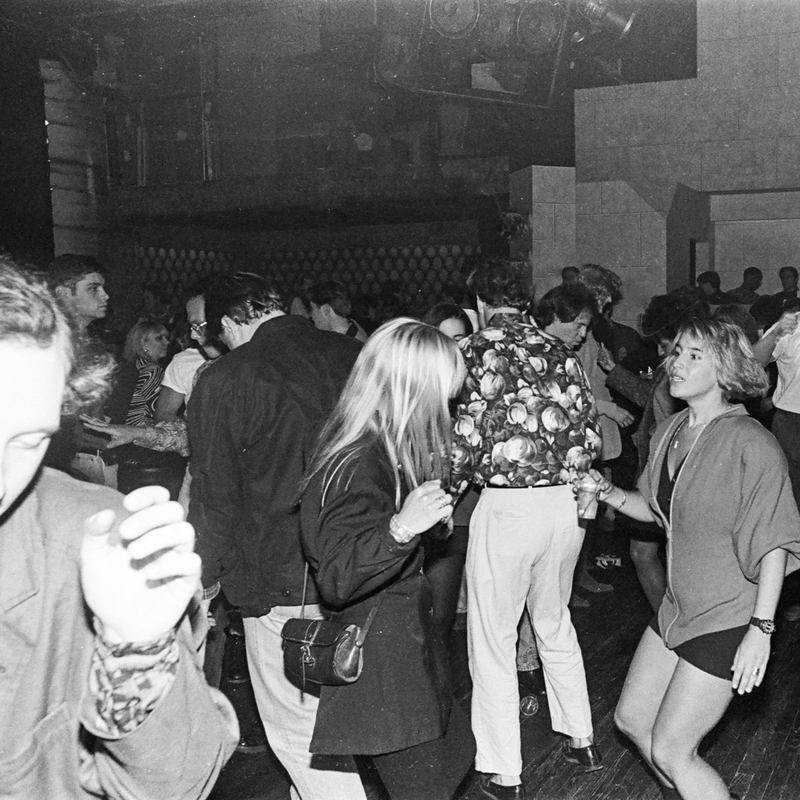
DJ Rafe Gomez: At Danceteria, the mindset was if you get what we're doing here, and if you embrace it, come on in. [music]
Janae Pierre: Nightlife in the '80s was unmatched in New York City. On today's episode, we travel back in time to a nightclub called Danceteria. The downtown club was influential in shaping '80s pop culture. That was NYC then. This is NYC Now. I'm Janae Pierre. Before we get to that, here's what's happening in our region. A New York City Council member wants the state to better regulate the illegal tow truck industry in New York City. Following a WNYC investigation, Staten Island Council member Frank Marano has introduced a resolution calling on the state DMV to fix a loophole.
Frank Marano: Someone can get official tow truck plates without proving their license to operate in New York City. That's bonkers. There should be verification before issuing or renewing those plates, and that's where we need the state to step in.
Janae Pierre: A DMV spokesperson says oversight of the city's towing industry is the city government's responsibility. WNYC's investigation identified more than 700 unlicensed tow trucks that operated on city streets last year. Home flipping is pushing up housing prices and pushing more and more black residents out of New York City. A new report by the Pratt Center for Community Development says 10,000 homes were bought and quickly resold in the five boroughs between 2021 and 2025. The highest rates of home flipping were in neighborhoods with significant black populations.
In Jamaica, Queens, alone, 30% of homes sold were flips. State lawmakers looking to curb the practice are considering raising transfer taxes. The state realtors association says doing so would only curtail investment in aging properties. The researchers say investors often target vulnerable buyers with lowball offers, then reap outsized profits in the resale. Whoever said Knicks in six was right. The New York Knicks are moving on to round two of the NBA playoffs. The Knicks crushed the Atlanta Hawks Thursday night, 140 to 89, ending Atlanta's season. New York broke several NBA records with the win. Their 47-point halftime lead was the biggest in playoff history. The Knicks will face the winner of a series between the Boston Celtics and Philadelphia 76ers in the Eastern Conference semifinals. That deciding game is happening Saturday night.
A downtown Manhattan nightclub became an unlikely launchpad for some of pop culture's biggest names in the '80s. After a quick break, we revisit Danceteria. Stick around for the conversation.
[music]
Janae Pierre: Welcome back. Hop into my time machine and picture this. It's the '80s in New York City, and you're headed out for a night on the town, you got an invite to a place you've never been. It's a five-story nightclub in downtown Manhattan called Danceteria. LL Cool J is working the elevator, Madonna is on coat check, and Jean-Michel Basquiat is actually DJing. It's lit. Or as they say in the '80s, it's groovy.
Danceteria played a pivotal role in pop culture during this time. It was famous for its vibe, introducing iconic art, fashion, and music all in one place. All the things we love about New York City. The nightclub closed in 1986 due to an extreme rent increase. One guy is replicating the vibes Danceteria presented musically. DJ Rafe Gomez is the host and spinner behind DanceteriaREWIND on Twitch. Welcome to the show.
DJ Rafe Gomez: JP, thank you for having me.
Janae Pierre: So nice to have you here.
DJ Rafe Gomez: Thank you.
Janae Pierre: Before we jump into all of this, how did you discover Danceteria?
DJ Rafe Gomez: I lived in northern New Jersey, and I went on a field trip with my high school to the Museum of Natural History.
Janae Pierre: Nice.
DJ Rafe Gomez: At lunchtime, there's all of the newsstands outside. I saw something that I was familiar with, The Village Voice, this newspaper that listed New York news, New York events, and it was the size of the Yellow Pages.
Janae Pierre: Oh, wow.
DJ Rafe Gomez: Yes, it was huge. I spent my 50 cents, and I bought one. I was reading it on the bus ride back, and the event listings for what was happening in this city, probably 75 pages. It was, "What are these clubs? Who are these bands?" I became very aware of the fact that my little world in New Jersey was not even touching all of the possibilities [crosstalk]--
Janae Pierre: Not even close.
DJ Rafe Gomez: Right. I saw the Danceteria had a full-page ad, and it had a fun vibe to it because they were very much embracing visually kitsch and nostalgia, like a suburban '50s nostalgia. I thought, "I've got to go to this place." I was 16 years old.
Janae Pierre: Oh, so you couldn't get in.
DJ Rafe Gomez: There's absolutely no way I could have gotten in. I was aware in Times Square there was a place called Playland, and it was a video arcade. They also sold fake IDs.
Janae Pierre: Oh, I know what you did.
DJ Rafe Gomez: I went in, I took my $5, I got my fake ID, and it looked so fake, Janae. I made time to be able to go to this incredibly fascinating place, Danceteria. The guys at the door looked at the ID, and they looked at me, and they looked at the ID and looked at me and went, "All right, come on in."
Janae Pierre: Where was Danceteria actually located?
DJ Rafe Gomez: The one that I went to was at 30 West 21st Street. The story about West 21st street at that time was you could lay down in the middle of the street at six o'clock and have a solid night's sleep, and no cars would go by.
Janae Pierre: Dead.
DJ Rafe Gomez: It is dead. That area of New York, there was no retail, there was no residential development. There was nothing. The city was bankrupt. The only thing that existed in that area were former warehouses and former factories. When Danceteria was looking for a space to open, there were all of these landlords that were saying, "Come on in." "Sure, absolutely." You could make as much noise as you want because there were no neighbors there to complain.
Janae Pierre: Tell me what Danceteria was like inside.
DJ Rafe Gomez: Well, there was the basement, which I never made my way to. That was where the staff hung out. It was also very poorly lit and had a goth vibe. These made-up goth kids were down there. I don't know, maybe that's where they slept in catacombs, I don't know. Then the first floor was the live bands. Second floor was DJing. Then there were some, I can't specifically remember what, but there's something called Congo Bill, which is a club within a club. It was part of Danceteria but a separate club within the five-floor space. Then there was the rooftop, where there were, you had to be super, super chic.
Janae Pierre: Super chic and super important, but you made your way up there.
DJ Rafe Gomez: I'm Super Bozo the Clown, but they took pity on me. The special kid they brought up there.
Janae Pierre: Tell me what the vibe was like there. The top, the introduction, was no dramatization. All of these now-celebs actually worked and built their careers at Danceteria.
DJ Rafe Gomez: It was okay. There were no such things as influencers, but they were influencers there before influencers were influencing. It was five floors. The thing about getting a guy like me in it wasn't like Studio 54, where you had to have money and be fabulous and be a somebody. At Danceteria, the mindset was if you get what we're doing here and if you embrace it, come on in. Also, they knew that people like me who were escaping suburbia, we were going to pay full price for drinks, full price for admission, we were going to subsidize this place. We had no problem with that. We will open our wallets to be part of this amazing magic.
Janae Pierre: You said, "If you get it, come in." What is the it?
DJ Rafe Gomez: Being open-minded to hearing music you've never heard before, seeing people who are coming from lifestyles and are dressing in ways you have never even seen. If you are thirsty for that, you will just soak in what we have. I did. It was hard for me to go back home because I was, "How am I existing in this wasteland of post disco goofdom?" That's what was going on there. It was just the clubs and the people that were still clinging to the magic of John Travolta and Tony Manero years after the fact. I went, "My God, you people move on."
Janae Pierre: What do you remember about that first time you went to Danceteria?
DJ Rafe Gomez: The music was what struck me the most. The visuals there was art everywhere. There was a floor with video art where there were combinations of different visuals and films, and short snippets. Again, this embrace of kitchen nostalgia all smashed together. People were digging it. I was digging it too, because I'd never seen anything like this. I managed to, and I don't know why, maybe they took pity on me because I was such a bozo. They let me up onto the roof, where there were all sorts of semi-private parties going on. On another trip to Danceteria, I saw Madonna perform on the roof, her first song, Everybody, she worked there. She worked not just as coat chef, but she operated the manual elevator because this is a former warehouse. It was one of these kinds of things with the crank. She operated that. The Beastie Boys were janitors. Ll was working the front door. Debi Mazar, the chef and actress, she was in Goodfellas, many other things. She was working with Madonna at Kochek.
Keith Haring was a waiter when he was trying to fund and come to terms and figure out what his direction was going to be. Jean-Michel Basquiat, who by the way, was going out with Madonna when they both worked at Danceteria, he got hired and then fired as a mural painter because the guy in charge of what he was doing, a guy named Rudolf Piper, he didn't like what Jean-Michel did, and he wasn't going to pay him.
Janae Pierre: What can you say about the role and impact that Danceteria played when it comes to pop culture? Because we're hearing all these names. Keith Haring, Madonna, Beastie Boys, LL Cool J, like they weren't popping back then. They built their careers in this space.
DJ Rafe Gomez: I think what they probably got out of it was the fact that they were able to collaborate with like-minded visionaries. They all influenced each other. When Madonna went on tour for her first tour, she had the Beastie Boys as the opening act. The little girls who were little Madonna wannabes were, "Oh my God, who are these gross guys?"
Janae Pierre: That was a good one. That's a good impersonation.
DJ Rafe Gomez: I was practicing that on the way over. They all remained friends, they all remained tight. What I'm doing on my live stream is, look, I'm going to provide and present a theater of the mind. I'm going to take you back to this place. I researched the original DJ playlists of guys like Mark Kamins and Anita Sarko and Bill Bahlman, and Sean Cassette, all of whom DJ there. They all had different styles because you could go from one floor to the next and you would be able to hear in one night disco, early electro, rap, hip hop and glam, reggae, dub, EDM, industrial goth, bubblegum, '60s stuff, punk, afrobeat, funk, James Brown. In one night, you could hear all of this.
I set out to take you from you walk in, and by the time you leave, I will have increased the beats per minute and seamlessly blended all the music in a way that this is what it tasted like being in this incredible spot.
Janae Pierre: Man, this is so cool. I want to reiterate the fact that there was no social media during this time. No group text with friends to discuss the next hang spot. You mentioned that Yellow Pages, that thick ad book, but how were people finding out about it?
DJ Rafe Gomez: Village Voice, but also Snipes. There were posters all over the city that were advertising who was going to be appearing at which clubs. You're going to find this so funny. Invites.
Janae Pierre: Invites?
DJ Rafe Gomez: Flyers.
Janae Pierre: Oh, yes.
DJ Rafe Gomez: They would hire kids to put little flyers in all of the clothing stores and all of the restaurants down in the Village in midtown. You'd see these cool branded invites, not just from Danceteria, but from everywhere. That was the social media. That was it. You had to be in the spot for this particular thing.
Janae Pierre: It wasn't just folks, you know, across the five boroughs. This was world known.
DJ Rafe Gomez: Yes. The fact that there were so many things happening in New York, the development of this art scene and the music, rap, it's hard to believe it was just getting started. It came over from the Bronx. Debbie Harry and Chris Stein were instrumental in bringing this stuff over because they saw it in the Bronx, and they brought it to the galleries on the Lower East Side, and eventually it got to Danceteria. There's all of this excitement about the art and hip hop. All of these celebrities came over here, Duran Duran, The Rolling Stones. They had parties at Danceteria because it was the nexus of everything going on.
They were, "Look at this, what has happe-- They had no knowledge of any of it, and they just dove into it and loved it.
Janae Pierre: Rafe, I don't know the last time you've been to a club, but what's the difference between Danceteria and clubs today?
DJ Rafe Gomez: I will be honest, the only knowledge that I have of what's happening in clubs is from my kids. They tell me what time it is. I'm going to make a generalization. I'm sure I'm going to piss somebody off. At Danceteria, especially because there are other clubs around town that. There was the Paradise Garage that specialized in a soulful pre-house thing. The Roxy, which was this hardcore electro. The Fun House, which had a more of a bridge and tunnel vibe. The Saint, which was high-energy, gay, post-disco stuff. What I loved about Danceteria, it brought all those scenes into the one club.
I start off my show low beats per minute reggae. Then I start getting into rap, and then I start getting into other things. By the time the show's over, I'm up at 151 beats per minute of punk. That was what excited me. I didn't know what was coming next. The idea of going up to the DJ and making requests to me was so disrespectful because these were tour guides. If you were in Danceteria, you were saying, "I don't know where you're going to take me, but take me."
Janae Pierre: But I trust you.
DJ Rafe Gomez: I trust you. Exactly. I trust you. What I have found from seeing different videos and different playlists of what's going on right now in clubs, it seems to me, and I know smack me down because I'm probably wrong, but the beats per minute is very uniform. It's at in the 120s, 130s, and maybe a little less. Also, everything's programmed. Everything is programmed drums. It's not hard to make a transition from one song into the next because it's perfect. It's perfect drum beats. Danceteria, a lot of the songs included drummers who were, let's say, in altered states of consciousness in the studio. The pacing just dips and speeds up, and slows down.
What I find when I'm putting the show together is how do I combine these songs? It's a mesh and a merge, and the answer is practice. I'm correcting a lot of their mistakes as I'm doing it, speeding them up, slowing them down. I'd say the answer to your question is the diversity, the unexpectedness. I don't know if I could go to like five different clubs now, and I could cover my eyes, and I wouldn't know if I'm in one different club to the next. Whereas back then, it was you knew where you were based on what you were hearing.
Janae Pierre: When you look at New York City's arts and culture scene today, how is creativity that emerged then still resonating?
DJ Rafe Gomez: I don't know how it is, but it's just astounding. It still has appeal and desirability for audiences of all ages. Right now, we have at the Brant Foundation Keith Haring show showing his works from '80 to '83, which was his formative years. The interesting about Keith was that he's working in Danceteria and the music is addressing and forming and shaping his-- What you see on the canvases.
Janae Pierre: Honestly, now that you say that, when I look at his art now, and I'm taking in the vibes of Danceteria thanks to DanceteriaREWIND.
It's moving. His art is moving.
Janae Pierre: Yes.
DJ Rafe Gomez: You get that, that this was a music fan. In fact, there was a three-album set that came out in the UK in 2016 called The Essential Keith Haring. All the music that motivated him to create, Jean-Michel Basquiat, also very into music. He was in a band called Gray, which didn't really take off, but I always use his music on the show, and you can hear that this guy was feeling the streets and showing it in his art.
Another thing about Danceteria that just occurred to me was in addition to all that music that I mentioned, there was a massive Latin influence. You couldn't get away from it. In the record stores, Fania Records was huge with salsa. What happened was the band Kid Creole and the Coconuts was huge downtown and also overseas, but there was a guy in the band named Coati Mundi. He released a song that did well in the clubs here, but in the UK, it was a top-five pop song. It was all Boricua, salsa-infused, boogaloo-infused. That launched a salsa craze in London, which then when those records were released, got exported here and played in our clubs, which then influenced us.
Bands like Modern Romance and Funkapolitan, and even New Order. New Order, when they first came here, they heard this music in Danceteria, this Latin-flavored dance music. They ended up releasing songs that became huge among the Puerto Rican population. Then the Latin kids were influenced by New Order and Depeche Mode because they saw these amazing outfits, and they heard the way that they were using the synthesizer. It was just everybody's talking to each other. The cross-pollinization was just nonstop. Which is astounding because there was no social media like you said, there was no internet. It was all lived experience, and then sharing it when you got back into the studio.
Janae Pierre: Man, I'm wondering what artists are putting out work in 2026 that seem to be carrying on the legacy of Danceteria.
DJ Rafe Gomez: JP, I'm going to do you one better.
Janae Pierre: Okay.
DJ Rafe Gomez: Which artists from the Danceteria era are still making an impact?
Janae Pierre: Oh, that's a good one.
DJ Rafe Gomez: I will tell you right now, ESG.
Janae Pierre: How's so?
DJ Rafe Gomez: ESG is an all-female band that was released on a little tiny record label called 66 Records. Or not 99. I'm not sure, 99 or 66, depends on how you're looking at it. They had songs that they were like the house band of Danceteria. All-female family band. They've played Glastonbury in the UK. They're touring right now across the country and still attracting crowds. What's even more fantastic, their songs are used in car commercials, in movies, in TV shows. Stuff that was recorded in the early '80s during the Danceteria era. The sonics of it still resonate with what we are doing and where we are.
Janae Pierre: I love that.
DJ Rafe Gomez: That's how you look up ESG Moody, and you will be, "I have heard this." What was great about them, and a lot of these other bands that were coming out of this era. They started out as punks, but they didn't like the fact that you couldn't really dance to punk. You just jumped up and down. Their idea was, "Okay, we love punk, we love the DIY thing, we love the energy. Let's make something that will get the floor moving. Let's talk about the issues that we want to talk about. Punk topics, but get a groove."
That song Moody by ESG it's so thick. The bass is so deep. It's like sticking a knife into frozen peanut butter. That's how thick this groove is.
Janae Pierre: Nice.
DJ Rafe Gomez: They're still out there and doing it. They're in their 60s, and they're still rocking crowds.
Janae Pierre: I love that. Are there any places that remind you of Danceteria in New York City?
DJ Rafe Gomez: Unfortunately, I don't know Manhattan, because it's priced out. It's like there's no innovative [crosstalk]--
Janae Pierre: That's what happened with Danceteria. We talked about it. They had a good six years, but that rent increase got everybody.
DJ Rafe Gomez: I'm going to give you a stat that's going to make you go, "What?" Because it's so crazy. Back then, in the five boroughs, there were approximately 10,000 liquor-serving nightlife establishments in the early '80s, during the Danceteria era.
Janae Pierre: Not enough. I'm joking. That's a lot.
DJ Rafe Gomez: No, it's true. Bring them on. Because today, across the five boroughs, there are a little less than 1,000 liquor-serving nightlife establishments. By the way, in Manhattan, it's all table service. It's all crazy admission. If you go to the boroughs, that's where things are happening. Ridgewood, Queens, and Brooklyn, that's where you have some rooms where some exciting stuff is going on. Haven't been there. I've read about them. My kids have gone. They tell me that it's fantastic going out to those places. It's gone off of the Manhattan peninsula. Manhattan Island.
Janae Pierre: Well, before we let you go, tell me a bit about DanceteriaREWIND. How did that get started?
DJ Rafe Gomez: Through Omicron, I was losing my mind, as everybody was. I was focused with working from home and trying not to die, and keeping my apartment clean. That's all I had every single day.
Janae Pierre: You kept the vibes during the pandemic.
DJ Rafe Gomez: I tried. One night I was walking, it was like midnight, and I put it up to the universe. I had no solutions. What can I do to bring me joy? What can I do that can be a hobby? I couldn't DJ because, actually, I had been DJing. I DJed in the early 2000s. I had a nationally syndicated radio show. I was a QVC host. I was in clubs, I was doing jazzy, funky stuff. That was done. That era was done. I couldn't do it because, one, nobody cared who I was anymore, and two, there was no place to play because of COVID.
The universe came back to me and said, "DJ something else. Do it online. Find a platform." I found Twitch, and I realized again, I had zero cache as a DJ, but I could recreate something that brought me joy, and that was Danceteria. I took a long time researching the bands, the tracks, and what was played there. Now, when you listen to DanceteriaREWIND, it has almost 60,000 followers around the world. You can chat with me while I'm DJing. I know that the listeners of what I'm doing, a lot of them are in their 20s because they're using gaming lingo.
Janae Pierre: Oh, boy.
DJ Rafe Gomez: Which I didn't know what it was like. I put on a track that everybody loves. I see WWW, Eat it, FTW. "What is this?" I had to look it up, and I was, "Oh, they like it. Got it. That's cool." It is this thing that it started to just give me an outlet and bring me joy, but just bring a lot of other people joy. That's why I do it every week. People make an appointment with me 8:00 to 10:00 Thursday nights, twitch.com DanceteriaREWIND to spend this time, take this trip with me. They love the way they feel when they do it.
Janae Pierre: I love the fact that all these years and a few decades later that Danceteria was still with you. Can you talk about its impact on you and how it's helped you in your career now?
DJ Rafe Gomez: Yes. The same way it's making me very happy now, doing this live stream, it made me happy, and it gave me an escape when I was living in northern New Jersey. Even though it's only 12 miles away, 14 miles away from Manhattan, it was so far away. It made me realize there's a big world out there, and I need to get involved in this. That joy and that experience stayed with me so deeply that when it finally occurred to me what to do as far as a DJ route, it had to be this, because I can talk about it, but if you haven't heard it, then you get it. Then you understand what it's like to go from all of these genres into another, seamlessly beat, matched, connected.
In fact, the style of DJing that I use is called beat matching, which is something that isn't really done that much anymore by DJs. It's not only the music I'm playing, but also the way I'm playing it, which is representative of what the experience was like back then.
[music]
Janae Pierre: That's DJ Rafe Gomez. Check him out on Twitch with DanceteriaREWIND, Thursday nights at 8:00 PM. Thanks so much for joining me, DJ Rafe.
DJ Rafe Gomez: J Pisky. Thank you for welcoming the bruv on the spot in the place to be, NYC Now.
Janae Pierre: Thanks for listening to NYC Now. Have a lovely weekend, and shout out to everyone headed to see The Devil Wears Prada 2 this weekend. I don't have my tickets or my outfit yet, but I hope you do. I'm Janae Pierre. See you next time.
Copyright © 2026 New York Public Radio. All rights reserved. Visit our website terms of use at www.wnyc.org for further information.
New York Public Radio transcripts are created on a rush deadline, often by contractors. This text may not be in its final form and may be updated or revised in the future. Accuracy and availability may vary. The authoritative record of New York Public Radio’s programming is the audio record.