
How One Photographer Archived NYC's Graffiti & Street Culture
[music]
Janae Pierre: From WNYC, this is NYC NOW. I'm Janae Pierre. The Queens Night Market, New York City's vintage district, and the photographer behind the graffiti Bible is celebrated at the Bronx Documentary Center. That's all ahead on this edition of the Arts and Culture Check In. First, here's what's happening in our area. Mayor Zohran Mamdani is creating a new city office tasked with cracking down on deed theft and protecting longtime homeowners from scams. Mamdani says real estate investors frequently target valuable properties in predominantly Black neighborhoods in central Brooklyn and southeast Queens.
Mayor Zohran Mamdani: Deed theft not only disproportionately robs Black and brown New Yorkers of their homes, it also robs them of the stability that a home provides.
Janae Pierre: He says the office will help investigate deed theft claims and conduct outreach to warn residents about fraud. Data shows the problem is on the rise. The Attorney General received more than 500 complaints of deed theft last year. That's up from around 152 years earlier.
The Trump administration says it needs to convert a New Jersey warehouse into an immigration detention center in order to handle an influx of immigration cases from New York City. The administration has asked a federal judge to allow it to begin work on the facility. That's according to a new court filing in a lawsuit by state and local officials to halt the project. Last month, New Jersey's attorney general sued the Trump administration, claiming it violated federal statutes by purchasing the warehouse without conducting an environmental review. The next court hearing is scheduled for May 12th.
A 27-foot-tall sandstone sculpture of the Buddha is now up on The High Line. Artist Tuan Andrew Nguyen says the piece pays homage to the Bamiyan Buddhas of Afghanistan. Those were two statues carved out of a mountain in the 6th century that were destroyed by the Taliban 25 years ago. The sculpture replaces the last major public art installation on The High Line, a massive metal pigeon called Dinosaur.
We got to take a quick break, but when we return, WNYC's Matthew Schnipper joins me for another edition of the Arts and Culture Check In. Stay close.
[music]
Janae Pierre: Welcome back to another edition of our biweekly Arts and Culture Check In. It's a look at what's been coming across the Arts and Culture desk here at WNYC and our news site, Gothamist. Joining me to walk and talk through this is Matthew Schnipper, our Arts and Culture editor. Hey, Matt.
Matthew Schnipper: Hi. Can you hear my chair creaking?
Janae Pierre: What an entrance. Great. He's here.
Matthew Schnipper: Very creaky. What was up with that?
Janae Pierre: I don't know.
Matthew Schnipper: Oh, I don't like that. We got to get some WD-40.
Janae Pierre: Please give now to public radio, wnyc.org/donate.
Matthew Schnipper: wd40.org
Janae Pierre: [laughs] All right. Matt, what's coming off of your desk this week?
Matthew Schnipper: There's a lot going on in the last couple weeks. Stuff in Queens, the Bronx, lower Manhattan. Where do you want to start?
Janae Pierre: Come on, now. Let's start in Queens. Let's do it.
Matthew Schnipper: Start in Queens. Let's start at the Queen's Night Market.
Janae Pierre: Yes.
Matthew Schnipper: Do you like food, Janae?
Janae Pierre: Love food.
Matthew Schnipper: Night Market has got all kinds of stuff to eat. It is an enormous fest of vendors. You can get Peruvian ceviche, Polish pierogis, Taiwanese popcorn, chicken, Persian crispy rice.
Janae Pierre: I love ceviche.
Matthew Schnipper: Me too, actually.
Janae Pierre: Every year, I plan to go to the Queens Night Market, and I just never make it. I think this is going to be the year for me.
Matthew Schnipper: It's a good year because prices are going up, actually, after this year.
Janae Pierre: Oh, definitely need to go then.
Matthew Schnipper: Walter Woodman, a reporter on my desk, he talked to the founder, John Wang, and he said the market is keeping its $6 price cap on all food for one more year, and then they are going to raise that cap next year.
Janae Pierre: Okay, I can afford $6.
Matthew Schnipper: There's more about the Queens Night Market on Gothamist.com. It is behind the New York Hall of Science every Saturday, starting May 2nd through October 25th, starting at 4:00 PM.
Janae Pierre: Love ceviche. Definitely getting that. When I make it out there, is there anything else that I should keep an eye out for?
Matthew Schnipper: There is an enormous amount of stuff. I had actually heard they have shark fin sandwiches somebody has got, which sounds great. They have the shrimp and yam fritters that look insane. There's a guava bocadillo, and that is a fried plantain with guava syrup and cheese inside. It's rich. Everything there is rich food. I would say, in addition to your $6 per dish, bring an antacid.
Janae Pierre: Okay, I can do that.
Matthew Schnipper: One each. I think for our longtime listeners, we got to find out whether or not they have tuna melts.
Janae Pierre: After that picture you showed me, I'm not into tuna melts.
Matthew Schnipper: Oh, yes. I did DM Janae recently. I was at a diner in Long Island, actually, and I was like, "I'm going to get a tuna melt." It was really bad.
Janae Pierre: It looks disgusting.
Matthew Schnipper: I was pretty bummed. I wanted it to be good. I was excited, and I was like, "Oh, I got to tell Janae about this."
Janae Pierre: Yes. You were the editor on that tuna melt story. There was no mention of Long Island, so lesson.
Matthew Schnipper: Yes, this is a purely five-boroughs situation.
Janae Pierre: All right, so what else is on your desk?
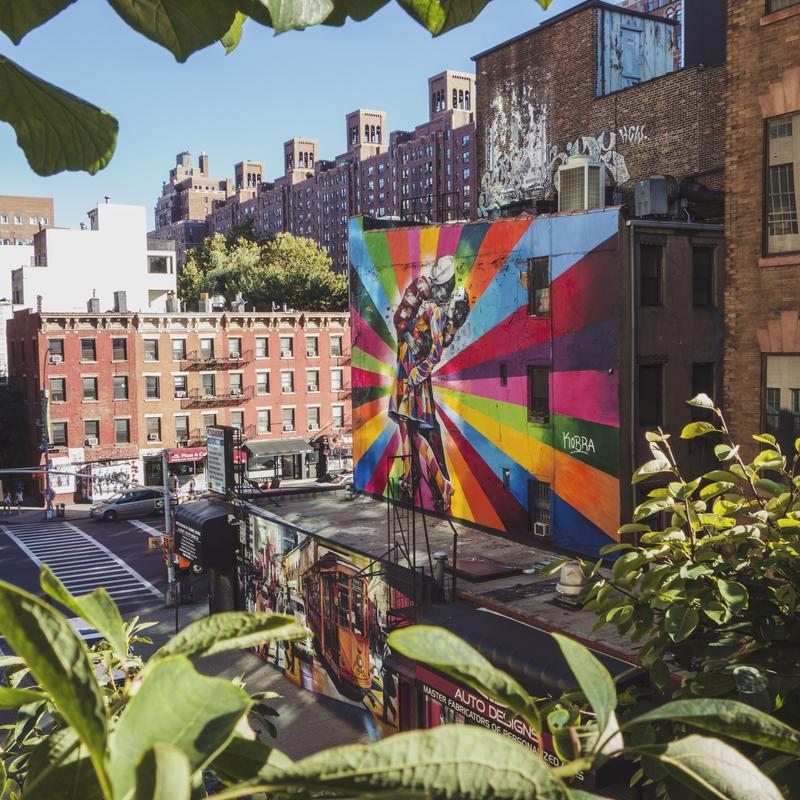
Matthew Schnipper: Man. Going from Queens to the Bronx, I was really excited we ran a story about the photographer Martha Cooper, who has a retrospective at the Bronx Documentary Center. Martha Cooper is basically known as one of the first, if not the first, documenters of the graffiti moment in New York City. She grew up in Baltimore. Her dad owned a camera shop. She spent a lot of time around cameras and became a staff photographer for the New York Post in the late '70s. Basically, she just got bewitched by graffiti.
Martha Cooper: I started to do a personal project about kids playing creatively on the Lower East Side. We're in front of some of those pictures right now. One of the boys showed me his sketchbook with drawings and explained to me that he was practicing to put his name on a wall. That was the first time I understood what graffiti was.
Matthew Schnipper: We actually interviewed her for this piece. Walter, again, a reporter on my desk went up to the Bronx documentary to talk to Martha, who is in her early 80s, is wearing a airbrushed jean denim jacket with her name on the back.
Janae Pierre: Of course, she is.
Matthew Schnipper: She has got a lot of spunk. She was great. This exhibit is open for the next couple months. It looks great.
Janae Pierre: Yes. Martha Cooper's a living legend. I love that we were able to sit down and chat with her. Graffiti is illegal, and it's this underground scene. I'm wondering, for people out here doing graffiti to kids out there doing it, why were they so comfortable with her in the first place?
Matthew Schnipper: It's interesting because, at that point, she was young, but older than them. A white lady snooping around with a camera, working for a newspaper. It is interesting. We had wondered that same thing, like, how did she end up in the scene? Basically, she would just go and give them prints.
Martha Cooper: Photography has always been a part of graffiti writing because the photographs are the proof of what you've painted. I could take better pictures because I had better camera equipment. The kids were shooting with cardboard cameras, disposable cameras. They wanted the pictures, basically, and they trusted me because I did come back and I did give them pictures.
Janae Pierre: I guess they saw that it was pretty cool.
Matthew Schnipper: It was pretty cool. It was better than the photos they were taking, I guess.
Janae Pierre: That's dope. Her photos are now an archive of New York City culture.
Matthew Schnipper: Yes. She has several books, which you can definitely check out. It has her photos, not just graffiti, but her photos of street racing. There's breakdancing, early hip-hop shows, tattoos, and then a whole bunch of illegally built casitas.
Janae Pierre: I think the cool part about it, it's called Streetwise. Love that name.
Matthew Schnipper: Yes, it's a great name.
Janae Pierre: Very cool. I can get some good food this weekend in Queens. I can go learn about New York City underground history in the Bronx. What else, Matt?
Matthew Schnipper: I would say if you were bopping around New York City, you could go head to the Lower East Side, which we have a story about, maybe becoming a new vintage district.
Janae Pierre: I felt it coming along.
Matthew Schnipper: Yes?
Janae Pierre: I felt it coming on these past two years for sure. There are a lot of vintage shopping spots on the Lower East Side now. It just happened.
Matthew Schnipper: Yes. We knew there were so many of these different stores, and more kept opening up. A store from LA called Varsity opened up a branch in York. One thing we were curious about, is there enough supply and demand to keep all of these shops open? They all sell similar stuff, a type of '90s-ish designer streetwear type things. Are there that many people that want to get into this very niche type of vintage? Is there enough of this type of vintage, which has to be tracked down through estate sales, online thrift stores, dealers, et cetera, to actually make the variety of stores that interesting?
Janae Pierre: Yes. I often wonder about the authentication process, too. When you're shopping vintage, and you want to ensure that it is indeed vintage and it is indeed Gucci, like, how are all these things getting authenticated?
Matthew Schnipper: Sometimes they are, and sometimes they aren't. I think over time, you end up getting an eye for knowing, okay, this tag does this, and the hem looks like this, and in this season, this brand did this. A lot of it, you're going on trust. Yes, it's possible if you don't know enough, you're going to go in there, and you're going to buy something. If enough of these trendy shops keep opening up, the shopkeep might not know enough to authenticate it. I think that is a risk that's built in.
Janae Pierre: I only ask because I was not in the vintage district on the Lower East Side. I was actually in Williamsburg, and there were these Gucci loafers that were like $800, $800, and I'm like, "House way?"
Matthew Schnipper: That's a lot of money. There are many things in these shops that cost more than they did at retail when they were new, you know?
Janae Pierre: Yes.
Matthew Schnipper: It's not just the quality of the thing, but you're going on rarity as well.
Janae Pierre: That's one thing people should keep in mind if you're heading out to one of these vintage shops. Don't go into these shops thinking and expecting thrift store prices, because you will be shocked.
Matthew Schnipper: Yes, you'll get sticker shock. This is not a thrift store.
Janae Pierre: Yes. Are you a vintage shopper, Matt?
Matthew Schnipper: I am more of a thrifter. I do wear mostly used older clothing. I do have an interest in this type of stuff, but not the interest in opening my wallet as much.
Janae Pierre: It just depends, for me. If it's like an old, old plate, maybe with the gold rim. There are certain things that I'm like, "Okay, you got a little coin?" Like my grandma said, "You got a little coin?"
Matthew Schnipper: There are some things where I will pay.
Janae Pierre: All right. Well, I know you've been keeping up with Mayor Mamdani's cultural references, and I have to mention that WNYC actually spoke to the mayor this week about the lessons he's taken in his first 100 days in office and the lessons that he gained from Mayor Fiorello La Guardia. You can listen to that conversation, of course, on our feed right now. It's the previous episode. Matt, when it comes to Mamdani's cultural references, do you have anything for us?
Matthew Schnipper: I do. Before I say anything about this, let's just listen, because I didn't understand any of this.
Janae Pierre: Okay.
Mayor Zohran Mamdani: If you are a Mario Kart fan, government is Yoshi, and philanthropy is the golden mushroom. That edge we need to beat Bowser on the Rainbow Road. To belabor this metaphor even further, Bowser is corporate greed in this scenario.
Matthew Schnipper: This was lost on me, Janae. He was talking about accepting private donations to fund public programs. What exactly this has to do with Mario Kart? I recognize that he is making an extended metaphor.
Janae Pierre: Same. I mean, I don't know where this came from.
Matthew Schnipper: [laughs]
Janae Pierre: You lost me at government is Yoshi.
Matthew Schnipper: When I saw this, I thought, "Is this AI?" Which is the kind of thing that-- I'm not joking. It's funny. I was like, 'Did he say this?" He did say this, and I assume for many people, this did 100% compute. For me, I was like, "Yoshi's the turtle guy. I know that. Philanthropy is the golden mushroom. I think go, Yoshi." Right?
Janae Pierre: Yes.
Matthew Schnipper: Yes. Sure. All right, sure.
Janae Pierre: I'm just going to say Mario and Luigi, according to my niece, in a recent film, they live in Brooklyn.
Matthew Schnipper: Really?
Janae Pierre: They're Brooklyn Knights. Yes. They're Brooklyn Knights.
Matthew Schnipper: You know what I'm realizing, actually, looking at this? The game is Mario Kart, but Mario isn't a character in his metaphor, right?
Janae Pierre: Listen, you're absolutely right, I think.
Matthew Schnipper: We may need to learn about video games and try to explain why he's wrong. If someone knows about video games and has a better metaphor-
Janae Pierre: Yes, hit us up.
Matthew Schnipper: -can they hit us up, please?
Janae Pierre: Yes. Nycnowmyc.org. We are eager to hear from you.
Matthew Schnipper: Just if you want to tell us a metaphor in general, hit us up.
Janae Pierre: Yes. We got time.
Matthew Schnipper: We're lyrical people.
Janae Pierre: Especially Matt.
Matthew Schnipper: National Poetry Month.
Janae Pierre: Yes.
[laughter]
Janae Pierre: With that in mind, Matt, I just want to move on because I'm sure there are stories from your desk that we have missed a Brooklyn musician.
Matthew Schnipper: Yes. Zosha Warpeha plays a Norwegian fiddle called a Hardanger d'amore.
Janae Pierre: What's the difference between a Norwegian fiddle and a regular fiddle?
Matthew Schnipper: Probably socialized healthcare, I guess.
[laughter]
Janae Pierre: Wow.
Matthew Schnipper: Now, this fiddle has the regular amount of strings, and then underneath, it has sub-strings, resonant strings. Everything that is being performed also has this kind of echo built into it.
Janae Pierre: Cool.
[music]
Matthew Schnipper: Her album is beautiful. She recorded at a space in downtown Brooklyn called ISSUE Project Room. I would check her out. Z-O-S-H-A is how you spell her first name. Check her out. Her album is on Amazon Bandcamp.
Janae Pierre: You know who else I am excited to check out? Lina Bradford, the DJ.
Matthew Schnipper: Yes. Lina is cool. You can still see her at Cafeteria. We did an interview with her. Shout out to Rich Juzwiak, who did the interview with Lina. She is one of, if not the first, trans DJs in New York who really made a name for herself. She played for about 10 years at big parties on Fire Island. She plays at Cafeteria in Chelsea every week and just all around town.
We had an interview with her, really about how sounds have changed, what has stayed the same, and how you go from being a personality in a club to being behind the decks, and how, for her, really having a big personality is helpful. She learned how to play records and how to mix records after the fact. She was encouraged by Frankie Knuckles to just get up and start being a DJ, which she did.
Janae Pierre: Yes. Worked out great for her.
Matthew Schnipper: I want to say go to gothamist.com because the photo that we have of her is maybe my favorite photo that we have run before on this interview. It's very orange. Everything is color coordinated.
Janae Pierre: Orange is my favorite color.
Matthew Schnipper: You are going to like this photo. You should check it out.
Janae Pierre: Okay, cool.
Matthew Schnipper: It's very fun.
Janae Pierre: There's a Wallace Shawn retrospective?
Matthew Schnipper: There is. One of the things that's interesting, if you are listening to this and you know who Wallace Shawn is, you're maybe picturing, maybe you're thinking about my dinner with Andre, maybe you're thinking about Inconceivable from Princess Bride.
Vizzini: He didn't fall? Inconceivable.
Speaker 5: You keep using that word. I don't think it means what you think it means.
Matthew Schnipper: Maybe you're thinking about the fact that he was Cher Horowitz's teacher in Clueless, or maybe you're like, "Who is that guy?" I found it interesting talking about Wallace in our newsroom because some of our younger colleagues were like, "I don't know who that guy is." Eventually, you'd show them a picture, and they'd be like, "That guy." I was like, "Wallace Shawn. National treasure Wallace Shawn." Wallace Shawn has a kind of mini retrospective being organized by John Early, the comedian, who I also love, at Metrograph, playing not just his big films, but stuff that he has a small role in, like Clueless, running next week. The whole lineup for the festival is on gothamist.com.
Janae Pierre: Nice. That's WNYC's Arts and Culture editor, Matthew Schnipper. Thanks a lot, Matt.
Matthew Schnipper: Thanks always for indulging me, Janae.
[music]
Janae Pierre: Before we go, this week, WNYC observed Take Your Kid to Work Day. The little ones checked out a lot around the office, and they shared some life advice.
Kid 1: My advice is drive your car every day.
Kid 2: My advice is enjoy yourself.
Kid 3: My life advice is never let someone push you around. Like, never feel bad about yourself.
Kid 4: My life advice is don't get stressed out or it will become a self-fulfilling prophecy, and you will have your day go wrong.
Kid 5: My life advice is never underestimate the power of words.
Kid 6: My life advice is chill out and relax.
Kid 7: My life advice is to go outside every day.
Kid 8: My life advice is that you should never go swimming in under 5 degrees. I learned from experience.
Kid 9: My life advice is don't let anyone hurt or ruin your spark.
Kid 10: My life advice is have fun.
Kid 11: My life advice is pineapples and pizza don't go together.
Janae Pierre: Thanks for listening to NYC NOW. I'm Janae Pierre. Have a lovely weekend. See you next time.
Copyright © 2026 New York Public Radio. All rights reserved. Visit our website terms of use at www.wnyc.org for further information.
New York Public Radio transcripts are created on a rush deadline, often by contractors. This text may not be in its final form and may be updated or revised in the future. Accuracy and availability may vary. The authoritative record of New York Public Radio’s programming is the audio record.