
'A Thousand and One' Sees a Mother do Everything She Can to Keep Her Son
( Courtesy of Focus Features )
[music]
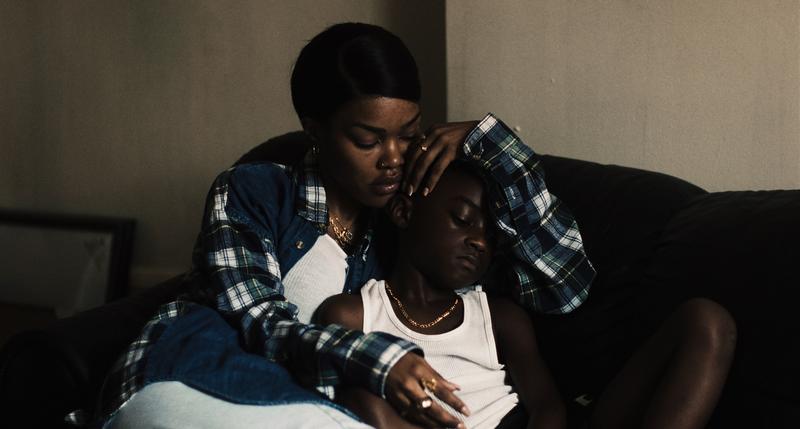
Alison Stewart: This is All Of It on WNYC. I'm Alison Stewart. A new film tackles gentrification through the lens of a mother and son attempting to make a home for themselves, while escaping the foster care system. The movie is titled A Thousand and One, which also happens to be the number of the apartment in Harlem that a young, impulsive, and recently incarcerated Inez finds for her and her son, Terry, who was in foster care, something Inez knows about firsthand.
In a moment, she changes both their lives when Inez takes off with Terry. Inez gets Terry a fake social security number, and enrolls him in school. She finds work. Her boyfriend, Lucky, becomes an important part of their lives. She really wants for them to be a family, and for her son to have a good life. We follow them over the course of a decade or so, from 1994 to 2005.
At the same time, the city is changing around them, and that affects how they can live their lives. Teenage Terry and his friends experience the NYPD Stop-and-Frisk. Local stores are replaced by chains. When a new landlord says he's going to fix up apartment 1001, it becomes clear, he is trying to force them out. A Slate Magazine review states one of the most powerful emotions driving A Thousand and One, A.V. Rockwell's arresting drama about a young Black mother, who will stop at nothing to stay with her son is nostalgia.
Playwright Jeremy O. Harris said he walked out of the theater and wept in front of people he barely knew, as he announced that the film was the winner of the Sundance Grand Jury Award back in January. A Thousand and One is playing in theaters now. Joining us today, a native of Jamaica, Queens, A.V. Rockwell, who wrote and directed the film. A.V., Welcome.
A.V. Rockwell: Hi. It's such a pleasure to be here. Thank you for having me.
Alison Stewart: You made me cry in my office as well. I cried yesterday [laughter] watching this film. This film has got big macro issues like gentrification and the foster care system. Then, it's got these micro issues about what does it mean to be a good mom, what actually makes a family a family. Which element came first for you? Did you have a story, or did you have themes?
A.V. Rockwell: I definitely had themes. I think for me, just in the ways that I was reconciling with my relationship to New York was, I think that was definitely a part of it. Gentrification is definitely a part of this story, but I think what the movie really explores is, how we got to gentrification being something that's now dominating so much of life in the city.
You see all the years that set the stage for it, and what the vision was during that time from the leaders of the city, and how that impacted these characters in explicit, and also covert ways. I think that, that's a lot of what I wanted to explore here. I think also the themes that I had in mind were Black womanhood, and just being a woman in general, and mother and son relationships.
I think that I started with the themes, and then just got into the more specific, like family. I think family for me, and the way that it's explored in the film is-- When you think about something like displacement in the ways that my characters are constantly threatened by that, I really wanted to showcase the impact of that.
When you say a neighborhood is changing for the better, when you say a city is changing for the better, but yet the people that are most marginalized and most vulnerable, are put in these positions, where they're yet again being offended. I wanted to showcase that human price. I think by showing the power of family, showing the power of what it means to have a home like this apartment that we're speaking of, and just have stability-- I think what that means for people, if you can see what that means for people, and them finally having the stability they need to access the American dream, then you can understand what it means to pull it away again.
Alison Stewart: There's some things in it that are just so very New York. There's this great shot of the Hotel Theresa in Harlem, which was the place to go for the Black literati, and the Harlem Renaissance. Then, I think, it dissolves into a shot of Old Navy. [chuckles] You get that sense of this is how jarring it is for this neighborhood to lose so much history, and for people to be losing their homes. To your point, when the neighborhood is allegedly on the come up. What were some of the creative choices you made to let us know about the changes? That was one that really struck me.
A.V. Rockwell: I think you definitely nailed one right on the head. I'm so excited that you bring that up because, obviously, this is a movie that, the more you have context about New York and about the history of the city, the more you'll understand the nuances of the story that's in front of you. I think Hotel Theresa, like you said, it's a historical monument of the city. Those blocks, Frederick Douglass, Malcolm X, all of those are walkable acknowledgments of the way this neighborhood was a part of American history.
To see that washed away for chain stores, to see that washed away for all these things that make this neighborhood less specific, and knock down that history. Lenox Lounge, which unfortunately, I couldn't feature in the film, but that has become a Wells Fargo. I think it's really tragic. I think that's definitely part of it. All along, throughout the movie, and it's tough for me to share without wanting to give it all away, but I think the way I focused on structuring the film was through bookending two mayors that would have been leading the vision of the city over the time that Inez is focused on raising Terry, and helping this young boy grow into a man.
I think that, you see Giuliani come in '94, that's the year that he became mayor. You see what his vision is, but you see how that vision unfolds, in a way that seems to contradict what he tells citizens like Inez in Harlem, what these changes should mean for them. Then, from there, we move into Bloomberg, and obviously, the shift of the guard happens around the 2001-2002 period.
You see him come in, and he just continues to build on that vision. It's interesting because, as he comes in, and during that time hearing him speak on the vitality of New York City neighborhoods and how special they are, and how they are part of what makes the city a city, and makes New York City so great, but then you see these changes that continue, and how that, again, contradicts what's being said about the vision and goals for the city.
I think that you see it in big macro ways like that, and hearing these mayors talk about their plans for the city, and seeing how that is implied in the world around these characters. Then, you also see it in direct ways in the ways that, as you talk about Stop-and-Frisk. If the neighborhood is supposed to be cleaned up, why is it literally cleaning us up? It's pushing us out of our neighborhood, whether it's petty offenses and a lot of the civility politics of the time, or major offenses like that.
Then, obviously, you start to see the faces of change. I think that was really important for me, especially, in talking about gentrification. A lot of times people think of gentrification, and they just see it as some new neighbors.
Alison Stewart: New faces.
A.V. Rockwell: Yes. They see buildings changing, but they also see their neighbors changing. That's a lot of what I've seen also in just how it's been depicted in film and TV, but it's a lot of things all coming together, how the neighborhood changes around you. Then, you have the more explicit forces, the faces of it. Yes, like that landlord that you mentioned.
To me, I think of him. [chuckles] I think of those people when I think of gentrification and not, "Why is Susie moving into my building?" I think that it's just all these things coming together, is really what it's about. I really wanted people to see that, especially, if they're experiencing it themselves. It goes beyond-- I'm just talking about the Black community, but it happens to everyone, who's marginalized in one way or another. This is how it works.
Alison Stewart: My guest, A.V. Rockwell. The name of her film is A Thousand and One. She wrote it and directed it. Inez is our main character. We follow her, and her quest to raise this boy, Terry. What are some adjectives you would use to describe Inez?
A.V. Rockwell: [chuckles] Some adjectives? I think she's a force. I think she's deeply loving, deeply loyal, and committed. I think she is a criminal, but she's a criminal with a heart of gold. I think she's impulsive. I think she's humorous. I think she's feisty. [chuckles] I also think she's deeply sad, deeply longing for love. That could give you-- I think she's a very layered, complicated woman.
Alison Stewart: When she gets out of prison, and she spies Terry, this little boy on the street, her son, and she approaches him, he's not really sure he wants to deal with her. She bribes other kids to find out where he is, and what's going on with him, and she discovers he's in the hospital. I'm not giving anything away, because this happened at the top of the film. She decides to take Terry and go. Was that impulse for your character, or was that the plan?
A.V. Rockwell: It was absolutely impulse because I think as it plays out in that part of the story, you see she discusses with him that like, "More than likely, you're going to move. People don't even know that I'm in contact with you. Nobody's going to be like, 'Oh, by the way, this is where you're going to find him.'" You see her make petty attempts to just try to be in touch with him in that scene, giving him the beeper number and stuff like that.
I think it just dawns on her that, "I have no idea how I'm going to find you again once you're moved." What does that mean? Will I see you again? When will I see you again? How much time will pass again, and what's going to happen to you during that time?" At the end of the day, he's in that hospital because of something severe that happened to him. He's not necessarily living in conditions that should make her feel like he's going to be okay. I think it was just a moment of panic and desperation.
Alison Stewart: The movie also really looks at, and how that's really important, what it means to be a good mother, and how we judge mothers. Inez loves this little boy, but she seems like she just hasn't had the equipment necessarily when she's young to do what she wants to do.
A.V. Rockwell: Do what she wants to do, you mean like--[crosstalk]
Alison Stewart: Provide the way she wants to provide for him. She wants to, but she isn't necessarily equipped to do it, but she still just really wants to help this young boy. I was curious what you wanted to explore about motherhood.
A.V. Rockwell: You mean, in terms of the physical, or in terms of the literal challenges?
Alison Stewart: Maybe both.
A.V. Rockwell: I think people need to remember that Inez is young. She's 22 when the movie starts. That was so important for me because, especially, for younger moms, especially for those young and single moms, in so many ways, you're still a kid trying to figure out yourself, trying to figure out life. You spend your 20s trying to get stable, and it only gets more challenging when you have a child.
I think, Inez she's fighting that fight trying to figure out, "How do I create a life for you in which both of our survivals are managed and taken care of, but then, also, how do I mom? I'm doing this for the first time, and I don't fully have the tools to be a mom, because I didn't have a mom. I didn't have parenting. I didn't have people around me that nurtured me in that way. I don't really know what I'm doing here."
Even people that do have that support system, might still not know how to do it. There's no foolproof guide to how to be the right parent. I think, she's just figuring it out, as she goes to the best of her abilities.
Alison Stewart: When did you write this film?
A.V. Rockwell: I began writing it in 2018. That was a process, just picking up the pen and putting it down. I started it from a place of experience, just pulling from my lived-in experiences coming of age in New York. I did a lot of research as well. Research, not only in terms of things that serve the plot, like the foster care system, or how would she have been able to keep it in hiding.
What are the kernels that I needed, in terms of knowing how he would have been able to sustain as a documented citizen, so to speak? Also, just what was going on in New York, aside from what I knew, aside from what I lived and observed, and historically, what took place.
I did just a deep dive, just understanding what was happening, and so just in that whole process, it was constantly me writing. If I felt like I needed something else, I would keep writing, and so I finished writing about 2020 is when I felt like, "Okay, we're ready to [chuckles] shift gears, and go make this."
Alison Stewart: The film was shot in about six weeks in Harlem. Is that right?
A.V. Rockwell: Yes.
Alison Stewart: How did shooting in Harlem help the texture of the film?
A.V. Rockwell: It was so important to me to shoot in Harlem, because I wanted to make sure that I was reflecting the neighborhood that I wanted to protect. You have to see and feel the essence of Harlem. I think that the movie benefits in, not only narratively, but also, I think just being able to shoot in Harlem and have Harlemites be part of this film, it's like, this is the way that I'm also empowering this community, empowering this neighborhood, a lot of these local businesses that give this neighborhood its identity, versus [chuckles] what's new and coming in, and pushing a lot of that out.
It was really important for us to be there. I think it added in so many ways. Obviously, me just as a storyteller, I continue to just layer in those shades, not only between what you see on screen, but what happens off screen, like what you're hearing, what you're feeling, the sounds of it. It's just a musical neighborhood. Overall, it was just everything that I-- Especially, being that I lived in Harlem at the time that I was making the movie, everything that I [chuckles] could do to embody and celebrate Harlem, both on and off camera, I incorporated that into this.
Alison Stewart: It is a beautiful and moving film. It's called A Thousand and One. I've been speaking with its writer and director, A.V. Rockwell. A.V. congratulations.
A.V. Rockwell: Thank you. Thank you so much. [chuckles]
Alison Stewart: Coming up on All Of It on Monday, the Pulitzer Prize-winning play, a take on Shakespeare's moody Prince Fat Ham is on Broadway. Will speak with its stars that's going to be on the show on Monday. That is All Of It for this week. All Of It is produced by Andrea Duncan-Mao, Kate Hinds, Jordan Lauf, Simon Close, Zach Gottehrer-Cohen, L. Malik Anderson and Luke Green.
Our intern is Catherine St. Martin. Megan Ryan is the head of live radio. Our engineers are Juliana Fonda and Jason Isaac. Luscious Jackson does our music. I'm Alison Stewart. I appreciate you listening, and I appreciate you. I will meet you back here next time.
Copyright © 2023 New York Public Radio. All rights reserved. Visit our website terms of use at www.wnyc.org for further information.
New York Public Radio transcripts are created on a rush deadline, often by contractors. This text may not be in its final form and may be updated or revised in the future. Accuracy and availability may vary. The authoritative record of New York Public Radio’s programming is the audio record.