
Spring Cleaning Your Home, Top To Bottom
[music]
Alison Stewart: This is All Of It on WNYC. I'm Alison Stewart, coming to you live with the sounds of spring.
[machine whirring]
Were you expecting birds? That was a real live handheld Dustbuster [machine whirring] because we're talking about cleaning. After winter of holiday baking and friendly gatherings and a lot of cozy couch time, it's possible that some holiday crumbs never made it out of the oven or maybe they're in the couch, or maybe you're still pulling pine needles from your rug. Over the winter with the windows shut, maybe your shower's gotten a little moldy.
It is going to be in the 80s today, so yes, you can start moving all of those winter clothes, the back of the closet, or maybe off to Goodwill because as you clean you might want to address clutter as well. Long story short, at this point, everything in your home could probably use a good deep clean and maybe a good decluttering. Joining me now, please welcome Amy Panos, an editor at Better Homes and Gardens. Hi, Amy.
Amy: Hi, Alison. Good afternoon, thanks for having me.
Alison Stewart: Amanda Wiss, founder of Urban Clarity, a Brooklyn based home organizing service. Hi, Amanda.
Amanda: Hi, Alison. Thrilled to be here.
Alison Stewart: Listeners, we want to bring you in on the conversation. Give us a call with your spring cleaning questions. Maybe you have a tip or a trick that you've stumbled on that might help out fellow listeners. We're talking cleaning and decluttering for the rest of the show. 212-433-9692, 212-433-WNYC, or you can tweet to us or DM us @allofitwnyc, that's both Twitter and Instagram, phone lines are open, and screeners are standing by. 212-433-9692, 212-433-WNYC, spring cleaning questions, decluttering questions, or any tips or tricks that you have stumbled on that might help out your fellow public radio listeners. Amy, when you think about spring cleaning, how much of it for you is about managing all the things you have and how much is it about dusting scrubbing, and do you have an order?
Amy: Yes, very much so. I think it's really all about managing what you have, getting rid of things that are cluttering up your life and cluttering up your brain and making you stressed out. That is got to be the first step, otherwise, you're just moving around annoying piles of things that shouldn't be in your life to dust under them. Get rid of the clutter first before you start the dusting and scrubbing process, I say.
Alison Stewart: Amanda, how do you break up home organizing into chunks to make it more manageable. When you say, "Get rid of the clutter," like Amy said, which makes a lot of sense. Oh my gosh, where to start?
Amanda: Totally. The great thing is that it doesn't really matter where you start. It's more about doing bite-sized pieces. You can walk into your home and decide, "I'm going to work on my entranceway today," and just tackle that small bit. If your entranceway feels too overwhelming, you can break it down even smaller. Maybe you're not wearing your winter boots anymore, so let's make room now for your sandals that are coming in. Just tackle a small piece and then tackle the next part and create a little bit of momentum.
Alison Stewart: Amy, the same process for cleaning, go small, or should you devote a big chunk of time?
Amy: Oh my gosh, I completely agree with what Amanda says. A lot of people can get very overwhelmed thinking about, and they maybe get a little perfectionist about about things, like thinking that they have to get this all done in one go. That's just a recipe for getting overwhelmed and not doing any of it. I agree, start small. If you were going to say, "Okay," well, [unintelligible 00:03:47] to step back a second, I would say make a plan. I'm a list maker. Sit down and make a list of all the things that you ideally in a perfect world would like to tackle during your spring cleaning.
Make a list and then prioritize them, what are the things that I really am going to feel best about if I get them done, and what are the things that are the nice to get done, but if I don't they could wait? Pick the smallest thing on your must do list and start there. It might be I'm going to really deep clean my powder room today. That's a small space. You can start and really do a top to bottom deep clean of your powder room, probably in an hour. Like Amanda said, let that momentum carry you through to larger projects. I always say start small and let success breed success.
Alison Stewart: Let's take calls. The phone lines are filling up. Bridget is calling in from Jackson Heights. Hi, Bridget, thanks for calling All Of It.
Bridgette: Yes, hi. My question is, I feel like I really need a handheld vacuum so I can really get into those hard to reach places. I've heard that a lot of them have very poor battery life and they also don't really suck very well. I need to know if there's a handheld vacuum that I can really get a lot of value from.
Alison Stewart: Amy, where do you fall on vacuums in terms of what's in your arsenal to tackle the cleaning part?
Amy: Well, it's spendy, but I'm pretty in love with the Dyson stick vac that converts from a stick vac so you can use it standing up. It also comes apart into a handheld, like a Dustbuster size thing. This product is expensive but it's worth it. The battery life is awesome, the suction is really good. My favorite part about it is that it has this blue laser on the front. It sounds nuts, but it really it's so satisfying seeing all the crumbs and dirt and dust lit up and then you just get them with this vacuum. I am a big fan of the Dyson and I think a vacuum is a good investment because you're going to use it for a really long time, and it's going to make a real difference in how clean your house feels.
Alison Stewart: All right, Amanda, we have a question for you from Diane who's calling in from Maryland. Hi, Diane, thanks for calling All Of It. You're on the air.
Diane: Well, thank you. Hi, Amanda. I am a very good reader out but my children, two of whom no longer live here, still have stuff here. How do you convince people to come get their stuff because I don't feel good about throwing it out?
Alison Stewart: When you're not the clutterer, Amanda, when family members are, what to do?
Amanda: That is a great question, Diane. The first thing to do is to have a conversation with your kids and discuss with them why this is important to you and have them potentially, hopefully, come to some understanding of why this would be a space that you want to reclaim in your home. Be able to articulate to them why it's important, and then set a deadline. That's not necessarily meant to be punitive. It's meant to be enjoyable in the sense of, "Come over. We'll do something fun as a family, and also we'll give you a little support," but basically do something where you're creating momentum for them and saying to them this is something really important. Alternatively, if your kids live nearby and you want to box up a few things and drop them off, it's a little bit more passive aggressive, but you can also do that too [unintelligible 00:07:35] throwing it out.
Alison Stewart: [laughs] Amanda, when you start to think about decluttering, what are three things you should have on hand?
Amanda: The first thing that you should have on hand are some recycling and garbage bags because you will likely be filling them with trash and donation. The second thing is a glass of water or something to keep you in the space, a little bit of snacks and things so you don't find yourself wandering. I know it's a little counterintuitive, but if you don't have good energy and you're not hydrated, you're going to give up much more quickly. The third thing is just something that you enjoy. You should be either listening to music or doing something else that will also keep you in that space so you'll be able to continue the momentum.
Alison Stewart: I'm hearing a theme; stay in the space, don't try to escape.
Amanda: Don't leave. If you know you're not using something, and you have a donate pile, you can go put it on your stoop right now if you're in Brooklyn. You just need to stay in that space and deal with the stuff and then you can walk away once you've made a lot of decisions.
Alison Stewart: All right, Amy, you told us we need a vacuum. What are a few other must have items before you start to do a deep clean?
Amy: Absolutely, so microfiber cloths are so great because they can clean so much without any chemicals. The magic is right in the cloth. All you really need is water plus a microfiber cloth to clean a lot of surfaces. The key with those microfiber is that you can't just toss them in with the rest of your bath towels. You have to wash those all together because they have some special magic in them that allows them to attract a lot of dust and dirt. You wash those all together in hot and don't ever use any fabric softener or dryer sheets on those.
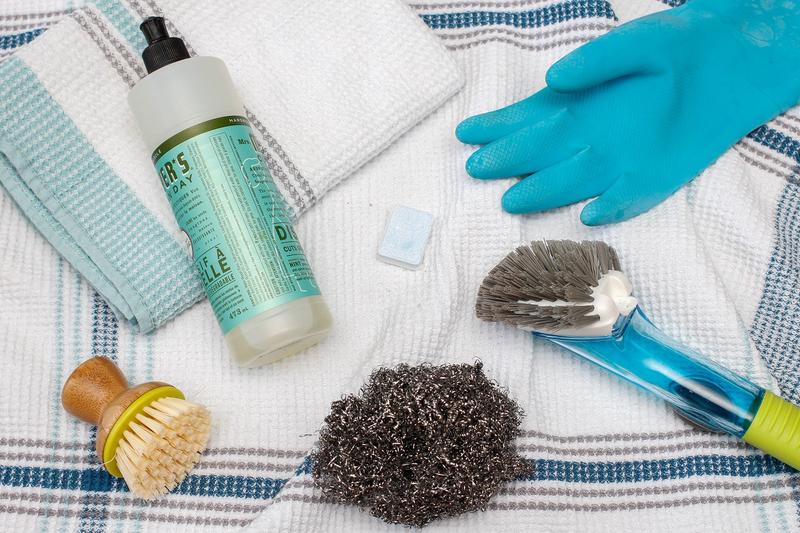
In addition, I would say get some gloves. You do not want to ruin your hands or your manicure while you're dealing with all the grunge. A bucket, a good all purpose cleaner. I really like Mrs. Meyers products because they're more natural and they have really great scents. Then I would say you need a mop. I really like, again, the theme is microfiber, I really like a microfiber mop and I use it not so much on floors but more for top level things. If you're really going to go for it with your spring cleaning, you're going to start from the top of the room down, and I mean they literally mean the ceiling. I literally mean the crown molding at the top. A brand new fresh microfiber pad on a mop with a telescoping handle is going to let you be able to knock down that dust really easily. That's my toolkit,
Alison Stewart: If you go on any of the social media sites, a lot of people are saying put baking soda with this and that, and we clean and it's great. Of the DIY cleansers for people who really don't want to get into detergents, what have you found works best?
Amy: Vinegar is really an amazing one of those, again, magic products. My mother-in-law who was a school custodian for many, many years, swears by vinegar for a lot of different things, including hardwood floors. A little vinegar diluted in some warm water will get you far on a lot of different fronts. I also think people use baking soda is very, very helpful for things like sprinkling on carpets and then vacuuming it up to freshen your carpet.
Same way with a mattress. If you're going to spring clean your bedroom, one of the things to do is take all the bedding off, of course wash all the bedding, and then sprinkle some baking soda on your mattress believe it or not. It's going to soak up odors and any oils. Leave it on there for 10 minutes and then vacuum it off. I would say vinegar and baking soda are a couple of real standouts for natural cleaning products from your pantry.
Alison Stewart: We're talking about spring cleaning and decluttering with Amy Panos, editor of Better Homes and Gardens Home Section and Amanda Wiss, founder of Urban Clarity, a Brooklyn-based home organizing service. If you want to ask a cleaning or decluttering question 212-433-9692, 212-433-WNYC, or tweet to us or send us a DM at Instagram or Twitter @allofitwnyc, or maybe you have a tip that you'd like to share with your fellow listeners. All right, Amanda, we have a call from Robin in the West Village. Hi, Robin, thanks for calling in.
Robin: Hi, can you hear me?
Alison Stewart: Yes. Great. Go for it. You're on the air.
Robin: Hello?
Alison Stewart: Ooh, I don't know if Robin can hear us. We'll see if we can get Robin's audio situation ironed out. Amanda, closets. In terms of keeping the closet organized, you think I'm going to bring my summer clothes in. What can one do so that they stay organized? Let's talk about starting off on the right foot.
Amanda: Totally. The first thing to do is to make space in your closet for those summer clothes. You want to get rid of your sweaters, the heavy seasonal winter things that aren't supporting you at this point that you wouldn't grab because you want certainly the front of your closet and most reachable parts to be the things you're actively wearing. I would say do a sorting initially, purge anything that you can either from the closet completely, whether you're donating it or whether you're just binning it up and putting it somewhere else so it's out of your active closet space.
Then look at your space itself and make sure that you're using things that are maximizing the space as much as you can. Do you have slim line or velvet flocked hangers instead of chunkier ones? Do you have hooks for a place that you might want to grab your robe? Just think about what you intuitively go for, recognizing that most people wear about 20% of the things in their closet on any given week or month. Make sure that the things you're using most are front and center and that the other things are just not quite so hidden, but make sure that you can reach them.
Alison Stewart: Figure out what are those things that you go to over and over again and make them front and center.
Amanda: Exactly. It's basically the Pareto principle for your closet. You want to make sure that the most accessible are something that you can reach pretty quickly. If you have favorite outfits, sometimes you can even put a top and a bottom together and just put it on one hangar. Just think about how you dress and what you dress for. If you dress differently on the weekends versus the weekdays, maybe have a section of your closet that is something that you just go to on the weekends. Just personalize it to yourself without being a perfectionist about it.
Alison Stewart: Amy, what do I need to clean in my closet?
Amy: [laughs] I was hoping you'd come to me because I have thoughts. Everything Amanda is saying is totally key to getting your closet organized and functioning better because there's just nothing more defeating than you open the closet and it's just a hot mess and you cannot find what you want and you just want to slam it and go put on your bathrobe. I think one way to fix that after you've gotten it sorted and organized the right way is make it beautiful. Make it a space that you really get a little thrill looking at. One easy way to do that I think is within reason, sort your wardrobe by color. For example, I have all my shirts, that's where I wear most of my color.
All my shirts are sorted like ROYGBV like the rainbow and it's a stupid thing, but it makes me happy every time I look at it. Another idea for that is, and this one's a little bit bananas so people might think, "Okay, Amy, whatever, get real," but if you put a pretty wallpaper in the back of your closet, you could get a roll of peel and stick wallpaper for probably $20 and just put a pretty pattern back there. That will just make you happy every time you see it. You can get color coordinated boxes and bins. Pick a favorite color and really go for it and beautify your closet. I've even seen people hang little mini chandeliers in their closets. That might be a little bit crazy. [crosstalk]
[laughter]
Alison Stewart: The people in your [crosstalk] are laughing at this moment. [laughs]
Amy: It's an investment to make it look pretty. In other words, to really make yourself feel good when you see it.
Alison Stewart: Amanda, let's move to the kitchen. There are so many gadgets you can see about, I can put my yogurt cups in this thing if I stick it the underneath this shelf. I can find this ledor. Of many of the kitchen gadgets and space savers, which ones are really useful for decluttering?
Amanda: Sure. I think what you have to start with when you're thinking about your kitchen is if you're getting rid of things, you don't have to actually store them. If you're decluttering first, then you don't need to containerize it with something necessarily if that makes sense. Think about what you're actively using. That said, I am a big fan of some space saving things in your fridge. There's an everything egg organizer holder with a drawer that's at the container store now that has literally revolutionized the way that we make breakfast here in the morning. It is so easy. You can literally just open the drawer with one hand, grab the eggs that you're going to crack. It's fantastic.
I think also a lot of people use water bottle holders now because water bottles have gotten to be this ubiquitous thing in American homes and they're falling all over the place and our kitchen drawers are not meant for them and shelves they fall off of so I'm a big fan of a water bottle holder. I think in a pantry, you want to really containerize as much as you can with pantry cubes. I like the ones from iDesign, but really anything that you use that's a clear container that then ideally if you have a lot of people in your home that you can label is really helpful because then people know how to both retrieve and return things.
Amy: Hey, it's Amy. Can I jump in on that?
Alison Stewart: Let's go for it.
Amy: Awesome. Thank you. I'm wondering, Amanda, I love the word containerize, I'm going to totally use that, do you containerize the refrigerator and the freezer as well because I just containerized my freezer. I have a freezer on the bottom, the big pullout thing, and it was just a black hole. I was pawing through it. You're bending over it all the blood's rushing to your head. You're trying to find the frozen vegetables or whatever. I containerized it with a one bin for meats and one bin for vegetables and one bin for breads and it has been a game changer. I'm just curious if you do that with the refrigerator.
Amanda: Yes. I think the same principles apply. When you're looking at anything, you sort and you purge and you figure out where it's going to go. If this is going in the fridge or the freezer, you figure out what shelf it's landing on. Then as much as you can, you want sturdy, easy containers that are simple to handle. In a freezer in particular, a container could be something as simple as a Ziploc baggie. Here's several things that you use to make a smoothie in the morning that are all frozen fruits, and you can now grab that one thing and they're all together. As you diminish your supply, you'll see, oh gosh, we're almost out of frozen peaches or whatever that thing is.
I do like a good container. I like a good label. I don't think you have to be crazy about it, but I think if there's things in your fridge or in your freezer that you are forgetting to use, I'm a fan of sticking a Post-it note on the outside of your fridge, just reminding someone to eat that leftover, or if there's a family member who's doing some more cooking, just making sure that that chicken gets used sometime soon. Think about not just the container, but then also what's the next action that's happening with that thing. It has to come out and actually be consumed in some way so making sure that that next step happens is also fairly important.
Alison Stewart: Amy, someone wants to know how you clean an oven. How do you clean an oven?
Amy: Depends on whether you have a glass stove top or a gas stove top. In general, you want to basically run your oven cleaning cycle. To loosen up that stuff beforehand, you can essentially cook a big container of water in there. Same principle works for your microwave, where you microwave a little bowl of water for five minutes to get a steam going that's going to loosen the gunk, run your oven cleaning cycle, and then wipe all that stuff out. Hopefully, it should come out pretty easily. Then for the top, if you have a glass or a smooth top electric, you're going to want to spritz it with distilled white vinegar and then sprinkle it with baking soda and do warm, wet towels.
Let those lay on top of that surface for 10 minutes. Then you should be able to use that wet towel to scrape up all of the water spots and baked on food and that kind of thing on the glass top. If you have grates on the top of your oven or your stove top, you're going to want to take all those grates out and let them soak in soapy hot water for a good 5 or 10 minutes, and then scrub those. Then just take an all-purpose cleaner to what's left on top of the cooktop, replace the burners, make sure you get them all hooked up the right way, that they still work. That's the process for those two kinds of stovetops.
Alison Stewart: Let's talk to Maria from Oradell, New Jersey. Hi, Maria.
Maria: Hey, how are you?
Alison Stewart: Good. You're on the air.
Maria: Yes, thanks. I just want to tell you something that my mother did once around the time when I did not take the stuff that she wanted out of her house after I had moved out. Honestly, it was decades. She begged me, begged and begged me, and I never did. Finally, one year at Christmas time, there were a whole bunch of presents under the tree for me, and it was [chuckles] a whole bunch of stuff that she wrapped up and put under the tree so that I would get it out of there.
Alison Stewart: Mother is legend.
Amy: Oh my gosh.
Alison Stewart: That is legend.
Amy: Classic. That's a classic mom move, right?
Alison Stewart: [laughs] Yes.
Amanda: It's the passive-aggressive Maria that I was talking about earlier. Totally, 100%.
Alison Stewart: Let's talk to Matt from Brooklyn. Hi, Matt.
Max: Hi. My name's actually Max, but thank you.
Alison Stewart: Sorry.
Max: I was just curious some of this is very close because it just happened last night. We're moving and we have a lot of sentimental items psychologically. How do you get over parting with some of those cards your kids have made you in recent years or their art as they grew up through their first few years in school, that kind of thing?
Alison Stewart: Amanda, kids' art. It's a tough one.
Amanda: Yes. It is a hard one. I think what you want to do generally is choose your favorites and identify a certain amount of space that you're willing to dedicate to whatever that is. Hopefully, you can, instead of just putting it in a bin, maybe there's a few pieces that you can frame if you still would like to be able to see them. Certainly, you can photograph them or take a video of yourself holding that object and remembering what it's meaningful to you if you're really getting rid of it, which you may decide to get rid of something else that's less meaningful. You could get rid of a fondue pot or something and create more room for mementos if you wanted to. It's important to downsize, but you shouldn't do it drastically or genetically if you think you're going to have a lot of regret on things you can't replace.
Alison Stewart: Sometimes when you take pictures of them and then you can make them into a book. I've seen people do that.
Amanda: Yes, certainly for artwork you can absolutely. There's lots of ways. You can also take old T-shirts and make them into blankets. There's ways you can create other things that you then use and enjoy, which can be helpful.
Alison Stewart: Amy, if we're cleaning our house, we only have a couple of minutes left, what do we must do for Spring to truly do spring cleaning?
Amy: You know what, I think windows. I think investing in cleaning windows is going to make the whole place just feel better and more ready for spring. It's going to let in more light. It is a big job though. It's a two-person job. Obviously, you're not going to want to do it on a super sunny day, so wait for a cloudy day. Sun will streak it up a little bit too much. One person on the inside, one person on the outside working on the same window at the same time. Our trick is have one person wiping up and down and the other person wiping side to side. If you see a streak, it's a little more easy to tell which side of the window it's on and then that person can go and take care of it.
Alison Stewart: Windows. Okay.
Amy: Oh yes. I think windows once a year.
Alison Stewart: Amanda, one place to start cluttering you think to have a true spring cleaning?
Amanda: I think that you want to do your clothes and seasonal swap because I think that's what you're wearing most and it'll start to feel a lot better and lighter if you can have things that you can wear every day.
Alison Stewart: We weren't able to get to all of our calls, so hopefully we'll be able to do this again. My guests have been Amy Panos, editor of Better Homes and Gardens, the Home Section, and Amanda Wiss, founder of Urban Clarity a Brooklyn-based home organizing service. Thank you for your tips and thanks for taking our listeners' calls.
Amy: Thanks, Alison, it was fun.
Amanda: Thanks, Alison.
[music]
Alison Stewart: That is All Of It for today. On tomorrow's show, we'll talk about how Arab and Arab-Americans are represented in film, and our guest Yasmina Taweel will recommend some films to check out in honor of Arab-American Heritage Month. That is all of it for today. I'm Alison Stewart. I appreciate you listening and I appreciate you and I will meet you back here next time.
Copyright © 2023 New York Public Radio. All rights reserved. Visit our website terms of use at www.wnyc.org for further information.
New York Public Radio transcripts are created on a rush deadline, often by contractors. This text may not be in its final form and may be updated or revised in the future. Accuracy and availability may vary. The authoritative record of New York Public Radio’s programming is the audio record.