
The Schomburg Explores the Relationship Between Langston Hughes and Griff Davis
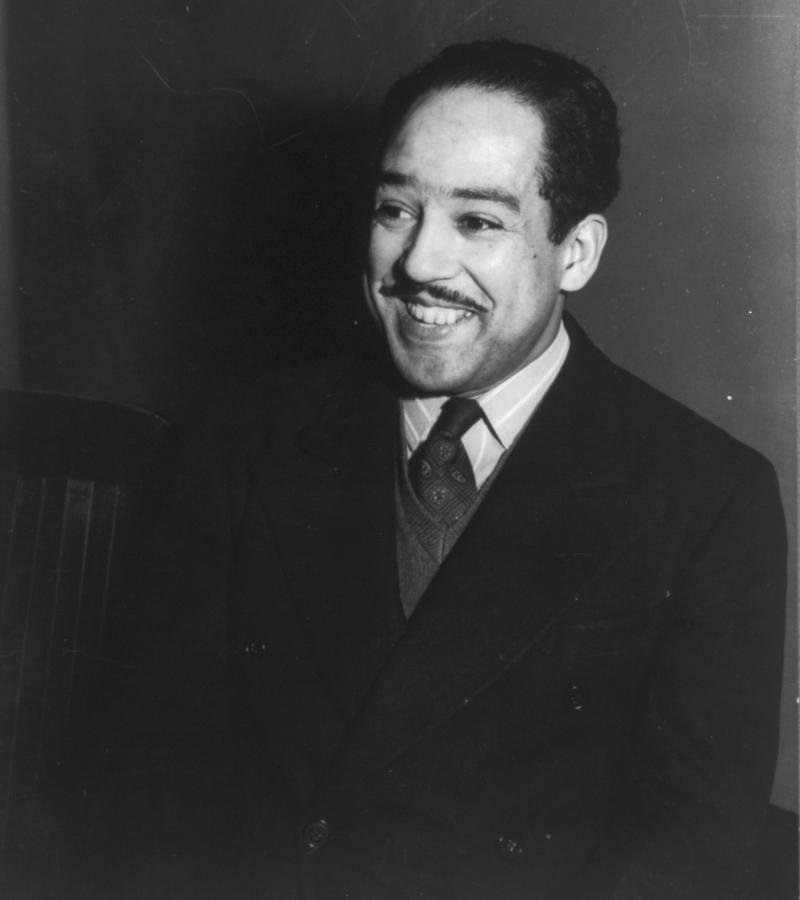
( Jack Delano/OWI/Library of Congress )
[music]
Alison Stewart: This is All Of It. I'm Alison Stewart, live from the WNYC studios in SoHo. Thank you for spending part of your day with us. Just want to say, our next special guest wasn't planned, just kind of happened, so we're going to go with it. You may remember a few weeks ago we did a Small Stakes, Big Opinions segment about cruise ships. Would anybody want to go on a cruise ship? Why? Pros and cons. We had a WNYC listener call in from a cruise ship as it was pulling into port in Bora Bora. You may remember Alan. We told Alan, "Hey, Alan, call us back. Let's know how it's going on." It's a 138-day cruise. Alan happened to be listening to WNYC at the time. Alan has called in from his cruise. Hi, Alan.
Alan: Hi, Alison.
Alison Stewart: I'm so glad you called in. It's nice to speak with you. Where are you?
Alan: I'm in Sydney, Australia. The down under, as they say down here. We just pulled into the port here and we're going on to Tasmania tomorrow.
Alison Stewart: Remind people when you got on this cruise, what the cruise is about, and why you decided to take it.
Alan: Okay. We got on December 20th in Fort Lauderdale. We go west through the Panama Canal. We go to six continents. We end up in London on May 6th and I fly back to New York. I'm here because of the 58 ports that we're stopping in. It's in six continents and many places I have never seen. That's the reason for me. Some people are here for the ship itself. It's a luxury. The thing about luxury is it's about an acquired taste. You fall in love with it the second that you have it. The food, the entertainment, the facilities, there are people who don't get off the ship for 138 days. They're here just to enjoy that, but many of us are here for the destinations.
Today is Sydney. I've been here before, but we're cruising the harbor. Tomorrow it's Tasmania and I understand it's a spectacularly beautiful place, so we'll probably go out hiking there. It'll be about another week in Australia before we go up to Bali and Indonesia and Vietnam, and then down around. The thing a lot of us are concerned about is whether we're going to complete the trip through the Red Sea because of what's going on in the Red Sea or whether they will reroute us around Africa. We'll miss a lot of the destinations like in the Mediterranean. For me, that would not be fun, but for some people, they could care less. They just want the luxury
Alison Stewart: Alan, we spoke to you on January 19th. What have you seen since we last spoke to you that will stay with you, the thing you'll tell people about?
Alan: I spoke to you when I was in Bora Bora, and then we went to Mo'orea and Tahiti. That, to me, the scenery, just the land, you feel like you're on a movie set where when you're in New Zealand. That's where we went right after Tahiti. We were there about a week in New Zealand so-- [crosstalk]
Alison Stewart: Alan, are you taking us with you?
Alan: [unintelligible 00:03:52] action is--
Alison Stewart: Are you taking us with you? WNYC?
Alan: Oh, I wish I would take you all. I listen to you every day. I get it more clearly here than I do from my home in Chelsea.
Alison Stewart: Alan, I think you know what? We're a walking distance from Chelsea. I think when you get back, you should come to the studio for an in-person hello and maybe an in-person interview.
Alan: I will. That’s okay. I would love to do that.
Alison Stewart: Excellent.
Alan: I promise I'll call back on this number and we'll do it.
Alison Stewart: Definitely. Well, call back before then. We want to hear another trip. Call us back in another couple of weeks. We want more updates, Alan.
Alan: Okay. You got it.
Alison Stewart: Safe travels.
Alan: Thank you.
Alison Stewart: Love an impromptu interview and on we go. This Black History Month, we're having a series of conversations dedicated to the lives of Black New Yorkers. Today we head to one of the New York Public Library's excellent research libraries, the Schaumburg Center for Research in Black Culture in Harlem. A new exhibit there looks at the friendship of photojournalist and US Foreign Service Officer Griff Davis, and perhaps one of Harlem's most favorite celebrated residents, Langston Hughes.
The exhibit opened on Hughes' birthday and Hughes' ashes were buried under the lobby of the Schomburg, close to the exhibit. The show displays photographs Griff Davis took of Langston Hughes, including when Davis was a student in Hughes' creative writing class, as well as letters they sent to one another throughout the many years of their friendship and professional partnership. Davis even rented a room in Hughes' Brownstone while a grad student at Columbia.
The Ways of Langston Hughes: Griff Davis and Black Artists in the Making is on view at the Schomburg at 135th and Malcolm X Boulevard through July 8th. With me now is Dorothy Davis, Griff Davis' daughter and president of the Griffith J. Davis Photographs and Archives, and guest curator of this exhibit. Dorothy, nice to meet you.
Dorothy Davis: Nice to meet you too. Thank you for having me.
Alison Stewart: This show is about this relationship between your dad and Langston Hughes. What do people think, even those who are familiar with both men and their great achievements, what do you think they can learn about their friendship and friendship in general from this exhibit?
Dorothy Davis: Well, the basis I think, or the-- yes, the basis of their friendship was really two Black men who helped each other to pursue their own dreams, their respective dreams in an environment that was against all odds. That's really what the exhibition is about in terms of the letters. The letters are important to see Langston Hughes as just a human being versus the persona, the public persona, even though you have that as well. But it's really focusing on their personal friendship and really the friendship with our family.
Alison Stewart: Let's talk about the friendship with your family. I have heard you say that you didn't fully understand that Langston Hughes was Langston Hughes growing up.
Dorothy Davis: Exactly. I didn't know that Langston Hughes was the public persona that everybody knows until I read his obituary in the New York Times in 1967. That's how personal the relationship was. Our parents never really talked about it. It was just essentially another friend of our parents and so that was my approach to him. I remember going to his town-- his-- what do you call it, Brownstone, in Harlem. My earliest memory of going there was, I think I was probably about seven, around there.
We opened the gate and went down the stairs to the door that was underneath the flight of stairs that go up to the first floor and walked in. My parents went into a room on the left, I'll say, and there was the figure, Langston Hughes. It was dark in there. There wasn't a whole lot of light in there, but his aunt, Aunt Toy, took my brother and me into the kitchen where she gave us pink lemonade. All I remember is the red linoleum floor. I don't know why a child would focus on that, but that's what I focused on.
Then later on in life, I realized that he had given me a autographed children's book, his autographed children's book called The Book of the West Indies. He gave it to me when I was about three years old. When it resurfaced in our belongings, I realized that I had scribbled all over the book. I was trying to write, I guess. I don't know what I was doing, but that's my gift from him.
Also in the letters, my parents sent him a letter saying that they were expecting, which was expecting me. That was in February, I think 1953. In May, he wrote back and he said, "Where is the heir apparent going to be born, here or there?" because my parents were in Liberia- -and he was in New York, so I'm quite honored with that term or that title.
Alison Stewart: Will you explain to folks why you were born in Liberia?
Dorothy Davis: My father became a U.S. Foreign Service officer. He took the test and was sent to Liberia, which is the only place other than Haiti that African-American Foreign Service officers were sent to by the State Department. He started that particular side of his career in Liberia as the first information officer for President Harry Truman's 0.4 Program, which is the predecessor to what we now know as the US Agency for International Development, or USAID. It started there. So I was born soon after they arrived. I mean, not born. I was conceived soon after they arrived. They were there for about four years, so until 1957.
Alison Stewart: My guest is Dorothy Davis. She's the guest curator and the daughter of Griff Davis, president of The Griffith J. Davis photographs and archives. We're talking about a new exhibit at The Schomburg Center for Research in Black Culture. It's called The Ways of Langston Hughes: Griff Davis and Black Artists in the Making. It's on view now through July 8th. The show is in two sections. There's a section about Atlanta and a section about Harlem. Your dad was born in Atlanta and actually on the Morehouse Campus. Is that right?
Dorothy Davis: Yes. He was literally born on Morehouse Campus, and he grew up Spelman's campus.
Alison Stewart: Oh, wow.
Dorothy Davis: My grandfather was a Morehouse graduate also, but he was the superintendent for buildings and grounds at Spelman until he died, so that's why he grew up on Spelman's campus so--
Alison Stewart: When did your father develop an interest in photography?
Dorothy Davis: In high school. He said that there was a teacher named William Brown at the Atlanta University Laboratory High School that he attended, and it piqued his interest. I have all this to thank Mr. Brown, [laughs] because his camera became like an appendage so I have a lot of photos. Go ahead.
Alison Stewart: How did your father meet Langston Hughes?
Dorothy Davis: In his senior year at Morehouse, he decided to take a course that Langston Hughes was teaching as a visiting professor at Atlanta University, which is now Clark Atlanta University. He took the class, it was a creative writing class, in his last semester. At the same time, my father was the campus photographer for the various campuses around that area, and so Langston Hughes realized that and basically adopted him as his photographer in Atlanta. Some of the photographs you see are of that era when Langston Hughes was a visiting professor there.
You will also see, there's a blow up of the first page of my dad's first essay that he wrote for a class. You'll see the edits of Langston Hughes at the top of the page, so that's pretty nice.
Alison Stewart: Yes, it’s like a whole wall. The projection is pretty cool. There's also these great photos in the exhibition, and you get a sense that Langston Hughes-- there's pictures of him with his students in a diner, and there's pictures of him with them gathered around a table reading a magazine. Did your dad ever talk about what he was like as an educator and a teacher? It seems it was a not just teacher-student relationship, maybe there was a mentorship or a familial sense.
Dorothy Davis: Yes. He didn't really talk about the teaching aspect so to speak of Langston Hughes. It was more about the relationship. Langston Hughes essentially-- They moved from, let's say, student-professor relationship to mentor relationship, because like I said, that was the last semester that my dad was at Morehouse, and so therefore you're moving into trying to get a job. Langston Hughes was impressed, I guess, you would say, by my dad and his writing, that when John Johnson, the founder and publisher of Ebony Magazine told him that he was looking for a roving editor for Ebony, Langston Hughes recommended my dad.
So my dad became the first roving editor for Ebony and moved from Atlanta to Chicago. They were actually able to do one story together for Ebony. It was called Atlanta, and that's also in the exhibition. It was a story that Langston Hughes wrote but my dad shot of different parts of what would be called Black Atlanta at the time because of segregation and Jim Crow. I guess they were very proud of it because they autographed it. They autographed the article. That's what you'll see.
Alison Stewart: It's interesting, there's a subtitle for that article that reads-- about Atlanta. It's, "Negroes have the most culture, but some of the worst ghettos in the world." Your father once said about the article, "We wrote about things that needed to be said about Atlanta that were not being said." What do you think-- yes, go ahead.
Dorothy Davis: They got a lot of flak from the Black Atlantans that they featured, because they highlighted the discrepancies, the differences in their lifestyle. I think there was one person who, in the article, valued his home for I think, let's say $50,000, and got mad that they published that in the article, because that was going to cause him some issues with IRS, because I think he had a lower value or he told IRS a lower value or something of the house. There were things like that. What my dad said is, it was probably a good thing that he was living in Chicago when the article came out and not Atlanta. [laughs]
Alison Stewart: We're discussing the exhibition, The Ways of Langston Hughes: Griff Davis and Black Artists in the Making. It is currently at the Schomburg. My guest is Dorothy Davis. We'll have more after a quick break. This is All Of It.
[music]
Alison Stewart: You are listening to All Of It on WNYC. I'm Allison Stewart. We're talking about a new exhibit at the Schomburg Center for Research and Black Culture. It's called The Ways of Langston Hughes: Griff Davis and Black Artists in the Making. It's on view now through July 8th. My guest is Dorothy Davis, the daughter of photographer, photojournalist, diplomat, Griff Davis. She was guest curator of the exhibit, as well as the president of the Davis Photographs and Archives.
We talked about Atlanta. Let's talk about the Harlem side. The section about Harlem, Hughes famously lived on 127th Street, and your dad rented a room in Langston Hughes' home while attending Columbia Journalism School. How did that come to be?
Dorothy Davis: After about a year and a half at Ebony, my dad decided that he needed to hone his professional skills as a photographer and journalist and started dialogue with Langston Hughes as to whether he should leave Ebony or was this a good idea and so forth. Langston Hughes suggested that he should go ahead and apply to Columbia University Graduate School of Journalism. He wrote his recommendation letter that went with his application. I'm sure you probably know that Langston Hughes at some point in his life before this also attended Columbia and I think he left after a semester because of the racism on the campus, so he offered a room in his home for my dad to rent while he was go attending Columbia Journalism School.
Dad rented the room on the third floor, was the same floor as Langston Hughes' room and his office. What would happen is that in the evenings-- because Langston Hughes didn't get up until 12 o'clock every day because he went to bed really late, so he didn't wake up until 12 o'clock, nothing started until then. In the evenings, he would go on his assignments and he would take my dad as his photographer.
Those are the photographs you see in that section of the exhibition. One of them is of Canada Lee, the legendary actor Canada Lee- -in his dressing room. I think it was at the Apollo. You see Langston Hughes interviewing him. Well, Langston Hughes was doing an article about what do entertainers do backstage for Ebony. He interviewed a series of entertainers like that. I point to that particular photograph because it is permanently installed in the Museum of Broadway, and it's part of a whole collection of photographs that my dad took around Harlem. You'll see Harlem shots, right, shots of Harlem.
There's one woman, you see the back of her, she's dressed up, and she's got these high heels on, and she's got this hat on, and you just know that she's going to church, or has come from church, or something and it's a visual that you see in Harlem today, so it's very familiar. Then the other thing, when my father graduated from Columbia, he was the only African American student in the class of 1949 for Columbia University Graduate School Of Journalism, because at the time, Columbia only allowed one Black person per year, so he was the only one. It was particularly moving at the opening of the exhibition when Dean Jelani Cobb came to see it. That was a nice full circle. I also went to Columbia, so I'll add that too.
Alison Stewart: What is a photo or an image that you would like folks to spend a little extra time in front of when they go to check out the exhibition, The Ways of Langston Hughes: Griff Davis and Black Artists in the Making?
Dorothy Davis: I think it's the one where he's surrounded by students. I think they're high school students in Atlanta. He's autographing something, a book or something, but he's in a sea of students and their faces look so hopeful and so alert and ready for the future kind of faces, and it's girls and boys. That's got to be one of my favorite ones and it's transcending. I also want to say that complementing the photography of my dad and the letters are photographs and archives from the Schomburg's collection across five divisions of the Schomburg.
Notable additions to the exhibition include a watercolor by Joseph Barker of Langston Hughes' Home on East 127th Street. Then there's a letter from Hughes to playwright Lorraine Hansberry and a listening station, so you can even hear Langston's own words. It's a nice compliment and it also extends the theme of friendship to other people who were notable in their own right. You'll see photographs from the Schomburg collection of Harry Belafonte,-
Alison Stewart: Sammy Davis.
Dorothy Davis: Sammy Davis Jr. and a host of others. We as the outside world, so to speak, looking at them, are enamored by their talent, but within their own circle, they probably had the same kind of friendship that my dad had with Langston Hughes. That's the idea of extending it to them.
Alison Stewart: The name of the exhibition is The Ways of Langston Hughes: Griff Davis and Black Artists in the Making. It's on view at the Schomburg through July 8th. My guest has been Dorothy Davis, guest curator, daughter of Griff Davis and president of the Griffith J. Davis Photographs and Archives. Thank you for your time today, Dorothy.
Dorothy Davis: Thank you. You take care.
Copyright © 2024 New York Public Radio. All rights reserved. Visit our website terms of use at www.wnyc.org for further information.
New York Public Radio transcripts are created on a rush deadline, often by contractors. This text may not be in its final form and may be updated or revised in the future. Accuracy and availability may vary. The authoritative record of New York Public Radio’s programming is the audio record.