
A New Documentary Features Never Before Seen Footage of Wham!
[music]
Alison Stewart: This is All of It on WNYC. I'm Alison Stewart. Forty years ago in 1983 an album dropped by two 20-year-old best friends from the London Burbs, one fashionable and gregarious, the other shy and cerebral. The shy one was Georgios Kyriacos Panayiotou and the good-time guy, Andrew Ridgeley, and they broke through as Wham with the single.
[MUSIC- Wham!- Andrew Ridgeley]
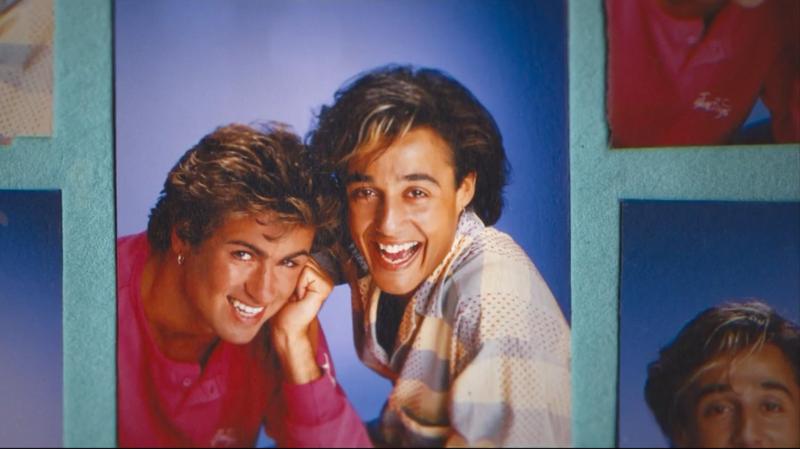
Yorgos became George Michael, and for four years, Wham! dominated the industry that it first didn't know what to do with them. A new documentary streaming on Netflix today details the lightning-fast rise and eventual and of one of the world's biggest pop groups, through never before seen or heard interviews, photos, and videos. It seems that Andrew Ridgeley's mother was a master at scrapbooks and ephemera, and she kept a lot, which we get to see. While the film candidly explores celebrity at its core, it's about a friendship, one that would create magic, and then be tested and strained, but would remain intact through decades, even as one half of the duo wanted more, fame, control, and musical artistry.
The Guardian gave the film four out of five stars, simply titled Wham! It was directed by Chris Smith, who's also been behind the documentaries about the disastrous fire festival, senior about Robert Downey Jr. and his dad, known as Senior, that's the last time he was on our show. As well as Tiger King. He is here with us today. Welcome back, Chris.
Chris Smith: All right. Thanks for having me.
Alison Stewart: Hey, listeners, do you have a favorite Wham! memory? Did you get a chance to see them perform? We want to hear your Wham! stories, or you call in and tell us your favorite Wham! song, 212-433-9692, 212-433-WNYC, you can call us, or you can text to us. We're looking for your Wham! memories. Before we begin the conversation, Chris, just for scale, will you remind people how big Wham! was when they called it quits? They were playing, I believe, it was Wembley Stadium.
Chris Smith: Yes. I think they got to where anybody could hope to get. They visited a stadium too in America. They toured the world. I think that they could have done whatever they wanted at that point, and I think the film does a good job of showing why it had to end when it did.
Alison Stewart: One of the things that's unique about the film, and to me, the big news headline, are these scrapbooks, all of this information, things that we've never seen before. When did you become aware of the scrapbooks that Andrew Ridgeley's mother kept?
Chris Smith: With any project that's heavily based in archive, you start the process of collecting things, and pretty early on, we became aware that there were these scrapbooks, but they weren't just like any scrapbooks, they were literally like the Rosetta Stone of the four years of Wham. They were 50 of them, and they documented every beat that happened of that story. It was an incredible find and we ended up using it as a spine for the documentary.
Alison Stewart: I was going to ask, how did the scrapbooks shape the narrative of the film? What was something that you saw in them that you really went beyond the narrative we all think about Wham?
Chris Smith: I think, more than what they illuminated, I think it was just that they serve to add color to beats that you were aware of. There were so many small things in terms of ephemera or articles that probably would have been lost to history that still survived because they were collected and put into these books. I think it gave a lot of texture to the experience that George and Andrew went on just in terms of plane tickets and ticket stuff and scrap photos. There were so many things that I think added color to the story that we thought we knew.
Alison Stewart: The film is told mostly from audio of Andrew and George. George Michael passed away seven years ago at the age of 53. Andrew Ridgeley is now quite elegant and at 60 years old. How did you source these interviews? Where did you pull from?
Chris Smith: George, obviously, was archive. There were a number of interviews that he had done throughout his life that we were able to tap into. Then Andrew, we ended up doing all contemporary interviews. We spent days in a studio with Andrew recounting the story. One of the unexpected surprises is that we would pull in lines or thoughts that George had said, and then Andrew would react to those, and that actually gave us the ability to make it feel very alive in terms of the back and forth between the two of them.
Alison Stewart: My guest is Chris Smith. We're talking about the documentary Wham! which dropped today on Netflix. Let's take a call. Craig is calling in for Morganville, New Jersey. Hi, Craig. Thanks for calling All of It.
Craig: Hey, how you doing? I was telling your screener, I'm mostly a rock and roll guy. I follow the dead. I've seen everybody. I wasn't a big Wham! or George Michael guy. I would dance when you're with girls in a club. I was dating this girl, and she wanted to see him, so I said, "I'll tolerate it." This guy comes out, and it was one of the most wildest, to this day, one of the top five shows I have ever seen. This guy could sing playing acoustic guitar while he was moving around. The first two songs, it was at the garden, the sound was like when you saw the Beatles on The Ed Sullivan Show, and you couldn't hear them sing, just heard these girls screaming.
This guy was the real deal. His musicians could jam. Usually, they have a set playlist and a set thing, but these guys were jamming in between, the solos were unbelievable. His movements, his voice, he had a presence. It was nuts. The stage show, and they had this neon green cage made of metal that he came out to, and it hydraulically opens up, and he just came out. It was nuts.
Alison Stewart: Wow. Craig, he made an impression, clearly. Thank you for calling in. I'm going to jump ahead a little bit because Craig brings up some really interesting points, Chris. We get from the documentary very clearly that George Michael is not just great looking and charismatic, but that he really is an artist. He becomes very involved in the production, and he is very serious about the songwriting. I would ask you how you would describe Andrew's sensibility because that becomes a little bit not an issue, but it becomes clear they're very different, and they think about this project and fame in a very different way.
Chris Smith: I think Andrew really had the vision for what the band could be, and that's shown that he really defines where Wham! was in terms of its aesthetic and the way they projected themselves. I think the early demos were co-written by the two of them. Wham Rap!, Club Tropicana, and Careless Whisper were songs that they demoed in their parent's living room. As the band progressed, Andrew states it very clearly that George's songwriting was progressing at a greater speed than his own, and so they made the decision to if they wanted to do achieve their goals of conquering the world as a band, that it made more sense to let George take on that responsibility.
I think it was a bittersweet decision because I think Andrew loved playing music and contributing, but I think it was clear for them at that time to achieve what they wanted to achieve that that was the decision that they made.
Alison Stewart: It means he gave up a certain financial stake because he give us some of the publishing, right?
Chris Smith: I don't know. We didn't get into that side of things, so I don't know the details around that.
Alison Stewart: Let's talk to Francis from Brooklyn. Hi, Francis. Thanks for calling in.
Francis: Hello, can you hear me?
Alison Stewart: I can. You're on the air.
Francis: Okay, I just want to say you cannot talk about Wham! without talking about Pepsi & Shirlie. Pepsi & Shirlie were their backup singers. They were in all the videos. I remember listening to Wham! as a kid. I was super young at the time and just being obsessed with them. Not many people knew this, but they had just as many fans as the boys. I just want us to shout out to Pepsi & Shirlie.
Alison Stewart: Thank you for calling in. Pepsi & Shirlie are in the documentary, Chris.
Chris Smith: They also have a book that's very good. If anybody's listening and wants to learn more, Shirley was amazing and came to the premiere with Dee C Lee, who was there and then ended up leaving the band, and then Pepsi joined. They're incredible. They have a great book out that if anyone's interested in learning more that you can find.
Alison Stewart: My guest is Chris Smith. He directed the new documentary Wham! Listeners, we want to hear your Wham! stories. Maybe you saw Wham! in concert. Did you have a chance to see them perform? Maybe you have a Wham! story. Maybe you've met George Michael or Andrew Ridgeley. Very possible in the New York area. 212-433-9692, 212-433-WNYC. You can call in and get on the air or you can text to us.
In the film, we go all the way back to when they are kids. They are teenagers. They first met in middle school we learn. Andrew used to call George Yog, was his nickname, and he was a shy kid, and Andrew volunteered to shepherd around the new shy kid at school. Their personalities, at least at that time, seemed opposite. What did they bring out in each other?
Chris Smith: Well, I think Andrew was always pretty confident. You can see even in old super eight footage that we found, he's very outgoing and confident in the way that he projects himself. I think George was shy and more reserved, and I think Andrew helped George find his voice, not just in singing, but just in the way that he presented himself as George Michael. I think it's clear from the movie that I don't think that Wham! could have existed without the two of them. That they both grew so much from each other.
Alison Stewart: They did some early performing and it was a ska band. Was this something that they both enjoyed or was this just the music of the moment?
Chris Smith: I think it was different. I think George looks back, in some of the archive we found, he thought they were terrible where Andrew, I thought for 16 that they weren't that bad. I think it's perspective, but I think anyone that's making a band and recording and playing at 16 years old you have to give them some credit for that.
Alison Stewart: I alluded to this in the introduction. What was it about Wham! that made them unique in the music landscape in the early '80s?
Chris Smith: Well, what's interesting is that they actually started, if you look back at some of the reactions to the music, they were these social rappers in a way. Then I think they realized pretty quickly that that wasn't going to last. If they were to achieve any success, that that wouldn't really hold up over time. They pivoted to something that, as Andrew called it, was pure Wham!
I think that happened with Club Tropicana. What's interesting is that that song was written at the same time as Wham! rap. It wasn't so much that it was like they pivoted or changed. It was more that they embraced this other part of themselves, which was this-- they shot the video in Ibiza and that it was almost, I think Andrew said something like it was embracing hedonistic aspect of youth, for what they imagined. They shot the video at this notorious hotel, but what they imagined that life would be.
Alison Stewart: Well, let's hear a little bit of Wham's Club Tropicana.
[MUSIC - Club Tropicana - Wham!]
Chris, critics were quite dismissive of the song. You show a clip of an interviewer being quite rude to them actually. What was the critical reaction to them? What about the fans?
Chris Smith: I think that the critics I think that they felt they were abandoning this social conscious message that they had established themselves with and felt somewhat betrayed by that, but I think with the fans, it was the exact opposite. I think you can see that it helped them find themselves in the image that they were projecting, which is actually the image that people think of when they think of Wham!. I don't think they really think about the bad boys' era. Club Tropicana I think is more representative of what people think about when they think back to what Wham! was, the essence of it.
Alison Stewart: There's an interesting part in the film where they discussed being broke a lot of the time. What kind of deal did they sign that left them cashless, low on cash? George Michael particularly was perturbed about it.
Chris Smith: It was not a very good one. I think it's hard. It's funny. I think they signed a very bad deal. I think Andrew at some point said it was one historically bad deal, but in the same breath, he doesn't seem to hold a lot of resentment about it in the sense that he said they had no other option, and if they didn't take that deal, there would be no Wham!. I don't think he's happy about it necessarily, but I don't think he lives his life regretting that decision because if they hadn't made that decision, they wouldn't have become what they became.
Alison Stewart: We're talking about Wham!, the documentary with its director Chris Smith. Listeners, if you have a favorite Wham! memory or a chance to see them perform, we'd love to know. Give us a call, 212-433-9692, 212-433-WNYC. You can text to us there as well. George Michael was gay and he was in the closet for a large part of his career. He came out to Andrew and Shirlie early on. What toll did it take on George remaining in the closet for so long?
Chris Smith: All that I have to go on is what you see in the movie and the audio interviews that we collected and the impression from Andrew and Shirlie. It's interesting, I think, probably for a younger audience today, the decision to come out. Probably it might seem confusing, I think, because it just feels so much more accepted, but as someone who was around at that time that it felt-- I could sympathize or understand how things unfolded, how that happened.
I think that as Wham! blew up he was a sex symbol, him and Andrew both. I think a lot of what they were selling was their sexuality. I think that you can see that that took a toll on George because he was living this false reality and wasn't able to fully be himself. There was a toll on Andrew as well. Just being thought of as the guy that was just lucky and was brought along with George based on his talent. I think you really get to understand why Wham! ended when it did.
The thing that always strikes me is that, in the footage, it feels like they both feel they're getting too old for it. That it was always supposed to be this representation of their youth. What's shocking to me, looking back at it now, is that they were 23 when Wham! ended, which is just so incredible the journey that they went on and how much they achieved in this four-year period yet they were still 23 when they walked away from it feeling like they had outgrown it or that they were too old, which is just incredible to me.
Alison Stewart: I want to play a clip from the film that really debunks this myth that you mentioned, that Andrew Ridgeley was hanging around. I remember seeing some really snotty quote once. It was like, "George Michael in the hat rack," but it really wasn't the case. Andrew Ridgeley was really important to Wham's success. This is Wham's manager, Simon Napier-Bell speaking about Andrew's influence on the group and on George Michael. This is from the documentary, Wham!
Simon Napier-Bell: Contrary to what most people say that Andrew had no part in Wham!, it's totally the opposite. Wham! was Andrew and George when he was younger, copied Andrew. It was Andrew and Andrew, the real Andrew and the fake one, but as time went on, I think George, partly because he really did feel that the group wasn't him, he put more and more effort into the songwriting and production. Andrew was reasonably indifferent to that and was an easygoing person so he let George do it.
Alison Stewart: It's interesting. That's a big part of this story too, is the evolution of George Michael as an artist and a performer. When we see him in Wembley Stadium in that last concert, he's very different from the boy just four years earlier. How had he evolved into this presentation, this George Michael persona?
Chris Smith: Well I think the most evidence of it is just seeing the footage. He's so confident. The George Michael that I think most people remember especially after Wham! ended and his solo career started but you could really see that in the footage. It's just like there's a sequence in the middle of the film that after they've achieved some success we go back and you see this progression of George as a child all the way through him doing the Careless Whisper video and just the transformation that takes place is incredible. What I love about the movie and the archival footage is that you so clearly see that evolution take place.
Alison Stewart: What has Andrew Ridgeley done? He had a solo album out, he retreated from the business, what was his life like outside of the spotlight and did he and George stay in touch until George's passing?
Chris Smith: They remained close friends and I think that there was some separation that needed to take place just because of the nature of just what Wham! was and what George had to do to forge out his own path. From what we've heard about Shirlie and Andrew and George remained very close friends all the way through the end of George's life.
Alison Stewart: The name of the documentary is Wham!. It dropped on Netflix, I've been speaking with its director Chris Smith. Hey Chris, thanks for being with us again.
Chris Smith: Thank you so much.
Alison Stewart: I want to read this text. The best Wham song is Everything She Wants which everyone confuses George Michael's solo song but isn't, it's on the Make It Big album. That's Monica from Harlem. Monica, I'm going to have to disagree just on this one, we're going out on I'm Your Man.
[MUSIC - I'm Your Man- Wham!]
Tomorrow on All Of It is perfect weather for getting out of the kitchen into one of the city's parks for an outdoor meal. We'll talk about how or where to grill in New York City. I'm Alison Stewart, I appreciate you listening and I appreciate you. I'll meet you back here tomorrow.
[MUSIC - I'm Your Man- Wham!]
Copyright © 2023 New York Public Radio. All rights reserved. Visit our website terms of use at www.wnyc.org for further information.
New York Public Radio transcripts are created on a rush deadline, often by contractors. This text may not be in its final form and may be updated or revised in the future. Accuracy and availability may vary. The authoritative record of New York Public Radio’s programming is the audio record.