
Listening Party: The Arcs' 'Electrophonic Chronic'
( Alysse Gafkjen )
[music]
Tiffany Hanssen: This is All Of It. I'm Tiffany Hanssen filling in for Alison Stewart, and here is a new song from the Arcs off a new album that is out today.
[music]
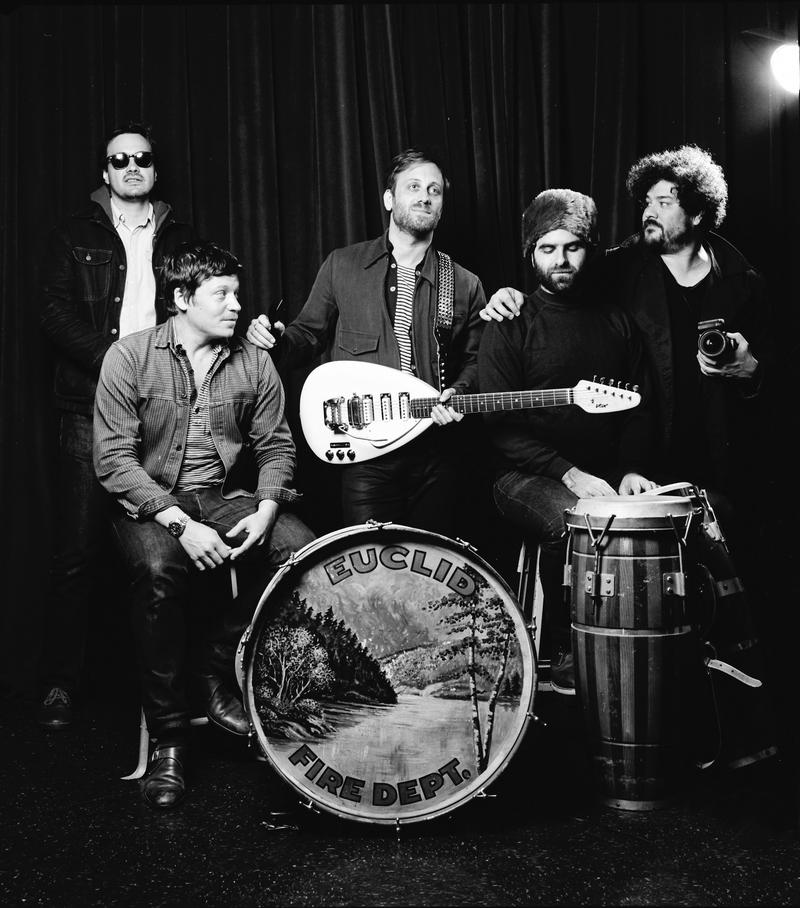
That’s Sunshine from The Arcs off their sophomore album, Electrophonic Chronic co-produced by band members Dan Auerbach and Leon Michaels. You may recognize Auerbach as the lead singer of The Black Keys, who are nominated for two Grammys next month for their latest album. Auerbach is also up for producer of the year. Leon Michaels leads the band El Michaels Affair, and he is also up for a couple of Grammys this year for his work on two album of the year nominees from Mary J. Blige and Lizzo.
The new Arcs album began in sessions back in 2015, around the release of their debut, and a few years before the death of founding Arcs bandmate, Richard Swift. Swift was a producer and multi-instrumentalist who had released a number of solo records and also worked with acts like Wilco, The Shins, Ray LaMontagne. Auerbach has called Electrophonic Chronic a way for us to say goodbye to Swift. Dan is joining me now for a release day listening party with Leon Michaels. Welcome to both of you.
Dan Auerbach: Thanks for having us.
Tiffany Hanssen: Yes, glad you're here. I want to talk a little bit about this album. The first album came out in 2015, but The Arcs began Dan originally as a side project, right?
Dan Auerbach: Yes. It was just a fun project. Just we would get in the studio and we all had our own studios. We were all studio rats. We loved to record. That's how this group came to be really. It wasn't about touring. It wasn't necessarily about being on a stage. It was about the creative process, and the studio, and the shared love of that.
Tiffany Hanssen: Leon, when you first came together then, what was the goal, just to hang out and play good music?
Leon Michaels: Essentially, yes. We got together and Dan had a couple of songs that were maybe for his solo record, maybe not. I think it started like that but it became clear pretty quickly that it was its own thing and that it felt like a band.
Tiffany Hanssen: When you realized that it felt like a band, what was that moment like when you realized, “Hey, this thing has got some legs now that we might want to take it to the next step?" What was that moment like, Dan?
Dan Auerbach: I think as soon as we started playing music together, it was instantly fun. We were prolific. We would get together and come up with four or five, six, seven song ideas in one sitting and it never stopped really. I always knew that there was a special connection there. We didn't know exactly what it was, but that's how it started.
Tiffany Hanssen: Yes. You talk about a special connection and there's someone who's no longer with us who was part of that special connection. Richard Swift passed away in 2018, three years after the release of that first Arcs album. Enough time has passed now for you to be able to talk about him?
Dan Auerbach: It hit us pretty hard and we never really dealt with it fully, I think. We certainly weren't in the right frame of mind to open up those old songs. Even though we'd almost finished a record with Swift, it got put on the back burner and then he left us and we didn't really know what to do. It took a few years for us to even be comfortable to listen to the music again.
Tiffany Hanssen: Sure. To go out on public radio and talk about him, right?
Dan Auerbach: Yes. He was a very special person. The first time I worked with him was on a Valerie June record, and we hit it off, and we tried to work together all the time. As soon as I went to New York to work with Nick and Leon and Homer, I knew that Swift would love it so I brought him into the mix and there was no looking back. It was just like instantaneous bond and instantaneous music.
Tiffany Hanssen: Leon--
Leon Michaels: I think Swift was actually the point when it became a band because we had been making music, me, Dan, Nick, and Homer, and then when he joined it, it felt fully complete.
Tiffany Hanssen: Dan says he's a special person. What makes him a special person?
Dan Auerbach: He was a special little boy.
Leon Michaels: Special little boy. [laughs]
Dan Auerbach: Yes, he was as he would say.
Leon Michaels: Yes. A million things. Outside of music, he was the funniest person I'd ever met, like truly A-level comedian.
Dan Auerbach: Yes. We thought this must be what it was like hanging out with Chris Farley backstage or something, [crosstalk] just like always on, always on. The funniest person in the room, always. He had his demons and he kept them to himself really. When he was around us, it was like--
Leon Michaels: Yes, and then when he let them out, it was funny, like the way Richard Pryor talks about lighting himself on fire.
Tiffany Hanssen: That's how he deals with it.
Leon Michaels: He was just always funny.
Dan Auerbach: Absolutely.
Tiffany Hanssen: When you talk about that specialness now, how's that make you feel?
Leon Michaels: I think enough time has passed where thinking of him doesn't make me sad. It's usually just like the good parts. Like I said, him being so funny, it's usually when I think of him, I'm usually laughing.
Tiffany Hanssen: Yes, Dan?
Dan Auerbach: Yes. I guess I don't look back too often, you know what I mean? I'm always like focused on the future, focused on what I got to do next. Us making this record was really like we were forced to go back in time a little bit. Honestly, it was amazing just to hear him on tape, laughing, and playing, and joking, and just to hear how special he was as a musician on top of all the things we loved him for. The more that time goes by, the more I just feel honored that I got to be his friend and make music with him, because I just think he's just truly a one of a kind.
Tiffany Hanssen: A lot of these tunes were recorded, cut back in 2015, 2016 before his death. You mentioned going back and being able to go back after a certain amount of time, being able to go back and listen to them. I would assume when you first went back, it brought up a lot of stuff.
Dan Auerbach: It was hard. Swift's last record, I can't listen to still. I'm playing guitar all over it and stuff. I remember him having me play guitar and talking about the album and it's too hard for me to listen to yet, because there's so much pain there and it's so obvious. But I think with the Arcs music, it was really all joy, and about friendship, and about really good times. It made me feel happy when I listened to it.
Tiffany Hanssen: Yes. Maybe though time doesn't make all things better.
Dan Auerbach: No, it doesn't make all things better, but I think it makes you appreciate things way more.
Tiffany Hanssen: Yes. What do you appreciate about him and about that process now Leon?
Leon Michaels: Swift, well, as a musician, I think his approach to making music and being in the studio for me was pretty revelatory. At the time, especially when I first met him, he had this approach that was like all you really need is taste and a little bit of ability and just to be in the studio. He was never hung up on like equipment or even the song, the song would happen. Just being in the studio with him and feeding off his energy was a big influence.
Tiffany Hanssen: The album opens with the track, it opens with him on drums. Dan, how did you decide to open with that track?
Dan Auerbach: It was a song that- -when we did eventually start to play some shows, it added a different dynamic to the group and it was fun, and that was one of the songs that we loved to play live. We just felt like it was right for the first thing for people to hear on this record, to be swift playing.
Tiffany Hanssen: Let's listen to it. It's Keep on Dreamin.
[music]
Dan, this was Keep on Dreamin. What state was this song in when Richard died? Was it fully--
Dan Auerbach: It was finished.
Tiffany Hanssen: Fully finished?
Dan Auerbach: Yes. Most of the record was fully finished. There were just a couple of things here and there that we needed to finish.
Tiffany Hanssen: Was there a time in the process of truly finishing it like mixing it and all of that, that you wished for his voice?
Dan Auerbach: Luckily, we used Chad Blake to mix and he did the last record. It was like it felt fitting to have him do this one too to link the two albums together sonically. We knew that Swift loved Chad and what he did because it was like--
Leon Michaels: Tchad
Dan Auerbach: Tchad. He's not a normal mixer and Swift loved that.
Tiffany Hanssen: So, he was there? Yes, he was there, right?
Dan Auerbach: Yes, he was there. He knew what we were going to do.
Tiffany Hanssen: Leon, now, Richard's gone, talk to me about this collaboration between you two. How does this feel now moving forward between you and Dan?
Leon Michaels: We've worked together for 12 years so it doesn't really feel any different. It feels great to promote this record because just having it out, there's those, like what, three years where it just sat on a shelf. The idea that it wasn't going to come out was sad or that there's a possibility, because both of us weren't ready.
Tiffany Hanssen: Yes, I wondered that. Dan, was there ever a question like, “You know what, let's just forget it?”
Dan Auerbach: No, I knew that it would come out. It was too good. It was too finished. It was done. I knew it was just a matter of time.
Tiffany Hanssen: When you are collaborating with Leon now, Dan, what's-- let me know one thing you love about collaborating with him. Let's talk about him like he’s not here.
Dan Auerbach: Let's go. Basically, he always knows where to go for lunch.
Tiffany Hanssen: All right.
Leon Michaels: He always backs me up, that's what I love about Dan.
Dan Auerbach: Is there anything more important?
Tiffany Hanssen: It's a valuable skill. All right, well, on that note, let's go to A Man Will Do No Wrong. Let's hear that.
Dan Auerbach: [laughs] No, it's A Man Will Do Wrong.
Tiffany Hanssen: Oh, okay, right? Oh, A Man Will Do Wrong. Oh, sorry, Leon.
Dan Auerbach: You just went there.
Tiffany Hanssen: I just went there.
Dan Auerbach: You were projecting.
Tiffany Hanssen: I was projecting, sorry. A Man Will Do Wrong.
[music]
When you're listening to a song with someone and you're super excited about the song, one of the things that I do, as I say, "Wait, wait, wait. You got to listen to this part." Leon, what part of this song do you do that? Or is there a song on this album that you always do that when someone is listening to it and you're like, "Wait, wait, wait, wait, wait. You have got to hear this?" Or Dan, jump in.
Dan Auerbach: Ma’am, I think that this whole album is filled with ear candy. That's why we called it Electrophonic Chronic, it's just another way of saying ear candy. We're in love with the studio and the sounds, and that's what it's all about. It's got to have that special little crack we call it that sprinkled on top, that makes it-- that gives it its thing.
Tiffany Hanssen: I talked before you guys got into studio-- why are you laughing?
Dan Auerbach: I don't know
Tiffany Hanssen: Because you said crack?
Dan Auerbach: Yes. I'm an idiot.
Tiffany Hanssen: With a band called Thee Sacred Souls, they do with some SoCal soul. I hear some soul on this album. Do you, Leon?
Leon Michaels: That song we just listened to, I would categorize that as soul.
Dan Auerbach: Yes, that was a cover, and it was by-- because one of the things that we really loved to do besides being in a studio was being in a record shop. Leon played me that song, A Woman Will Do Wrong by Helene Smith on 45 and flipped out, “I love this song.” It was so good. We were just playing in the studio one day, said, “Let's try to cover that.” That's how that song came to be.
Leon Michaels: Yes, with no intention of releasing it.
Dan Auerbach: Yes.
Tiffany Hanssen: You still go into record shops?
Dan Auerbach: You know what, we still go into to record shops.
Tiffany Hanssen: What are you looking for?
Dan Auerbach: Something that moves me. Usually I'm looking for 45s, but if it's like gospel, I'm looking for LPs and I don't know, it all depends really where I am, but certain dealers have their specialty. We definitely spend a lot of time on Discogs.
Tiffany Hanssen: Yes. Leon, yes?
Leon Michaels: Discogs? Yes, no, I have a problem.
[laughs]
Dan Auerbach: Discogs is a problem for us.
Leon Michaels: Yes, it is. It's too easy.
Tiffany Hanssen: The next song I want to get in here before we're completely out of time is River. What inspired River Leon?
Leon Michaels: River, I don't really remember. That was another situation where me, Dan and Swift just started from nothing. I don't really remember what we were going for, but--
Dan Auerbach: So many of these songs were just us channeling the music out of nowhere. We wouldn't necessarily talk about anything. We wouldn't be trying to copy another song or something. We would just go.
Tiffany Hanssen: All right, let's hear a little bit of it.
[music]
Tiffany Hanssen: You're nodding your head, you're loving this.
Dan Auerbach: I just love hearing-- I love hearing Richard's voice. He's like, “All right, let's go.” I love it. It makes me happy.
Tiffany Hanssen: Good. You, Leon, same?
Leon Michaels: Very happy.
Tiffany Hanssen: Good. Dan Auerbach, Leon Michaels, their new album as The Arcs is Electrophonic Chronic. Thanks so much for spending time with us today on All Of It.
Dan Auerbach: Thank you so much.
Leon Michaels: Thank you.
[music]
Copyright © 2023 New York Public Radio. All rights reserved. Visit our website terms of use at www.wnyc.org for further information.
New York Public Radio transcripts are created on a rush deadline, often by contractors. This text may not be in its final form and may be updated or revised in the future. Accuracy and availability may vary. The authoritative record of New York Public Radio’s programming is the audio record.