
Labor Day: Adapting 'Are You There God? It's Me, Margaret' for Film
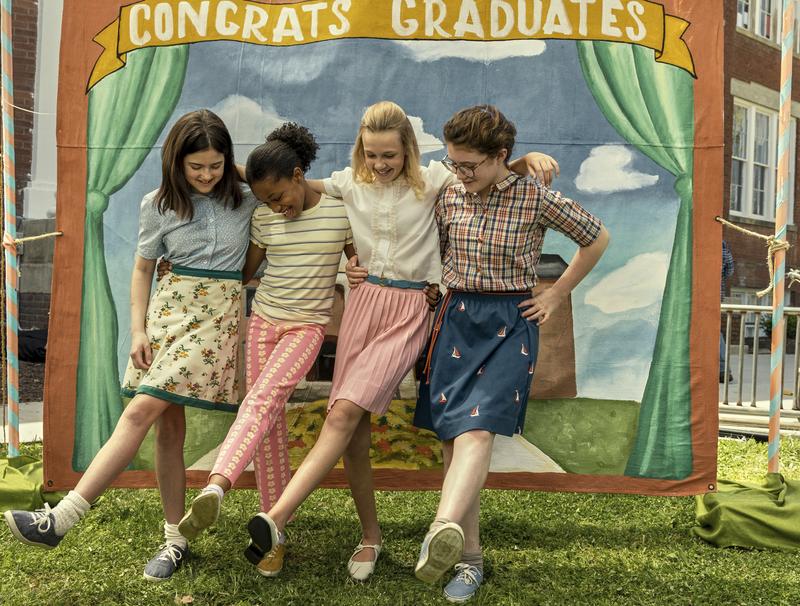
( Courtesy of Lionsgate )
[music]
Speaker: Listener supported WNYC studios.
[music]
Alison Stewart: This is All Of It on WNYC. I'm Alison Stewart. The film adaptation of a classic novel is tricky business. You have the expectations of adoring fans of the source material, but also a new audience and medium to consider, not to mention authors who can be fiercely protective of not only their intellectual property, but their characters and those characters lives. Such was the case with Judy Blume's, Are You There God? It's Me, Margaret, a staple of young adult literature for decades. It is the story of a young girl who moves from New York to New Jersey and tries to figure out who she is.
She's anticipating all that puberty can bring, navigating what faith means, given her dad is Jewish and her mom is not, and trying to develop her own moral compass. 50-plus years after it was first published, Are You There God? It's Me, Margaret, was released as a film in April of this year. Film critic Leonard Maltin wrote at the time, "As a critic, I hesitate to use the word perfect, but it is the first adjective that comes to mind as I compose this review of, Are You There God? It's Me, Margaret."
In the months after its release, the film retained its near perfect rotten tomato score of 99%. As WBR's culture critic wrote, "Nearly every conversation I've had since seeing the film has started with me saying, 'Don't worry, they didn't screw it up'." For example, here's one of the most memorable moments of the story where Margaret and her new friend led by know-It-All Nancy engage in some exercises they hope will help them fill out their training brass.
Nancy: If we want to get out of those small brass, you're going to have to do the same exercise and technique I do.
Nancy's Friend: There's an exercise?
Nancy: Of course there is. You hold your arms out like this and you say, "I must, I must, I must increase my bust. I must, I must, I must increase my bust."
Nancy's Friend: Does that really work?
Nancy: I'm living proof. Now, come on, get up. Get up. Get up. Get up. You'll see. Get up. I must, I must, I must increase my bust.
Friends: I must, I must increase my bust.
Nancy: Chin up.
Friends: We must, we must, we must increase our bust. We must, we must, we must increase our bust. We must, we must, we must increase our bust.
Nancy: Shut up. You're so stupid. Shut up.
Actor: We must increase our bust? It's really working.
Alison: The Detroit Metro Times described the film as a soulful account of a story whose classic status is made all the more real by its residents today.. No matter your background, it's a sweet, honest moving movie period. The film's writer and director Kelly Fremon Craig joined me after its release alongside the young actor who plays Margaret, Abby Ryder Fortson. To round out today's hour on the life and work of Judy Blume, here's our conversation.
[music]
Alison: Kelly, looking back as an adult, what did this book mean to you as a young girl?
Kelly Fremon Craig: Oh, gosh. It really meant everything. I found it when I was 11 years old, and just fell instantly in love with Margaret, and with Judy Blume. I think she wrote so honestly about what it felt like to be that age, and that was really reassuring at the time.
Alison Stewart: Abby, this is in the '70s, you're a modern kid, modern young woman, smartphones, the internet, all of it. What did you relate to about Margaret in the '70s?
Abby Ryder Fortson: Honestly, so much of her journey and everything that she was going through. I related so much to-- When I first read the book, when I had gotten the audition, I remember turning to my parents and I said to them, "Oh my gosh, this is the experience. How did someone write this down in the '70s?" I was so taken away by Margaret and her story and Judy Blume's, yes, her honesty and the way that she wrote so truthfully about these things that I had never really read that in a book before, and it was so special. I just loved how much I did relate to Margaret and just her and all of her awkward, weird moments, and just everything about her, and who she was as a person, and everything that she went through. I just related to so much of that.
Alison Stewart: I don't think the decade matters, but the word awkward and puberty, they just always come together. [laughter]
Kelly Fremon Craig: So true.
Alison Stewart: It's like cookies and milk, awkward and puberty. Kelly, the 70s, obviously, a simpler time in many ways. These girls wouldn't have looked up menstruation on the internet. It would've been easier for them to have access to information like that. I'm curious what that simplicity of the '70s offered you creatively as a writer.
Kelly Fremon Craig: Oh, that's really interesting. Well, I have to say, it actually just made the focus so completely on the feelings. You know what I mean? That's the thing that doesn't change. The details change and stuff like that, but the emotions that you go through are universal. I actually felt that that was a real gift of setting it in this time, because I think that girls today who are going through this today, realize women 50 years ago went through the exact same thing. Your mom went through it, your grandma went through it, and all women throughout history, and there's something about that that I think connects us.
Alison Stewart: Abby, you mentioned your parents. Your parents are working actors. What was something that you've either observed about them in their work or some piece of information that they've given you, imparted it to you that was really helpful in the making of this film and in creating Margaret?
Abby Ryder Fortson: Oh my gosh, so much. Yes, they're both longtime actors and they've been my coaches forever. They were on set the entire time, and they've helped me so, so, so much. They helped me during my preparation process, getting Margaret's character and working out all of her little awkward moments and little things that she does. Oh gosh, to nail down one piece of advice is really hard because they've just given me so much of it, but just hard work and the importance of prep time and listening to directors and just sharing your ideas are some of those.
Alison Stewart: We're talking about the film, Are You There God? It's Me, Margaret, with its writer and director Kelly Fremon Craig and the actor who plays Margaret, Abby Ryder Fortson. Kelly, you made a film called, Edge of Seventeen, and it was originally called Besties. I went back and I found this first graph from a Deadline article from 2011. It says, "James L. Brooks Gracie Films has made a mid six-figure preemptive deal for Besties, a spec script by Kelly Fremon." [unintelligible 00:07:15] Kelly Fremon.
"Part of the deal is she's attached to make her directing debut. The script is a John Hughes-style comedy about two high school girls who are best friends until one dates the other's older brother, who is totally the sister's nemesis. Brooks was the first person the script got sent to, and he's expected to mentor Fremon as she makes the jump to director." That paragraph actually telegraphs a lot about what happened wit Are You There God? It's Me, Margaret. Let's just first back in the back way back machine, what made you decide to send that script to James L. Brooks?
Kelly Fremon Craig: First of all, there was nobody in the world and there still isn't anybody in the world I admire more. I mean, I look up to him so much as a writer and a filmmaker. In a lot of ways, his movies in my mind are the pinnacle of what to shoot for. We sent that script to him not knowing if he would ever read it or respond, and then I got incredibly lucky that he did, and then we went on to make that film.
Alison Stewart: That set the stage for a decade later sending approaching Judy Blume, who at first wasn't so sure. She told somebody, it was in part, something you wrote that she described it as the beauty of the letter that you wrote. You're a good letter writer, apparently, also the James L. Brooks and your relationship and working with him. Without giving away too much, because I know Judy Blume is a fairly private person, what was the theme of your pitch to her?
Kelly Fremon Craig: First of all the letter itself was really a love letter in a lot of ways. I told her how much her work had buoyed me. All of her books, especially at that age, just felt like a lifeline. They told me that I wasn't the only one who felt the way that I did. I think, particularly, at that age, that realization can be lifesaving. A lot of the letter was really telling her how much I wanted to do that for viewers, and that I thought, Are You There God? It's Me, Margaret, would make a beautiful film. That now more than any other time, we could get the support to make it in the right way.
Alison Stewart: Why now?
Kelly Fremon Craig: I think there's just a different support for women telling women's stories that didn't even exist. I would say when I made The Edge of Seventeen, it was very hard to get that film made. It was a parade of rejection before we were finally given the money to go make it. Things have changed and there is more support now. I felt we could get the amount of money that we needed to make it and make it right, and just have real partners in the process.
Alison Stewart: Abby, let's listen to you at work a little bit, and we can talk about it on the other side. This is from the beginning of the film. Margaret's been at camp, and she comes home, and she's really excited, and her parents are really excited to see her, but she notices the house is a mess. In the scene, her mom's played by Rachel McAdams, dad is played by Benny Safdie, he is the director as well, and grandma who blows the secret is played by Kathy Bates, and of course, Abby as Margaret. This is from Are You There, God? It's Me, Margaret.
Dad: How was camp?
Margaret: It was amazing.
Dad: You were in a play?
Margaret: Yes.
Dad: Oh, my God. It's incredible.
Margaret: Who are those boxes for?
Dad: Don't worry about that. I want to hear more about camp. What else did you learn? What else did you do?
Sylvia: We're moving.
Margaret: What?
Dad: Really, mom?
Mom: Sylvia. You promised.
Margaret: We're moving?
Sylvia: She saw the boxes. She was putting it together.
Mom: I don't think she was.
Margaret: We're moving?
Mom: Look, we wanted you to settle in before we sprung the news, but your dad got his promotion.
Dad: Yes. Isn't that great?
Mom: We found this great house.
Dad: Oh, the best house, the best house.
Margaret: Where?
Mom: Well, that's the thing. We got really lucky.
Sylvia: New Jersey.
Dad: Ah.
Margaret: New Jersey?
Sylvia: I'm sorry, I'm sorry.
Alison Stewart: What's going through Margaret's head right at that moment, Abby?
Abby Ryder Fortson: New Jersey. [laughter] Oh, God. It's so funny because, gosh, I've never actually been to New Jersey, so I don't know what Margaret's so disgusted by. I've met a couple people from New Jersey, they've all been lovely, so I don't have any personal hatred towards New Jersey. Basically, I think what it is, is that I moved right after I filmed Margaret, and even though I was moving 10 minutes, 15 minutes down the street, it's still a part of your life. You grow up somewhere, and you have your roots there, and you have friends.
It's like a piece of you, and then when you even think about taking that away, it's like a hole is just left in your chest and you rip it out. It's something that you-- It's really hard to just even imagine happening. It's something that once it happens, you're like, "Oh, God. I was overreacting about this," but when you just find out, it's like the end of the world. You don't know what's happening. It's all these new things, and you can't even picture your life somewhere else.
Alison Stewart: I'm from New Jersey, so you've met somebody from New Jersey, but I don't stink. I'm pretty nice. I want to ask you about the Kathy Bates character, Kelly, because I thought it was really well-written. She's not unrecognizable, but in the best way. She's a fabulous New York City Jewish grandmother. I'm sure we have many of them listening right now. What did you know you wanted this character to be, and what you didn't want it to be, because it could have been a caricature?
Kelly Fremon Craig: We've been calling her a glama, which I really like.
Abby Ryder Fortson: Did you get [unintelligible 00:13:48] on it?
Kelly Fremon Craig: I think she's the grandma everybody wishes they had. Certainly, the grandma I wish that I had. She's a fairy godmother, and just comes into a room with so much energy and lightness. I think Kathy is just spectacular and hilarious. A lot of the fun was actually giving her room to improvise lines and play. I think she's just a knockout.
Alison Stewart: That's a character that you took some license with in the movie, but I'm curious if there was any attachment to something in the source material that you had to let go ofn that you might have really wanted to include. I was actually thinking about the cover. If I remember my cover, Margaret's blonde.
Kelly Fremon Craig: You know what? It's interesting. She changes in all the different covers. I think I had the one that was in the early '90s, and I think she's Brunette on that one, but anyway. Gosh, there were definitely things I knew I had to get right. I knew I had to get, "I must, I must increase my bust," because that's the one thing everybody remembers from the book. Then in general, it just felt like, how do we deliver the spirit of the book and the feeling of the book even as we change or condense or swap things around?
Alison Stewart: Abby, when you think about Margaret when she moves to this new town, why is she so ready to go along with so much?
Abby Ryder Fortson: Honestly, it's because she wants to fit in. She wants to find her place. She's trying to figure out who she is, but at the same time, she really just wants a place to belong, I think, because she moved, because she's put in this new place full of all these new people and new things. It's very overwhelming to some people.
I think Margaret just-- she just wants to belong and find her place so badly that she's willing to go along because she thinks that that's the right thing to do. She figures out eventually that she needs to stand up for herself, and she needs to make her own decisions. I think that's what her journey takes her on. It's her learning to be brave and to branch out and to be herself.
Alison Stewart: Kelly, I think this is something that gets lost because we all remember the "I must increase my bust", but faith is a big part of the story, an exploration of faith and losing faith in faith or having faith in faith.
Kelly Fremon Craig: Yes. That's a really big part of why I wanted to make it. When I reread the book as an adult, I was so moved by that aspect of it. I think, in particular, there's something about adolescence when everything is changing, your body is changing, your friends are changing, your whole perspective on yourself is shifting. At that point in life, reaching out for something greater beyond you, and trying to understand it, and trying to figure out if it's there at all. I really resonated with that yearning for faith in something.
Alison Stewart: We're discussing the film, Are You There, God? It's Me, Margaret with its writer and director Kelly Fremon Craig and lead actor Abby Ryder Fortson. Judy Blume makes a Stan Lee-like cameo in the film. I won't give it away. She was on the set, I understand, Kelly. Why was it important?
Kelly Fremon Craig: Yes, she was for a few weeks. It was important because she's the godmother of all of this, and she's a genius. She's legendary for a reason, because she has wonderful ideas and an incredible eye for detail, and so it was important to me to have her there looking over the whole thing.
Alison Stewart: Abby, what did it mean for you to have Judy Blume on set?
Abby Ryder Fortson: It was amazing, honestly, just to have her stamp of approval on anything. I think while we were on set, I know that I was, I was just looking nervously back to where she was sitting and being like, "Oh, my God. Is she liking this? Am I doing right by her." We really wanted to make her happy because she created Margaret. She created this world. I think for any writer, you're giving-- it's like your baby. You're giving it off to new people. I'm really happy that she was there especially because she actually-- her biggest note, I think, the first day she was on set, we were rehearsing "I must increase my bust" thing, and we were doing it wrong.
Alison Stewart: I found out I did it wrong all of my life.
Abby Ryder Fortson: Judy had to pull us aside and teach us how to do it correctly as she had always envisioned it. That's the dream, isn't it, to be taught how to do the exercise by the Judy Blume?
Alison Stewart: Now everyone knows officially how to do it because they can actually see it.
Abby Ryder Fortson: Kelly, this is what we did. We created a tutorial on how to do "I must increase my bust."
Alison Stewart: Abby, what's something about being a kid in the '70s that you think is pretty cool, that you're like, "I could deal with that now."
Abby Ryder Fortson: I think I've mentioned this a couple of times, but my favorite thing from the '70s is rotary telephones, because when I'm really mad at someone, and I just want to hang up on them so badly, and I want them to hear it, pressing the little end call button doesn't have the same effect as just slamming that phone down. Yes, that was really fun to just play with. I want to have one now. I just want to get rid of my cell phone and just have a rotary telephone.
Alison Stewart: Oh man, they used to have one that was in the shape of a hamburger. That was really awesome. That would blow your mind, Abby.
Abby Ryder Fortson: Oh my God.
Kelly Fremon Craig: Oh my gosh.
Abby Ryder Fortson: [crosstalk] I totally had the hamburger.
Alison Stewart: I also feel like there's an app opportunity there, you get to download phones hanging up on people. Before I let you go, Kelly, what made Abby the right Margaret?
Kelly Fremon Craig: Gosh, Abby walked through the door and was just instantly it. She has such a soulfulness and such a naturalism. You just look into her eyes and you root for her. You want things to turn out okay for her. She's just an incredible talent. The sky's the limit.
Alison Stewart: That was my conversation with writer and director Kelly Freeman Craig and Abby Rider Fortson, star of the film adaptation of Are You There God? It's me, Margaret. That concludes today's show. All of It will be back on the air live tomorrow. Thanks for listening.
Copyright © 2023 New York Public Radio. All rights reserved. Visit our website terms of use at www.wnyc.org for further information.
New York Public Radio transcripts are created on a rush deadline, often by contractors. This text may not be in its final form and may be updated or revised in the future. Accuracy and availability may vary. The authoritative record of New York Public Radio’s programming is the audio record.