How Our Parks Make Us More Resilient Against Climate Change
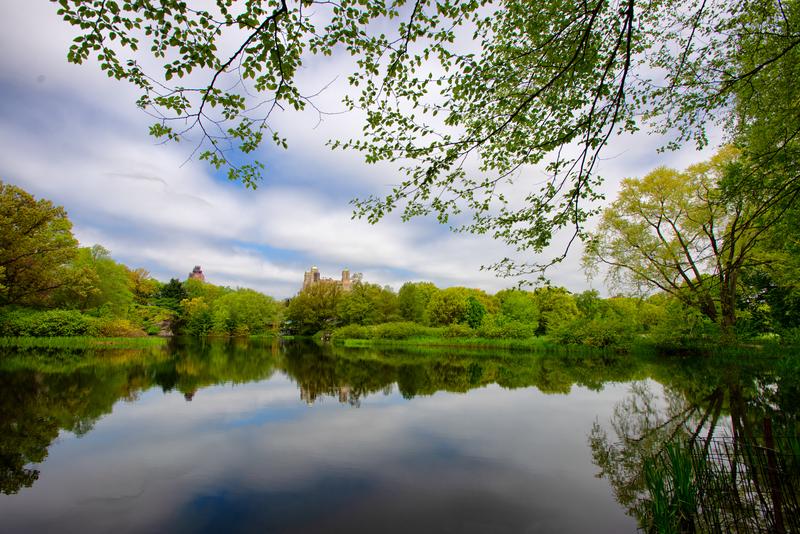
( Courtesy of Flickr Creative Commons/Pat Charles )
[music]
Kerry Nolan: This is All Of It. I'm Kerry Nolan filling in for Alison Stewart. Now, before the break, we were talking with the NYC Plant Doctor, Doctor Chris, about keeping your gardens and your house plants healthy through the spring bloom. Now we turn to the idea of keeping our parks and green spaces healthy amid a changing climate. Last year, the Central Park Conservancy opened a Climate Lab that uses the park to gather data about how climate change is impacting our area, and how parks can actually be used as tools to protect the city from some of the conditions that climate change will bring, including flooding, heat waves, and threats to our local biodiversity. After a year of getting that research underway, we wanted to check in on the Climate Lab to see what they've learned over the past year, and what they'll be trying to learn in the years to come.
Michelle Mueller-Gamez is the Central Park Conservancy's manager of climate change research. She joins us now to talk about it. Hey, Michelle, welcome to All Of It.
Michelle Mueller-Gamez: Hi, Kerry. Nice to be here.
Kerry Nolan: Michelle, help us orient ourselves to your expertise. What does it look like to do the work you do? What are you looking at, what are you looking for, and what information are you hoping to pull out from all those observations?
Michelle Mueller-Gamez: Well, I'm an urban planner, so I have a background and understanding how the built environment impacts the natural world and the environment that we live in day to day. I'm based at Central Park Conservancy, but I work in partnership with the Yale School of the Environment, and a local nonprofit called Natural Areas Conservancy, who really works in partnership with the Park's Department to steward the natural areas of New York City. Those are our forests, our wetlands, and those areas that are not just maintained lawns with trees.
We're really trying to understand both the mitigation effects that green spaces have on reducing the impacts of climate change, and then also the adaptation, so how green spaces can help us adapt and really continue, and hopefully improve how we live our day-to-day lives in the future. That's through cooling and reducing the risk of stormwater flooding through green spaces.
Kerry Nolan: I want to open up-- I'm sorry, go ahead.
Michelle Mueller-Gamez: No, you go ahead.
Kerry Nolan: I wanted to say I want to open the phones to our listeners. If you have questions about how climate change is impacting our parks or how our parks could help us blunt the impacts of climate change, give us a call, 212-433-9692. That's 212-433-WNYC. You can also tweet or DM us on Instagram @allofitwnyc.
Michelle, part of your work is about protecting parks from climate change, and part of it is using parks to help the area as a whole deal with the impacts. Do you see these things as two separate lines of inquiry, or do you think about how they're related? Are they intertwined?
Michelle Mueller-Gamez: I think they're completely intertwined. We want healthy, thriving parks with lots of vegetation that has really rich biodiversity and a really strong ecological system that's functioning, so it can be resilient in the face of climate change. I really see them as connected. We want to make sure that we have healthy forests, healthy meadows, healthy lawn, so that they are better able to stand and contribute to that.
We're really looking at this from both lens, and so we're seeing these negative impacts on our parklands like extreme wind events that are occurring more frequently, perhaps periods of droughts that might make our tree canopy more susceptible in the future. We're losing a lot of days that are below freezing, which are really important to kill pests or anything that might attack our urban forest, and so we really want to consider what species we're planting, and the composition of our forests and our natural areas and also our parkland, so that it can be able to withstand some of those threats in the future to provide some of those ecosystem services that we get from green spaces in the city.
Kerry Nolan: There was an article in 2021 on the Conservancy's website that discusses the relationship between parks and park maintenance, and the natural rhythms of the season. What happens is, as those cycles are changing shape, you just referenced a real lack of weather below freezing in the winter. On the whole, it really has been unseasonably warm. No discernible snow except for that one day and then that melted. What does that mean for the parks as you've observed?
Michelle Mueller-Gamez: I think some of our staff are trying to understand what tree species to plant, what might be more resilient in this new, unpredictable climate, so maybe looking at species from the southern. We call them plant hardiness zones. There's a zone that's right below New York, and so maybe pulling species that are really doing well, and we're observing that are doing well and planting those. Then also it's shifting how park staff are working on a day-to-day basis.
I did interviews with some staff at Central Park Conservancy, with folks who have worked here for over 10 years. They were saying that maybe they were working in the park in the winter, and they were digging into the ground, and usually it would be not pliable. It would be really firm, and that in the past few winters they've been able to dig and they're seeing plants emerge at different times. I think with lawn care, it's been really hard not having the snow cover because then the lawns get more use, and it can make them harder to be prepared for the spring. I think it's really just shifting park operations, but there are things that urban park managers can do to prepare for it. At the Climate Lab, we're just trying to bring some of that knowledge together and share it with other park managers.
Kerry Nolan: My guest is Michelle Mueller-Gamez, and she's the Central Park Conservancy's manager of climate change research. We're talking about how climate change is impacting those large green spaces, the New York City parks, parks all over the country. When the Climate Lab, Michelle, was first getting underway, you did a Q&A on the Conservancy's website where you mentioned how much you love the Jamaica Bay Wildlife Refuge, which is a really a very different type of green space from, say, Central Park. Those areas are both massive, and that's compared with a lot of the city's smaller neighborhood pocket parks.
Can you give us, I guess, a survey of the kinds of green spaces that are part of these urban design questions about the future of the climate?
Michelle Mueller-Gamez: I love that you brought that up. Jamaica Bay is such an inspiration for me. Maybe I would call that a blue-green space. I think the way we talk about it is different cover types within the urban landscape. You might have a water body, which is a cover type. You might have a marshland, which is a cover type. Forested areas, you might have maintained lawns with trees, grasslands, meadows, different scales of park. You mentioned we might have pocket parks, maybe something like Madison Square Park, and then we have Central Park 800 acres, Van Cortlandt Park in the Bronx, which has a rich forest. All of these serve different purposes.
I think about Jamaica Bay as really protecting the houses that are on Long Island and also New York City. The marshland acts as a buffer from the threat of extreme storm events that might come to the city. They're facing different climate change issues than we are. They're facing sea level rise and a loss of marsh landscape, whereas some of the street trees or the pocket parks are really important in reducing energy usage during the summer because of their shading and cooling benefits through evapotranspiration, and so that can reduce our energy demand, and it also can just improve the quality of life and reduce risk of mortality caused by the heat.
Then some of these large parks and these forested areas, we really consider those the lungs of the city. One of the studies we did last summer with Natural Areas Conservancy was to deploy air temperature sensors between these different cover types. We learned about the forested landscapes during one of the peak heatwave days. It was 10 degrees cooler than an air temperature sensor that was placed below a street tree. We really want to think about scale when we're in urban planning and preserving those large natural areas because they really can help us adapt to warmer temperatures.
Kerry Nolan: Are there any climate impacts that you think it's fair to say are likely to become a problem for all parks, or is each space just too unique?
Michelle Mueller-Gamez: No. Certainly climate change will impact all parks. Generally, plant stress and mortality is what we're really concerned with. A lot of the climate change models I give advice to land managers are based outside of urban context, so rural, large forested areas. We know that in the urban environment, our trees and vegetation are stressed by a variety of factors that maybe those models don't have to take into effect. We have the urban heat island and effects, so the temperatures are actually warmer, and that impacts our vegetation, as well as us.
Cities are also the origin source for invasive species, so they're the frontline and encountering those. Our landscapes are fragmented, so our vegetation, especially in forested areas where it's naturally regenerating, perhaps those seeds can't move quite the same distance, or they're fragmented by the urban landscape. Also just wear and tear from just human use, so soil compaction and trash can compound with the threats of climate change. I really think plant stress and mortality, extreme windfall events, and lots of tree canopy, and just general loss of biodiversity, those are all threats across all of our parklands.
Kerry Nolan: You spoke briefly about invasive species. It's getting onto the time of the year when a lot of insects are waking up from wherever they've been over the winter. Are we likely to see more problems with the lanternflies?
Michelle Mueller-Gamez: I'm not an expert in spotted lanternflies, but I would say invasive species come to us through transportation connections and through just our economy, and how it's structured. It's a little separate from climate change. I think if we're not having days below freezing, we might be creating an environment where they can thrive. We also want to make sure that our forests have a lot of diversity, so that if one species is attacked, then we have other species that can come in and take the place. That's how I think about that.
Kerry Nolan: Well, we pulled some of the Conservancy's articles about the ecology of Central Park, for example. If you could explain how they fit into the Climate Labs work, say, in the water features, you've been tracking algae blooms, what's the cause of that problem and what are the solutions?
Michelle Mueller-Gamez: Sure. The algae blooms are interesting. It's certainly climate change and warmer temperatures are exacerbating it, but it's really from the water supply. We have a high concentrations of phosphorus in our water. When we are having higher temperatures and more nutrients as build up, but we're looking at solutions and we're talking about potentially having floating wetlands and using plants to uptake that extra nutrients. Then also looking at other nonchemical-based solutions, like using just filters to get some of that out of there.
Kerry Nolan: What about birds and butterflies and other migratory wildlife? How have they been impacted by climate change as we're seeing it? Also are there ways that a more biodiverse ecosystem is a better buffer against its impact?
Michelle Mueller-Gamez: Certainly. I think the Audubon Society has a lot of data on how bird migratory patterns are shifting. Here at Central Park, we've really worked hard in the last 20 to 30 years to restore our wooded areas, so the Ramble and the North Woods. We're actually seeing an increased presence in multiple species, and really seeing it as a refuge for the the flight path. I think it's something we got to keep monitoring.
Kerry Nolan: A lot of climate change discourse involves images of apocalyptic weather events, and to be sure, extreme weather is one consideration, but one of the real threats of climate change are the long-term public health impacts. How do you see your role and the role of parks as matters of public health?
Michelle Mueller-Gamez: Certainly, we want really rich parks that are full of trees and healthy vegetation so that we can reduce the risk of heat mortalities and provide cooling. Also these other benefits that we get from green spaces like reducing air pollution, and then just providing recreational space and mental health refuges for folks.
Something I think about a lot is just equity in our work. We know that parks are severely underfunded in New York City, and we know that a lot of parks in the outer boroughs or in communities of color have less resources. Perhaps they don't have a conservancy issue to support some of the work and the needs. Really this is a matter of environmental justice. We want to make sure that all of our boroughs are adequately covered in tree canopy and have a park space for folks to go to.
Kerry Nolan: In a Q&A recently, you discussed the importance of engaging the public in this work. You shout out birders and arborists, and other amateur and naturalist types. In what way does the Climate Lab rely on the public's help?
Michelle Mueller-Gamez: Certainly, I think outside of just the research that we're doing, I think, as citizens, we really--
Kerry Nolan: Oh, oh, it looks like we may have--
Michelle Mueller-Gamez: --our advocate for resources out. Can you hear me?
Kerry Nolan: Yes, we do. It just dropped out for a second. It's all good. We were talking about the ways that the Climate Lab relies on the public's help.
Michelle Mueller-Gamez: Great. I think the research we're not really directly reaching out to get help on that, but we are looking for help on just stewarding our natural resources, so getting folks out there to volunteer. New York City Parks is a great program where you can become a citizen pruner and really take care of some of those street trees that have direct impacts with folks. Then also just becoming a big advocate for funding for parks.
Kerry Nolan: You also shouted out artists. What's the role of art in public green spaces when it comes to climate change?
Michelle Mueller-Gamez: Yes. I think that there is a lot of fear around climate change. There's a lot of hopelessness or lack of power in our ability to make change. I think that art has a really important part in providing a space for folks to convene and maybe even take humor in the crisis, or just a space for reflection to bring us all together and maybe provide us an opportunity to feel a little less hopeless through art. I'm always looking for artwork that can reflect on the history of place and place us in context.
Kerry Nolan: Now most of our parks were designed many, many, many years ago. What would be different about our parks today if they were designed with the climate change in mind from the jump?
Michelle Mueller-Gamez: For sure. I've been getting into the history a little bit of Central Park, and how Frederick Law Olmsted designed and what the landscape looked liked before. It was a marshy landscape on the north end, actually, the East River connected where the Harlem Meer is. That was a wetland area. Then there were some streams that used to run through it, and in the construction of the park, that landscape was severely modified. The lakes were built, streams were widened. Soil was brought in from New Jersey, and forests essentially were cut down to create lawn spaces.
There are new parks being constructed, and I think if we had the opportunity to look back at the landscape, maybe we would have preserved it more as a natural area with some nice trails to go through. The reality is we all love having green spaces that are accessible, so I think maybe a hybrid where we maintained some of those natural ecosystems, but also allow to access.
I think New York City is really interesting in the design world around parks because a lot of it is rehabilitating infrastructure or past land uses, and restoring some of those ecosystems that existed before. We can look to other spaces in New York, like Brooklyn Bridge Park or the Hudson River Park, who are trying to emulate some of those natural systems.
Here at Central Park, we're doing a fun--
Kerry Nolan: I'm afraid we have-- This is where we have to leave it.
Michelle Mueller-Gamez: [laughs] That's okay. That's all right.
Kerry Nolan: No, that's great.
Michelle Mueller-Gamez: More to come.
Kerry Nolan: More to come, definitely. Michelle Mueller-Gamez is the Central Park Conservancy's Manager of Climate Change Research. Thanks so much for being with us.
All Of It is produced by Andrea Duncan-Mao, Kate Hinds, Jordan Lauf, Simon Close, Zach Gottehrer-Cohen, L. Malik Anderson, and Luke Green. Our intern, Katherine St. Martin. Megan Ryan is the head of Live Radio. Our engineers are Juliana Fonda and Jason Isaac, and Luscious Jackson does our music.
I'm Kerry Nolan. Thanks for sticking around today.
Copyright © 2023 New York Public Radio. All rights reserved. Visit our website terms of use at www.wnyc.org for further information.
New York Public Radio transcripts are created on a rush deadline, often by contractors. This text may not be in its final form and may be updated or revised in the future. Accuracy and availability may vary. The authoritative record of New York Public Radio’s programming is the audio record.