
'The Girls on the Bus' Follows Female Campaign Reporters
( Courtesy of Max )
[MUSIC - Luscious Jackson: Citysong]
Kousha: This is All Of It from WNYC. I'm Kousha Navidar, in for Alison Stewart. A new TV series follows four women working as journalists covering the campaign trail for president. It's called The Girls on the Bus, and it's based on real-life political reporter, Amy Chozick's insightful memoir titled, Chasing Hillary: Ten Years, Two Presidential Campaigns, and One Intact Glass Ceiling.
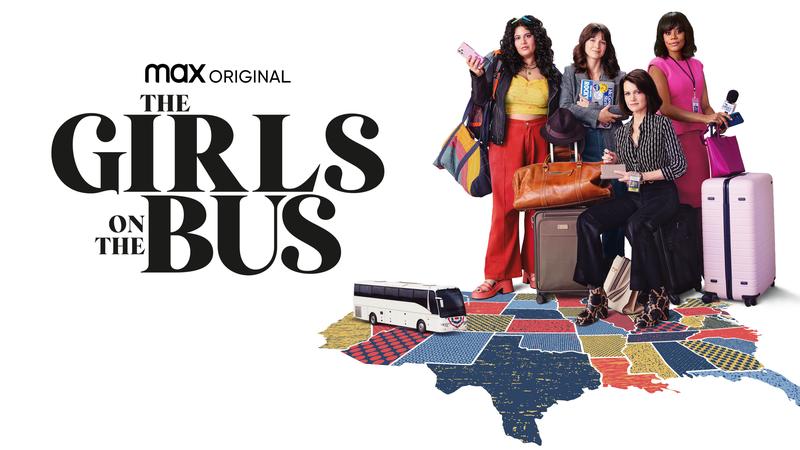
The show centers Sadie McCarthy, played by Melissa Benoist. Yes, from Supergirl; journalist by day and hero by night echoes here. In the show, she's an eager young journalist looking to ask candidates hard-hitting questions while checking her own biases. On the trail, she meets the other girls on the bus; Sadie gets guidance from her friend and mentor Grace, played by Carla Gugino, a more polished journalist who represents traditional media. There's also Lola, played by Natasha Behnam, who's a content creator hoping to break the rules of the establishment.
Finally, we've got Kimberlyn played by Christina Elmore, who is a Black woman making a name for herself as a reporter at a top conservative news outlet. The Girls on the Bus releases this Thursday, March 14th on Max, and it's followed by one new episode weekly through May 9th. Amy Chozick joins us today to discuss. She is an author and journalist who previously worked for The New York Times, and she's the creator of the series. Amy, welcome to All Of It.
Amy: Thank you so much for having me. It's great to be here.
Kousha: Great to have you. In 2018 when you published Chasing Hillary, you talked about your highs and lows covering the 2016 campaign. How do you think the experience of following Hillary Clinton shaped how you thought about your role as a reporter?
Amy: Oh, that's a very good question in creating this fictional world. It was very fun for me to play in fiction. As soon as the book reached Warner Brothers and Greg Berlanti, we decided there's no Trump, there's no Hillary in this world. Let's just play in a fictional universe and focus on this chapter called The Girls on the Bus, which is about the found family and unlikely friendships that form among the reporters covering the bus.
Certainly, all of my experiences from 2016 inform the world, but it was very fun to play in a fictional universe where we didn't have to relive all of those things exactly, but definitely inform the world. Everything from how the bus looked, it's very hard to shoot on a bus. There were some ideas from production about maybe there should be sofas in the press bus. It was like, "No, it has to look like a press bus." Everything from the look and feel, press files being disgusting and littered with power cords, to the themes that we have about women in power and media, and how we cover women in politics.
I think all of that informed the world.
Kousha: What was the moment where you thought, "I have this memoir in my hands, this could be a great series"?
Amy: [laughs] I don't think I thought that. I think that it landed with Warner, even before I had finished writing the book, I had breakfast with two executives at Warner Brothers, and they were intrigued by this idea. I wanted to write the book less of a game change like here's what happened, and more of a very personal Julia and Julia, but politics instead of cooking. How this woman took over my life.
It was very personal, and then from that moment we started to kick around ideas for how to fictionalize it and make it a television show. Certainly, when I was writing it, I was just focused on the book. I didn't think it was going to--
Kousha: It was going to make it to the screen.
Amy: Yes.
Kousha: When you started going through that process of adapting it, you mentioned the bus, just filming on the bus. It's hard to film on a bus.
Amy: So hard.
Kousha: Was that the hardest part about adapting it or was there something else?
Amy: No, no. It was a challenge, and also, of course, we wanted to make a contemporary statement about journalism and politics without living in the real world. I think crafting that was hard. It was also hard to just, we had a wonderful writer's room in Hollywood, but trying to have soapiness and juiciness within the confines of them being also serious journalists. Certainly they can't sleep together and they can't do this. That was a challenge. Then we had COVID and two strikes. There's always a big hurdle in getting anything made, but we're really proud that it's coming out.
Kousha: In the first episode we learn about Sadie McCarthy, who works for a traditional print newspaper, and she idolizes The Boys on the Bus, which is a book written by journalist Timothy Crouse. This book was about the journalists who covered the 1972 US presidential campaign. What are some of the key insights from this book? How are they illustrated in the show?
Amy: Sadie, I think she does. She romanticizes this era of journalism and both it's swashbuckling correspondence that wrote everywhere, and they were predominantly men. I think something that's really interesting is that by the time the girls got this job, the job has completely changed. The industry is-- Grace, Carla Gugino's character says in the first episode, this industry is dying.
I think that's interesting, and then I also think that they can't do what the boys in the bus used to do. You filed once for the print newspaper, and then you were just hard-charging and drinking with the candidates. Now you're filing all the time, you're on deadline all the time. I think we live in a world of enraged fact-checkers. Would that kind of gonzo style of journalism that Sadie romanticized fly in today's age?
I think that's what she's grappling with. It's like, by the time I got my dream job, no one believes what they read in newspapers, and it looks very different. I think that's her journey. She starts out wanting to be one of the boys on the bus, and she ends up realizing, "No, I have to be better."
Kousha: There's a clip that reminds me of that I'd love to play right now. In this scene, the Daily Sentinel reporter, Sadie McCarthy pleads with her editor Bruce Turner, to let her back on the trail to cover a female senator who is the front runner among the Democrats. Here's that clip.
Bruce Turner: Now the newsroom brass is still burned. They worry that you live and write, in a more emotional space.
Sadie McCarthy: That is such bullshit.
Bruce Turner: Felicity Walker.
Sadie McCarthy: What about her? Aside from the fact that she should be president right now.
Bruce Turner: See, see. There it is.
Sadie McCarthy: I'm kidding.
Bruce Turner: Come on. Look, you wanted her to win, and it showed in your work. Hell, it showed on television. I mean, your crying became a meme.
Sadie McCarthy: I don't think that many times.
Bruce Turner: The media is under attack. We cannot show even a hint of bias. Sadie, you're a great writer, but you lead with your heart and we need you to lead with your head.
Sadie McCarthy: Well, Hunter S. Thompson didn't just write what he saw. He wrote how he felt. He found a deeper truth, which is what made him a legend.
Bruce Turner: You got to stop romanticizing The Boys on the Bus. Hunter S. Thompson was a legend in 1973, today he would be an HR crisis.
Kousha: We talk about the idea of romanticizing what we take, and then what it's actually like in reality. What was the environment and culture of the bus actually like in your experience?
Amy: [laughs] I think the show really did capture that. We have this perception of the elite media, and yes, the job is prestigious, but it's totally unglamorous. They're checking into a different Marriott every night, they're being thrown turkey sandwiches. There's an episode in episode six, it's called The Debate. We thought, instead of watching fictional candidates debate, the bus breaks down and these women get into debates about everything.
It's prestigious and entirely unglamorous. I also think it's an important that the show portrays these women, their personal lives are like a dumpster fire because they've committed their lives to covering these candidates. You give up your life, you're on the road all the time, and I think that's really important right now to show journalists that they are fully committed to finding the truth. The truth still matters, and they are giving up their lives to the job.
Kousha: How real were the friendships that you show in your own experience? Was that the core part where you said, "Oh man. These are friendships that I'm going to have for the rest of my life. This is what the story's about."
Amy: Yes. I don't think I had exactly the same friendships, but certainly there were people like Andrea Mitchell on the bus. Normal life, I would've never come into contact with her. She became such a lovely friend and mentor to younger women on the bus, and she was such a legend that we often turn to her for advice. Abby Philip is a consultant on the show. She was a dear friend on the bus.
I think it was the idea that when you're together and forced together, suddenly you can get past your differences and suddenly just see each other. The other thing that was very interesting to tell writers and to communicate is like, these are women who we shared everything with. They knew about my wedding, they knew about drama. I knew about all their home decorating projects. The one thing you didn't say is what you're working on.
It was interesting that we were still competitors. It's like, "Oh, Annie is my best friend, except she better not be looking at my screen to see what I'm working on." That was very fun to play. You see in the pilot, Carla's character and Melissa Benoist's character are like, they're dear friends, but we're not going to talk about our scoop.
Kousha: How competitive does the campaign trail get among these reporters? How do you separate that professional from personal when you're just together basically 24/7?
Amy: I think that's hard, and it's a really fun tension that we play with in the show. You're definitely competing. In Episode 2, Sadie gets really mad at Kimberlyn because she asks an assertive question in a press conference and then the candidate runs off. She's like, "You ruined it for the rest of us." Those tensions are definitely there. I think what's really beautiful throughout the season, the women eventually have to work together, because there was a story so big that it pulls them all in.
Kousha: In the first episode, we start off with a big, but we don't know what happens, and so there's something that will be revealed where they'll have to work together is what you're saying?
Amy: Exactly, yes. We actually, this was important to me to make it realistic, because there were a lot of like, maybe they work on the story together. I was like, "No." We did find like the Pentagon Papers, the Panama Papers, ProPublica investigations, times when the news is of the public interests and news organizations have worked to get that out together.
Kousha: You're listening to All Of It. I'm Kousha Navidar, and we're talking to Amy Chozick about her new series, The Girls on the Bus. It premieres March 14th on Max. We're talking about the main characters. Another thing, Amy, that stood out to me was the different reporting styles and personalities of all of these characters, but how they have to find common ground as you were referring to. The character Lola is representative of new media. She's the influencer journalist.
What are the main differences between Timothy Crouse's experiences on the bus and your experience on the bus in 2016, versus how journalists report stories today? Because I imagine that the character of Lola is post-2016.
Amy: Yes, completely. It's funny because we were obviously rewriting these scripts right up until the last minute. For instance, Lola has a very lucrative substack. I don't think that's a word we would have even used when we started writing the show in 2019. Especially Lola was-- Grace is old school Washington Post style reporter. That didn't change so much. Certainly, the Lola character, we were updating in real-time and also seeing more journalists who emulated her, and seeing a majority of young people getting their news from TikTok. There were all of these things that we incorporated into Lola.
Look, the boys on the bus had it easy. They filed once for the paper, they were done. They called their desk from the pay phone. I also think that there were news outlets, of course, on that bus that sadly don't exist anymore. Then there were news outlets when I was on the bus, Buzzfeed was on the bus, and Politico and new outlets then.
I even think in 2016, there was less viral. Of course, the candidate would be concerned that we caught something and it went viral on Instagram. I think it was even less than now in terms of TikTok and digital media, and candidates going directly to circumventing the press, which Trump has obviously done. Then as we were crafting Lola, we really wanted to tap into, as Grace says, "The brave new world of political reporting."
Kousha: When we first meet Lola, and I might get this wrong, so correct me, but does she speak Farsi when we first meet her?
Amy: Yes. Natasha Behnam is Persian and it was really important to her to have that be authentic. There is an episode, in Episode 8, she goes home to see her family and they are all speaking Farsi as well. Yes.
Kousha: That choice came from Natasha?
Amy: Yes.
Kousha: Yes, talk me through that.
Amy: Natasha is incredible. I love her so much. She sent in a tape to audition and we literally didn't watch anyone else. Immediately she cracked us up. She had heart, she had depth. As you watch the show, Lola started out in our minds like an Emma Gonzales. When the media has moved on to the next tragedy, and these kids who got very famous for surviving something so awful, suddenly what do they do? We thought, "Okay, well Lola channels that into activism in the form of journalism."
Natasha, when we sat down to speak to her, everything from Lola's name, Rahaii, it became very molded and what was important to the actor in that case. I think it was really beautiful. I love that she seems like this super fun, independent girl with her vibrator, and then her dad comes to help her with her luggage. That is all adding hopefully layers to Lola. Yes, it was important to us and her.
Kousha: Speaking of layers, one thing that stood out as well in this is how you were able to unveil what goes on behind the scenes on the trail, while also making it interesting to the average person who's not a reporter, does not work in politics. Where did you draw that line? How did you balance the two?
Amy: Oh, good. Actually, I would say Lola is super useful for that too, because she doesn't understand how journalism works. In Episode 3, they're in Las Vegas and Lola gets invited to be in the pool. She shows up thinking she's going to be in a bikini thinking, she didn't know what the press pool is. Sadie has to explain to her, and then she explains to her what OT or off the record means and background means. I thought it a great vehicle, her learning as a conduit for the audience learning.
Look, I think one of the things I loved about The West Wing or medical shows is I might not understand what they're talking about, but I know that the characters know what they're talking about. We did have some times where people would watch an editing and say, "I don't know what she's saying." It's like, "It's okay because she sounds smart and she sounds like she knows what she's saying." For Lola to help us explain, hopefully taking viewers along into this world.
Kousha: There's one scene in the first episode where Christina Elmore's character, Kimberlyn gets a drink thrown on her at a college campus because the students detested the conservative news outlet she works for. Can you tell us about this scene a little bit? We can listen to a clip right after.
Amy: Yes, of course. Yes, Christina Elmore plays Kimberlyn Kendrick, a reporter for Liberty Direct News. This was a character that was very much, a lot of research went into this character from a very wonderful staff writer. Her father was a very prominent Black businessman who is not a Trump Republican, but a fiscal Republican. Her experiences around Thanksgiving dinner tables informed her worldview. Everything from that to listening to Clarence Thomas and Condoleezza Rice's memoirs, all of this shaping this Black intellectual conservative that Kimberlyn is.
The campus protest happened I think before our current era where we're hearing so much about that. We just thought it would be very interesting to have Lola, who's on the opposite side of the spectrum there to cover the socialist AOC-like candidate confronted with this angry mob attacking Kimberlyn. What do you do? In that moment, Lola just helped her without thinking, "Oh, yes, your views are completely polar opposite to mine."
Christina Elmore was on Insecure, and she is just a brilliant actress, and she just brings such empathy to the character. I have some friends who are like, "I'm really liking the conservative." [laughs] I know because Christina, it's hard not to Kimberlyn.
Kousha: Let's listen to a clip. In this scene, Kimberlyn is trying to get a candidate who's been nicknamed the freshman, as you were mentioning, to answer a question as she's leaving a campus building.
[applause]
Kimberlyn: [unintelligible 00:16:03] Do you really believe that redistribution will benefit the poor when capitalism has--
Speaker 1: Oh, thank you. So nice to meet you.
[background noise]
Kimberlyn: Do you really believe that redistribution will benefit the poor when capitalism has lifted more people out of poverty than any other economic system? Why are you afraid of Liberty Direct News?
Speaker 3: Maybe because you're the devil?
Kimberlyn: Oh, so it's the party that's supposed to stand up for free speech.
Speaker 3: Your network's words are literally violence.
Kimberlyn: Words are not violence.
Speaker 3: Get out of here.
Kimberlyn: Stop. What are you doing?
Kousha: In The Girls on the Bus, you talk about politically divisive issues that could cut across audiences. How do you handle that?
Amy: We do. One of the wonderful things about putting these arguments into the girls' mouths is that we really don't-- I don't know the answer. You saw on the pilot, there's this big debate about journalism, whether authenticity is more important than objectivity. These are debates, both what happened in that scene on college campuses, whether it's that or whether it's in journalism.
These are debates that are happening in the ether, and we put them into these girls' mouths. It's like every time Lola would make an argument and say, "Objectivity, it only existed when white guys covered other white guys and they had no skin in the game. When you're coming for my rights, it's impossible to pretend to be objective." We'd write that argument for Lola and be like, "Yes, I can understand that." Then when Grace would say, "If you're saying I can't be objective, I can't do my job." We'd be like, "Yes, Grace has a point."
I think that scene was one of those things. Then I love that Lola ends up losing sponsors and getting semi-cancelled for helping Kimberlyn. She starts questioning her mind. She yells at her manager, "Black Lives Matter doesn't just apply to people with our same politics." I think we're starting to see Lola's evolution to accepting Kimberlyn as a friend and as a human, not just as a right-wing news outlet. Yes, certainly we wanted to play in those debates.
Kousha: It's interesting to bring that up and to mention The West Wing before because some people might describe that show, The West Wing, as maybe an idealized version of what it's like to work in government. Do you think The Girls on the Bus is an idealized version of what it's like to work in journalism or a realistic view, or something in between?
Amy: No, absolutely. One of the things I'm most proud of about the show is that I think it has the trademark heart of Greg Berlanti shows. My partner in running the show, Rina Mimoun, worked on Everwood. If you remember Everwood, Dawson's Creek, Jack & Bobby, these are shows that had big heart and idealism. I do think we are idealistic.
I certainly think there's no way you can watch our fictional primary and not think, "Oh, this is an escape. It's fun." Scott Foley does a fantasy Magic Mike striptease in Episode 3. It's fun and an escape. Certainly, I was actually drawn to the data showing how many people streamed The West Wing during the Trump presidency because it was an escape and I think that motivated us. There is an idealism.
Certainly there are characters and moments when there's cynicism, Grace in particular, but that is not the world that we are playing in. I think we wanted an idealism, and a hope, and an escapism.
Kousha: Can you put a finger on what is idealistic about it or what is the if I had a magic wand, this is the way it would be?
Amy: Yes. For one, Sadie is confronted. All she ever wanted to do her whole life is write for the paper of record, for her words to matter, to write something that would live in history. By the end of the season, she's confronted with this very antagonistic source who says like, "Wake up, Sadie. The truth left the building a long time ago." She's confronted with this reality that are we living in a post-truth world?
Rather than, I think, saying, "God, you're right. It's so dark. It's so depressing. The industry's dying. No one believes what we read." She does the opposite. She dives into this investigation that gets her, as you saw at the beginning of the pilot, in trouble with the law. She brings in the girls to help her. I think there is this idealism that she pretends that that doesn't exist and she just buckles up to do her job. There's a dark turn too. There's a dark turn in the presidential race that catapults her into this awakening, if you will.
Kousha: When you think about all the different characters that are at the forefront of this, all women, what unique pressures do these women face in balancing their personal and professional lives because of their gender?
Amy: Oh, completely. If you go back to read The Boys on the Bus and it's a masterpiece, but the women in that book are picking up their husbands after a long swing in the primary or a debate night, and they've got meatloaf in the oven. They come home and they're hailed as heroes who were out on the road. It's so different.
These women's lives are all completely, their personal-- well, Sadie can't even really have a relationship as she tells her mom, "The road is my home," and her mom's like, "Okay, Jack Kerouac." She can't even have a stable relationship. Then there's Grace who chose the job over mothering her entire career because women in that generation had to choose. She says to Kimberlyn in the finale, "There is no such thing as work-life balance." Now she's faced with her daughter's in college and really needs her. No, I certainly think all of these women face unique challenges that The Boys on the Bus did not have to face.
Kousha: For you, that's part of your own experience, right?
Amy: Yes, certainly. I wrote in really personal ways about deciding when to have a baby in time and get around the presidential campaign. These are things I don't think men thought much about.
Kousha: In the one minute that we have about left, what are aspects of this season that you think are most reflective of where we are now in society?
Amy: Well, my partner, Rina Mimoun has been inserting women's issues into television her entire career. There was an abortion episode on Everwood when she ran that. Greg Berlanti put the first gay kiss on television with Dawson's Creek. I think there is an episode and one of the characters is pregnant. They are campaigning in a state that does not allow abortion, and she has to take a road trip to get her abortion pills, and the only reporter that can drive her is Kimberlyn.
I'm very proud of that episode. Actually, it was so current that in the writers' room, we had to take out a map of the US and say, "Okay, this state just changed their laws so that she can't drive there anymore." We had to actually post-Dobbs, look at the map and figure out where to set this episode. I think that is very relevant. Also by the way, when we started writing this show, we thought, "Oh, no. Well, how is the real world is going to change?" Still no woman president, right?
Kousha: Sure.
Amy: Still no woman president. The themes that we explore that we get to in the finale are very relevant because sadly, still no woman president.
Kousha: Amy Chozick is the creator of the new series, The Girls on the Bus, which premieres this Thursday, March 14th on Max, followed by one new episode weekly through May 9th. Amy, thank you so much.
Amy: Thank you so much.
Kousha: Absolutely.
Amy: It's been great talking to you.
Kousha: You too. Emmeline Clein's on the way on All of It. Her new collection of essays explores her relationship with disordered eating and the societal failures to properly address it. She joins me to discuss the book titled Dead Weight: Essays on Hunger and Harm. That's next right after news headlines.
