
Get Saucy: The Art Of Sauce Making
[music]
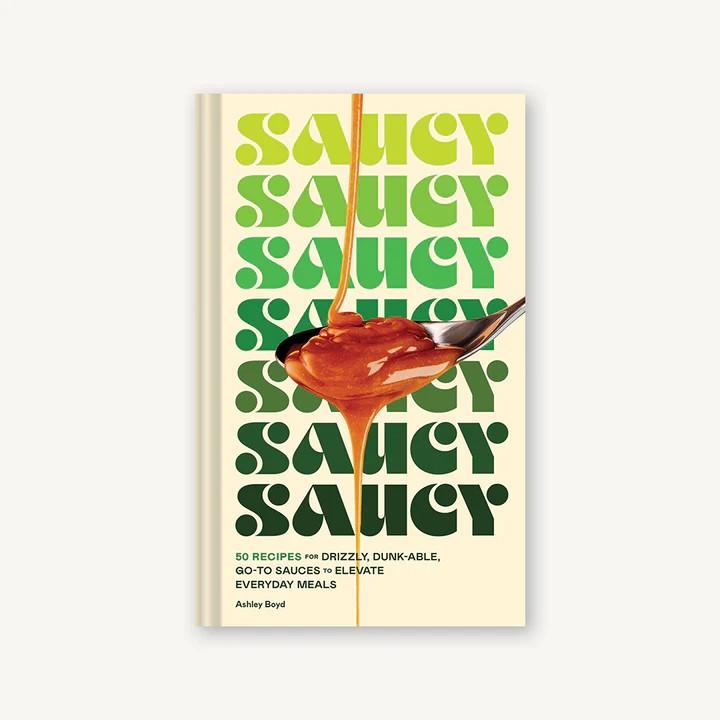
Kousha Navidar: This is All Of It. I'm Kousha Navidar in for Allison Stewart today. Every Thursday we're bringing you a culinary conversation to help you look ahead to your meal prep for the weekend. We call it Food for Thought. Today we're talking sauce. There's a new cookbook called Saucy: 50 Recipes for Drizzly, Dunk-able, Go-To Sauces to Elevate Everyday Meals. Love that title. It shows you recipes for sweet and savory sauces, smooth glazes, and chunky salsas, raw from the blender, or it's simmered into flavorful unity on the stovetop. Cook and author Ashley Boyd, who's also founder of the food blog Pink Owl Kitchen.
She makes the case that keeping sauces at the center of your kitchen can streamline your cooking. The idea is that with different sauces at your disposal, the same grilled chicken or veggies can become vastly different meals. Listeners, let's get saucy. Ashley Boyd joins me now to talk about her new cookbook. Hey, Ashley.
Ashley Boyd: Hi. How are you today?
Kousha Navidar: Good. Thanks for joining us. Listeners, we want you to join us to give us a call with your sauce-making stories, your tips, or questions for Ashley. Here's the number. You can call 212-433-9692, or you can text us at the same number 212-433-WNYC, or if you've stumbled on any creative or unusual ways to use sauces in your cooking, we're here for it, or maybe you've had trouble with consistency or flavor in your past sauce attempts. We'll see if Ashley can help you out. It's 212-433-9692, or as always, you can hit us up on social. Our handle is @allofitwnyc. Ashley, lots of cookbooks include sauces, why did you want to put sauces at the center of your cookbook?
Ashley Boyd: This concept I looked at it, I thought it was just out of the box. You don't see like you said, an entire book with sauces, and that's it. I thought that the idea of a cookbook full of sauces to have keep it in your little kitchen toolbox in your back pocket to pull out when you can't think of another way to serve grilled chicken, or a sheet pan, or roasted potatoes. You know what, Mom, not again. Not again, Mom.
It's a way to elevate everyday meals. This is not for professional cooks. It's for home cooks, for busy moms, for regular folks who may have limited kitchen skills. It's a way to elevate those dishes. I just thought that it was a really cool concept. I hadn't seen anything like it. It needs to be out there. That's what I thought. [chuckles]
Kousha Navidar: What's the first sauce that you learned how to make?
Ashley Boyd: Comeback sauce.
Kousha Navidar: Oh, wow. What's that?
Ashley Boyd: Have you heard of that?
Kousha Navidar: I haven't, no.
Ashley Boyd: All right. Comeback sauce, this is how I like to describe it to people. You know what remoulade sauce is, Thousand Island. Think of remoulade sauce, Thousand Island, ranch dressing, and barbecue sauce all had a baby. It would be comeback sauce. This originated in my hometown of Jackson, Mississippi. It's a creamy sauce. It's got some spicy notes, savory notes. It's a creamy sauce you can use on literally anything. It's one of the first sauces I remember having. It's at every restaurant in the South just about. If you order a side of French fries, I'll say, "Hey, you want some comeback sauce with that?" I was like, "This sauce is delicious. I want to make it."
I just use what I thought the sauce was made with. I created my own little version at home. Then I continued to make it. It developed into the recipe I used today, which is my family's top request. Whenever I make anything, it's comeback sauce.
Kousha Navidar: We've got a caller who's ready to ask you a question. Ashley. We've got Lou in Rockland. Lou, hi. Welcome to the show.
Lou: Good afternoon. Thank you for the show. I will be contributing today. Question, I need a substitute for onion or garlic in any and all sauces. I'm highly allergic to garlic and onion. Tremendous pain because of the sulfur or whatever they are in there. Doctor said it's just normal for me. Can you help me?
Kousha Navidar: Lou, thank you so much for that call. Ashley, what do you think?
Ashley Boyd: Substitute for onion and garlic. If you're highly allergic, we can't do shallots. We can't do anything like that. Let's add some more acidity by adding some extra squeeze of fresh lemon juice or something like that. Because we can't do any of the onion powders or anything. Let's see here. I would say definitely some more citrus. Let's substitute some more citrus juice, citrus zest, some fresh herbs. You're not going to get that onion flavor from anything else. Let's throw in some fresh herbs, some citrus juice that'll give you that acidity that you're looking for. It'll balance the flavors of the sauce without you having to deal with any of the consequences of your allergies.
Kousha Navidar: Moving away from the onions and shallots and leaning into the citrus flavor profile.
Ashley Boyd: Yes, for sure. It'll change the flavor a little bit, sure, but it'll still give you that zing that you're looking for.
Kousha Navidar: Nice. That's creative. I like it. Lou, thank you again for calling. I hope that that was helpful. Ashley, if we could circle back to comeback sauce because I'm still super engaged on this. Are you willing to share the ingredients to comeback sauce?
Ashley Boyd: Oh, for sure. Let's do it. It's a mayonnaise-based sauce. It starts with some mayonnaise. What some of the ingredients, I'm about to say, some Mississippians would say, "No, that doesn't go in comeback sauce." Hey, this is my recipe. I use mayonnaise ketchup. Basically, all comeback sauces start with that. Then I do something a little different. Most comeback sauces they use chili sauce, I use sriracha. To me, I like the extra little kick from the sriracha. Worcestershire sauce, which adds a delicious umami flavor that anchovy fermented flavor is delicious. You've got some fresh lemon juice, whole-grain mustard.
If you have access to Creole mustard, I highly suggest trying that. It's something you find commonly in the south, I'm not so sure about it in the New York area. Whole grain mustard, some fresh chopped parsley. We've got fresh mint, garlic, and then some seasonings. I use smoked paprika, garlic powder, onion powder, and a little bit of salt, and freshly cracked black pepper.
Kousha Navidar: Oh, wow. Sorry.
Ashley Boyd: You mix that together. Nothing, you just mix it together. That's all you do. Nothing fancy.
Kousha Navidar: We will try to put a list of those ingredients, if it's okay with you, Ashley, on our social, in case folks have missed it out. Is that all right?
Ashley Boyd: Absolutely, yes.
Kousha Navidar: Wonderful. Question that I had about that, you mentioned Creole mustard, right? What's the difference between Creole mustard and other kinds of mustard?
Ashley Boyd: Creole mustard it's like whole grain mustard, but it's got more, I don't even know what the word is, twain maybe. I know that there's more spice. There's some added spice in there, maybe from some cayenne pepper. It's a stronger flavor.
Kousha Navidar: Wonderful.
Ashley Boyd: It's made by Zatarain. I was trying to think of the brand, Zatarain.
Kousha Navidar: Oh, got it.
Ashley Boyd: Zatarains makes it. If you can find Zatarain's creole mustard, give it a try. You're going to be hooked. You probably can order it on Amazon. If you can't find it at a grocery store locally, try Amazon.
Kousha Navidar: If there's any city in the world where you can find a lot of stuff, it might be New York City.
Ashley Boyd: You know what, it's New York.
Kousha Navidar: It's New York. [laughs]
Ashley Boyd: You're absolutely right. I'm sure you can find it somewhere.
Kousha Navidar: If anyone knows listening right now where you can find Creole mustard, please text us, call in. We would love to know so that we can try some of this comeback sauce. I want to move, if it's okay, into the book itself, specifically the photos. There's a question here for advice that I would love. I love the photos in the book. Each sauce gets a closeup photo of the way it's drizzled and spread in a fancy way like what you might see on a cooking show. Can you give us any presentation tips for plating the sauces so they taste good and they look good?
Ashley Boyd: Okay. That's the thing about a sauce. Not only does it add a flavor element, it can take a dish from basic to beautiful, to pretty. Now this is not a super culinary, correct book. It's for home cooks, like I mentioned. A simple drizzle of a sauce on top of your grilled salmon or smear it. You can put it on a spoon and smear it on the plate so that when you take a bite with your fork, you can go across the sauce with it or dip it into the sauce.
Serve it on the side. Put a little ramekin over on the side, so you can dip it. There's no right or wrong answer here. Literally just pouring it a little drizzle on top of your dish makes it look beautiful.
Kousha Navidar: Speaking of some of those dishes, there's also an apricot miso glaze recipe that you have on there. Can you walk us through that one because that one stuck out to me.
Ashley Boyd: Yes. That's another one of my favorites. I probably can say that about every recipe in the book. "That's one of my favorites. That's one of my favorites." The apricot miso glaze, it gives you that salty kind of the fermented flavor from the miso paste, which is just a fermented soybean paste. Then you mix it with the apricot glaze, which is sweet. It's a sweet fruit. You combine those together with a little bit of vinegar. There's rice vinegar in the sauce. There's sriracha in that sauce as well. I love sriracha. You'll see, I include it in several of the sauces.
Then you've got orange zest, brighten the sauce up. You've got the citrus zest, and then there is soy sauce. You've got like the umami flavor, the sweet, the salty, the little bit of spice. Those flavors do a dance that is unlike anything else. It's so delicious on pork, like pork chops, pork tenderloin, chicken, anything. I made a wrap the other day and put some on there. It's good on everything.
Kousha Navidar: While you were writing this book, was there an ingredient that you discovered or maybe rediscovered that you thought, "Wow, that's adding a lot"?
Ashley Boyd: I won't say discovered, but probably, and we happen to be on this recipe. Probably the miso. I had it before, I've used it before, but incorporating it into this sauce and just realizing that there are so many ways to use it and that it's a simple but complex flavor that can elevate so many different dishes. I really have been leaning into the miso now since this book.
Kousha Navidar: One of our producers just said that miso has been revolutionary for them as well, which I just want to point out.
Ashley Boyd: It's a game-changer.
Kousha Navidar: It's a game changer much like sriracha or Creole mustard. [laughter] I was pointing out for listeners, we have that miso apricot glaze recipe on our website as well, so you can check that out if you'd like.
Ashley Boyd: Awesome.
Kousha Navidar: Before we are you know wrapping up here, one question that I had-- Actually, we've got a caller on line three that I'd love to squeeze in real quick. Anjuli from Queens. Hi.
Anjuli: Hi. I just wanted to offer something for the caller who is allergic to onions and garlic. One other option besides the very excellent idea that your guest gave was hing which is also called asafoetida. It's used a lot in Indian cooking, and you can get it in Indian stores or online. A tiny pinch of it will give a pop of a garlic kind of taste. In Ayurvedic cooking, it's considered safer than onions and garlic for the health.
Kousha Navidar: Could you repeat that one more time for us? Because that sounds great. What is the ingredient?
Anjuli: The common name is hing. H like Harry, I-N, G like George.
Kousha Navidar: Got it.
Ashley Boyd: Hing, okay.
Anjuli: You can get it at any Indian grocery store.
Kousha Navidar: Wonderful. Anjuli-
Ashley Boyd: Wonderful.
Kousha Navidar: -thank you so much. Lou from Rockland, I hope that you heard that. Wonderful. Thank you so much. Ashley, we've got about a minute left. I'm just wondering, before we run out of time, saucy has expanded beyond its culinary roots as a word. When you're not talking about food, what do you mean when you call something saucy, and why do you think saucy has come to mean what it does?
Ashley Boyd: That's funny that you say that because when I got approached about this book idea, and I was told the concept, I was like, "Hmm, I'm a little saucy myself." I feel like this is a perfect fit. Saucy can mean so many different things. You'll hear a young kid say, "Hey, you're dripping sauce. It just means cool. Like swagger, that type of thing. You can get saucy with food, and you can get saucy with your personality. It's like spicy. Ooh, that's a little spicy. That's a spicy conversation. That's a saucy conversation. It's a plethora of applications. [laughs]
Kousha Navidar: Absolutely. Ashley Boyd is cook and creator of the blog Pink Owl Kitchen, and she just wrote Saucy: 50 Recipes for Drizzly, Dunk-Able, Go-To Sauces to Elevate Everyday Meals. Ashley, thanks so much.
Ashley Boyd: Thank you for having me.