Get Lit with A.M Homes: 'The Unfolding'
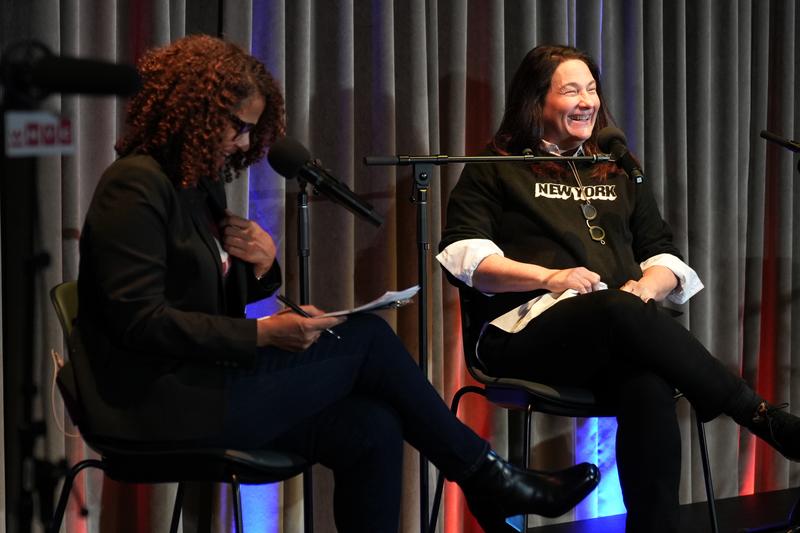
( Jonathan Blanc/ NYPL )
[music]
Speaker 1: Listeners supported WNYC studios.
[music]
Alison Stewart: You're listening to All Of It on WNYC, I'm Alison Stewart. Acclaimed writer AM Homes published her first novel in more than a decade last year. It's titled The Unfolding and the story begins on the night of the 2008 election. Our protagonist is the Big Guy, a wealthy man with some influence within the Republican party. He's excited to be in Arizona for the McCain election night party and he's especially thrilled to be there with his teenage daughter, Meghan, who has just voted for the very first time. Less than happy to be in Arizona is the Big Guy's wife, Charlotte, who has been struggling with alcoholism an eating disorder, and depression.
The Big Guy can sense that his wife is struggling, but when Obama comes out on top, the Big Guy becomes focused on political power. He decides to assemble a motley group who he calls The Forever Men and they begin to strategize about how to take back the reins. Meanwhile, in boarding school, the Big Guy's daughter, Meghan, realizes she isn't quite sure why she voted for John McCain in the first place, and that maybe her parents are more human than she ever realized. Equal parts satire and family drama, The Unfolding explores what can happen when privileged people feel their power slipping away.
The novel was our October 2022 Get Lit with All Of It book club selection, and thanks to our partners at the New York Public Library, 2,358 of you were able to check out an e-copy and read along with us, and now you'll hear some of the highlights from that event. I began the conversation with AM Homes by asking her why she decided to title the book The Unfolding.
AM Homes: Because life is but an origami. Because I think there's so many things that the book is looking at, whether it's large scale, sociopolitical aspects of our culture and history, and also things that are becoming known within a family and awakenings also within the family. Titles are difficult, but we do what we can.
Alison Stewart: When did the title come into the process for you? Was it the title first?
AM Homes: About two days before the last minute or maybe just after the last minute, I think, in this particular case.
Alison Stewart: For real? Really?
AM Homes: Yes. There were other titles in the works. It can be difficult. I will say this one was a little bit difficult in that way. I shouldn't admit that so broadly, but it was.
Alison Stewart: When did you actually start writing this book?
AM Homes: As a small child, I think growing up in Washington DC I was taking notes. I think that this book, the actual writing of it started well before Donald Trump was even a candidate. I was looking at ideas actually in a short story called A Prize for Every Player that was in my last book, which is this collection called Days of Awe. In that story, a man goes with his family shopping in a big box store, and by the time they check out, he's been nominated to run for president by the other shoppers. I had the feeling,-
Alison Stewart: I know.
AM Homes: -it seems plausible; they print the banners in the home office section and so on. Actually, I think we're going to try and make an opera out of that. That's a whole other thing coming down the road.
Alison Stewart: Follow up on opera?
AM Homes: Yes, thanks for saying no to opera. My sense was quite a long time ago that the American political system, not any one side, had lost track of the American people, and it became its own world that was only about politicians serving themselves. That made me very uncomfortable. Then there was the influx of what we now call dark money that has just grown exponentially. I thought there was something happening. When the lack of politicians' desire to represent people and the rise of dark money dovetail, it gets complicated.
Alison Stewart: It was so interesting in one of our comments, someone, when we announced the book, said, "I don't know if I can read about Trump in 2016." Immediately I got on their Instagram, "No, really, it's about 2008. It's a whole different place." What has it been like to try to talk to people about this book given that 2016 is so top of mind for everyone?
AM Homes: Even I'm still not over January 6th by any means. I think it's interesting because I think that the seeds of how we as a country got from 2008, but even really the end of World War II to where we are now, that's the real mental time span for me are sewn all throughout. I look at that election, the night of Obama's election here in New York City, A, I got a bigger TV because that was a big thing for me. I had my college 13-inch. I was like, "Got to go big." I got like this big. They don't even make that anymore, and had friends over and when Obama won, we were like, "Yay."
We all went out in the street and there was celebration and the sense that there was hope and a new possibility and a new beginning for many people in this country. Then I also think in some ways, that uncorked a barely latent, incredible racism and sexism and really fear of other people losing power or what they thought was theirs exclusively. Some people are not good sharers.
Alison Stewart: On election night, where does the Big Guy see himself in the world, his place in the world?
AM Homes: Early on election night, [chuckles] before the results are in, I think he's somewhat concerned and he is in Phoenix, Arizona, which is where the McCain campaign is based and where they have set up for their victory party. I think he sees himself as a guy who gets stuff done, who can pull strings and obviously, he's there and he's a player in a certain way. Then by the end of the evening, he really thinks he and his cohort have really not been paying attention. I think that to some degree, they may have assumed that they had powers that they didn't have.
Alison Stewart: We get engagement on our Instagrams where we post questions throughout the month before the event and someone commented, "I had a hard time with the book at first because I had a hard time caring about a Republican, the Big Guy, but then I got into it because his daughter was so wonderful."
AM Homes: There's so many things to say about that because on the one hand, and this comes up a lot, people are always, even my friends, my very first readers, I give them the book and they're like, "Am I supposed to like these people?" I'm like, "That's irrelevant." In the sense that I'm writing always about very different experiences than my own. Part of why I'm doing that is because I want to understand them and I need to inhabit another world and think, "How does this come to be? Who are these people? How did they get there? What are they thinking? What do they need and want?" and so on.
The Big Guy, he's not easy by any means and he is, I think, offensive to many people for good reason. His daughter, Meghan, votes for the first time in 2008, and their love of history is a thing that bonds the two of them, but also for me, it was an important thing to talk about what it mean to grow up and to begin to differentiate yourself from your family and to think, "Oh, do I buy into the narrative," which is a story that families and societies, we all tell ourselves about things, "Or do I begin to define myself not in full acceptance of that?"
That is the beginning of a brand new journey and awakening for Meghan. It's ongoing.
Alison Stewart: We asked people what name they would give the Big Guy if they could give him a name.
AM Homes: That's a good one.
Alison Stewart: Someone said, Gus, Rex, Donald. How did you land on the Big Guy?
AM Homes: I think it's interesting. The Big Guy somewhere in the book, I think his name does appear once and I've even forgotten what it is. He is the Big Guy. He is the guy who takes up too much space, who thinks really well of himself but doesn't realize the way in which he intrudes on the space and time of others. I think he is someone that we all live with in many different iterations. It was important to me that he not be defined by a name.
Alison Stewart: I pictured him being a man spreader on the subway.
AM Homes: Oh, totally. Yes, absolutely.
Alison Stewart: That guy.
AM Homes: The thing too is that there's so many kinds of coming to consciousness in the book. There is a piece of it too where he begins to realize like, "What if I'm a jerk? What if I'm really not the generous person who takes such good care of everybody, but what if I'm really not a good person?" and that he can't live with himself knowing that, so there are levels of awareness.
Alison Stewart: What is it that he feels he needs to protect after election night 2008?
AM Homes: That's a good question. I think for me, that question I'm looking at it now literally every day when I'm looking at what's going on in our political system. I think there are some people who feel right now the need to preserve power at any cost. It's interesting, my editor in England wrote to me and said, "I'm confused because this guy talks about protecting and preserving democracy, and yet it seems like he and his friends are trying to overthrow the government." I go, "Yes, well, there's no confusion then." She's like, "But wait." The idea even of what does democracy mean?
We have to remember too when democracy in America was first founded, women didn't vote, people of color didn't vote. There's still a lot of effort made to keep a lot of people from voting. Part of what he wants to protect and preserve is himself, and his ownership of all.
Alison Stewart: His democracy.
AM Homes: His democracy, exactly.
Alison Stewart: Let's talk about this group of men the Big Guy has recruited. You've got amateur historians, some odd military men, some doctors, they're all unique, I'll use the word.
AM Homes: Yes.
Alison Stewart: How did you decide what characters would populate this group of men?
AM Homes: Sure. The Forever Men, which is a cohort he pulls together, is modeled after the Eisenhower 10, which were 10 men that Eisenhower sent secret letters to near almost the end of his administration that were basically along the lines of in case of nuclear war, you were in charge of agriculture, and you were in charge of communication. They were secret until like 15 years ago.
We didn't know who they were, we didn't know they existed, and I wanted these men to represent different aspects of healthcare, of the judiciary, of the military, but I also really wanted to push them out a little into the Dr. Strangelovey surreal, like a heightened coda color overly saturated world because I was trying not to compete with reality, and then reality just kept galloping up behind me.
Alison Stewart: Weirder and weirder.
AM Homes: I know.
Alison Stewart: Interesting. What was your research like? How did you stumble on the Eisenhower 10? Did you watch a lot of Fox News? Did you read a lot of Washington Times?
AM Homes: I can't do that. [chuckles]
Alison Stewart: Did you read the editorial page of The Journal? I'm curious about what you did.
AM Homes: Every now and then I do try to watch Fox News and I started stuttering. It's so much more upsetting than I could possibly even imagine. I can't even start with that. I read a lot of history. I read a lot of books by political figures. I'll read what is John McCain writing about himself? What are John McCain speech writers writing? When Eisenhower talked about that rise of the military-industrial complex, that also is a huge shift in the economy. It sounds so weird to say this, but when we study fiction or literature, we never talk about economics, but how people live their lives and move through their lives is so much about economics.
If you are rich, if you are poor, if you share a room with somebody else, if you don't have a home, the story changes profoundly. I'm secretly super interested in that and the way that plays out for things. I read a lot and I love history. I did deep, deep research. I once had a fellowship across the street in the library, and it's just the best place to go. I'm in the books.
Alison Stewart: We never really fully know what the Big Guy and The Forever Men have as a plan. You don't have to tell me. Do you know what the plan is?
AM Homes: I think we're seeing the plan. I think we're in the plan.
Alison Stewart: Were you ever tempted to let us know specifically, clearly, what they had in mind?
AM Homes: No. Here's why. Because the whole book takes place over 77 days. I would say do I know more about the plan? Absolutely. Are we seeing literally, and I'm not being facetious by saying, are we seeing the effects of men very much like the Big Guy and his cohort, what they've done between 2008 and now? We're seeing that every day in the kinds of information we're getting, the kinds of narratives that are being spun, but I didn't think it would be appropriate within 77 days for them to have the whole thing fully planned out.
One of the things they talk about is that they wish to be invisible, and the more invisible they are, the more dangerous they are, and I think that's entirely true.
We're at a moment now where you drop a pebble in here and the rings go out, but at a certain point, you can't trace where that pebble started. With all the noise, it's not information, but I keep calling it a narrative that's out there. We don't know where it stops and starts, and that makes it really much more difficult to also navigate.
Alison Stewart: Let's talk about something more fun.
AM Homes: Yes. It's a really funny book too, by the way.
Alison Stewart: It is funny. It's very funny. You get to write about real people, John McCain, George Bush, Condoleezza Rice. What was fun about getting to create voices for people that we already know, we know something about, but you could take some creative license?
AM Homes: Sure. It's totally fun because on the one hand, you get to do research like, "Oh." There's a whole scene where they're talking about John McCain on the night of the election, and they're saying, "Oh, I hear John's a gambler," and apparently, he was a bit of a gambler. They'll say, "I hear he has lucky items." One of them talks about a lucky feather, and John McCain did have a lucky feather. He kept losing his various lucky items on the campaign plane, and then all the aides would freak out like, "John lost his ball." [laughter] It's just like, "Oh my God." All those kinds of things were really interesting.
Then Condoleezza Rice who was at a Thanksgiving dinner that Meghan goes to talking about her family and how she grew up and her dad. He was, I think, a preacher and a football coach. All that's true. Then there's a part that I get all excited like hysterically funny when they visit George Bush right before he's about to leave the White House, and he gives Meghan a whole lot of Air Force One M&Ms. Now, Air Force One M&Ms are a real thing. Originally, when Kennedy was president, you had cigarettes on Air Force One, so everyone got a pack of cool cigarettes. It's like, "Oh, I'm on Air Force One."
Then when there was no more smoking on planes, Ronald Reagan came in, and it was jelly beans. Then after Reagan left, there was like, "No, we don't want to do jelly beans anymore," so they settled on the presidential M&M. You can buy these on eBay. They are in boxes signed by each president, but there's also some that are unsigned, which are transition M&Ms. Lots to know.
[laughter]
Alison Stewart: Let's talk about the family because the family story is really touching and moving and funny as well. It's as much a book about a family in dysfunction. As he's trying to fix the world, his family is having troubles of their own. Does the Big Guy see the situation with his wife Charlotte? Does he see that her alcohol intake is not an amped-up social intake, that it's actually alcoholism?
AM Homes: A problem, yes. I think certainly by early in the book, I would say he probably already knew that, but it becomes untenable pretty quickly. I think, in a way, we're already at that moment at the beginning, but it takes us a little bit to get there. Charlotte for me was, on the one hand, I joke and say if Joan Didion and Nancy Reagan melded, they would be Charlotte, but everyone's like, "That's not possible." [laughter] There's certain things that defy the laws of science. I look at Charlotte and I think of people like Martha Mitchell, John Mitchell, Nixon's attorney general, who there was actually a psychiatric term defined, the Martha Mitchell Effect, which is real.
Pat Nixon, Betty Ford, it's hard to be a political wife. It's hard to be a woman who grows up and part of the thread too is the multigenerational look at women's lives from Charlotte and Meghan who grows up being asked, "What kind of man do you want to marry," not, "Who do you want to be or what do you want to do with your life?" That was also important.
I wanted to weave the large scale what we call the great American novel, which I always joke just means a pretty good, big book, with the more intimate domestic. The truth is historically in our country, the great American novel is written by men, and women write books about home life.
It was important to me to claim both spaces and weave them together and put an end to the idea that one can do one or the other. Then it was so difficult. Someone said to me, "Who is your book for?" I was like, "People,-
Alison Stewart: Humans.
[laughter]
AM Homes: -readers."
Alison Stewart: The Big Guy really loves her, doesn't he?
AM Homes: Yes.
Alison Stewart: Because for all of his faults, it's the place where he is the most human, the most thoughtful, the most caring. Even if he doesn't know how to do it, he wants to do it. Theirs is a true love?
AM Homes: Yes, I think in the way that the Big Guy doesn't realize that he's trapped his family. He thinks he's provided so well for them, but they're caged in some way. Part of his awakening and his growing up in some ways is to realize you need to give people space to find themselves and to go out in the world. There's also a moment, which, again, and talk about the dark humor, where he's having a bonding moment with Meghan and they're at the National Zoo in Washington, DC and she's like, "Dad, is there anything that you would have wished to have done with your life differently or that you would have wanted to become?"
He's like, "Yes, there is something. There's something I wish I'd invented. The atomic bomb." I just think, "Who thinks that?" To me, that's both hysterically funny and so disturbing because of the grandiosity and the arrogance of it. She's like, "Oh."
Alison Stewart: I've said this to you before that one of my favorite exchanges is Meghan and the cab driver and when the cab driver challenges Meghan on who she voted for. Meghan assumes he's a Barack Obama supporter, and he's voted for McCain. He just wanted to know why.
AM Homes: Yes, he wanted to know.
Alison Stewart: He was challenging the depth of her commitment to her vote, which I thought was a really interesting way of introducing that she doesn't really know why she did it or just because Mom and Dad did it, I guess.
AM Homes: Right, and because he believes in the things we all believe in, it's like, well, doesn't Obama believe in those same things? Which is also interesting too of what people feel they are voting for when they're voting for somebody and even their understanding of what that might mean.
Alison Stewart: That was the first part of my conversation with AM Homes about her new novel, The Unfolding. We'll hear more of my conversation with AM and some audience questions after a quick break. This is All Of It.
[music]
You're listening to All Of It on WNYC. I'm Alison Stewart. We continue my conversation with acclaimed author, AM Homes, about her latest novel The Unfolding. It was our October Get Lit with All of It book club selection. In just a minute, you'll hear some questions from our audience who joined us for a sold-out event at the New York Public Library's SNFL rooftop. First, here's more of my conversation with AM Homes.
[music]
The person I'd most like to have coffee with is Tony.
AM Homes: Tony is very cool.
Alison Stewart: Tony is a cool guy.
AM Homes: Tony is the Big Guy's best friend from, I think either high school or college, early on. He is a closeted gay Republican in Washington, DC, and was modeled in some ways on, I think, men I saw and didn't understand when I was growing up. Washington has a history of having a lot of gay people and gay men in service to politicians. Jack Kennedy's best friend was a gay guy. Roosevelt had gay men in proximity. Part of it was at that point in history in time, gay men didn't have families. They didn't get married, they didn't have lives, so they could work really hard for people. Then we also have had the lavender scare.
Certainly, as a kid growing up in DC, when the AIDS epidemic hit, I saw a lot of men who had lost contact with their families and people who died. Tony is very impacted by that and his view becomes less about Republican or Democratic philosophy and a much longer game. He's somebody who travels with the office of president. He's the fixer in Washington.
Alison Stewart: He seemed wise to me.
AM Homes: Yes, I love Tony.
Alison Stewart: Let's get to some audience questions.
Audience 1: Hi. First, I liked the book a lot. My question is about Meghan. As we just said, she discussed her life, her issues with the taxi driver, she talks to Tony, and she talks to the scribe. Where are girlfriends in her life?
AM Homes: That's a really good question. I don't know. I didn't think of that. God, I wish we'd had this conversation a couple of months ago. That is a really good question. I would say to me, Meghan, at the beginning of the book, she's definitely a very sheltered kid, is also that kid I feel like I've met too many times, who you meet them at 17 or 18 and they seem very vague. Kind of like, "What are you interested in?" and like, "I don't know." They're like, "Are you applying to colleges?" "Yes." You're like, "You're never going to get in." [laughter] That young person who doesn't seem awake on any level yet, and I think for me, this was about Meghan waking up.
I remember early on also thinking, I hope she does wake up because it's not very interesting until somebody does. I think that's a super good question of where are girlfriends and female confidants. I don't know. I'll have to ask her. Certainly, if I write more about Meghan, if there's a little sequel, I'll be chatting with her about that. Very good question.
Alison Stewart: I feel like there's a common theme in your work around the perpendicular nature between the origin of where people come from and where they end up. I wonder if you ever considered making Meghan a boy?
AM Homes: Oh, interesting. No, but I think that's interesting. I wonder why I would make Meghan a boy.
Alison Stewart: The difference between the Big Guy and the offspring isn't gender, but the difference in exploring the different ways of being male.
AM Homes: Sure. I would say that's really interesting and that would be a different book in so many ways because one of the threads too is that all of The Forever Men lament that they don't have a male successor. Then I think by the end of the book, the Big Guy actually, again, in his awakening, realizes, "Hey, I have this incredibly great daughter. Hey, a daughter could actually do things too." He actually sees that Meghan is smart and is capable, but it's not about his masculinity or whatever. It's more about him realizing women can do things too. To me, that was actually a big step for him.
Were Meghan to be a boy it would be different? I'm not opposed to writing a different version because I think that is also an interesting relationship to look at. In all seriousness, Meghan and Charlotte in the multigenerational, as I said, aspect of how women's lives both have changed and have not changed is really interesting to me. I think equally, men have struggled about what does it mean to be a man. Nothing about the time we live in is easy. What does it mean to be a good man? How do you make space for women? How do you make space for other people? It's complicated.
Alison Stewart: Yes, totally.
AM Homes: Now I got to add a boy and I got to get her some friends. The sequel is already underway. It's coming along. I feel like I got at least 50 pages tonight.
Alison Stewart: The secret son.
AM Homes: Totally. Exactly.
Audience 2: Hi, there. I'm over here.
AM Homes: I'm sorry. [chuckles]
Audience 2: Number one, a compliment, I love the whole sequence. I think it was somewhere in the middle. I was listening to the audiobook, by the way, well done, of Thanksgiving, where the Big Guy was alone and that seemed to go on for a long time. I loved that it really unfolded on multiple levels, but it also drew attention to me that there's a lot of dialogue in the book. That was all of a sudden where he was alone. He wasn't talking to as many people. That's a compliment. My question is about your process maybe, where you're trying to decide do you think about how much dialogue am I putting here as opposed to narrative?
AM Homes: Sure. That's a good question. First off, it's funny because people are like, "You can't put double Thanksgiving in a book. That's not allowed. You're only allowed one of each holiday. You can't double down on it. Nobody eats Thanksgiving twice." Also, that was, in a way, a little bit about his consumption and it's never enough. That was a piece of that. Then in terms of the dialogue again, the truth is I didn't notice it. When the Big Guy and his cohort were together, I wanted them to look and sound somewhat different than when the family is together.
I felt like I wanted just to give these people space to be and talk and I didn't need to say, "Tony looks over his shoulder and sees the wilting orchid and thinks of himself." It's just like, "Oh." I didn't want to add a lot of commentary. The other piece of it is that my mentors in that way both literal and, as I was just describing, of invisible mentors, are Edward Albee, Harold Pinter, the playwright Caryl Churchill. In fact, the scene where Charlotte's at the bottom of the pool with the pennies, that's from Caryl Churchill's play Skriker. Not literally, but kind of. Evoking those kinds of images, and I'm really interested in the way that The Forever Men spin each other up.
Somebody said to me last night, "Do they even know what they're saying when they're talking?" I'm like, "Not necessarily." It's not even clear that you could be planning to overthrow the government, but what are you saying? Do you know what you're talking about? The way they egg each other on I think is also to me a reflection of the speed of the news cycle, the frenetic way that we all grind on all this stuff. I wanted that to have the speed that you would only get with a lot of dialogue and not, I don't know, is it the David Mamet version?
Alison Stewart: I'm thinking about something you said earlier. I had mentioned to you once before that I thought it was interesting that people had a lot of parties throughout the book. Then I realized it's the holiday season between the 4th and inauguration day. That is also a time when people are heightened feelings and heightened feelings about family and heightened feelings just about everything. You'd have a short fuse, you can read into people's body language, "This person said this to me and I'm feeling vulnerable because I'm alone." Just hit me with the [unintelligible 00:28:17] that that's a compact time.
AM Homes: It's so funny because this was supposed to be the best part of the year and it is the most difficult part of the year. I should write a cranky book called The Most Difficult Part of the Year, and then make it into an Adam Sandler movie.
[laughter]
Alison Stewart: Then you'll be rich. Any other questions from the audience?
Audience 3: I think you mentioned that your editor is in the UK, and then you also mentioned some readers who I assume are Americans. What kind of different feedback did you get and how did you incorporate that into your drafts?
AM Homes: My US editor is here. It's weird. I really love the editorial process and I love cutting stuff, which makes me probably weird for a writer. I'm like, "Let's cut more, let's cut more." Lots of conversations with Andrea, my editor, who's here, and editors in England and a few different people. I don't have a lot of people who read my work, but asking for me to drill down on things, asking questions about things, all kinds. It's just a lot of back and forth. A lot of sometimes just going out to lunch and talking about ideas. I find that it's funny because I live in my head.
Exactly, and so I can be thinking about a book, but sometimes it doesn't really get started till I go have lunch, which I never do normally; I don't eat lunch. Then actually start talking and you're like, "Oh, yes, and then this could happen and that could happen, and then these other people could come in." If I had lunch with you, they would be friends. I clearly have to at least get out of the house a little bit more. That was part of it. One thing I will say is it is interesting, my books come out in a lot of different countries and in a lot of different languages. I do think they're very American. On the one hand, I think, "Wow, that's so cool that they come out in these other countries."
I also think sometimes they might be better understood in other countries because here, people are on the fence like, "Are you making fun of us or are you serious?" and I'm like, "Well, I'm not making fun of us, but I have to laugh at us and have to note the absurdity of things." Because number one, it would be too excruciatingly painful if I didn't, but it's definitely with love. I'm deeply invested for better and worse in what it is to be American.
Alison Stewart: That was my conversation with Author AM Homes from our Get Lit With All Of It October book club event. We spent the month reading her novel, The Unfolding.
[music]
Up next, performances from our musical guest, Laurie Anderson, that you won't hear anywhere else. They were specially improvised composition based on the words of AM Homes and inspired by a song from her late husband, Lou Reed. You won't want to miss it. That is coming up next. Stay with us.
[music]
Copyright © 2023 New York Public Radio. All rights reserved. Visit our website terms of use at www.wnyc.org for further information.
New York Public Radio transcripts are created on a rush deadline, often by contractors. This text may not be in its final form and may be updated or revised in the future. Accuracy and availability may vary. The authoritative record of New York Public Radio’s programming is the audio record.