A Documentary Shows Muscogee Reporters Fighting for a Free Press
( Courtesy of Oklafilm )
[music]
Alison Stewart: This is All Of It on WNYC. I'm Alison Stewart. A fascinating new documentary shows one indigenous community's fight for independent journalism. It is called Bad Press. The film follows the inner workings of the Muscogee Nation, the fourth largest US Native American tribe after its government abruptly repealed a landmark act guaranteeing freedom of the press. It happened in 2018, just three years after that act was established.
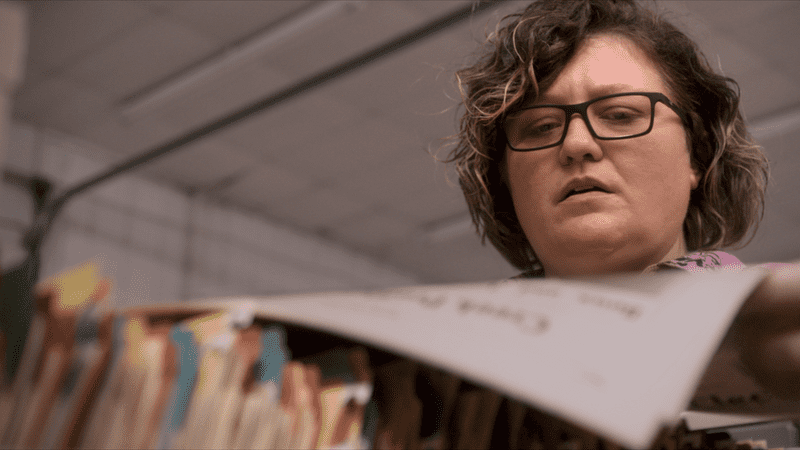
The law was a rarity among indigenous nations. At the time, out of 574 federally recognized tribes, only 5 had passed laws protecting freedom of the press. Muscogee journalists like Angel Ellis, Gerard Moore, and Gary Fife are shown working to raise the alarm about what this proposed legislation means. Think about it. Who will cover upcoming elections fairly or report on financial scandals involving local leaders, and sexual harassment accusations made against political figures, some of whom intend to rein in journalists?
As the battle goes on, citizens lose trust in both local media and the government. A variety states, "Bad Press has no lack of drama, much of it arriving late and shameless displays of convenience." Early this year, the film received the Special Jury Award for Freedom of Expression at the 2023 Sundance Film Festival. While the film is about a very specific time and place, it does bring up the bigger picture issues of what can happen to local media if it is not protected.
Bad Press premieres today at the DCTV Firehouse at 87 Lafayette Street, very cool place to see a movie by the way, and it is screening across the nation. Joining us now, co-directors Rebecca Landsberry-Baker, she's an enrolled citizen of the Muscogee Nation. Hi, Rebecca.
Rebecca Landsberry-Baker: Good morning, Alison, or afternoon. It's so great to be here.
Alison Stewart: Also, I want to mention your executive director of the Native American Journalists Association and joining us as well, co-director and editor, Joe Peeler. Hi, Joe.
Joe Peeler: Hey. Thanks for having us.
Alison Stewart: Becca, we understand the need for a free press generally, but very specifically, what is significant about having a free press in a community like the Muscogee Nation?
Rebecca Landsberry-Baker: For Indigenous communities, free press is so important. You mentioned the numbers, which are staggering. Only 5 tribes out of the 574 federally recognized tribes that we have here in the US have this really special protection at the legislative level. What those free press bills do is protect those tribal media outlets who are covering their governments. Like you mentioned, especially when it comes to the election seasons that we have, every vote is important.
Just like in any election season, I think especially an Indian country, five votes can make all the difference. 10 votes can make all the difference. Having an informed and engaged electorate at this tribal level is super, super important because it also reinforces our tribal sovereignty because it provides that mechanism of accountability between the elected officials and the citizens who are supposed to be represented within that. When you squash the media outlet that provides their voice, you're really doing a disservice and dismantling your tribal democracy, I would say.
It's super important to the health of our tribal democracies to have independent media within tribes and I think a very important story to tell in Bad Press.
Alison Stewart: Joe, let me give a little bit of a timeline and I'm going to get you to jump in. In 2015, a law guaranteed Muscogee Nation citizens a free press. It was repealed in 2018 during this emergency session called by National Council member Lucian Tiger, III. What precipitated this emergency meeting or is there any discussion or conversation prior to this meeting?
Joe Peeler: The journalists were notified of the meeting coming up about 12 hours beforehand, so they got the notification at, I think, everyone remembered the minutes that it came in their email. I think it came in at 8:06 in the morning, and free press was repealed by 8:00 that night. They were totally blindsided. The entirety of the Muscogee media newsroom was completely in shock. Immediately afterward, Sterling Cosper, the managing director resigned in protest, and it just began this domino effect that completely decimated Muscogee media.
Alison Stewart: Just so we're clear, what position did this decision to repeal the Free Press Act put on the local journalists? What was the immediate effect on them?
Joe Peeler: Basically, the repeal made Muscogee media-- It put Muscogee media directly under the principal chief's office, and specifically the secretary of the nation in commerce at the time. A person who we spoke to while we were filming said it's like if The New York Times got taken over by the Secretary of State.
Alison Stewart: Rebecca, as you start to work on this film, who did you know you needed to hear from when you sat down to think about, "This is going to be who we're going to talk to? This is whose story we're going to follow."
Rebecca Landsberry-Baker: I actually worked as an editor at what was then the Muscogee Nation news earlier in my career. It was the first stop on my journalism career after J school. I worked with the journalists in our story, Angel Ellis, Gary Fife, Sterling Cosper, Jason Saltzman. These were all colleagues of mine, and I also had experienced the same issues that we see in Bad Press. The same issues of transparency, of elections coverage, and I actually hired Angel Ellis who is our main protagonist as my editorial assistant while I was there.
I knew about the joys and the challenges of covering our tribal communities, including some of those issues being censored. I knew about the humor that was also there, and I think that's a really important element to our, not just our story, but to our communities and wanting to represent that. When Free Press was repealed, I thought, I can't just let this be squashed by the tribal government and that'd be the end of it.
I have seen so many times in my career now as executive director of the Indigenous Journalists Association, we just recently had a name change from the Native American Journalists Association earlier this summer, but I had seen it happen and I thought, what can I do to document this? I had no idea how long it was going to take or if the story was going to have a happy ending, and many times, I thought it would not have a happy ending.
I just wanted to make sure that the Muscogee journalist and the Indigenous journalist side of the story was documented and represented, and that we also showed the diversity, not only within the Muscogee Creek Nation, but within Indian country and sharing that humor in the newsroom as our journalists are facing these very stressful situations. It's a survival mechanism. We use humor to survive.
I think to be able to show those struggles on screen and to have folks who may not know much about Indian country connect with who we are as people and just know that we're just modern people, we're not a monolith, and we have the same struggles that many journalists in local news are also dealing with and grappling with was very important to me telling the story.
Alison Stewart: Joe, Rebecca mentioned Angel Ellis who is one of the journalists in the film, and she's a pistol. She is on fire and has a great sense of humor. That's one of the things that you really feel, and she's also super passionate. It'd be tough to have her on the show because she knows her way around a couple of curse words, shall we say? Joe or Becca, dive in and just give a sense of people of who Angel is and what fuels her passion for journalism.
Joe Peeler: Well, I would say as an outsider, the thing that made me-- Initially, you hear about the repeal of Free Press and just what's happening in an Indian country, and I was shocked as I thought of myself as a news-reading, informed citizen and I had no idea that this was going on. My initial thought was, okay, if I don't know about this, I think a lot of other people might not know about this, so that makes it an interesting idea for a movie, but it was really the moment that I met Angel.
Obviously, Becca already knew her, but the moment you meet Angel, there's no difference between Angel on screen and Angel in real life. She has this preternatural ability to crunch down incredibly huge chunks of information into a bite-sized hilarious joke. She's constantly dropping F-bombs and she's chain-smoking. She's just hilarious to be around, but extremely, extremely, extremely passionate about getting information to her fellow citizens.
I think she views it as almost information being on the hierarchy of needs. She just believes that in her core, that in order for her fellow citizens to thrive and in order for their democracy to function in the Muscogee Nation and beyond, information needs to get out to the citizens in a clear and unimpeded way. When I heard about the project, that was I think on a weekend, it was Saturday or Sunday when Becca and her husband Garrett who's also one of our producers came to me and said, "Do you think this is a movie?" On Wednesday, I met Angel, and on Friday, we started filming. We were out in Oklahoma filming. It's like you just meet her and you know if there's anybody who's going to take up this fight, it's going to be Angel, and we just need to ride her coattails the entire way.
Alison Stewart: We're discussing the film, Bad Press. It opens today at the DCTV Firehouse Cinema. It'll be running through the week. I'm speaking with its directors, Rebecca Landsberry-Baker and Joe Peeler. I want to play a clip from the film, which is a really interesting moment where Angel's talking about-- She gives a little background, to give some context, on why and how the American Indigenous people have been portrayed in the press in the past and how it is a sensitive topic. We can talk about it a little bit on the other side. This is from the film, Bad Press.
?Angel Ellis: Throughout history, the Muscogee people were told that the Indian is too dumb and too insignificant to take care of themselves. It's a fear for us that that stigma will be placed back on us, and that's why we want to show the world how good we're doing because this world is designed to tear us down. When you think about our modern government, it is so new. 1979 is when we adopted our constitution that we're operating under today.
Reporter: The Creek Nation under the leadership of Claude Cox. The progress here has been extraordinary.
Angel Ellis: If I look back at that newspaper from 30 years ago, I would think, "There's not been a problem at the tribe, ever."
Alison Stewart: Becca, it's such a nuanced part of the film. When did Muscogee media start doing more investigative pieces and covering issues affecting the nation, and with a more critical eye?
Rebecca Landsberry-Baker: I think this happened part of the time when I was there, actually. Here's a little bit of a spoiler that Angel, while I was there as editor, actually gets fired for some of the coverage that she has been doing. We put a picture of a tribal official in handcuffs on the front page of the paper and that had never been done before. That was from a tip from the inside of the tribal government, a relationship that Angel had. I think that speaks to her savvy as a journalist to be able to get a hold of that information and report it because the citizens need to know about that, of course.
I think when tribal media for many tribes was established originally, it was in service to building the tribes up and letting the citizens know about not only the programs and services that could benefit them and were important to them, but also to, again, show outsiders, "This is us. This is how we're serving our people. This is how we're exercising our sovereignty."
It really did serve an important function back when the paper was established in the '70s as we mentioned in the clip, but now, I think there is this new era in tribal media of, well, our jobs are more important than that. Yes, we have done that, but also, we now have this responsibility and we've always had this responsibility, but we're just seeing, how do we exercise that within our tribal governments and within our sovereignty?
How do we provide this access to news and information to citizens fully, not just the cultural information, the news, which is also important and has a place in our tribal media outlets because no mainstream outlets are covering that aspect of who we are as the Muscogee Creek people, but also on our tribal government officials because we are electing them and they're supposed to be representing us. I think that there, in tribal media, should be a good balance of those different issues within that.
Again, it's really going back to Angel and how she really believes that news and information, and I think this is true in Indian country is part of that. What did you say Joe earlier, the needs pyramid?
Joe Peeler: Oh, the hierarchy of needs. Yes.
Rebecca Landsberry-Baker: Hierarchy of needs. Thank you. Yes, I think that's a perfect breakdown of where Angel's at, but I really do think about in Indian country, kind of like in PR, that news and information should be a citizen right. It's a human rights issue, I think, when it comes to access to news and information. I think we're starting to see that shift in Indigenous communities and thinking about it as a program and service, just like we're providing health care services, housing, education needs.
We're meeting all of those needs, but where's news and information in that landscape? I think we're starting to see that elevated. Again, I think our story shows one tribe and now, there's this trail that can hopefully be followed by other tribes to follow in looking at it from a different perspective as a program and a service that is essential to tribal citizens.
Alison Stewart: Joe, Bad Press spotlights the journalists on the frontlines of this issue fighting for free press, also fighting for their jobs and their livelihood. I wanted to ask you about the politicians who make and vote on the laws. As you were thinking about this, how did you make an effort to show the council members' perspective on this issue?
Joe Peeler: Well, it was really a process of gaining trust. I think there's a lot of skepticism for outside media. Even with Angel or with Becca being a member of the tribe, we still came up against that, but initial reticence, I would say, being on camera, and that was the journalists and the politicians, but really, it was just an effort to get everyone that we possibly can on camera and get their point of view, and then try to put that point of view in the film in any way possible. The election that we were following was very crowded.
There were 10 candidates, and we would literally stick camera teams on-- We have movies worth of footage for multiple candidates because we would just film them as much as we possibly could to get their points of view on free press certainly, different topics that came up in the election as well. Then in the case of some politicians who didn't want to speak with us, we used archival of their public comments around free press. We made every effort to show both sides of the issue, even though for the majority of the film, we're embedded with the journalists.
Alison Stewart: After the council appealed the Free Press Act, Rita Courtwright was promoted to managing editor with only three weeks of real news experience. Let's take a listen to how the process of publishing changed the Muscogee news. This is from the film, Bad Press.
Angel Ellis: I have secretary of the nation in commerce telling me, "This is how it needs to go. I need to see the paper fully printed out before it goes to print. This is what I'm suggesting, but this is also what's going to be done." It's also that way so it would look like he was the one making decisions and not the chief.
Alison Stewart: Rebecca, I wanted to ask you, without giving too much away, in your journalistic opinion, were there any of the politicians who were truly for free press?
Rebecca Landsberry-Baker: Yes, I absolutely think that is true. I think there were at least one, I will say, that really was interested, and I think even to the point of they maybe could have stepped in and helped the Muscogee media outlet, but wanted to stay hands off and say, "Independence is really important here so I'm not going to get involved." I do think that there were politicians who genuinely care and know that free press is an important issue to the Muscogee Creek Nation and to Indian country at large. I do believe that there are folks who care about that.
Alison Stewart: Joe, this is in the film a bit. How did fight impact how citizens view the media?
Joe Peeler: It was a pretty interesting shift, I think. We tracked the citizen opinion of Muscogee media. There's a thing that happens in the film where there's a bit of a smokescreen law passed by the National Council to make it look like they have free press when they, in fact, do not. That, I think, confused a lot of the citizenry, just enough that they were unsure where Muscogee media stood.
They are justifiably angry that Muscogee media is not able, or in their views, just not willing to cover the stories that they want to see covered. It's this interesting trail, almost like a subplot in the movie where you see how disinformation and misinformation weave its way into public discourse when you don't have a trusted news source.
Alison Stewart: To find out what happens, go see Bad Press. DCTV Firehouse, December 1st through 7th. I've been speaking with its co-directors, Joe Peeler and Rebecca Landsberry-Baker. Thank you so much for sharing your film with us.
Rebecca Landsberry-Baker: [unintelligible 00:20:30]. Thank you so much, Alison.
Joe Peeler: Thank you.
Copyright © 2023 New York Public Radio. All rights reserved. Visit our website terms of use at www.wnyc.org for further information.
New York Public Radio transcripts are created on a rush deadline, often by contractors. This text may not be in its final form and may be updated or revised in the future. Accuracy and availability may vary. The authoritative record of New York Public Radio’s programming is the audio record.