
Billie Marten Performs Live
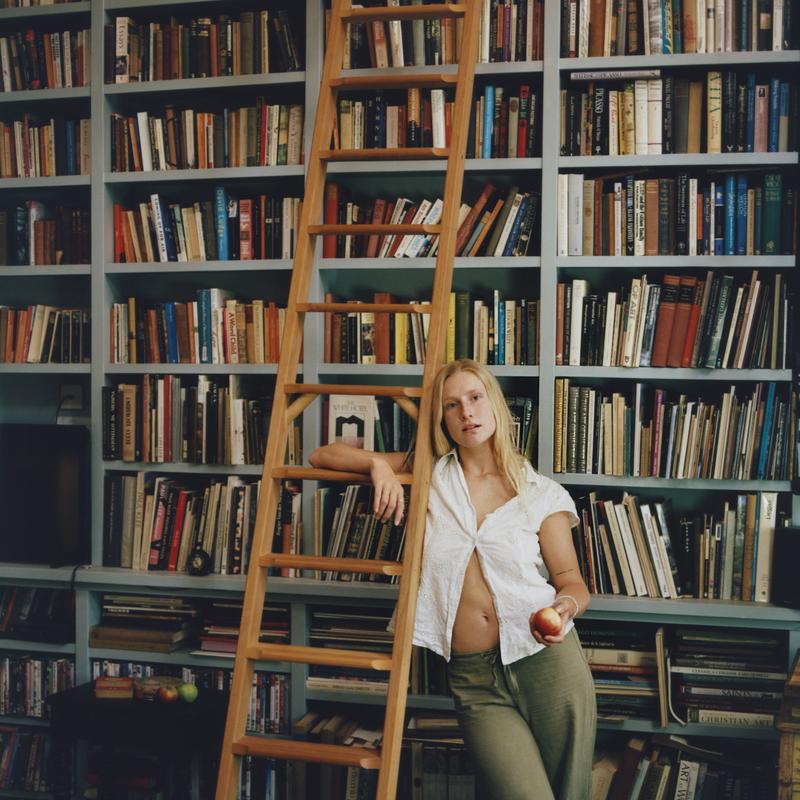
( Katie Silvester )
[music]
Alison Stewart: This is All Of It from WNYC. I'm Alison Stewart. Thank you for spending part of your day with us. Whether you're listening on the radio, live streaming, or on demand, I'm really grateful you're joining us today. On the show, we have Aisha Harris will be here. You may know her as the host of the NPR podcast Pop Culture Happy Hour. She joins us to discuss her new book, Wannabe: Reckonings with the Pop Culture that Shapes Me. We'll continue our full bio conversation about the life of Martin Luther King, Jr. With author Jonathan Eig.
We'll talk about some summer book recommendations with our Get Lit with All Of It producer Jordan Lauf. Plus, we have an exciting summer reading announcement ahead. That is our plan so let's get this started with some music from Billie Marten.
[music]
I know the secrets I do believe in
All that I hear about you
Things I cannot begin to unlock
The key is right under the blue
But I made a mess, a life to assess
An arm to be held at the wrist
So give me a reason
Oh, not to keep him
Right at the top of my list
But I can't get my head around you and I can't get enough
And I've been looking so hard for love
Alison Stewart: You're listening to I Can't Get My Head Around You from the new album Drop Cherries by Billie Marten. Marten released her debut EP in 2014, right around her 15th birthday and her first full-length album came out a couple of years later, leading the BBC to describe her as a "adolescent prodigy". Now, at the age of 24, the British singer-songwriter is already on tour with her fourth album and is currently taking it on the road. Marten is in town to play Bowery Ballroom tonight after a show at Rough Trade yesterday and she's in our studio three with her guitar right now and she has kindly agreed to play a few songs for us. Hi, Billie.
Billie Marten: Hello. Hi, Alison.
Alison Stewart: Hi. What are you going to kick us off with?
Billie Marten: I was going to play the song that you just played, so I'm not going to do that anymore.
Alison Stewart: You can if you'd like.
Billie Marten: I'm going to do a song called Willows.
Alison Stewart: Willows. Here's Billie Marten.
[music]
All that I am, all that you are
Wishing we were under the same star
But I am here and you are not
You're elsewhere
Folded in sheets, hearing me speak
Waiting for time to welcome its sleep
And I look out the window
Praying tomorrow will wake up
Building a wall, tearing it down
Sending a message that I am yours now
Two weeping willows throwing an arm to the other
Hidden in your shoulder curve
Waiting for your chest to burst
No one said that it would hurt
Knowing you
Oh, to know you
I hear the sound, you hear the voices
If we're not to dance, then why all this music?
It runs in my blood and I know it swims to yours
Hidden in your shoulder curve
Waiting for your chest to burst
No one said that it would hurt
Knowing you
Knowing you
Hidden in your shoulder curve
Waiting for your chest to burst
No one said that it would hurt
Knowing you
Oh to know you
Building a wall, tearing it down
Sending a message that I am yours now
Two weeping willows throwing an arm to the other
Alison Stewart: That's Billie Marten performing Willow. The new album is called Drop Cherries. That is such a beautiful guitar. What kind of guitar is that?
Billie Marten: Oh, thanks. It's actually not mine because my guitar is stuck in Spain and won't get through customs.
Alison Stewart: Oh no.
Billie Marten: I did a European tour a couple of months ago and, I still don't have it back.
Alison Stewart: Oh my gosh.
Billie Marten: This is a very kind lend from Gibson. It's a classic J-45, and I picked it up in LA at the start of this tour.
Alison Stewart: Oh, my gosh. What did you think when you looked up at your luggage and said, "Wait, where's my guitar?"
Billie Marten: Well, it got left on their tour bus. I was on a support tour, and there's some sort of Brexit rule now about not being able to send a guitar without it being really expensive or a gift for someone. Now it's looking like I need to send someone to Barcelona to go and get it.
Alison Stewart: I'm sure you can have a few volunteers. I see at least three volunteers in our studio to retrieve your guitar. Well, good luck, I hope the guitar comes back.
Billie Marten: Thank you.
Alison Stewart: But in the meantime, that one is beautiful and sounds beautiful. Billy, when did you know in your life you were going to be a professional musician?
Billie Marten: Oh, I'm not sure that I know that now. Well, music was always just a very happy accident. It was a deeply familial thing. I learned guitar from my dad and we were all singing around each other in the house, so I didn't really know that being a musician was a job per se. The artists that I grew up listening to, we're talking like, I'm five, six years old at this point.
I didn't realize that they were being paid to do that or that it was considered a profession. Then I stumbled upon YouTube and the powers of the internet again, just doing my own thing, and then suddenly the world wanted to grab a slice but things started super early. I was 12 when this specific video came out and that's, you know, we're nearing my 12th year in the biz.
Alison Stewart: That's such a funny thing to hear from a 24-year-old.
Billie Marten: I know.
Alison Stewart: My decade-plus in the business.
Billie Marten: I feel like an old timer.
Alison Stewart: When you look back and you listen back to that early material when you were very young, what do you hear?
Billie Marten: I hear possibly my more precocious self-thinking she was very much an adult. When my first album came out, I was 17 and I fully thought that I was a fully formed human being. I also hear a lot of the sentiments that I still agree with now. I do remember having something to say at that point, and it being your core belief system, or you always have your own semantic field that you play around in throughout your life.
I feel like it was pretty accurate in the beginning, but I don't know. I'm proud of the catalog, and I certainly don't listen to it in my spare time. It's there and it's very interesting how your voice changes, obviously you're really getting the month-long tour voice rasp right now but I feel happy. I feel happy that things started when they did. I certainly know not to regret anything one day. I may re-record things when I'm in my 60s, who knows?
Alison Stewart: When you were writing before everything blew up versus when you write now? What is similar about the way you've written over the past decade? Then what's really changed?
Billie Marten: I still believe there's a kind of-- I hate to use this because it's often tied to every single woman in music but confessional songwriting is my style and I'm proud of it. I'd say there's a deep level of introspection that I can't seem to get out in any other walks of life. When I sit down to write a song or rather, the song just comes out, because I'm not very good at planning, writing, it just happens.
When I'm sitting down, it's often, this is where I'm at and these are the very fluid thoughts that are going to come out. It's always just a lifelong journal. You're documenting your life as it comes and goes.
Alison Stewart: It's both. A journey and a journal.
Billie Marten: Yes.
Alison: It's Billie Marten. The name of the album is Drop Cherries. She'll be at the Bowery Ballroom tonight. The last hour of Flora Fauna which I did go back and listen to again.
Billie Marten: Nice.
Alison Stewart: It's interesting, it's a little thicker sounding.
Billie Marten: Yes, definitely.
Alison Stewart: A little more muscular sounding.
Billie Marten: It's chunky.
Alison Stewart: Chunky. That's a good word. When you were thinking about this album, which is a little more, this is my opinion, a little more ethereal. There's a lightness to it. It's not in opposition to the last record. It's just different. When you start to make an album, are you thinking, oh yes, I'd like to stretch and try something different or is that just the music that came to you?
Billie Marten: This one, Drop Cherries was almost without me being present there. In terms of songs coming out in the songwriting process, it just flowed very easily because I had a muse to write about and sing about which is a great tip for songwriting. Find a muse. The last one, I certainly wanted to push boundaries. I started writing on bass instead of acoustic guitar just so I could get some different rhythms in there because I can't play bass at all.
Picking up an instrument that you have no idea about is actually really helpful. I knew working with my producer Rich Cooper we'd done things before. We did part of the first EP together. I met him really early on so we wanted to change our musical direction and I think that involved having a chunkier sound and layering up things. I wanted to make a change in the live show so that involved less singer-songwritery aspects, I guess.
This one I've then fully regressed and gone full circle to the music that I've always been making. Some of the songs on the records are demos. They are just the demo forms.
Alison Stewart: The first track is a demo right?
Billie Marten: The first one is a demo. Literally just an experiment for me just learning how to produce. There's a song called Devil Swim as well which was also done in my silly little fake studio. It's a room. It's like a tin box with no windows and somehow that song came up.
Alison Stewart: Would you play another song for us?
Billie Marten: I can do that. Yes.
Alison Stewart: What do you think we should hear?
Billie Marten: We're going with a similar song title because they seem to all be the same now. It's called Arrows. How's the sound can you hear me?
Alison Stewart: You sound great.
[music] Arrows - Billie Marten]
Satellite or moon?
Riddle or fortune?
How long will it take me to leave my cocoon?
To wrestle the room and no longer marooned
Emerge like a winner
Reminds me of you, my sweet summer fruit
Always an island and rarely consumed
With the dust or the filler
Pro or beginner
I'm leaving the dimmer on low
I'm faulty as hell
Hide in my shell
Climb the whole tower without ringing the bell
I'm at war with my shadow
Roads dark and narrow, but I am the arrow
And blessed is he who bears this disease
Craves the desire of a man on his knees
He says, "Listen to me, say what you see
And worry for it when you're gone"
Alison Stewart: That was Billie Marten performing Arrows from the new album Drop Cherries. We'll have more with Billie after a quick break. This is All of It.
[music]
Alison Stewart: You're listening to All of It from WNYC. I'm Alison Stewart. I'm so happy to have as my guest in studio Billie Marten. Her new album is called Drop Cherries. She's playing Bowery Ballroom tonight, if you have some free time. You read in the bio for the album, Billie "you can either skate this album surface or dive right to the core." What does skating the surface sound like and what does dive into the core sound or feel like?
Billie Marten: One of my writing themes is not feeling at home or synergized with the modern world. That includes people not really listening to records, which is a great problem that we have. By skating the record service, I wanted to make a general atmosphere that got the album's point across by having it in the background as you're having a dinner party or you're in the bath or something. Something comforting. However, if you pick apart the songs and really dive into the narrative and have this album be wrapped around you then I would imagine or hope then there are more layers for people to discover.
I just wanted something that sounds nice to everybody no matter how much of a music fan they are.
Alison Stewart: What is the narrative of Drop Cherries?
Billie Marten: To put it very simply, it's about loving someone very much and removing yourself from a point of self-degradation or sadness which I think comes to me very naturally, I don't know why. I'm a songwriter and that's what we do. We love to complain about ourselves. It was such a freeing experience for me to put all my attention into someone and something else. Giving an album to someone is also a really nice thing to do. I would encourage people to do it.
Alison Stewart: Do you feel better after you've written a song?
Billie Marten: Oh, yes, that will keep me going. It's like fuel. It's like you've simultaneously emptied the tank and filled it up at the same time. You need to get it out but also it keeps you going for the next few weeks and then you've got something that didn't exist before.
Alison Stewart: My guest is Billie Marten, the name of the album is Drop Cherries. You recorded this on tape, rather than digitally.
Billie Marten: Of course.
Alison Stewart: What went into that decision?
Billie Marten: I have worked on the second album and did this album with a very genius man named Don Monks, who is a great producer and engineer. He always works on tape. We did most of the second album on a little four-track just on the carpet in a shed. I just believe that music sounds, it's the way that music should be recorded. Obviously, we put it on a computer afterwards and rejig things and put the shiny, finishing touches on there. Mostly I think tape just makes music feel very alive.
Alison Stewart: How so? You mean that it gives it texture or--
Billie Marten: There's texture. There's depth, there's much more of a sense of a live feel like you are in the room with whoever's playing to you. All my favorite records, of course, are on tape. I just believe that it's a really fantastic way to record things, especially when you're doing a live album which this mostly was.
Alison Stewart: Does your performance change at all when it's on tape versus digitally?
Billie Marten: It certainly did. When I first came into contact with a big old tape machine and the red lights go and it starts spinning, and then you go, wow, this is very physical. As time goes on, the red lights become very comforting. I don't know, it's like a very physical experience.
It reminds you that music is not ephemeral. It really does last forever. I enjoy that feeling a lot.
Alison Stewart: Where did you record the record on tape?
Billie Marten: The tape record. It was mostly done in a place called Frome in Somerset, which is a very lovely quintessentially British market town in a converted barn studio of Doms. Then we needed a break one day, so we drove to Wales to a converted chapel that time.
We did a couple of days there to just completely different feel and use a piano for a song called Tongue and just get a change of scene. Somerset and Wales.
Alison Stewart: That's interesting because you mentioned earlier before the break about recording in like a little tin can of a studio. Now a converted chapel, a converted barn. How does your external environment impact your performance or your creativity?
Billie Marten: It's everything. Absolutely everything. I don't want to rely on Windows, but I have to, and I think my studio without the window, I didn't last very long. I got out of there pretty quickly, but your environment is-- Now I'm in a radio studio and it's ever so dry.
It's the complete opposite to playing the show tonight where there's room to sing out too. It affects your performance massively. This is very much an insular type of performing, and I enjoy both. Your character changes, your outlook on life changes. It's everything.
That's why people put such great care into studios I guess.
Alison Stewart: You're currently on tour. What's an adjective you would use to describe this tour?
Billie Marten: I've got to make it a good one.
Alison Stewart: It's thinking, thinking.
Billie Marten: Thinking, thinking on radio. Not good.
Alison Stewart: It's okay.
Billie Marten: An adjective just this isn't an adjective, but it's just been absolutely delightful. Every day is just glorious, beautiful people everywhere. Just a lot of very inspiring conversations and humans that I've met and seen and tears from people and handmade gifts and the gifts have been crazy. Which is really, oh, there's so many random trinkets that I now own a lot of key chains from specific areas.
Paintings, drawings, really long letters. Just people get to make my clothes.
Alison Stewart: That is so interesting that you inspire people to make things for you.
Billie Marten: I love that.
Alison Stewart: That's pretty cool.
Billie Marten: None of it goes unnoticed and it all goes into a special box of things that I've collected. Absolutely delightful. Just a real treat to be able to do this.
Alison Stewart: Will you take us out in another song?
Billie Marten: Oh, yes, I can do that. That's what I'm here for. I forgot
Alison Stewart: I saw you tuning during the break. What are we going to hear?
Billie Marten: This is that song Devil Swim, which is very much about exercising those demons and just getting on with life because it's beautiful.
Alison Stewart: Here's Billie Marten.
[music] Billie Marten: Devil Swim
Does the sun shine on your back in Autumn?
Do the birds call out your name in Spring?
And do you let the chill return?
And are the ladies dancing in the meadow?No man is an island on their own
Are we living in a hard-earned dream?DreamI wish you'd open your mouth
And let the devil swim out
Nothing left to cry aboutWater flowing over your horizon
You are growing warmer every day
Picking up the fruits of every human
And then I throw bad things awayI wish you'd open your mouth
And let the devil swim out
Nothing more to cry about
Alison Stewart: How's Billie Marten? The new album is called Drop Cherries. She's playing Bowery Ballroom tonight. Billie, thank you so much for joining us and for performing today. Those were lovely songs. Thank you.
Billie Marten: Thank you. Nice to meet you.
Copyright © 2023 New York Public Radio. All rights reserved. Visit our website terms of use at www.wnyc.org for further information.
New York Public Radio transcripts are created on a rush deadline, often by contractors. This text may not be in its final form and may be updated or revised in the future. Accuracy and availability may vary. The authoritative record of New York Public Radio’s programming is the audio record.