
Ana Tijoux's 'Vida' (Listening Party)
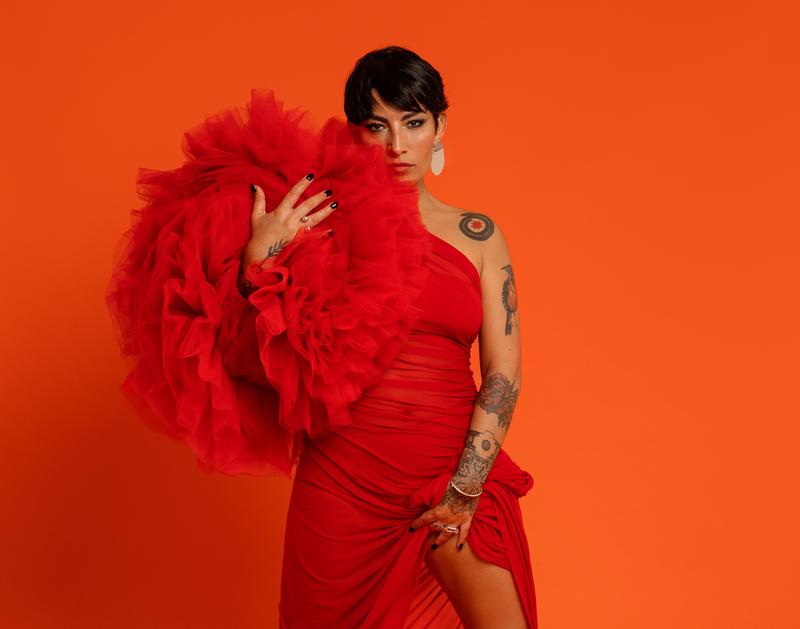
( Photo by Javiera Gajardo )
[MUSIC - Luscious Jackson: Citysong]
Alison Stewart: This is All Of It on WNYC. I'm Alison Stewart. On we go with a little music about life.
[MUSIC - Ana Tijoux: Cora]
Alison Stewart: There's Chilean artist, Ana Tijoux. The track is called Cora from her new album, Vida, which is Spanish for life. The album takes us through celebrations as well as matters of serious consequence. She sings about the natural world but also social injustice and even violence. The work is a mixture of emotions, like the sadness of having no one to dance with, and the joy you can find while dancing by yourself. When Ana Tijoux says life, that's what she means, life, all of it.
Vida is Tijoux's first album since 2014 when she released Vengo, which was nominated for a Latin Grammy and which NPR called virtually flawless. On the new album, she's joined by Talib Kweli and De La Soul's Plug 1. It's an album a Billboard review describes as "a tale of resistance, revolution, and the unwavering spirit of an artist who continues to redefine the contours of Latin hip hop." Ana Tijoux joins me now. Ana, nice to meet you.
Ana Tijoux: Nice to meet you, too. A pleasure.
Alison Stewart: This is your first album since 2014. When did you go back into the studio with new material?
Ana Tijoux: It was almost like one year ago, I guess. To be honest, I didn't even feel the 10 years. It was so fast for me. The time is so bizarre after a time. It's not the same when you got 10 and then you got 20. It's very different. To a certain age, you feel, I guess, the time in a very different way.
Alison Stewart: Also in that time, there was a global pandemic, which does things to the way we think about time and space. I talked to a lot of artists. What was the impact of the pandemic on your creative life?
Ana Tijoux: I think that's impacting all sense in all of us. I think we don't even know how it will continue to impact like this shutdown in the world, in the mental health, in the over emotional, I guess also in people that had the possibility to have a reflection, and how we was living our life, all of us, like what was the sense of life? I guess we all begin to be super spiritual, some of us, although trying to survive. It was a very bizarre and interesting moment, and I'm sure that impact my music. I don't know totally how today, but I can answer that question perhaps in a couple of years. I don't know yet how that impact me, but it's sure that it impact me. I'm sure that changed everything.
Alison Stewart: In that decade between the last album and this one, was there one particular life event that was a creative source for you, a creative spark, something you knew you had to write about, something that happened?
Ana Tijoux: Yes. I guess that's bad news, but that's the law of life. Some people that I really appreciate passed away during those-- a lot of people during the very short time. I guess that when we live that kind of lost, that puts you automatically in a very connection with the sense of life and to begin to be more grateful with every moment, with people, to not be so egocentric, trying to live life with other perspective, I guess.
Alison Stewart: We've got a text. Someone texted us who knew you were going to be on the show today that says, "Just a huge thank you to Ana Tijoux for her amazing music, her feminist first stance, and for her work on bringing positivity to the world. Te quiero."
Ana Tijoux: Thank you so much. Thank you. Thank you so much [unintelligible 00:04:25]
Alison Stewart: Do you think of yourself as a feminist?
Ana Tijoux: Totally, yes. I think that's part of our struggle as a society because it's about equality and humanity. It's a fight for human being.
Alison Stewart: My guest is Ana Tijoux. The name of the album is Vida. We're having a listening party. Let's start with the first track, Millonaria. Let's take a listen.
Ana Tijoux: Millonaria, yes.
[MUSIC - Ana Tijoux: Millonaria]
Soy millonaria, miles de afecto', afortunada
'Toy tapizada, una familia que siempre me abraza
Soy millonaria, tengo mi piño, mi casa, mi gata
'Toy tapizada (Unas amigas que siempre me apañan)
Millo, millo, millo, millonaria
Millo, millo, millo, millonaria
Millo, millo, millo, millonaria
Millo, millo, millo, millo, millo, millo
No tenemo' palacio, ah, ah, ni tenemos tanto
Tenemo' cariño (Sí, sí, sí)
De tantos abrazo' nos faltan los brazos
Sobra la ternura
Tenemo' lingote y amor de fortuna
Billete de besos
Cariños impresos, mimos y afecto'
¿Qué más queremos? No hay más na' (¿Qué más queremos? No hay más na')
Tenemo' este amor que todo calma (Tenemo' este amor que todo calma)
Tenemo' los panas que están de verdad (Tenemo' los panas que están de verdad)
Los que te apoyan, te llenan, te cuidan
Te llenan de música y curan, curan
Valen más que millone' y quilate' (Quilate')
Son lingotes preciados y radiantes (Radiante')
Que brillan por la calle cuando salen (Salen, salen, salen)
Alison Stewart: It's Millonaria from the album, Vida, from Ana Tijoux. That is about family. The song is family, it's about gratitude, it's about your house, things that are more precious than diamonds. Why did you want to start the album with a song about gratitude and being grateful?
Ana Tijoux: Because we live in a society, in a world where everything is so much this topic about what is to be rich and because there is this sense of lie, totally absurd about inequality, what means really the values of love. I think that's the value that we need to continue to push it now more than ever in front of the absurdity of everything that happening. I think to come back to that first emotion, that is the family or the extended family or whatever kind of family we got, I think that's helped a lot to have, how you say that, a house where you can build your life.
Alison Stewart: Let's hear a track called Oyeme. What is it that you want people to hear, to listen to?
Ana Tijoux: In this album or in general?
Alison Stewart: In this album, on this song, Oyeme. Why are we listening?
Ana Tijoux: Oyeme. Oyeme, I began to write it because I saw a terrible news in the TV where they was explaining about those boats that was in Great Britain, where they put immigrants. I was thinking about the slavery, so I make a parallel between the new and the old slavery. That's the idea of the song, about liberty, about freedom and slavery.
Alison Stewart: Let's listen.
[MUSIC - Ana Tijoux: Oyeme]
Mi piel es morena, mis ojos negro'
Negros y azabache, descendiente de mi abuelo
En mi tez madera que corre por mis venas
Y el cuero que te suena viene de mi tierra
Vine de tan lejos con solo lo puesto
Crucé tantas aguas, varios desierto'
Llevo en la boca parte de mi cielo
Por dónde camine, porto de mis duelo'
Mis pies cansado', pero llenos de sueño'
Acá los cortaron acusándome de quitar empleo
No quepo, no entro, mi cuerpo entero
Canta libertad, mientra' tú mata' a mi pueblo
Que limpie lo malo, que se apague el fallo (A-Agua)
Que bote todo el odio, que lo limpie todo (A-Agua)
Que llueva la vida, que lleve la ira
A-Agua, agua, agua, a-a-a-a—
Que limpie lo malo, que se apague el fallo (A-Agua)
Que bote todo el odio, que lo limpie todo (A-Agua)
Que llueva la vida, que lleve la ira
A-Agua, agua, agua, a-a-a-a—
Levantaron alambrados, nos encadenaron
Crearon cárceles en medio del océano
Barcos absurdos, esclavistas humanos
Y acá seguimos enjaulados
En la hipocresía gritan "democracia"
Silencian la justicia, quitan su balanza
Rompen de su espada, nadie dice nada
Es la historia no contada la colonia sigue
Tu silencio cómplice
Alison Stewart: It's Oyeme from Ana Tijoux's album, Vida. There's a line in there that translates to the border divides man according to where he resides. Being white is not the same price as being Black. Up with humanity first. Why do you think some people lose their humanity or can't see the humanity in others?
Ana Tijoux: I think that everybody feels humanity because it's something that we all got in our soul. It's something natural in human beings. I think it's not us. I think that's the way that the society want us to break that humanity, because when we are humanity, we are a community, and that's always very dangerous to build humanity.
Alison Stewart: For people who don't know your story, your parents escaped Chile under Pinochet relocated in France, where you were born. How does your family history factor into you using your artistic voice to address political topics?
Ana Tijoux: I think in all ways because I'm very proud of my parents and of that part of history. That's the history of the world, the dictatorship, and how power affects everything. Those values that I had in my life teach me how to work, how to feel, they bring me tools to build ideas and melodies and to share also and to continue to think in that concept. That for me is very important, that is humanity. For me, humanity is the center of everything and community.
Alison Stewart: With your artistic practice, with your ability to sing and make records, do you see that as an opportunity to talk about political issues or do you consider it a responsibility? Or maybe both?
Ana Tijoux: I guess both. I don't like the word responsibility. That's makes me feel like school, but I think it's something that we all got a responsibility. Journalists got a responsibility, doctors got a responsibility, teacher, musician, we all got a responsibility because we all actors in the society.
Alison Stewart: What is one of the first political issues you remember writing a song about?
Ana Tijoux: That's a very good question. Social classes or inequality, I guess. Inequality, yes.
Alison Stewart: Has there been an issue that you've wanted to write a song about or that you have written a song about but that it was difficult, it was a little bit challenging to find the right way to write about it?
Ana Tijoux: It's not so easy sometimes to talk about something that is so deep, but at the same time, sometimes that's appear from my experience but also through conversation with friends. That's when you realize that is more common, that what we think, that the violence is everywhere. I really think about to break that violence in every place.
Alison Stewart: My guest is Ana Tijoux. The name of the album is Vida.We're having a listening party for it. Let's talk about that title track, let's hear it and we can talk about it on the other side, this is Vida.
[MUSIC - Ana Tijoux: Vida]
Vida, cuéntame lo que llevas dentro (¿Qué?)
Vida, por más que siento, no te entiendo
Vida, el epicentro de mi enredo
Dime por qué algún te irás en otro vuelo
Vida, tú que quitas todo el veneno
Vida, tú que te mueve' entre mis dedo'
Vida, yo te respiro acá dentro
Te exhalo, te inhalo mi corazón que late dentro (Ah, yo)
Vida, tú articula' mi esqueleto (Eh)
Vida, tú que camina' con el viento
Corre por mis vena', me oxigena por completo (Oh)
Vida, por mi musculatura circulando en mis hueso'
Uh, vida, cuánto te deseo
Vida, te veo, te beso
Te mueves por mi cuerpo
Tú siembras las plantas que dan flore' a mi desierto
Eres la belleza en lo complejo
Vida, tú te que te lleva' mis muerto'
Dime en secreto si me cuidan en silencio
Bajo tierra o en el cielo
Sé que dejarás de darme vida en un ciclo perfecto
Vida, no sé cómo dejarte
No sé cómo alejarme, despedirme o soltarte
Me miras, respira', la vida, molécula que todo conspira
Tú te llamas "vida"
[Chorus: Omar]
Hey, why do you say
Everyday is a simple blessing?
We gotta give thanks
For simple things in life we know
Hey, why do you say
Everyday is a simple blessing?
We gotta give thanks
For simple things in life we know
Alison Stewart: That's Vida from Ana Tijoux's album, the same name. Who do we hear there at the end?
Ana Tijoux: He's an amazing singer, his name is Omar. He's an amazing singer from UK. I'm super fan since so many years so it was more than an honor to come with his voice and his energy on this album.
Alison Stewart: When you look at collaborators, what do you look for in a collaborator, someone to bring onto your tracks?
Ana Tijoux: Magic. [laughs] I guess magic because it's a dialogue, it's not a monologue. It's a dialogue with another musician. It's to have the opportunity to amplify a song.
Alison Stewart: Some of the production in this album comes from a longtime collaborator of yours, Andrés Celis?
Ana Tijoux: Andrés Celis, yes.
Alison Stewart: How do you work with Andres?
Ana Tijoux: I was in high school with his brother, so I know him. He's younger than me, and I know him since he was 10 years old. It was amazing to see all these evolutions since we was kid. I was a teenager, he was a kid. Because he's a drummer in bass, a jazz drummer, but he play keyboard bass, guitars and he's someone that is really in love with music. To travel with him through music has been really amazing.
Alison Stewart: My guess is Ana Tijoux, the name of the album is Vida, we're having a listening party, so let's listen to another track. We're going to listen to Bailando sola aquí. What is the song about?
Ana Tijoux: This is a song that I made for people that are, let me say soltera. How do you say that? To fall in love with ourselves, self-esteem, I guess. This is an anthem for self-esteem.
Alison Stewart: Let's listen to Bailando sola aquí.
[MUSIC - Ana Tijoux: Bailando sola aquí]
Me cansé de esta tristeza, llorarte un río
Sentir esta pena pegada hasta en los bolsillo'
Buscar en personas que llenaran el vacío
Buscar amor romántico sin ningún sentido
Decidí ser feliz, bailando sola aquí
A mi manera, a mi forma, con mis normas
En mi rola, en mi volá muy piola
Como loca a mil por hora
Qué ternura yo siento
Qué fueguito acá adentro
Que ilumina todo este incendio
Que recorre toíto mi cuerpo
Qué ricura presiento
Locura de momento que mueve mi centro
Un movimiento, un sentimiento
Que cura los male', que llega y se va
Se va, se va, se va, se va
Ça va, ça va, ça va, ça va, ça va
Alison Stewart: That's Bailando sola aquí. You've probably heard this phrase and I dance like nobody's watching. Just go for it, right?
Ana Tijoux: Yes, just dance. It doesn't matter how, just dance.
Alison Stewart: What is the role of dance in your life?
Ana Tijoux: Happiness, I guess. Is the possibility to make the body language and the body let's talk. That's what I love, I love to see people dancing. Not only dancers, it's when you see old people dancing whatever they feel the music. That's the magic of the body, it's an action and reaction of the skin that's amazing.
Alison Stewart: Let's hear another track from Vida. This is Busco mi nombre.
[MUSIC- Ana Tijoux: Busco mi nombre]
No nos pueden acallar
Lo que portamo' al andar
Los llevamo' en el amar, amar, amar, amar
Faltan ellas, faltan ellos
Faltan todos, faltan tantos
Tantos rostros, tantos otros
Faltan todos
Busco mi nombre, busco mi sombra
Y busco de ella que se aparezca
Busco mi tierra, la lluvia con su primavera
Entre las nube' millone' de estrella'
Que revelan nuestra historia, que faltan las huella'
Mi huella busco en ella, y entre mis yema'
La memoria de tu estela que flota en mis vena'
La memoria, los poema', la verdad como emblema
Yo busco mi nombre
Busco, busco, busco, busco, busco
Busco, busco, busco, busco
Alison Stewart: My guest is Ana Tijoux. If you're thinking, where can I hear these songs live, you can hear them in New York Live. Ana Tijoux is going to be at Le Poisson Rouge on March 24th. What is it that you like the most about performing in front of a live audience, Ana?
Ana Tijoux: Everything. Everything because every perform is different, because the crowd is different, and every city is different, every people is different. The songs are never the same. Even if there are perhaps people that think that we are repeating the same concert, it is super different because it's a new day in every concert. That's the magic of the live show.
Alison Stewart: The name of the album is Vida, it is from Ana Tijoux. She will be at Le Poisson Rouge on March 24th. The new album is out now, we're going to go out on the song, Niñx. Will you tell us a little bit about it?
Ana Tijoux: Yes, I write that song for my kids, but also I wrote to my own kid and to all the kid that we all got inside us. That was the objective of that song, to never lose that kid that we get.
Alison Stewart: Ana, thank you for being with us. Thank you so much.
[MUSIC - Ana Tijoux: Niñx]
Se mueve mueve cuando llueve llueve
De esta agua bebe saca lo que te duele
Tu tu tu tu latido son latidos de hormigas
Levantando los ladrillos
Tus tambores retumban con platillos
Canta por los bosques salpica con los grillos
La pluma y el puma la pluma la rumba
Zumba con la cumbia en la ultratumba
El sol te acompaña con el dulce de la caña
Subirá tú la montaña entre maleza y maraña
Sube la cima súbete a la tarima
Toma la pala sube escala hasta la colinaY ya tócala, respira exhala
Si algo ataca, tú tú mantén la calma
Míralo siéntelo por el suelo
Transpira, respira el cielo, vámonos
Niña (niña)
Niña (niña)
Niña (niña)
Niña (niña)Camina mi ni, niña por aquí
Camina mi ni, niña por aquí
Que el fuego encendí fruta recogí solo para ti ti
Copyright © 2024 New York Public Radio. All rights reserved. Visit our website terms of use at www.wnyc.org for further information.
New York Public Radio transcripts are created on a rush deadline, often by contractors. This text may not be in its final form and may be updated or revised in the future. Accuracy and availability may vary. The authoritative record of New York Public Radio’s programming is the audio record.