
'Whidbey' Explores Different Responses to Childhood Abuse
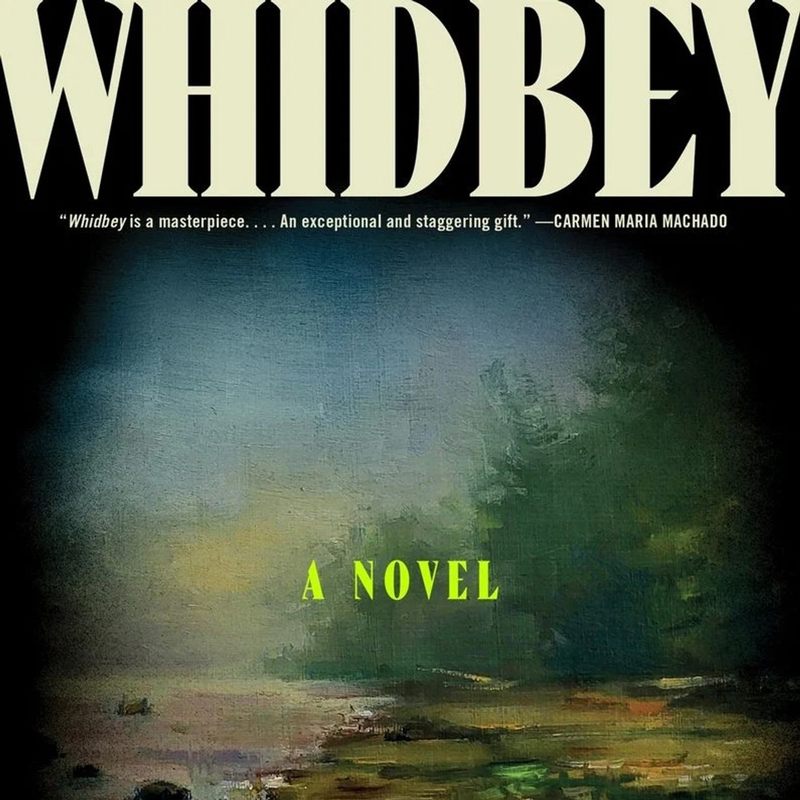
Alison Stewart: This is All Of It on WNYC. I'm Alison Stewart. Listeners, before we begin, I'd like to let you know that this conversation will deal with the sexual abuse of minors. If at any time you need support, please call the National Sexual Assault Hotline. That number is 1-800-656-4673. That's 1-800-656-HOPE. They are open 24 hours a day. In the novel from T. Kira Madden, the three different women grapple with the aftermath of childhood sexual abuse. There's Birdie, who was abused by a man named Calvin when she was only nine. Now Calvin is out of prison and emailing her. Birdie decides to head to the remote Whidbey Island and assume a fake identity to get far away from him.
Then there's Linzie, who shares her story on a reality TV show. Linzie writes a memoir about her experiences, a memoir that includes portions about Birdie. Then there's Mary-Beth, the abuser's mother. She loves her son despite what he has done. Her world is turned upside down when she learns Calvin has been killed. The novel follows each of these women as they grapple with the aftermath of Calvin's murder and as they reckon with the media landscape that loves to commodify women's trauma.
The book is titled Whidbey. It's the debut novel from T. Kira Madden, who is also the author of the memoir Long Live the Tribe of Fatherless Girls, where she writes candidly about her own experiences with sexual abuse. Whidbey was published yesterday, and T. Kira Madden is here with us today. It is nice to meet you.
T. Kira Madden: I'm so happy to be here. Thank you, Alison.
Alison Stewart: Let's start with the title. Whidbey Island is off the coast of Washington State. You lived on Whidbey Island before?
T. Kira Madden: I've never lived on Whidbey Island, but I have visited maybe a dozen times in the past decade.
Alison Stewart: What did you want to catch about the island, about being on an island?
T. Kira Madden: It's such a lush, beautiful place, so I did want to capture details in the natural world, the way people speak there, but also the metaphorical properties of an island. I started this book just after arriving on Whidbey for the very first time in early 2017, when I was battling the person who had abused me as a child in court. I was taking this ferry back and forth and moving between these two shorelines, that of Florida, where I grew up, and that of Whidbey Island, where I had this fantasy that maybe being there alone at a writing residency, I could arrive at something new, a new version of myself, split from this past that I was battling in court.
I met a stranger on that ferry boat. This is a true story, which is where the novel of Whidbey begins before it departs into fiction. That stranger asked why I was crying on the boat, and I told him what I was doing in court. He said, "Would you like me to kill him for you? No one would know we ever met." I distanced myself from that stranger as soon as possible. When I arrived on the island, I was haunted by that conversation and this feeling of remoteness and being alone in the woods, feeling watched by the animals, the wildlife there, and throttled back into a past. The novel began there, and I wanted to explore that place and what it means to feel like you might start over.
Alison Stewart: That is where the novel begins, with you meeting this man. With Birdie meeting this man.
T. Kira Madden: Yes.
Alison Stewart: Before we even get to that, at the beginning of the book, you write, "Dear reader, if you would like the opportunity to review a content warning before reading, please see page 367." There in the back, you include a warning that there'll be descriptions of child abuse in the book. First of all, why did you want to add that content warning right up front?
T. Kira Madden: I always want a reader to feel that I, as an author, I care about them. It's an experience for a reader. When I'm writing for myself, I'm writing for myself. Once a book is published, and that was something I wrote after I knew the book would be shared with the world and therefore a dialogue, I want a reader to feel that I care about them. If I'm going to render scenes of violence and especially child sex abuse, I want to do so with care, without graphic, superfluous detail, and that I'm writing in solidarity with survivors of abuse.
I am a survivor, and I'm also a teacher. My students honestly teach me so much about how they want to handle content warning. Some people want to engage with it, some people want to go in fresh and not know anything. That's why I chose to make that content note from me an optional page that one could flip to if they wanted to engage.
Alison Stewart: The novel is set in 2013, before the MeToo movement really was in effect. Why did you want to set this before MeToo?
T. Kira Madden: I wanted to explore that moment just before, and also just before the moment Serial really came.
Alison Stewart: Oh, really?
T. Kira Madden: Yes.
Alison Stewart: That's interesting.
T. Kira Madden: It's just before. There is a podcaster in this book who's looking to make a series about Calvin's murder and about these victims. I was thinking about that in terms of like the timeline of Serial, which some forget is really the boom of true crime in media and podcasting, specifically. I knew after a few drafts and years writing this book that it was too simple for there to be one single boogeyman, and that being the abuser in this story. Instead, I wanted to take the time to really look at the greater systems, the systems of the carceral system, the criminal justice system, and also the role of media in commodifying pain, commodifying suffering, and especially women's suffering in stories.
Alison Stewart: My guest is T. Kira Madden. We are discussing her new novel, Whidbey, which tells the story of two women who were sexually abused as children by the same man. The story of that man's mother. It's out now. Birdie, she's going to Whidbey Island to live under a fake name. In the novel, we learned that her abuse happened when she was 9 and Linzie's abuse began when she was 13. She draws a big distinction between these two ages. Why does Birdie want to draw that line of differences between their experiences?
T. Kira Madden: It was important for me that none of the characters in Whidbey really be so-called likable narrators or a perfect victim. I wanted to investigate not only their suffering, but also the barbs that they throw at each other. The ways in which the system, which has its own hierarchies of victimhood and survivorhood, where some people are considered credible witnesses, depending on their proximity to whiteness or to power or to wealth, this can change someone in terms of their psyche, in terms of why don't they believe me?
I wanted to investigate that hierarchy not only within the system, but within these survivors themselves and their psyches, and the ways that being believed or not believed in court or dismissed in court has changed how much they want to prove their suffering, how much they want to, I don't know, prove it to the world if it wasn't proven by a court system or a jury. Birdie and Linzie both have things to say about the other. Both of them want to be believed. Ultimately, I think so many of us in the world, not only in this book, we want our suffering to be seen and believed sometimes, and to be seen not only for the veneer that we move through the world with of being survived or being healed, but what we've endured.
Alison Stewart: We first hear from the other survivor, Linzie, not through her perspective, but through excerpts from her memoir. Why did you want to introduce her that way?
T. Kira Madden: I published a memoir which does touch on my history of child sex abuse and other growing up with two parents who are addicts and lots of difficult traumatic stuff, as some might say. At the same time, I was going to court dealing with this and beginning the first pages of Whidbey. I'm also showing up to market and smile, and build press packages about a memoir about suffering.
It was also very strange of how do I package this book about trauma? How do I talk about it in a way that ultimately makes me maybe believable or likable? One wants to be a believable or likable narrator on the page, the same way one wants to be believed on the stand. I was a federal Jane Doe. My case went all the way to trial, and I had to write a victim impact statement. I felt there were so many similarities of just wanting to be believed, wanting my story to be valid, wanting to make myself a likable narrator.
Alison Stewart: Mary-Beth is Calvin's mother, and we first meet her when she learns that her son has been killed. When did you know you wanted the abuser's mother to be a big part of this story?
T. Kira Madden: That's a great question. I'm always a little bewildered and perplexed by the loved ones, the family, the friends, the parents who continue showing up for people who have caused great harm, who the evidence is presented before them, and they can still stand in trial or court and say, "I believe him, or I believe this person. They are not capable of what you're accusing them of." As, again, a Jane Doe who I've seen this, and I've also seen this in working in correctional facilities as a teacher and in reentry. I've seen these people continue to show up, sometimes enabling that abuser.
I like to write into questions. My great big question with that was always, what does that love look like? What does that degree of denial look like? How deep does it go? How potent can denial really be for a parent? My first book was largely about loving parents, despite making some bad decisions and causing harm. This book feels like a reversal of that, considering a parent who loves a son despite what he's done. She's not meant to be a likable person, but a dynamic person for us to, I hope, really sit with and think about what does it take to enable someone who's caused harm?
Alison Stewart: How do you feel about Mary-Beth?
T. Kira Madden: I think she's a very complicated character. I hope that a reader can hold some of her more despicable qualities by standing by her son, along with the fact that she has been disenfranchised by a system as the mother of an abuser, when she herself has never abused anybody. I think looking at that poverty of disenfranchisement and also the harms that she is causing by enabling an abuser can sit side by side. I like to write into that kind of complication for a reader to hold and feel a little disquieted by that.
Alison Stewart: You have these three women to contend with as a reader, but we also have to contend with the legal system. You get into it quite a bit. You include a detail that, at one point, a colony of people who are sex offenders, or who are on the sex offender registry in Miami, they are forced to live under a bridge. In your novel, Calvin is one of them. Why did this happen in the first place, and when did you learn about it?
T. Kira Madden: Yes, this happened right after I graduated from high school. I was born in Miami and raised in South Florida. The Miami-Dade County is less than half a mile wide. Ron Book created this legislation that asked any registered sex offenders to not be within 2,500ft of children and where they can congregate. Because of the way Florida is and its narrowness, half a mile wide, this caused these pockets and encampments to occur, meaning that those on the registry-- That means not only people who have abused children like in this book, but also people who have urinated in public, people who have publicly streaked, to be designated to live in places like the Everglades or under the Julia Tuttle Causeway Bridge.
That encampment is real. It was called Bookville, where people were leaving their sentence or leaving jail, and they were taken directly to this bridge encampment. That's what their ID literally said. I thought that was so strange and bizarre that this community lived under a bridge, as I was driving over to spend the day in Miami. Almost too strange for fiction, but I wanted everything in terms of the legality and this legislation to be rooted in fact for people to learn a little bit about, "What do we mean when we say we care about survivors or we care about the children? Is this something that will really help? What's the legislation where I live?" I wanted readers to ask those questions.
Alison Stewart: I wanted to ask you about your writing process before you run out of time. You said in your own words that you're completely obsessive about writing. What does that look like?
T. Kira Madden: I write all of my first drafts on the typewriter. I learned how to write on a typewriter when I was a child, and so that's still my process. It's not to be romantic. It's just the thunder of the keys, and looking at the page, and not having the distractions of a screen or the Internet is how I get a book done.
Alison Stewart: You like the sound?
T. Kira Madden: I like the sound.
Alison Stewart: That's interesting.
T. Kira Madden: Yes. I work on an electric, a Selectric II. Thank you, Philly typewriter. I like the thunder of that sound. From there, I then transcribe all of those pages onto the computer, reading everything aloud. Every single page on the typewriter transcribes to eight on the computer, eight pages. It takes a really long time by reading aloud and transcribing every single moment of a book. It's an immediate full second draft by the time I get onto the computer. Otherwise, I think I might get a little lazy or let something stay on the page when it doesn't belong there.
Alison Stewart: Oh, it's almost like editing.
T. Kira Madden: Exactly.
Alison Stewart: Oh, that's so interesting.
T. Kira Madden: It pushes me to edit every single word.
Alison Stewart: You set up your desk in a very particular way. Will you share with us?
T. Kira Madden: I like to decorate my desk, depending on the project I'm working on, so that when I leave my day of teaching or caretaking or whatever I'm doing that day, I can land at a space in a desk that has a very specific lighting or smell, or I have driftwood from Whidbey Island on my desk. That was there the whole time I worked on this book. I had models of banana slugs just to bring myself back to that island when I couldn't be there.
Different items from South Florida, and gas stations, and anything that could bring me into the world of the book. I'm big on bulletin boards. I'm big on mood boards and bringing in the energy and colors, and smells to the desk so I can immerse myself into that project the way I hope a reader could immerse themselves in the book.
Alison Stewart: As you're immersing yourself in this project, how did you protect yourself and your health when writing this book about childhood abuse?
T. Kira Madden: I'll never have a great answer for that because I haven't figured it out yet. Some days are just really hard. Some days were really, really difficult, and I'd have to take a long walk. Other days, I let myself have breaks. I don't push myself through writing something if it feels deeply unhealthy. This book took eight and a half years for a reason. I think it took taking these long breaks, having a fantastic therapist, many walks, and weeks and months that I took off to let the well fill back up. When I felt emotionally depleted, or I felt that I needed the story to come back to life within me, I tried to honor that and never push through or rush something.
Alison Stewart: There are likely survivors of childhood sexual abuse who will read your book. What experience do you hope they'll have?
T. Kira Madden: I hope that other survivors can see themselves and appreciate the complexity of survivorship that I hope to render in this book. We're not all one thing. We don't have to be the most likable person or the most affable or public-facing person to be worthy of respect and to be believed of the thing that we have survived. I hope this book presents a number of different ways that survivorship looks and that one could see themselves in that, however complicated or prickly, or messy that could be.
Alison Stewart: The new novel is called Whidbey. It's very good. It is by T. Kira Madden. Thank you for being with us.
T. Kira Madden: Thank you so much for having me.
Alison Stewart: That is All Of It. I'm Alison Stewart. I appreciate you listening, and I appreciate you. I will meet you back here next time.