
Why Protein Became the Hottest Trend in Food
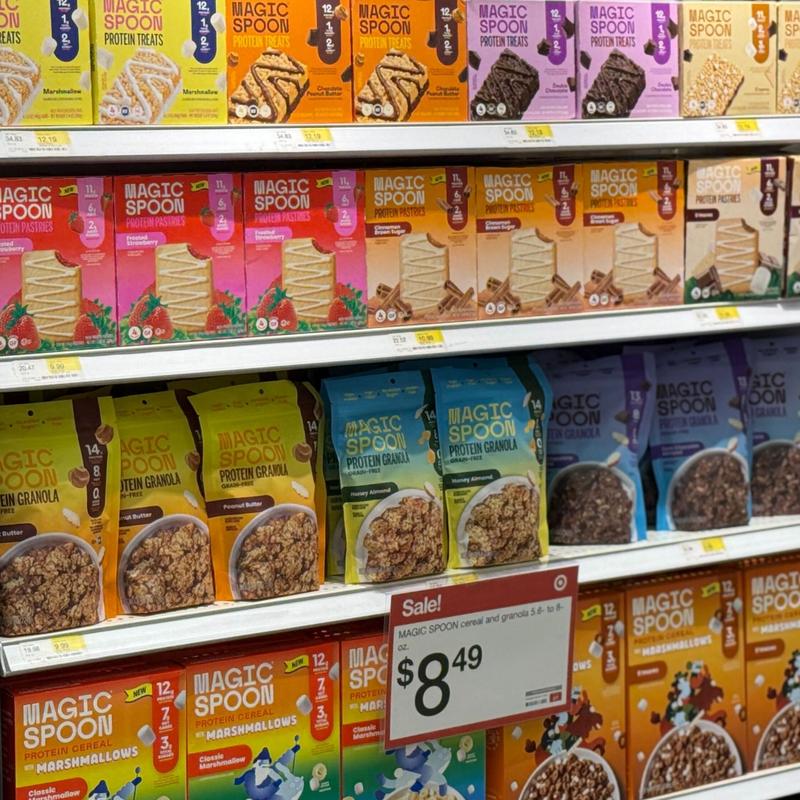
Alison Stewart: This is All Of It on WNYC. I'm Alison Stewart. Recently, if you've been by a Dunkin' Donuts, you'll notice in the familiar pink and orange lettering on the glass announcing, "Protein, protein, protein." That's on top of Starbucks introducing new flavors of protein lattes. Chipotle dropped a high-protein menu, and Subway introduced something called Protein Pockets.
The protein craze continues just as U.S. Health Secretary Robert F. Kennedy Jr. rolled out new guidelines encouraging more Americans to prioritize, say it with me, protein. Is the focus on health, weight loss, menopause, or is it about making money? Have we been protein pilled? To help us understand, we have New York Times reporter Alice Callahan, who writes about health, health and nutrition. Hi, Alice.
Alice Callahan: Hi, Alison. Thanks so much for having me.
Alison Stewart: Also joining us is Dr. Rekha Kumar from Weill Cornell Medicine, who specializes in endocrinology and obesity medicine. Dr. Kumar, thank you for joining us.
Dr. Rekha Kumar: Thanks for having me here.
Alison Stewart: Listeners, we want to get you in on this conversation. Do you feel like you're getting enough protein in your meals? What are some of the new protein-fortified dishes that you've incorporated in your diet? What are some of the strangest protein foods you've seen on your walk through the aisles at the grocery store? Our number is 212-433-962, 212-433-WNYC. Or if you have a question about food or nutrition for Alice or Dr. Kumar, you can call in with that. They can give you their general opinion. Of course, they can't be specific, but they can tell you what they know.
Our number is 212-433-9692, 212-433-WNYC. Okay. Alice, we've seen a lot of it. We've seen protein energy bars, we've seen protein breakfast cereals, baked goods, snacks, even sports drinks. Why are so many companies focusing on producing protein-fortified food of late?
Alice Callahan: That is such a great question. I think it's because they're doing what companies do. They are picking up on what consumers are interested in, and they are adding it to their products. It's a great selling point when so many people and the general public are interested in protein, trying to get more of it. You see these familiar products out there, and they have added protein. It's very enticing.
Alison Stewart: How successful have these products been on the market so far?
Alice Callahan: I'm not sure if I can speak to that exactly, but I assume they've been pretty successful because we keep seeing more and more of them. I don't think we're seeing any leveling off yet of the number of products out there. My inbox is just full of pitches from companies that are continuing to introduce new protein-fortified products. I would expect this trend to continue. I'm hearing from experts who are also watching this trend, and they're saying, "It's like what we saw with low-fat products in the 80s and 90s." We're getting some information from our federal officials about this emphasis on protein on top of a lot of just popular interest in the nutrient, and food companies are responding by adding more protein and using it as a marketing point for their products.
Alison Stewart: Dr. Kumar, let's bring you into the conversation. How much protein does the body actually need?
Dr. Rekha Kumar: Great question, and probably to a certain degree varies through life stage. The general guidelines have always recommended 0.8 grams of protein per kilogram of body weight. Current, people speaking about health and wellness will say that recommendation is perhaps too low and that many active adults would benefit from more, around 1.2 to 1.6 grams per kilogram of body weight. An example would mean a 150-pound person might aim for 75 to 100 grams per day. Bodybuilders may aim for higher. Generally speaking, those are the guidelines and recommendations.
Alison Stewart: What happens to the body when you've consumed too much protein?
Dr. Rekha Kumar: Protein is a type of fuel for the body. Protein, we consider it really like building blocks, like Legos. What protein does in the body is that it builds things. It builds cell membranes, it builds enzymes, hormones. We're taught in high school, middle school biology that proteins are made up of the building blocks of life. If you consume too much of it and there's more material than you need, these things potentially can impact kidney health, cause gout, which people consider a medical condition of excess consumption. Yes, there are other reasons someone may get gout. If we think of medical conditions associated with high protein consumption, we think of kidney disease and we think of gout, which is a joint disease.
Alison Stewart: Alice, we named all those chains, Dunkin' Donuts, Subway, Chipotle. They've embraced this trend on their menus. How helpful are these menu options for the everyday consumer hoping to make a more responsible decision around mealtime? We're in New York, we can-- You're in Oregon right now, but around New York, you can get food all over the place. When I travel across the country as a reporter, you get to some place, and it would be fast food, fast food, fast food. I'm wondering if it's helping people make more responsible choices.
Alice Callahan: I can tell you what I hear from all of the many researchers, and scientists, and dietitians that I speak with as a journalist. Actually, every time I talk to them about protein, someone says, "Keep your protein out of my coffee." I can't believe everyone's-- They're always like, "Let me tell you the product I just saw, protein. This is the new protein-fortified cereal or waffles, or donuts." None of these foods are healthful, everyday foods that you want to be making up the predominant part of your diet. I'm not sure that we can even say that adding protein to a food that is otherwise really high in sugar or fat is really going to improve its nutritional quality. It's definitely a good selling point. That doesn't mean it's better for you. Your best bet is really to get your protein from whole foods.
The reason for that is that those foods are also packed with all of these other essential nutrients that you need. We do tend to, as humans, get a little bit myopic about nutrition sometimes. If protein is the hot nutrient, people are looking for protein. They're attracted by the high protein label. They're thinking about how many grams of protein they're getting per day, which is not a bad thing to consider, but if all you're doing is counting protein grams, then those products look really good.
If you're thinking more broadly about what a healthy diet is, it needs to include all of these food groups and foods like plant-based proteins like lentils and beans, which also give you all this wonderful fiber and vitamins and minerals, and dairy products, which give you calcium and Vitamin D, and lean meats, which offer iron and zinc. You have all of these amazing nutrients that are packed into foods. When you start getting into these highly processed foods, they may have added protein, but you're probably missing out on a lot of other things.
Alison Stewart: Dr. Kumar, we have a question here, and maybe you can answer it. When you take medicine for Parkinson's, you're not supposed to eat protein an hour before or after. Can they discuss that? What are the alternatives? Why is this a bad mix with the meds?
Dr. Rekha Kumar: It has to do with how these medicines are metabolized and the enzymes that metabolize Parkinson's medicines that can create a reaction in the body that's dangerous. It doesn't mean that patients with Parkinson's shouldn't eat protein ever. It's just in combination with the medicine. High protein, close to the timing of the medicine, isn't recommended.
Alison Stewart: Let's talk to Daniel, who's calling in from Brooklyn. Hi, Daniel. Thanks for making the time to call All Of It. What's your question?
Daniel: Hi. I was just wondering if-- I always wondered, the billion-dollar industry behind protein powders and such, is there any actual evidence that powders like this are actually utilized by the body effectively, or as well as naturally eating meat, dairy, non-animal type of proteins, anything like that? Because I just always wondered, powdered forms, are these really effective or efficient for the body?
Alison Stewart: Dr. Kumar, do you want to answer that?
Dr. Rekha Kumar: Yes, sure. Most of the protein powders are either whey protein, some of the plant-based, or pea protein. We do absorb these in our guts and our intestines in a reasonable way. If somebody is not getting enough protein through their diet, supplemental powders are a way to get it. The benefits of getting proteins from whole foods is that you're getting all of the other nutrients that Alice mentioned. When you're eating eggs, Greek yogurt, beans, fish, tofu, nuts, there's so many other benefits in the whole foods along with the protein versus isolating it out. You do absorb the powders.
Alison Stewart: After the break, we're going to talk about the new dietary guidelines with my guests, New York Times Health Reporter Alice Callahan and Dr. Rekha Kumar. If you want to get a call in, if you want to join the conversation, our number is 212-433-9692, 212-433-WNYC. [MUSIC - Luscious Jackson: Citysong]
Alison Stewart: You're listening to All Of It on wnyc. I'm Alison Stewart. Protein foods are on shelves in grocery stores across America. We're talking about it. I'm here with New York Times Health Reporter Alice Callahan and Dr. Rekha Kumar from Weill Cornell Medical to talk about this trend and how much your body actually needs. Alice, a few weeks ago, the US Health Secretary released new dietary guidelines which suggest that adults consume 1.2 to 1.6 grams of protein per kilogram of body weight, which is far more than what some health officials have previously recommended. What sources of protein does this administration-- What is it emphasizing?
Alice Callahan: What's really interesting, these new guidelines, there's the text of the guidelines, which of course I study very closely, and then there's also this new food pyramid that Secretary Kennedy unveiled with the guidelines. That's the visual that I think most Americans are probably going to see, and that probably we'll be seeing in school classrooms and military cafeterias, and other government information about diet. The food pyramid is very striking because it puts animal-sourced proteins right at the top. Especially, there's a big ribeye steak and a carton of whole milk and a huge hunk of cheese, and a roasted turkey or chicken. That message feels very clear in the food pyramid.
The written guidelines are a little bit more like, they describe animal-sourced proteins and plant-sourced proteins like beans, lentils, nuts, seeds, whole grains are a pretty good source of protein. A lot of experts are puzzled by this pyramid because when you look at the way Americans eat now, I've never had a nutrition expert say, "Wow, I just wish Americans would eat more meat. We just don't get enough animal-sourced protein." Americans are known around the world for being pretty heavy meat consumers.
What we could really benefit from is more plant-sourced proteins, probably. When you look at data on large populations of people that are followed over decades, people who consume more plant-sourced proteins, this is the beans, peas, lentils, nuts, seeds, tend to have lower rates of Type 2 diabetes, cardiovascular disease, colorectal cancer. These foods are really protective. There's a little bit of disappointment that those protein sources were not promoted more in the new guidelines.
Alison Stewart: Dr. Kumar, I want to read this text to you. It says, "I'm a private chef in Monmouth County. A lot of my clients are looking for more protein due to the current trends. I believe in a balanced diet with fiber, and think too much protein could be bad for your cardiovascular system." This has been echoed by the American Heart Association. Why is this the new dietary guidelines, or why is more animal meat a bad thing at this point?
Dr. Rekha Kumar: Like Alice said, the visual of the new food pyramid can maybe be a bit simplified because it looks like on the pictures that the more animal protein, the better. I would actually reflect back on MyPlate, which we did use more recently than the old food pyramid. MyPlate really shows us that balance matters and that fiber from fruits and vegetables matter, whole grains, and healthy fats. Protein is essential, but it's not meant to replace everything, especially animal protein. I agree with you that when we are thinking of cardiometabolic health, the reason excessive amounts of animal protein may be a concern is that animal protein often comes with saturated fat.
Alison Stewart: Let's talk about some specifics. Some people online have adopted high-protein diets to lose weight. Dr. Kumar, is this accurate?
Dr. Rekha Kumar: Replacing carbohydrates or processed carbohydrates for protein can be an effective weight loss strategy, but we shouldn't be replacing our carbohydrates all with animal protein. If you look at people who replace their carbs with animal protein or plant protein, you really only see the mortality benefit when those carbs are replaced by plant protein. Yes, there are reasons that increasing your protein may help on a weight loss journey. You can feel full for longer, you can keep more muscle mass on, and protein does support metabolism because muscle burns more calories than fat does. There are reasons that increasing your protein can help on a weight loss journey, but that doesn't mean that the bulk of our diet should be animal protein.
Alison Stewart: Alice, I feel like we've heard this before, like the Atkins diet and the Zone diet. What's different this time?
Alice Callahan: Some of the experts that I speak to say, "Maybe this is just the next trend." Just like we've been through previous diet trends, we've survived the low-fat era, we've seen low-carb diets get really hot. They're still popular, but a super high-protein diet-- I think we do tend to see our cultural interest in diets go to the extreme. Then, we see over time some self-correction where we get more data, or we have more people speaking out about the evidence we already have, and we realize, like, "Okay--"
This concept of balance, even though it's boring and it's not sexy, and it doesn't go viral on social media. People are really looking for advice that's more prescriptive or feels different or feels like something they haven't heard before. This concept of balance, I think, we come back to it over and over again. It is what the evidence supports. Protein is important, of course, and it can have some benefits to prioritize protein a little bit like Dr. Kumar said, but we don't have to go overboard. There are diminishing returns. Once you get past that range that Dr. Kumar gave, 1.2 to 1.6, you might see some benefits in that range, but above that, we have very little evidence that you'll see additional benefit. You're just going to burn that protein like any other calorie and use it for energy or store it as fat.
Alison Stewart: Let's take a couple more Calls. Alex is calling from Hell's Kitchen. Hi, Alex, thank you so much for calling.
Alex: Thank you so much for having the show today. I'm really glad to connect with the two speakers. I'm wondering, given that most Americans are already meeting their protein needs while under-consuming fiber, for example-- A lot of these protein-added products, as we're discussing, are still ultra-processed. How do you guys think that the long-term public health will change? Are we going to look back in a few years and see this as an industry that's really capitalizing on a nutritional trend at the moment, or do you think maybe 10 years down the line we'll reflect and perhaps see negative outcomes by this industry push at the moment?
Alison Stewart: Dr. Kumar, what do you think?
Dr. Rekha Kumar: I think these are excellent things to address because social media and fitness trends are huge right now, and people are focused on strength, aging well, and weight loss. Obviously, people are capitalizing on these interests. If this is going to lead to people consuming more processed ingredients, I do think we're going to look back and probably not feel so great about this. If there are people getting the message that optimizing protein intake and making sure we're consuming enough protein as we age, in addition to doing strength training, and seeing protein as an essential nutrient as we get older--
I know that, for me, when we're in training as doctors, we learn about the tea and toast diet in elderly patients as they age and they live alone, that they really don't consume protein, and they develop sarcopenia or muscle loss. I do think that there are benefits in raising the importance of protein, but if we're getting this through protein cookies and protein popcorn, I don't think we're going to look back on this in a good way.
Alison Stewart: Alice, you've done some reporting on the link between protein and menopause after a reader asked a question about the various claims online. From your reporting, how valid are those claims that you need more protein when you're going through perimenopause or menopause?
Alice Callahan: Dr. Kumar is really an expert in this area, too, so she may want to weigh in.
Dr. Rekha Kumar: Sure.
Alice Callahan: I think certainly our bodies are changing in menopause, and I think we do need to be aware of, are we feeding ourselves well to keep our muscles strong and our bones strong as we age? We have these hormonal shifts that are happening. There's not great evidence that there's something super special about the menopause transition that means that you really need to pile on the protein. When you look at how women in America eat, older women do tend to underconsume protein a bit. It's a little bit more common among that demographic.
I do think it's good that we're getting a little bit more emphasis on that. Make sure that you're feeding yourself with enough protein. Again, it doesn't have to be crazy amounts, but you're getting enough, and you're doing the strength training that will help keep your muscles strong and your bones strong as you age.
Alison Stewart: Dr. Kumar, would you like to answer?
Dr. Rekha Kumar: Sure. Just a couple of the scientific facts around menopause. As estrogen levels drop, it is harder to maintain muscle mass, and fat storage increases, especially around the belly, and bone density decreases. Upping your protein slightly can help support maintenance of muscle, helping protect your bones, balance your blood sugar, and it may help women feel full for longer, where there are some changes in hunger cues around perimenopause and menopause because of how carbohydrate metabolism changes.
Slightly upping protein to increase fullness and be able to manage your carbohydrate intake during a stage of life where you're predisposed to increase belly fat can be beneficial.
Alison Stewart: Let's try to get one more call in here. Ralph is calling from Manhattan. Ralph, thank you so much for taking the time to call All Of It.
Ralph: Oh, that's great. Thanks so much for putting this on. I'm wondering about the discussion of meat versus fish. I've stopped eating meat pretty much across the board and stuck with chicken and fish and nuts and plants and arugula and leafy things. What's the truth about how much meat someone should eat in order to get protein versus overeating it a couple of times a week and possibly being carcinogenic?
Alison Stewart: Dr. Kumar, what are your thoughts?
Dr. Rekha Kumar: I think the way this gentleman has modified his diet is excellent. The way he's eating with lean protein, fish, lots of plants, this is ideal. You don't have to eat red meat in order to get enough protein. You can get everything you need from this pattern of eating that was just described. If somebody wanted to incorporate red meat, I think we would still say to be mindful and limit the intake because of fat content.
Alison Stewart: Alice, before we go, is there anything that you would like debunked about protein that you've read that's come across through your inbox?
Alice Callahan: Oh, gosh. I think just the whole concept that more is better, I think that is what's fueling the explosion of protein-fortified processed foods. I just think we need to-- We can dial it back a little bit, make sure you're getting enough, but there's really no reason to go overboard. If you go overboard, you'll probably be missing out on some other really important components of your diet that your body needs.
Alison Stewart: Dr. Kumar, anything that you would like to debunk or you would like to leave us with?
Dr. Rekha Kumar: Yes, I want to just reiterate what Alice said about our tendency to become myopic about these things. When I think of health overall and nutrition, we have to look at the big picture of the foundational behaviors. In general, if your exercise, nutrition, sleep, and stress management aren't great, and you're like, "I'm going to just eat a lot of protein," that's probably not going to help you. We have to see where this fits into the overall lifestyle and optimization of health.
Alison Stewart: So keep your protein out of my coffee and go to the gym?
[laughter]
Dr. Rekha Kumar: Works for me.
Alison Stewart: Works for you. My guests have been New York Times Health Reporter Alice Callahan and Dr. Rekha Kumar. Thank you so much to both of you for your insight. We really appreciate it.
Alice Callahan: Thanks for having me. This was fun.
Dr. Rekha Kumar: Thank you. So fun.