
What's the Best Soup? (Small Stakes, Big Opinions)
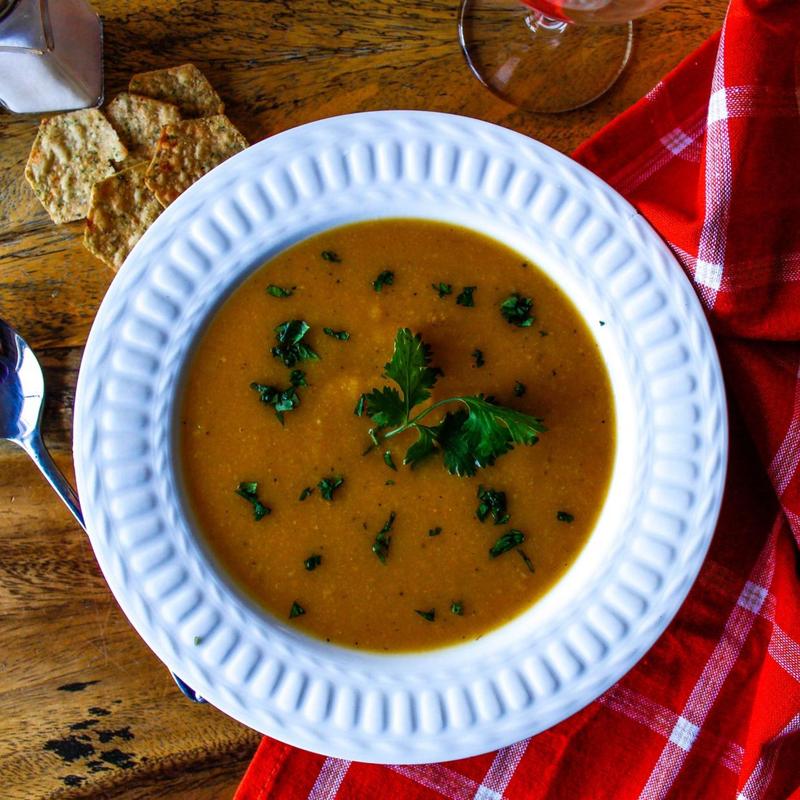
Alison Stewart: This is All Of It on WNYC. I'm Alison Stewart. What better way to make it through the freezing cold than with a good steaming hot bowl of soup, faux ramen, potato leek or classic chicken noodle? The soup options to make it at home are endless. For the next installment of our Small Stakes Big Opinion series, we want to hear your answer to this question. What is the best soup and why? Call or text us now. 212-433-9692, 212-433-WNYC.
As we hear your thoughts, we have with us New York Times reporter and columnist Melissa Clark. She's got some advice on great soups to make at home. We'll discuss her article, just published yesterday, 3 Beloved Dishes — In Soup Form. Hey, Melissa.
Melissa Clark: Hey. How are you?
Alison Stewart: I am doing well. I do have to ask you about this, your red lentil soup. According to the New York Times Cooking, this is the most popular recipe on the site of all time, with more than 34,000 ratings. Tell us about the origin of this red lentil soup.
Melissa Clark: It's so funny because it's such a simple recipe, which I think is why it resonates with people. It's really easy to make, and it has a lot of flavor for very little effort. Plus, there's not a lot of chopping. I think you have to chop some garlic, maybe a carrot, and one onion. I think chopping a lot of things is also a bar to entry for a lot of soups. This just ticks all the boxes for what you want. Plus, it's really warming.
I got the recipe-- This is a takeoff from a recipe from my friend, the cookbook author Anya von Bremzen. I had this Turkish lentil soup at her house, and I was blown away. I was like, "Oh, my God." It was a long time ago. It was one of my first red lentil encounters. Now red lentils are everywhere, but this was one of my first red lentil dishes. I just fell for it because it was so nubby. The red lentils are very sweet, and it had a backbone of sourness from the lemon.
She told me verbally how she made the soup. I went home, I made my version of it, put it in the New York Times, and now it's become a lot of people stop me and say, "That is the recipe of yours that I make the most," which I love to hear.
Alison Stewart: You write about this particular lentil soup, that it defies expectations of what lentil soup can be. How so?
Melissa Clark: I think the lentil soup that I grew up with, maybe a lot of us grew up with, I don't know if this is true of your childhood as well, was a brown lentil soup or a black lentil soup. It was very thick, it was very hardy, and very dense. This is a much lighter brothier soup, and it also has the lemon. It has a brightness and flavor as well as a lightness and texture, which I think isn't necessarily what people think of when they think of lentil soup. I know for me, it was a whole new thing.
Alison Stewart: That's my Friday night plan, is making this soup, but during the week, I don't have a ton of time. What's an example of a solid weeknight soup that won't take up too much time?
Melissa Clark: Oh, there are so many great soups. I love to make a miso soup when I'm really pressed for time because miso has so much flavor in and of itself. If you just take a good, high-quality miso paste and mix it with a little bit of water, that is your broth, and you can just put anything in there. You can throw in baby spinach, you can throw in an egg, and let it just cook right in that broth.
Sliced mushrooms, or if you don't want to slice, maybe just torn pieces of tofu. That gives it protein and makes it a little bit more satisfying. You could put cabbage in there. You could put coleslaw mix if you have that in the fridge. It's so versatile. I would say, just have some miso in your fridge, and it is this instant freedom for soups all week long.
Alison Stewart: You wrote an article recently about transforming three dishes into soup. Hummus, bean salad, and pasta pesto. How did you get the idea to make different dishes into soup?
Melissa Clark: It's funny because I love to change the form of something. I love to take a popular dish and just turn it on its head a little bit. For this article, I got the idea because I had been seeing Italian dishes turned into soup. Like lasagna soup right now is a-- Have you come across a lasagna soup yet?
Alison Stewart: I have seen it. Not in the wild, but I've seen it on the Instagram. [laughs]
Melissa Clark: Exactly. It's all over my Instagram. I'm like, "Lasagna soup, okay." Then to me, it seemed like pasta pesto would be a more natural soup. Adding a little bit of pesto to soup is actually pretty traditional, or in France, you add something called a pistou, which is the French version of a pesto, and it adds so much flavor. What's great about it is you want that brightness, that basil, that garlic, that oomph in the middle of winter, when things are so cold and gray, and you just stir in some store-bought pesto that you just buy, it just makes everything brighter.
I took all of those influences and just turned it into a soup. Then I added some orzo. The pasta is orzo because that's a great soup pasta. Then I added some ground turkey again just to make it more of a meal, and some baby spinach, and just threw that together. You could do that on the weekend, during the week. That one is pretty after-work friendly. It goes fast.
Alison Stewart: Quick question. You said orzo is good soup pasta. What makes something a good soup pasta? What makes it not the greatest pasta for soup?
Melissa Clark: Just imagine slurping spaghetti out of a soup. I know that's ramen, and I know that is a tradition. It's a specific thing. I think specifically with pesto, I wanted something that would stay in the spoon, discreetly in the spoon. Also, it makes it thick. A thing about orzo, as opposed to say spaghetti, is because they're small, they shed a lot of the starch into the broth. They will actually thicken a soup broth the way a longer pasta won't necessarily do that, or bigger pastas won't do that. For me, they're easy to eat, they cook quickly, and they just give you this nice texture on the broth, which I love. Almost like rice, except that pasta a little chewier, which I love.
Alison Stewart: My guest is Melissa Clark, New York Times food writer and recipe columnist. It's cold outside, so we are talking soup. We're also hearing from you in our Small Stakes Big Opinion series. What is the best soup and why? Our number is 212-433-9692, 212-433-WNYC. Let's talk to Tracy in Highland Park. Hi, Tracy. How are you?
Tracy: Hi. I didn't know that Melissa was going to be on today, and it's actually a New York Times recipe that I'm calling in about.
Melissa Clark: Perfect.
Tracy: It's a creamy spinach artichoke chicken soup, and it tastes like spinach artichoke dip.
Alison Stewart: Oh, there's the magic words.
Melissa Clark: You see, there we go. We're turning a dip into a soup. It's that same exact instinct. You take a dish that you love, and you make it brothy. You make it some warming for winter. I know that recipe, and it is a great one. It absolutely great because it's so creamy, but it's so much lighter than a spinach artichoke dip.
Alison Stewart: All right. We got a text that says, "For vegetarians, creamy coconut chickpea stew. Yum." That's from Annie from the Upper West Side. Portuguese sausage, kale potato soup gets my vote. I think they mean linguiça is what they're talking about. Bright flavors and quick to cook. That's a great one. Let's talk to Miguel from Queens. Hi, Miguel. Thanks for calling, All Of It.
Miguel: Thank you for having me. How are you guys doing?
Alison Stewart: We're doing all right.
Miguel: I am surprised that in New York City, they did not mention Sancocho, the main Dominican dish. It was one served to Queen Elizabeth when she visited Dominican Republic. It is a very hearty soup with every single ingredient you can find. We love it.
Alison Stewart: You mentioned it, Miguel. It belongs to you. Thanks so much for calling in.
[laughter]
Alison Stewart: I want to ask you a question. I literally had this conversation the other day with a friend. We were talking about broth. We were talking about stock for soup. Then we were talking about, "Well, what's bone broth?" Can you explain the difference between broth, bone broth, and stock?
Melissa Clark: They overlap, and the definitions are not-- They're not set, so they're changeable. People will use bone broth, stock, and just broth interchangeably. I think they're two different things. I would argue. Again, this is different people see it differently, but from my perspective, broth and stock are the same thing. They're just two different words for what you get when you simmer. It could be vegetables and bones, vegetables and meat, just plain vegetables, or even just garlic. Just anything, or when you're simmering aromatics to get a flavorful liquid, I would call that stock or broth.
Bone broth is a specific subcategory of those two things. For bone broth, you need to use bones, and you need to use bones and let the broth simmer for long enough with a little bit of acid. Some sort of acidic ingredient, usually a little bit of vinegar or sometimes a little bit of wine in the pot to dissolve some of the collagen. If you've ever made broth, you know how you put chicken or beef in there, and there's little bits of collagen, like little bits of sinew and things sticking to those bones.
All of that needs to dissolve into the broth, and that's what makes it bone broth, because you have all those dissolved nutrients in the broth, which you'll often get in regular broth and regular stock. For bone broth, you are specifically looking to get that protein content, that nutrient content, and that body. Bone broths tend to be thick into your soup pot.
Alison Stewart: Raina has texted this question directly to you, Melissa. "Melissa Clark, are red lentils the same as red split peas?"
Melissa Clark: I think they are. They're a type of dal. I think you will see them as-- They're split lentils. I'm not sure if they're peas. I think they're labeled similarly. They're a legume, and they're a lentil or a dal that's been split. They're peeled. When you peel a lentil, they tend to fall apart into two pieces. That makes them split very naturally, and because they're peeled and because they split, they cook really quickly. If you look at a red lentil, it's like this teeny, weedy little disc.
When you add water to that, and you start to simmer it, it will cook in like 20, 30 minutes. It doesn't need a long time. If you have a whole lentil or an unpeeled lentil or say a pea like a dried green pea, it will take much longer. Or like a chickpea, for example, which, when it's not split, it could take an hour or more to cook. A red lentil is always split, it's always peeled. I think it might be called a split red pea. I wouldn't be surprised if you'd see it marketed that way.
Alison Stewart: My guest is Melissa Clark, New York Times food reporter and recipe columnist. It's cold outside. We're talking soup, and we're also hearing from you as part of our Small Stakes Big Opinion series. What is the best soup and why? Our phone number is 212-433-9692, 212-433-WNYC. After the break, we'll talk about vegetables, using noodles, and how to get rid of all that stuff in your refrigerator.
[music]
Alison Stewart: You're listening to All Of It on WNYC. We're talking soup. That would be me, Alison Stewart, and my guest, Melissa Clark, New York Times food reporter and recipe columnist, and we are talking to you. We're asking you to tell us what your favorite soup is and why. Here are some texts, Melissa. "African sweet potato, carrot, chickpea soup with peanut butter and coconut milk. It's so good it makes people cry."
[laughter]
Melissa Clark: That sounds amazing. I want that recipe.
Alison Stewart: It says, "My favorite soup is chicken matzo ball. Not difficult. You just have to make sure you have the following DILL!" It's in giant letters with an exclamation point. Parsnips, turnips, carrots, onions, celery, and add a whole chicken and let it boil low bubble, simmer couple of hours. Then you make your matzo balls according to the package. No need for bouillon or store-bought stock. The most flavorable soup. Enjoy. I do want to ask about, we do a little like getting people ready and checking out their voice on sound check. We asked you about your clean the fridge soup. What is your clean-the-fridge soup?
Melissa Clark: I was asked what my favorite soup is. I was talking about a soup that I just made a couple of days ago, and I call it the clean-out-the-fridge soup. I think a lot of people have their own versions of clean out the fridge dishes. Clean out the fridge frittata or clean out the fridge pasta. Clean out the fridge, stir fry is a big one, but mine is clean out the fridge soup. I always have random root vegetables in my fridge because I belong to a CSA so I get a box of produce from the farm.
Often, I'll get one giant turnip the size of my head and a leek, and all these herbs. I love to make a soup just using all of that. What I do is I base it on a potato leek soup, which is one of my favorites because the leeks just make it so sweet and delicious. I saute a bunch of leeks to start, and then to that I just add whatever I have. The other day, I had this giant turnip, I had a kohlrabi, I had two parsnips, kind of shriveled, they've been sitting there for a while, and some potatoes and celery.
I used celery because I wanted that. I love the flavor of celery in soups. I threw it all in the pot. I let it simmer, added a little bit of butter, and when it was nice and soft, I pureed it with all of the wilty herbs that I had left over from different recipes. I had some parsley, I had some cilantro, and I had some thyme. I threw it all in, and I pureed, including the stems, and just took the immersion blender and went [unintelligible 00:15:18].
I ended up with this delicious sweet spot, speckly green soup. Then my secret thing that I do with soups, whenever I make a soup that's sweet and lovely but needs a little bit of a kick, I make some kind of spice oil. For this one, I heated up whole cumin seeds with olive oil and thinly sliced garlic and chili, just like a red pepper flakes. Let it toast the garlic and toast the spices. Then, right before serving, I pour little drizzles of that into every bowl with some flaky salt. It just makes it just this really lovely, garlicky, spicy contrast to the sweet, soothing soup. We absolutely love it. I will never make it again. It's one of those soups you make it once, that's it. It can never be replicated.
Alison Stewart: We got this text that says, "Chicken and dumplings. My favorite." This is a question for you. Can your soup expert please finally, definitively solve the eternal question? Is chili a soup?
Melissa Clark: Oh, gosh. That's like, is a hot dog a sandwich?
Alison Stewart: There you go.
Melissa Clark: Or is brownie a cookie? Are brownies a cookie? I think that it could be whatever you want it to be. If you add enough broth, sure, it could be a chili soup. I think that chili is inherently a stew. Are stews soups? Again, it depends on how much broth you have. My answer would be no, but I know there are people out there who would disagree with me, and that's fine, too.
Alison Stewart: This text says, "Slovak sauerkraut soup warming, zingy easy. It's considered a hangover cure. I also think it cures cabin fever." I want to ask you about another one on your website, which is incredibly popular on the New York Times website, is your lemony white bean soup with turkey and greens. It's got five stars, over 20,000 ratings. What do you like about this combination?
Melissa Clark: It's funny. You never know what recipe is going to be the hit. you. I create so many recipes, and I'm like, "Oh, everyone's going to love this one," but then it's this other one. This white bean turkey soup with greens. It's such a simple recipe. It's so good, but I didn't think it would hit the way it has. I don't know why. I will tell you that I love it. It's one of the few recipes I actually follow because it just works. It's just really easy.
My guess is it's the combination of the tomato paste and the cumin, and together they really just make the turkey and the broth just so aromatic. It's not a lot of work, not a lot of chopping. Then you can add whatever greens or whatever beans you have. It's very flexible. I think that's probably why it's such a popular recipe, and it's very hearty, too. It's almost like a stew. It's got just your one-pot meal, your protein, your greens, your beans, and tons of flavor.
Alison Stewart: Let's take a few more calls. Susan from Staten Island. Hi, Susan. Thank you for taking the time to call All Of It.
Susan: Oh, hi. I hope you can help me. My mother used to make a potato soup that was not creamed because my father would not eat anything that was a creamed soup. I know she used canned tomatoes, and I assume she used celery and onion. When I asked her for the recipe, by the time I asked her for the recipe, she told me she had forgotten it. As I tried to duplicate it, it just doesn't taste the same. I was wondering if you had any suggestions.
Melissa Clark: What was the texture like?
Susan: It was a clear broth. It was made with water, and I assume maybe the juice from the canned tomatoes, and pieces of potato in this soup, with some pieces of the potato and the tomato, pieces of that.
Melissa Clark: Wow. It sounds really good and really unusual. I don't know that I--
Susan: It was wonderful.
Melissa Clark: I don't know if I've ever made a soup like that. I don't know because I've never tasted it, so I couldn't tell you. What I would do is I would probably-- You said she made it with water, not with broth, right?
Alison Stewart: I believe so.
Susan: [inaudible 00:19:29]
Melissa Clark: I think probably more water, fewer tomatoes, and more salt. I think that that's probably. Maybe salt is the missing thing here. If she's not using broth, you'd be surprised how much salt you need to add. I know for a lot of home cooks, it can be off-putting to actually put an entire tablespoon of salt into something. That might be the thing that makes it right if you just keep increasing the amount of liquid to keep it brothy, but also the amount of salt to keep it balanced. I'm going to try this. I'm going to try to make this soup because now I'm inspired. Thank you for this great idea. Watch the New York Times. Maybe we'll be able to publish it. What's your mom's name? I'll name it after her.
Susan: Mary.
Melissa Clark: Mary. Okay, there you go. Mary's tomato potato soup.
Alison Stewart: Let's talk to Sharon from Middlesex, New Jersey. Hi, Sharon. You just made soup.
Sharon: Hi. Oh, my gosh, I love your show. I never miss it, and thank you for what you do. Mentioning the soup, someone just mentioned the African one, a couple of people previously. I made that, and it was easy and so delicious. We just kept making it over and over. I did hear that someone mentioned that African soup.
Alison Stewart: They sure did. They said it made people cry. I believe that's what she said. Before we go, we're getting close to the end, Melissa, what soup would you make for this week? This is a week of single digits when you wake up. It doesn't get above 20. What would you suggest?
Melissa Clark: Oh, I'm craving something with a lot of spice right now. In fact, I've been thinking about this a lot, just because it's so cold and it's not going to warm up at all like you said, for the next few days. I'm thinking maybe of a soup stew, like maybe a kimchi-jjigae. A soup that has lots of kimchi in it. It's a Korean recipe. I know we have plenty of-- I think we have several versions of a kimchi-jjigae on our website at NYT Cooking.
I know there's one with pork bones, which I think is the one pork ribs, actually. Meaty pork ribs, it's just going to be very hearty soup. We also have a tofu one. We have vegetarian versions. What I love about a jjigae is the way that I love the softness of the cabbage. The kimchi and the cabbage, to me, it adds texture. Then you've got that lovely spicy flavor, but it's not too spicy. I love it served over rice, which is traditional. That is what I'm thinking of making for this weekend. If that helps you all the listeners out, I hope so. I hope it's a good one for them.
Alison Stewart: Melissa Clark, New York Times food reporter and recipe columnist. It's always great to talk to you, Melissa.
Melissa Clark: Great to talk to you. Thanks for having me.