
What a Miss Lily's Chef Serves on His Jamaica Table
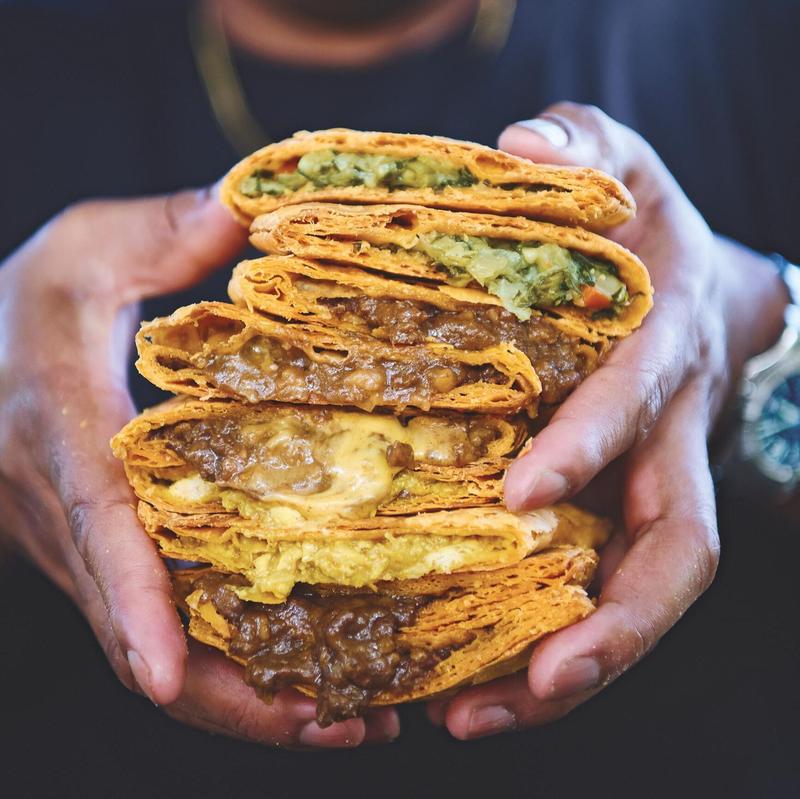
Alison Stewart: This is All Of It on WNYC. I'm Alison Stewart. New York is affectionately known as the 15th parish of Jamaica, and for good reason. There are more than 150,000 Jamaican immigrants living in New York, according to the Center for Migration Studies, and even more in the metro area. The results of those numbers, especially for folks on White Plains Road in the Bronx or Nostrand Avenue in Brooklyn, you can enjoy the best of Jamaican food in the city. Beef patties, jerk chicken. You can also enjoy Jamaican cuisine at Miss Lily's, the popular East Village restaurant and bar off Tompkins Square Park, where my next guest, Andre Fowles, was once a chef.
Andre has written a new cookbook called My Jamaican Table: Vibrant Recipes from a Sun-Drenched Island. He's also a three-time Chopped champion and happens to be a private chef for Bruce Springsteen. "The Boss" wrote the foreword to the book, which is out today. Andre, thank you for being here.
Andre Fowles: Thank you so much for having me, Alison. What a wonderful introduction.
Alison Stewart: There you go.
Andre Fowles: I love that.
Alison Stewart: We got a good conversation coming. You write that Jamaican food is "the soul of the island." What does the food tell us about Jamaican culture?
Andre Fowles: It tells a story of firstly the history of the people and the migration of ingredients. It's a very eclectic cuisine. If you think about some of our favorites. We have the jerk chicken, those spices. Then we have the curry goat, the spices from India. Then we have the Chinese influence. It's a very diverse, delicious combination of cuisines.
Alison Stewart: I'm going to read a little bit from your book. This is a beautiful introduction. It says, "Dappled sunlight flickering through the trees. A tendril of smoke unfurling from the coal fire. The perfume of red peas rising from coconut milk in a well-worn pot. I can almost taste the thyme and Scotch bonnet. It's like I've returned to my grandmother's kitchen. These are the sights, tastes, and smells that bring me to Jamaica." Tell us about your grandmother's kitchen.
Andre Fowles: Oh my gosh. You went straight for the heart with that one. You got me emotional. That's actually probably my best paragraph because, as you were reading that, it took me back, and I got teary-eyed for a hot second. It just showed us food is such the ultimate connector, and it's something that I really wanted to make sure that I captured in the essence of the book. It's not just about the recipes. It's a storytelling, my story. I'm sure other people can connect to my story. Food is one of those things that everyone can sit around a table and share and talk just about anything. It's just something that I'm super proud of.
Alison Stewart: "Mama Cherry" was your grandma. She raised you in Kingston. What did "Mama Cherry" instill in you about cooking?
Andre Fowles: Firstly, show respect to the cuisine. If you're going to cook, give it your all, because that's something growing up in Jamaica, we didn't have a lot back then, but food was one of those things that my mom, my grandmother showed love. They took it extremely serious. They'll go to the market, they'll shop. They get the best ingredients. The preparation was meticulous. They put a lot of effort in to make sure that everything was clean, everything was done well, the techniques and everything was great. I think watching my grandmother worked in the kitchen, it instilled great values of just being disciplined, showing love, being respectful, and being kind.
The reason why she's named "Mama Cherry" is that people often said that she's sweet like a cherry. Her friends would call her Cherry. We call her-
Alison Stewart: "Mama Cherry".
Andre Fowles: -"Mama Cherry".
Alison Stewart: What was the favorite dish she made for you? That you were like, "Oh, yes, "Mama Cherry" is cooking that."
Andre Fowles: Oxtail, hands down. That's why my oxtail is the best. No, for sure. That's why my ox-- because I learned from the master. The way how she prepared her oxtail was literally like watching a French master chef. Everything was meticulous and her techniques and how she really approached that dish was a spot on. Yes, her oxtail and rice and peas was unbelievable.
Alison Stewart: What made you decide that cooking was going to be your job? It was going to be your profession?
Andre Fowles: If I'm being completely honest, growing up in Jamaica, I wanted to practice medicine, but because of my circumstances, my family could not afford to send me to school for that. I was like, "All right, cooking is the next best thing. I'm so good at it." I grew up around food because Jamaica is a cooking culture. Back then, we didn't do takeout. Maybe it's on the weekend, we'll grab some jerk chicken or maybe some patties throughout the week. Most of our meals was being cooked at home, so that was something that came naturally. Of course, Jamaica is a tourist destination, so there's a lot of jobs available. I'm like, "I got to go cook."
Alison Stewart: We're talking Jamaican cooking. My guest is Andre Fowles, author of the book My Jamaican Table: Vibrant Recipes from a Sun-Drenched Island. Also, we'd love to hear from you. What's your favorite Jamaican dish? Maybe your Jamaican from the island, or grew up in the city and you moved here. What does the culture mean to you? Is there a Jamaican dish that reminds you the most of your family? Give us a call or text us at 212-433-9692. 212-433-WNYC. As we said, there are a lot of Jamaicans who live in New York. Why do you think New York and Jamaica share this special bond?
Andre Fowles: The people, because we have a very diverse population in New York, and it's the same for Jamaica. A lot of different people live in Jamaica. Honestly, when you go to Jamaica, you see people of different complexion, but they're all Jamaican. We have a lot of different backgrounds that identify as Jamaican. I think it's very similar to New York. Just the fact that the food is so popular here as well. Everyone loves something about Jamaican food. If you're a vegetarian, we have the ital stew. If you like fish, we cook some of the best seafoods. Of course, those stews you can get over like the curry goats and oxtail, the patties. All these things make it a very attractive cuisine.
Alison Stewart: A lot of New Yorkers know Ms. Lily's. I know Ms. Lilly's. You were the chef there. The culinary directory of Ms. Lily's location in Negril, Jamaica. What do you want customers to feel about Jamaican food when they visit Miss Lily's?
Andre Fowles: It's an experience, firstly because New York is the hustle and bustle city. We're all here to achieve our goals and dreams. When you're out in the street, you feel like, all right, you got to go get this done, get that done. My concept of a restaurant is that once you open that door and you enter, you should be transported. You shouldn't feel like you're in New York anymore. Should feel like you're somewhere in Jamaica having a good cocktail or a Red Stripe beer, listening to some great music, smelling the pimento as it grill as we jerk some chicken, having some pepper shrimp. It's an experience.
We want people to feel like you belong and you're in that moment, and those few minutes or an hour or two, you're just in that one experience.
Alison Stewart: Oh, you said Red Stripe.
[laughter]
Andre Fowles: Yes. Ice cold, Red Stripe. It has to be extra cold. [laughs]
Alison Stewart: Yes, it does. All right, let's talk jerk. All right. What are the elements of true jerk rub or marinade? What does it need to have?
Andre Fowles: Jerk. We can identify jerk as two things. It's a seasoning and it's a method. First thing, the seasoning, it has to have a few ingredients to make it jerk. Allspice pimento, that we call it, you have to have the garlic, the ginger, the thyme, the scallion, and of course, the heartbeat of Jamaica, the Scotch bonnet. Oftentimes, Scotch bonnet, sometimes we can't find that. You can substitute for habaneros, but the flavor is going to be different because Scotch bonnet gives such a-- it's not just about heat with Scotch bonnet. It has a citrus, a fruity aroma that makes jerk really, really special.
Then in terms of the technique, you need some kind of a smoke element to make it extra tasty. Obviously, we can cook in the oven, which will give you a similar taste. To get the perfect jerk, you need a combination of the seasoning and the smoke.
Alison Stewart: Jamaican curry powder is different than the curry powder that we think of. Tell me a little bit about Jamaican curry powder. What sets it apart from other curries?
Andre Fowles: Jamaican curry powder is it's a little bit more mellow in terms of the complexity of the flavor. It's very turmeric, fenugreek, cumin forward and just-- what really makes the curry dishes special is the combination of the Scotch bonnet.
Alison Stewart: It all comes back to the Scotch bonnet.
Andre Fowles: Because the Scotch bonnet is just one of those gifts that keeps on giving, because it's such a fun chili pepper to cook with. Because we do rice and peas, we do soups. If you know the right techniques and the right different Scotch bonnets on how to use them. For instance, an example, when we make rice and peas in Jamaica, we always use a green Scotch bonnet just to steep it in that coconut broth. Because the flavor of the green Scotch bonnet gives you-- It's not as spicy, but it gives you that citrus, fruity note that makes rice and peas taste so good. It's because of the Scotch bonnet.
Alison Stewart: When you say rice and peas, it's not little green peas?
Andre Fowles: No, no.
Alison Stewart: Please explain.
Andre Fowles: It's beans, actually. It's red kidney beans. You know what, we're Jamaicans. We do things our own way. We call it peas.
[lauher]
Alison Stewart: We're talking Jamaican cooking. My guest is Chef Andre Fowles, author of the book My Jamaican Table: Vibrant Recipes from a Sun-Drenched Island. We also want to hear from you. What's your favorite Jamaican dish? Maybe you're Jamaican living in the city. What does the food remind you of home? Or do you have a recipe that reminds you of family or home? Call or text us now at 212-433-9692. 212-433-WNYC. Your first recipe in the book is pepper shrimp.
Andre Fowles: Yes.
Alison Stewart: What's it called on the island?
Andre Fowles: Pepper swims [laughs] All right. The local call it swims. It just meaning like it's swimming but it's pepper shrimp. It's what it is. It's some local shrimp that we catch in the river. It's similar to a crayfish. They're really small, hard shell, but they're super flavorful.
Alison Stewart: How do you make it?
Andre Fowles: Honestly, it's one of the most popular street foods outside of the patties and stuff like that. How it's made, it's Scotch bonnet, of course, you need some pimento, a little bit of vinegar, some salt, some spices. It's primarily done like a preserve method because you can hold that for days. That's how they sell it on the streets in Jamaica in some clear plastic bags. This is like a quick snack.
Alison Stewart: This text says, "My favorite Jamaican dish is stew peas with salted pig's tails and white rice."
Andre Fowles: Ooh. I know. I can relate to that. That person is a real Jamaican right here. [laughs] Because when you talk about stew peas and the pig's tail, you're going real hardcore. That's one of the treats on Sundays. That was one of the things that-- if my mom was having a good week, it's two things. We're eating stewed peas with pig's tail, or we eating oxtail. Because those things are very pricey.
Alison Stewart: I see. Let's talk about Jamaican breakfast. It's a whole culture into itself. What do you need to have a good Jamaican breakfast?
Andre Fowles: Jamaican breakfast. The thing is, with Jamaican cuisine there, there are a lot of options for Jamaican breakfast. The go-to most classic breakfast combination, in my opinion, is the fresh steamed callaloo, the ackee and saltfish, obviously the national dish of Jamaica. Then it could be a combination of sides. My favorite combination is fried sweet plantain because you get the balance of the sweet, salty earthiness from the greens, and then crispy fried dumplings, like Johnny cakes. It's like a fried dough. Super crispy on the outside and light and fluffy on the inside. The combination of everything that's on that plate, and of course, a cup of Blue Mountain coffee, and you're in heaven.
Alison Stewart: Explain to people what ackee is. It's like a fleshy fruit.
Andre Fowles: Yes, it's a very high-fat fruit. It's something that you have to cook it first in water. You have to boil it to make it super tender. Then once you do that, you drain it. Then you saute with your salt fish and your garlic and onion, and that's created ackee and saltfish, or our dish in Jamaica.
Alison Stewart: What does it release in other flavors?
Andre Fowles: Actually, it doesn't have a particular flavor on its own. That's why it works so well with the saltfish, because it's very neutral in flavor. It's really fatty. It's just deliciousness, pretty much. [laughs]
Alison Stewart: Deliciousness. That's all. Let's talk to Zeke in Park Slope. Hey, Zeke, thanks for making the time to call All Of It.
Zeke: Hey, Alison. Love calling every time, calling into you. My brother, you hit my heart, and I'm going to tell you why very quickly, in a good way. My mother's Cuban. My father's Jamaican. I'm Panamanian. Number one. I was in Church Avenue two weekends ago. I was at home, and I had to think, "How do I make cow foot soup?" I haven't had cow foot soup in a while. Yes, boy.
Andre Fowles: Yes, sir.
Zeke: Oh, you were talking now. My first time, it wasn't bad, but it's an art. I wasn't stirring. I was trying to use a pressure cooker the whole 9 yards. I didn't do great, but didn't do it bad. I need your expertise.
Andre Fowles: Wow. I got to say, cow foot soup, you're talking my language because I love soups. Cow foot soups, so the first thing you have to make sure you get a good quality cow foot. Ideally, a pressure cooker would cut your cook time in half. If not, it's perfectly fine. Once you drop your cow foot in your water, you want to start seasoning from the beginning. You add a couple cloves of garlic, your pimento, your thyme. As it starts to cook, you want to skim that scum that comes on the top. Then you want to start to continue adding your flavor. You can add your pumpkin, whatever vegetables you want, but always season as you go along.
Then once it starts getting a bit tender, you want to crank it down to a simmer and then just have it just do its thing for the next maybe 30 minutes, and then you're golden.
Alison Stewart: All right, good luck, Zeke. Let's talk to Denton. Hey, Denton, you're on the air.
Denton: Hi. Good afternoon, Alison. Hey, Andre. How are you doing?
Andre Fowles: I'm doing good, Denton.
Denton: Look, Alison, it's hard to say what's your favorite dish when it comes to Jamaican palate? Absolutely hard.
Alison Stewart: I go for the tough questions. I'm telling you, sir.
Denton: Yes, but we got to get off with ackee and saltfish, AKA codfish.
Andre Fowles: Yes, sir.
Denton: Then there's jerk pork.
Andre Fowles: Oh, gosh, yes.
Denton: Then there's cow foot and butter beans. The list goes on.
Andre Fowles: It goes on.
Denton: Those are my top three.
Andre Fowles: Wow, that's a pretty good list, honestly. That's great.
Alison Stewart: Thanks so much for calling. Let's talk to Brenda in Queens. Hi, Brenda. You called All Of It. Thanks for taking the time.
Brenda: Good afternoon.
Alison Stewart: Good afternoon.
Andre Fowles: Good afternoon.
Brenda: I'm Jamaican, and I have lived in America in New York, almost 40 years. I came here at 22, and I cook Jamaican food a lot. What I've discovered is that I'm very disappointed when I eat out to get Jamaican food, so I cook it myself. Additionally, my all-time favorite Jamaican dish is stew peas and rice. It's because it's something I could eat over and over without feeling like I'm making myself sick or without getting tired of it. There's just something about the stewie red kidney beans that just-- That's the only time I eat seconds. I do not consider myself a foodie, but I can eat that all the time.
[laughter]
Andre Fowles: Oh, yes.
Alison Stewart: Thank you so much for calling. Did you want to respond to any of those calls?
Andre Fowles: Well, stew peas is obviously one of the GOATs of Jamaican food, so, yes, you're definitely doing the right thing.
Alison Stewart: This is a question for you, "Andres, what's the difference between Jamaican food and other West Indian cuisines?"
Andre Fowles: Wow, that's a great question. Wow. I would say the combination of flavors that we have. Because when you think about the Caribbean and the West Indies, we have very similar ingredients. It all depends on what group of people settle on what island that makes up the cuisine. For Jamaica, the fact that we have the Indians and the Chinese, the Spanish and the English, and so many more influence, that's what makes our cuisine so much more eclectic, I would say. The flavors that we can-- Of course, the range that we can pull from those ingredients, I think that's what make our cuisine stands out.
Alison Stewart: You write that Jamaica has a nose-to-tail culture, that you don't waste any part of the animal. How does that influence the flavors?
Andre Fowles: A lot. A lot. Because the scraps, like what people would say, but then those parts of the animal usually carries the most flavor because it takes longer to cook. As it cooks and it breaks down, the flavors gets more complex. That's why oxtail is on a surge right now. You can't afford oxtail these days. It's more expensive than steak. [chuckles] It's because of just the tendons, the fat, everything that's in it. Of course, it goes back to cow foot. It sounds taboo when people are not aware of what it is and how to use it, but once you cook it, it's so delicious.
I would say, yes, those nose-to-tail culture that we have, everything we eat. The cow foot, the cow head, whatever it is, it's just delicious parts of the animal. Our final question is from Cheryl in Brooklyn. "What's the best way to prepare chicken feet?"
Andre Fowles: [laughs] Wow. I would say in soups, that's the best way to do it. In soup. If you think about a classic Jamaican chicken soup, it's always a combination of chicken feet, the chicken backs, whatever it is, stuff that has bones to give it the flavor. I would say the best way to do it is in soups.
Alison Stewart: As I mentioned, you're a Bruce Springsteen chef.
Andre Fowles: Yes, I am.
Alison Stewart: Does he have a favorite Jamaican dish?
Andre Fowles: Actually, yes, he has a few. I would say his go-to favorite is curried lobster and coconut rice with some side of plantains and some steamed vegetables. He loves the flavors of curry and he loves the sweetness of the coconut milk. Whenever I make my curry, I always try to make condiments with it to help to enhance the flavor of the curry. Usually, it's two condiments. It's either a Scotch bonnet hot sauce, but kind of mellow. Then you have a mango chutney or any chutney of its kind. Could be pineapple. Those combination of hot, sweet curry, the coconut rice, and of course roti as well.
It's just like you're having a mini buffet because you can create your own flavor pockets. I think that's one of the things that he really loves.
Alison Stewart: My son loves beef patties. I just had to share that with you.
Andre Fowles: I make a pretty wicked beef patty.
Alison Stewart: I'm going to try.
Andre Fowles: It's in the book.
Alison Stewart: I'm going to try.
Andre Fowles: Take a look at that patty in the book. I put so much work into that recipes because I love my cuisine and I want people to connect with that. I didn't want to do a quick project. This book took me four years because I did the research, I test the recipes, and it's a great book.
Alison Stewart: The name of the book is My Jamaican Table: Vibrant Recipes from a Sun-Drenched Island. It's by Andre Fowles. Thanks for being with us.
Andre Fowles: Thank you. This has been an absolute pleasure. If you guys are in Brooklyn, I'll be at BEM tonight at 7:00 PM.
Alison Stewart: Love that.
Andre Fowles: BEM Bookstore.
Alison Stewart: Thanks for being with us.
Andre Fowles: You got it.
Alison Stewart: There's more All Of It on the way.