
Train Hour Part 1: Train Dreams star Joel Edgerton and Director Clint Bentley
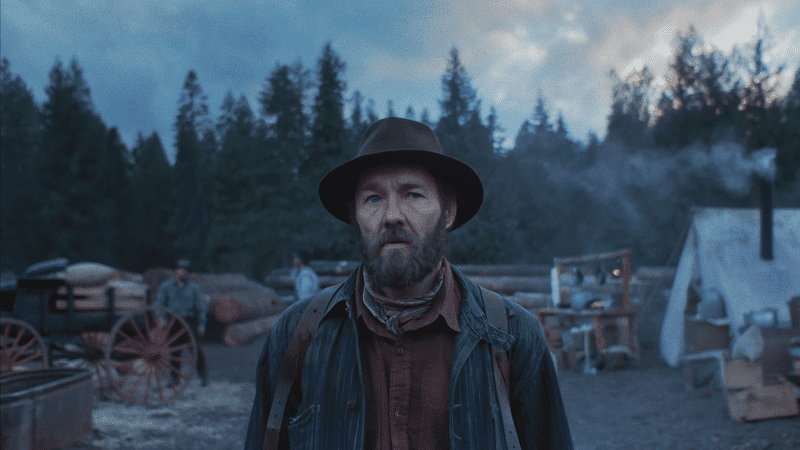
( Courtesy of Netflix )
Alison Stewart: This is All Of It. I'm Alison Stewart, live from the WNYC Studios in SoHo. Thank you for sharing part of your day with us. I'm really grateful that you're here. On today's show, Rolling Stone contributing writer and author David Browne joins us to remember Bob Weir, guitarist and co-founder of the Grateful Dead. Plus, we'll hear excerpts of my 2022 conversation with him. We'll also hear about our music guests for our book club, Get Lit with All Of It. We are reading Ocean Vuong's The Emperor of Gladness. We'll tell you about that next hour. That's our plan. Let's get this started with Train Dreams.
[music]
Alison Stewart: The film Train Dreams is a meditative, lushly shot story about an ordinary man living in a world that is changing rapidly around him. It's based on a 2011 novella by Denis Johnson. Robert Granger is a man of few words, even fewer friends, and no family when we first meet him. He spends most of his time on manual labor jobs that take him far away from home but still out in nature, which is where he seems to feel most comfortable.
He witnesses things that are shocking, but a part of life for people trying to live in the earliest 20th century. Set in the Pacific Northwest, the tall trees, endless vistas, and rugged terrain make the setting a character in itself, played with quiet depth by Joel Edgerton, who won a nomination for best actor for the Golden Globes, and directed by Clint Bentley, who was up for an Oscar for best screenplay for the film Sing Sing last year. Train Dreams will sneak up on you, leading many reviews to call it astonishingly beautiful and one of the best films of the year. We have both Joel and Clint here in studio today. Hey, it's good to see you.
Joel Edgerton: Hey.
Clint Bentley: Thanks for having us.
Alison Stewart: This book is based on this novella by Denis Johnson. It was up for the Pulitzer Prize for fiction. When did you first read it, Clint, and what spoke to you about it as a filmmaker?
Clint Bentley: I first read it when it came out, the year that it came out. I'm blanking on what that year is.
Alison Stewart: 2011, 2012.
Clint Bentley: 2011 or something like that. I didn't know Denis's work. It was just one of the books to read that year. I was on the road a lot, and it was very slim. It's only 116 pages. I read it and just blew my mind. It sent me down a rabbit trail of reading most of Denis Johnson's work and becoming a big fan. I honestly didn't think about it as a filmmaker. It was before I was even a filmmaker at the time. It's a book that you wouldn't necessarily think about adapting. I think a lot of people wouldn't.
It's told in a stream of consciousness style. It's all over the place. It's got a lot of things you shouldn't, or you're told not to do as a filmmaker, with a quiet protagonist and a period piece and stuff like that. Some lovely producers had the rights to the book and came back to me after I made my first film, Jockey, and they were looking for a filmmaker to adapt it. Marissa McMahon, Ashley Schlaifer, and Will Janowitz, who are producers on the project. Then, when I went back and looked at it again as a filmmaker, it just really felt like it could be a special piece. A lot came to life.
Alison Stewart: What were you doing when you first read it? You weren't a filmmaker yet.
Clint Bentley: Oh, I was a, already, failed musician and trying to write a novel that I also ended up failing at that. I was just on the road. I was living in Montreal. I was hitchhiking around and just living on the road.
Alison Stewart: On the Pulitzer Prize site, the novel is described as a novella about a day laborer in the old American West bearing witness to terrors and glories with compassionate, heartbreaking calm. Joel, why did you think that would make a good character?
[laughter]
Joel Edgerton: By the way, Clint, you're not a failure in my mind in any form.
Clint Bentley: Oh, thanks.
[laughter]
Joel Edgerton: I think I found the celebration of an ordinary life a very dignified thing to put on screen. As Clint said, it's not a typical protagonist for a film. The film, like the book, it spans 80 years of one person's life. I feel like 99.9% of any audience in a cinema views their own lives as relatively ordinary. We go to the cinema to dream, but I also think that we want to sit in that seat and see something of ourselves reflected.
I think what is really profound about Denis' novella and the film and the character is that the experiences that Robert goes through are, I think, the great big things in life, falling in love, the joys and the fears around becoming a parent, and of course, some of the bigger, more devastating blows that we might be hit with in life. I think that audiences and myself, when reading the material, could see a reflection of my own life.
Even though we're looking back into another period of somebody else's life, it's a mirror to ourselves. I think there's something really dignified about that. I just felt I could really connect with it. I felt like more than any other character I've played in years. It felt like one of the most personal things I could do, given my life has somewhat intersected with who Robert is.
Alison Stewart: I wanted to go on a picnic after watching this film, just with a loved one, someone that you love. Just sit in a field.
Clint Bentley: That sounds really nice.
Alison Stewart: It's a beautiful thing. It's a very special moment in the film, which I think was interesting, stringing together all of these special moments, which aren't particularly special, actually.
Clint Bentley: I know, and that was the conceit. Joel was just speaking to it a bit of we, a lot of times, don't think about that moment of going on a picnic with a friend or having a beer in the afternoon with a friend, or just waking up and having a lazy morning with your family. Those little small moments, we don't often think about those as the big things. We're thinking about our next vacation or we're thinking about this big Christmas party we're going to have, or something like that.
Yet, when you look back, those moments, the little quiet moments in the afternoon with a loved one or something like that, those are the things that end up giving our life depth along the way and being the things that when you lose somebody or just as we grow old and grow apart with people, as we naturally do, that you look back and you really remember those times of something that felt very mundane at the time but has so much depth and beauty to it and are the things that end up defining our lives.
Alison Stewart: Now, Joel, you originally wanted to adapt this. How did you hook up with Clint?
Joel Edgerton: It was a completely separate and serendipitous kind of thing. I had read the novella, had been given to me as a gift. I think when people gift you a novella or a book, it means something more than if you just randomly go into a bookstore and select something. I read it, immediately fell in love with it, had tried to option it myself, immediately found out the rights were taken. I grumbled a little bit, and then I put it at the back of my mind, and life got in the way, and I went on to other things. Then, out of the blue, I was working in Chicago on an Apple series. I'd since become a father, which, if you've seen the film, that means that playing the character meant so much more to me.
Alison Stewart: So much more.
Joel Edgerton: Wrapped up in all my biggest fears. Clint had reached out about would I like to play Robert in the film. I remember thinking, had somebody tipped him off that I'm such a big fan of this material, and it was a completely separate situation. Then I started to get really nervous because I knew it was a difficult adaptation. I'm glad I didn't have to do it.
[laughter]
Joel Edgerton: I thought he'd just done such a marvelous job. Now, here we are, people, are listening, but I'm now sitting next to one of my newest dearest friends. Clint is such a special, honest, decent. Apart from all his wonderful creative attributes and virtues, he, like the character in the film, is reliable and decent. I immediately was drawn to him, and it was very easy to say yes.
Alison Stewart: Is that unusual for you to become friends with the folks that you work with?
Joel Edgerton: I feel like, like Robert in the film, one of the other connective tissue aspects of the character for me is Robert is a contract worker. I have slightly less calloused hands than Robert. I'm an actor, but I go away from people I love to work for large stretches of time, and I can really relate to that. Along the way, just a shout out to the wonderful William H. Macy, who plays a character on meet on the road, on the contract, you occasionally collect people that you are magnetized towards and you know will be in your life forever. There's a whole bunch that won't, but they could be also a pleasure to be around. Clint, you're not getting rid of me that easily.
[laughter]
Joel Edgerton: I'm already like, "Clint, let's do it again." This was such a great experience making the film. The process and the result, which is quite rare, that both line up to be top shelf experiences. Why not continue the process of working with people that you adore?
Alison Stewart: Clint, what was important to you when you were adapting the film from the novella, things that were hard yeses and hard nos?
Clint Bentley: That's a good question. Thinking about what makes a good adaptation and what doesn't, I'd spend a lot of time thinking about that just as a film lover and a film student. I think the best ones, with exceptions to this rule, but the best ones are very loyal to the spirit of the book, but then let the rest go. They let themselves become-- It's translating a piece of work and an idea, and a story into a new medium.
That was from the very beginning, where I felt like, and along with my co-writer, Greg Kwedar, we needed to be completely loyal to the spirit of the book and to the spirit of this main character. There's certain things like that that you don't touch, you don't change, but the rest of it's interesting. You learn it by doing it, and you learn it through trial and error of what can be translated and what can't. There's some amazing sequences in the book.
There's some of the most affecting things I've read in literature, and some of them it feels impossible to translate. Some of them that became clear even in trying to translate it into a screenplay format. Then some of them we tried very hard to translate it and couldn't translate it, even in making it, and it didn't make it into the final cut. There was that. The other thing is there is a wooliness to the book, in the storytelling itself, that is an integral aspect of it.
The story goes wherever it wants, it takes its tangents, it moves around. I really wanted to bring that into it as well and translate the book into a narrative structure that works for cinema and this type of film specifically, without losing that shagginess of the story that's so integral to the feeling of it.
Alison Stewart: I'm speaking with actor Joel Edgerton and director Clint Bentley about their film Train Dreams, a film about a man and how he deals with the ever-changing world around him. It's currently streaming on Netflix, I should say. Joel, when you're presented with a character who doesn't speak a lot, no external monologues, no huge fight scenes, what do you do first as an actor?
Joel Edgerton: I find the challenge of that really extraordinary. I had had the pleasure of being in a movie directed by Jeff Nichols, called Loving-
Alison Stewart: It was a great movie.
Joel Edgerton: -with Ruth Negga, and in a similar but different way played a character who had a lot of feelings, a lot of impact from the world around him, and didn't really know how or didn't think he was allowed to express himself. I'd had an experience with a relatively non-verbal performance before. I was saying earlier that my life in many ways has intersected with what Robert is like, what Robert's experience in the film is in that I'm a father of two young children. I wrestle with my qualities as dad daily. The joys and the guilts and everything that swirl around with parenthood.
My greatest fears are wrapped up in this film, and again, the work aspects of trying to find a better union of work and family life. I could also really trust that this is one of the most personal performances for me and that if I gave more of myself than I usually do in any performance. I like to, as I call it, sort of dive into the dress-up box and funny walks.
Alison Stewart: Truly.
Joel Edgerton: In honesty, a lot of characters I play, I'm trying to stretch my imagination to play people that I'm not with rhythms that aren't really my own and voices that are not really my own. This was a different thing. The non-verbal aspect of it felt like the thoughts are all in my mind, the feelings are all just really under a very thin skin. I could trust Clint to capture them with his incredible cinematographer, Adolpho Veloso, who just pictures this world in such a divine way.
Alison Stewart: How do you direct an actor where a lot of it is internal?
Joel Edgerton: He's very shouty.
Alison Stewart: Shouty. [laughs]
Clint Bentley: I scream a lot. I yell.
Joel Edgerton: [unintelligible 00:15:27]
[laughter]
Alison Stewart: Come on, come on, Joel.
Clint Bentley: [unintelligible 00:15:32]
Joel Edgerton: Cry.
[laughter]
Clint Bentley: I don't want to minimize the thought that goes into it and everything, but it is very easy with somebody like this, especially somebody like Joel, who is an incredible actor, everybody knows that, and a very deep and resonant actor. Then, also is a great writer, director, and storyteller himself and has made a lot of great movies and understands we can have very frank conversations about, "Okay, how many times should this character cry in this movie? How big should the cry be at this moment, thinking about what we need later on?"
Or just those little nuanced decisions that you have to make in terms of calibrating a performance that is a large part on the shoulders of the actor, but then is also on the shoulders of the director to think about and to try and think ahead to the edit to help craft that performance in the edit to where it does justice to what the actor did. I will say one of the things that makes this character work and makes this film work really is the fact that Joel can do so much with so little and can do so much with a look.
We talked about early on, we had the help of having a narrator who could narrate some thoughts in this character's mind. I found a lot of times in the edit, we would shoot a scene that had narration over it of what the character was going through, and we were just pulling out that narration because what he was doing-- Not to embarrass you by sitting next to you, but what he was doing was so beautiful and so deep. It was taking the viewer much farther than whatever the narrator was saying.
Alison Stewart: Joel, what were your challenges with how to embody his character, because you don't speak so much? You have to have a certain position, how he stands, how he reacts to something. How did you develop that?
Joel Edgerton: It's a real journey in the film from a very capable physical laborer, helping him build the railroads and in the logging world, to go from a very physically capable person to the later decades of Robert's life. I found the physical challenge of playing him as he ages through the film really interesting to think about how a person's physical life or their job shapes their body later in life, how they move, how they turn, and the way they view the world.
I saw Robert as a child that just kept getting older on the outside. It's really quite an open person about all these things. He's not a judgmental person. There's almost not a bad bone in his body, but his bones get fragile as he gets older, still allowing that physical capability to show itself, even in the later ages. He's not just frail. He's frail because of his work. The other thing was how experience in life, and I'm talking about the darker blows in life, can really bear down on a person, too, and their demeanor.
We see the joy stripped from him at certain points, and allowing when that they-- Like the forest, the metaphor of the forest regrowing, when joy returns to a human being, what's that sound of laughter in a person when you haven't heard them express joy for such a long time? We did have a lot of conversations about this, and then you get to set, and you throw all the conversations away and let it happen.
Alison Stewart: Clint, directors have to make decisions repeatedly from the minute they hit the ground. What was a decision that was hard for you to make?
Clint Bentley: Oh, man, that's a great question. I'm trying to sift through the thousands of difficult decisions. I think there were times where it was tough to decide. We shot this film in 29 days. We moved very quickly, and we found ourselves in moments where we were going to cover this scene in four takes or four setups and four shots, and now we've only got time to do it in two. That always, we got into a rhythm, as Joel said, and shout out to our lovely cinematographer, Adolfo Veloso-
Alison Stewart: [unintelligible 00:20:40]
Clint Bentley: -where we could operate almost more on an intuitive level and find our way through those things. One of the more difficult things was really just what to cut out from performances. There's so much. We let scenes breathe, and anytime we had a moment after we wrapped a scene, if we had 10 more minutes before we broke for lunch or something like that, we would just take Joel and Felicity and just go off with some chickens or something like that and make a little scene.
There's so much. There could be a whole movie just of their life around the cabin. We've got enough material for that. I think that was the hardest. The most difficult decisions were in the edit of just cutting out beautiful things and thinking about that.
Alison Stewart: Robert does fall in love in this film, as you mentioned. Felicity Jones plays Gladys.
Clint Bentley: She's amazing.
Alison Stewart: What does she bring to his life?
Joel Edgerton: Love is joy, and they're for anxiety. Why I say that I'm not trying to equate love with anxiety, but the moment you stop living life as an island, and you care about another person, suddenly there's a whole new bunch of things that can be concerns for you. One of the things I love is there's a line of dialogue where Robert, who we find out is an adopted child, which can be a profound thing that I can't relate to, but I can start to wonder about.
He's playing with his baby on the bed, and says, "Do you think that she knows that I'm her daddy?" I just find that idea really profound because, as a child of parents, I always look up and see parents as protectors. It reminded me, because I am a dad, how much anxiety goes into the idea of being a parent and being in love. The moment you have people to really care about, that can be the best thing in the world, but it can also fill you with all sorts of fears.
Alison Stewart: Paralyzing sometimes.
Joel Edgerton: Yes. The film really dives in to that. I think it's one of the reasons why people can reach into it more than any other film I've ever been in. I think this film finds or expresses or feels it has different meaning for any different individual that watches it because it holds a mirror up to your own experience.
Alison Stewart: It's subtle in the film, but the film shows how manual labor became automated fairly quickly. We see this with your character, and Robert has to adapt. It feels topical given the AI of it all right now. Was that on your mind when you were adapting this, or was a happenstance?
Clint Bentley: When we started working on this, and Greg and I started adapting this, it was back in 2021, I think. AI was just like it's insane to think about how quickly it has developed, but we were just starting to talk about it at that point. It is no new thing in the past 200-some odd years to talk about how labor and how working people are ground up in capitalist societies. Not just capitalist societies, but the way that economies have grown in the past 200 years.
Whether you talk about coal miners or whalers, or Amazon delivery drivers, I saw this with my parents, who went through this in their various ways. That was top of mind in the adaptation to just show, hopefully in not a heavy-handed way, but to show how our little lives a lot of times are defined by these systems that we have no control over. They might as well be tornadoes or Greek gods or something like that that can upset our lives in ways that we have no impact over.
Robert and Gladys, all they want to do is be together and have their little house, and yet they've got to try and figure out like, "How do we make a living? Is it better for me to be gone and make more money or to be in town and be present, but we can barely get by." They've got their dreams that they can get upset by natural disasters. That's as big of an impact on his life along the way as the fact that, as technology progresses, it leaves him as a relic in his own time, which I think a lot of us are feeling younger and younger, unfortunately.
Joel Edgerton: It's incredible how the novella, and therefore the film, reflects so many things. Again, we're looking the early 20th century. These other things that occur within the life of Robert, his observation and awareness of the use and mistreatment of immigrant workers, is a thing that has not changed. In fact, it obviously is intensifying our relationship with harvesting the planet and the naivety around some of the characters' point of view.
As we evolve towards the end of the film, Kerry Condon's character, a conservationist, and her expression around the interconnectivity of all of us with all things and our connection with the planet, there's these things that we think we wouldn't see in historical documents and pieces of writing. Of course, they're very, very relevant as they swirl around in Robert's life, as he observes them with this sort of, like I said before, almost like childlike-
Clint Bentley: Naivety.
Joel Edgerton: -yes, naivety.
Alison Stewart: The name of the film is Train Dreams. I've been speaking with actor Joel Edgerton and director Clint Bentley. You can watch it now on Netflix. Thanks for being with us.
Clint Bentley: Thank you, Alison.
Joel Edgerton: Thank you.