
To Go Grey or to Not Go Grey?
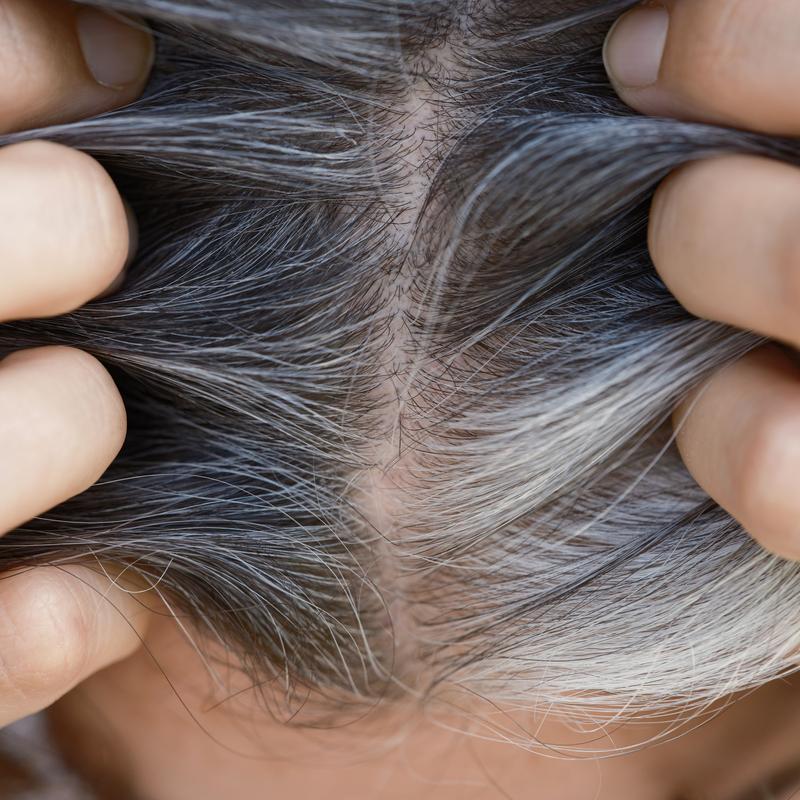
Alison Stewart: This is All Of It on WNYC. I'm Alison Stewart. A woman recently wrote into The New York Times with a question. "I haven't seen my true brown hair in decades, and I'm starting to feel like it's time to embrace my natural gray. Is this a bad idea?" More than 1,500 people responded to her, including my next guest, New York Times chief fashion critic Vanessa Friedman. In her column, Ask Vanessa, she writes, "The decision about which way you go depends as much on psychology and emotion as it does on any practical considerations, though many of those are involved."
Listeners, we want to hear from you. How have you navigated the psychological, emotional, and practical considerations of going gray or not? Have you yourself let your hair go gray? Are you dyeing it? What does that decision mean to you? Our phone number is 212-433-9692, 212-433-WNYC. We are now talking to Vanessa Friedman. Hi, Vanessa.
Vanessa Friedman: Hi, Alison. Great to talk to you.
Alison Stewart: Nice to talk to you as well. What did you think when you received this question, which read in full, "I haven't seen my true brown hair in decades, and I'm starting to feel like it's time to embrace my natural gray. Is this a bad idea? How does one look less ratty while growing out their natural hair color?"
What did you think when you got that letter?
Vanessa Friedman: The first thing I thought was, "Wow, I ask myself this question all the time."
[laughter]
Vanessa Friedman: I feel torn about it all the time. Then, the more I started thinking about it, the more I thought it gets into so many complicated questions we have about our identity as women, as men, as people in the workforce. It has to do with our complicated feelings about aging and what that means because gray hair is, for most of us, really a symbol, a visual signifier of getting older, and that's a complicated thing.
Alison Stewart: One of the comments in the article read, "I have been threatened that not coloring my hair makes me look old. Well, I am old. What is the problem with that? I am in the winter of my life." What do you think of that attitude?
Vanessa Friedman: I think she's absolutely right. We live in a culture that is increasingly focused on youth. If you look at social media, it is full of women, in particular, who seem to have completely erased age from their faces and their hair, whether that is through filters, cosmetic surgery, or what have you. Increasingly, there seems to be this messaging around age that really, it should be erased, certainly when it comes-- It's a very, very gendered message because classically, men are fine getting wrinkled and gray. In fact, they're supposed to.
When we see men like that, we think, "Oh, there is someone with experience." While you would think it would only be rational to feel the same way about women, that is not the case. Women, because their appearance is associated with fertility, which is associated with youth, are supposed to be perennially young, even when they are clearly in positions that have required decades of experience to get to.
Alison Stewart: Let's take a couple of calls. Let's talk to Diane in Union, New Jersey. Hi, Diane. Thank you for making the time to call All Of It.
Diane: Hi, thank you for talking about this issue. I'm in the arts and sitting in an orchestra pit of a show or something. It's become important to look young, even though the audience actually can't see you unless they peer over. Orchestra jobs and stuff like that, it's very youth-oriented for women. A fantastic flutist who plays for the Metropolitan Opera was told that she should do something about her hair. I'm having trouble because I want mine to grow out to let the gray, but events keep coming up, and it's growing in unattractively and I don't know how to get rid of the-- I only use semi-permanent dye, but it still is permanent on three-quarters of my hair, it seems to be. I don't know how to bleach it out. I don't want to damage my hair any worse than dyeing does. I don't know what to do.
Alison Stewart: Is there a way to let your hair grow gray and to keep it healthy?
Vanessa Friedman: Unfortunately, it's always going to be a painful process. There's really no way around it. As far as I could tell from all the hairdressers I spoke to. You can cut it all off, you can hide. It was the one was one of the opportunities that people found during COVID because lockdowns did provide these periods where you were not in the public eye. A lot of women seized that moment to grow their hair to get through that painful stripy period. You can imitate Alysa Liu and just go with the different [unintelligible 00:05:20] and stripes. Maybe it's a trend that we can all exploit that way.
In the meantime, there are ways to help. There's something called Color Wow, which is a kind of powder that you use, almost like eyeshadow, and you can paint it on your roots, and that definitely is not permanent. That can ease the transition. You can go shorter, you can pull your hair back in a ponytail, which kind of changes how dramatic it looks when you have roots in hair that is a very different color. You can go to the salon and submit yourself to the expensive and time-consuming process of having your hair colorist help you through it. It is expensive and time-consuming, but in the end, maybe you get your money back.
Alison Stewart: I'm speaking to The New York Times chief fashion critic, Vanessa Friedman. We're talking about going gray, and we are taking your calls. Have you let your hair go gray? Are you dyeing it? Are you navigating that choice right now? Call or text us at 212-433-9692, 212-433-WNYC. This text says, "I love, love, love gray hair on other people and on myself. In fact, I'm kind of disappointed that at 71, I have so little of it. When I started getting some grays in my 30s, the hairdresser used to try to cut it out, and I told her to leave it because I earned every one of them. They are true to me."
Let's talk to Ginny, who's calling us from Bloomfield, New Jersey. Hi, Ginny, thanks for taking the time to call All Of It.
Ginny: Hi, thanks so much for taking my call. I listen to you every day.
Alison Stewart: Oh, great. Thank you.
Ginny: Here's my story. I ended up working from home during the pandemic, like many people, and so I decided to let my hair go gray. I let it go for about three years, and I kind of liked the way it looked. And then very unexpectedly, in 2024, I got laid off from my job, and I was past 60, and I had one interview on Zoom. It was so clear to me that my interviewers, who were women, thought that I was too old to handle this job, that I made the tough decision to go back to dyeing it again because I just felt that I wouldn't get a fair shot if I didn't.
Alison Stewart: Thank you so much for calling in, Ginny. That's a real issue for women.
Vanessa Friedman: It absolutely is. Nora Ephron, who was an incredible writer, filmmaker, woman, commentator on the state of women, said that she was convinced that hair dye had essentially extended the working life of women dramatically. Had been the most important factors in women becoming powers in the workplace that she knew. I think she's right.
Alison Stewart: I'm sort of interested in the idea of COVID. Did our beauty standards change during COVID?
Vanessa Friedman: I think they did, but I also think one of the points worth making is it's not just your hair color; it's also your hairstyle and the rest of your style that contributes to perceptions of aging. Some of the comments on that story were from women who said, "I keep my hair very long," for example, "even though it's gray, it kind of conveys a more youthful attitude," or, "I wear my hair in this kind of funky style that conveys a more youthful attitude."
There are ways to kind of mitigate the perception of gray as necessarily equating to old. I think if you wear your hair in a very classic, kind of sculpted, immobile,-
Alison Stewart: Immobile. [laughs]
Vanessa Friedman: -shoulder-length bob, that does date you. It's worth thinking about the whole package.
Alison Stewart: Immobile. That is so funny. Let's talk to Cheryl from Lyndhurst. Hi, Cheryl. Thanks for calling All Of It.
Cheryl: Thank you for taking my call. I'm 73. I was a blonde. Then my hair started growing in with the gray and the blonde, and I'd get highlights. I always got a lot of compliments on it. I was very happy with the way it looked. Then last year, I was diagnosed with breast cancer. Decided to shave my head before it all fell out. When it grew back, it grew back stronger and a lot curlier. I said, "You know what? As much as I like the color," I've been somebody who's always colored within the lines my whole life, "and when you have cancer, it kind of changes your outlook on life," so I walked into the hairdresser's one day and said, "I want to go purple," and that's what I did.
Alison Stewart: Good for you.
Vanessa Friedman: I love that [unintelligible 00:10:19].
Alison Stewart: Let's talk to Ellie in Brooklyn. Hi, Ellie, thanks for calling All Of It. Ellie, are you there?
Ellie: Hi. Yes, yes.
Alison Stewart: There you are.
Ellie: Yes. Can you hear me?
Alison Stewart: Yes, you're on the air.
Ellie: I want to push back on the idea of dressing and styling it youthfully and still looking young. I did it in a rip-the-bandaid-off way. I went to my hair colorist, they bleached it, dyed it titanium, and became gray without ever growing roots. Then my natural hair just grew in and nobody could tell in that way. I know it made me look older. Same physicality, same everything. I can say that I went from never getting seats on the subway or being offered seats on the subway one day and the next day, always being offered seats on the subway. That's my unscientific study. I push back on the idea of being able to overcome it by dressing or styling yourself youthfully. It's just a fact. People assume you're older with the gray hair.
Alison Stewart: Thank you for calling in. One commenter on the piece wrote, "As a teacher, being gray at a younger age seems to give me a sense of authority and wisdom that I really didn't have. It helped me with my students' parents." How does this speak to some sort of positive cultural associations around gray hair?
Vanessa Friedman: Certainly, this is also, interestingly, a problem that I think falls probably unfairly on women rather than men. Often, when you're young in the workplace, if you look particularly young, people treat you as a less serious individual. They take your thoughts less seriously; they look for someone who's got more authority than you do. Gray hair does convey authority. That's why we think that men with gray hair are respectful people. It works, I think, when you're younger, maybe to your advantage. As many [unintelligible 00:12:33] have pointed out, I do think there are lots of prejudices associated with gray hair.
Alison Stewart: I'm speaking with The New York Times chief fashion critic, Vanessa Friedman. We're talking about going gray, and we're taking your calls. Have you let your hair go gray? Are you dyeing it? Are you navigating that choice right now? Call or text us at 212-433-9692, 212-433-WNYC. Let's talk to Jeff in SoHo, who is the owner of a salon. Hi, Jeff.
Jeff: Hi, Alison. How are you?
Alison Stewart: I am doing well.
Jeff: Thanks for taking my call. I'm the owner of IRON | FEATHER down in SoHo, neighbors with WNYC. I just want to say that through my years of working in the industry and seeing women of all different ages and career paths and all that, I think there's nothing more confident than a woman who is comfortable embracing her own skin and comfortable with making her own choices. Whether that means she wants to come in for the highlights and get the grays covered up every four to six weeks, if that makes her happy, then by all means, it's amazing.
The women that embrace their grays, I find that there's nothing more strong or beautiful than that. I think getting older is a blessing that not everybody is afforded. The lines, the wrinkles that eventually come, the gray hairs, they're just a badge of life. Do whatever makes you happy and let your hair colorist help you on that journey, however you'd like.
Alison Stewart: Thanks so much for calling in, Jeff. Let's talk to Beth in Old Bridge, New Jersey. Hi, Beth. Thanks for calling All Of It. You're on the air.
Beth: Thank you. I love your show and I love this topic. I let my hair go gray during COVID. It was one of the best things, if there was anything good about COVID, because I was dyeing my hair every three weeks because I had dark brown hair, at least as I remember it. My neighbor happened to be a hairdresser. As we were emerging out of COVID I said to him, "How do I grow this out?" I was done. He put blondes in it to gradually let it grow out. I have somewhat curly hair. I keep it shoulder length. I recently found a hairdresser that's amazing. I love my hair. I get compliments since I've gone gray on the street, in stores all over the place. I love it. I'm not changing it. But I have to say— I'm single—that I think men do not look at women the same way—most men, maybe, my impression—at women with gray hair or silver hair, whatever it is.
Also, I agree with that person who said she's on the subway. I get more invitations to sit down than ever happened in New York, which is lovely, but also disconcerting. I don't love that perception, but I do love the way I look.
Alison Stewart: Well, thank you for sharing your story. We appreciate that. Let's talk about the gender issue here. Men versus women. I'm talking about you, Anderson Cooper. [laughs] How did men respond to the story? The question that was asked?
Vanessa Friedman: Some of them told me stories about their wives and their attitudes toward their hair. Some of them talked about whether they found women with gray hair attractive or not. It certainly seemed to be less of a pressing issue for them than it has been for many women. Some talked about dyeing their own hair. It makes me think about when George Clooney dyed his hair to do Good Night, and Good Luck on Broadway. He dyed it black, and he got so much pushback for it and got so aggressively mocked for doing the opposite, for not having his silver fox look. Men have almost the opposite issue where they are mocked if they're seen to care too much about their appearance and care too much about their hair. One of the really interesting things to me is in China, it was tradition for a very long time for men in power, particularly men in the government, to dye their hair black because it was seen as a sign of virility and strength. It was a really big thing when President Xi went gray.
Alison Stewart: Let's talk to Kevin, who's calling in from Manhattan. Hey, Kevin, you're on the air.
Kevin: Hey, Alison, I love your show, and you ask amazing questions. I went prematurely gray at 24. My mom was gray at 18. I colored my hair from 24 to 52. At 52, I just started on this health journey where I just started eating a plant-based diet and eating a diet rich in antioxidants, so I just figured the chemicals would be bad and all that stuff that I'd been putting into my body for years. That's why I stopped. It's been such a positive experience. Everyone just says I look better and younger with gray hair. My natural color was sandy blond. I was just coloring my hair the color it had been. Still, people like the gray a lot better. It's been a positive experience.
Alison Stewart: Thanks so much for calling in, Kevin. This says, "Went gray at 20 and dyed it until 50. Who knew how gorgeous in pure white my real hair color was? It's been so liberating and fun to show the real me." In our last minutes. Vanessa, what do you want people to think about if they're deciding, "You know what, I think I'm going to go gray"? What do they need to know?
Vanessa Friedman: I think they have to think about how it will make them feel, how they will present in the world. We can get through the hard part. Whatever, six months, a year, it kind of sucks, but you get what you get at the end; you get where you want to go. The question you have to really ask yourself is, "Do I want to go there?"
Alison Stewart: Vanessa Friedman is The New York Times chief fashion critic. We appreciate you taking the time. Thanks so much for being with us.
Vanessa Friedman: Great to talk to you.
Alison Stewart: Thanks so much to all of our callers for calling in. Coming up on All Of It, you hear a lot about pop culture on this show, but next, we're going to talk about people who often intentionally shun it, like Atlantic contributing writer Anna Holmes, who just wrote a piece about her tendency to avoid popular things, even if she ends up liking them a year later. Coming up, she joins us to talk about it.
[music]
We want to hear about any shows, music, or movies you've evaded over the years. That's next. It's happening after the news.
[music]
Copyright © 2026 New York Public Radio. All rights reserved. Visit our website terms of use at www.wnyc.org for further information.
New York Public Radio transcripts are created on a rush deadline, often by contractors. This text may not be in its final form and may be updated or revised in the future. Accuracy and availability may vary. The authoritative record of programming is the audio record.