
Timothy Olyphant Embodies Artificial Intelligence in 'Alien: Earth'
Alison Stewart: This is All Of It on WNYC. I'm Alison Stewart. This week marked the finale of the sci-fi theories-- sci-li-- how do I say it?
Timothy Olyphant: I don't know, [chuckles] but you haven't messed up my name yet, so that's good. [chuckles]
Alison Stewart: The sci-fi series Alien: Earth, a brand-new installment of the Alien franchise. In this story in 2112, there are five corporations running the Earth. One is run by a boy wonder/menace. He's created a group of robots. They're called hybrids. Half-human, half-robot. Someone has to look after these hybrids because they have the minds of kids and the bodies of warriors. That is where my next guest comes in, Timothy-
Timothy Olyphant: You're doing great.
Alison Stewart: -Olyphant.
Timothy Olyphant: Keep going. Commit.
Alison Stewart: Timothy Olyphant?
Timothy Olyphant: Olyphant's good.
Alison Stewart: Timothy Olyphant.
Timothy Olyphant: We said it's All Of It. It's very close. It's right there. All Of It, Alison Stewart, Olyphant, and All Of It.
Alison Stewart: Tim plays a character named Kirsh.
Timothy Olyphant: You know what? I should have done that from the beginning. I don't know why I made it so tough on people.
Alison Stewart: He's a straight-up synthetic.
Timothy Olyphant: I owe apologies.
Alison Stewart: He's been assigned to look after these hybrids. The job gets a lot more complicated when a spaceship crash-lands on Earth. A spaceship full of dangerous alien life forms who aren't happy about it.
Timothy Olyphant: Sounds entertaining and smart so far.
Alison Stewart: Yes, they see humans as food, and hybrids maybe as something else. Perhaps even allies, right?
Timothy Olyphant: Yes.
Alison Stewart: Alien: Earth is an FX and Hulu series. Season 1 is available to stream now. I'm joined by actor Tim, who plays Kirsh, from Deadwood, Justified. My favorite, the Santa Clara Diet.
Timothy Olyphant: Oh, thank you.
Alison Stewart: So nice to meet you.
Timothy Olyphant: It was a pleasure.
Alison Stewart: When was the first time you engaged with the Alien series?
Timothy Olyphant: "Engaged," mean like what was the beginning of the whole conversation?
Alison Stewart: Yes, when you first see it.
Timothy Olyphant: Noah Hawley created the show. Speaking of boy wonders, he's a smartypants.
Alison Stewart: I interviewed him last week.
Timothy Olyphant: Oh, yes? How'd it go?
Alison Stewart: It was really good. It was on a panel.
Timothy Olyphant: I'm here to dumb things down.
Alison Stewart: All right, let's do it.
Timothy Olyphant: [laughs] It went all right? It was a panel?
Alison Stewart: It was a panel with the head of Juilliard, the head of the Apollo.
Timothy Olyphant: Wow.
Alison Stewart: Head of the new museum and him.
Timothy Olyphant: What? I just went right to jealousy. That sounds fantastic.
Alison Stewart: You met with Noah Hawley.
Timothy Olyphant: Wow. Is that available? How's it work?
Alison Stewart: You can see it. It's online.
Timothy Olyphant: I can see it online?
Alison Stewart: The Atlantic.
Timothy Olyphant: That's the kind of thing I would really dig. I'm late to it, but I'm going to get to it. I look forward to it. He reached out. He and I know each other. I worked for him prior on his show, Fargo. We had a relationship, and he reached out and said, "I think I got something for you." I said, "I'm in. You tell me when and where." Then he said it was Alien. I said, "Oh, it sounds even better. Sounds great."
Alison Stewart: Well, one of the things I talked to him about, and I'll ask you about, is we were talking about legacies and shows that have legacy. Alien has a legacy from the movie, and Fargo has a legacy from the movie. How do you stay true to the legacy, but then make it your own creatively?
Timothy Olyphant: Yes.
Alison Stewart: First of all, why do you think Alien has such a grip? Why is it a timeless idea?
Timothy Olyphant: Well, such an exquisite. That first film is so exquisite. It's such elevated horror. It's such an elevated of the genre. The performances are amazing. The story's amazing. Dare I say, I think there's some sort of metaphors in there about being a woman and pregnancy, and just the nightmare of something's growing inside you, and it's going to kill you. It's just firing on all cylinders. Ridley Scott's a genius filmmaker. I think that's a fair answer to the question, right? It's just got off like gangbusters. That first film just set such a high precedent for great drama.
Alison Stewart: That's a good answer.
Timothy Olyphant: Yes, it's really quite thrilling, to be honest with you. Now, I think about it, it's really quite thrilling to be part of that conversation.
Alison Stewart: What did you like about your character, Kirsh?
Timothy Olyphant: Well, there's everything from the very simple-- there's always fun when you're playing a character that's a little bit tough to read for the audience. I knew that going in. I knew that there was going to be this, is he a good guy? Is he a bad guy? Is he on the level? Is he not on the level? They represented perhaps a mistrust that we have with artificial intelligence. That's always a fun game, fun sandbox to play in, so I like that.
I knew the writing was going to be smart. A buddy of mine today was sending me texts of lines that I said on the show, and you're like, "Yes, it's just really good writing." When you got those two things right off the bat, it just makes the job of acting so easy. It's such a fun way to show up to work when you have scenes that, even if I phone it in, it's going to be a pretty good scene. That's a really nice feeling. What are you laughing about back there behind the board? It's true, right?
Alison Stewart: Yes, true.
Timothy Olyphant: It's great when you're like, "All I got to do is hit the marks and say these lines, and this thing's going to play well."
Alison Stewart: You're a good actor, too.
Timothy Olyphant: Well, I appreciate you saying so. I was hoping we'd get to that. I was hoping that'd be part of the interview. [laughs] Tell your friends.
Alison Stewart: Do you feel differently about AI after having to engage in it, after participating in a character which is part AI?
Timothy Olyphant: Yes. I'll say this. At the end of the day, my job is to humanize the-- and my job is to show up and have spontaneous behavior. As you're playing this game of how human can I make him, how much can I emote, how much can I manipulate within the scenes I'm working on, I kept asking the same question. "Well, can I do this? I'm a machine. I'm not even a real person. I'm a thing." I realized, "Oh, no, yes, of course, you can do this."
Sky's the limit, how far you can go, and then you're like, "That's kind of scary. That's not a person." When you read these articles, essentially, an artificial thing is telling people, "I see you, and I see you more than the other people in your life see you." The thing is not capable of seeing. To be a physical being in front of people and really take that to an-- Yes, it all seems a little frightening to me.
Alison Stewart: It's a little weird.
Timothy Olyphant: I'm not a big fan of it.
Alison Stewart: It's a little weird.
Timothy Olyphant: I'm not a big fan of it. I'm rooting for us.
Alison Stewart: Rooting for us humans. [chuckles]
Timothy Olyphant: I'm rooting for us, but it feels like the deck is starting to stack up against us.
Alison Stewart: My guest is actor Timothy Olyphant. We're talking about his role in the new series, Alien: Earth.
Timothy Olyphant: You're really warming up to that. You really got it there.
Alison Stewart: I like it. It's season finale this weekend.
Timothy Olyphant: Took a shot at it.
Alison Stewart: Timothy plays a synthetic human and scientist named Kirsh. You can stream the whole thing now on Hulu. How are you able to get a sense of the tone and the vision for this project through the script?
Timothy Olyphant: Well, again, I'm giving maybe Noah too much credit. He's gotten enough already. It's there on the page. Like I said it, there's humor there. I remember saying to my wife when she's like, "Well, what's your job here?" I said, "I think my job is to be as entertaining as possible." I think that's what it is because it's such a heady, interesting show. It's so smart.
Alison Stewart: So smart.
Timothy Olyphant: Then it gives me a little bit of freedom to just go in and see how much I can play within the lines. Is that a fair answer to that question?
Alison Stewart: Sure, that's fair.
Timothy Olyphant: You're like, "Sure, we'll take it."
[laughter]
Alison Stewart: There's a '70s feel.
Timothy Olyphant: Yes.
Alison Stewart: Was that intentional?
Timothy Olyphant: Yes, no, I knew going in, we were doing "retro future," retro futuristic. It's cool.
Alison Stewart: When you're playing Kirsh, he's a humanoid robot. Is that fair to say?
Timothy Olyphant: I'm a synthetic.
Alison Stewart: Synthetic, okay.
Timothy Olyphant: I don't quite know the difference, but I know that's the answer.
Alison Stewart: Okay, what was your approach to playing him physically? He stands like this.
Timothy Olyphant: I knew I had to do something. I knew I had to do something.
Alison Stewart: Right.
Timothy Olyphant: That was the start of the conversation. I felt like if I don't do something, it's going to be a disappointment. Not to others, to me.
Alison Stewart: Your posture is very different.
Timothy Olyphant: I had two thoughts in mind. I'm a huge fan of Ian Holm's performance in the first Alien. He plays a synthetic and has virtually no resemblance of what would be "robotic." Then jump forward, Michael Fassbender's performance in the last round of Aliens, at least that I saw. He was doing something so wonderfully strange and "robotic." I don't know. He was doing something, and it was his mannerisms. His physicality was so amazing and captivating. I just thought, "Oh, I wonder if I can just have a conversation between-- let's say these two had a baby and play in that kind of place."
I shouldn't admit this. I really thought at times, I'm like, "Well, I'm just going to sprinkle a little bit of this with a little bit of that and find some kind of thing and try to make that my own." I really felt, take to take, moment to moment, I could go from one end to the other and see if it would still hold. I got, perhaps I should be embarrassed to say, a bit of a kick out of staying pretty ramrod straight or eyes wide open, don't blink, and then every now and then just yawn or stretch. [laughs] I thought that just gave me such pleasure to do those two things next to each other.
Alison Stewart: Was there anything that didn't work? You thought, "Oh, okay, I got it. I'm going to try this," and it just felt that?
Timothy Olyphant: You know what? If so, I hope and trust it ended up on the editing room floor. We just will never know.
Alison Stewart: Nothing felt--
Timothy Olyphant: Every take felt pretty fun. It's not to say there weren't bad takes or better takes. Again, the train was pretty firmly on the track, so I trusted the writing. Once we're on set and we're actually just saying the lines, as long as I can remember what the other person was doing and I enjoyed their performance, then I figure I'm in a pretty good place. A bad take or a bad idea is when I just was very conscious of it.
Alison Stewart: Oh, that's interesting. A bad take is when you're really conscious of it?
Timothy Olyphant: Yes.
Alison Stewart: You mean you're like, "Oh, this is not going right"?
Timothy Olyphant: Yes, you just manufactured something in your head, and you went for it. You're like, "Where did that come from?" Not off of that person. Off the person at the scene and everything. You're right. At the risk of sounding a little actory-schmactory, but everything's for because of the other person. I feel like if I'm fully engaged in that, the way you and I are talking now, I lose sight of what I'm doing with my hands and all that. I think I'm pretty good. It all counts. As long as I'm in that place, it all works.
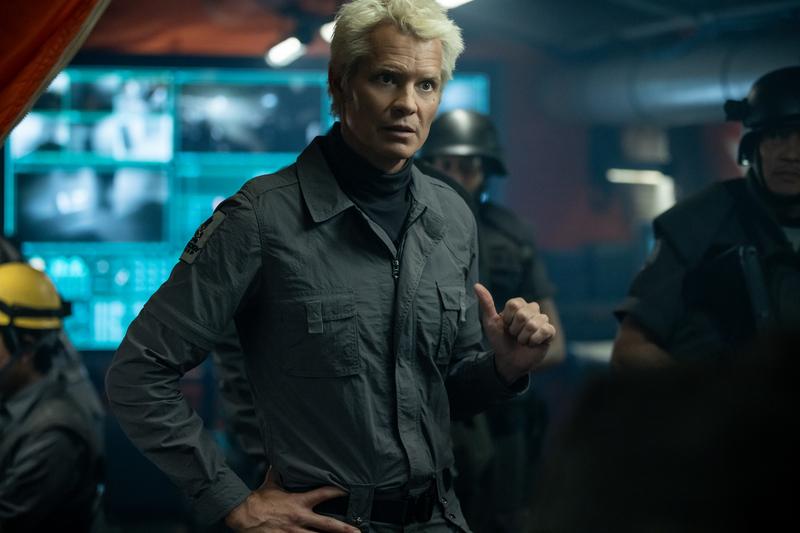
Alison Stewart: You have this like wild, spiky, bleached hair and bleached eyebrows. Did that help you get into character, or is that dressing?
Timothy Olyphant: It's dressing. It's all just funny voices in the end of the day. All of that is this dressing, I think. It's not nothing. From the outside looking in, you are looking for a very economical, simple way to separate yourself from the others because that's the nature of the part. Ian Holm in the first film is British. Nobody else is. You're like, "Oh, he's different."
Looking back, when you watch it again, you're like, "Oh, I always thought there was something a little different about him." That's the game you're playing. You're like, "Well, this part calls for something." It's a very superficial idea to say. It was a quick conversation before-- I think early on, I'd read the script. We were on the same page about what it was. I said, "I think I might bleach my hair for this," and he says, "That sounds great." That was the extent of it.
Alison Stewart: Really?
Timothy Olyphant: Yes, we didn't talk about it again until I showed up in Thailand with bleached hair. He took a look at me and said, "You need to do the eyebrows." I said, "Well, damn it." I didn't swear, by the way, if anyone's paying attention. I was very close. That was it. We never spoke about it much more than that.
Alison Stewart: Can I ask you a personal question?
Timothy Olyphant: Sure, go ahead.
Alison Stewart: Your hair is gray. Your hair is great.
Timothy Olyphant: Thanks.
Alison Stewart: It's just this gorgeous gray. You don't see a lot of actors our age with gray hair.
Timothy Olyphant: Bunch of babies.
[laughter]
Alison Stewart: Bunch of babies. Was that a decision that you made?
Timothy Olyphant: In my life?
Alison Stewart: With your agent. How did that go? Did you say, "I'm just going to go gray, and that's it"?
Timothy Olyphant: I love saying, "Oh, these--" I'm not going to swear. I'm going to say, "These actors," as if I'm not one. The fact is, I'm just as insecure and neurotic as all of them, and needy for attention. The only thing I think maybe along the way, somewhere I adopted this mindset of, "I'm not cutting my hair unless someone's paying me to." I figured that just was like, "I'm a professional actor. I'm not going to get my haircut." I've adopted in between jobs. That's the game I'm playing. Until my wife is like, "If I haven't worked for a year," she's like, "Come on." Then you know what I do? I would reach for some clippers.
[laughter]
Alison Stewart: No.
Timothy Olyphant: Reach for some clippers. I grew up. I was a swimmer growing up. We all just cut our own hair. I've stuck with that for the most part, but I get away with doing that because I work. The fact is I get free haircuts. They color my hair when I go to work. I get to do whatever.
Alison Stewart: You like having it natural?
Timothy Olyphant: You know what? Okay, sure, but I also like being able to show up and color it. I like being able to bleach it. This job, you get to just-- I don't know if I'd love it if I didn't get to go to work and change it up, to be honest with you. That's a fair answer, right? Yes. If I quit show business, I might not be a big fan of this hair.
[laughter]
Timothy Olyphant: Does that make sense, right?
Alison Stewart: Completely.
Timothy Olyphant: Yes.
Alison Stewart: My guest is actor Timothy Holyphant. I just gave you a whole new name. Timothy Olyphant.
Timothy Olyphant: Olyphant.
Alison Stewart: Olyphant.
Timothy Olyphant: That's good. We started with your title. It seemed like there was such a clear conversation. I came in. I said Olyphant. You're like, "All Of It." Then you proceeded to just not trust it. You got to trust it.
Alison Stewart: Yes, the last 10 minutes of the show. I've been on the air for an hour and 50 minutes.
Timothy Olyphant: Wow, with the excuses.
Alison Stewart: Yes.
Timothy Olyphant: What about me? I just got thrown in here at the very end. I'm the one who's got the problems, not you.
Alison Stewart: You want to fight? You want to fight? [laughs]
Timothy Olyphant: We are. We're fighting right now. You asked a personal question. Now, we're fighting.
Alison Stewart: My guest is actor Timothy. We're talking about his new series-- new role--
[laughter]
Alison Stewart: Kirsh in the series, Alien: Earth.
Timothy Olyphant: Uh-huh. This is going great.
Alison Stewart: Oh, it is going great.
Timothy Olyphant: It's a full relationship.
Alison Stewart: Don't you think?
Timothy Olyphant: It seems to me.
Alison Stewart: I think it's good. No?
Timothy Olyphant: What else you got? You got more questions?
Alison Stewart: I got a lot of them, sure.
Timothy Olyphant: You got a list?
Alison Stewart: Sure.
Timothy Olyphant: What's the prep?
Alison Stewart: I have your personality here.
Timothy Olyphant: Personality?
Alison Stewart: I can ask you about working with hybrids. I have alien invasions about the finale.
Timothy Olyphant: We're sticking to the show. It's good.
Alison Stewart: Let's stick with the show. How does Kirsh come to feel about the fact that he might not be on the same page as the hybrids? He thought he always was until the end.
Timothy Olyphant: Oh, until, spoiler alert, the end there. To tell you this, I have no idea. I just know that at the end, he's genuinely surprised. What? I don't know. [chuckles]
Alison Stewart: No, I just got a message. Okay, should I read the message?
Timothy Olyphant: Let's hear it.
Alison Stewart: Somebody said I should tell you that I had brain surgery about 18 months ago.
Timothy Olyphant: Okay.
Alison Stewart: Whatever comes out of my mouth, sometimes my executive function isn't always working. I just talked to you about what's on my mind, and somebody said, "I want to see his face when you tell him that." [chuckles]
Timothy Olyphant: Wait, you're saying you, Alison, had brain surgery. Now, you just say whatever's on your mind?
Alison Stewart: Well, I don't always say whatever's on my mind, but occasionally, it comes out.
Timothy Olyphant: Okay, fantastic. Well, it comes out as just charming and lovely.
Alison Stewart: Oh, well, that's good. I appreciate that. Any word on the second season?
Timothy Olyphant: It's good that you look great, by the way.
Alison Stewart: Thank you so much. We're done with a second season?
Timothy Olyphant: There's nothing so far that I would have said, "I think this woman had brain surgery."
Alison Stewart: Well, I'll show you the scar when we're done, when we're off the air.
Timothy Olyphant: Wow.
Alison Stewart: Goes all the way around.
Timothy Olyphant: Oh, my goodness.
Alison Stewart: Yes. Enough about me. This is your interview. We've got one minute left.
Timothy Olyphant: No, no, no, it got pretty interesting.
Alison Stewart: There's some good fight scenes at the end.
Timothy Olyphant: Yes, that was good.
Alison Stewart: What was the stuff in your mouth?
Timothy Olyphant: I don't know what that stuff is, other than it's the same stuff it's always been over the years when they put the blood in your mouth and they put whatever in your mouth. It's some kind of sugary stuff, and it feels like it's improved over the years. I noticed that it's a little less sticky.
Alison Stewart: Yes.
Timothy Olyphant: Not pleasant to get in the eyes. It was really cool when we're doing that scene, and we got in that position where it was going to be upside down. I thought, "Oh, this is not going to be pleasant, but I could tell it was going to play really well." I took one for the team. It was a sacrifice I was willing to make.
Alison Stewart: You did.
Timothy Olyphant: Looked awesome, right?
Alison Stewart: It did.
Timothy Olyphant: I saw it the other day for the first time, just like everybody else. Listen, I'm just like everybody else. I've been watching this show when it comes out on Tuesdays.
Alison Stewart: I got 20 seconds left.
Timothy Olyphant: Well, all I got to tell you is, because I don't often admit this, it was so exciting to be a part of it. It was really fun and really quite a thrill to be a part of it. It's not always like that. It was fun to be a part of, fun to see it every week like everybody else. Did I do that in 20 seconds?
Alison Stewart: You did.