
The Story of the Pioneering Female Punk Band The Lunachicks
Alison Stewart: You're listening to WNYC. This is All Of It. I'm Alison Stewart. Coming up on the show next week, we'll speak with the author of a new biography about The Rolling Stones. Musician Angélique Kidjo will join us for a listening party for her new album, and we'll talk about email scams, who might be behind them, what you can do about them, and how they are affecting us here at All Of It. That's in the future. Let's get this hour started with the Lunachicks.
[MUSIC - Lunachicks: Jerk of All Trades]
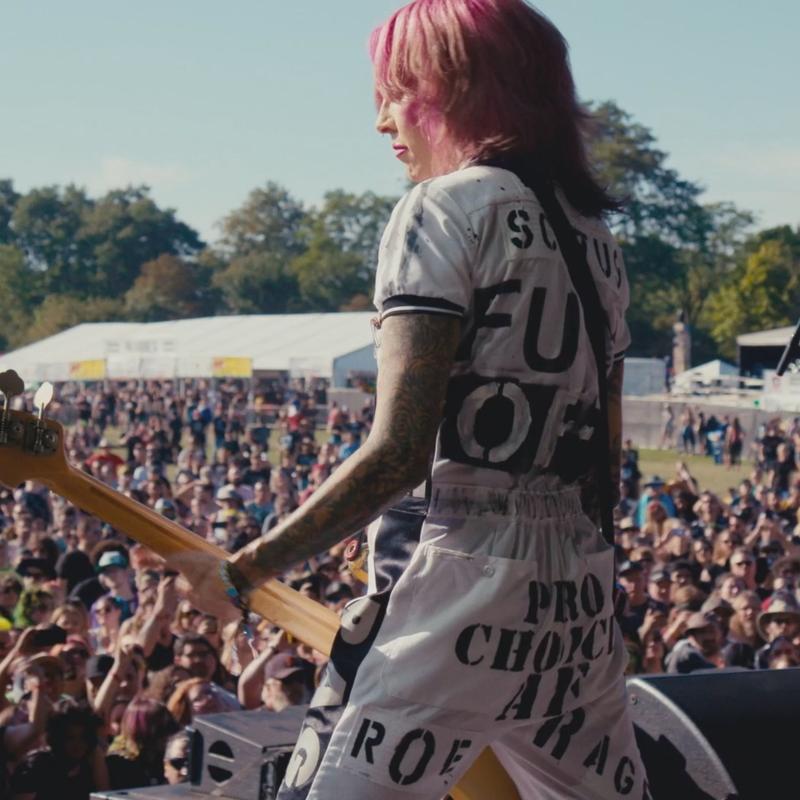
Alison Stewart: The band, the Lunachicks, started at LaGuardia High School after forming in 1987. They made their mark on New York's punk scene in the 1990s with raucous shows at CBGBs, holding their own against punk's male-dominated bands. You can tell they made it from their mark from the musicians featured in a documentary called Pretty Ugly: The Story of the Lunachicks. Debbie Harry, The Go-Gos, Luscious Jackson, The Offspring, and more appear on screen to bear witness to the Lunachicks' influence and musical prowess. The documentary was directed by my next guest, Ilya Chaiken, and of course, it also features members of the Lunachicks, including my other two guests, Theo Kogan and Gina Volpe. The film is streaming on digital and in theaters today, with the screening tonight at The Roxy in Tribeca. Welcome to all of you.
Theo Kogan: Thank you.
Gina Volpe: Thank you. So happy to be here.
Theo Kogan: So excited to be here.
Ilya Chaiken: Thank you.
Alison Stewart: Listeners, are you a fan of the Lunachicks? Have you seen them live? We want to know. Call in and text us now with your Lunachicks experience. 212-433-9692, 212-433-WNYC. Ilya, how did the documentary come about?
Ilya Chaiken: Well, I was trying to figure out what my next project would be, and I, in the past, mostly have made narrative films, but I wanted to try doing a doc. I thought, "What better subject than my favorite band, the Lunachicks?" I go way back with them. Gina Volpe and I met at SUNY Purchase when I was in film School. She was there very briefly before the band forced her to drop out.
Gina Volpe: We did.
[laughter]
Ilya Chaiken: -and be a rock star. Anyway, I was present for the early formation of the band and was at their first show, and have been a fan ever since. They had all the perfect ingredients for a great film because amazing characters, lifelong story arc, and then, a triumphant finale.
Alison Stewart: Gina, on your social media, it says, "Plucker of strings, singer of songs, drawer of drawings, tis me."
[laughter]
Alison Stewart: What were you doing before the doc started? Right before?
Gina Volpe: Well, the doc has been a long process. I'm always creating something. Whether it's music or art, I'm always trying to put something together. I was gearing up for an art show, I think, when we were doing a lot of the filming. It was my first solo gallery show, and that actually appears in the doc as well, which is really great that Ilya got all of that on camera because that was such a special night.
Alison Stewart: Theo, you made a name for yourself as sort of a high-end, fancy makeup artist.
Theo Kogan: [chuckles]
Alison Stewart: What did you think when a documentary filmmaker came around and said, "I want to document your story"?
Theo Kogan: It was kind of a no-brainer. First of all, nobody else asked,-
[laughter]
Theo Kogan: -so there's that, but then Ilya is an old friend, so it's like she gets it. We knew that she understood us, our story, our journey, and all that stuff. It was really great to go on the other side of the camera. I love doing makeup. It's my art. As the band was starting, I wanted to do SFX, like gore and stuff like that. Then that didn't happen. I'd kind of taught myself. Then I came 360 around to doing that. I really enjoy not being in front of the camera, but for this, I really loved being able to tell our story with Ilya.
Alison Stewart: It was interesting. Theo, she said that you got it, Ilya. What do you get about the Lunachicks? What did you understand that allowed you to tell their story correctly?
Ilya Chaiken: Well, I think they really spoke to women, particularly of our generation, because we came of age, we were children of the '70s, Free to Be... You and Me. We were empowered as young girls and were taught to believe that we could do anything we wanted to. Then we became faced with the reality once we were out there in the world trying to make names for ourselves, whether that was in the music industry or the film industry, and hit the reality of there's a lot of boys' clubs out there that are actively keeping us out.
That was a story that I understood, but seeing the band as a young woman and confronting that reality, they just manifested the inner fierce superhero that all of us knew we could be. They were amazing to look at. They were very theatrical. Lots of costumes and kooky makeup, but also hilarious and gross-
[laughter]
Ilya Chaiken: -and political and angry and all the things that just really sort of expressed what a lot of young women were feeling at the time and still feel. Like, it's amazing to see the reaction with the younger generations.
Alison Stewart: Let's go back in the Way Back Machine. Gina, you were students at LaGuardia High School. When did you become friends? When did you become bandmates?
Gina Volpe: Theo was one of the first people I met. We were sitting across from each other in art class, and I swear she was giving me dirty looks. To this day, she says:
Theo Kogan: "I wasn't."
[laughter]
Theo Kogan: I had a really bad cold the first day of school, so my whole face was swollen. My eyes were glassy, and so I was looking at her. We had met when we were in middle school, but Gina looked really different, and I guess I did, too, at that point, because middle school, we both had long, plain hair and-
Gina Volpe: Dweebs.
Theo Kogan: Yes.
[laughter]
Gina Volpe: I was like, "Teo is so cool. She's so cool."
Theo Kogan: Gina had a mohawk. I was like, "Is that the same person I met in eighth grade?" Like [laughs]
Gina Volpe: We overcame. Then lifelong friends. We bonded because we were always scribbling cartoons back and forth of our teachers, and all the bands we were listening to. We were constantly drawing and scribbling, and we, to this day, still do that. We art-jam with Sharpies. We just did that for our album cover that came out. We had a compilation album that came out yesterday or two days ago-
Alison Stewart: Oh, nice.
Gina Volpe: -called We Can Be Worster, and the cover is a collaboration of Theo and I scribbling.
Theo Kogan: This time digitally.
Ilya Chaiken: They were classmates with Sydney. Syd Silver, AKA Squid. They were all in the fame school together. That's all documented.
Alison Stewart: Theo, what do you remember about the moment when you thought, "This could work. This band thing could work"?
Theo Kogan: I think, maybe being on stage when I first felt like, "This is where I'm supposed to be," and I felt the most comfortable, which makes absolutely no sense, but I think maybe that's where, really, I was like, "Yes, this is it." Again, with that spirit of, "We can do anything. We can be whatever we want to be," we were just like, "We're just going to do this." That was like the spirit.
Alison Stewart: I'm speaking with the director, Ilya Chaiken, and Lunachicks band members, Theo Kogan,-
Theo Kogan: Got it, argh.
Alison Stewart: -and Gina Volpe. The documentary Pretty Ugly: The Story of the Lunachicks premieres in theaters and on digital today. This text says. "The Lunachicks are the best band ever. They were standing up for queer and trans rights and feminism since their inception. Long live Lunachicks."
?Speaker: Yes.
?Speaker: Woo-hoo.
Alison Stewart: "Lunachicks. They were great in Troma Terror Firmer."
?Speaker: Yes.
Alison Stewart: We have a call from Mike in Flatbush. Hey, Mike, thanks for taking the time to call, All Of It. You're on the air.
Mike: Oh, God. Thanks for taking my call. As a product of public school in New York City, I think it's awesome that there's LaGuardia and then the State University of New York figures in. This is working-class punk rock. That's pretty cool.
?Speaker: Yes, it is.
Mike: I was curious, then, as the father of two girls, I think, what I missed so much-- I went to hardcore shows in Staten Island in the mid to late '90s. Other than a couple of really great female-fronted bands, it really was a big boys' club. It was cool, relatively speaking, but certainly downtown New York, it was also a big boys' club, so I wanted to know what your relationship, if any, was with them. Then also going across the country to Olympia and stuff, what were the interactions with Riot Grrrl out there? Thank you so much.
Gina Volpe: Well, I just want to say, it was, we didn't really see that many females represented in bands. I remember the first time I did see PMS. They were a hardcore band, and they played one of the matinees. They were all female. Just seeing that—I was 14—allowed me to visualize like, "Oh, this is a possibility. This can happen." I think little by little, watching other women do it made it possible to carry on that, to emulate that.
Theo Kogan: My moment like that was seeing the band Frightwig, who are from California. I think I was like 15. It was one of those. I always liken it to Gen X, [unintelligible 00:11:34], when Jim from Taxi eats the pot brownies for the first time-
[laughter]
Theo Kogan: -and he's like, "Ugh." That was my moment of like, "This is what I want to be." They just looked insane. They changed instruments. The drummer looked like this giant Amazon. Then she pulled her shirt up and pulled her gut and was like, "Ugh." The other two players: one was pregnant, one looked like a beekeeper. It was just like goth and loud and--
Alison Stewart: Wow.
Theo Kogan: In terms of being around the hardcore scene, when I used to hang out, when I was 13, 14, or whatever, how old we were, I was scared of everybody. I was. I was like, "Ugh, these guys are scary." Then, as I grew older, I was like, "This is kind of hot. They're all jumping on each other-
[laughter]
Gina Volpe: Shirts off.
Theo Kogan: -with no shirts. Okay." Then, as time went on, we really were incredibly respected and felt loved, respected, protected, and all that kind of stuff. That was very nice. There were also times when everyone's like, "Who did the Lunachicks sleep with to get on that tour?" Which is like, classic.
Alison Stewart: Yes. You get into that, Ilya, in the documentary. It was the '80s and '90s, after all, and they were getting flak. Like, "We already have a woman performing on the stage," or on radio, or whatever. There was one scene in the documentary about a two-way mirror.
Ilya Chaiken: Oh, yes.
Alison Stewart: Could you share that with our audience a little bit? It was wild.
Ilya Chaiken: That actually takes place in the UK, where they toured a lot when they first started out. Discovered they were in a dressing room at a pub or wherever they were performing. Chip, who was the drummer at the time, was suspicious of this mirror. They're looking at and went around and checked it out. They figured out it was a two-way mirror. That triggered a very organic reaction from Chip, and there was a lot of--
Gina Volpe: Organic. How diplomatic.
[laughter]
Gina Volpe: You're being very diplomatic. People have to watch the documentary.
Ilya Chaiken: I know. I don't want to ruin the scene for everybody. They tell this story, and it turns out to be rather hilarious. Some things were smashed, some-
Theo Kogan: Pants were taken down.
Ilya Chaiken: -some pants were taken down.
Gina Volpe: Pants were pulled, mirrors were broken.
Alison Stewart: Tabloids were alerted.
Theo Kogan: Tabloids were told, yes.
Ilya Chaiken: It was a scene, yes.
Alison Stewart: How have times changed when you think about it, Gina?
Gina Volpe: Well, I see the presence of women on stage. The proportion of women on stage has definitely grown since the '90s, but I will still say we still have a long way to go. Not enough for my taste. It makes me really happy to see how many females are on stage, playing and rocking out. It's a different dynamic.
Alison Stewart: How have you seen things change, Theo?
Theo Kogan: I agree with that. I also feel like there's so much more acceptance at the shows where sort of anything goes. Everyone likes all kinds of music. I even saw this chick on the train who looked like she was very black metal. Had all these metal tattoos, and then there was Bob Dylan's signature. I was like, "That kind of sums up today." I also hear from other women in bands now, there's a sexist, sexist world out there. It's still prevalent. If you look at how the world is right now, it's just like they hate women and trans people, so we have a long way to go, but we're fighting. I feel like everything's brewing to have a big change again.
Alison Stewart: We're talking about the documentary Pretty Ugly: The Story of the Lunachicks. It premieres in theaters today and on digital today. I'm speaking with director Ilya Chaiken and Lunachicks band members Theo Kogan and Gina Volpe. This is interesting. This text says, "I want to thank the Lunachicks for the best lyric ever in Babysitters on Acid. You want to know how the baby is? Don't worry, she's almost done."
Gina Volpe: Oh, God. Terrible. Was so terrible.
Theo Kogan: I was just thinking about this song this morning. I was like, "This song is so messed up." It was like it was based on John Waters' scene in-- Which one?
Gina Volpe: It was in Desperate Living.
Ilya Chaiken: Desperate Living.
Theo Kogan: Desperate Living, where this babysitter puts this baby in the refrigerator.
Gina Volpe: It didn't just happen.
Theo Kogan: Then there was a real story from like the '80s, I want to say, or '70s, where someone actually put a baby in an oven, so it was like, "That is like the worst thing I can possibly think of right now," at the time it was like, "Ahaha. John Water is in real life," and, "Aha."
Gina Volpe: We were teenagers.
Theo Kogan: We were teenagers.
Gina Volpe: We were teenagers. Obnoxious teenagers.
Theo Kogan: Obnoxious. We were into everything that was wrong.
[laughter]
Alison Stewart: Ilya, how would you describe the aesthetics and the style of the Lunachicks?
Ilya Chaiken: Well, John Waters comes to mind immediately, who was an early influence for them.
Theo Kogan: He just turned 80. Sorry to interrupt.
Ilya Chaiken: They also evolved over the years. They taught themselves in the beginning and were very DIY punk rock, and then really strove to hone their musicianship. You can hear it in the scope of their albums. The movie documents both the musical evolution, as well as the aesthetic evolution. There was lots of Alice Cooper-type blood—Alice Cooper is another reference—and whatnot in the early days. Later on, it became a little more. What's the word I'm thinking of?
Gina Volpe: Las Vegas showgirls?
Ilya Chaiken: Las Vegas showgirls. Very, also influenced by the drag queen community.
Theo Kogan: Oh, yes, big time. Big time.
Alison Stewart: You describe a gig where you all spontaneously menstruated on stage using plastic bags on your legs, and it was taped to your legs. How important were theatrics to you, Gina?
Gina Volpe: Well, because we're artists—Theo and I are visual artists—and having that element be a part of our whole show, we loved, like, we said, Alice Cooper, we loved KISS, we loved all the glam bands like the New York Dolls, we loved Redd Kross. Having that loud, crazy visual color be another layer on top of the music was really important to us because we needed that visual aspect to be added as well.
Alison Stewart: What did you think when you saw it photoshopped out of a certain ad for a certain sneaker?
[laughter]
Theo Kogan: So classic. At first, I didn't realize it, and then Gina was like, "Look, this was the old photo." I was like, "Oh, my God." That wasn't her foot either; that was somebody else's foot.
[laughter]
Alison Stewart: The documentary features Debbie Harry, Gina Schock from The Go-Gos, Donita Sparks from L7, The Offspring, some real heavy hitters. Ilya, what did you learn about the Lunachicks from the people that you interviewed? What was their impact?
Ilya Chaiken: The whole process, really, I learned so much about the Lunachicks that even as a friend and fan, I didn't know that they were really respected by their peers. From the early days, Donita Sparks from L7 says, "No punk rock house worth their salt did not have the Jan Brady single, the 45." Later, they tour with The Offspring, who just can't say enough praise about them. As we talk about the sexism faced in the industry, for the most part, the male bands that you did play with were not part of that equation. They were all very much into the Lunachicks, asked them to tour with them, and they got a lot of respect.
Alison Stewart: Did any of the interviews surprise you, Gina?
Gina Volpe: I'm trying to think now. Well, I was very excited to see Debbie Harry and Chris Stein, our heroes. We are such huge Blondie fans, so to see them talking about us-- Come on, who gets that? That is really cool.
Alison Stewart: What surprised you, Theo, in those interviews?
Theo Kogan: I feel like when Gina Schock was talking about that the world wasn't ready for us at the time, that made a lot of sense to me. It felt like that a lot of the time. It felt like everybody around us was ready for us, but the world at large and the industry was just like, "What? We love you, but how would we possibly deal with you?" Now I get it, they couldn't.
[laughter]
Alison Stewart: Drug use comes into the picture. Not everybody. Gina, how were you able to support each other through those times when people had difficulties?
Gina Volpe: We are sisters. We're not related, but we have been together for so long, and we love and adore each other so much. We feel like a family. We are sisters, and we care about each other. Those were hard times. We were young and didn't always know how to deal with such difficult issues. We weren't willing to walk away from each other, and we weren't willing to give up on each other. It was just too important. Above the band, above anything else, our friendship just meant everything to us.
Alison Stewart: You took a little bit of a hiatus around 2000. Why did that feel like the right time?
Theo Kogan: We had been touring, touring, touring, touring. Me and Gina both were ready to go get into some other types of musical expression. We just felt like that was the time. We all turned 30, so we were kind of like, "We've been doing this. Now we're 30, we want to try some other stuff." It was really weird. It was painful. It was very painful, but it felt like the right thing to do at the time.
Gina Volpe: It was all we knew. We started as teenagers, so it was all we knew for our adult life.
Theo Kogan: Yes, we raised each other. Yes.
Alison Stewart: It's kind of interesting. Some people will be discovering the Lunachicks for the first time through this documentary. What would be a good place for them to start listening? What do you think?
Ilya Chaiken: Well, I think the documentary is a good place to start because I think one of my goals was to make it accessible, fun, and interesting for people who may not have ever heard of the Lunachicks, or maybe really pay attention to them, or were too young. I think that it achieves that. What's a good place to start?
Alison Stewart: Where's a good place to start for somebody who's like now really into it, wants to start listening? What do you think?
Gina Volpe: Well, my favorite album is the last album, which is Luxury Problem-
Theo Kogan: [unintelligible 00:23:34]
Gina Volpe: -but we did just have a breast of compilation that came out, so that would be maybe an easy-- It's a sampler. It's a pupu platter of Lunachicks music.
Alison Stewart: Theo, do you agree?
Theo Kogan: Yes, but that's on vinyl, so you have to have a record player. I would say I love Luxury Problem, but I feel like Jerk of All Trades is kind of where we found our-- We honed ourselves on that album.
Alison Stewart: The name of the documentary is Pretty Ugly: The Story of the Lunachicks. It premieres in theaters and on digital today. My guests have been director Ilya Chaiken and Lunachicks band members Theo Kogan and Gina Volpe. Thank you so much for coming to the studio.
[crosstalk]
?Ilya Chaiken: Thank you, Alison.
Gina Volpe: Thank you for having us. So excited to be here.
Copyright © 2026 New York Public Radio. All rights reserved. Visit our website terms of use at www.wnyc.org for further information.
New York Public Radio transcripts are created on a rush deadline, often by contractors. This text may not be in its final form and may be updated or revised in the future. Accuracy and availability may vary. The authoritative record of programming is the audio record.