
The Sets of 'The Sopranos' at the Museum of the Moving Image
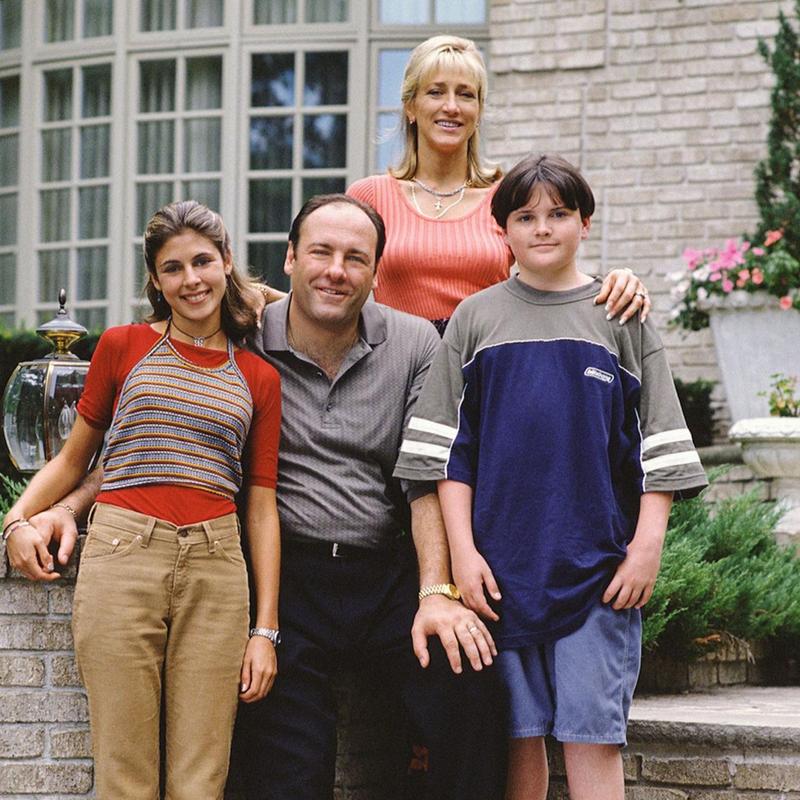
Alison Stewart: You are listening to All Of It on WNYC. I'm Alison Stewart. Let's get in the mood here. It's Sunday night, it's about 1999, you turn on HBO, and you hear this.
[MUSIC - Alabama 3: Woke Up This Morning (Sopranos Mix)]
Alison Stewart: For 6 seasons and 86 episodes, The Sopranos changed the face of premium TV. It was famous for its character-driven storytelling, but just like any beloved TV show, the sets where the action takes place can be just as important. Consider Dr. Melfi's office, where Tony Soprano is trying to figure out why he would have panic attacks, or consider the steamy, gritty aura of the Bada Bing club. All are featured in a new exhibit at the Museum of the Moving Image.
It's called Stories and Set Designs for The Sopranos. Barbara Miller is the Museum of the Moving Images deputy director of Curatorial Affairs. She organized this exhibit, which is on view now through May 31st. She's here now to talk about the sets of The Sopranos. Hi. Welcome to the show.
Barbara Miller: Hi, Alison. So good to be with you.
Alison Stewart: Okay, The Sopranos is, and this is the most overused word, but it actually applies here. It's an iconic television show, right?
Barbara Miller: Absolutely.
Alison Stewart: In terms of the exhibit itself, what kind of physical objects are on view?
Barbara Miller: We have some material in the museum's collection related to the design of the pilot episode of The Sopranos and the first season of The Sopranos. On the occasion of my colleague, curator of film, Michael Koresky, organizing a series of evening-- showing episodes from Season 3 of The Sopranos, we decided, as we do often at Museum of the Moving Image, to look at this iconic work of art from multiple perspectives. We had these screenings in our theater from last Thursday through Saturday with David Chase and cast members in person,-
Alison Stewart: Wow.
Barbara Miller: -which was incredible, showing these episodes and having these conversations with these avid fans in attendance, but we also, in our galleries, explored the show from a different angle, and that was establishing the series as it went from a pilot, which David Chase wrote, into the first season of this series.
Alison Stewart: Just generally speaking, outside of The Sopranos, why are sets so important when we think about television, and we remember television?
Barbara Miller: Yes. It's a great question. It's really different, I think, in some ways for TV than it is for film. You make a film, you know what the beginning and the middle and the end is, and you're creating sets and you know where it's going. You're creating environments for the action to play out over a very limited amount of time. You can see the end coming.
For television, I think, especially in the model of The Sopranos where there was a pilot with no idea what was going to happen after that, "Is it going to go for a full season? Is there going to be another season after that?" The design of sets for television is a space where characters live for an unforeseeable amount of time. I think that's why we focused our attention on the design of the pilot and the design of the first season, because once those sets were established, that's where the characters had to live for all those years.
Alison Stewart: Who are the designers we're talking about?
Barbara Miller: The production designer for the pilot episode was Edward Pisoni. Then for the first season, the production designer was Dean Taucher. For the balance of the series, Bob Shaw was the production designer, amazing New York-based production designer. He, of course, made tremendous contributions to the look and the feel of the series, but the foundational environments were laid by Ed in the pilot and then by Dean's work as he took those environments that were all location shot except for Dr. Melfi's office. They were all shot on location. Had to take those environments, turn them into built sets at Silvercup Studios in Queens. Then that's where the characters lived from 1999 through 2007.
Alison Stewart: What kind of research did the designers do when they were creating the various locations for the Sopranos? The pork store, the Soprano home. How important was accuracy?
Barbara Miller: I think it really needed to have a feel for New Jersey. Right? I mean, it was--
Alison Stewart: Yes, my home state.
Barbara Miller: [laughs]
Alison Stewart: I used to say, "The Sopranos is a documentary."
[laughter]
Alison Stewart: As I watched it, I was like, "Oh, yes, after the school, I went to that soda shop, I went to that place to get food for my mom." I recognized all the places they picked.
Barbara Miller: I think it's so great that you say that, because, obviously, most of us don't live in the world of organized crime, but these environments, the way that these mobsters, these criminals really moved through the world was just this-- it was America.
Alison Stewart: It was average America.
Barbara Miller: It was average America. It was suburban America. I think shooting-- framing the action of organized crime in suburban New Jersey largely was a real change from how mob activity had ever been represented on screen. I think David Chase, as a native of New Jersey and of that neighborhood where Tony and Carmela lived, and really wanted to lean into that. I think that was really important to him.
Even though after the pilot, all of the built sets were at Silvercup Studios in Queens, all of the exterior shots, all of the exterior shots that were meant to represent New Jersey, were shot in New Jersey, without exception.
Alison Stewart: We're talking about the sets of The Sopranos, the subject of a new exhibit at the Museum of the Moving Image, Stories and Set Designs for The Sopranos is on view through the 31st.
Barbara Miller: May 31st.
Alison Stewart: May 31st. Thank you very much. My guest is Barbara Miller, the museum's deputy director of Curatorial Affairs. Dr. Melfi's office, let's talk about that. We've talked about it a couple of different times, the place where we see Tony Soprano at his most vulnerable. What are some of the details from that office that maybe you should pay attention to?
Barbara Miller: Yes, it's really great. It's kind of a dream for me watching it. It's like a dreamscape. It doesn't make sense in the context of the show. You see Tony walk in there a few times into this nondescript building through some other courtyard, but inside the room, first of all, it's circular. It's very free of trappings. It's not loud. There's not a lot of traffic through it. It's not ostentatious. It's very Zen space.
On view in the exhibit, there are a few reference images that the production designer, Ed Pisoni, pulled in order to create that space. Ed Pisoni talked about how he thought about that space was building a circular office, part of it was wanting to create an environment where Tony had no place to hide. There were no corners to hide, and so he was exposed.
Alison Stewart: Ooh. That's so interesting.
Barbara Miller: That's really interesting, yes.
Alison Stewart: You had access to David Chase's personal archives for the exhibit.
Barbara Miller: Yes.
Alison Stewart: What did you decide to use and what did you learn?
Barbara Miller: Oh my gosh. Oh my gosh. Like I mentioned, the production design material that's on view in the exhibit is pulled from the museum's collection, but we had the opportunity to go in very generously. David Chase allowed us to go into his personal archive, and I really wanted to limit the exploration to that kind of moment where he was moving from a pilot into planning for the first season; how is he taking those characters, how is he expanding upon those stories. Because there were no other scripts written. HBO shoots the pilot in 1997.
The series gets greenlit six months later, and all of a sudden, okay, we have to figure out who these people are, what they're going to be doing, what are these stories going to be about. The material in David Chase's archive really speaks to some of the research that they did, much more fine-grained research into the mob, looking for themes that they could then bring into the stories.
There are handwritten notes that chart character development and story arcs and figuring out what the main focus is going to be for each episode, but I think, really, tellingly, one of the strengths of The Sopranos, one of the reasons people love it so much and has stood the test of time, it's not like every episode has a little button at the end, "Okay, this is done. Now moving on to something else." It really is about how these characters evolve. The notes that we have on view are really looking at characters. They're not just looking at story beats necessarily and resolving something at the end of an episode. That was really great.
Alison Stewart: One of the places that people will recognize, who watch the show, the entire season, is the pork store. It's not what we think of as Satriale's Pork Store in the pilot, right?
Barbara Miller: In the pilot, it was shot at a real business called Centanni's Meat Market. They took over the Market for for the time it took them to shoot the pilot. Then when they were moving into a series, they couldn't realistically use a real business to keep shooting at day to day, so they had to scout multiple locations in the area to see what they might use as an ongoing set.
They actually built a set to look like Centanni's so there was continuity. Obviously, the name changed because they couldn't use that name, but there is a lot of continuity in terms of the look between Centanni's and the set that they built nearby that became Satriale's.
Alison Stewart: I want to talk about the Sopranos' home. There are many key scenes that take place there. I see in the show there's a floor plan of their house.
Barbara Miller: Yes.
Alison Stewart: Why was that necessary for, I guess, the writers to understand how this family lived?
Barbara Miller: That's a good question. Probably it was important maybe for the writers to see how all the spaces connected. When they shot the pilot, they shot within this family's private home. They shot the outside with the pool and the ducks and all that, and they also used the inside of the house as a set. I think having those plans there was important maybe for the writers to understand the spaces they could use, but really also to plan how it was shot, for the director of cinematography and all the folks that were working on it.
After the pilot, they continued to use the exteriors of the Recchia family home in Caldwell, ongoing, really, through all of the series, but they built a dedicated set for the interiors at Silvercup, and they modified the layout of the house somewhat so that it was easier for them to use. They added a main stairway. That entryway in the actual home is single-story, but for different story reasons and creative reasons, they modified the house somewhat to be able to add continuity there.
Alison Stewart: What's your favorite thing in the exhibit? I know that's a hard question, but one that you like to tell people about.
Barbara Miller: Oh gosh. It's really tough. Having those handwritten notes from David Chase and his writing team and really seeing the DNA of the show come together, for us, that's really the magic. At the museum, we like to pull the curtain back to show how things happen. It feels like magic, but it's work. We show the work that's important for us, so seeing that work take place, seeing David Chase's ideas and the contributions of his writers as the outlines for the different episodes come together, that's really, really magical. I think also just having the production binder there from the pilot episode, that feels magical. They didn't really know, like, you realize, they had no idea what was coming.
Alison Stewart: They had no idea.
Barbara Miller: They had no idea what was coming, and just they're out there. They're doing the thing. They're producing a pilot, and all these years later, it becomes this iconic thing.
Alison Stewart: The name of the exhibit is Stories and Set Designs for The Sopranos. It's on view through May 31st. My guest is Barbara Miller, the museum's deputy director of Curatorial Affairs. It's on exhibit at the Museum of the Moving Image. Thanks for joining us.
Barbara Miller: Oh, thank you so much, Alison. It was a pleasure.