The Criterion Channel Celebrates Debut Films from Black Women Directors
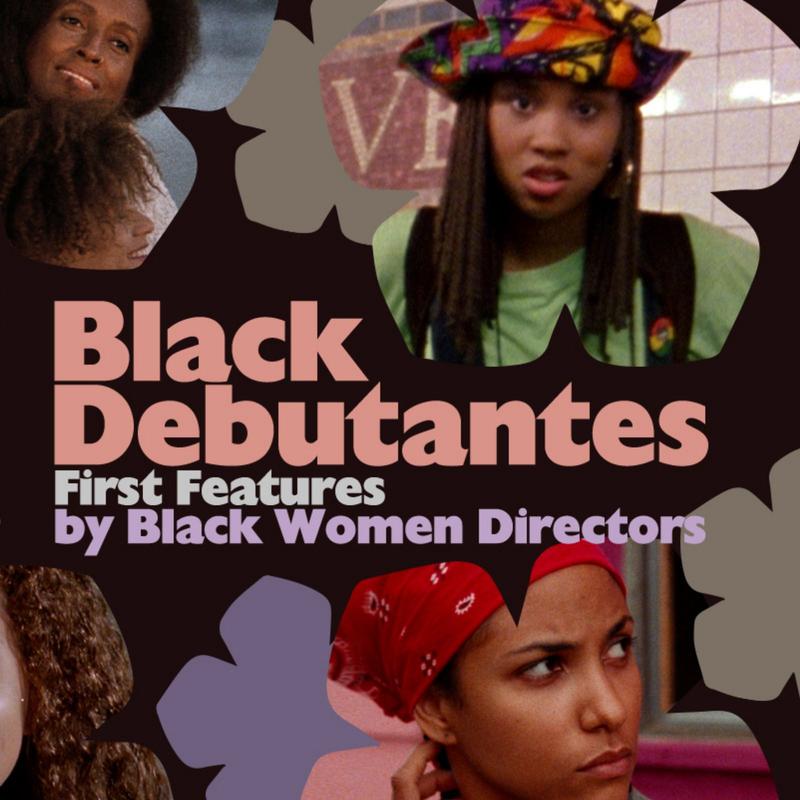
Alison Stewart: This is All of It on WNYC. I'm Alison Stewart. We're continuing on with The Criterion Channel. A new series streaming on the Criterion Channel celebrates the trailblazing debuts of Black women filmmakers. It's called Black Debutantes. Some of these films are more recent, while others are one-offs that have become cult classics. All have left a mark on a generation of filmmakers. The slate includes the Southern gothic drama Eve's Bayou, starring young Jurnee Smollett as a 10-year-old girl uncovering family secrets. The romantic drama Daughters of the Dust, following three generations of Gullah women. Pariah, a coming-of-age story about a queer Black teenage girl. Black Debutante is streaming on The Criterion Channel through December. Joining us to discuss the series is The Criterion Channel's curatorial director, Ashley Clark. Ashley, welcome.
Ashley Clark: Hi. Thank you for having me.
Alison Stewart: Also with us is series programmer Rógan Graham. Rógan, it's nice to meet you as well.
Rógan Graham: Hi, Alison. Thank you for having me. Hi, Ashley.
Ashley: Hi.
Alison Stewart: Listeners, we'd like to get you in on this conversation. Have you ever seen Eve's Bayou, Daughter of the Dust or just another girl who is a black woman filmmaker that you admire? What do you remember about her debut feature? Our number is 212-433-9692 212-433-WNYC. You can call in, you can join on air, or you can text to us at that number or hit us up on social media @allofitwnyc. Rógan, you premiered a version of Black Debutantes at the British Film Institute Southbank earlier this year. Why focus specifically on the first features by these women?
Rógan Graham: Hi. That's a great question. I suppose I was thinking a lot about my own film history and education, and I was sort of-- You hear the name Martin Scorsese, and you think, "Okay, well, I'll just go back to the beginning and watch all the big hits, maybe Google a top 10 list." If people are particularly interested in Black cinema or cinema by Black women, a lot of these women haven't got to the 10 features to make a top 10 list to be able to narrow their filmographies down.
I started digging deep, and what I found was a lot of these incredible filmmakers only got to make their debut feature. That was my way in. Through a lot of research, there's a lot of different reasons as to why that was. That's why I wanted to present the program that way. Anyone who has this particular area of interest, this is hopefully a good starting point.
Alison Stewart: Why was this important to you, Ashley?
Ashley Clark: Something that we love to do at Criterion, whether that's across our disc releases or the channel, is amplify and focus on work that might otherwise be overlooked, underrated, or not contextualized properly. I'm a big fan of Rógan's work as a writer and programmer. When I saw that she'd put together this series at the BFI, which features a number of films that we've released in The Criterion Collection, like The Watermelon Woman, Cheryl Dunye's film, Compensation by Zeinabu irene Davis, all these kinds of films that we love, but they were contextualized in such a thoughtful and generative way. I thought it would be great to reach out to Rógan and ask if we could collaborate on something which we're really, really happy to do.
Alison Stewart: Rógan, you said in an interview with Channel 4 that it occurred to you that many of these Black women directors you love, that this was maybe their only film that they directed. When did that moment hit you?
Rógan Graham: It hit me when I wasn't even thinking as a curator or as a programmer, as a film fan. I watched Cauleen Smith's Drylongso, which I did come to via the Criterion restoration a few years ago. My mind was blown, and I was so moved at the texture of the film. Then, when I found out it was a debut, I was like, "That's crazy. Who is this genius?"
Then, Cauleen Smith is still an incredible filmmaker and working artist, but as feature films go, Drylongso is the only one.
Then I unfortunately started realizing that for many, many films, Just Another Girl on the I.R.T., Alma's Rainbow, losing ground for different reasons. I just started joining the dots in my own personal film watching and thought, "Okay, there's something here, and I'll join the dots." That's how I suppose I started thinking about the curation.
Alison Stewart: We get a text here that says, "I loved Eve's Bayou. Such a lovely, heartfelt film with great actors." At the time of the release of Eve's Bayou, Ashley, how was it received by audiences?
Ashley Clark: It was well received, actually. It was a critical hit. It did, I think, relatively well at the box office for a studio film. It benefited in some ways from the input of Samuel L. Jackson, who signed on, who was a relatively large star at the time, but really, it benefits most from the vision of its filmmaker, Kasi Lemmons, who just gives it such an incredibly confident style and pace and movement. It feels so lived in. It's a film that you could use to teach students at film school about how to pace, how to block, and how to work with actors.
She has actually gone on to have a really solid career as a studio filmmaker and opera director. A lot of these filmmakers in this series are very multi-hyphenate. They work in dance, music, theater, literature as well. By asking us to collect these filmmakers together, we're also not just looking at them as filmmakers, but as artists in their whole being, which is exciting as well.
Alison Stewart: I interviewed her a couple years ago. She's amazing.
Ashley Clark: Yes, incredible.
Alison Stewart: She's a really cool woman. Kasi Lemmons made Eve's Bayou about 28 years ago. It grossed 14 million on a 4 million dollar budget. Rógan, how were these films funded?
Rógan Graham: Oh, well, it depends on the film, and I suppose that's the beauty of the program as well as a variety of genre. They all have very unique origins. A lot of them came up through, I suppose, collectives. The majority of them are independent films. It was the filmmakers going out and hustling and getting the funding on their own, self-funding, getting into debt, doing what they needed to do to bring their vision to life. A lot of them didn't have the initial commercial financial success as Eve's Bayou. Their legacy still reverberated.
Alison Stewart: A new series streaming on The Criterion Channel celebrates the trailblazing debuts of Black women filmmakers such as Daughters of the Dust, Eve's Bayou, and Pariah. I'm here with Criterion curatorial director Ashley Clark and programmer Rógan Graham to discuss the series Black Debutantes. We'd like to hear from you, who is a Black woman filmmaker that you admire, what you remember about her debut feature? Our number is 212-433-9692. 212-433-WNYC.
Got a text here that says, "Love & Basketball comes to mind. Shout out to Gina Prince-Bythewood." That's a good one. A lot of these films actually were in the 1990s and in the 2000s. What themes were Black women discovering during that period and contributing to the conversation during that period?
Ashley Clark: There are a number of themes about girlhood, about coming of age, about existing in a climate of masculine hostility, but also artistry and art and pursuing your vision and your dream. Often, a lot of intergenerational conversations, like Daughters of the Dust, is a great example of that. A film that is about history, it's about the great migration, but it's about looking forward to the future. It's about art and community and bonds. Those things tend to drift throughout all the films and interweave throughout all of them in the 90s and beyond.
Alison Stewart: Rógan, in curating the program, which film made you rethink an element of identity or politics in a way that you really hadn't thought about before?
Rógan Graham: Oh, what a good question. How long have we got?
[laughter]
Alison Stewart: Do you want me to take a call, and you want to think about that?
Rógan Graham: You can if there's a call there.
Alison Stewart: We do have a call, so you think about that. Let's talk to Michelle from The Bronx. Hi, Michelle, thanks for calling All Of It.
Michelle: Hi, thanks for taking my call. From the time it first came out, Daughters of the Dust has been one of my all-time favorite movies. Julie Dash visited Detroit and I found out that there are a lot of people who worked with her on that film from Detroit and to talk to her and to hear what it was like for her to develop the film. She was so open, so willing to do it. It had such an impression on it that one of the first places as an adult I wanted to go was to South Carolina and visit that community, the Gullah community. She is a treasure. The fact that she lifted up and stays in touch with other filmmakers who worked with her on that, to lift up arts in the African American community.
Alison Stewart: Thank you so much for calling, Michelle. We really appreciate it. I'm coming back to you, Rógan. [laughs] The question was, what film made you rethink an element of identity or politics or society in the way you hadn't thought before you curated this program?
Rógan Graham: I think a really big discovery for me, and hopefully for people who come across the film on the channel, would be Naked Acts, Bridgett M. Davis's film. It was recently restored, and it was completely out of circulation. It didn't reach the UK at all, really, and until this restoration. The story of a Black woman dealing with issues around her body and how that related to sexual violence as a child and how that impacts every relationship in your life, with your mother, with your grandmother.
It felt like witnessing conversations that I have seen and feeling isolated by them. I think what so many of these films do is reveal that we're not existing in a vacuum, and we don't have these struggles alone. We are all interconnected. So many of these films, when they're rediscovered, and I think that's something that The Criterion Collection and the channel does so well-
Ashley Clark: Thank you.
Rógan Graham: -is that when these films get to be restored and recirculated, and you experience them for the first time, you realize that, "Oh, we've been trying to reinvent the wheel. Someone has already done this. Someone has already dug deep within themselves and produced this incredible, sensitive, tactile work that speaks to the very specifics of the Black female experience." That in itself, which is maybe a bit more broader than what you've asked, really spoke to me, because I think what it does is you stop-- There's a lot of conversation about we don't have any films about this or whatever.
It's like, "No, maybe they're just not accessible to you, but people have been having these conversations and making art about these things. I'm just really pleased that so many of those stories are now just more readily available, I suppose.
Alison Stewart: Ashley, Just Another Girl on the I.R.T. What is it about?
Ashley Clark: It's about the life and times of a very, very spirited, opinionated young Brooklyn woman in the early '90s, directed by Leslie Harris, which is a feature film that grew out of an early project, which was a more educational project around Planned Parenthood. This is just a fun, freewheeling film that takes a few turns, and it is an emotional roller coaster, but it's a lot of fun. It's really one of my favorite films in the program.
Alison Stewart: It breaks the fourth wall.
Ashley Clark: Oh, yes. Yes, yes. She's talking straight to you. Chantel grabs you by the throat and tells you exactly what she's thinking. It's really fun.
Alison Stewart: Let's listen to an example from Just Another Girl on the I.R.T.
Chantel: Y'all, people today be bugging. The other day, I was on the number two train with my friends, just bugging out, having a good time. People just started staring at us like we were some sort of street girls with no future. Yo, when I'm with my friends, I act like it don't matter because it don't, but between you and me, [beeps] it pisses me off when they think they can just judge you by the way you dress. No. I always get A's and B's in all my classes. I'm the best student in my calc class. People be tripping when they find out how smart I really am. [laughs]
Alison Stewart: I think she rode the train with me yesterday. Let's talk to Nusret, calling from Morristown, New Jersey. Hi, thank you so much for calling All Of It.
Nusret: Hi, Alison. I'm so happy to be here. I had the pleasure of going to the New York Short Film Festival just about a month and a half ago, and I was able to see a series of films. The film that really caught my eye was Simple Somewhere Else, by Amatus Karim Ali. It was an incredible film from her. Her debut film, and she also acted in it, and it was just really relevant to today's time in regards to women's reproductive health. It was really profound. We got a chance to meet her and the other filmmakers, which was also pretty exciting.
Alison Stewart: That is exciting. Thanks so much for calling in. Rógan, as a part of the series, there's a 1999 film called Compensation, which is a portrait of deaf African Americans, but it's set in two different time periods: in the 1910s and 1993. How do the two stories meet?
Rógan Graham: Oh, my goodness. It's the most beautiful love story told over these two time periods. The two different chance encounters between two people at different times in their lives, and how they build those relationships. I think there's something really-- It's a really beautiful love story. It's a really beautiful drama. I also want to commend the restoration for upgrading the accessible captioning on the screens and really putting deaf audiences at the forefront in terms of viewing experience.
Zeinabu irene Davis, I know, has been incredibly passionate about that since first making the film. As technology's evolved, so has the way the film can be viewed, which is wonderful. When we premiered it in the UK, it was just really special to see so many deaf and hard-of-hearing audiences come out to that screening, where they may not have been able to access others.
Alison Stewart: That was so interesting. You nodded your head when she said that.
Ashley Clark: Yes, absolutely. I just wanted to give a shout-out to Zeinabu irene Davis, who is also a professor and one of the most inspirational people that I know. She spent many, many years writing and developing this movie. It was released in 1999 with a screenplay by her husband, Marc Chery, and it screened at the Sundance Film Festival, and its so often the case. People saw it, liked it, but it never found distribution, and it slipped into that netherworld of not quite lost, but not really released.
To spend the last four or five years working with Zeinabu directly to bring this film back to life and back to circulation, and I spend maybe a little bit too much time on letterboxd.com reading the comments from younger viewers who are experiencing this film for the first time and thinking-- giving it four stars, five stars-- where has this film been all my life? It's a black and white silent film about relationships between deaf and hearing people in the 1910s and the 1990s. Potentially, it sounds academic and forbidding, but it's really true to Zeinabu's spirit. It's actually an extremely accessible and entertaining film, and I can't recommend it highly enough.
Alison Stewart: Rógan, I want to talk to you about Pariah. It was written and directed by Dee Rees, now an Academy Award nominee, but this is when she was first starting out. It's about a Brooklyn teenager from 2011 who's exploring her sexuality. When you look at it, what says Dee Rees to you about this film?
Rógan Graham: Oh, my goodness. It's gorgeous. It's I think the way the characters that are lit and the coloring on the film, I think that is something. You see it in the shot, the earlier shot of Pariah, and it's carried throughout her filmography, I think about-- I'd say Mudbound is probably her more better-known film, but you see that style and that finesse in Pariah. I would say it probably has one of the most iconic opening scenes, or at least opening needle drops of a movie. I won't spoil for people. You have to check it out.
It's one of the films where, yes, the director has gone on to have a wider filmography, which is really exciting. I think if Mudbound was the entry point, to definitely go back and watch Pariah, and if I can, Bessie, which isn't on the channel, but is also a great Dee Rees film.
Alison Stewart: This text says, "Hair Piece. I saw it in London, in Brixton, I believe, in 1980 at a church screening of female filmmakers from America. Black filmmakers opened my head up. No pun intended."
[laughter]
We've only got about a minute left. Is there anything you want to recommend, Ashley, that people should check out?
Ashley Clark: I want to flag that this is an international program. We've spoken about a lot of American films, but there's a Cuban film called One Way or Another, a film from Angola called Sambizanga, which is the first film made in Africa by a female filmmaker. An extraordinary film from the UK, I have to represent home, Welcome to the Terror Dome by Ngozi Onwurah, who's a Nigerian-born British filmmaker. The first film made and released by a Black woman in the UK in 1995. It's very upsetting, very hardcore science fiction film. You won't forget it. You may not want to watch it with the whole family.
Alison Stewart: I'll give you 30 seconds. Go for it, Rógan, which film should we watch?
Rógan Graham: Pretty Red Dress. Pretty Red Dress by Dionne Edwards, fellow South Londoner. The film didn't actually get distribution in the US, which is why I really encourage listeners to check it out. It's a queer, I would say, coming-of-age story about a Black father who is just released from prison, and he comes home, and he now has this teenage daughter who is experimenting with her own sexual identity, and he himself goes on his own journey. Pretty Red Dress will be one I really want to shout out, especially for US audiences who may be unfamiliar.
Ashley Clark: Will by the amazing New York legend Jessie Maple, the first Black woman to join the New York camera operators union. Incredible.
Alison Stewart: The series is called Black Debutantes. I've been speaking with Criterion's curatorial director, Ashley Clark, and programmer Rógan Graham. Thank you so much for all the work that you do. We appreciate it.
Ashley Clark: Thank you.
Rógan Graham: Thank you.
Ashley Clark: Thank you for having us.
Alison Stewart: That is All Of It. I'm Alison Stewart. I appreciate you, I appreciate you listening, and I will meet you back here tomorrow.