
The 1984 Subway Shooting That Still Shapes What We Think
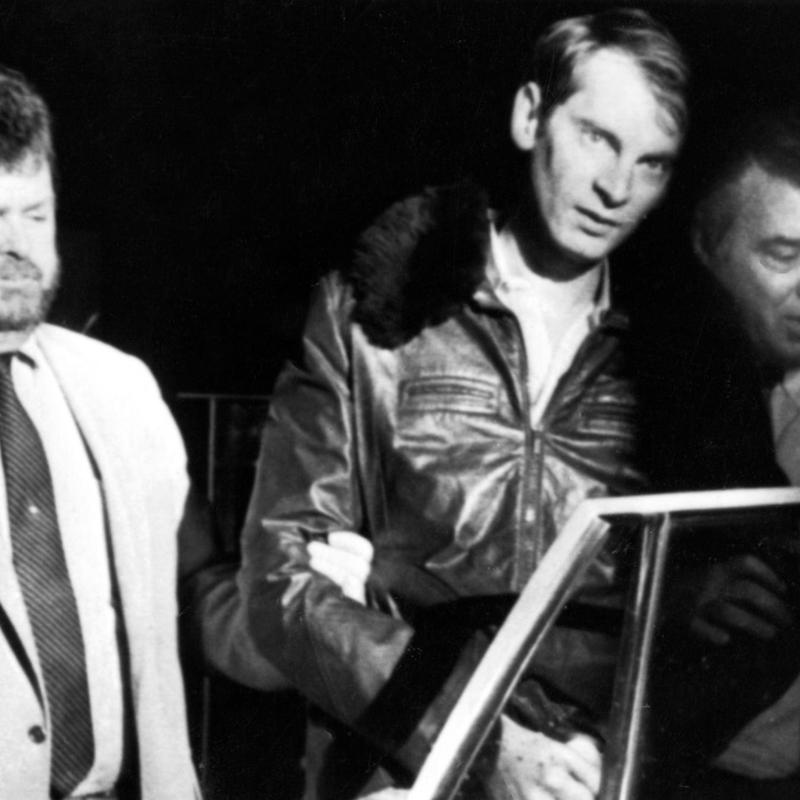
Alison Stewart: This is All Of It on WNYC. I'm Alison Stewart. Just days before Christmas, on the afternoon of December 22nd, 1984, Bernhard Goetz bordered a Downtown 2 train. Anybody listening to the station knows or thinks they know what happened next. In between 14th Street and Chambers Street, five shots were fired by Goetz, and four teenagers lay injured on the ground. So began a controversial case that would cause simmering tension in the city about crime, government trust, and racism. Goetz was white, the teens Black.
The combination was fresh meat for the [unintelligible 00:00:46] tabloids. New York was divided on what happened when Bernie Goetz. Was Goetz a gun-wielding bigot who attacked four Black teens under the guise of self defense or a hero who took fighting crime into his own hands because the city was failing to protect its citizens? It could be all of the above, according to the book Five Bullets: The story of Bernie Goetz, New York's Explosive '80s, and the Subway Vigilante Trial That Divided the Nation.
Its author is lawyer Elliot Williams. He traces every step of the case, including an interview with Bernhard Goetz he conducted in 2024. The book is out today. Elliot, thank you so much for joining us.
Elliot Williams: So great to be here with you, Alison. Thanks for having me.
Alison Stewart: How old were you when you heard about Bernie Goetz?
Elliot Williams: Eight years old. I would have been eight on December 22nd, 1984, right when the shooting happened, and I was born in Brooklyn and grew up in New Jersey not far outside the city. That's why it's very nice to talk to you, another daughter of 1980s New Jersey and New York, and really experiencing the zeitgeist of that moment. It really was just captivating all over the nightly news for all of us.
Alison Stewart: Do you remember your parents or relatives talking about it?
Elliot Williams: Not with specificity. The moment I remember, and I talk about this in the book Five Bullets, the one thing I remember is on the nightly news one evening, this is when I know I was nine because it would have been 1985, I know from reporting the book that Bernhard Goetz was the subject of rap songs, of hip-hop music. Bernie Goetz, literally the least hip-hop figure in human history, was somehow now the muse for rap songs and music. I didn't think anything of it at the time. Look, I'm nine years old. My God, what a moment that was.
When we look back and realize the not just criminal justice and public safety implications of it, but just the cultural significance of this moment, that this man is inspiring hip-hop songs, and a few years later, a line in Billy Joel's We Didn't Start the Fire. Something about Bernie Goetz and the shooting was bigger than just these five men. A lot of that inspired my interest in and writing of the book Five Bullets.
Alison Stewart: Listeners, especially those who were living in the city during the shooting and the trial, we want to hear from you what you remember about the Bernie Goetz case as it was unfolding. Call or text us now at 212-433-9692. Were you someone who was supportive of what Goetz did considering the crime rate of the '80s, or did you think he was wrong? Our number is 212-433-9692, 212-433-WNYC.
Or maybe you have a question about the legal issues surrounding the trial. It's a big part of the book. Elliot is a lawyer, I should say. He could answer them, possibly. Our number is 212-433-9692, 212-433-WNYC. I'm going straight to the end of the book. You interview Bernie Goetz.
Elliot Williams: Woohoo. Child, I did.
Alison Stewart: Was it easy or difficult to get ahold of him?
Elliot Williams: Surprisingly easy. We had been emailing, and I told him I was writing. I got ahold of his email, just sent him a note, and we were emailing back and forth. I'd be calling. At one point, I picked up the phone and called him, and he just answered. The next thing I know, I'm interviewing or speaking to Bernhard Goetz. What a 45-minute period of my life that was. Oh my goodness, Alison, it was bonkers.
Alison Stewart: What was the most pressing question you had, whether it was answered or not? [laughs] What was the most [crosstalk]--
Elliot Williams: Oh, he answered it.
Alison Stewart: He did? Okay.
Elliot Williams: Oh, he did. I mean, I really asked him because he was generally inveterate and unrepentant when I talked to him. I asked him, just reading between the lines of what he said, do you think you committed a public service with the thing you did in your shooting? He said, "Yes, those guys needed shooting. That's not why I shot them, but they needed shooting." It struck me-- I was floored by it because it was almost a eugenics argument, and believe it or not, it comes up in his comments. It comes up in a civil trial.
He was sued by one of the victims of the shooting who ended up paralyzed and brain damaged as a result of it. At trial, he almost was taking this point that some people simply don't deserve to live in society, and it really struck me there was really no moment of analysis or awareness or self reflection at all. If anything, over the years, he's calcified and gotten even harder in his views that he did the right thing.
Alison Stewart: Did you learn any new information from this conversation?
Elliot Williams: From the conversation, not so much. I mean, other than he's very bright, he's very sharp, but all over the place where at one minute, he's talking about squirrels and rescuing them, and another minute Mario Cuomo and all the bad things he did, another minute, a vulgar question to me about a personal private practice that adults engage in, then at another minute-- I mean, literally just bouncing around. You follow him, and you realize this is a sharp human being, but sort of an addled brain, and also a bigot.
The kinds of things he was willing to say to me as a Black man were striking. I mean, no ethnic slurs like he used in the past, and is documented in my book Five Bullets, but he said a couple things to me that I just thought, "Wow, you have no filter, none, and no awareness. My goodness, who are you?"
Alison Stewart: People often in the book use the word odd to describe him. Did you find him odd?
Elliot Williams: Absolutely. Far be it from me, I'm not the arbiter of what normal behavior is, but it was odd. It was quirky behavior, and a lot of it-- I didn't experience him in person personally. His neighbors would say things like he would be kind and warm and garrulous and back slapping and friendly to children and so on at one moment and then all of a sudden just clam up and stop or just want to yell about public safety. I just found his chuckling and all over the place behavior and talking just quirky at best, but odd. It's not an unfair journalistic assessment. He was an odd man.
Alison Stewart: My guest is Elliot Williams. He's a CNN legal analyst and author of the new book Five Bullets, which tells the story of Bernie Goetz's trial in 1980s New York. It is out today. We are hearing from you. What do you remember the most about the Bernie Goetz case? What did it mean for New York in the 1980s? Our number is 212-433-WNYC, 212-433-9692. Before we get into some more detail, you were not able to talk to any of the four young men who were shot. Yes?
Elliot Williams: I was not. Two are deceased. I had dozens of attempts to contact the others. I got as close as getting on the phone with two of his surviving sisters, and after much back and forth, they politely, they were kind to me, but politely declined any opportunity to comment for the book.
Alison Stewart: How did you then keep this book from being one-sided?
Elliot Williams: I did everything I could, and quite frankly, and that's an excellent question, Alison, in the preface to the book, I say I spoke to Al Sharpton, I spoke to Curtis Sliwa, I spoke to the prosecutor [unintelligible 00:08:15] and Bernie Goetz himself. Unfortunately, I didn't speak to the young men, and unfortunately, a lot of the public records about them revolve around their criminal histories because they all had copious records.
I did everything I could through existing articles and news clippings and whatever else I could find to reconstruct what their family lives were like, who they were, what their interests were. There's some detail and color about how each of them grew up in their houses and just what life was like, but without the ability to speak to them directly. It's certainly not one-sided.
By no means could anyone read the book Five Bullets and call it a one-sided account, but as a journalist, the thing I was craving more than literally anything else, even perhaps more than the opportunity to talk to Bernhard Goetz himself, was the opportunity to get one of the two surviving victims on the phone.
Alison Stewart: This is a text. It says, "I remember how angry subway rioters were about what Bernie did, accusing white people for carrying guns, but also white folks for saying enough is enough and how unsafe the subway is." That's one point of view. Let's talk to James from Brooklyn, who has a different point of view. Hi, James. Thank you so much for calling All Of It.
James: Hi. Thanks for having me on, but go ahead. Your question.
Alison Stewart: No, what's your question? What is your response?
James: No, I think Bernie did the right thing. New York City was very dangerous at the time. Even as an African American male, if four males were in that subway car with me, they probably would have attempted to mug me, and that was very common during those days. Keep in mind that during those days, our grandparents could not even go out because it was so dangerous. Bernie did the right thing. Those boys were harassing him. Had they not been bothering him, they would have never been shot. He would have stayed to himself.
Alison Stewart: Thank you for calling. Let's talk to Deborah on line five from Nanuet, New York. Hi, Deborah. Thank you so much for taking the time to call All Of It.
Deborah: Yes, hi. I just want to make sure you can hear me.
Alison Stewart: I do.
Deborah: I'm in my car. I lived in Brooklyn at the time. I was in my late 20s, traveling every day to St. Vincent's Hospital, as I'm a nurse. I remember vividly when that happened. I just don't think it's as simple as the author-- I think I agree with maybe what the author said at your introduction, that racist guy with a gun versus a Black guy on the train. Was Bernie right? Were they wrong? I just remember the fear of riding the subways every day. It was very scary time. If someone came to you, regardless, it did feel like harassment. You were afraid.
People were snatching chains off people's necks. I also do remember clearly thinking Bernie was wrong for carrying a gun because it was illegal. However, he did have a gun, and now he has people harassing him, and the fear and whatever went through his mind triggered him to do something. The guys who were harassing him were wrong. Unfortunately, they were young men. One of them ended up, I won't give names, being a patient in the hospital where I worked, so I was also listening to people who were taking care of him.
Alison Stewart: That's interesting.
Deborah: I said, it's not that simple. You feel sorry for him, but I ride the subway. I would have been afraid no matter who it was, no matter what color they were. A man, anybody.
Alison Stewart: Thank you so much, Deborah. I'm going to dive in there. I want to thank you so much for calling. The teenagers he shot that day, Barry Allen, Darrell Cabey, Troy Canty, and James Ramseur. What's important to know about these four men?
Elliot Williams: Yes, they were four teenagers, 18 and 19 years old, from the Bronx. They were heading downtown to break open video game machines. It was a big thing that young kids did. Teenagers at the time. This is the boom of video game culture in the United States, and bars and bodegas all had video game machines. They would go down, pick them open, and take a couple hundred dollars of coins out. They were on the way to commit a crime.
Now, Bernhard Goetz has used that and their criminal histories as some basis for justifying his shooting of them. He texts me or emails me a bunch now still, he's looked at my book, and says, "Well, you need to say more about their criminal histories." I say, "Well, look, the book Five Bullets references the drug abuse or criminal histories of these young men 41 times," I believe. I'm not shy about that. That fact alone does not justify their being shot only on the basis of the fact that Bernhard Goetz didn't know that information at the time he shot them.
One thing quickly, Alison, responding to both James and Deborah, and I want to validate the point they both made about fear and the pervasiveness of fear on the New York subway at the time, it was just unsafe in a way that nothing in New York is today. People up and down transcending race. I'm glad that James identified his race here, saying that, Look, Black folks were scared too, and we can't treat this as this binary in which either it was okay or it wasn't, because in truth, the environment was very frightening for many people.
Now, I say as a former prosecutor that merely fear does not necessarily always entitle deadly force. That was the core issue at the heart of this case, and really something I explore both morally and culturally and legally in my book Five Bullets.
Alison Stewart: We'll talk about that next after a quick break.
[music]
Alison Stewart: You're listening to All Of It on WNYC. I'm Alison Stewart. My guest is Elliot Williams. He's a CNN legal analyst, and he is now the author of a new book called Five Bullets, which tells the story of Bernie Goetz's trial in 1980s New York. The book is out today. One of the things I really want to talk to you about because you are a lawyer is the legality in the courtroom. It was really interesting in your book. One of the central legal arguments in this case was whether or not the defense could prove reasonableness of the fear that Bernie Goetz felt when he shot four people.
Elliot Williams: Yes. It all makes it all the way up to the highest court in New York State, the New York State Court of Appeals. I, as colorfully as I could, explain the complexity of just defining that one word, reasonableness, and what does society define as reasonable both as we live and go through our lives, but also in the eyes of the law. Ultimately, it came down to, and this is what the court ends up deciding, that reasonableness is complicated.
Number one, how does someone feel in his heart? Does he legitimately feel reasonably scared before he engages in deadly force, and does he act in a manner that comports with how we would expect other members of society to act, right? Did he also behave, I guess, normally or reasonably? It's both subjective and objective in many ways. Hearing James a moment ago, our caller, say many people would have done the same thing, that's part of the legal analysis. What would other people in the community have done?
That's three years of litigation I sum up in, I don't know, two pages of the book, but it was-
Alison Stewart: Oh, interesting.
Elliot Williams: - hugely important in the arc of New York law. Yes.
Alison Stewart: Goetz claimed he acted in self defense and fear, yet Barry Allen was found with a bullet wound in his back, which was meant that his back was turned. How did that play into the trial?
SpeakerA: Yes. Well, it's a little bit inconclusive only because the train is lurching and swaying. Both Allen and James Ramseur have bullet holes, if not in their back, in their sides, suggesting that they weren't hit head on. That's an open question. Now, Goetz in his confession says, "Those guys were trying to get away from me," and so he even acknowledges it. It wasn't flattering for Goetz. The jury sort of dismissed it.
Along those lines, this idea, both Deborah and James, the two callers a moment ago, use the word harassing, which is interesting. Number one, it's a legally operative term, but it's factually disputed and never fully resolved at trial whether the men actually harassed Goetz. It's established that Troy Canty either says, give me $5 or can I have $5? One of them being sort of panhandling, one being, yes, a threat that preceded an inevitable mugging, but that's never established.
Now, many New Yorkers felt, and Goetz said this himself, I know a mugging when it's going down, but again, it was up in the air.
Alison Stewart: Let's take a call. Alan from North Bergen wants to run something by you. Hi, Alan.
Elliot Williams: Sure.
Alison Stewart: Thank you for calling All Of It. Tell us your [crosstalk]--
Alan: Hi.
Alison Stewart: Tell me what you think.
Alan: Hi. Thank you for taking my call. I was 28 years old when it happened, so I remember it quite distinctly. North Bergen is right across the Hudson river, so we used to come into the city all the time. I remember it. Maybe I'm misremembering it, but I remember that they were wielding a screwdriver and threatened him with a screwdriver.
Elliot Williams: Yes, that [crosstalk]--
Alan: It wasn't harassment. A screwdriver, in that instance, can be used as a dangerous weapon.
Elliot Williams: Absolutely. It absolutely can be used as a dangerous weapon, but it was not here. I get into this quite a bit in the book. There's the Daily New-- Pardon me, it was the New York Post first ran with the notion that screwdrivers were brandished as weapons. That actually ended up being disproven and wasn't true. Now, back to the point, Alan, that I'd raised a little bit earlier in the interview that the guys were going Downtown to pick open video game machines. That's why they had screwdrivers on them.
Somehow some newspaper said that they brandished them as weapons for Goetz. That was never proven at trial. It was never stated at trial. All of the four men were clear, "No, they were hidden. They were in our back pockets," or whatever. They were for picking things open. It was a narrative that widely has been disproven. Even today when people ask me about the book, didn't they brandish and threaten him with screwdrivers, literally nobody says that.
Even Goetz today would acknowledge no one pulled out a screwdriver on him, but somehow after that first I think it was New York Post piece came out, it just turbocharged this notion of everybody picking up on it without actually checking whether the fact was true. I want to be clear, I do not say any of this as a defense of these four young men or of their behavior or anything they did or did not. This is just what the factual record at trial and throughout four plus decades of journalism has proven or established.
Alison Stewart: You've also established the tabloids' role in this. Would you explain to our listeners what was going on at the New York Post when this happened?
Elliot Williams: Sure. A few years before the Goetz shooting, Rupert Murdoch had purchased the New York Post and had really shifted the coverage of the paper to more sensational stories about crime. There's the three-page-- pardon me, the three-inch headlines that would say, city under siege, or, a night of terror, and people would consume this quite aggressively, get more scared, and then buy more newspapers. There was sort of a culture of fear pushed by the tabloids, started by the Post, but then the Daily News and Newsday started following suit.
As anyone who was in the city in the early 1980s remembers, everybody read the tabloids. That's how you got your news. They were the size they were, those little handheld ones, so you could read them in public on the newspaper and not have a full big multi-page New York Times or Wall Street Journal or whatever else. It affected the way people saw the world because that was really the only game in town. This wasn't the era of CNN and Fox and MSNBC.
Everybody got their news from two or three sources, and those sources really were reinforcing the narrative that New York was really, really, really unsafe. Which I want to be clear, it was, but the newspapers were reminding everybody quite aggressively how bad it was.
Alison Stewart: You're a legal analyst for CNN, and the trial of Bernie Goetz was obviously a heavily scrutinized legal case. From your perspective as an expert, what questions did you have about the actual legal arguments and procedures that happened during this trial?
Elliot Williams: Yes, it's, for the most part, Justice Stephen Crane, whom I interviewed, he's now, I think, 88 years old, was a wonderful two interviews I had with him. I really do think everyone respected him. Both sides respected him, trusted his judgment, trusted his fairness. The one thing he really screwed up, just the big mistake, he had allowed a staged reenactment of the shooting where Curtis Sliwa brought in these four big thuggy-looking Black dudes to stand in as these models and reenact the shooting.
Now, okay, fine, that may not sound like a big deal to a non-legal audience, but there was really no legal basis for it, and it was supposed to be a ballistics demonstration. It was supposed to be literally explaining how fast bullets went and where they whizzed. Really what it ended up being was four big dirty-looking Black guys beating up on a retired NYPD officer, which Sliwa acknowledged to me wasn't really for the ballistics. It was really just to frighten the jury and to get in the jury's heads about how scary this moment was for Bernhard Goetz, to play off the racial biases. It did not need to happen, and it was surprising that the judge allowed it.
Alison Stewart: Let's talk to Steve in Brooklyn. Hey, Steve. Thanks for calling All Of It.
Steve: Thank you. Yes, I lived in the same building that Bernie Goetz lived in, maybe still does, I don't know, at the time of this incident, and I remember all the press hanging out in the lobby. I didn't follow the trial or the news that much other than that then it was happening, but I always thought it was a wrong thing to do for Bernie to do what he did. Yes, I lived in New York. I've lived in New York a long time, and I've never carried a weapon.
Alison Stewart: Yes, there's a whole generation who don't know who Bernie Goetz is, truthfully. How much does this case still matter to New York today, and what can be learned from it?
Elliot Williams: Oh, I think a lot of the issues that characterize New York back then still live with us today. This whole question of how safe do we feel animates a lot of American politics today. Just open your newspaper. It's all about what is the reality of what people feel versus what the data says, and does it line up, and in people's hearts, do they feel safe? This question around the country of National Guardsmen in big cities often comes down to safety in cities and how safe are cities perceived to be?
Alison, quite literally the key players in this book, Five Bullets, Rudy Giuliani, Al Sharpton, Rupert Murdoch, Curtis Sliwa, the New York Post, are all driving the American conversation today. Quite literally, the figures that shape the case are shaping American policy and media today.
Alison Stewart: The name of the book is Five Bullets. It's by Elliot Williams. It is out today. Elliot, thank you so much for taking the time.
Elliot Williams: Thanks for having me, Allison. This was wonderful.
Alison Stewart: That is All Of It for today. I'm Alison Stewart. I appreciate you listening, and I appreciate you. I will meet you back here tomorrow, or I'll see you tonight at Get Lit.