
Team All Of It Ranks Albums of the Year Since 1959
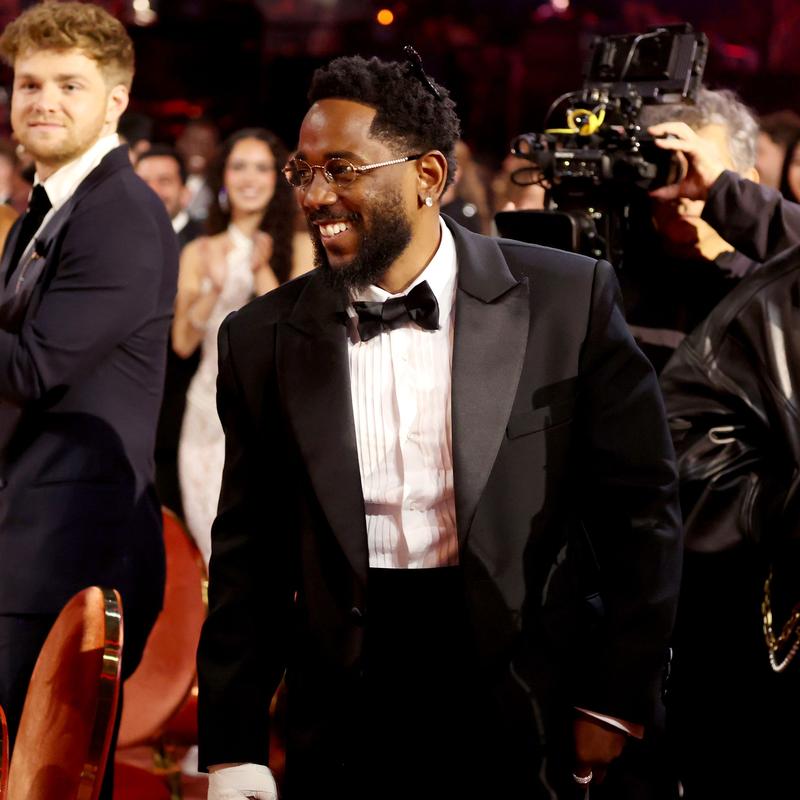
David Furst: You're listening to All Of It on WNYC. I'm David Furst in for Alison Stewart. The team of producers here on All Of It have to cover culture of all kinds, from books to theater to music, including award shows like the Grammys. When Bad Bunny had a historic Album of the Year win a few months ago, becoming the first artist to win the award for an album entirely in Spanish, our producers were interested, and two of them decided to embark on an intense project to learn more about the history of the Grammys. Producers Jordan Lauf and Simon Close listened to every Album of the Year winner in order, and they ranked them from best to worst based on criteria they created themselves.
That meant listening to 66 albums front to back from 1959 all the way through to 2026. Jordan did. Simon started later, currently stuck somewhere in the 2010s. They emerged from this experience with hot takes about what makes a great album and what the Grammys get wrong and right and strong opinions about Frank Sinatra. Jordan Lauf and Simon Close join us now to discuss all of this in their final rankings and why they decided to do this in the first place. Welcome.
Jordan Lauf: Hey, thanks for having us, David.
Simon Close: Hello from the year 2011.
David Furst: Okay, good to have you with us. Jordan, let's get to why. Why did you decide to do this?
Jordan Lauf: Yes, part of it is what you mentioned in that introduction, that Bad Bunny had this historic win. My partner is a massive Bad Bunny fan, so this was very big news in our household. When I learned that he was the first person to win for an album entirely in Spanish, that got me looking back at the catalog of albums that have won in the past. The minute you're on that Wikipedia page, some things really stand out to you. Some wins don't look right. Some things are nominated that are confusing. Some things are not nominated that are confusing.
It got me interested in trying to understand the Grammys on its own terms by actually doing the homework of listening. Plus, my Spotify algorithm is so boring, it's just feeding me the same stuff over and over again.
David Furst: All right, so you couldn't just click away and move on with your day?
Jordan Lauf: No, I was so musically bored, I have to say, I just needed to listen to something new. This felt like a structured way to do that and-
David Furst: A fun challenge.
Jordan Lauf: -get some musical education. Exactly.
David Furst: Simon, why did you decide to join her? Some inter-office peer pressure? Your desks are close?
Simon Close: I couldn't stand to think that Jordan was embarking on this musically nerdy project and that I wasn't also doing it. Jordan started backwards, so in the present day, and then went in reverse. I thought it would be fun to do the opposite and start from 1959 and then work my way forward.
David Furst: Oh, interesting. You must have met somewhere in the middle there. Jordan, do you think that affected your experience, listening to the music, forwards, backwards?
Jordan Lauf: Yes, so I went backwards. I started with Bad Bunny and went in reverse. I do think it was tough to start ranking things objectively in the beginning because it was a lot of music I had a previous relationship with. I grew up with it. I was a teenager when Taylor Swift was winning for all those albums, so I had a certain relationship to the music that I started out with. Then you get to the '90s and the '80s, and it was a lot of stuff I wasn't as familiar with or maybe had heard one or two songs. It was harder to try to evaluate that music on its own terms and compare it to stuff that was really meaningful to me or stuff that I really liked when I was growing up. That was a little bit of a challenge.
Simon Close: I was immediately confronted with the music of Peter Gunn and Henry Mancini. It was a lot of stuff that I was not that familiar with.
David Furst: Starting in the '50s.
Simon Close: Starting in 1959. I think that my experience was meeting a nascent organization that didn't really know what it was supposed to be yet. The 1960s are a strange decade of lots of Frank Sinatra and a couple comedy albums. It was interesting moving forward and seeing the music trends come into popular music, but also seeing the organization, the Grammys, figure out what their priorities were throughout time.
Jordan Lauf: I also just want to mention that Simon and I did meet in the middle at Billy Joel's 52nd Street, which we listened to at the same day on the same time in a handoff of sorts.
Simon Close: A poetic--
Jordan Lauf: We passed each other by.
David Furst: Passed each other on the highway.
Jordan Lauf: Exactly.
David Furst: Waved and moved along. Jordan, tell us about the rules that you set for yourself on this journey.
Jordan Lauf: Yes, these are strange rules that I just decided made sense.
David Furst: Naturally.
Jordan Lauf: This is what I went with. The first one should be obvious, but you have to listen to the whole album in order. You can't shuffle the album. That would make no sense. You can't skip any songs, even if you really, really, really hate it. You have to just keep going. I made a rule that I couldn't rank anything until I was finished with the whole thing. Even if I thought, "Oh, wow, Thriller, Michael Jackson, that's shooting straight to the top," I still had to wait until the album ended to put it in.
The first ranking was the final one for me. Once I put it in, I couldn't move it. Things could go above it, things could go below it. Once I slotted it in where it was, that's my first instinct. That's where it has to stay. I also decided that deluxe albums and bonus tracks did not count. For something like Rumors, sorry, Silver Springs, that's a bonus track that I couldn't incorporate into my ranking.
David Furst: An incredible bonus track.
Jordan Lauf: One of my absolute favorite Fleetwood Mac songs. I just couldn't consider it, unfortunately.
David Furst: Because it wasn't part of the original album as it came out, and as it won the award.
Jordan Lauf: Exactly.
David Furst: Simon, did you have an equally bizarre and complicated set of rules?
Simon Close: I had mostly the same rules, but a slightly more laissez-faire approach to it, maybe. I think I didn't hold myself to as quite strict rules, but--
David Furst: Jordan, glaring at you right now.
Simon Close: [laughs]
Jordan Lauf: If there are no rules, then what are we doing here?
Simon Close: There are rules, but I think I tried to consider each album on its own merits. Sometimes you encounter an album that is a covers album, and it's meant to be that. That song interpretation is its own art form. Taking that on its own terms versus a song that's all originals. Also, I think I was grading the artists themselves, but then sometimes grading the academy and thinking, "Does this speak to what was happening in music at the moment?" Or even if it doesn't, is it saying something else? Or is this just a really strange pick for whatever year it was?
David Furst: You were considering relevance to that moment in time as part of your criteria?
Simon Close: Yes, exactly.
David Furst: Jordan, I hear your methodology also involved subtracting points, some mathematics.
Jordan Lauf: Yes. Again, a thing that only made sense in my head. An album could lose points with me in a variety of ways. One was covers. I did not rank cover albums very high. Unlike Simon, I refused to value the covers on their own merits. I think it's just less exciting to me than writing something new is covering something else. If an album had a really bad B-side, which happened a lot, sometimes the first half of the album would be great, and then you'd get to the B-sides, and it was pretty terrible.
David Furst: Let me just say, B-side terminology that's reserved for 45s, but I'll let it slide.
Jordan Lauf: Sure, sure, sure. Let's just say then, the second half. Sometimes the second half was really not great. That would subtract points for me. If it was a movie soundtrack-- There are quite a few movie soundtracks on here that have won. The Bodyguard, Saturday Night Fever, which have some really great stuff on there. Then it'll be like a weird instrumental track from a pivotal scene in the movie. Sorry. Docking points for that.
Simon Close: A beautifully curated album mixing various genres.
Jordan Lauf: No. Still don't like it.
David Furst: Wow.
Jordan Lauf: If there was a song on the album that I really, really, really, really hated, it was going to lose points. It just had to lose points.
David Furst: Okay, well, was this done on the clock? HR's not listening. Understood.
Jordan Lauf: No comment. Alison's on vacation. Right?
[laughter]
David Furst: All right, let's get to some of your takes. Let's talk about some of the albums you like the least. Jordan, what album did you end up ranking last, and why?
Jordan Lauf: Coming in last for me, and if I could have ranked this album like negative 1,000, I would have ranked it that. It's Steely Dan's Two Against Nature.
David Furst: Whoa.
Jordan Lauf: I know. I'm sorry to all the Steely Dan fans out there. This had none--
David Furst: Some on staff. I can see people being restrained in the other room.
Jordan Lauf: Our director in the booth is very upset with me. She's threatening things that I'm not going to pay attention to. This album had none of the fun of a Steely Dan album that I like. I didn't think their voices sounded great. Above all, to me, there was this song, Cousin Dupree, which is about hitting on your cousin or finding your cousin attractive. I just found it incredibly disturbing and had a hard time getting past it. For me, of all the albums I listened to, Two Against Nature, I would never, ever listen to again.
David Furst: All right, well, you had a hard time getting past it. You're asking us to listen to it right now.
Jordan Lauf: I mean, see what I mean. Let's take a listen.
David Furst: Okay.
[MUSIC - Steely Dan: Cousin Dupree]
David Furst: Oh, come on. This song is written in character. It's supposed to be a gross character.
Jordan Lauf: Then why is it so fun?
Simon Close: I still think there's something sinister about this album. Oh, yes. I guess the way I was thinking earlier today-- You know the city of Los Angeles, how it's like it's perfect in many ways, always sunny. There's a perfect production, maybe, to the city. Underlying that is a sinister evilness. That is how I think of Steely Dan in the song.
Jordan Lauf: Oh, God.
David Furst: Okay.
Jordan Lauf: Our Los Angeles listeners are not going to like that. I apologize on behalf of Simon.
David Furst: These are hot takes.
Jordan Lauf: They are hot takes.
David Furst: I can't cool them off. These are your takes. Simon, what came in last for you and why? I'm bracing myself.
Simon Close: This is actually going to get me in a lot of trouble. I also need to say that, yes, I'm only in the 2010s right now, so there's definitely some not great stuff that I think is going to end--
Jordan Lauf: He hasn't gotten to Bruno Mars yet [unintelligible 00:10:32].
Simon Close: To 24K Magic.
Jordan Lauf: Go right to the bottom.
Simon Close: Also, I will say that there are two-- Only two comedy albums have ever won, and probably they would go pretty low on my list, but I ended up putting them in a slightly different category. What ended up at the bottom of my list is Frank Sinatra album Come Dance with Me. I think what was going on--
David Furst: These are classic artists.
Simon Close: A classic artist for sure. Frank Sinatra is capable of some great stuff, and this was not his best work. I'm not saying that this album is apples to apples, better or worse than the others, but I don't know that this album deserved to be rewarded for what Frank Sinatra is capable of. Also in this decade-- The 1960s, as I said, were a weird period for the Grammys. Frank Sinatra won three albums or won three Album of the Year awards in this decade. I was just getting a little frustrated with what the Grammys were up to.
David Furst: When you're thinking about all of the other things that were also coming out at the same time.
Simon Close: Exactly. Yes.
David Furst: I feel like I have to put out our phone number now before we take a break. If you need to respond to this, maybe you have your own Grammys hot take you want to throw our way, call us 212-433-9692. That's 212-433-WNYC. We're talking about the Album of the Year category with All Of It producers, Jordan Lauf and Simon Close, right back after a break.
[music]
David Furst: This is All Of It on WNYC. We are talking about the Grammys and the Album of the Year category. All Of It producers, Jordan Lauf and Simon Close, set a task for themselves of listening to all of these Album of the Year winners, and they are ranking their favorites, and the bottom of the list we just covered. I'm not going to back up to that again. Let's move on. Let's move on to the albums that you like the most. Simon, what album were you in favor of? Give us something positive.
Simon Close: I think Jordan and I both, as our number one, put Rumors by Fleetwood Mac.
Jordan Lauf: Yes, we did.
David Furst: Undeniable classic album.
Jordan Lauf: It was pretty undeniable. I thought going into this that Rumors would probably take the number one spot for me. I left my heart open to see if anything else could come and claim it. I almost cried with happiness when I hit the '70s because let's just say the '80s were a rough decade. I was going backwards. When I hit the '70s, I was so, so happy. Rumors is just an album that doesn't quit. I don't know that we have much to say that smarter people haven't already said about Rumors, but even compared to the rest of the stuff that won around it, it's pretty undeniable.
David Furst: Let's hear a little clip from the album. Let's hear some music.
[MUSIC - Fleetwood Mac: The Chain]
David Furst: Just a little bit of The Chain there. Still a piece of music that can just change the entire mood.
Simon Close: Yes, it really can. I also-- Again, as Jordan said, everyone said everything that you can say about that album, but it's a great argument for a band as a group project, I think. That everyone brought a song to that album that could be the best song on almost any other album.
David Furst: Everybody is delivering the goods, for sure. It also seems to be an Album of the Year win that really does coincide with the moment.
Jordan Lauf: It's definitely-- I think the '70s in general were the decade where the Grammys finally caught up to what people seemed to be interested in and like to listen to. There were a lot of great wins in that decade. Stevie Wonder won a bunch of times. Like you said, I think Fleetwood Mac is an encapsulation of something that is both a critical and a commercial success, that it's a popular music that also people agree is really great. I think there were many times where the Grammys strayed from that path.
David Furst: Definitely a moment that didn't feel like the disconnect that you were talking about in the '60s. Let's take a call. If you want to join this conversation, feel free, 212-433-9692. Let's hear from Stuart in Weehawken. Welcome to All Of It.
Stuart: Hey, everybody. Jordan just echoed what I was calling about, which was, when you think of the 1960s, you think of rock music. You think of the Beatles, the Stones, British Invasion, the Beach Boys, et cetera. What were the top albums that the Grammys won in the '60s? They were mostly middle-of-the-road stuff that my parents would listen to. When my mom first heard Hey Jude by the Beatles, as opposed to like the dentist office version and Paul is screaming at the end, my mom says they ruined the song. How could they have ruined that song?
[laughter]
David Furst: That is the best. That is an incredible comment. Thank you so much for joining this discussion. We're hearing some hot takes here from Jordan and Simon. When you dish out the hot takes, you get them back sometimes. We have a text here that I need to read out loud and get your response. "What are the producers' backgrounds in music? Why are their opinions important?"
Jordan Lauf: Certainly, our opinions are not important at all.
[laughter]
Simon Close: I think we're just coming on to say we had some fun. I will say I produced a lot of the music segments for this show that you apparently listen to, so I work on those and have for years. I run the Public Song Project, so that's a little plug that I do.
David Furst: All right, all right, relax. It's okay.
Jordan Lauf: I have no music qualifications whatsoever, and you probably shouldn't listen to anything I say.
David Furst: This is one of those projects you set for yourself, right? It was a fun thing to delve into.
Jordan Lauf: Also, I can't imagine there are that many people who have done this all in one shot. I really spent like two full weeks. The only things I listened to were these albums in order, which does seem like a unique experience. I'm sure some people do it to research or if they have their own personal project, but I do think I got some perspective from doing it that way.
Simon Close: Again, I would say we're not presenting ourselves as experts here. This is just a fun project.
Jordan Lauf: Oh, certainly, we're not.
David Furst: This is just a fun project. Let's get to some of your surprises, some of your surprising reactions over the course of this. Simon, what album were you surprised to see make it into your top 10?
Simon Close: This I did to be contrarian. [laughs]
Jordan Lauf: No, now you're trying to walk it back, and you should just stand by it.
Simon Close: It's true. I'm immediately going to be discredited for this, but I thought I should come with something especially fiery today, in case I haven't already. Honestly, Santana's Supernatural deserves some revision. I think it's a really fun album. It has one of the best pop songs ever, Smooth.
David Furst: Santana, classic artist.
Simon Close: It's a fascinating album because throughout Grammys' history, you come across a lot of comeback albums of various types, and some are remembered fondly and end up in the best comeback albums list. Like Bonnie Raitt's Nick of Time is an example, but this Santana album doesn't really end up there. I think it is evidence of a guitar hero from the 1960s who can still sound pretty relevant in-- The album came out in 1999. I'd say give that another listen. It's a lot of fun.
David Furst: Jordan, what about you? Any surprises?
Jordan Lauf: I was really surprised by Carole King's Tapestry, which should not be a surprise, but is an album--
David Furst: Massively popular, successful album. Incredible.
Jordan Lauf: Exactly. This is an album that I hadn't listened to front to back, I think, maybe ever. I was just shocked by the amount of hit songs that are on that one record. It's got one of the best three-song runs on it, I think of any album. It starts with I Feel the Earth Move, it goes right into So Far Away, and then goes right into It's Too Late. I mean, those three songs back to back, stone cold classics, what a way to open an album. That really shot up the rankings for me. That came in at number two, right under Rumors.
David Furst: Came in at number two. What about your favorite and least favorite decades, Simon?
Simon Close: I would say my least favorite is probably the 1960s for the reasons that I said and that Stuart said before. You have like two comedy albums in there. You have a lot of Frank Sinatra. It just feels like the Grammys haven't quite caught up to the moment yet. Other than that, I enjoy some yacht rock, but the Grammys definitely fell into a yacht rock pit for a period of the 1980s, that I don't know if they were necessarily rewarding the best that was out there.
Jordan Lauf: The '80s were definitely my least favorite. It does have some high highs. It's got Paul Simon, Graceland, it's got Thriller, obviously. Some of the wins in there were just, to me, unfortunately, incredibly corny. I had a hard time with it. I also honestly had a hard time with the '90s just in terms of the music that was popular at that time. Some of the things that were recognized didn't feel super exciting to me, though I do want to give a shout-out to The Miseducation of Lauryn Hill, a fantastic album that made it into my top 10 and was definitely the highlight of the 1990s when you look at the winners.
David Furst: We need to finish with some music. Do we have any music from that album?
Jordan Lauf: We do. We have Doo Wop (That Thing).
David Furst: Fantastic. Let's hear some of that kicking up right now. As we're wrapping up, the final last few seconds, did you learn anything from this exercise?
Simon Close: I learned if you want to win Album of the Year, make your album just a little bit too long. Also, if it's in the early 2000s, throw some Norah Jones in there, and you probably got an Album of the Year win.
Jordan Lauf: For me, if you have an undeniable hit, hit song, it's very likely that you could win Album of the Year. It seems like the Grammys really validated having one smash hit, and that could send you all the way to the top. The other thing I learned is that, like most award shows and like our opinions today, none of this actually matters at all. Like what you like.
David Furst: Like what you like. Always good advice. Thanks for joining us. This is All Of It on WNYC. I feel like I should have honored more hot takes, but producers Jordan Lauf, Simon Close, thank you both for joining us.
Jordan Lauf: Thanks, David.
Simon Close: Thank you, Dave.
Copyright © 2026 New York Public Radio. All rights reserved. Visit our website terms of use at www.wnyc.org for further information.
New York Public Radio transcripts are created on a rush deadline, often by contractors. This text may not be in its final form and may be updated or revised in the future. Accuracy and availability may vary. The authoritative record of programming is the audio record.