
Silvana Estrada Live in the Studio
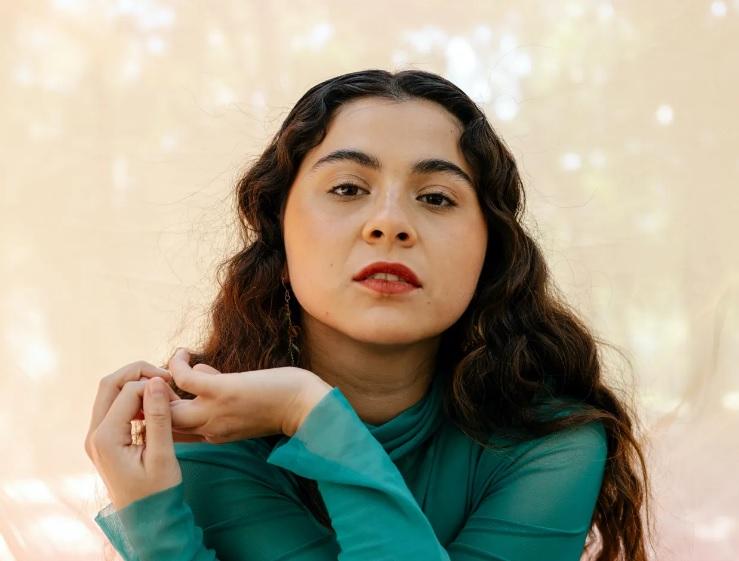
( Jackie Russo )
Alison Stewart: This is All Of It on WNYC, I'm Alison Stewart. Latin Grammy nominated musician and songwriter, Silvana Estrada, is set to release a new album. It's titled, Vendrán Suaves Lluvias, which translates to, "Soft rains will come." It's the first since her critically acclaimed debut, Marchita, back in 2022, which The New York Times called a tender snapshot of a young woman wrestling with the pain of lost love. Returning to her unique blend of Latin American folk, Silvana's latest album reflects on a life-changing period of self-discovery, the tragic loss of a close friend, and reconnecting with her intuition. With me now is Silvana Estrada, here for a special live performance and to talk about the new album, which is out Friday, October 17th, but she will be at National Sawdust this Sunday for an album listening session and a Q&A at 6:00 PM. Silvana, welcome to All Of It.
Silvana Estrada: Hi. Thank you.
Alison Stewart: The title of your album comes from a 1918 poem by Sara Teasdale. Tell us about this poem and how it inspired you.
Silvana Estrada: I was very young, I was a kid, and I was reading this Crónicas Marcianas, this book from Ray Bradbury. The end of this little tale was this poem, this Sara Teasdale poem, which the actual name of the poem is War Time. Yes, I was very young, and I was very moved by this image of-- the poem basically says like, even if we don't have the clarity to stop any war and we keep in this violent path, and even if humanity disappeared, the spring and the wind and the nature is going to be here anyways. With us or without us. There's something really hopeful about that.
Even if it's a super dark poem, I always found it super bright and luminous and beautiful. That image of the soft rains sticked in my mind for many, many years. I was writing songs for this album and one of the songs, one of the verses says, "Vendrán suaves lluvias, there will come soft rains." Then I was like, "Oh, this is the image. This is the image I want for this album. For the people to feel the breeze and the softness of the rain.
Alison Stewart: Let's hear a song from your album. What are we going to hear first?
Silvana Estrada: Yes, this is Lila Alelí.
[MUSIC - Silvana Estrada: Lila Alelí]
Alison Stewart: That was beautiful. That was Silvana Estrada. Would you please introduce the person sitting to your, I guess your left?
Silvana Estrada: Yes.
[laughter]
Silvana Estrada: This is Joe Grass, directly from Canada.
Joe Grass: Yes. [chuckles] Hello.
Silvana Estrada: Beautiful, beautiful, beautiful person, beautiful guitarist player, beautiful multi-instrumentista. Yes, I'm really excited to be here, playing duet. All these tunes we've been playing with the band, so we're figuring out how this is working. Just two instruments.
Alison Stewart: The last song we just heard. Tell us a little bit about that song, when you wrote it.
Silvana Estrada: Okay. This last song, Lila Alelí, it's a song that I started to write, I think, during the pandemic, because I was learning to do décimas, which is like a-- it's like a poetry form, super traditional from my region, and it's all around Latin America. It's like this 10 verses form with specific ways of combining the la rimas and the vocals. Yes, I was learning to write décimas. I get, during learning all this format and doing my own décimas, I discovered I was super, super homesick. [laughs]
Yes. I discovered that all of these décimas were about my hometown and how I miss my-- the nature, the flowers, the river. Also, I was a little bit heartbroken by that time. Yes, it's a really kind of my diary. This song, it's like all the things was going on in my heart at that time.
Alison Stewart: I understood you took a break from music for a little while. Will you tell us why?
Silvana Estrada: A break from music, I don't know if I actually had-- I don't know if I took a break of music, but I definitely had a rough time. [chuckles]
Alison Stewart: Yes.
Silvana Estrada: I guess I was very tired. I've been doing this for a long time. I'm still young, but I started very, very young, and I've been touring since very, very young, and I was very tired. Also, I lost my best friend. That really, yes, that was super hard to process. I guess I was trying to understand my-- why am I here? Why am I alive, and not-- why I am then the one who kind of survived or-- I guess I have been trying to give sense [chuckles] to my life, and music, it's great for exactly that.
At the same time, I was kind of trying to-- it took me a while to understand, like, what's the purpose of doing songs? What I'm doing with my life after knowing that death exists. It's so silly. We all know that we're going to die, but something happens when a person you love dies in a very violent way. It's like, turns the whole world upside down, and you need to restructure your-- basically your thoughts and your beliefs and your joys and your dreams. I did that, and it took like three years [chuckles] to do that.
Alison Stewart: Yes.
Silvana Estrada: Yes.
Alison Stewart: Did writing music help you process the death of your friend?
Silvana Estrada: Yes. Yes, big time. Yes. A lot, at the beginning, was very hard. The first year after that happened, I was not able to write. It was super scary. If there's someone listening with writer's block, [chuckles] I swear it's going to go away. Yes, it's super scary, because, feels like music doesn't loves you anymore, a little bit. It's like, "Oh, wow. She's turning her back to me after I've been [chuckles] with her all this time." Yes, it's super scary. I felt so lost, and I was also a little bit angry. I was like, "Oh, well, I'm going to also turn my back to you." Then I never quit.
I always tried and tried and tried and tried to write, until one day even without noticing, I was like, "Oh, I have a song again."
Alison Stewart: It just came to you?
Silvana Estrada: Then another, and then another. Yes.
Alison Stewart: Wow.
Silvana Estrada: Yes. I was actually at Chavela Vargas' house. I don't know if you know her. She's like a really historical singer from Mexico. I was doing a residency at her house. She passed many, many years ago. Yes, I don't know, maybe just being at her house inspired me.
Alison Stewart: Maybe she came to you.
Silvana Estrada: Yes, exactly. Yes, yes, yes. For sure.
Alison Stewart: It's a little woo-woo, but it might be true. [laughs]
Silvana Estrada: No, I'm definitely with you on that. Yes, yes, yes. [laughs]
Alison Stewart: My guest is Silvana Estrada. She's here to give us a preview of her forthcoming album. I'm going to try it again. Vendrán Suaves Lluvias?
Silvana Estrada: Yes, Vendrán Suaves Lluvias.
Alison Stewart: I was close. I was close. We're going to hear another song. What are we going to hear?
Silvana Estrada: We're going to listen to Al Norte, which is a song from my first ep, Primeras Canciones.
[MUSIC - Silvana Estrada: Al Norte]
Alison Stewart: That's Silvana Estrada. She just performed a song called Al Norte. You produced this new album, yes?
Silvana Estrada: Yes.
Alison Stewart: Why was that important to you?
Silvana Estrada: Well, for so many reasons. I guess I was, as I was telling you, I was a little bit lost, so it was really hard to speak my mind to other people. I started to have this like, I don't know, I was like trying to make a point and say like, "Hey, we need to do this." Especially, I started this album trying to work with producers, and it was a little bit hard to me to like, "Hey, I really want to do this." It was like, I always received this type of, like, nos. Like big nos. Like, "No, we can do that, you cannot repeat yourself." All these rules and a little bit of, I don't know, expectations of what this album should be after the first one.
I was like, "No, I don't-- I just want to do what I want to do. There's no other thing that matters to me, at least, and it's my album. So, we better should do it fun, and do it freely, and let's put our hearts on it." Yes, at some point, I decided to do it myself, because I was a little bit tired to feel like I need to fight for my vision. I was so tired. I was like, "No, I'm not going to fight for my vision. I'm just going to do it myself." Yes, that was a long process, because I never produced anything. I mean, I produced a couple of songs, but an album, it's another thing. Also, I'm a very-- like, I get distracted very easy. I'm really bad at organization and like-- [laughs]
Alison Stewart: Linear thinking.
Silvana Estrada: Linear thinking. I'm really bad at it. Really, really bad at it. So, it was a super hectic travel, [laughs] just doing this album and producing it. I mean, I was lucky enough to find great musicians and beautiful people who helped me. I guess what I did was just taking decisions in terms of who I wanted to work, what I wanted to be the sounds, and then I also allowed a bunch of people just to create with me. Yes, and it was actually pretty fun to do it that way.
Alison Stewart: When people listen to your album, what do you hope they feel? What do you hope they think about?
Silvana Estrada: Well, I hope for them to find a little time for beauty, and to fall in love with life. It's an album full of hope and full of light, even if most of the songs are about sad things. I think what I was trying to do when I did this album is like, "Okay, let's talk about the sadness. Let's not-- let's acknowledge that this world is difficult to be alive. It's a bunch of pain, but it's also a bunch of beauty, and in order to feel fully, you need to feel both things. Beauty and terror." Yes, I hope for everyone who will listen to this album just to, yes, find a moment to fall in love with life and fall in love with hope and maybe, I don't know, get to feel their hearts. Whatever it is inside.
Alison Stewart: We're going to hear the last bit of our album. We might have to dip out of it, but keep playing, because we're going to playing it again. It's from your forthcoming album, Vendrán Suaves Lluvias. What are we going to hear?
Silvana Estrada: This is Dime.
Alison Stewart: My guest has been Silvana Estrada.