
Revisiting the Golden Age of New York Magicians
Alison Stewart: You are listening to All Of It. I'm Alison Stewart. I'm so glad that you're here. Sometimes, last-minute plans are the best plans. You might be thrilled to learn that our February Get Lit with All Of It Book Club event is happening tonight at 6:00 PM in the WNYC Greene Space. Remember that snowstorm? Author Angela Flournoy will join us to discuss her novel The Wilderness. Tickets are free, and there are a few left, so grab them now. Head to wnyc.org/getlit to reserve yours. That's wnyc.org/getlit. That's happening in about five hours from right now.
Now, if you want a little more lead time, you can start on this month's Get Lit Book Club Pit Pick. We are reading A Guardian and a Thief by Megha Majumdar. I will be in conversation with Megha on Tuesday, March 24th, at 6:00 PM at the Stavros Niarchos Foundation Library. Tickets are free to that event, but seats are first-come, first-serve. Head to wnyc.org/getlit to reserve your tickets and learn how you can read an e-copy of the book from our partners at the New York Public Library. Speaking of the library, let's get this hour started.
[music]
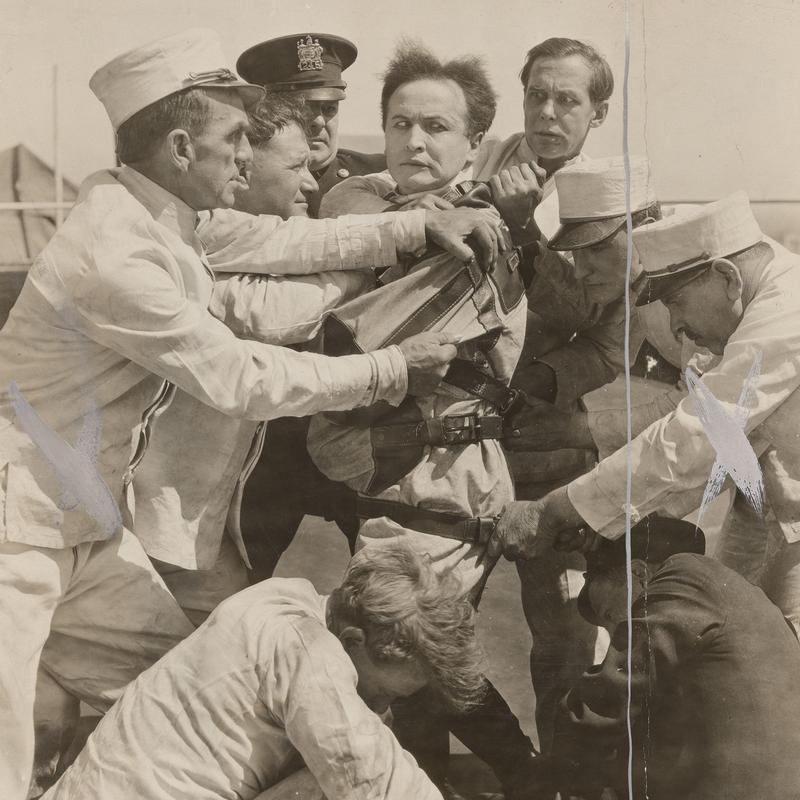
A new exhibit at the New York Public Library explores the long history of illusionists in the city. It's called Mystery and Wonder: A Legacy of Golden Age Magicians in New York City. With designs that evoke an early 20th-century magic shop, the show reflects on magic as both an entertaining pastime and a serious art form. It features more than 300 rare artifacts and books, some of them never seen before by the public, among them, the handcuffs and leg shackles used by the legendary Harry Houdini during his famous escape acts.
The exhibition also includes books on magic dating back to the 18th century, more than 40 magicians' wands, and 48 original lithographic posters promoting performances. Mystery and Wonder is on display at the Library for the Performing Arts at 40 Lincoln Center Plaza through Saturday, July 11th. Assistant Curator Annemarie van Roessel joins me to discuss. Hi, Annemarie.
Annemarie van Roessel: Hi.
Alison Stewart: The exhibit reflects the Golden Age of Magic. When was that?
Annemarie van Roessel: The Golden Age of Magic is really looking at a time period from just after the Civil War, so the 1870s right up through the beginning of World War II. It's a good 60-odd years of just incredible creativity in the magic world.
Alison Stewart: Yes. What caused this surge in interest during this time?
Annemarie van Roessel: Well, there were always magicians. There have been magicians since time immemorial, but during the 19th century, we start to see magicians becoming more professional. There was a very important magician in Paris that we could talk about, and there was a lot of surge in literature. The magicians here in New York City were just really emblematic of a time when there was just incredible creativity and innovation in magic as a performing art.
Alison Stewart: Tell me about the magician from Paris.
Annemarie van Roessel: The magician from Paris, a man named Robert-Houdin. Some of you might pick up that his last name was an inspiration for a young immigrant to New York City named Erik Weisz. Erik Weisz got his hands on a copy of one of Houdin's books in translation in English and realized that the world of magic might be open to him. He indeed took on the stage name Harry Houdini. The rest is history.
Alison Stewart: Why did magicians from all over the world come to New York?
Annemarie van Roessel: New York City has always been a Mecca for the performing arts. Not just magic, but certainly dance, music, theater. New York City was a place where all of the things and the people that you needed to put on a show were plentiful. Not just the theaters, small theaters down in the Bowery, way up to enormous theaters on Broadway, but you also had the set designers, the costume designers, the musicians, the stage managers, the travel, the tour agents. One of the things that's wonderful about this period is that magicians are not just flourishing in New York City, but they are traveling, touring all over the United States and internationally. Those stories are just wildly fun.
Alison Stewart: Many Jewish performers found success as magicians. What attracted Jewish immigrants to the profession?
Annemarie van Roessel: That's a complicated answer. I will say, just generally, in the performing arts, there are many, many examples of Jewish people finding tremendous success. Communities of practice, communities of support were very, very important. One of the other things I certainly could say about magic during this time period is that you didn't necessarily have to speak English fluently to be a really compelling, dramatic performer.
Alison Stewart: I see.
Annemarie van Roessel: A lot of magicians actually performed silently. At this time period, most magicians were performing to live music if they were of any renown, and so you could put on a really dramatic, exciting, exhilarating show without necessarily having to say a word. That opened up doors to a lot of immigrants who were maybe not comfortable speaking fluent English.
Alison Stewart: My guest is Annemarie van Roessel. Did I say that correctly?
Annemarie van Roessel: Van Roessel.
Alison Stewart: Van Roessel. Annmarie van Roessel. She is an assistant curator at NYPL's Library for the Performing Arts. The Exhibit is called Mystery and Wonder: A Legacy of Golden Age Magicians in New York City. It will be on display at the Library for Performing Arts through Saturday, July 11th. What kind of places did magicians perform in?
Annemarie van Roessel: Oh, all kinds of places. The exhibit looks briefly at the early years of magic. In the early 1800s, for instance, magic was happening in pubs and at street fairs, not at all the kind of sophisticated theatrical magic that we really think of during the Golden Age. Here in New York City, magicians like Houdini, for instance, could get their start on Coney Island or in the dime museums down in the Bowery, these slightly seedy theaters. As they progressed in their career, they could work all the way up to, as I said, theaters on Broadway.
Alison Stewart: Was it a competitive field?
Annemarie van Roessel: Very much so. Magicians, as you can imagine, are always guarding the secrets to their acts and to their knowledge. There are lots and lots of stories about magicians stealing tricks from one another. Lots of stories about that. Certainly, magicians innovating, adapting, remixing illusions that they had seen or that their mentors had passed down to them. It was very competitive. One of the things that really comes out of the Golden Age is also a sense of community and fraternity. That's the other side of this story. There was competition, but during this time, there was also a moment when magicians started to realize there was strength in numbers.
Alison Stewart: Who would go to magic shows?
Annemarie van Roessel: Oh, almost anyone. At the end of the 19th century, we're seeing a time when people have more money to spend on entertainment and more free time, even. You'll get families, there were certainly magicians who were catering to families and children. There were also magicians who were very much sought after by the elite, by royalty. Magicians during this time were also doing very elegant, full evening shows. It would be something that you would go to in a very sophisticated, adult sense as well. There was really some-- I think there was a magician for everyone. [chuckles]
Alison Stewart: There's all kinds of magic that we're talking about, though. We're using magicians as an over term. Can you tell us the different kinds of magicians? Were there illusionists, mentalists? Tell me about all the different kinds.
Annemarie van Roessel: Yes, that's really one of the fun things to explore in this exhibition. There are magicians who specialized in what we call escapology. Of course, Harry Houdini is the greatest one in that genre.
Alison Stewart: That's such a good word, escapology.
Annemarie van Roessel: There are magicians who did more traditional full-stage shows. They would do illusions and substitutions, where one thing becomes something else. Transformations, disappearances, vanishes, card, a lot of card manipulation, coin manipulation. There was a very important genre of magic, especially during the Golden Age, which was called mentalism or second sight. That's a form of magic that we still certainly see performed today, but that was an especially important genre of magic for husband and wife teams or duos.
Throughout this exhibition, one of the things that's very important for me is to really reveal the incredible contributions of women during the Golden Age of Magic. You see, in a number of ways, women with their husbands performing these second sight, these mentalist acts, reaching tremendous levels of success. Audiences really ate it up.
Alison Stewart: My guest is Annemarie van Roessel. We are talking about an exhibit at the New York Public Library. It shares rare items, books, and artifacts from 20th-century magicians. It's called Mystery and Wonder: A Legacy of Golden Age Magicians in New York City. How did magicians play upon the spirits, the afterworld?
Annemarie van Roessel: Yes. Spiritualism is very much a thread that's woven through the story of the threads of fabric of this exhibition. Spiritualism is a quasi-religious movement that arose in Upstate New York. It's a New York phenomenon. It has to do with this idea that you could communicate with the dead from the afterlife through mediums and seances. Magicians realized this was ripe fodder for their acts. There is a long history, a thread of spiritualism as a performance from magicians.
There were also many, many magicians who worked very hard to expose mediums that they thought were fraudulent. For instance, Harry Houdini spent decades exposing, seeking out fraudulent mediums, and sharing that the illusions, the manifestations, the tricks that they were producing during their so-called seances were actually human-made. There were no spirits involved, no supernatural forces involved. [laughs]
Alison Stewart: It's interesting. You gave me a beautiful program from the exhibit, and it shows all of the posters. Could you explain a little bit what the posters were about, what they were for, who made them?
Annemarie van Roessel: Sure. I'm especially proud of the posters in this exhibition.
Alison Stewart: Really cool.
Annemarie van Roessel: Really gorgeous. We have 48 posters on display. I think it's one of the largest collections of Golden Age magic posters of any public library in the world. These posters were really important. As I said, these magicians were touring a lot, and so they needed to be able to promote themselves. These posters are primarily visual. There's generally not a lot of text. You're getting a lot of really rich graphic iconography, this graphic language about magic.
These posters would be put up as magicians were traveling from city to city, would be put up outside the theaters, on fences. Any flat surface a magician and their troop could find would put up these posters to really attract the audience, to incentivize them to come buy a ticket and see the show, and help the magician make money. This was a performing art. They had to earn a living.
Alison Stewart: It's interesting that you said there was a community that developed around this. Was it a community around the magicians themselves? Did they talk to each other or, as we said earlier, they were competitive, but at the same time, they had to talk and gossip and carry on?
Annemarie van Roessel: They did. The exhibition actually begins with the collection of a man named Dr. Saram Ellison. Now, ironically, Ellison was not a magician himself, he was a doctor, but he was what we would call today a super fan of magic.
Alison Stewart: Oh, I looked him up. He was a super fan.
[laughter]
Annemarie van Roessel: He built this extraordinary library about magic. I also say he collected, not just books, but he collected friends and he collected magicians, in a sense. He built this enormous Rolodex of every major, even minor, magician living here in New York City, traveling through New York City. This extraordinary social network that he built up, he, along with several other people, realized there was a critical mass of practicing professional magicians, interested amateurs, aficionados. In fact, in 1902, Ellison and two other men form something called the Society of American Magicians. This is a monumental moment in the Golden Age, thinking about magic becoming a professional, mainstream performing art.
The Society of American Magicians, as you were asking, is really how magicians got to hang out together and share ideas. There was always this underlying competitive nature that never really goes away. The society, I should say, is still alive and well, flourishing today. The legacy of Ellison and the founding of SAM is really an important one. The SAM was a moment where magicians could really start to learn about their-- expand their own craft, learn about what was happening not just in the United States, but overseas. They would perform for each other.
A very important local hangout for them was a place called Martinka's, a magic shop on 6th Avenue just south of 30th Street. Martinka's was not just the place where you could buy the books and the tricks and the apparatus for your show in the Golden Age, but you could also meet mentors, you could hang out, you could absolutely gossip, you could just socialize with your compeers. Members of the SAM are called compeers.
Alison Stewart: I'm interested in Dr. Ellison. How was he perceived as an outsider? You said he wasn't a magician.
Annemarie van Roessel: I jokingly call him Switzerland. My theory is that because he was not a magician, but incredibly versed in the art of magic, knew how to speak the language to other magicians, they didn't find him-- he wasn't competing against them at all. He was the hub of this circle of magic and was genial, convivial, just somebody that they really wanted to get to know. There are many, many letters in our collection documenting all of these relationships, again, with every major and minor magician in the world at that time.
Alison Stewart: He also collected very rare items. What are some of the items that we might see?
Annemarie van Roessel: I love his collection. He was very rigorous in his collection. He was interested in the foundational literature of magic. On display, for instance, you'll see some very important English books on magic, again, from the 1700s. There's a very special copy of the first book on magic written and published in the United States, and that's called The Expositor, was published in Boston in 1805. We have Ellison's copy of The Expositor on view.
He was also very interested in collecting contemporary literature. One of the other really important books that I have on display in what I call the Ellison Room is his copy of a book called Modern Magic, which was first published in 1876 by a British amateur magician and author. That book, Modern Magic, was the catalyst, in many ways, for the Golden Age because it introduced the idea of magic as a stage art. It told you not just how to do tricks, but it guided the reader in how to dress, how to speak, how to shape a performance. It was just so radically influential. It remained in print for years and years and years. It's still read today.
Alison Stewart: Oh, that's so interesting. I have to ask you about Houdini's handcuffs. They're in the show.
Annemarie van Roessel: They are.
Alison Stewart: What made him so special at the time?
Annemarie van Roessel: One of the things that we always say about Houdini is that he was absolutely an incredibly talented performer, escapologist, but he was also just insanely talented at self-promotion. He just had a knack for putting himself out there, not just on the stage, but as an author, as a lecturer, with this effort to expose fraudulent mediums. He was just active in so many different realms. We know him today because of that knack for self-promotion.
Alison Stewart: What's interesting to you, or a detail about the Houdini's handcuffs and shackles that the audience can-- somebody goes to the library can see? What is an interesting detail about that you want them to pay attention to?
Annemarie van Roessel: For instance, we have two shackles that are called King Breaker shackles.
Alison Stewart: King Breakers?
Annemarie van Roessel: That's right. One of them is a shackle that would have been used in a normal police station. The other one is what we call gimmicked, which means that it's been slightly altered. I won't say more than that. Houdini was famous for issuing these challenges, where people could come up on stage or imitators could attempt to escape from these shackles. Houdini always managed to have them in gimmicked handcuffs, or, to some way, make it impossible for them to actually escape. He would offer hundreds, thousands of dollars for anybody who could be successful, and he never had to pay out.
[laughter]
Annemarie van Roessel: The King Breaker handcuffs are pretty cool.
Alison Stewart: When you think about this exhibit and people coming to see it, how does the legacy of these magicians live on in performers today?
Annemarie van Roessel: That's a great question. One of the things that I'd like to point out to visitors in the exhibition is that many of the illusions that we see in magic shows today, many of them have their roots during the Golden Age. Levitations. If you go to a magic show today, chances are you're going to see somebody do a levitation. That comes from the Golden Age.
Sawing a woman in half in the 21st century, that's not a great look for magicians, but sawing a woman anyway. That trick, that illusion really comes from two places, a British magician and then an American Jewish magician named Horace Goldin. They were coming to this illusion more or less simultaneously, early 1920s. Horace Goldin invents this sawing-a-woman-in-half illusion. That has certainly been adapted, remixed, evolved, and it's very much part of a repertoire today.
Alison Stewart: I've been talking to New York Public Library assistant curator Annemarie van Roessel about the Mystery and Wonder: A Legacy of Golden Age Magicians in New York City. It is on display at the Library for the Performing Arts at 40 Lincoln Center Plaza through Saturday, July 11th. Thank you so much for coming by.
Annemarie van Roessel: Thank you so much for having me.