
Remembering Diane Keaton’s Best Performances
Alison Stewart: This is All Of It on WNYC. I'm Alison Stewart. We want to remind you about our Get Lit Book Club pick for this month. We are reading The Wilderness by Angela Flournoy. The story follows a group of women and their friendship through times good and bad in New York City and LA. It's about chosen family, social justice, and navigating the challenging wilderness of young adulthood.
Angela Flournoy will join us at the New York Public Library for a Get Lit event on Monday, February 23rd. Tickets are free, but seats are first come, first serve. We're also going to be joined by a special musical guest handpicked by Angela Flournoy, jazz musician and 2026 Grammy nominee Immanuel Wilkins. Join us at the Stavros Niarchos Foundation Library on February 23rd for our events, head to wnyc.org/getlit to get your tickets and to find out how you can borrow your copy of the book from the New York Public Library. That's in the future. Now let's get this hour started with Diane Keaton.
[music]
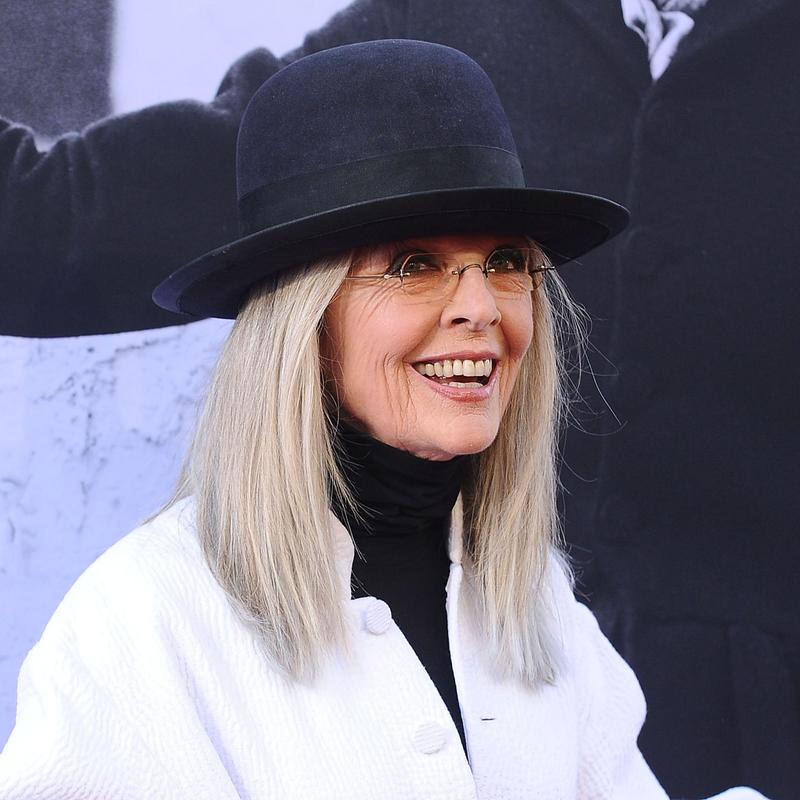
Alison Stewart: There are many ways to remember the actor Diane Keaton. Her talent, her charm, her style, her la-dee-dahness. Keaton was widely praised as an actor when she passed away in October 2025 at the age of 79. She was an Oscar winner and Emmy winner who got her start on stages in New York City. She even earned a Tony nomination before making her film debut. Starting this Friday and running through February 19, Film at Lincoln Center will celebrate Keaton's career with the series "Looking for Ms. Keaton," featuring The Godfather films, Annie Hall, and much more of her performances. Film at Lincoln Center programmer Maddie Whittle is with me in studio to preview the series. Hi Maddie.
Maddie Whittle: Hi. It's great to be here.
Alison Stewart: Listeners, we want to hear from you. Call and tell us about your favorite Diane Keaton performance on screen or maybe you even saw her on stage early in her career. Our phone lines are open. 212-433-9692, 212-433-WNYC. Do you remember the first time you saw Diane Keaton?
Maddie Whittle: I can't be entirely sure whether I first encountered her in The Godfather films, which I saw at a fairly young age, or in Something's Gotta Give, the Nancy Meyers rom-com, which I also saw at a fairly young age. I can't, for the life of me, recall which came first. I think that is kind of apt in that those two roles were real bookends for her careers. From the beginning, I have had a sense of her as a great actress whose work spanned decades and had something to say about womanhood across those decades.
Alison Stewart: Yes. When did you realize that there was something special about Diane Keaton?
Maddie Whittle: Even from the earliest days of watching The Godfather with my family, and those are films that I've seen many times. I think by the second or third time I watched The Godfather, part I and II, I registered that this actress whose role in the films as Kay Corleone, the wife of Michael Corleone, is not voluminous with regard to scene minutes, lines of dialogue, but she really forms the moral center of those films, I think, in a way that was legible to me even as a young person.
I think a few years later when I encountered her in Annie Hall, and she was really given space to be the center of attention in that film, and I realized, "Oh, the reason that she is such a powerful presence as Kay Corleone is that her performances are imbued with this complexity, even on a small scale." When you see her in Annie Hall, and she really just steals every frame that she appears in with this presence that she has, this sense of humor, this vitality, this specificity and idiosyncratic personality that she really just-- it's hard to even articulate technically what she's doing that's working because it's so organic and so lived in.
Every performance she gave was so specific and fully inhabited. Working on this program and looking at all these performances alongside each other, I think really heightens one's appreciation for just how expansive her range was.
Alison Stewart: Let's take some calls. Martin is calling in from The Bronx. Hi, Martin. Thanks for taking the time to call All Of It.
Martin: Sure, Alison. I listen every day. I've spoken to you before. You're so nice, and the program is great. I just wanted to mention how kind a person she was, or at least to me. About 25 years ago, I was walking around Central Park with a camera, and I spotted her, and I asked if she would mind me taking her photograph. She said, "No, not at all," and she stopped and waited for me to adjust my camera, take a couple of pictures. She didn't care. She was so kind.
Then, coincidentally, I bump into her 10 years ago, or 12, whatever, when the new Whitney Museum opened up. We were there opening day, I think it was. I spotted her, and I reminded her of our encounter. I said, "Do you mind if I take your picture?" Again now 15 years later or 10 years later. "Not at all." She stopped for again for a couple of minutes to let me photograph her. How kind is that?
Alison Stewart: That is unbelievably kind. Thank you so much for calling. I like people sharing those kind of stories.
Maddie Whittle: That's incredible.
Alison Stewart: Let's talk to Peter in Manhattan. Hi Peter, thank you so much for making the time to call All Of It.
Peter: Oh, certainly. Well, her death has struck such an amazing chord in so many people, but this morning when Brian Lehrer on his show referred to her as the late Diane Keaton, that's the sort of thing that [unintelligible 00:06:42] because she embodied such a sense of the moment and of being alive, and that over a 50-year career inhabited that. That is the thing that's struck you. I think online people have been delving into her YouTube clips and seen her on talk shows, and just knowing that she existed during a very specific period of time but then transcended that time is extraordinarily important.
On the AFI Tribute, Meryl Streep referred to the fact that you've given us so much pleasure. I think that is the highest compliment you can pay to any public figure, especially an actress with her extreme artistry. I mean, to be able to do Baby Boom and then do Shoot the Moon is a range that you cannot pinpoint and you cannot catch on to it, and you cannot understand, as Maddie just mentioned, what her technique was because she was able to have that personality, but then delve into a character and have that fine line exist continuously, and that's not going to be forgotten.
Alison Stewart: Thank you so much for calling in. Yes, Maddie, The New York Times obituary describes Diane Keaton as, "Vibrant, sometimes unconventional, always charmingly self-deprecating," as we just heard from those two callers. What perspective did you gain by looking at these films for this series?
Maddie Whittle: I think we, those of us who work in film, who program retrospectives like this, often focus on directors and screenwriters as authors, auteurs of the films that they're making. I think one of the gifts of working on an actor retrospective is that you see a different kind of authorship emerge. You see somebody who worked with a vast range of directors over the course of her five-plus-decade career, all of whom had something to say, all of whom had a particular sensibility. She collaborated, of course, with Woody Allen eight times.
She was in the three Godfather films with Francis Ford Coppola. She had recurring collaborations with Nancy Meyers over the years, both as a screenwriter and a director. Through it all, Diane Keaton told a story. She told a coherent story with the roles that she chose and the way in which she inhabited them, the life that she breathed into these women who she was playing on screen.
I think the story that she's telling is one that you might only get a glimpse of it in any individual film, but if you look across her body of work from the '70s, '80s, '90s, aughts, she was really, I think, thinking through the condition of womanhood in this second and third wave feminist moment that she was working in and actively wrestling with what it meant during those periods to be a woman moving through the world in American culture, even in period roles like Reds or Mrs. Soffel, both of which are included in the retrospective, which, of course, don't take place in the moment in which they were made.
I think she really brought a sense of urgency to those roles and a sense of the now and of the state of women in the '70s and '80s, looking back on the state of women in these earlier periods, and looking at all of her films in conversation, you really do get a sense of how she perceived her own status as a woman during this moment of social change and cultural change.
Alison Stewart: We're talking about a retrospective of the late Diane Keaton's work that's being produced by Film at Lincoln Center. The series is called Looking for Ms. Keaton. It runs from February 13th through February 19th. I'm speaking with programmer Maddie Whittle. We'd like your take on this. Please tell us your favorite Diane Keaton performance on screen or maybe you ever saw her on stage earlier in career or maybe you had an encounter like our guest Martin did. Our number is 212-433-9692, 212-433-WNYC. Let's talk to Stephanie from Fairfield, Connecticut. Hi, Stephanie, you're on the air.
Stephanie: Hi, Alison. Can you hear me?
Alison Stewart: Sure, I hear you great.
Stephanie: Great, terrific. Thanks so much, great story. I think a lot of people don't really know this. I'm always sharing it with friends. She actually narrated Joan Didion's book of essays Slouching Towards Bethlehem on audiobook. It's particularly special, especially my favorite, the essay on self-respect. Highly recommend it. Those are my two cents.
Alison Stewart: Thank you. I'll take both of them. Let's talk to Scott from Huntington. Hi, Scott. Thanks for calling All Of It.
Scott: Oh, thanks for having me. Good to be here. I just wanted to just briefly acknowledge how funny she was, Diane Keaton. She's such a brilliant comedic actress. I'm partial to Woody Allen movies, and she just brightens all of them, no matter what she's doing, whether she's in Annie Hall or Manhattan, but also the sillier movies from the earlier '70s, Sleeper, and in particular Love and Death. I just lose it every time they're having their pseudo-philosophical discussion. She just says, "Can we stop talking about sex?"
Alison Stewart: [laughs]
Scott: It just cracks me up. I will always smile when I think of Diane Keaton and her gift of herself to the world of cinema.
Alison Stewart: Thanks for calling in. We're talking about a retrospective of the late Diane Keaton's work that's being produced by Film at Lincoln Center. It's called Looking for Ms. Keaton. It's running from February 13th through February 19th. I'm speaking with programmer Maddie Whittle. After the break, should we get into the movies?
Maddie Whittle: Sounds good.
Alison Stewart: That's coming up next.
[music]
Alison Stewart: This is All Of It on WNYC. I'm Alison Stewart. We're talking about a retrospective of the late Diane Keaton's work that's being produced by Film at Lincoln Center. The series is called Looking for Ms. Keaton. It runs from February 13th through February 19th. I'm speaking with programmer Maddie Whittle. All right, we said we were going to get into some films. We're going to talk about Looking for Mr. Goodbar. We got a text about that. Remind people what this movie is about.
Maddie Whittle: Looking for Mr. Goodbar, directed by Richard Brooks from 1977, was adapted from a novel which was itself kind of a fictionalized telling of a true crime incident about a schoolteacher, a New York school teacher, who was murdered. The film, as with the book, traces this woman's process of self-discovery, of self-striving to find connection in a world in which-- she had a, by day, very conventional life as a schoolteacher teaching deaf children, coming from a Catholic family. By night, she was in the habit of perusing singles bars in the city and connecting with men there that she would have trysts with.
The film follows Theresa, Keaton's character, through a sequence of encounters that she-- happens upon in this world. I don't want to spoil the ending, but it's quite dark, ultimately, the message of the film, to the extent that it has a message, it is really very pessimistic, I would say, about what kind of liberation the Women's Lib Movement actually offered with regard to women's sexuality, women's sexual autonomy, pursuit of pleasure, pursuit of articulating their own desires.
Keaton's performance, I think this is perhaps my favorite Keaton performance because it's incredibly layered, and the character of Theresa is in many ways kind of an enigma, kind of a contradictory set of qualities, and yet she coheres through Keaton's performance. She really vividly comes out of the screen as a woman that you can imagine even 50 years later, navigating similar or analogous quandaries and conundrums about being an independent woman moving through the world.
Alison Stewart: I went back and looked at a review from 1977, which can be treacherous, [laughs] but Roger Ebert said that Looking for Mr. Goodbar is very much worth seeing, particularly for the Diane Keaton performance. Let's listen to a clip from Looking for Mr. Goodbar. This is featuring Diane Keaton and Richard Gere.
Maddie Whittle: That's right.
[clip begins]
Tony (Richard Gere): I need a pad till I can get something going.
Theresa (Diane Keaton): Not here.
Tony (Richard Gere): What, four or five days?
Theresa (Diane Keaton): Even you've got a mother.
Tony (Richard Gere): She said no.
Theresa (Diane Keaton): Go set the world on fire.
Tony (Richard Gere): What, on a couple lousy dollars? Come on.
Theresa (Diane Keaton): Find a smaller world.
Tony (Richard Gere): Hey, hey, relax. Come on, it's Tony boy talking. Remember? You're still my girl. Mine. Mine, right?
Theresa (Diane Keaton): Damn. Get this into one of your two heads, the only one that can think, I am my own girl. I belong to me. Now get out of here. Leave. Go. Go.
Tony (Richard Gere): I don't believe it.
Theresa (Diane Keaton): Believe it.
Tony (Richard Gere): You're throwing me out?
Theresa (Diane Keaton): Yes.
[clip ends]
Alison Stewart: We've gotten a couple different texts that basically say the same thing, so I'm going to read one of them. It says, "You can sum up Diane Keaton's range by noting Annie Hall and Looking for Mr. Goodbar came out the same year." What do we see Keaton doing differently in each of those films?
Maddie Whittle: Simplistically, you could start with the fact that one is a comedy and one is very much a drama, and specifically one is a Woody Allen comedy, which is in a very different register than, say, the Nancy Meyers comedies that she would do later in her career. I think if you look at her two 1977 performances together, you really see an artist wrestling with the possibilities of comedy and drama and the ways in which you can arrive at insight into a particular woman's circumstances and her experience of them via comedy, in the case of Annie Hall, or via this very sort of ripped from the headlines dark, sordid, dramatic context of Looking for Mr. Goodbar. She really was at home in both registers.
I think part of what makes both performances brilliant is that in a comedic role she was not afraid to be vulnerable and not only in a comically self-deprecating way but also in the inherent awkwardness of being aware of one's own flaws and maybe the self-perpetuating obstacles that that creates when you're sort of in your head and perhaps off kilter with your surroundings in some way.
Similarly, in Looking for Mr. Goodbar, I think she could be vulnerable while also not inhabiting the position of a victim or of a passive participant in events happening to her. Both films, I think, are very much about women who wanted to define their own fates and took measures to do so, whether it's in the Woody Allen sort of laughing at life and laughing at our foibles or in the Richard Brooks sort of excavating or trying to excavate layers to a person, she could do it all.
Alison Stewart: We're talking about a retrospective of the late Diane Keaton's work that's being produced by Film at Lincoln Center. The series is called Looking for Ms. Keaton. It runs from February 13th through February 19th. I'm speaking with its programmer Maddie Whittle. Maddie, we're going to look at Shoot the Moon from 1981. It's a divorce drama. The Film at Lincoln Center site says, "It's one of her 'most nuanced and underrated performances.'" What's nuanced about it?
Maddie Whittle: Shoot the Moon, which is directed by Alan Parker, Keaton plays the wife of Albert Finney, who is a really magisterial, imposing presence throughout the film, who just sort of enters a room and just casts chaos around him. Diane Keaton, as his wife and mother of his four daughters, is coming to terms with the fact that her marriage is ending, that her husband has found another woman that he has fallen in love with, and that there is no coming back from this rupture, that the family is about to be split into. There's an entire genre of films about the process of separation and divorce. In recent years, we've had Marriage Story.
We've had any number of entries into this genre. What really grabbed me about Shoot the Moon and specifically about Keaton's performance in it is just this brutal honesty of-- that we get to go along with her character on the highs and lows of being liberated from a bad marriage but also having love for her husband and having concern for her children and wanting to be honest with them about what's happening. It's a film that is very talky.
There's a lot of conversation in this film, but that doesn't weigh it down, and I think partly that's because the nonverbal aspects of her performance buoy the conversations that are happening with these two adults trying to make sense of their own feelings and their own anger and hopes for the future. Even in the moments in which nothing is being said, I think that's where Keaton's character really reveals to us something that can't be said with regard to relationships, marriage, parenthood. I think her performance is incredibly subtle and vivid and she comes across as a woman I know.
Alison Stewart: Here's a clip from Shoot the Moon featuring Diane Keaton and Albert Finney.
[clip begins]
George (Albert Finney): I worshiped you.
Faith (Diane Keaton): Well, then for God's sakes, George, why didn't you treat me that way? You were always yelling. You were always so angry. You have such a terrible temper.
George (Albert Finney): But you know I don't mean it.
Faith (Diane Keaton): Tell that to the children, George.
George (Albert Finney): I was afraid. Don't you understand?
Faith (Diane Keaton): Afraid of what?
George (Albert Finney): I couldn't hack it. I felt like I was swimming the English Channel with a 50-pound weight around my neck.
Faith (Diane Keaton): That's my mother's line.
George (Albert Finney): Yeah, well, your mother's done a lot of drowning.
Faith (Diane Keaton): You leave my mother out of this.
George (Albert Finney): I'd be glad to. Your mother was a lousy mother and a lousy wife.
Waiter: Did we decide on dessert?
[clip ends]
Alison Stewart: "You decided on dessert?" Oh my goodness. Another film that you wanted to highlight was Crimes of the Heart from 1986. She starred as one of three sisters alongside Jessica Lange and Sissy Spacek. It's actually an adaptation of a play,-
Maddie Whittle: That's right.
Alison Stewart: -which a lot of people didn't know. She started her career in theater. She was in the original Hair. What do you think she brought from theater to the screen?
Maddie Whittle: That's a great question. I think there's an immediacy in theatrical acting and the knowledge that an audience is in the room with you and a particular line reading. While it might resemble other readings of the same line, no two readings of a line in theater are going to be the same, and therefore, no experience of watching a play can be replicated. I think that there's a quality to her screen acting that sort of approximates this feeling of watching someone in the room with you and watching somebody who could read the same line a hundred times and would always make it possible to find something new in that line.
There's a just sense that each-- When you look at Crimes of the Heart, in which she's playing opposite Sissy Spacek and Jessica Lange as her sisters, there's sort of an electricity to the dynamic that these actresses create that I can only describe as theatrical in the sense of perhaps whether it's expressing a heightened emotion or an exaggerated affect. There's just a sense when you're watching these films, that you're in the presence of a living, breathing human who at any moment could surprise you.
Actually, several of the films that are most celebrated in her filmography involve Keaton playing one of a group of sisters. I think Crimes of the Heart is maybe the best example of this, of inhabiting not just a character but that character's relationships.
Alison Stewart: The latest film in your series is 2003, Something's Gotta Give. It's Nancy Meyers directed, as you mentioned, Keaton is torn between Jack Nicholson and Keanu Reeves. What was Zeitgeist defining, as the website describes this film? What was it?
Maddie Whittle: Honestly, the strongest association that I have with this film is the visual impact of Diane Keaton in the white turtleneck sweater that Jack Nicholson cuts off of her in a moment of passion. I think her appearance in that film and the way that her character, Erica--
Alison Stewart: She's gorgeous in that film too.
Maddie Whittle: She's absolutely gorgeous. I think of Diane Keaton as the quintessential actress of the American baby boomer generation. If you think about the baby boomers reaching retirement age around the turn of the millennium or into the new millennium, she really, I think in that role, once again, was a poster child for a generation of women entering a new stage of life, still having desires, having dreams, having a life force that they wanted to go out and use.
She just really is so winning in that performance and so flawed. She's kind of in some ways an Elizabeth Bennet type character where you want to grab her by the shoulders and shake her, but you also love her and root for her and want the best for her, want her to continue to thrive, want her to find love. I think it's a credit to her and Nancy Meyers's collaboration, that I think between the two of them, they created this incredibly human and endearing character who could stand for the experience of a generation of women.
Alison Stewart: Let's hear a clip of Jack Nicholson and Diane Keaton from Something's Gotta Give.
[clip begins]
Erica (Diane Keaton): I really like you.
Harry (Jack Nicholson): I really like you.
Erica (Diane Keaton): Yeah, but I love you like you. I do, I love you. Oh. Oh.
Harry (Jack Nicholson): I think that we should consider that maybe we're getting a little ahead of ourselves.
Erica (Diane Keaton): Do you?
Harry (Jack Nicholson): Yeah.
Erica (Diane Keaton): I'm like the dumb girl who doesn't get it. I've never been the dumb girl before. It ain't so great.
Harry (Jack Nicholson): Let's just calm down. I had these plans before I even met you.
Erica (Diane Keaton): Okay?
Harry (Jack Nicholson): I mean, I do like seeing you. I do.
Erica (Diane Keaton): Yeah.
Harry (Jack Nicholson): And I'm always surprised by it.
Erica (Diane Keaton): Surprised by it? What was I thinking?
Harry (Jack Nicholson): I have never lied to you. I have always told you some version of the truth.
Erica (Diane Keaton): Truth doesn't have versions, okay?
[clip ends]
Alison Stewart: As we wrap up, what is your favorite Diane Keaton performance, Maddie?
Maddie Whittle: Ah.
Alison Stewart: You knew I was going to ask. [laughs]
Maddie Whittle: I often answer Looking for Mr. Goodbar, but I think in this conversation, let's say Shoot the Moon because as I've been thinking about that performance in particular, I think there's a real magic to the character that she creates.
Alison Stewart: The series is called Looking for Ms. Keaton. It is being produced by Film at Lincoln Center. It runs from February 13th to February 19th. Thanks to programmer Maddie Whittle. Thanks for coming to the studio.
Maddie Whittle: Thank you so much.