
Reading 'Wuthering Heights' Ahead of the Controversial New Movie
Alison Stewart: This is All Of It. I'm Alison Stewart live from the WNYC studios in Soho. Thank you for sharing part of your day with us. I'm really grateful that you're here. On today's show, Kenan Kamwana Holley is the director of the new docu series Soul Power: The Legend of the American Basketball Association, and he joins us to talk about it.
We're coming close to Valentine's Day, so we'll talk about the most romantic thing that's ever happened to you and hear stories from other people's lives with Anna Martin, host of The New York Times's Modern Love Podcast. One of the members of team All Of It appears on the podcast. We'll tell you who. We'll talk about the bingeable guilty pleasure television shows we like to watch with Vulture critic Kathryn VanArendonk. That's coming up. Now let's get things started with Wuthering Heights.
[MUSIC - Luscious Jackson: You and Me]
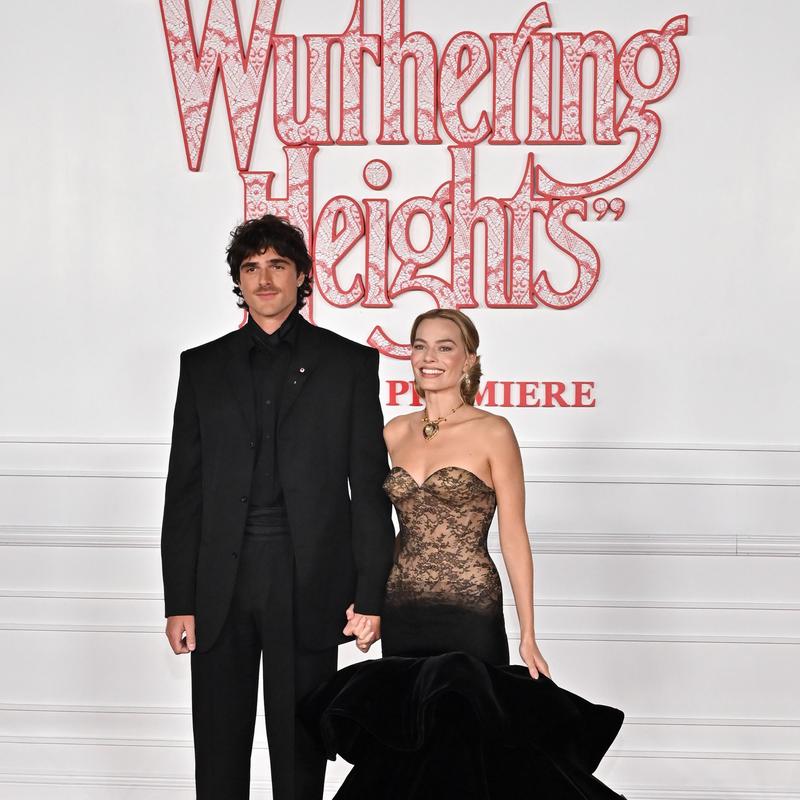
Alison Stewart: This weekend, just in time for Valentine's Day, the new film adaptation of Wuthering Heights heads to theaters. The movie is directed by Emerald Fennell, known for her bold films like A Promising Young Woman and Saltburn. It stars Margot Robbie as Cathy, a woman who has to decide between her love for the dark and troubled Heathcliff or a conventional marriage. Heathcliff is played in the new film by Jacob Elordi.
The new adaptation has inspired readers and book clubs around the country to pick up the original novel by Emily Brontë, but what they find inside might look a lot different than the love story being marketed to moviegoers. The novel is actually pretty violent and is as much about obsession as it is about love. How much does accuracy matter when you're making an adaptation, and why does Wuthering Heights, a novel published in 1847, still inspire creatives today?
Joining me now to discuss is New Yorker staff writer Alexandra Schwartz, who is also the co host of the Critics at Large podcast. She will be part of a live taping of that podcast at the 92nd Street Y on Thursday, February 19th. The topic is Wuthering Heights through the ages, but first, we get to hear some of her thoughts right now. Hi, Alex.
Alexandra Schwartz: Hi. Great to be here.
Alison Stewart: Listeners, we want to hear from you. Have you read Wuthering Heights before? Are you reading it now to prepare for the new movie? What are your thoughts on the novel? What are your hopes for the new adaptation? We are taking your Wuthering Heights opinions. Our Phone number is 212-433-9692, 212-433-WNYC. You can call in and join me and Alex on the air, or you can text to us at that number as well. 212-433-9692, 212-433-WNYC. Do you remember the first time you read Wuthering Heights?
Alexandra Schwartz: Absolutely. In fact, I even have the same copy I read then, and I think I was in eighth grade, which seems a little young, but I just went for it.
Alison Stewart: [laugs] What do you remember about that first impression after you read it?
Alexandra Schwartz: Oh, the intensity. It swept me away. You can't really put it down until you get to the end. I'm rereading it now, and that's still the case.
Alison Stewart: Is this your first time rereading it?
Alexandra Schwartz: This is my third read overall, and I'm finding it just as satisfying in my late 30s as I did as a barely pubescent kid. [laughs]
Alison Stewart: Thinking about that, what's changed for you in the reading of it?
Alexandra Schwartz: I think just an admiration for what Emily Brontë was able to do. She herself was in her 20s when she wrote this book. She died the year after it was published at 30. The wildness of her own imagination, which she was able to do by taking some tropes of the Romantic and the Gothic eras and making it totally her own and creating these characters who, as we see, are timeless. They are reinvented in each era in film adaptations, in TV miniseries. That came from her. The more I think about Wuthering Heights, the more admiration I have for Emily Brontë.
Alison Stewart: You mentioned Gothic elements because there are Gothic elements to the book. For people who might not be as familiar, what makes a novel Gothic?
Alexandra Schwartz: I would say, especially if we're talking about a book from the 19th century when the Gothic period really was major, we're talking about dark, spooky houses, we're talking about ghosts, we're talking about all of those haunted elements, and often mixed with an element of fatal obsession.
Alison Stewart: This text says, "I remember the old movie as a love story. When I read it a few years ago, I thought it was far from a love story!! That's the way the movie is being marketed?" Do you think it's a love story?
Alexandra Schwartz: I think if you think stalking is an act of love, you will think Wuthering Heights is a love story. There's as much darkness as there is light. In fact, there's a lot more darkness than there is light in this story. Love is at the center of it. Heathcliff and Cathy are attracted to each other beyond life, beyond death. There's two souls locked into it for all of time. That seems really romantic, but a lot of very, very drastic and bad things happen. They both are of equal intensity, the two characters at the heart of it. They both stalk each other beyond the grave forever.
Alison Stewart: Are you thinking about them in terms of being obsessives?
Alexandra Schwartz: Absolutely. They are obsessives to the end. One thing that's very interesting about the story to me is Cathy, and for those who've read it or who are about to see the movie will see this, she is torn between the ultimate love that Heathcliff represents and living a softer kind of life. She chooses to marry someone who will bring her more status. She'll be able to live in a comfortable house. She'll get pretty dresses. Those things are attractive to her. She sets about changing her life, but she can't escape the intensity of attraction that she has to Heathcliff. That, to her, really represents her true self.
Alison Stewart: Some of the famous lines between Cathy and Heathcliff, people remember, "Whatever our souls are made of, his and mine are the same." Cathy, just in this moment, she looks out and she goes, "I am Heathcliff." When you hear those lines, what does it reveal to you about their relationship?
Alexandra Schwartz: It reveals that they are-- [chuckles] is codependent too weak a word? I think probably. To say you're the same as someone else. By the way, she says that after she's accepted a marriage proposal to someone else. There is a kind of elemental bonding between these two people where they really see themselves as part of the same essence. I think they both try to resist that throughout the course of the book and just strike out on different separate paths. That may be their ruin.
Alison Stewart: This text says, "There's an article in the Washington Post describing the relationship between Catherine and Heathcliff as toxic masculinity. It also noted the book goes for on about 200 pages, showcasing his cruelty after Catherine dies. Do you see that strain as well?
Alexandra Schwartz: I would have to say that toxic masculinity is a really reductive way to see this character and this story. Heathcliff is struggling with many, many things when he comes into the Earnshaw family. He grows up as Cathy's foster adopted sibling. He is referred to as a gypsy. He's a foundling. He was found on the streets of Liverpool by Cathy's father, brought into the house, raised, loved by the father, but punished by Cathy's older brother.
There's a lot beyond Just masculinity going on here. There's a sense of having no history, being orphaned, being abused. You could apply some modern psychological concepts as well that I think would be applicable. A kind of rootlessness. Heathcliff is prevented, really, from socially joining the rest of the family, and he burns with fury. This is a book about revenge and vengeance as much as it is love.
Alison Stewart: This text says, "Wuthering Heights is a remarkable book. Casting yet another White guy as Heathcliff is a huge missed opportunity to illuminate the state of racism in that time period and a disservice to the book." For people who don't know, Jacob Elordi is playing Heathcliff. In a lot of the book, he is described as, I'm sorry to use this word if this is offensive to people again, he's described as a gypsy. He could be the son of an Indian woman, it's described. He's described as not White as in the book. How are you feeling about race? Do you think race plays an issue in the book?
Alexandra Schwartz: Oh, I think race plays a huge issue in the book. I should give a big caveat, which is that I have not yet seen the Emerald Fennell movie. I'm seeing it tonight. I can't comment on Jacob Elordi's performance and I can't comment on what Emerald Fennell wanted to do with it, but I think in the book, race plays an absolutely huge factor.
We're dealing with an England that is coming into its own as a colonial power and is starting to encounter the rest of the world as a force of power and of taking it of dispossession. Heathcliff enters this extremely rural English area. It is so closed off. We only hear about two families practically in the course of the entire book. He is very, very much and others. Yes, I do think it plays hugely into the novel.
Alison Stewart: We're discussing Emily Brontë's novel, Wuthering Heights, and the upcoming movie adaptation starring Margot Robbie and Jacob Elordi. My guest is New Yorker staff writer and co-host of Critics at Large podcast, Alex Schwartz. The Critics at Large podcast will be hosting a live taping about Wuthering Heights on February 19th at 92 Y. Tickets are on sale now.
Let's talk about sex in the book. Emerald Fennell is known to go for it. Anybody who's seen Saltburn, they understand. The review so far, the Hollywood reporter says, "Margot Robbie and Jacob Elordi set hearts and loins a quiver." [laughs] It's a great title. How do you think sex might play in the role of the adaptation. How does it play in the novel?
Alexandra Schwartz: I'm hearing a lot about how moist this movie is, is a word that keeps coming up in various reviews. I hear there's a lot of dough kneading, strategic dough kneading and other such things.
Alison Stewart: I don't want to know that. [laughs]
Alexandra Schwartz: I'm all for it. I'm all for it. [laughs]
Alison Stewart: That's funny.
Alexandra Schwartz: In the novel, we know that sex happens in the novel because kids are bored-
Alison Stewart: Kids are bored, yes.
Alexandra Schwartz: -but there's passion. Are you going to see Emily Brontë disrobe her characters? No, you're not. There are some very intense kisses. Ooh. There's also grave digging up, which, frankly, is way beyond sex in terms of intensity and devotion. Many people have had sex. Very few people have dug up their beloved's grave.
Alison Stewart: Listeners, we want to hear from you. Have you read Wuthering Heights, or are you reading it now to prepare for the movie? What do you like about it? What do you find challenging? What are your hopes for this new adaptation? Our Phone number is 212-433-9692, 212-433-WNYC. The big part of the novel is where it is set. We talk about the Moors, it's in West Yorkshire Moors, and of these big dramatic cliffs and a beautiful landscape, and we get to see a big rainstorm. How does the setting play into the story?
Alexandra Schwartz: Hugely. This is such a great example of pathetic fallacy, the idea that the weather reflects the emotional reality of the characters who are in the story. The Moors are such a remote, windswept place. People are always showing up in the rain. There's a lot of sickness that happens because they're going out in the rain, weeping and getting caught in the rain.
I think the real thing is the ruggedness and the hardness of the landscape. These are people who are outside of society. We hear about cities, but they're not in contact with people in the way that others were, even if they lived in a small town. There are two households and they are so remote from each other that Cathy really only, and Heathcliff, only encounter the other when they're already almost teenagers. It's that sense of isolation, of only having each other that comes through so intensely, I think, through the landscape of the book.
Alison Stewart: Will you describe the two households for us?
Alexandra Schwartz: Absolutely. The Earnshaw household, Cathy and her older brother are part of this household. This is the one that Heathcliff is brought into as a young man and is eventually forced to be a farmhand. They live a very rustic life. There's a servant who's always preaching to them and telling them they're ungodly. Then there are the Lintons, who live in a big, beautiful house. Edgar and Isabella Linton. They have grown up, let's say, with feather pillows and probably even duvets. It's that world that Cathy finds herself curious about. That brings about the division between her and Heathcliff.
Alison Stewart: This text says, "I love this quote from Alice Hoffman. Reading Wuthering Heights when you're 18 and you think Heathcliff is a romantic hero. When you're 30, he's a monster. At 50, you see he's just human."
Alexandra Schwartz: Ooh, I love that. I think that's so true. If he's just human, he's a very extreme genre of human. I think all of those are appropriate reactions to Heathcliff. Absolutely. One thing I think that distinguishes Heathcliff even more than his obsessive love is his determination to get vengeance. Of course, we see a lot of that in society right now, so it's an interesting time to return to this book. This anger, this refusal to bury the hatchet, this refusal to forgive is so much of what drives Heathcliff. For this reading of mine, that is also what's striking me very much.
Alison Stewart: Do you think that's what drives him to violence, or is he a violent person?
Alexandra Schwartz: I think that's what drives him to violence. I think he's bent on showing what he's made of and on punishing those who have wronged him, and he can see no way out. Maybe he would have had a chance with Cathy, but without her, there's no way for him.
Alison Stewart: When we talk about the violence and Heathcliff's violence, is it supposed to denote passion?
Alexandra Schwartz: I don't think necessarily. I guess if passion is something that escapes from you and you can't get hold of it. There is a very upsetting part of this book that has also been shown in other movie adaptations. I'm thinking immediately of the one with Ralph Fiennes and Juliette Binoche as Heathcliff and Cathy from 1992. Heathcliff goes on to marry the sister of, spoiler alert, but goes on to marry the sister of Cathy's husband and does not treat her well. He beats her. You see that in the book. You see that in various adaptations. That is something that is unforgivable and-
Alison Stewart: Of course.
Alexandra Schwartz: -shows that Heathcliff is not just this wonderful, dashing romantic hero. He's someone who has a very dark and monstrous side.
Alison Stewart: They're making fun of me because I keep saying Wuthering Heights sound like weathering. It's my Jersey accent. I'm sorry. We're talking Wuthering Heights [chucles] with Alex Schwartz. We want to know your opinion of it. What do you think of Wuthering Heights? Are you reading it now? What do you like about it? Our number is 212-433-9692, 212-433-WNYC.
This text says, "I am 76 years old and have read Wuthering Heights five times. It's my favorite story about faded love, obsession, and especially revenge. I think I've also seen all the film versions, but none of them live up to the book. Nevertheless, I look forward to this new version and we'll probably read the book again." How can you make a good adaptation of this story? I watched the Laurence Olivier last night.
Alexandra Schwartz: Oh, yes.
Alison Stewart: Which is more like Bridgerton actually [chuckles] than anything else. What makes for a good adaptation of Wuthering Heights?
Alexandra Schwartz: It's such a good question. I do think all of them are very different. The Laurence Olivier one has a lot of softness to Heathcliff, I think. I don't know if you agree with that.
Alison Stewart: That's why it reminded me of Bridgerton. Totally.
Alexandra Schwartz: He is a real romantic hero. He smiles and the sun seems to shine. It's all of that. It also cuts out half of the book, which is the story of the second generation; how they live out the conflict that came through their parents and how, in some ways, in a very interesting way, they end up repairing it.
What I've heard about the Emerald Fennell adaptation is that this line that's been going around. She wanted to adapt her first impressions of the book when she read it in high school. She's going back to that time in her life. I think that's okay to be really subjective about an adaptation of this book. This book can take it. It can take a lot of different interpretations and a lot of reimaginings.
Alison Stewart: This text says, "I love Wuthering Heights, but instead of reading the book, I will rewatch the 2009 masterpiece classic series starring the dark and mysterious Tom Hardy as Heathcliff as Charlotte Riley plays Cathy. Have you seen this?
Alexandra Schwartz: I have. They're, of course, married in real life, so I think that adds an extra little level. When you see the attraction between them, you know that there's something real there, too.
Alison Stewart: Is a limited series a better way to tell this story?
Alexandra Schwartz: I'm really open to people reimagining it, I have to say. I don't want to be a purist about adaptations. We have the book. Return to the book. I think if this leads people back to the book, that's really wonderful. Often, yes, with a long novel, it can be nice to really get into the depths of it. I will say Wuthering Heights is a book with very stark themes. A lot of different things happen in it. I think if you get the message of obsession, violence, and revenge across, if it's two hours or if it's six hours, go for it. I'm here for all of it.
Alison Stewart: The most recent adaptation starring Kaya, I hope you say Scodelario, excuse her name, and James Howson. This one is notable because Howson is a Black actor playing Heathcliff. How do you think casting choices influence the story?
Alexandra Schwartz: I think it goes back to what we were talking about. Heathcliff in the book and in the society is very much an outsider. He's defined as a racial outsider as well as a social outsider. Those things are relevant. In our own society, of course, racism continues very apparently, so it might help a modern audience click in to some of what Emily Brontë was writing about.
I think a big part of the book has to do with the degree to which Heathcliff feels that he's able to, or not, to integrate into this particular world he comes to. He comes. There's a period of time in the book where he leaves. He leaves Wuthering Heights, and when he returns, he's a man of the world. He's rich.
Alison Stewart: He's wealthy.
Alexandra Schwartz: Yes. Look, I'm looking at the preview with Jacob Elordi, and he's cut off his crazy hair and suddenly he's really glowed up. Heathcliff has his glow-up moment, but he's still outside of it all and he's still defined by the people who knew him as an outsider. I can see how paying attention to that in casting could help bring that point across.
Alison Stewart: This text says, "I'm reading Wuthering Heights right now with my three girlfriends and we're planning on watching it on Valentine's Day altogether. I love the book and I'm hoping the movie does the book justice." As they are reading the book and having a book club, what questions would you bring up for a book club?
Alexandra Schwartz: Ooh, questions for a book club. I guess one question I would really bring up is to point to the agency of Cathy. It's what I'm finding most perplexing in my current read. In a story in which two lovers are separated, say, a Romeo and Juliet type story, there, it's their families that do the separation. The lovers are star crossed because in the social world in which they live, their families will not let them be together.
Here, a lot of the difficulties that these lovers face is because of a choice that a woman makes. She is trying to take agency over her own life to improve her life and to live the life she wants, but it deprives her of something that's equally important to her. I think maybe I'd ask the readers of the book club what they think about that. It's fascinating. It remains fascinating.
Alison Stewart: We have been talking about Wuthering Heights. My guest has been Alexandra Schwartz. She's a New Yorker staff writer, co-host of the Critics at Large podcast. The Critics at Large podcast will be hosting a live taping about Wuthering Heights on February 19th at 92 Y. Tickets are on sale now. Thanks for coming to the studio.
Alexandra Schwartz: Total pleasure. Thank you.