
Quiara Alegría Hudes on Her New Novel 'The White Hot'
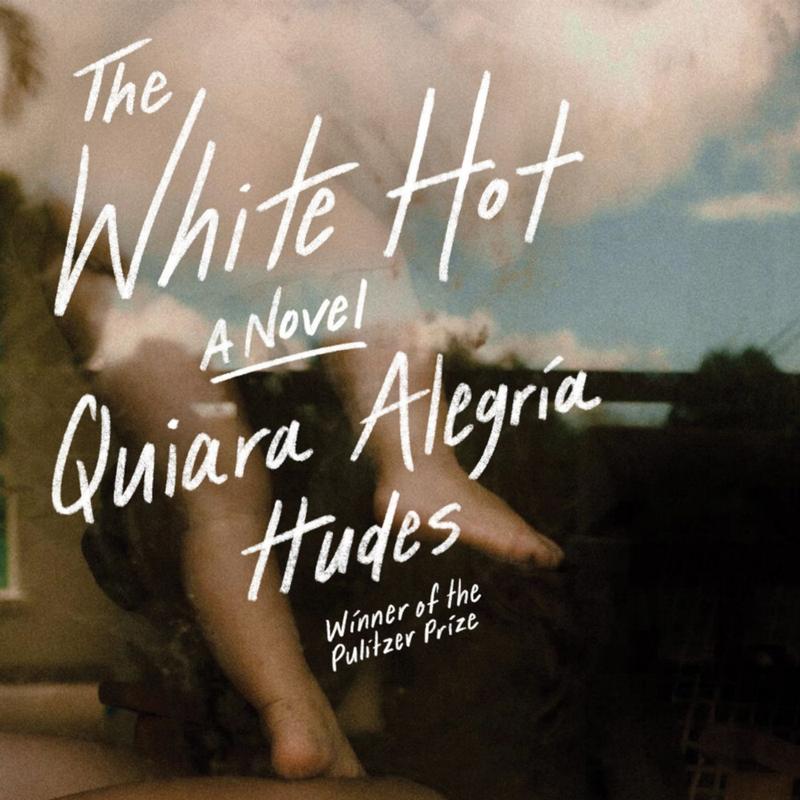
Alison Stewart: This is All Of It on WNYC. I'm Alison Stewart. Quiara Alegría Hudes is the Pulitzer Prize-winning playwright for Water by the Spoonful. She wrote the book for the Tony-nominated In the Heights and a memoir called My Broken Language. Now Hudes can add another title to her résumé, novelist. The book The White Hot follows a young mother, April Soto, who angrily storms out of her home one night.
This impulsive departure turns into a years-long journey of self-discovery, but left behind in April's wake is her 10-year-old daughter Noelle. She is bright but troubled. The book is written in the form of a candid letter opened that April pens Noelle and she can't open it until her 18th birthday. Kirkus calls it, "A profound journey to the soul." The novel is out tomorrow. We are lucky to have Quiara here in studio with us today. Welcome to the show.
Quiara Alegría Hudes: All right, here we go.
Alison Stewart: A note, I want to point out that The White Hot will have a reading at Joe's Pub on November 24th.
Quiara Alegría Hudes: Yes.
Alison Stewart: Do you want to read the first page of the novel for us?
Quiara Alegría Hudes: I would love to. This is how it all begins.
[novel reading begins]
Noelle received the envelope eight years after her mother's disappearance. She got home from school and found it propped on the counter, oversize and leaning against the microwave door, clearly placed there by her dad or stepmother to catch her eye. She ran a finger over the uppercase letters: NOELLE SOTO. It wasn't the handwriting that dinged memory's bell so much as the pen's feral indentations. No sender was named above the return address, but Noelle recognized those grooves like a gut recognizes a fist. The same ones she'd glimpsed on emergency contact forms, "blue cards," brought into school in Septembers, on grocery lists carried to the corner store.
Why did her mom press so hard for the littlest of nothings? Grooves that attacked the paper, letters like jackhammers. One corner was ripped and a binder clip peeked through. She folded the torn flap and saw a return address in Pittsburgh. Six hours away. Did that mean that her mom had been close all this time, or far? "Pittsburgh, Pittsburgh" the devil laughed in her ear, "Pittsburgh."
On the back, a note, "To my daughter. An explanation. Do not open until your 18th birthday."
And so, with rumbling heart and saliva pasting tongue to teeth, Noelle plunged a finger into the manila corner and ripped open the fabric of her world. Seven weeks left till graduation, till the long-awaited diploma, but no: adulthood began now, with these loosely stacked pages and whatever "explanation" they might offer, or claim to offer, or fail to offer. Noelle devoured her mother's words in three hours, standing by the microwave, before meeting her dad, stepmother, and brothers at the Italian restaurant where her birthday tiramisu would arrive with a glittering lit sparkler plunged into its core.
Dear Noelle,--
[novel reading ends]
Alison Stewart: And now the rest of the book.
[laughter]
Alison Stewart: It's interesting, a great part of the book is written in this epistolary form. Why did you choose this letter writing to tell the story?
Quiara Alegría Hudes: It's so direct. I could feel this character, April Soto, she's the kind of female antihero I always wanted to write. I always wanted to be-- To be perfectly honest, I could feel her whispering in my ear. She just felt that close to me, and so that letter writing form, most of the book is this letter directly to her daughter. It puts the reader in the position of feeling her voice that close, making it feel that personal, which can be delightful at times and quite uncomfortable at other times.
Alison Stewart: How would you describe April?
Quiara Alegría Hudes: April is a bright 26-year-old young woman who lives in Philadelphia in a four-generation household. She has never left Philly. She lives a very small life, but she's got an incredibly big intellect.
We find her at a precipice when she wants to live a big life. Not only that, she never really got to experience what being a teenager was like because she had a daughter when she was 16, and she realizes, "My daughter is going to inherit this small life too," so she feels herself at a precipice, and she feels her daughter about to kind of start to become a young woman and take on these kind of bad habits that she's grown up with, so April has some big decisions to make about what kind of life she's going to live as a woman and what kind of womanhood she's going to model for her daughter.
Alison Stewart: What bad habits does she want her daughter to avoid?
Quiara Alegría Hudes: There is this scene early on that involves sweeping. This is four generations of females in this household, not a man in sight, and they're having an argument around the dinner table. April used to get into trouble at school. She used to fight. She would get sent to the principal's office. She would also get in trouble for being too smart, to be honest, and that would get her sent to the principal's office too, while her daughter is 10, is in the same position. They're around the dinner table at night, they're fighting over the latest suspension at school, and plates get thrown. Here goes abuela, she goes to grab the broom.
She's trying to sweep up cooked rice off the ground, which is the comic attempt because it just globs and gloms onto the broom. April sees this and realizes, "For generations, the women in my family have been sweeping their desires, their truths, their loves, their dreams under the rug. I'm sweeping myself under the rug. I don't want that." She makes a vow to herself, "I'm not going to sweep myself under the rug anymore." That's the habit she doesn't want her daughter to inherit. She's got lots of ways to do it. She gets in fights. She puts on her noise-canceling headphones and listens to nature sounds. She basically is just tamping down all of her life force to make it through the day.
Alison Stewart: How would you describe Noelle?
Quiara Alegría Hudes: Noelle is also brilliant. She's a drawer. Another thing that precipitates this fight around the dinner table is that she's done a drawing for her fourth grade class about her family home. It's kind of a critical drawing of-- It's like slightly passive aggressive but like brilliant young artist edition.
Alison Stewart: [laughs]
Quiara Alegría Hudes: She sees, "Mom, how you're living, it's not cool," and she sees, "Grandma, abuela, how you guys are living, it's not cool." She shows that in drawing form. She's hungry for a bigger life too, just like her mom. Neither of them knows how to get it, and they're going to stumble upon it in this book, in this journey.
Alison Stewart: Was the letter writing form always your choice, or did you start out in a different way? Sometimes novels start off as a short story or a poem. Was it always this letter?
Quiara Alegría Hudes: It wasn't. I've been a playwright for 20 years, and that's my default form. I started it as a script.
Alison Stewart: Oh.
Quiara Alegría Hudes: It started with a dinner table, the dinner table scene, the fight around the dinner table. Then it became something much more personal. There's a moment of spiritual revelation. This book is inspired by a book I read in high school, Siddhartha by Hermann Hesse, which is basically-- For those who don't know it,--
Alison Stewart: [laughs] I'm laughing because that plays a significant role in the book.
Quiara Alegría Hudes: It does, it does. It's not autobiographical, but April reads it when she's in high school. I also read it in high school. It's the Buddha story fictionalized. I kind of followed that. I was jealous of Siddhartha because he left a newborn child behind. He left his wife, he left his family, and he went and found God by the river. I'm like, "Well, I'm talking about me, Quiara, in my real life," like my mom didn't get to stop doing the dishes and leave and go find God, go find enlightenment, fill in the blank.
Anyway, I wanted April to do that. I wanted her to grab her freedom and go and find what she could find out in the larger world. There's a scene where she finds the tiniest peek, the tiniest glimpse of enlightenment by the Schuylkill River in Philadelphia. That's enlightenment that's hard to pull off on a stage. I said, "No, I need to hear that from inside her, not in dialogue," and so it became this personal letter.
Alison Stewart: You called her an antihero, as opposed to the protagonist.
[laughter]
Alison Stewart: Why did you call her an antihero?
Quiara Alegría Hudes: I have been reading and grappling with and grateful for and deeply inspired by Elena Ferrante, Toni Morrison, Jamaica Kincaid. They're writing these women whose lives are experiments in freedom, and it comes at a cost. It's not like, oh, freedom's some fun thing. No. They become scorned by their communities, outcasts, there are female pariahs, but they're fumbling towards and fighting for a sense of self-possession.
That is electric to me, and it's alive, and it's aspirational, but it does turn them into antiheroes. April, I'm throwing my hat in the ring. I wanted to contribute to that conversation. April leaves her daughter. She leaves her daughter when her daughter is 10 years old. It puts a question in the reader's lap, which is, is it okay that she did that?
Alison Stewart: Something worse might have happened if she stayed?
Quiara Alegría Hudes: Yes, this is true. It wasn't a healthy environment, but it's a tough choice.
Alison Stewart: I'm speaking with author and playwright Quiara Alegría Hudes. She's here to talk about her new debut novel, The White Hot, which is publishing on November 11th. What is The White Hot?
Quiara Alegría Hudes: The White Hot is her fury. She got in fights when she was a kid. She feels so stressed out, so frustrated, so angry, she doesn't even know why. She spends a lot of her day just trying to tamp that down, put a mask on it, keep it under wraps. She calls it her armor and her undoing. That's how she refers to it in the book. It's her armor because she lived a tough life.
The women in her family have lived tough lives. They've had to protect themselves emotionally to the point that they're almost disassociated. It's that fury that she gets her to run. She gets up from that dinner table and she goes. She gets a ticket out of town. She's never left Philly. This is all new to her. In some ways, the fury that she feels inside her, it's caused a lot of pain, it's caused a lot of frustration, but it's also her ticket to self-actualization and freedom.
Alison Stewart: What causes The White Hot to come, to show up, and what causes it to leave?
Quiara Alegría Hudes: She describes that it's almost like an electricity taking over her. It looks like milk is poured in her eyes. It looks like lightning is in her eyes. She just sees the world white. Sometimes, she's so disconnected from herself, she doesn't even know why. Of course, she knows in the back of her head, and she fesses up to her daughter Noelle by the end of the book.
She says, "I don't want to sweep myself under the rug anymore. This is what happened to us." There is trauma in their history. She touches on it briefly but honestly. That trauma kind of comes up at ugly and unexpected moments that are not convenient for her life as a young working mother. It comes on like a tsunami and then it leaves, and she feels depleted. She's ashamed for having fought. She's embarrassed at how she behaved. She wants to end this cycle.
Alison Stewart: I want to ask about her mantra that she uses, "Dead inside."
Quiara Alegría Hudes: [chuckles]
Alison Stewart: [chuckles] What does that do for her?
Quiara Alegría Hudes: When we meet her, her job is basically data entry. She's tabulating receipts, and she spends the whole day just looking at receipts and entering the numbers. It's numbing. She likes it because there's a numbing component to that work. When things heat up at home, she puts on her noise-canceling headphones. She listens to nature sounds, and she says, repeats on, on loop inside her mind, "Dead inside, dead inside, dead inside."
She's afraid to feel. She's afraid to feel because they have a history of feeling really darn bad, but actually, when she hits the road and runs in this book, she also starts to feel really good too. She wants to take with the good, with the bad. She learns to engage her feelings dead on. She drops that mantra "dead inside" real quick. In fact, there is a scene where she hikes into the woods. She's wearing her casual work clothes from the day.
Alison Stewart: Right.
Quiara Alegría Hudes: She's wearing gladiator sandals and skinny jeans and a sequin top. She's never been in the woods before, and she starts getting blisters. I mean, she's just not prepared for this hike at all. Her feet are killing her with these blisters. She remembers that earlier that day, her mantra had been, "Dead inside." She says, "You know what? I want a new mantra for this, to deal with this blister pain." Her new mantra, as she's walking through the woods, she's telling herself, "Skin heals, skin heals." Even the mantra starts to evolve.
Alison Stewart: Our main character, April, she goes to the bus station and she asks for a ticket to the furthest destination, right?
Quiara Alegría Hudes: Yes.
Alison Stewart: But her letter focuses on the first 10 days of her disappearance.
Quiara Alegría Hudes: Yes.
Alison Stewart: Why did you pick the first 10 days?
Quiara Alegría Hudes: Well, when she gets up and rolls, and she's like, "I got to get away from this dinner table. I don't want to see my abuela with the broom. I got to get out of here." She's just thinking she's taking a walk to blow off steam for an hour, but "Whoa, why are my feet walking towards the Greyhound bus station? Whoa, why am I asking for a ticket far away?" She's kind of taking it one day at a time, and it's over the course of these 10 days that she almost has the youth, the girlhood, the adolescence she never got. It all happens late in her 20s, and it happens quick. She reads her first feminist book. She hears jazz for the first time. She's embarrassed and angry that she never heard jazz in her life.
She takes her first walk in the woods. She sees her first shooting star. Things that are normal tent poles for many people's childhood, she never got them. It's those 10 days when she kind of becomes a woman. Not just any woman, she becomes the woman she chooses to be. From there on out, we don't know what happens after that.
Alison Stewart: Why isn't she scared of this outside environment that she's never been in before? How is she able to manage it?
Quiara Alegría Hudes: She is scared. It's not the kumbaya nature [crosstalk] that she experiences in Ohiopyle State Park. She faces bears. She faces, where do I drink clean water from? She gets cut up by some thorns. At one point, there's a storm that comes through, which is very scary, but something happens in the woods where it's like, she hasn't put on deodorant in a few days and she starts to kind of smell, and she's realizes she doesn't even know what her natural state is. She's so removed from herself.
I think when she goes into those woods, at first she's almost thinking like, it's almost like some sort of self-harm activity, like, "I'm just going to go disappear. No one's ever going to be able to find me," but actually, what it becomes is that she starts connecting with a kind of native nature to her, with her animal self for the scary parts and also for the beautiful parts.
Alison Stewart: As you've mentioned, you are a playwright, you've written plays, you've written musicals. What was different about writing a novel?
Quiara Alegría Hudes: I absolutely loved this form so much. What I loved most about it is that this is not autofiction, this is not based on someone, I did not go through these experiences, and it's that kind of thing where nothing in there is a fact, but all of it is really true. I could just pour my heart and soul into April. I actually think that I played this little game with myself as she went through another step in the story, I'd say, "Okay, what would Quiara do here? April is going to do the opposite. [crosstalk] I got to live a different kind of womanhood through April." I loved that form of fiction and how close and personal I could make it.
Alison Stewart: The name of the book is The White Hot. It comes out tomorrow. We've been speaking with its author, Quiara Alegría Hudes. Thank you for coming to the studio. We really appreciate it.
Quiara Alegría Hudes: A real pleasure.
Alison Stewart: Coming up on tomorrow's show, we'll talk about films inspired by the real world. Iraq war veteran Ray Mendoza talks about the film Warfare, which is based on his own experiences as a Navy SEAL. I'm Alison Stewart. I appreciate you listening, I appreciate you, and I will meet you back here next time.