
Previewing This Year's NYFF
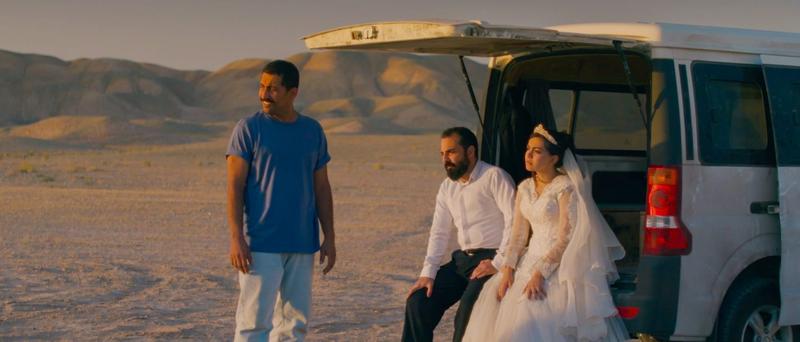
( Courtesy mk2 Films )
[music]
Alison Stewart: This is All Of It on WNYC. I'm Alison Stewart. The New York Film Festival is underway, offering participants a first look at some of the most anticipated new movies, many of which have yet to be released. The festival puts groundbreaking career-defining work from A-list actors and blockbuster directors alongside newcomers and international unknowns.
The slate of films this year includes dramas from Portuguese missionaries in the Philippines to Brazil's mid-century military dictatorship to New York City's starving artist scene of the '70s and '80s. There are works of documentary and fictionalized works that depict modern issues from authoritarianism in Iran and the war in Gaza. There's a film about depression whose main character is Bruce Springsteen. A lot of movies to discuss. Let's get into it. My guest is Vulture film critic Fran Hoepfner, who's had a very busy movie-filled weekend. Hi Fran.
Fran Hoepfner: Hi, how are you?
Alison Stewart: I'm doing well. What is it like to experience the New York Film Festival?
Fran Hoepfner: It's my favorite time of year. Film festivals happen year-round, but this happening in early fall has a kind of back-to-school feel-
Alison Stewart: [laughs]
Fran Hoepfner: -and getting to go up to the Upper West Side every single week, and you start to see the same characters at the film festival every year. There's people whose faces I just know from seeing movies with them every single fall. It's so exciting, and the energy is so wonderful.
Alison Stewart: Let's start with some films. Sentimental Value. It's a family story centering around a once-celebrated film director played by Stellan Skarsgard. He has these daughters; they've got a strained relationship. He wants to make a movie, sort of a comeback movie based on their life. This is getting a lot of praise, this film. What is making it stand out from other kind of family stories?
Fran Hoepfner: I think that it is a story that's about film and about theater and about show business, but it's not this kind of self-aware Hollywood version of it. It's taking place in this European scene and kind of melds this world of European cinema, European theater, with the world of Hollywood. It has a slightly less, well, dare I say, sentimental feel to it. It's a little bit more grounded and theoretical. Joachim Trier's last movie, The Worst Person in the World, was this fantastic humanist relationship drama. I think he's so focused on his characters versus the glitz and glam of their lifestyles that make watching his movies very pleasurable.
Alison Stewart: The cast is pretty great-
Fran Hoepfner: Yes.
Alison Stewart: -speaking of Joachim Trier. It was Renate Reinsve?
Fran Hoepfner: Yes, she's back.
Alison Stewart: She plays one of the daughters. Who else is in the film? Do you know?
Fran Hoepfner: Elle Fanning is the American actress who's taking on the role that was supposed to be Renate's in the film. Elle Fanning is one of my favorite actresses. I think she's so deliberate and interesting in her choices. It's great to see her play a version of herself in this that's also reckoning with the kind of star that she is.
Alison Stewart: Listeners, if you're participating in the New York Film Festival, we would like to hear from you. You can call in and share your thoughts on some of the feature films that you've seen or you're excited to see. Our number is 212-433-9692, 212-433-WNYC. You can call in and share your thoughts, or you can reach out on social media, @all ofitwnyc. You also saw The Secret Agent, which is a period piece in the '70s in Brazil under a military dictatorship. What's special about this film?
Fran Hoepfner: Well, it's sort of a spy movie, but above all else, it's kind of a shaggy dog hangout movie. It feels really retro and throwback in its sensibilities. It's got a pretty languid chill-out pace. It's very funny. It's about this academic who's essentially on the run for crossing the police and the dictatorship. It's probably got about 45 characters in it-
Alison Stewart: Whoa, really?
Fran Hoepfner: -which in any other film would be too much to juggle. You'd be like, "Who's this person? What do they do again?" The director, Kleber Mendonça Filho, is so good at casting. Every single person you see in this movie is instantaneously memorable to you. You know exactly who they are in relationship to the main character, where they work, where they live. They are so fun to see interact with each other. It becomes this wonderful ensemble piece of everyone just trying to get through this difficult time and help each other out.
Alison Stewart: It's shot in Panavision, right?
Fran Hoepfner: I believe so. It looks astounding.
Alison Stewart: It's a beautiful film.
Fran Hoepfner: Yes.
Alison Stewart: That one's called The Secret Agent. You also have on your list a pair of documentaries. Put Your Soul on Your Hand and Walk. It's about life in Gaza since October 7, 2023, told through video calls with the director, with a young photographer who lived there. Then there's With Hasan in Gaza. It draws parallels between Gaza today and Gaza almost 25 years ago. What struck you about the storytelling tools that filmmakers are using to document this story?
Fran Hoepfner: In many ways, they're both found footage-
Alison Stewart: Found footage?
Fran Hoepfner: -movies. Put Your Soul on Your Hand and Walk is mostly footage of FaceTime calls. It is a camera recording FaceTime calls, and you're just watching conversations play out in very real time. Whereas With Hasan in Gaza is old footage that's been rediscovered, recontextualized. It's about the filmmaker going on this journey to try to find someone that he used to know in his past, but it becomes quickly very clear that that's not really going to happen as literally as possible. Both are about daily life in Gaza through the eyes of people who are living it every single day and brought to the big screen.
Alison Stewart: What makes FaceTime calls engaging in this film?
Fran Hoepfner: It's interesting, because you'd think, given that that's really the bulk of this feature, that it might get tired or tedious, especially because the Internet connection is not very good. A lot of these calls are quite choppy or interrupted by a bad connection. It's as frustrating to watch on the big screen as it would be if you were FaceTiming someone in real life and the call kept dropping. The subject and the conversations in this movie are so engaging and warm and funny. They're talking about what's happening in Gaza, but they're also talking about film and food and family-
Alison Stewart: Interesting.
Fran Hoepfner: -and what daily life is like in a way that makes it so clear that what is happening has completely disrupted what should otherwise be this really colorful, remarkable city and way of life.
Alison Stewart: We're talking about the cinematic works being featured at this year's New York Film Festival, running now through October 13th at Lincoln Center. My guest is Vulture film critic Fran Hoepfner. If you're participating in the film festival this year, we want to hear from you. Call in and share your thoughts on some of the featured films that you've seen, what you're excited to see. 212-433-9692, 212-433-WNYC.
Our next one, we have a clip for. It's A House of Dynamite. It's a drama about how the US military responds after it detects an incoming nuclear missile. This was directed by Kathryn Bigelow. Remind people who Kathryn Bigelow is.
Fran Hoepfner: Kathryn Bigelow is the Oscar-winning director of The Hurt Locker.
Alison Stewart: Woman Oscar director winner.
Fran Hoepfner: Yes.
Alison Stewart: There are so few.
Fran Hoepfner: There really are. She did Zero Dark Thirty. She did Point Break. She's a fantastic director, especially of tension, of which there is a lot in this movie.
Alison Stewart: All right. This looks at one of the actions that takes place in a war room. It takes place largely in the war room with some big maps that are a little bit like you see in things like Dr. Strangelove. Let's listen to a little bit of the trailer.
Narrator: I always thought just being ready is the point. It keeps the villain in check. It keeps the world straight. They see how prepared we are. No one starts a nuclear war.
General Anthony Brady: Approximately three minutes ago, we detected an ICBM over the Pacific. Current flight trajectory is consistent with impact, somewhere in the continental United States.
Speaker 5: Have we seen DEFCON 2 before?
Speaker 6: No.
SCPO William Davis: Is this real? STRATCOM is asking for launch instructions right now.
Reid Baker: I'm going to need you to breathe.
Jake Baerington: We are talking about hitting a bullet with a bullet.
Reid Baker: It's a [bleep] coin toss? That's what $50 billion buys us?
Olivia Walker: Get in the car and just start driving.
General Anthony Brady: If we do not take steps to neutralize our enemies now, we will lose our window to do so.
Jake Baerington: If we get this wrong, none of us are going to be alive tomorrow.
Mark Miller: There is no plan B.
Lieutenant Commander Robert Reeves: We did everything right, right? We did every [bleep] thing right.
Narrator: None of this makes sense. Making all these bombs and all these plans. The walls are just ready to blow.
Alison Stewart: Love Tracy Letts, first of all. [laughs]
Fran Hoepfner: Oh, me too. Me too.
Alison Stewart: How does Kathryn Bigelow create that kind of tension? What is it about her directing that creates that kind of tension that you need for a film like this?
Fran Hoepfner: She can be really withholding and not be showing us the full picture of everything that's happening. Part of what's so compelling about this film is that it's got a kind of formal game to it, which is that we're seeing about the same 35 minutes three different times, but from different points of view. There are things that you see or you hear early on in the film that you'd have absolutely no context for. You're not sure who's saying them, what they do, what their role is. We don't really know who the president is until closer to the end of the film.
I think in withholding who's doing what so that we can really focus on very specific rooms of people doing different things in different parts of the movie, she's able to escalate all these individual moving parts. It's kind of like a symphony. She's paying attention to the strings and then the brass and then the percussion, and it all comes together in the end.
Alison Stewart: After the Hunt is about relationships and MeToo questions and about inappropriate power dynamics within academia. It stars Andrew Garfield, Ayo Edebiri, and Julia Roberts. How does this film build on MeToo?
Fran Hoepfner: Well, it's interesting because it's set in 2019, when MeToo, I think, was a much more prominent cultural focal point. It's all done through this really intense character study of the Julia Roberts character, Alma, who's a professor who's not personally grappling with a cancel culture MeToo scandal herself, but rather she's the third-party conflict in between one of her coworkers and one of her favorite students. She's been asked to pick a side. It's about the difficulties both in not doing that and doing that.
It shows how, regardless of a response to this kind of crisis, there's no good path forward for literally anyone involved. It's all much more money than, say, publicly condemning someone or elevating someone who has been harmed, that there are repercussions that continue to happen because of this. In focusing on a person who's not the victim allows us to see what's happened from a couple different point of views.
Alison Stewart: Last night, another Bear alumni had a screening. Jeremy Allen White in Springsteen: Deliver Me from Nowhere. It's about Springsteen circa 1982. Did you get a chance to see this?
Fran Hoepfner: I haven't seen this one yet, but I'm really looking forward.
Alison Stewart: I saw it yesterday afternoon, and it's so interesting. It really is about depression and about depression within Springsteen's family and how he uses his music to get through his depression. For a minute, I forgot it was about Bruce Springsteen, which I think is actually a compliment to the film.
Fran Hoepfner: Yes, it's not like reminding you with proper nouns over and over again, like who everyone is and all that.
Alison Stewart: They do through the songs in every now and again.
Fran Hoepfner: Sure.
Alison Stewart: I think it's a pretty good movie, actually.
Fran Hoepfner: Nice. I hear Jeremy Strong is fantastic in it.
Alison Stewart: Oh, he's so great.
Fran Hoepfner: I love him.
Alison Stewart: He's Jon Landau. He and Jeremy Allen White really have a love affair going on as friends, as men. That is very touching, I think, in the film.
Fran Hoepfner: I can't wait to see it.
Alison Stewart: There are several films about artists this year. We talked about Bruce Springsteen, Blue Moon, about when Richard Rodgers dumped Lorenz Harts as his partner for Oscar Hammerstein. There's a Martin Scorsese docuseries as well, sort of big picture. Why do filmmakers seem to enjoy stories about the creative process?
Fran Hoepfner: I think there's a real deliberate effort to keep writing and rewriting the canon of cinema and of show business and of art. I think for a lot of these filmmakers, they hit a point in their career where it becomes more compelling to look backwards at how we got to where we were, versus continuing to look forwards. Although in going back, I think, in making these movies, we're able to kind of see into the future a little bit. It's a big hallmark of New York Film Festival every year to have some of these artists, biopics or documentaries or explorations. Many of them wind up being very much in communication with New York City itself, which, I think, makes them so fun to see in the city that they take place.
Alison Stewart: This text says, "Alison, I saw a screening of House of Dynamite, and not only was it spellbinding, but it sheds a new light on who's at the top of the political chain making decisions that could save us or get us killed. It's beyond eye-opening and somewhat terrifying."
Fran Hoepfner: Completely. Yes. I think we see how much of a, dare I say, group project everything is. In the way that group projects are not always completely successful, we see that in this as well.
Alison Stewart: The film Peter, I hope I pronounce this right, Hujar's Day?
Fran Hoepfner: Hujar.
Alison Stewart: Hujar's Day. It's adapted from-- This is really cool. It's a recorded conversation between the title character. He was a gay portrait photographer from the '70s and '80s. He witnessed the Stonewall riots, some of Andy Warhol's projects. Let's listen to a clip of when he's talking with his friend about work and the stardom of his subjects, and we can talk about it on the other side.
Peter Hujar: I would like my work to stand about that, that my work could stand so all by itself without a single star in it.
Linda Rosenkrantz: Well, it could. I find the star thing very superfluous.
Peter Hujar: They're not your everyday stars. To me, those were stars in the show. It's a different thing.
Linda Rosenkrantz: These people are very special.
Peter Hujar: [chuckles] They're like the same thing. Like Joan Crawford. Wouldn't you go out of your way to see Joan Crawford?
Linda Rosenkrantz: She's not one that interests me that much.
Peter Hujar: [laughs] If she was around the corner, you would see her.
Linda Rosenkrantz: No, I'm telling you, I'm very blasé about stars.
Peter Hujar: What about An Evening With Joan Crawford?
Linda Rosenkrantz: I think it would be gigantically boring.
Peter Hujar: [laughs] You're probably right. I'd still be very curious.
Linda Rosenkrantz: Yes, I'd rather meet Bette Davis.
Peter Hujar: Well, there are other people that-- I mean, I just picked Joan Crawford because Vince showed me a book, and on the cover, there was a scene from-- I think it was King Kong in New York, some movie where New York floods, and you see these big waves coming down the street. It was Herald Square with Crawford.
Alison Stewart: I feel like I was on the back of the bus, sitting behind this pair and just listening to them talk.
Fran Hoepfner: 100%. This might be my favorite film of the year, Peter Hujar's Day.
Alison Stewart: Tell us why.
Fran Hoepfner: I just think it's a remarkable snapshot of the past. Basically, it's a real transcript, is what this film consists of, between Peter Hujar and his friend Linda, who is at the time trying to make a book where she interviewed artists about just what they did on a regular day. That book never came to fruition during that time. This conversation with her friend Peter, who died of aids, makes up the subject of this film.
It's really just a day-long conversation. It's a 75-minute film. It is set in the '70s. It is so rich and textured. It's like an amazing apartment, amazing costumes. It really just captures what it's like to talk and eat and smoke a cigarette and vent to your friend for an hour. I think it's just absolutely beautiful. It's such a portrait of what it's like to be a working artist, which is mostly complaining about freelancing.
Alison Stewart: [laughs] Let's talk about the international side of things. This is so interesting. It Was Just an Accident. We talked about this a little bit on the show. It was the Palme d'Or winner, and it was by an Iranian director who cannot film in Iran, correct?
Fran Hoepfner: Yes. He spent a significant amount of time in prison a few years ago. This film was produced in France and is reckoning with the politics of Iran, and portrays this ragtag group of people who think they've come across someone who tortured them when they were imprisoned. They try to think of what they should do now that they have him, if it is him, which they're not sure that it is because they weren't able to see him.
Alison Stewart: That one is called It Was Just an Accident. You're excited for If I Had Legs I'd Kick You?
Fran Hoepfner: Yes.
Alison Stewart: Who stars in this?
Fran Hoepfner: This is Rose Byrne, as you have never, ever, ever seen her before. I was lucky enough to catch this at Sundance earlier in the year. It is an extremely stressful, sometimes very funny portrait of motherhood. I keep saying it's kind of like a Safdie brothers movie for women in that it is really intense, very stressful. Most of the film is Rose Byrne in close-up, just reacting to the world around her, and we are just with her on this journey of temporary single parenthood. Her husband is away on work. Her daughter is sick. The ceiling of their apartment caves in. She's having a crisis at work, and she's just taking it all on like waves at the beach, like just getting knocked over again and again. It is remarkable.
Alison Stewart: A$AP Rocky's in it-
Fran Hoepfner: Yes.
Alison Stewart: -and he's a charmer.
Fran Hoepfner: Oh, yes, he is.
Alison Stewart: Yes, he is.
Fran Hoepfner: They have fantastic chemistry. It's a great year for him in the movies. He's so good in Highest 2 Lowest as well.
Alison Stewart: Also, Conan O'Brien makes an incredibly frustrating therapist.
Fran Hoepfner: Yes. He's so unlike the Conan we've ever seen before. It's the most withholding he's ever been.
Alison Stewart: Let's try to get to this last clip. This is from Is This Thing On? It's Bradley Cooper's third film as a director. It stars Will Arnett and Laura Dern. Let's listen to a little bit of the trailer.
Audience: Tell a joke.
Alex Novak: I think I'm getting a divorce. What tipped me off was that I'm living in an apartment on my own.
[laughter]
Alex Novak: Yes, and my wife and kids don't live there.
[laughter]
Alex Novak: That was probably the biggest clue.
[laughter]
Alex Novak: Not exactly sure what happened. Came home from work one day, someone said, "Is this thing over?" Pretty sure it was her. Probably should have paid attention. That's what she meant about not paying attention.
[laughter]
Tess: The real relationship is finding somebody you can also be unhappy with. Somebody who has your back. We stopped having each other's backs.
Ciarán Hinds: What, like you tell jokes?
Alex Novak: I try. It's more like kind of funny stories from my life.
Christine Ebersole: Oh, honey, I had no idea your life was this bad.
Ciarán Hinds: What's funny about your life?
Christine Ebersole: This is why she threw you out.
Alison Stewart: Sounds pretty funny. What do you see as Bradley Cooper's-- What is his magic sauce when it becomes being a director?
Fran Hoepfner: He has such a knack for emotional intensity and for really highlighting the interiority of characters in crisis. I haven't seen this film. I'm so curious about it because it feels like a little bit of a departure from his last two, which were these big musical epics. Now, he's shifting focus to a maybe more intimate story about comedy. I know that Will Arnett was doing open mics down in the West Village to prep for this. It seems very true to the comedy experience, for better and worse. I have no idea what this is going to be. Sometimes that's the biggest thrill.
Alison Stewart: It's exciting to think about. Before we wrap up, any other films you want to cover in the last minute?
Fran Hoepfner: I would love to talk about Lav Diaz's Magellan, which is a huge epic that's really reckoning with the colonial impact of Portugal in the Philippines. Lav Diaz is more of an experimental filmmaker who operates in slow cinema. This is like his most, maybe approachable film yet. Gael García Bernal plays Magellan, and he's fantastic.