
O Brother, Where Art Thou' at 25 (Silver Liner Notes)
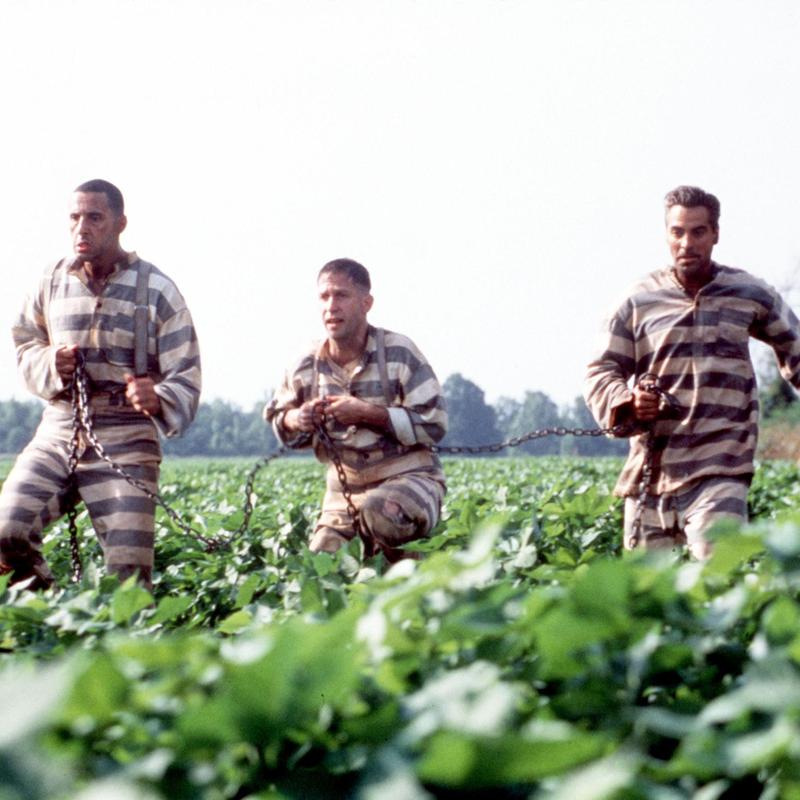
Tiffany Hanssen: This is All Of It on WNYC. I'm Tiffany Hanssen, in for Alison Stewart. 25 years ago this month, one movie soundtrack inspired Americans to discover, or rediscover, a love for roots and bluegrass music. Of course, we're talking about O Brother, Where Art Thou?
[MUSIC - Soggy Bottom Boys: I Am a Man of Constant Sorrow]
Tiffany Hanssen: This is I Am a Man of Constant Sorrow from O Brother, Where Art Thou? That movie starred George Clooney, John Turturro, and our previous guest, Tim Blake Nelson, as Mississippi chain gang escapees who became the Soggy Bottom Boys. The soundtrack was as popular, if not more popular, than the movie itself. Over 8 million copies sold, number one on the Billboard charts. It even won album of the year at the 2002 Grammy Awards.
Allison Hussey is a music writer who wrote a review of the soundtrack for Pitchfork. She's with us now in the studio to reflect on the 25th anniversary of the "O Brother, Where Art Thou?" soundtrack as part of our Silver Liner Notes album anniversary series. Hi, Allison.
Allison Hussey: Hi. Thank you so much for having me.
Tiffany Hanssen: Absolutely. All right, so let's just start back at the way back. Do you remember when you first heard it?
Allison Hussey: I've been thinking about that. It's crazy to think that it's 25 years old now. I didn't see it right when it came out. I grew up in North Carolina. Have lived in New York City for about seven years now. That kind of music was always around, but then, when the soundtrack blew up, it really felt like that kind of music was everywhere. There was a lot that was familiar there, and there was a lot of stuff that was new there. I think that that made for just a really distinctive combination that a lot of people really connected with in a way that I don't think we've really seen since.
Tiffany Hanssen: Did you see the movie or did you hear the music first?
Allison Hussey: I definitely saw the movie first. I think it was my parents, probably, watching it on TV. I remember a big connection was, there's a guy at the very, very end leading the parade, when they catch Baby Face (George Nelson) named David Holt. He's a North Carolinian musician who was one of the first concerts I ever went to as a child. He's a folk musician and a mandolin player. I remember my parents saying, "The guy that we went to the concert at the art museum is now in this movie." I just remember that connection of being like, "Oh, this is just such a big connection, how did this guy that I-- [unintelligible 00:03:13] saucing the cat came back. Now he's in a big movie."
Tiffany Hanssen: I can think of some other soundtracks that did really well. I'm thinking about Grease. I'm thinking about-
Allison Hussey: Saturday Night Fever.
Tiffany Hanssen: Saturday Night Fever, The Sound of Music, Frozen.
Allison Hussey: Oh, yes.
Tiffany Hanssen: When I think about those, I guess maybe with the exception of Grease, they're not so genre-specific in the way that this soundtrack is. Why do you think that was so innovative, and it actually worked? Sometimes that stuff can just fall on its face.
Allison Hussey: I think the thing that made the big difference here was that music was such a part of the story. It wasn't just a set piece to move things along. It really was essential to the plot of this whole movie. What would O Brother, Where Art Thou? be without its songs? The whole turning point in the movie is when they go to the radio station, they cut the record, and their lives change. I think that the fact that it's such an interesting story that is really absurd and silly, but I think it ultimately does end up being a little bit heartwarming. There's nothing like it.
Tiffany Hanssen: Listeners, we're talking about "O Brother, Where Art Thou?" soundtrack, celebrating 25 years of that soundtrack. Do you have a favorite song? Why do you think the soundtrack was so successful? Did it change your opinion about bluegrass music, roots music, any of that? Call us, text us, 212-433-9692. You can also find us on all the social media @allofitwnyc.
We got a text here that says, "I sang Down to the River to Pray to my two babies every night. Sweet memories."
Allison Hussey: Aw.
Tiffany Hanssen: I love that.
Allison Hussey: That's really sweet.
Tiffany Hanssen: Allison, wait, I read it. It won the Grammy Award for Best Album of the Year in what year? What year was that?
Allison Hussey: It won in 2002. February 2002.
Tiffany Hanssen: Oh, yes, I see. It won in 2002. It beat out Outkast, by the way.
Allison Hussey: Yes.
Tiffany Hanssen: What was there- if there was- anything happening at that moment in time that you think, "This just landed at the exact right time"?
Allison Hussey: Nothing unusual happened in American history in the six months before February 2002. It was this album, and this movie landed, I think, in a moment where the country was just feeling really shocked. There is just really a lot of comfort there. It's easy to reach for something reassuring; it's also easy to reach for something that is really good. I'm not trying to talk down Outkast at all, because I think they are two of the most brilliant musicians to ever come out of the south or the whole country. I think that O Brother, Where Art Thou? was something that, for a lot of people, was very easy for them to just latch onto, find a lot of meaning in it, at a time when I think people were feeling a bit extra sensitive.
Tiffany Hanssen: Another text here. "I definitely recall the beginning of what came to be known as the second folk revival after that soundtrack. The first, of course, being in the '60s. There's always a periodic looking back in all art." Allison, I want to bring a caller into the conversation, Jeremy. Jeremy's in Middletown. Hi, Jeremy. [silence] Hi, Jeremy. You saw the film in theaters.
Jeremy: I did. I saw the movie when it came out in New York City. I was dating someone who lived in the city at the time. I live in Jersey. It's just an anecdotal thing. It was very funny, and perhaps it's New York City's educated film audience, but we're watching the movie, and the scene where George Clooney sings as a member of the Soggy Bottom Boys for the first time. He leans into the microphone, and the microphone kind of covers his mouth. He begins to sing I am a Man of Constant Sorrow and the entire audience started giggling because I think they all knew that it wasn't him singing. [laughs]
Tiffany Hanssen: Jeremy, thank you. I mean, fairly obvious that it wasn't him singing. Doesn't detract from it, though, right?
Allison Hussey: Right. That voice is Dan Tyminski, who is, I would say, one of the best living singers and figures in bluegrass music. He was a member of Union Station. Eventually had a hit with Avicii in 2013, which was pretty interesting. I interviewed Dan Tyminski, I think it was back in 2015, for another article I wrote. I think he said something about his wife said something along the lines of, "Oh, my God, your voice coming out of George Clooney's mouth, that's great. Love it."
Tiffany Hanssen: Yes. She gave that a thumbs up, I think.
Allison Hussey: Exactly, yes.
Tiffany Hanssen: We're talking with Allison Hussey, who's a music writer, about the 25th anniversary of the soundtrack for O Brother, Where Art Thou? Allison, another text here. "Having grown up with bluegrass, the more you listen, the more you love." Of course, it is a soundtrack; it came from a movie. What do you know about what the Coen brothers' original intent was for the soundtrack movie relationship and how they work together?
Allison Hussey: It was very, very intentional to have the music be a really deep part of the fabric of the story from the start. The Coens pulled in T Bone Burnett to handle the soundtrack. T Bone eventually called on Gillian Welch to be an associate producer, and now we know her to be just megastar.
Tiffany Hanssen: Amazing. Amazing.
Allison Hussey: Right, just one of my all-time favorites. The Coens and T Bone both just had this, I would say, unbelievably fastidious approach to how they wanted to do the soundtrack. I don't think every song necessarily was exactly of that era. I think the song I'll Fly Away, actually, was first recorded a few years after the movie is actually set. They had a forensic musicologist tracking down information about where the songs came from,-
Tiffany Hanssen: Of course they did.
Allison Hussey: -and really making sure that the music was perfectly tailored to what was happening in the plot and that there was, I would say, probably back and forth between what was happening in the music and on the screen.
Tiffany Hanssen: Let's listen a little bit.
[MUSIC - Gillian Welch & Alison Krauss: I'll Fly Away]
Tiffany Hanssen: Look, I could listen to that all day long, but here, we are talking about the soundtrack for O Brother, Where Art Thou? Allison, I think that immediately transports me to not even the movie. We have a text here that says, "Your guest is so right, the film soundtrack was the American comfort food the nation needed. Apple pie, mac and cheese, et cetera, supported the American identity itself." I think it's that, it kind of transports you to that place of good feeling.
Allison Hussey: Yes. I think that in some ways, that can be complicated too, because it's this idea of being transported to this idealized past that really never existed. Another big plot point in O Brother, Where Art Thou? is a clan rally, and they're trying to lynch somebody. The truth of that era is not always the slapstick comedy that we see in the movie. I think that it is, again, just something really easy people can reach to for comfort because it does remind them of their grandparents, I think, especially. I heard that all the time of just, "Oh, I just remember hearing these songs with my grandparents." It just really set a lot of people at ease.
Tiffany Hanssen: Couple of texts here, too. "Bluegrass music is so, so special. The "O Brother, Where Art Thou?" soundtrack is just the tip of the iceberg. So many amazing bluegrass artists like Billy Strings, AJ Lee, more people we should listen to."
Another text says, "The soundtrack is great because of the fantastic and legitimate source music that was pulled together, as you were talking about, by T Bone Burnett and others." T Bone Burnett, for people who don't know, I'm pretty sure people know who we're talking about, but he's a mega force. I'm curious how you see his fingerprints on this.
Allison Hussey: They're all over the place. I think one of the things that I don't think necessarily stands out to most average listeners, but throughout the recording process, he even worked to arrange microphones in the way that microphones were often arranged in recording studios or radio studios in the 1930s.
Tiffany Hanssen: Where people gather round, right? There's a single microphone. People gather around.
Allison Hussey: Actually, it wasn't a single microphone. It was called the Decca Tree method. They had multiple microphones set up in these branches to capture this sound, I think, at a time when these different kinds of microphones just were maybe a little bit more difficult to get in some areas.
Tiffany Hanssen: I believe it. Allison, let's bring another caller into our conversation here. Curtis in Irvington. Hi, Curtis.
Curtis: Hey, how's everyone doing? I love the movie. I have the movie. I actually have the DVD. I'm holding it. After I get off the phone, I'm going to watch the movie. Regarding the soundtrack, I like the very last song, where the devil finds them at the house. The flood comes, and the old Black man is singing a spiritual-- That song really touched me.
Allison Hussey: Yes, [unintelligible 00:14:49] [crosstalk] before.
Curtis: I like that, it's part of the soundtrack. I love the movie. I'm a Black guy, you mentioned the lynching scene with the KKK with the clan. It really touched me, but it makes me laugh when they say, "The color guard is colored!" They have a lot of comedy in the movie. I'm going to watch it because 4:20 is coming up real soon in a few hours, and I'm on vacation. That's one of the reasons why I keep a DVD player handy, because I have a nice collection of DVDs, and O Brother, Where Art Thou? is in my DVD collection, and I'm going to watch it right now.
Tiffany Hanssen: Love it. Curtis, thank you so much for your reflections.
Allison Hussey: Yes, thank you.
Tiffany Hanssen: Love that. We are talking with Allison Hussey, who's a music writer. She wrote about the soundtrack for O Brother, Where Art Thou? It's coming up on the-- Coming up? When is the actual date?
Allison Hussey: I think it is maybe a little bit later this month, is the actual 25th anniversary [unintelligible 00:15:59] [crosstalk]
Tiffany Hanssen: 25th anniversary-ish of the release of the soundtrack for O Brother, Where Art Thou? We're going to take a quick break here, but on our way out, I wanted to listen to a little music if we could. I'd like to listen to Didn't Leave Nobody but the Baby. We'll end on it, and then we'll talk about it when we come back from the break. I'm Tiffany Hanssen, in for Alison Stewart.
[MUSIC - Emmylou Harris, Alison Krauss, & Gillian Welch: Didn't Leave Nobody But the Baby]
[music]
Tiffany Hanssen: This is All Of It on WNYC. I'm Tiffany Hanssen, in for Alison Stewart. We're talking about the soundtrack for O Brother, Where Art Thou? Coming up here on the 25th anniversary of that soundtrack. We're talking about it with a music writer, Allison Hussey, who wrote a review of it for Pitchfork. Allison, before we had our little break there, we heard from another Alison, Alison Krauss. We talked about Gillian Welch, Alison Krauss, another unforgettable voice on this soundtrack. The song was Didn't Leave Nobody But the Baby. Just tell us your thoughts when you hear that music.
Allison Hussey: With Didn't Leave Nobody But the Baby, where, where do you even start? It's Alison Krauss, Gillian Welch, & Emmylou Harris. What a just power trio right there. Some listeners might miss this, but if you listen to it closely, it's not just them singing totally acapella. There's these weird singing saw and this maybe distorted banjo plank in the background. It really just does this amazing thing that I think a lot of old Appalachian and folk music can do, which is just raise the hairs up on the back of your neck and really just hypnotize you in a way that feels almost literal.
That is kind of what happens in that scene in the movie because it's the sirens and the guys are taking their break in the river. They get seduced. Then Pete gets taken away. I hope I'm not spoiling a 25-year-old [unintelligible 00:18:58] for everybody.
Tiffany Hanssen: Uh-oh, Curtis-- No, Curtis has already seen the movie. It has an intimacy to it. I think the music in general has an intimacy to it. This, I think, is a little bit the case with radio, in that it instantly draws you in. We're in your head, we're in your earphones. You're in this tiny space with these three women, and you're hearing their foot creak on the wood floor or whatever. Whatever that sound is supposedly evocative of. I wonder if there's something to that in terms of its continued popularity, because we did mention that it spawned a second revival of folk and a lot of music in this genre.
Is it that? Is it more than that? Is it a lot of things? I'm going to guess it's a lot of things, right?
Allison Hussey: That's a good question. It's kind of hard to know where to start. I think part of the appeal of any type of folk music is that it goes back just years and years and years. A lot of the songs on this soundtrack are now over 100 years old. They have passed through the hands of so many people. In every version, there's a new meaning that can go into it, a new twist, or somebody can put their own spin on it. I think that it feels like something that's just been passed down from from one person to the next. That's not a unique thing to say about folk music, but I think that being able to very genuinely feel that that lineage-- In the movie, there was Ralph Stanley, who was one of the elder statesmen of bluegrass at the time. He passed away, I think, within the last decade or so. You really get to see that tradition and feel it.
Tiffany Hanssen: We feel that tradition. We know that a lot of these songs have come from the hills. There's also some original music on there. There's also some field recordings that were on the soundtrack. Just before we listen here, just tell us a little bit about Po' Lazarus.
Allison Hussey: Po' Lazarus was recorded by Alan Lomax as part of his pretty famous travels through the south, and especially recording at Mississippi State Penitentiary, which a lot of people know as Parchment Farm, which was a pretty brutal place. Among the many recordings he did there, he recorded this man, James Carter, singing as part of a chain gang. You can hear the rocks breaking in the recording, and a bunch of uncredited singers. That song is-- the first thing you hear in the movie, I think, is the sound of the hammers smashing against the rocks.
Tiffany Hanssen: Yes, let's hear it. We have to hear some now, right?
[MUSIC - Alan Lomax: Po' Lazarus]
Tiffany Hanssen: I think it's interesting, Allison, to talk about this film, too, in the context of another film that was released this year that was set in Mississippi. Sinners.
Allison Hussey: Yes. Oh, my gosh. I could yap for days about--
Tiffany Hanssen: All right, let's hear it.
Allison Hussey: I was just talking to a friend about this the other day. The idea of music as something that is this intergenerational, almost like interdimensional force. I loved the way Sinners used, like, Buddy Guy, talk about, you know--
Tiffany Hanssen: We're talking blues now, just to put people in context.
Allison Hussey: Exactly.
Tiffany Hanssen: We're putting people in context here.
Allison Hussey: I think that much like the Coens and T Bone Burnett, working really hard to make sure that things fit really well. I think that Ryan Coogler and his whole crew really did a lot of work to make sure that the music really helped bring the movie to life. It's a cool movie, Sinners is, they've got a lot of amazing stuff going on, but the music is such a massive animating Force. Again, I don't think Sinners would be what it is without it.
To go back to Po' Lazarus and talk about the fastidiousness, once the soundtrack really started catching on, T Bone Burnett actually worked with an investigative reporter and somebody who was affiliated with Alan Lomax's Association for Cultural Equity to find James Carter and to be able to give him his royalty check.
Tiffany Hanssen: Nice.
Allison Hussey: He got a $20,000 check. His family was able to receive royalties. He also got to go to the Grammys with his family.
Tiffany Hanssen: Nice.
Allison Hussey: I think that that also just really speaks to how many layers there are to this movie, that this happened.
Tiffany Hanssen: One of the songs from Sinners that you wanted us to play is Hard Time Killin' Floor Blues. It sounds like it could be on the soundtrack for O Brother.
Allison Hussey: Wait, Hard Time Killin' Floor Blues was in O Brother.
Tiffany Hanssen: Oh, right. You're right, sorry.
Allison Hussey: I think you're right, it does sound like it could kind of fit into Sinners. It's Chris Thomas King.
Tiffany Hanssen: Correct me. It's Chris Thomas King. You wanted us to play it because it sounds like it could be in Sinners. Any other reason?
Allison Hussey: I think that Chris Thomas King is really interesting because we talk about the "O Brother, Where Art Thou?" soundtrack really making a huge difference for a lot of the musicians who are on it. Chris Thomas King, who's just a really talented musician out of New Orleans, I don't think that he necessarily saw the same catapult into semi-celebrity that the other musicians had. I've always wondered about that. Not necessarily wanting to assign anything to malice. I don't know, it's just always interesting how just different things shake out.
I do think that this is a buried treasure on the soundtrack. It's this really calm, but also still a little spooky song. It's a song by Skip James, and just another really interesting tune that also fits in with this story about American music in the early 20th century, but just a different angle on it.
Tiffany Hanssen: We've been talking with Allison Hussey, who's a music writer, who wrote a review of the soundtrack for O Brother, Where Art Thou? For Pitchfork. We've been reflecting here on the 25th anniversary of the "O Brother, Where Art Thou?" soundtrack. It's part of our Silver Liner Notes album anniversary series. Allison, thanks so much for your time. I think we should probably go out here on Hard Time Killin' Floor Blues.
Allison Hussey: Great. Sounds good.
Tiffany Hanssen: Thank you.
Allison Hussey: Thank you.