
New True Crime Podcast, 'The Chinatown Sting'
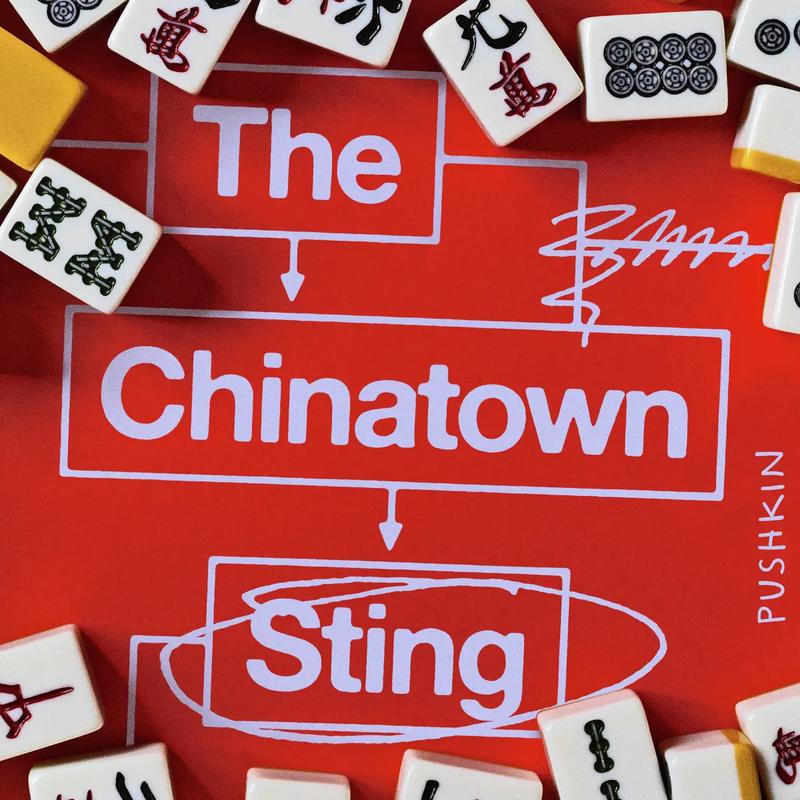
Alison Stewart: This is All Of It on WNYC. I'm Alison Stewart. Chinatown attracts New Yorkers and tourists alike for its authentic cuisine, shopping, and cultural events. Thousands flock to the area every lunar new year to celebrate, but Chinatown isn't just a tourist destination. Like most immigrant communities, it's just home, but like these big cities, it has had its problems. A new podcast spotlights the 1980s Chinatown drug trafficking problem.
Law enforcement had discovered large quantities of heroin was being moved by Chinatown gangs. It was a highly lucrative business, but it also came with risks. Fights over who controlled the distribution were becoming even more violent. An investigation that helped bring down one of the most powerful gangsters, and it all started with the arrest of a single mom who had been recruited through her mahjong club.
The podcast is called The Chinatown Sting. It's hosted by journalist Lidia Jean Kott. She's a senior editor and producer at Pushkin Industries and is a reporter of stories for the BBC, NPR, and here at WNYC. Lidia joins us today. Hi, Lidia.
Lidia Jean Kott: Hi.
Alison Stewart: You mentioned that you discovered this case when someone gave you a box of documents, and it was given to you by your boyfriend's mom, who happens to be a federal judge.
Lidia Jean Kott: Yes.
Alison Stewart: Who is she and how does she come to give you this box?
Lidia Jean Kott: Yes. Her name is Beryl Howell, and she's a federal judge in Washington, D.C. so she's overseen a lot of high-profile cases, like secret grand jury investigations into President Trump, the case against Giuliani, et cetera. I've known her for a very long time, ever since I was in elementary school, actually. We're in the same neighborhood.
She's someone who I look up to a lot, and she's actually why I decided I wanted to report about the law, because I feel like the law can seem very intimidating. Courthouses look like churches, judges wear robes, it's a scary thing. She demystified it for me, and then I wanted to do that in my reporting.
This case is her first case. It started just a few weeks on the job, and I felt like if I explored it and understood it, I would also understand how she came to do the law the way that she does the law, and understand how people who do justice think about justice.
Alison Stewart: We should make that point that when it started, she was just at the beginning of her career in the 1980s. She went from from adjudicating on January 6th rioters, but in 1988, where was she? What was she doing? Tell us a little bit more about Beryl.
Lidia Jean Kott: Yes. She was a prosecutor in the Eastern District of New York, which is in Brooklyn. She had been on the job basically just a few weeks.
Alison Stewart: Wow.
Lidia Jean Kott: She was in the situation where there were all these women who had young children who were in custody, and they were accused of accepting these boxes that had stuffed animals, tea, and millions of dollars worth of heroin. She needed to know why they did it and for who, and they weren't talking.
Alison Stewart: What was it about this case that resonated with her so deeply?
Lidia Jean Kott: It was an incredibly complicated case. She started it a few weeks when she started as a federal prosecutor, and it continued on until she became chief of the Narcotics Division in the Eastern District of New York. It was, like, four or five years. In order to build a case like this, it required many steps. Lots of things went wrong. There was an international extradition, but also at the heart of it was creating relationships with these women and trying to gather the information that she needed to build it. I think it was the relationships and the human side of it that is what really stuck with her.
Alison Stewart: I'm speaking with Lidia Jean Kott about her new podcast, The Chinatown Sting. The first three episodes are out now, wherever you get your podcast. How soon did you realize that this was something you wanted to pursue for a podcast?
Lidia Jean Kott: The first time I heard it, I went-- it's one of those stories where it's like you can't remember when you first heard it. You feel like you always knew it. This case is a family legend.
Alison Stewart: Ah, funny.
Lidia Jean Kott: I've been part of that family for a really long time. I can't pinpoint it exactly, but I think it was one of those times where we were sitting around the dinner table and Beryl was reminiscing, and she told this story of these mahjong parlors in Chinatown and these women and how she got to know them.
I was just like, "I really want to know more. I want to do a story about this." I didn't think it would ever be possible because judges so rarely give interviews. I thought it was a dream, and I also thought there was no way I would be able to find the people who were in the story, but I was like, "I want to see this movie. I want to know more."
Alison Stewart: Before you got started, though, how familiar were you with the history in the neighborhood of Chinatown?
Lidia Jean Kott: Not that familiar at all. I was a baby in the East Village. I'm a New Yorker, kind of. I spent my babyhood here and then moved to D.C. when I was a little older, but I did not know anything about the history of Chinatown and how it came to be, and the legacy of the Chinese Exclusion Act. All of that were things that I discovered through reporting this podcast.
Alison Stewart: What did you discover in doing your research? Before you started, you have to do your research about Chinatown. What did you discover about Chinatown that you clocked in your brain and you said, "This is going to matter later on?"
Lidia Jean Kott: I think it's really important to think about how Chinatowns were formed and how it is a legacy of the Chinese Exclusion Act in the 1800s, and how basically, originally, a lot of Chinese immigrants came to the West Coast during the Gold Rush. Then there was all of this anti-Chinese sentiment.
Chinese immigrants helped build the railroads, and a lot of times they were forced to take those very railroads to go to the East Coast, and Chinatowns were formed as safe havens because Chinese immigrants felt excluded and attacked by the larger US Society. I think that's an essential part of this case. That wouldn't have happened if Chinatown didn't become this enclave that it did as a result of this racism and exclusion.
Alison Stewart: What were some of the challenges you faced in tracking down those people who were involved in this case of shipping heroin in boxes to women playing mahjong? [laughter] An incredible story.
Lidia Jean Kott: I would say it was all challenges. I was great because I had a co-reporter. Her name is Shuyu Wang. She's from the same region of China as a lot of people in this story, a little bit outside of Hong Kong, and she's also a lawyer. One challenge was the law is very confusing and hard to understand, and another challenge is basically, we had no idea what happened to these people. We just looked them up on the white pages and were knocking on doors.
A lot of times the people who answered the doors didn't speak English. It was really great to have someone who could translate with me, and then also just who believed in the project and would spend all of his time traveling through all the Different Chinatowns that now exist in New York, knocking on doors with me believing that eventually the right door.
Alison Stewart: How did the lawyer-- first of all, what did she think when you brought the project to her?
Lidia Jean Kott: She was really into it because she had actually studied journalism in China and then she realized that wasn't really a path that she was able to pursue. She was like, "This is an opportunity to do journalism again." Then she was also really interested as an immigrant to New York City who was discovering Chinatown now, as someone-- she had been living here for a couple years to learn about Chinatown's history and the experience of immigrants before her.
Alison Stewart: How did she handle the people who wanted to talk but didn't feel like they could talk?
Lidia Jean Kott: I would say we had two main sources. We spoke to two women who received these packages, who we built the story around, Tina and Wa. I think they were both anxious about talking because it's obviously a really hard time in their lives, and they had to make some really tough decisions. Also surprised that we came to find them.
I think that we were very much like, "We're going to come to you and ask you whether you want to talk, but then it's your decision." I think that they, in the end, decided that they wanted to share their stories. I think that does have to do in part because of the connection that they did feel to Beryl. I think Beryl wouldn't have sent me off to find them if she didn't feel like that connection was mutual and like the story needed to have some sort of ending.
Alison Stewart: Let's set the scene for people. Gang activity and gang-related violence was huge in '80s Chinatown, as is in most under-resourced areas in this country. First of all, what were the factors that led to the escalation that it would be this much gang violence in Chinatown in the '80s?
Lidia Jean Kott: I think the reason there was so much gang violence was because teens in Chinatown didn't necessarily feel like they had a lot of options for upward mobility, or sometimes because of the language barrier, or just having someone before them who had done it, or racism. There wasn't a ton of job opportunities that felt open, and one way to get a lot of money is to join a gang.
A lot of the former gangsters that I interviewed talked about a sense of belonging and being bullied. I think a lot of them felt bullied for being Chinese, felt like they didn't fit in. Then being a member of this gang, you felt powerful, you felt like you had a sense of belonging. You also were able to get a lot of money.
I feel like that would be very tempting to teenage boys. Then the police and the feds weren't really that interested in what was going on in Chinatown because it was limited to Chinatown. It wasn't until it escalated to the point of the drugs coming in and the violence escalating and impacting people who are outside of Chinatown that anything was really being done about it.
Alison Stewart: I'm going to get you to explain what was in the boxes that these women received. These women in these mahjong parlors would get these boxes and what was in them?
Lidia Jean Kott: These boxes, I think they weren't all exactly the same, but they contained some variation of stuffed animals, peppers to mask the smell, tea boxes with-- I think one of the women told me Chinese lettering on them because she actually, interestingly enough, doesn't speak Chinese because she was born here and then also millions of dollars worth of heroin.
Alison Stewart: Did they know what was in the boxes?
Lidia Jean Kott: That is a key question of the investigation. There's all different ways of knowing. There's deciding not to know, and there's literally not knowing, there's knowing that it might be something bad, but deciding to not investigate and just agree to pick up this box in the mail, and then there's literally knowing what was inside of them. I would say option two is where most people were landing.
Alison Stewart: My guest is Lidia Jean Kott. Her new podcast is the Chinatown Sting. All three episodes, the three episodes there are now, are available where you get your podcast. You have a lot of really colorful characters in the podcast. Tell us a little bit about Onionhead, for example.
Lidia Jean Kott: Onionhead, his name is Johnny Eng. He was one of the main importers of heroin into New York City. He was the head of a gang called the Flying Dragons. He's a really important character because before he took over the gang, the gang really kept it local. They ran the gambling parlors, they ran the mahjong parlors, they extorted shopkeepers, but that was pretty much all they did. And they engaged in fights with other gangs. That was a big activity.
When he took over the gang, he was like, "I don't really care about this intergang warfare; this gambling money is a lot of money, but I know a way we can make a ton more money," because he had connections to the triads in Hong Kong who were bringing in heroin. Basically, he was like, "Let's start bringing in drugs. He became really rich and very successful and very well known in Chinatown. He was called Onion Head because his hair stood up like an onion.
Alison Stewart: He's the focus of episode two. Then there was a person we meet, and we meet this woman named Tina. What was Tina's involvement?
Lidia Jean Kott: Yes. Tina is one of the main characters of the podcast. Like I said, she's half Portuguese and half Chinese, and she grew up actually a little bit outside of Chinatown. Then as a kid, she got brought into this world of Chinatown through her best friend. Her best friend is the person who asked her to receive this package in the mail. She was one of the woman who was held in custody and she had to make this pivotal decision of whether or not to give up her best friend, who was really key to the investigation, her best childhood friend, basically, or face a much longer prison sentence.
Alison Stewart: What were your first impressions about Tina?
Lidia Jean Kott: Me and Shuyu, my co-reporter, showed up at her apartment. We brought cookies, I said, because we were coming so out of the blue, it seemed like we should bring something. I think the first thing that stuck out to us was she had a parrot, a huge parrot in her apartment. She told us that her parrot does talk, but it doesn't talk to strangers. My mom told me that a lot of times how people talk about their pets is really how they talk about themselves.
Alison Stewart: Oh, that's interesting.
Lidia Jean Kott: That's something I thought a lot about with Tina, where I think she wanted to talk to us, but it took many visits in order for us to not be strangers.
Alison Stewart: Tell us who Wa was.
Lidia Jean Kott: Wa is Tina's best friend. She's part of why I wanted to do this story, because of how Beryl, my boyfriend's mom, talked about Wa. She's this incredibly charismatic woman who everyone knew was the center of life in Chinatown. Beautiful. My boyfriend's mom was like, "It's not even just that she's beautiful. It's just like, she just makes you feel so alive when you're with her." She's someone who knows what she wants and knows how to get other people to do what she wants. She's a pretty incredible person. Everyone who I interviewed who mentioned Wa when I said Wa they had some sort of reaction.
Alison Stewart: In episode three, you spoke with Wa, and it's an exchange, which is pretty funny, and it gives you a look into her personality a little bit. This is Wa talking about how she didn't mind being in jail. This is from The Chinatown Sting.
Wa: Oh, I had a good time. I tell you, a lot of the officers they liked me, so I got a lot. I got everything I want, and I could tell them to do whatever. Some of them, they do for me.
Lidia Jean Kott: How do you get people to do whatever you want for you?
Wa: Because I'm smart. I can convince them.
Alison Stewart: I'm smart.
Lidia Jean Kott: She is. She just makes you feel like when you're with her, like up is down and down is up. It's so fun and disorienting.
Alison Stewart: Beryl referred to her as Wicked Wa, though she seemed not necessarily wicked per se for me, at my point of view, but more like businesslike in the podcast. What do you think?
Lidia Jean Kott: I think she thought of her as Wicked Wa until she met her. Because before she met her, she was like, who is this woman who has convinced all of these other women to receive these packages in the mail? It's a very serious offense. They could get in a lot of trouble. They don't have criminal records. Why was she getting them to do this? Then when she met her, I think she felt differently.
I think she felt like this is someone who's really charismatic, actually has a very big heart, and just loves to gamble and take risks. I think Beryl said the thing about Wa is when she sees a rule, what she thinks about is how to circumnavigate it, which is the opposite of Beryl, but it's definitely intriguing.
Alison Stewart: Tina and Wa sound so matter-of-fact about everything that has happened to them in the podcast, but realistically, thinking about it, how did being involved in this activity affect their lives?
Lidia Jean Kott: It had a really big, really big impact on their lives. Tina had to leave Chinatown, which was her home. She talked about how afterwards it took her, I think, about a decade to be able-- she had a hard time finding work before all of this happened, because she didn't have a college degree.
Then afterwards, because she had committed a felony, it was even harder. She lost her a lot of her friends. It had a huge impact on her life. Wa, she's still torn up about it. We didn't even ask her to walk through the trial with her because I felt like it would be too painful. I think she still has a lot of shame.
Alison Stewart: How did Beryl feel after she heard the podcast? Judge Beryl, we'll call her.
Lidia Jean Kott: Judge Howell.
Alison Stewart: Howell. Sorry.
Lidia Jean Kott: I was really nervous about how she would feel, and I really was hoping that she would feel like I did justice to the story. She said I did more than justice.
Alison Stewart: Oh, that's great.
Lidia Jean Kott: I think it was really interesting to her to get to hear from these women who she had been thinking about all these years later. I think it felt intense and also intense to be out there in a podcast, because I feel like, usually as a judge, she controls the setting completely, and I think giving up that control is pretty intense, but I was really glad that she felt like I did justice to the story.
Alison Stewart: What is something or an important thing that you learned when you were reporting this story, either as a journalist or you learned about the history of this area?
Lidia Jean Kott: So much. Learning about the history was really important. I think one thing that I learned about the law that I hadn't really thought of it that way is you think of people who are enforcers of justice as wanting to be very tough. You talk about being tough on crime, and Beryl is also very scary and intimidating.
When I get in trouble in the household, I don't go to Beryl, and neither do the kids, but I think she is less interested-- she is tough, but she's less interested in being tough than being fair. It was really important to her. I think what she wanted to know is whether the woman in this case felt like they had been treated fairly, because in order for people to trust the justice system, they need to feel like it's fair.
If people don't trust, all falls apart, because you need cooperators, you need people to report crimes, et cetera. I think in order for someone to. To feel like they are treated fairly, there needs to be a little bit of empathy and understanding there.
Alison Stewart: Do you think this podcast is much about the true crime story as it is about survival?
Lidia Jean Kott: Yes. I think it's more about survival and less about the true crime story.
Alison Stewart: What do you hope listeners take away from it?
Lidia Jean Kott: I think in their own ways, Beryl, Tina, and Wa, I worked on this story throughout my 30s, and they've all become role models for me for what sort of woman I want to be and who I hope to grow into. I hope that people who listen to it also take something away from the three of them because I think there's a lot to admire and learn from how they navigated this really tough situation.
Alison Stewart: The name of the podcast is the Chinatown Sting. I've been speaking with Lidia Jean Kott about it. The first three episodes are out now wherever you get your podcast. Thank you for coming in and sharing your story with us.
Lidia Jean Kott: Oh, my God, thank you so much. It was my pleasure.