
New Doc About School Shooting Victims, Memorialized Through Their Bedrooms
Alison Stewart: This is All Of It. I'm Alison Stewart live from the WNYC studios in Soho. Thank you for spending part of your day with us. I'm grateful that you're here. On today's show, actors Tony Shalhoub and Celia Keenan Bolger are starring in a new take on Antigone at the Public Theater. They join us to discuss along with playwright Anna Ziegler. I'll speak with Anissa Helou about her new cookbook, Lebanon: Cooking the Foods of My Homeland and director Kleber Mendonça Filho and actor Wagner Moura will discuss their Oscar nominated film, The Secret Agent. It's about a researcher who becomes a marked man during the corrupt regime of 1970s Brazil. That's the plan. While we're on the Academy Award nominations, let's start with All The Empty Rooms. We start with a short documentary nominated for an Academy Award that sadly could have gone on for hours and hours. That's because it's about the aftermath of school shootings, something that happens in the United States more than anywhere else in the world.
My guest, broadcast journalist Steve Hartman, was first assigned to report on a school shooting in 1997. In the years since, school shootings have increased from 17 per year to 132 per year. The doc, All The Empty Rooms follows Hartman at the end of a seven-year independent reporting mission, traveling to the homes of children killed by gun violence and bringing cameras into their rooms to document their lives. Here's a clip featuring Steve speaking to the parents of a girl named Gracie.
Steve Hartman: Do you go in there a lot?
Parent: Oh, yes, a lot. All the time. Every day. Every day I tell her good morning and every night I tell her good night.
Steve Hartman: Still?
Parent: Still.
Steve Hartman: Still to this day?
Parent: Yes. Hi.
Steve Hartman: When that time comes that that room is not there, does she go away? As long as that room exists, she exists in a way?
Alison Stewart: All The Empty Rooms was directed by my other guest, Academy Award nominee Josh Seftel, and Lisa Cortes, who served as an executive producer, is also here with us. The film is nominated for an Academy Award for Best Documentary Short Film. It's currently streaming on Netflix. Welcome to all of you.
Steve Hartman: [00:02:50] Thanks for having us.
Lisa Cortes: Thank you.
Josh Seftel: Thank you.
Alison Stewart: I want to start with you, Steve. Your first assignment was to report in a school shooting in 1997. Where was it? What did it feel like when you got there?
Steve Hartman: [00:03:03] It was in Pearl, Mississippi. I can't really remember much about it because I've covered so many since, and that was the impetus for the project in the first place, the fact that these were all blending together. I just felt like I was growing numb to this epidemic and I felt like the country was growing numb to the epidemic, and I started wondering, "What could I possibly do to shake myself and the country out of this numbness?"
Alison Stewart: Steve, when did you realize that you were starting to feel numb?
Steve Hartman: I think, as there were more and more shootings, usually one a month on occasion. A few weeks would go by and I would talk to friends and family about, "Oh, that shooting in Nashville," and they would say, "What? I just realized that we had just accepted this as part of what being an American is, dealing with school shootings. The stories all felt the same and they were blending together for myself and for friends and family. I think it was just the sheer volume of them that precipitated this, but the project began about eight years ago.
Alison Stewart: Lisa, you've been on the show before, talking about your many documentaries, your documentary about Stacey Abrams, All In. What drew you to this project?
Lisa Cortes: I sat down at a dinner party next to Josh Seftel, the brilliant director. He started telling me about the project. He invited me to review a work in progress, and I just loved the passion, the purpose, the message. with independent docs, which it was, I know that it takes a big village to birth these projects, particularly a project that has had and continues to have tremendous impact.
Alison Stewart: Josh, your last film, Stranger at the Gate, which was nominated for an Academy Award for Best Documentary Short Film, it's about a military veteran who planned an attack on an American mosque. How did you end up this being your follow up project to that?
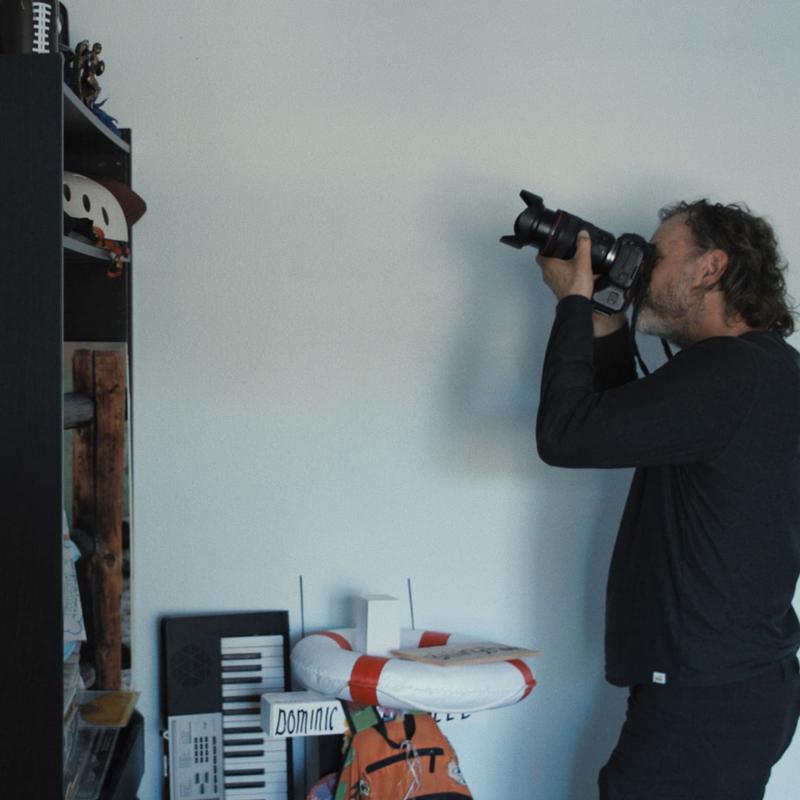
Josh Seftel: Actually, it's very connected because when we were on the Oscar broadcast, Steve Hartman saw me on the television, and he called me the next day and said, "Hey, I'm doing this project about empty bedrooms." He explained it to me and then he showed me a picture that he had, that Lou Bope, the photographer that travels with Steve, had taken in one of these bedrooms. It was a picture of a toothpaste tube with the cap left off.
I immediately was struck by it because I could feel the presence of the child, the child who was rushing to go to school, decided not to put the cap back on because they'd get to that later and they never came home again. Just the feeling, the presence of the child, I found to be so powerful that I think that was the moment when I said, "I think there's a documentary here, Steve," and within a couple of months, we were on the road pursuing this film.
Alison Stewart: Steve, when and why did you decide that you wanted to see the children's rooms?
Steve Hartman: I was trying to come up with different ways to shake myself and the country out of that numbness. I started thinking about the parents and what their life must be like the day of the shooting. I started thinking about the reporters who knock on the door and they want an interview, coming home from the hospital and friends and family coming over and just. I tried to put myself in their shoes.
Then I thought when night fell and normally when they would say good night to their child and put them to bed, what it must be like for them to walk into those rooms. I started wondering what that would look like, and I imagined everything that kid loved and everything that kid dreamt about was on all the walls, on the dresser, and on the desk, and what it must be like to be surrounded by all those memories.
Then I started to think, "What if all of America could stand in those rooms? Could that possibly shake us out of the stagnation that we've really fallen into in terms of trying to solve this problem?" I knew that was impossible for everybody in America to stand in those rooms, but I thought maybe we could take them there through still pictures.
Alison Stewart: Lisa, because you see these rooms of these late children, what was it like to be entrusted with that footage when it came back?
Lisa Cortes: The process for the team was always one of the inclusion of the families in the process. I think that's a really important part of the respect given not only to the child, but the families and to make certain that they are comfortable with the story being told. I think that partnership, it really speaks to the intention of the film being served.
Alison Stewart: Josh, in an interview with Creative Independent, you said, "We promised the families of All The Empty Rooms that we would try to capture the story of each child and share it with the world." When did that become the mission of the film? Why was it important to make that promise?
Josh Seftel: I think that from the very start, that was our goal. We just thought that that was the take. The take was, "Let's go into these rooms and show the belongings and the things that are left behind in the room in order to essentially create a portrait of each child." It was very simple. What we discovered as we started to talk with these parents about it, the parents who agreed to participate in our film, is that they shared the exact same goal. Their goal is to make sure that the world doesn't forget who their child was, so we were very aligned with that.
What I didn't fully understand when we started was that there's something more there than just pictures and then these objects. There's something deeply universal about these bedrooms. There's something that everyone can relate to. There's something about these rooms that's powerful, that just feels like people connect to it. It feels familiar. It transcends every possible political debate that you could imagine around this issue. It just brings it to the very core of, these children are dying from a crisis that is preventable. I think it's that simple.
Alison Stewart: I'm speaking to journalist Steve Hartman, director Joshua Seftel, and executive producer Lisa Cortes about the documentary short film All The Empty Rooms. It's nominated for an Academy Award, and it's currently available to stream on Netflix. Josh, it's a documentary about the rooms, about the children's lives, but it's also a documentary about the reporting process as well. How did you look at those two pieces and figure out how to fit them together?
Josh Seftel: I think having Steve Hartman be a part of this story was essential. When we first had that conversation, when he told me about the project, when I said, "Yes, let's make a documentary," his first reaction was, "That's great. I don't want to be in the film." I said to him, "No, you have to be in the film because you're the one who's going to take us on this journey. This is going to be a very difficult journey for people. For you to take us into these rooms, for you to hold the hand of the viewer and take them on this journey is essential because people trust you and people will go with you, and it will make it easier. That's important because we want people to watch this film."\
Having the story of the reporter and the photographer taking us on this journey is so important. I think it adds this layer, and in a sense, to me, Steve Hartman and Lou Bope, the photographer in our film, become surrogates for the audience. They take us to these rooms, and we see them experiencing it and taking it in, often in silence, but we understand what they're feeling, and it helps us as viewers to participate in the journey.
Alison Stewart: Steve, initially, why didn't you want to be in the film?
Steve Hartman: I think just my instinct as a journalist is to not be part of the story. I wanted Josh to have the freedom to take what Lou and I had done up to that point and do what he wanted. In the end he felt like, as he explained, that Lou and I had to be there.
At first, when I first started reaching out to the parents and asking if we could come and photograph the rooms, I wanted to make the footprint as small as possible. I wasn't even going to go. I just said, "We'll send in a still photographer, just a camera, no tripod, no lights, to photograph the rooms," because the ask was so great and I knew it was so great. I knew that what I was asking was to be allowed into this very personal space that not even close friends and family are often allowed to enter. Sometimes the door is even locked. I just wanted to make it as simple as possible on the parents.
Then, as we got into it, one family said, "I want you to come," and so that was the first room that I stepped in myself, and that was Sandy Hook. That was Charlotte Bacon's room. It was just as it was years earlier, and it's a pretty haunting feeling. Maybe when I said I didn't want to be part of it in addition to that journalistic instinct I talked about, maybe it was also that I didn't want to feel the pain of stepping in those rooms.
Now that the film's done, and Josh has obviously done just a brilliant job putting this together, it all makes sense. I'm glad I went, because I'll never be numb again. Every time there's a school shooting, I'm going to be able to place myself in that room. In that sense, at least for me, the documentary has achieved what I set out to do when I started the project.
Alison Stewart: Lisa, if you can explain Lou Bope's participation in the film. He's a still photographer.
Lisa Cortes: Yes. He's a longtime friend of Steve Hartman's, and he went on this journey with Steve. One of the things I so love in watching this film is Lou's process entering into these rooms that we call sacred spaces, how he takes his shoes off. He does not use any additional lighting and just respectfully inhabits. The perspective that his photos provide are so deep into the specific characters of each of these young people. He is this tremendous-- he's our invisible eyeball entering into this space.
Alison Stewart: We're discussing the film All The Empty Rooms. We'll have more after a quick break. This is All Of It.
[music]
Alison Stewart: You're listening to All Of It on WNYC. I'm Alison Stewart. I'm speaking with journalist Steve Hartman, director Joshua Seftel, and executive producer Lisa Cortes about the documentary short film All The Empty Rooms. It's nominated for an Academy Award and it's currently available to stream on Netflix. Steve, when you approach these parents whose kids are no longer with us because of school shootings and you enter the rooms, what's the shape of the room? Do parents keep them the way they are? Have they been tidied up, or are they like when the children left that morning?
Steve Hartman: It varies. In some cases, they are exactly as the child left that morning. The bed's still unmade. In one case, as Josh said earlier, little tasks undone, like the toothpaste tube, the cap still off, hair in the drain, hair ties in the sink, homework strewn across the floor just as it was. That's one of the more haunting aspects of this whole thing, is because you can just so picture the child there and fully expecting to come back again at the end of the day.
In some cases in the rooms, there are small changes, like maybe a cross from the funeral, just some additional things that were placed there. Sometimes parents had repurposed the rooms and of course, we did not focus on those. When I sent out the letters, and I sent out letters to just about everybody who lost a child to a school shooting since Sandy Hook, most did not respond because it was such a big ask. A handful respond and say, "I would like to be part of this, but the room isn't there anymore." We focused on the parents who pretty much retained the room exactly as it was.
Alison Stewart: Smell comes up a lot, parents talking about the smell of the room, smelling of the old blankets. Joshua, what have you learned about memory and senses in reporting this story?
Josh Seftel: One child, Dominic Blackwell, who was killed in the Saugus High School shooting in 2019, his parents actually saved the dirty laundry. There's a basket of dirty laundry. Six years later, it's still there in the room and they just can't bring themselves to even wash it because they want to preserve his smell. It's actually the opening scene of the film, and that struck us deeply, the idea that you eventually would lose the smell of your child. It's something that some of these parents are holding on to.
I know that the Scruggs family in Nashville, they have the blankie of their child, Hallie. I know the mother goes into the bedroom, lays on the bed and smells the blankie to try to get the smell of her child, of Hallie. It's deeply important. It's a way of connecting, to stay in touch with the child who's no longer there.
Alison Stewart: Steve, do you have anything to say about that olfactory memory that comes through?
Steve Hartman: I lost my sense of smell decades ago, so-
Alison Stewart: Oh, interesting.
Steve Hartman: -this is not my field of expertise, but I know for many of the families, that smell still does play a role in it. I think it's even more so just the sight of everything around the room and all the different art projects that the kids did, just taking in the space, filling all the senses. I think that's why the parents that have held on to the rooms do hold on to the rooms, because sacrificing the rooms would be almost like another stage of grief that you have to go through for these parents. When you lose a child so suddenly like that, just imagine having to take everything and putting it in a box. Some people are ready for that in a matter of weeks, and for other people, they're never ready for it.
Alison Stewart: Lisa, what did you see in the final film that has really stuck with you in a child's room?
Lisa Cortes: I think we all have these memories of the trinkets that populated our own rooms growing up. Stepping into these rooms and bearing witness to this loss, it just forever haunts you. Hopefully it will engage people with being a part of this change that needs to happen, because it's so universal what it is to create your special space and for it to be lost.
Alison Stewart: Joshua, you've been nominated for an Oscar for short film work. How does this documentary suit a story like this?
Josh Seftel: From the beginning, we thought this was a short film. A short film is defined as anything under 40 minutes. It was hard to imagine that people would want to engage in a film on this topic that was longer than that, and so we felt that the short film might be the perfect way to deliver the story and to deliver the message of the story. One of the advantages of a short film is that when you have a screening- and in this case this film is 34 minutes long, you have a screening and then it allows for a robust conversation. That's what we've done, is we've screened the film more than 100 times now, and we're going to continue to screen it all over the country.
We have these amazing conversations afterwards where people talk about the issue, people talk about what they're feeling, and often people raise their hands and say, "I've watched this film, now tell me, what can I do to help? Tell me what to do." We have this opportunity to guide them toward what they can do to create change, because that's why we made the film, that's why I made the film, is to try to channel this empathy that we hope the film generates and channel that into some change.
For each individual person, that might be something different, but our hope is that people will engage in the issue, people will re-engage in the issue. It's like, think about how we used to feel when we heard about a school shooting, when we heard about Sandy Hook or when we heard about Uvalde, how we used to feel. Now when we hear about a school shooting, there was a school shooting last week, many of us don't even remember. How do we get back to the place where we feel something again? Our hope is that this film can help people to do that and to help people to re-engage and get involved in the issue.
Alison Stewart: Steve, we see you as a father in the film. What lessons were you able to take away from these reportings and these trips that has helped you out as a father?
Steve Hartman: You can't help but do something like this and come out of it with a renewed sense of appreciation for what you have. It sounds a little cliche. You don't take your kids for granted anymore. The fact of the matter is, you do end up taking your kids for granted. Everything reverts back to that eventually, but I never quite go back to where I was before. I do have it in the forefront of my mind or in the back of my mind, depending how recently I've read the news or heard about a school shooting or seen the film. It's always there, this thought that it could all go away.
There's part of me that was a little bit happier when I could just put my head in the sand, and "La, la, la, la, la. This isn't ever going to happen to me," but I'm glad I am where I am now. I think it does the same for people who watch the film. Every once in a while, we'll hear somebody say, "I don't know if I could watch that film. It just seems too sad." Yes, I would say it's emotional, but no one comes out of watching this film and regrets watching it. I think you end up in a better place. I think you actually come out of it with hope that maybe this is a good place to restart and start to come up with some solutions. The film doesn't offer solutions intentionally. Guns are never mentioned, for example. We really just want people to care again, and from that care, maybe some kind of positive change can emerge.
Alison Stewart: The name of the film is All The Empty Rooms. It's nominated for an Academy Award. I've been speaking with journalist Steve Hartman, director Joshua Seftel, and executive producer Lisa Cortes. Thank you for taking the time to speak with us about this film.
Lisa Cortes: Thank you.
Steve Hartman: Thanks for having us.
Josh Seftel: Thanks, Alison.